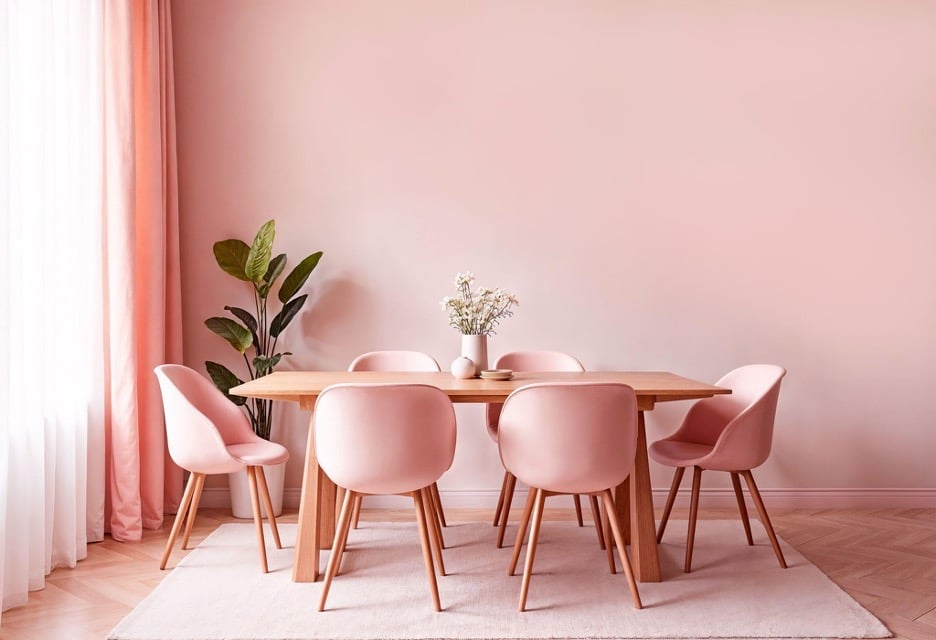
Strategic Holiday Dining Room Layouts: Seating Clearance & Space Saving Tips


Strategic Layouts for Holiday Dining Spaces: How to Host a Crowd Without the Squeeze
When the holidays arrive, the dining room quickly becomes the busiest hub in the house. But cramming extra family and friends around the table often leads to a common hosting headache: a room so tightly packed that nobody can get up, serve food, or move without squeezing past their neighbor.
Hosting a crowd comfortably isn’t just about how many chairs you can fit—it is about spatial strategy. With a few key measurements and the right versatile furniture, you can easily maximize seating while keeping the room’s traffic lanes completely clear.
The First Rule of Hosting: Master Your Clearances
Before you invite everyone to take a seat, you need to account for what designers call the “dynamic envelope”—the space needed for a person to pull their chair out, sit down, and allow others to pass by.
Measuring from the edge of the table (rather than the pushed-in chair backs) is the secret to an effortless traffic flow:
-
The 36-Inch Baseline (Basic Seating): You need at least 36 inches of clearance between the table edge and the nearest wall, sideboard, or door frame. This provides just enough room for a guest to slide their chair out and sit down comfortably.
-
The 42-to-48-Inch Ideal (The Traffic Lane): If a wall is also a major walkway (like the path to the kitchen or the buffet), aim for 42 to 48 inches. This extra space ensures that someone can carry a heavy roasting pan or pour refills behind seated guests without causing any awkward shuffling.
-
Elbow Room: Plan for 24 inches of table edge per adult. If you are planning a “holiday squeeze,” you can drop this down to about 20 to 22 inches for children, but keeping to 24 inches ensures that guests won’t be bumping elbows while cutting their food.
How to Scale Your Seating: Benches and Extendable Tables
The most efficient way to prepare for a fluctuating guest list is to invest in furniture that expands only when you need it to, and stays compact when you don’t.
1. Harness the Power of Extendable Dining Tables
If you have a standard rectangular or round table, it probably works perfectly for your immediate household. But for the holidays, an extendable dining table is a game-changer.
-
Seamless Transitions: Choosing a table with removable or self-storing leaves allows you to expand your dining capacity by 2 to 4 extra seats in just minutes.
-
A Planning Tip: Remember to calculate your room clearance based on the table’s extended length, plus an extra 12 inches on the ends that expand, so you don’t accidentally block doorways or high-traffic pathways.
2. Introduce Space-Saving Dining Benches
Traditional dining chairs have bulky backs and deep footprints. Replacing the chairs on one or both of the long sides of your table with an upholstered dining bench can work wonders in tight spaces:
-
Sneak in Extra Seats: Benches are incredibly versatile, easily accommodating three or four children (or a few cozy adults) where you might only fit two standard chairs.
-
Zero Obstruction: When dinner is over, a backless bench can be slid completely underneath the tabletop, entirely clearing the walkway and opening up precious floor space for socializing.
-
Cozy Comfort: Look for cushioned or upholstered benches with durable, stain-resistant fabrics to keep guests comfortable through multi-course holiday feasts.
How to Free Up Space: Move Food off the Main Table
One of the biggest space-stealers during holiday hosting isn’t the people—it’s the food. A massive turkey, multiple side dishes, and drink pitchers can quickly crowd the tabletop, forcing guests to sit further back and cramp the room.
To keep your dining table open and functional:
-
Utilize Sideboards and Buffets: Shift the actual food service to a sideboard, credenza, or console table positioned against a perimeter wall. This “buffet-style” setup leaves the main table free for place settings, glassware, and modest centerpieces.
-
Mind the Cabinet Clearance: When placing a sideboard, ensure there is still 42 to 48 inches of space between it and the dining table so that guests can access the food and open the storage doors without blocking anyone seated nearby.
-
Use Tiered Trays: If you must keep items on the table, use vertical, tiered serving trays to reduce the footprint of rolls, desserts, or condiments.
Quick Holiday Dining Checklist
Before your guests arrive, do a quick “floor test”:
-
The Carpet Check: Make sure your dining rug extends at least 24 inches beyond the table’s edge so chair legs don’t get caught on the border when guests pull them out.
-
The Door Test: Can the door to the kitchen or the hallway open fully, even when the end chairs are occupied?
-
The Lighting Rule: Place your table directly under your chandelier or pendant light, but ensure the bottom of the fixture is about 30 to 36 inches above the tabletop so it doesn’t obstruct natural sightlines across the room.
See the Pieces in Person
Finding the right balance between seating capacity and everyday comfort can be tricky on paper. The best way to make sure your holiday layout will work is to see, touch, and measure the furniture yourself. Visit our local showroom today to speak with an on-site comfort expert, try out our extendable tables, and test our full selection of seating in person.