
Transitional Sofa Styles That Work in Any Living Room


A homeowner in South Georgia or North Florida can spend an afternoon in a showroom, sit on a rolled-arm sofa that feels too formal, then try a low-profile modern piece that looks dated before it even leaves the floor. The problem isn't a lack of taste. It's that the sofa has to work harder than nearly any other piece in the room, handling movie nights, morning coffee, visiting relatives, pets, reading, and the occasional overnight guest.
Transitional sofa styles solve that conflict by combining traditional warmth with contemporary restraint. The right piece feels custom but inviting, substantial but not heavy, polished without looking precious. That balance suits the older architecture, coastal cottages, brick ranches, and open-concept additions found throughout South Georgia and North Florida.
A sofa purchase should be treated as a comfort-engineering decision, not a quick decor choice. Silhouette, scale, seat depth, upholstery, finish, and configuration all determine whether the sofa becomes an heirloom-quality anchor or an awkward object the room has to work around. The guidance in this living room furniture planning resource helps establish the room before a shopper commits to a frame.
The Living Room Moment That Led You Here
The familiar showroom scene starts with two sofas. One has rolled arms, decorative wood feet, and a formal profile that reminds the shopper of a previous home. The other has a very low seat, sharp geometry, and a fashion-forward shape that feels exciting for five minutes but risky for the next several years.
Neither sofa is necessarily poorly made. Neither fits the household.
A family may want the softness of a traditional room without a sofa that dominates the conversation. A couple furnishing a coastal home may want clean lines without making the living room feel like a waiting area. A homeowner updating an older brick ranch may need a piece that respects classic architecture while fitting an open kitchen addition. Transitional sofa styles answer those needs because they sit between visual extremes.
The bridge between formal and contemporary
Transitional style is often traced to the 1950s, when designers and homeowners began blending the warmth of traditional furniture with cleaner modern lines. Design references also connect its wider recognition to the late 1960s, while the term itself appeared earlier in furniture history during periods of change, including the shift from Empire to Victorian design in the 19th century. That history explains why transitional furniture resists a single rigid formula. It has always been about moving gracefully from one design language to another. The history of transitional style provides useful context for that evolution.
In practical showroom terms, the style usually means:
- A familiar silhouette: Rolled, sloped, track, or gently sheltering arms rather than exaggerated sculptural forms.
- A restrained surface: Neutral or earthy upholstery, limited ornament, and carefully controlled pattern.
- Balanced comfort: Cushions that feel soft enough for living but structured enough for sitting upright.
- A flexible footprint: Proportions that can work in a formal sitting room, family room, condo, or open-plan space.
Showroom rule: The sofa should support the room's architecture, not compete with it.
The best selection process starts with the room rather than the sofa. A homeowner should note where people enter, where the television sits, how much space remains for a coffee table, and whether the sofa needs to support upright conversation or full-body lounging. Transitional design works beautifully, but only when its comfort and scale match real routines.
What Transitional Sofa Styles Actually Mean
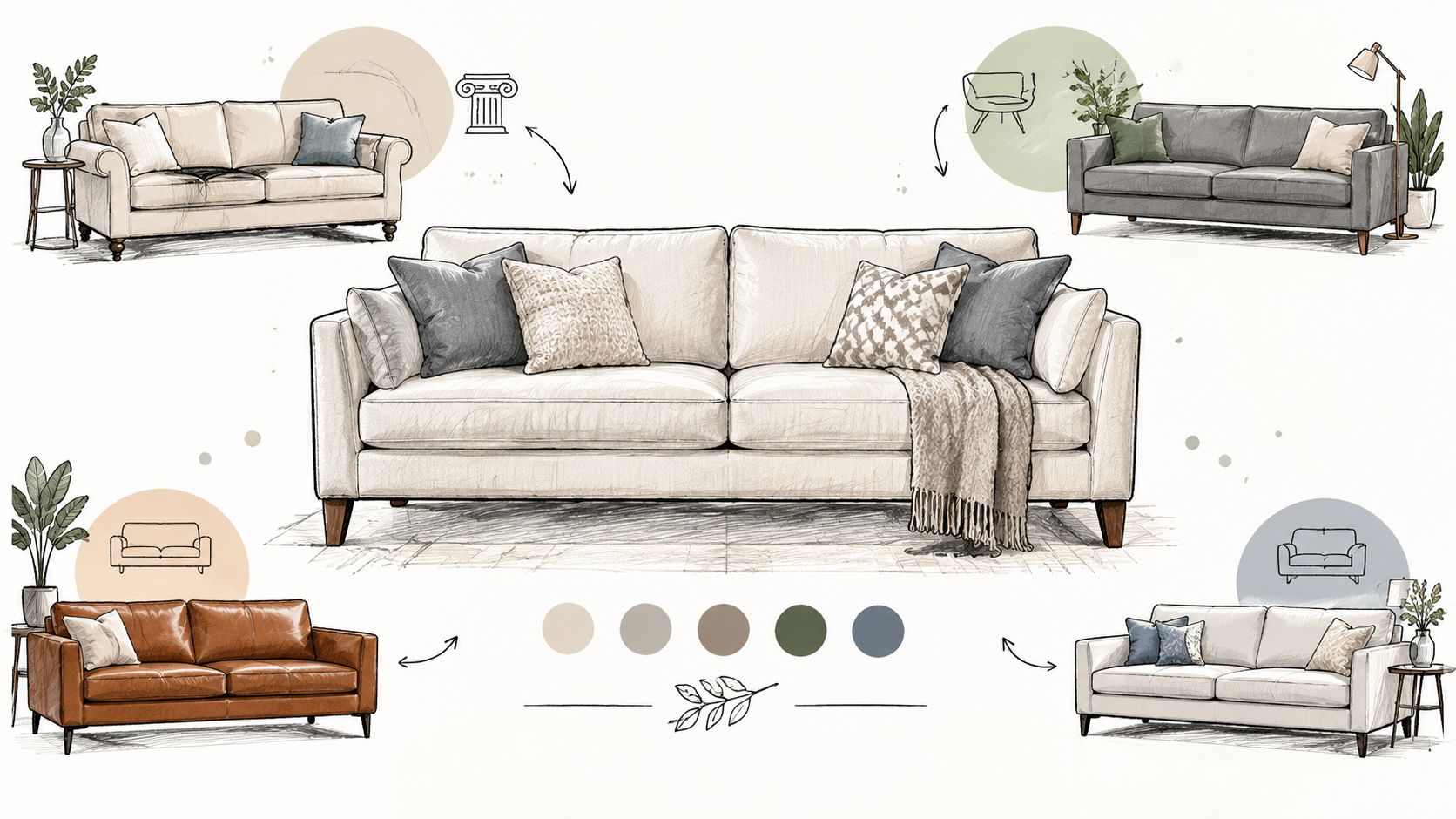
Transitional sofa styles deliberately bridge traditional craftsmanship and modern restraint. They borrow the upholstery, soft cushions, subtle welting, and familiar proportions of classic furniture, then simplify the arms, reduce ornament, and often expose the legs for a lighter visual effect.
That blend isn't a watered-down compromise. It's a useful design strategy for households that need one sofa to perform several jobs. The same frame may need to look composed during a holiday gathering, support upright conversation during a family visit, and remain comfortable for a long evening of reading or streaming.
Four decisions define the look
Silhouette comes first. A transitional sofa usually has clean geometry softened by curves, cushion edges, or a gently shaped back. It avoids the severe rectilinear profile associated with some contemporary seating, but it also avoids heavy carving, elaborate tufting, and excessive decorative trim.
Fabric controls the mood. Linen blends, textured woven upholstery, chenille, leather, and performance fabrics can all work. The strongest choices usually have visible texture or quiet dimension rather than a flat, anonymous surface. Neutral palettes remain useful, but mushroom, olive, taupe, warm brown, and muted blue can give the room more character without sacrificing flexibility.
Finish provides the traditional note. A tapered wood leg may look contemporary, while a turned walnut foot makes the same sofa feel more classic. Neither is automatically right. The finish should relate to nearby tables, flooring, cabinetry, and architectural details.
Scale keeps the balance honest. A sofa can be beautifully styled and still be wrong if its arms consume too much room or its seat forces people into a slouch. Transitional furniture succeeds because its proportions create visual calm across adjoining spaces. Industry design coverage describes this balance as modern restraint paired with traditional comfort, which is why these sofas often serve as long-term living room anchors. This guide to transitional decorating explores that relationship between restraint and comfort.
What it isn't
A contemporary sofa typically emphasizes current shape, sharp simplicity, or a strong architectural profile. A classic sofa leans more heavily on established traditional details, while an eclectic sofa intentionally combines contrasting periods, colors, or materials.
Transitional style is quieter. It creates connection instead of contrast. That makes it a strong choice for a room that opens into a kitchen, dining area, hallway, or foyer, where the sofa needs to coexist with several finishes at once.
For shoppers comparing this style with traditional furniture, this traditional-style couch guide can help clarify how much ornament and formality a room can handle.
Silhouettes, Arms, Legs, and Seat Depth
A transitional sofa succeeds or fails through physical details that shoppers often overlook. The label matters less than the relationship among the back, arms, legs, and seat.
Compare the major frame choices
Rolled arms bring softness and familiarity. They suit rooms with traditional trim, warm wood, or a relaxed cottage character, but broad rolls can eat into seating space in a smaller room.
Sloped arms offer a gentler transition between classic and contemporary. They're comfortable for leaning and tend to look less formal than a heavily rolled arm.
Track arms create a clean outline and preserve usable seating width. They're especially effective in apartments, condos, and open rooms where visual clutter needs to stay under control.
Shelter arms wrap slightly around the sitter and create a cocooning effect. They can be comfortable and handsome, but their broad shape needs breathing room.
Back style changes the experience just as much. A tight back looks neat and usually supports upright sitting, while a loose pillow-back feels softer and more casual. Semi-attached cushions often provide a practical middle ground, offering comfort without requiring constant adjustment.
Legs alter visual weight. Turned wood legs reinforce tradition, tapered wood legs lighten the frame, and metal legs introduce a more contemporary note. Higher legs make vacuuming easier and help a substantial sofa appear less bulky. Lower legs create a grounded, relaxed look but leave less cleaning access beneath the frame.
The most useful dimensional guidance is straightforward. Full-size transitional sofas commonly fall around 84 to 96 inches wide, while apartment-oriented versions often measure 72 to 84 inches. Seat height generally works best around 17 to 19 inches, with 20 to 23 inches of seat depth supporting upright comfort and 24 to 26 inches better suited to lounging. Main walkways typically need 30 to 36 inches of circulation space. This transitional furniture measurement guide connects those proportions to everyday room planning.
Practical rule: Under 36 inches of overall depth favors upright conversation, 38 to 42 inches supports lounging, and anything above 44 inches belongs in a larger room dedicated to sprawling relaxation.
| Feature | Options | Best For |
|---|---|---|
| Arm profile | Rolled, sloped, track, shelter | Matching formality, room width, and lounging habits |
| Back profile | Tight, semi-attached, loose pillow-back | Tailored rooms, mixed use, or casual comfort |
| Leg style | Turned wood, tapered wood, metal | Traditional warmth, visual lightness, or modern contrast |
| Seat depth | Under 36 inches, 38 to 42 inches, above 44 inches | Conversation, lounging, or spacious sprawl-out rooms |
| Overall width | 72 to 84 inches, 84 to 96 inches | Apartments, smaller rooms, or full-size living areas |
Before selecting a frame, shoppers should review these sofa and chair buying considerations, then sit in the actual piece long enough to notice whether the knees, lower back, and feet feel supported.
Why Transitional Sofas Are Quietly Changing in 2026
The beige-and-linen stereotype is no longer enough. Trend reporting for 2026 points toward comfort engineering, with modular layouts, lower profiles, deeper seats, curved forms, and customizable upholstery becoming central buyer priorities rather than niche details. Current living room furniture trend coverage reflects that movement toward furniture that adapts to changing household routines.
A modular transitional sectional may look like a structured sofa from the front, yet separate into pieces that can be rearranged. That matters in a family room used for movie nights, Sunday lunch, visiting relatives, and seasonal decorating. A chaise can add genuine lounging comfort in a condo without forcing the room into a visibly modern style.
Performance upholstery has also changed the conversation. Treated woven fabrics, performance bouclé, and other durable textiles allow households with children or pets to consider lighter colors and richer textures without treating the sofa as untouchable. Buyers should still ask about cleaning instructions, abrasion information, and care requirements. A performance label isn't a substitute for understanding how the fabric behaves in a real home.
Three shifts worth separating from passing fashion
| Shift | What Changed | Problem It Solves | Lasting or Fad |
|---|---|---|---|
| Modular transitional frames | Sectional flexibility now appears in more tailored silhouettes | Rearranging rooms and adapting to multiple uses | Lasting |
| Performance textures | More woven, bouclé, and treated upholstery options | Pets, children, spills, and everyday use | Lasting |
| Deeper, lower seating | Comfort priorities favor more room for lounging | Post-work relaxation and taller household members | Likely lasting, but room-dependent |
Sleeper mechanisms are another practical development. A transitional frame can conceal guest functionality without making the living room look like a dedicated pullout bed. That option suits homes where an office, den, or guest room must serve multiple purposes.
The fads are easier to identify. An extreme low profile can become uncomfortable for anyone who values easy standing. Oversized curves may consume circulation space, and a very deep seat can make a compact room feel crowded. Modular construction, performance fabric, and carefully chosen depth solve durable problems. A dramatic silhouette should earn its place through the room's architecture and daily use.
Pairing Transitional Sofas With Real Rooms
A transitional sofa should look as though it belongs to the house, not as though it arrived with a matching catalog page. Three regional room types show how the same design language can take different forms.
Coastal cottages near St. Simons or Fernandina Beach
A slipcovered track-arm sofa in performance linen keeps the room relaxed without slipping into theme-decor territory. Rolled cushion seats soften the outline, while a sea-glass palette works with pale floors, natural fibers, and coastal light.
A full-size sofa in the 84 to 96 inch range can anchor a larger cottage living room, provided the main walkway remains within the recommended 30 to 36 inch clearance. A rug should extend beneath the front legs rather than float as a small island in front of the sofa. Pair the sofa with one woven or lightly framed accent chair, not a matching pair that makes the room feel staged.
Warm-climate rooms benefit from breathable-looking textures and lower-contrast color. Linen blends and natural materials create ease, while olive, mushroom, taupe, or warm brown accents keep the space from becoming anonymous beige. For a more relaxed finish, these photo blanket styling tips offer useful guidance on draping and layering without making the sofa look cluttered.
Traditional brick ranches in Valdosta
A tight-back Lawson silhouette in textured chenille brings structure to a room with brick, crown molding, or established wood furniture. Turned walnut legs connect naturally to traditional casegoods, while a skirted ottoman adds softness without requiring a second upholstery pattern.
The sofa should face the room's primary focal point, with the ottoman positioned so it can serve as a footrest, tray surface, or flexible seat. A patterned accent chair can introduce movement, but its color should repeat one restrained tone from the rug or window treatments.
Modern farmhouse new builds outside Jacksonville
A low-profile modular sectional with wide bench cushions, exposed oak legs, and a washable bouclé slipcover gives an open-concept room the comfort it needs without abandoning transitional discipline. The sectional should define the living zone, not block the kitchen path or pinch the dining route.
A large rug can sit under the entire seating group when the room allows. In tighter layouts, placing the front legs on the rug still creates cohesion. This living room layout resource can help test traffic patterns before a sectional is ordered.
Before a showroom visit, a homeowner should check:
- Wall length: Measure the usable wall, excluding door and window trim.
- Entry route: Record foyer width, stair turns, elevator limits, and doorway height.
- Traffic paths: Mark the path between entry, kitchen, hallway, and outdoor access.
- Existing finishes: Photograph flooring, cabinetry, rugs, and nearby wood tones.
- Household needs: Note pets, children, preferred sitting posture, and lounging habits.
Customization and the Special Order Advantage
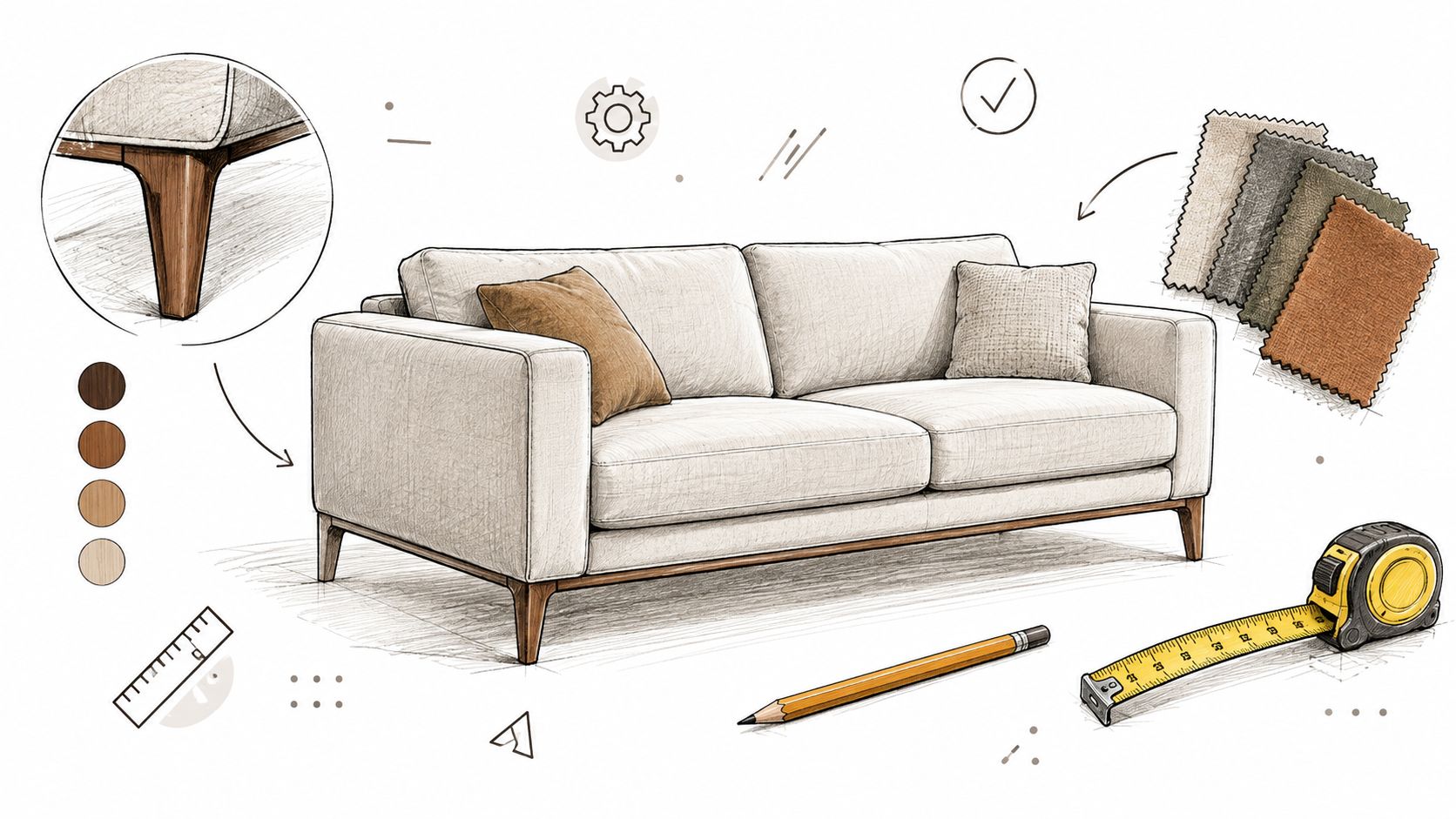
The Special Order process works best when the shopper makes decisions in the right sequence. Start with the frame, then refine the details that affect both appearance and daily comfort.
- Choose the frame style. Decide whether the room needs a Lawson, track-arm, roll-arm, modular, or sleeper-compatible foundation.
- Select the arm profile. Arm width affects seating capacity and the sofa's visual weight.
- Set the leg and wood finish. Match or intentionally contrast nearby tables, flooring, and cabinetry.
- Choose seat depth and comfort. Upright conversation and full lounging separate.
- Review the fabric grade. Consider texture, cleaning needs, pets, children, sunlight, and expected wear.
- Confirm the configuration. A fixed sofa, sectional, chaise, or sleeper must fit the room and delivery path.
Most furniture vendors support personalized designs involving fabric, leather, trim, wood finish, dimensions, and comfort-related construction choices. One custom furniture program describes nearly every item as customizable and lists over 1,600 fabrics, 125 leathers, 125 trims, and 45 wood finishes. Its customization and delivery preparation information illustrates the breadth that a Special Order conversation can include.
What deserves extra attention
Custom upholstery can require a 6 to 12 week lead time, depending on mill availability. Patterned fabrics cut on the bias, contrasting welt cords, and sleeper mechanisms can add complexity and time. Those choices should be made deliberately, not added at the end because the showroom sample looked attractive.
Some decisions can change later. Throws, pillows, and occasional tables are easy to replace. The frame, arm profile, seat depth, cushion construction, and upholstery commitment are made at order and should be tested carefully.
Investment-quality construction may include kiln-dried hardwood frames, eight-way hand-tied springs, and commercial-grade suspension. Those specifications don't guarantee that a sofa suits every sitter, but they provide a more serious foundation for long-term use than appearance alone.

White-glove delivery should also be part of the value calculation. Premium in-home service can include room-of-choice placement, unpacking, assembly or light installation, inspection, packaging removal, and a final customer review. Some delivery guidance specifies a minimum two-person crew and customer inspection before departure. This white-glove delivery overview outlines the difference between careful in-home placement and simple drop-off.
Lott's Furniture offers a Special Order Program, showroom guidance, and in-home delivery throughout South Georgia and North Florida. Its delivery standard includes a rigorous multi-point inspection before each piece reaches the customer, followed by white-glove placement and attention to the room.
For shoppers preparing for that process, this custom-order starting guide helps organize the decisions before an appointment.
Your Next Step From Inspiration to Sofa
The strongest sofa purchase combines digital preparation with physical testing. A shopper can begin online by browsing a digital catalog, using a style quiz to narrow the visual direction, and reviewing room-planning ideas before visiting a showroom. The online experience should reduce the number of choices, not replace the need to sit, lean, stretch, and stand in the actual frame.
Lott's Furniture's style quizzes help shoppers sort preferences such as Coastal Chic, Modern Farmhouse, and Timeless Traditional. The company also provides a Mattress Guide for shoppers working through comfort levels and support technologies, while in-store associates can assist with furniture design decisions. The mattress resource may address a different category, but the larger lesson applies to sofas too. Comfort needs a practical test, not a photograph.
A useful showroom appointment
Bring room photos, approximate measurements, and notes about traffic patterns. Pet details matter, especially if the household needs performance upholstery or a fabric that disguises everyday texture.
At the showroom, an associate can help the shopper:
- Test floor models: Compare tight backs, pillow backs, seat heights, and depths.
- Build a configuration: Determine whether a sofa, chaise, or modular sectional fits the room.
- Review swatches: Place fabrics beside clothing, flooring, wood tones, and existing rugs under showroom lighting.
- Plan delivery: Consider tight foyers, second-floor rooms, stair turns, and doorway access.
- Place a Special Order: Finalize the selected frame, fabric, finish, comfort level, and configuration.
The shopping path can move smoothly between Lott's digital catalog and showrooms in Fernandina Beach, FL, with local service across South Georgia and North Florida. Valdosta showrooms serve Lowndes, Berrien, Lanier, Brooks, and Cook counties, and appointments are available six days a week.
Brand choices can also support the evaluation process. La-Z-Boy and Smith Brothers offer routes into comfort and personalized upholstery, while Lexington, Stressless, and Hooker Furniture represent different approaches to refined living spaces. The right selection depends on the room, body comfort, fabric needs, and intended use rather than the name on the label.
A transitional sofa isn't a decor splurge. It's the household's primary comfort surface, the visual anchor that connects the room, and the piece most likely to expose a poor decision every day. A careful appointment turns that decision from guesswork into a measured plan.
For transitional sofa styles that combine design with practical comfort, visit Lott's Furniture to explore the digital catalog or schedule a showroom consultation. Bring room photos, measurements, traffic notes, and pet requirements so an associate can help shape a Special Order and coordinate white-glove delivery throughout South Georgia and North Florida.


