Save 50% Off MRSP on Lexington | Shop the Catalog >

Selecting Natural Wood Dining Tables: Your 2026 Guide


A family in a coastal North Florida home is gathering around a temporary dining table that wobbles whenever someone reaches for the serving bowl. The room deserves something better, a natural wood dining table with enough presence for holidays, enough resilience for weekday breakfasts, and a surface that becomes more personal with every shared meal.
That choice requires more than matching a stain to the floor. South Georgia and North Florida homes experience humid summers, air-conditioned interiors, and seasonal changes that can challenge solid wood. The right species, construction, finish, dimensions, and delivery plan all matter. Lott's Furniture helps homeowners move through those decisions with Customization, Expert Guidance, and Omnichannel Ease, combining online browsing with showroom testing in Fernandina Beach, FL and service across South Georgia and North Florida.
Introduction to Natural Wood Dining Tables
A natural wood dining table earns its place differently from disposable furniture. Its grain gives the room warmth, its weight creates visual stability, and its surface can carry the marks of family life without losing its character. A carefully selected table becomes an heirloom-quality centerpiece, not because it stays untouched, but because it can be maintained, repaired, and refreshed as the household changes.
The material deserves respect, especially in this region. Wood is hygroscopic, so it responds to moisture in the surrounding air. Humid conditions encourage expansion, while dry conditions encourage contraction. Those movements don't make a solid wood table a poor choice. They make construction quality, acclimation, finish selection, and household climate control important parts of the purchase.
Regional buying rule: A beautiful tabletop isn't enough. In South Georgia and North Florida, the table must also be built to accommodate seasonal movement.
A showroom visit gives shoppers a chance to examine the grain, feel the finish, test chair comfort, and judge scale in person. Online browsing adds convenience, while knowledgeable in-store associates can help narrow the choices through Style Quizzes, Interactive Style Guides, and the Mattress Guide for shoppers furnishing the rest of the home. The transition between the digital catalog and Lott's showrooms in Fernandina Beach, FL and Waycross, GA should feel continuous, not like starting over.
The following decisions provide a practical path. Homeowners can compare species, construction types, finishes, room layouts, and custom details before arranging white-glove delivery into the dining room.
Understanding Wood Species and Their Pros and Cons
Natural wood dining tables begin with species selection, but species isn't a complete durability rating. Grain direction, joinery, moisture content, finish quality, and everyday use all influence performance. The global wood furniture market was valued at USD 401.38 billion in 2025, and solid hardwoods accounted for 42.15% of market share in 2025, according to global wood furniture market data. Solid hardwood remains a substantial furniture choice, not a narrow specialty.
Matching grain and hardness to daily life
Oak is the dependable all-rounder. Its visible grain suits coastal, farmhouse, transitional, and traditional rooms, while its firm surface handles regular family use well. Maple has a quieter, more even appearance and a clean look that works in contemporary interiors. Walnut brings darker color, expressive grain, and a refined presence, making it a strong choice for formal dining rooms or spaces that need visual depth.
Cherry develops a warmer, richer appearance as it ages, so it suits homeowners who appreciate patina rather than strict color uniformity. Hickory has a lively grain and noticeable contrast, which gives a table a more rustic, collected personality. In a busy household, the decision should focus on how much visual movement the room can support and whether the finish will make everyday wear easy to live with.
Exact Janka hardness figures and fixed price tiers vary by lumber grade, mill, finish, and manufacturer. A responsible showroom consultation should therefore compare actual samples instead of presenting one universal ranking. For readers evaluating wood throughout the home, this guide to durable kitchen cabinet materials offers useful context on how material selection affects long-term furnishing decisions.
| Species | Janka Hardness | Grain Pattern | Typical Cost | Best For |
|---|---|---|---|---|
| Oak | Varies by oak type and grade | Open, pronounced grain | Mid-range relative to species and construction | Family dining and versatile interiors |
| Maple | Varies by maple type and grade | Fine, relatively even grain | Mid-range to premium | Clean, contemporary rooms |
| Walnut | Varies by grade and origin | Rich, flowing grain | Premium | Formal or design-led dining spaces |
| Cherry | Varies by grade and origin | Smooth grain with warm color | Mid-range to premium | Traditional rooms and evolving patina |
| Hickory | Varies by grade and origin | Bold, contrasting grain | Mid-range to premium | Rustic, farmhouse, and character-rich spaces |
A useful construction question is whether the lumber has been properly prepared before fabrication. Kiln-dried hardwood guidance helps shoppers understand why moisture preparation matters before a tabletop enters a conditioned home. Brands such as La-Z-Boy, Lexington, and Smith Brothers can serve different design directions, but the table should be judged by its actual materials, finish, joinery, and fit for the household.
Comparing Solid Engineered and Reclaimed Wood Options
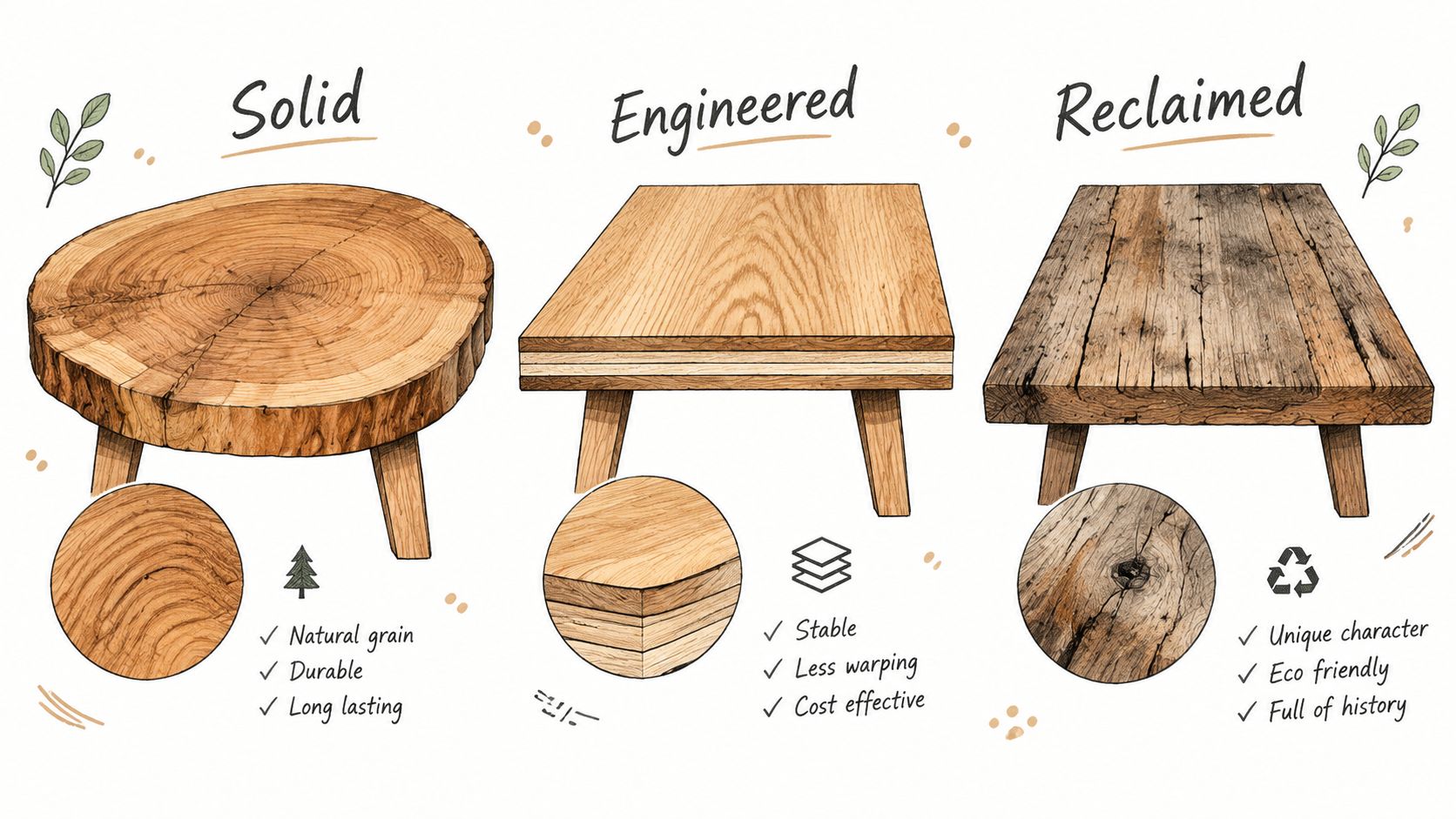
The best construction type depends on the buyer's priorities. Solid wood offers continuous material through the tabletop and gives future repair and refinishing more flexibility. Engineered wood can provide a more uniform surface and greater dimensional stability in some applications. Reclaimed wood contributes history, visible character, and a strong circular-economy appeal, but its irregularities are part of the package.
Solid wood for repairability and longevity
A solid tabletop is the clearest choice for homeowners who want investment-quality furniture with a long ownership horizon. It can show knots, mineral streaks, and natural variation, so two tables in the same species may not look identical. That individuality is a feature for shoppers building a curated sanctuary rather than a perfectly uniform showroom look.
Solid wood also moves with indoor conditions. Wide tops must be attached in a way that allows movement across the grain. Elongated screw slots, figure-eight fasteners, and properly designed breadboard ends help prevent rigid connections from concentrating stress in the tabletop. The construction details deserve as much attention as the species.
The global solid wood furniture market reached USD 5.513 billion in 2025, while unit demand exceeded 150 million in 2024, according to solid wood furniture market data. Those figures reflect sustained consumer interest in durable, premium, and eco-friendly furniture.
Engineered and reclaimed alternatives
Engineered wood can be sensible when a shopper prioritizes consistent appearance, manageable weight, or resistance to certain environmental shifts. Quality varies widely, so the buyer should ask what forms the core, how the veneer or surface is attached, and how edge damage can be addressed. It isn't automatically inferior, but it should be selected for the right use rather than mistaken for solid construction.
Reclaimed wood makes a stronger statement. Nail marks, varied boards, saw marks, and uneven color can create a table with genuine visual history. Buyers should ask about structural treatment, moisture preparation, surface sealing, and the source of the material. Sustainability depends on responsible sourcing and durable ownership, not solely on the word “reclaimed.”
Brands such as Hooker Furniture and Stressless may fit different furnishing needs, but the final decision should follow the table's construction and the household's expectations. Those seeking a distinctive, character-led piece can review reclaimed wood furniture before deciding whether visible variation suits the room.
Selecting Finishes and Maintenance Best Practices
Finish selection controls more than color. It affects how the grain reads, how easily the surface can be cleaned, and how practical future repair will be. Oil finishes tend to emphasize tactile grain and can be refreshed selectively, while lacquer and varnish create a more defined protective film. Water-based coatings can preserve a lighter appearance and reduce the ambering associated with some traditional finishes.
Choosing protection for the household
A dining table used for schoolwork, family meals, and entertaining needs a finish that matches its workload. A highly tactile finish may appeal to a design-conscious buyer, but a household expecting frequent spills may prefer a more protective surface. The showroom sample should be viewed under different angles and touched directly, because sheen changes how scratches, fingerprints, and grain variation appear.
Solid wood is sensitive to moisture variation. Industry guidance targets 6–8% moisture content for interior wood, as explained in wood moisture guidance. The table shouldn't be placed against a persistent heat source, in direct intense sunlight, or beside a vent that creates a concentrated dry or damp zone.
A practical care routine
- Daily protection: Use coasters, placemats, and trivets for hot serving pieces. Wipe spills promptly with a soft, slightly damp cloth.
- Routine cleaning: Use a mild, pH-neutral solution approved for the specific finish. Avoid abrasive pads and strong household chemicals.
- Seasonal observation: Look for small gaps, raised edges, or changes in alignment. Minor movement can be normal, while sudden or pronounced changes deserve professional attention.
- Climate awareness: A household hygrometer can help reveal large indoor swings. Stable conditions are more useful than trying to force a tabletop to remain perfectly static.
- Refinishing decisions: Repair isolated damage when the structure remains sound. Consider refinishing when the surface has widespread wear but the tabletop and base remain structurally strong.
For finish terminology and selection questions, understanding wood finishes gives shoppers a useful starting point. The strongest maintenance plan is simple: protect the surface, clean it gently, watch the room's conditions, and address damage before it spreads.
Planning Table Size Layout and Style Pairing
A dining table should fit the room before it fits the mood board. Measure the usable dining area, account for doors and walkways, and mark the proposed footprint with painter's tape. A table that looks graceful in a catalog can make a room feel cramped if chairs collide with walls, cabinetry, or traffic paths.
Building a comfortable footprint
Allow 24–30 inches of seating clearance around the table, then protect the main circulation routes with additional breathing room. The exact arrangement depends on chair depth, table shape, pedestal placement, and whether guests need to pass behind seated diners. Rectangular tables suit longer rooms, round tables improve conversation in compact areas, and oval profiles soften a formal layout without sacrificing useful seating length.
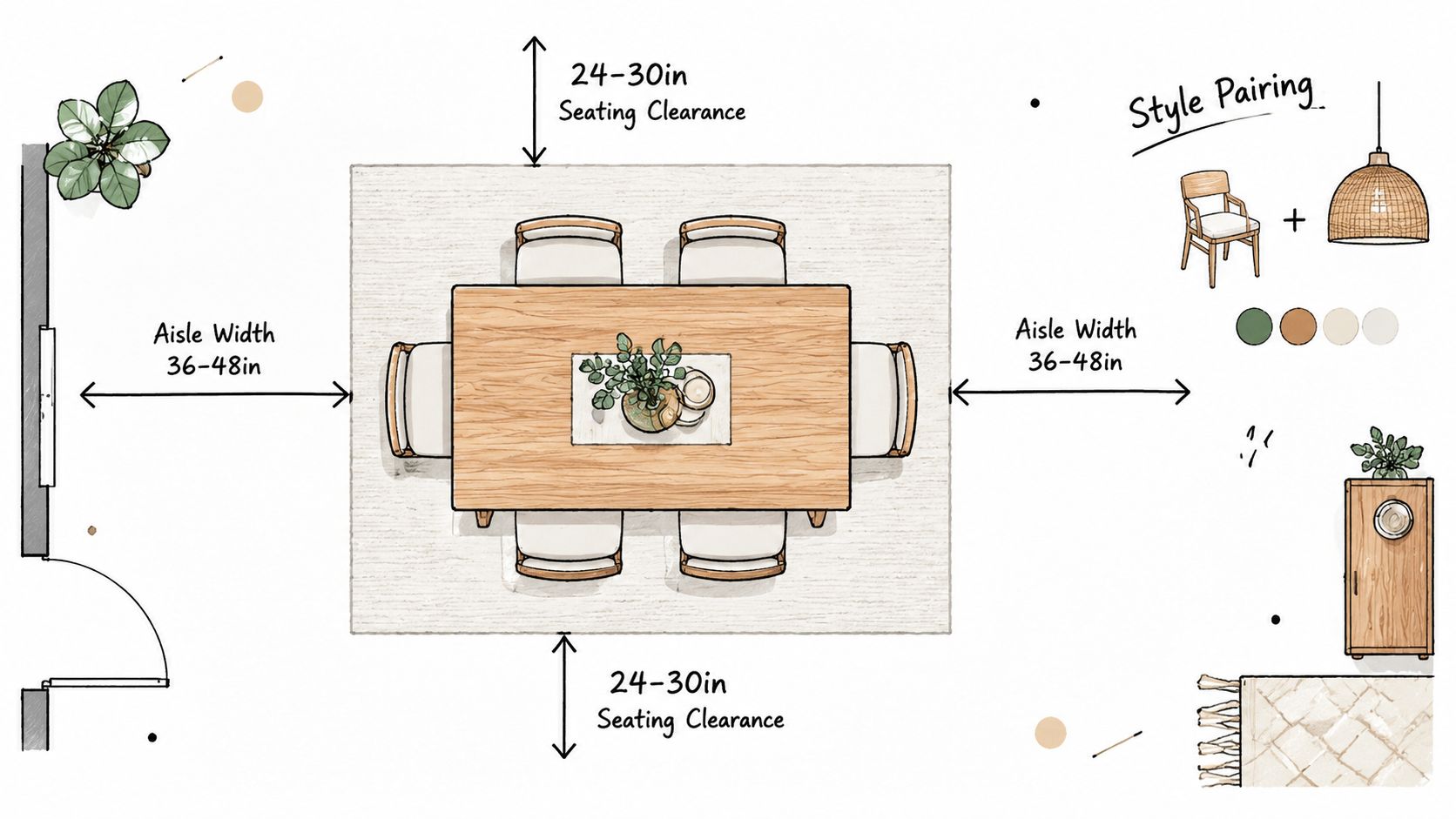
The table's base matters as much as its top. A central pedestal gives diners more leg flexibility, while corner legs can define seating positions and add architectural structure. Extension leaves are valuable for homeowners who need an intimate everyday arrangement and a larger setting for gatherings. An extension table from a brand such as Lexington can be paired with upholstered seating for a cohesive, welcoming room.
Coordinating wood, seating, and lighting
Wood tone doesn't need to match every other finish. It should relate to the room's overall temperature and contrast. Warm cherry can support traditional upholstery, walnut can anchor lighter walls and textured rugs, and oak can bridge painted cabinetry with woven or linen accents.
- Chair profile: Pair a visually substantial tabletop with chairs that have enough frame presence. A delicate chair can disappear beside a thick rustic top.
- Rug scale: Choose a rug large enough to keep chair legs supported when diners pull back. The rug should frame the table rather than stop abruptly at the tabletop edge.
- Lighting height: A pendant or chandelier should illuminate the grain without obstructing sightlines. A dimmer gives the household control over bright daily meals and softer evening gatherings.
- Room style: Coastal rooms benefit from lighter finishes and relaxed profiles, while traditional rooms can carry darker stains, turned details, or formal upholstery.
The dining table size guide can help organize measurements before a showroom visit. Associates can then test the planned dimensions against actual chairs and room proportions instead of relying on guesswork.
Customization Options and Budget Planning at Lott's
A natural wood dining table becomes more useful when its specifications fit the household rather than forcing the household to adapt. Lott's Special Order Program gives shoppers a path to personalize dimensions, wood finishes, edge profiles, table-leg shapes, and decorative details. Most vendors support some form of personalized design, including choices involving fabrics, finishes, comfort levels, and configuration.
Turning preferences into specifications
The process should begin with the room and the way the table will be used. A household that hosts large gatherings may prioritize extension capability, while a smaller coastal home may need a compact profile with softened edges. A homeowner who prefers visible character may select a more expressive grain, while another may want a calmer surface that supports artwork, linen, and lighting.
Custom ordering commonly involves several decision points:
- Choose the core piece: Start with the table shape, base, and construction.
- Select the finish: Compare stain depth, sheen, and how each option changes the grain.
- Refine the configuration: Adjust dimensions, extension features, edge treatment, or leg design.
- Coordinate the room: Match chairs, upholstery, and nearby case goods without demanding identical finishes.
- Confirm the order: Review specifications, pricing, production expectations, and delivery arrangements before approval.
Custom programs can also support banquette seating, with cushion firmness and upholstery choices suited to the room. Industry guidance describes special orders as a sequence in which shoppers select the core piece, choose fabrics or finishes, refine configuration details, and confirm pricing and timelines before production. Some furniture orders offer hundreds of fabric or leather options, as described in custom furniture ordering guidance.
Thinking in ownership value
The right budget conversation isn't only about the initial ticket. It includes construction, repairability, finish quality, delivery, and the years the table is expected to serve. Industry guidance places solid hardwood table longevity at 25–80 years, notes that refinishing may be appropriate every 15–20 years, and states that routine care can extend furniture life by over 30%. The same guidance says refinishing is often the stronger financial choice when its cost remains below 60% of replacement cost, as detailed in wood furniture care guidance.
That makes a well-specified table a value-focused investment, particularly for families that plan to stay in the home or pass furnishings forward. Associates can use Style Quizzes and Interactive Style Guides to clarify the design direction, while the Mattress Guide remains available for shoppers coordinating a broader home refresh.
Delivery Installation and Showroom Experience
A table isn't successfully purchased until it arrives safely, fits through the home, and sits correctly in the room. Lott's white-glove delivery standard includes inside delivery, unpacking, placement in the room of choice, assembly when required, packaging removal, and a final multi-point inspection before the crew leaves. This is the difference between convenient delivery and leaving a homeowner to manage a heavy, fragile centerpiece alone.
Testing before placing the order
The digital catalog is useful for reviewing silhouettes, finishes, and availability from home. A showroom visit in Fernandina Beach, FL or Waycross, GA adds the physical checks that matter for high-ticket furniture:
- View the wood in person. Lighting changes stain color and grain contrast.
- Run a hand across the finish. The surface should feel appropriate for the desired style and daily use.
- Test the chairs. Sit at the table, check knee clearance, and assess posture.
- Inspect the base. Confirm that the leg or pedestal arrangement supports comfortable seating.
- Ask about movement. Associates should explain how the top is attached and how seasonal change is accommodated.
The transition between online research and in-person evaluation should remain smooth. Omnichannel furniture shopping commonly blends the website as a research and purchase hub with showrooms as places where shoppers evaluate high-ticket pieces physically. Lott's associates can also support design decisions without pressure, using Style Quizzes and showroom experience to narrow the selection.
Preparing for in-home placement
Before delivery, clear the route from the entry to the dining room and protect fragile décor. Homeowners moving smaller pieces themselves can review practical advice on moving heavy furniture safely, but a substantial dining table should be handled by trained delivery professionals whenever possible.
The final inspection should verify the tabletop, finish, base, dimensions, and included components. The receiving process should confirm that the piece arrived undamaged and complete before the crew departs. Details about furniture delivery and assembly help homeowners understand what to expect from the in-home workflow.
Conclusion and Next Steps
The right natural wood dining table begins with a practical match between species, construction, finish, room size, and household habits. Solid wood offers lasting character and repair potential, while engineered and reclaimed options serve different priorities. Humidity management, thoughtful joinery, and careful delivery matter just as much as the visible grain.
Lott's Furniture brings the decision together through its Special Order Program, where shoppers can refine finishes, dimensions, and details. Expert Guidance comes through Style Quizzes, the Mattress Guide, Interactive Style Guides, and in-store associates. Omnichannel Ease connects the digital catalog with showrooms in Fernandina Beach, FL and Waycross, GA, serving homeowners throughout South Georgia and North Florida.
Lott's Furniture offers natural wood dining tables, custom ordering support, knowledgeable showroom assistance, and white-glove in-home delivery with inspection. Visit Lott's Furniture to explore the digital catalog, visit a Fernandina Beach or Waycross showroom, or book an online style consultation for a table suited to the home.