
Sectional Sofa Fabric: A Complete Guide to Choosing Yours


A homeowner in Lott's Waycross showroom holds two upholstery swatches side by side. One has a soft, nubby texture that feels inviting; the other is tightly woven and easier to imagine cleaning after a family dinner. The hard part isn't choosing what looks good today. It's picturing how each fabric will feel and look after years of everyday use.
Choosing sectional sofa fabric means balancing wear, spills, sunlight, comfort, and care. A useful decision starts with the household, not the biggest number on a sample card. The fabric should suit the room, the people and pets who use it, and the cleaning routine the owner can realistically follow.
Why the Right Sectional Sofa Fabric Matters
A sectional often becomes the room's landing place. Children stretch out after school, pets claim the chaise, and guests gather around a movie or a meal. In South Georgia and North Florida, sunlight, humidity, and frequent indoor-outdoor living can add their own demands. A fabric that works beautifully in a quiet formal room may not be the right match for a busy family space.
Three practical considerations help make the choice clearer:
- Daily wear: Sitting, shifting, and repeated use put friction on upholstery, especially at seat fronts, chaise edges, and favorite corners.
- Spills and sunlight: A fabric's ability to withstand abrasion doesn't establish how it will respond to stains, cleaning, or fading.
- Comfort and character: Texture, color, and hand-feel shape whether the sectional feels like a curated sanctuary or just a place to sit.
Those needs can pull in different directions. A highly textured fabric may bring warmth and visual depth, but raised loops could catch on claws or jewelry. A smooth, tightly woven surface may be easier to maintain, yet feel less plush than the homeowner wants. The right answer isn't the same for every household.
Practical rule: Choose for the toughest regular use the sectional will face, then make sure the fabric still feels good enough to live with every day.
Lott's Special Order Program gives shoppers a way to personalize the choice, with most vendors supporting options such as fabric, finishes, and comfort levels. That means the decision can account for household needs without treating style and comfort as afterthoughts. A visit to the showroom also lets shoppers compare swatches in person, while in-store associates can help with design choices and questions about construction and care.
A sectional is a substantial part of a home's daily life. Taking time to understand the fabric is more useful than choosing by color alone, because that small swatch represents a real combination of feel, maintenance, and wear.
Natural and Synthetic Fibers Explained
Fabric labels name the fibers, but the label alone doesn't tell the full story. A good first step is to understand the broad families, then ask how the fabric is woven and finished.
Natural fibers offer familiar qualities. Cotton is known for a soft, comfortable feel, while linen brings a light, relaxed look that suits coastal interiors. Wool adds depth and resilience. Leather is a premium upholstery option with different care and aging characteristics from woven fabric, so it's best considered separately from the fiber comparison.
Synthetic fibers are also a major part of today's sofa market. A 2025 market analysis reported that synthetic fabrics represented 39.8% of the sofa market by material segment, the largest share identified in that analysis (sofa-market material analysis). For a sectional, synthetic upholstery can include polyester, microfiber, nylon, acrylic, or blended constructions. Polyester and microfiber can offer strong abrasion resistance, while solution-dyed acrylic is often chosen for colorfastness in bright rooms, covered patios, and coastal settings.

Look beyond the fiber name
Fiber type is a starting point, not a verdict. A tightly woven natural-fiber blend may suit a home better than a loosely constructed synthetic fabric. Finishes can also change how upholstery feels, cleans, and holds its appearance.
Before choosing, ask what the full specification says:
- Composition: Which fibers are present, and are they blended?
- Construction: Is the weave tight, textured, or made with loops that could snag?
- Care: What cleaning code and maintenance instructions apply?
- Performance: What are the abrasion and colorfastness results, and what finish has been applied?
Touching the material matters. A shopper can compare a woven cotton with a performance microfiber and notice differences that a label can't convey. Lott's textured-upholstery selection offers another way to consider how surface character affects the look and feel of a room (textured upholstery fabrics).
The useful question isn't "Which fiber lasts longest?" It's "Does this fabric's construction and care fit the way this sectional will be used?"
Decoding Abrasion Ratings Without Getting Fooled
Abrasion tests help compare how fabrics stand up to repeated rubbing, but the result makes sense only when the shopper knows which test produced it. In North America, the commonly referenced method is Wyzenbeek under ASTM D4157. It rubs cotton duck back and forth across a fabric in the warp and filling directions, and reports the result in double rubs. One back-and-forth movement counts as a double rub (how Wyzenbeek results are recorded).
The Martindale method under ISO 12947 uses a figure-eight motion with worsted wool and reports abrasion cycles. Because the methods differ, their results aren't directly interchangeable. A Martindale cycle count shouldn't be read as if it were the same unit as a Wyzenbeek double-rub count (fabric-performance indicators).
For residential upholstery, roughly 9,000–15,000 Wyzenbeek double rubs is a practical benchmark for everyday living-room seating. Guidance also places about 20,000–30,000 Wyzenbeek double rubs in a medium-duty range and around 30,000–40,000 double rubs closer to heavy-duty use. For Martindale, roughly 15,000–30,000 cycles generally aligns with medium-duty residential upholstery, while 30,000–50,000 or more is associated with heavy-duty seating (abrasion guidance and test-method comparisons).

Read the result in context
The Association for Contract Textiles identifies 15,000 Wyzenbeek double rubs and 20,000 Martindale cycles as general contract benchmarks, and 30,000 Wyzenbeek double rubs and 40,000 Martindale cycles as high-traffic benchmarks. Its guidance also cautions that results above 100,000 Wyzenbeek double rubs haven't been shown to reliably indicate a longer fabric lifespan (textile quality standards).
That's why abrasion shouldn't be treated as a sofa-life guarantee. It doesn't independently predict staining, fading, pilling, seam performance, or resistance to sharp objects. Cushion compression, body oils, sunlight, pets, and cleaning practices can also affect how a sectional looks over time.
When reviewing a fabric specification, ask for the test method and result, not just a “heavy-duty” or “performance” label. Then examine the sample: raised loops and loose textures may snag even when the abrasion result is strong. Shoppers considering upholstery for pets can also review Lott's information about pet-friendly furniture, while weighing texture and care alongside the test figure.
Leather Versus Fabric for Sectional Sofas
Leather and fabric each bring a distinct feel to a sectional. Neither is automatically better. The more useful comparison asks how the material suits the room's climate, the household's habits, and the owner's preferred maintenance routine.
Full-grain and top-grain leather develop a patina that changes the look over time. That character appeals to some homeowners, while others prefer upholstery that keeps a more consistent, woven appearance. In coastal homes, temperature and humidity changes are worth discussing with the retailer, along with the maker's care advice for the specific leather. A wipeable surface may appeal to a vacation rental owner, but regular care still matters.
Fabric offers a broad range of colors, patterns, and textures, and it can feel warmer in a strongly air-conditioned room. It may also be more straightforward to reupholster than leather, depending on the sectional's construction and fabric availability. Prices vary across both categories, so a cost-per-year comparison needs actual purchase, care, and repair information rather than a general assumption.
| Factor | Leather | Fabric |
|---|---|---|
| Comfort | Smooth, with a distinct surface feel that changes as it ages. | Wide choice of textures, from crisp weaves to plush finishes. |
| Climate behavior | Ask how the specific leather responds to the home's temperature and humidity conditions. | Fiber, weave, backing, and finish all affect feel and performance in the room. |
| Maintenance | Follow the maker's instructions for routine care and conditioning. | Use the cleaning code and approved care method for the exact fabric. |
| Stain response | A wipeable surface can make some spills easier to address, but care guidance still matters. | Response depends on fiber, finish, texture, and the permitted cleaning chemistry. |
| Expected lifespan | Depends on leather quality, construction, use, and maintenance. | Depends on construction, wear, cleaning, and whether repair or reupholstery is practical. |
A Fernandina Beach vacation rental with frequent guest turnover may prioritize a surface that can be wiped clean. A family room in Waycross may be better served by a comfortable performance fabric that suits the household's spill risks and cleaning habits. The best choice is the one the owner can care for and enjoys seeing in the room.
The Hidden Trade-Off Behind Performance Fabric
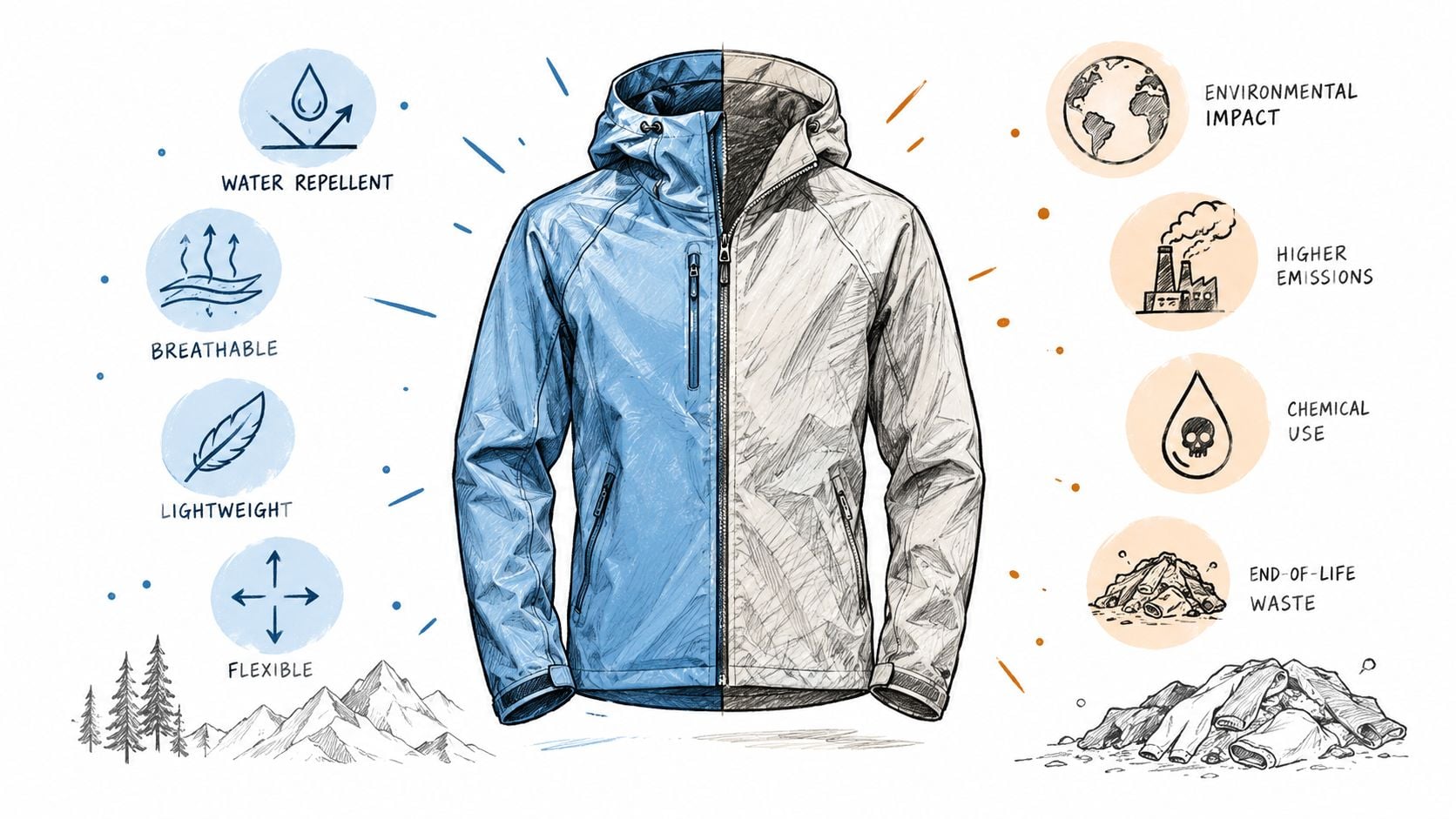
“Performance fabric” sounds like a simple promise: handle spills, stand up to daily use, and keep looking good. But the label doesn't tell a shopper which finish was applied, how the fabric should be cleaned, or what chemical information the manufacturer provides.
Some stain- and water-repellent treatments can involve PFAS, a class of persistent chemicals that may accumulate in people, animals, and the environment. Treated textiles and carpets may also contribute to higher indoor-air PFAS concentrations. That doesn't mean every performance fabric is unsafe. The specific fiber, finish, backing, foam, and ventilation all matter, so a shopper should ask about the actual product rather than assume every fabric in the category is the same.
Ask what the finish means
Three direct questions can make the conversation more useful:
- Was a finish intentionally applied? The answer helps clarify whether the fabric's spill response comes from its construction, an added treatment, or both.
- Is the treatment PFAS-free? Ask for confirmation about the specific fabric rather than a general description of the product line.
- Is chemical information available? Request a manufacturer disclosure or recognized emissions documentation.
OEKO-TEX STANDARD 100 is one textile-safety screening signal shoppers can ask about. It tests textile products and accessory materials against limits for substances that vary by intended use. The framework addresses chemicals including certain PFAS/PFCs, but certification does not establish abrasion resistance, stain resistance, or overall furniture durability (OEKO-TEX STANDARD 100 criteria).
Upholstered furniture can also be a source of formaldehyde emissions because textile and foam components may emit it. Furniture seat covers are identified as a lower contributor to overall indoor formaldehyde concentrations, so the practical response is to ask for product-specific information rather than assume that a single material determines the whole sofa's emissions (healthy-material considerations for furniture).
For a closer look at how materials and finishes differ, shoppers can read Lott's overview of what performance fabric is made of. A performance label is a starting point for questions, not a substitute for answers.
Cleaning Codes and a Maintenance Plan That Actually Works
A cleaning code tells the owner which cleaning chemistry is permitted. It doesn't rate abrasion resistance, and it doesn't promise that a fabric will resist every spill. Check the manufacturer's care label before treating a mark.
- W allows water-based cleaning.
- S permits solvent-based cleaning only.
- WS allows water- or solvent-based products.
- X means vacuum or lightly brush the fabric, without liquid or solvent cleaners.
Oversaturating upholstery can damage the backing. Rubbing a spill can push it deeper into the fabric or spread it, so blotting is the safer first response. Before using an approved cleaner on a visible mark, test it in an inconspicuous area and let the spot dry to check for discoloration or a water ring.
A manageable care rhythm
Think of upkeep as small habits rather than an emergency response. The schedule below is a practical starting point, but the furniture maker's care instructions take priority.
- Regularly: Vacuum loose debris and crumbs, especially between cushions and along seams.
- After spills: Blot promptly with a clean cloth, then follow the fabric's approved cleaning instructions.
- Periodically: Inspect high-use areas, cushion seams, and chaise edges for wear or loose threads.
- When needed: Ask a qualified upholstery cleaner whether the cleaning method suits the fabric's code and construction.
For homeowners deciding whether to bring in a professional, this guide to cleaning fabric sofas in Miami offers a useful example of the kinds of service details to discuss with a cleaner. Lott's at-home upholstered-sofa cleaning advice can also help owners understand routine care.
A sectional's construction matters as much as its surface. Lott's white-glove, in-home delivery includes a multi-point inspection before a piece reaches the customer. After delivery, the care label and cleaning code help the owner protect that investment with the right maintenance choices.
Designing a Custom Sectional Through Lott's Special Order Program
A fabric decision gets easier when it's tied to the room and the way the sectional will be used. A Lott's associate can help a shopper compare fabrics and leather, review care information, and consider how cushion firmness, arm style, or a wood finish affects the overall design. Most vendors support some level of personalization through the Special Order Program, including fabrics, finishes, and comfort choices.
The online Style Quizzes and Interactive Style Guides can help a shopper identify a direction such as Coastal Chic, Modern Farmhouse, or Timeless Traditional before visiting a showroom. The Mattress Guide is also available as a digital planning resource for comfort and support questions. In-store associates can then help with design decisions, and shoppers can move between the digital catalog and the Fernandina Beach showroom as they refine their choices.
A custom sectional is a long-term purchase for many households. Available consumer data indicates that just over one-third of consumers expect to replace a sofa within five to nine years, while roughly half expect to keep one for at least ten years. That makes care instructions and warranty limits important parts of the purchase, not details to leave until later (consumer sofa-replacement expectations).
For a household in South Georgia or North Florida, the decision can move from sample to specification: compare the material, verify its cleaning code and test information, then confirm the comfort and finish options. Lott's custom sofa options provide a starting point for exploring that process. Every piece also undergoes a rigorous multi-point inspection before white-glove, in-home delivery.
Your Next Step Toward a Sectional That Lasts
A homeowner choosing between two swatches doesn't need to predict every mark a sectional may collect. A sound decision comes from matching the fiber and construction to the household, treating abrasion as one useful signal rather than a verdict, and choosing a cleaning code the owner can follow.
Lott's Special Order Program can bring those choices together, from fabric and finish to comfort details. The multi-point inspection and white-glove, in-home delivery complete the experience for customers across South Georgia and North Florida.
Visit the Fernandina Beach or Waycross showroom to feel the swatches, or begin online with a Style Quiz and a browse through the digital catalog. In-store associates are available to help turn questions about pets, sunlight, spills, and comfort into a sectional that feels right at home.
Explore Lott's Furniture online or visit the Fernandina Beach or Waycross showroom to compare sectional fabrics and discuss custom options. The team can help with fabric selection, comfort details, and care questions, then arrange white-glove, in-home delivery after a multi-point inspection.


