Save 50% Off MRSP on Lexington | Shop the Catalog >

Pet Friendly Furniture Guide: Choosing Fabrics That Last


A dog settles onto the new sofa with muddy paws. A cat tests the arm with determined kneading. By evening, loose hair has worked into the weave, and a small accident has turned a beautiful purchase into a stressful cleanup project. Households across South Georgia and North Florida shouldn't have to choose between customized comfort and furniture that can handle real pet life.
Pet friendly furniture deserves a deliberate plan. The right choice considers fabric construction, documented abrasion testing, care codes, room layout, hidden pet functions, senior-pet access, and the service that protects the investment after purchase. With more than 78 years serving local households, Lott's Furniture connects custom ordering and big-brand expertise with the practical guidance families need.
Why Pet Friendly Furniture Deserves a Real Plan
In a pet household, the sofa becomes a nap zone, lookout, launch point, and sometimes the place where an accident happens before anyone reaches for a towel. Dogs wear down seat fronts and arms. Cats test seams and find loose threads. The right plan starts with those daily habits, not with a fabric swatch alone.
We have helped pet owners across South Georgia and North Florida match furniture to real household routines. Start with the animal, then assess the room. A kneading cat needs a tightly woven surface, while a senior dog may need easier access and upholstery with practical care requirements. A multi-pet home may benefit from modular seating and discreet storage. The room should still look like a room, not a display of pet gear.
The market reflects that broader demand. One forecast estimates the global pet furniture market at about USD 4.27 billion in 2026, with a projection of USD 5.71 billion by 2031 and a 5.98% CAGR. Beds and sofas represented 42.5% of the market in 2025, according to global pet furniture market reporting. Another forecast places the broader category at USD 3.7 billion in 2026 and projects USD 5.5 billion by 2033. The direction is clear: everyday lounging furniture deserves more attention than a separate pet bed alone.
Practical rule: Pet friendly furniture is a coordinated choice covering durability, cleanability, comfort, access, and appearance.
A helpful starting point is this guide to choosing kid-friendly and pet-friendly furniture. Then ask for verified abrasion testing, the fabric's care code, and custom ordering options that suit the room. We also recommend planning pet access from the beginning, including a lower seat height or a stable route for older animals.
Good design keeps the room's character intact while making daily cleanup, lounging, and movement easier. That is the standard we use in our showroom.
Reading Performance Fabric Specs Like a Pro
Fabric labels often sound reassuring, but labels alone don't tell the full story. Martindale and Wyzenbeek are the two common abrasion tests used to compare upholstery durability. Martindale measures resistance through repeated rubbing cycles, while Wyzenbeek reports wear through double rubs. The test method matters because a number has meaning only alongside the method used to produce it.
For ordinary residential use, a practical specification is at least 30,000 rubs. Heavy residential or commercial settings should look for 50,000 or more, with the result verified through Martindale- or Wyzenbeek-style testing, as outlined in pet-friendly upholstery durability guidance. Consumer furniture guidance commonly treats 15,000 double rubs as appropriate for light residential use and 30,000 or more as a higher-use target, while pet-focused recommendations may reach 50,000 to 100,000 or more for heavier wear, according to performance fabric buying guidance.

Five questions to ask before ordering
Request the test certificate. A salesperson should be able to provide documentation, not just a “pet-friendly” label.
Confirm the measured rub count. Record the actual result and compare it with the expected use in the home.
Verify the test method. Ask whether the figure comes from Martindale or Wyzenbeek testing. Don't compare the figures as if they were identical measurements.
Check for a stain-release finish. Abrasion resistance helps with wear, but it doesn't automatically prevent moisture or spills from penetrating.
Ask for stain data. Specifically ask how the fabric performs against common spills such as oil, coffee, and wine.
Residential upholstery commonly measures around 15,000 to 25,000 double rubs, while contract or performance grades often exceed 50,000 to 100,000 double rubs, according to industry coverage of performance fabric benchmarks. That same coverage notes that performance fabrics moved from a specialty upgrade into a frequently requested residential category, partly because owners want resistance to claw snags, easier hair removal, and moisture management.
Lott's Special Order Program gives shoppers a practical way to review those choices rather than settle for the fabric shown on a floor model. Most vendors support personalized designs, including upholstery, finishes, comfort levels, cushion firmness, arm styles, and wood finishes. Associates can help compare performance fabric options from brands such as La-Z-Boy and Smith Brothers, including broad libraries of textures and colors. More detail is available in this performance fabrics for upholstery guide.
Best Materials and Fabrics for Homes With Pets
A sofa can look perfect in the showroom and still struggle in a busy pet home. Start with the animal's habits and the household's cleaning routine. Dense construction gives claws fewer openings to catch, while smooth surfaces usually release hair more easily. Leather, microfiber, canvas, denim, and tightly woven upholstery remain practical choices because they help limit snags and simplify cleanup, as summarized in pet-friendly reupholstery fabric guidance.
| Material | Claw Resistance | Hair Removal | Stain Behavior | Best For |
|---|---|---|---|---|
| Leather | Good against routine wear, though claws can mark the surface | Very easy to wipe or vacuum | Spills generally stay easier to address on the surface | Homes wanting a polished, classic look |
| Microfiber | Dense surface helps limit snagging | Usually easy with a cloth or vacuum | Often practical for spot cleaning, subject to the care code | Shedding dogs and active family rooms |
| Canvas | Firm, sturdy construction | Moderate to easy, depending on texture | Practical when treated, but verify finish and care instructions | Casual rooms and hardworking seating |
| Denim | Dense weave limits loose-thread problems | Generally manageable with vacuuming | Requires attention to finish and cleaning code | Relaxed, layered interiors |
| Tightly woven performance fabric | Strong choice when testing and cleanability are documented | Often easier than open-texture upholstery | Stain-release options can improve response time | Multi-pet homes and frequent-use sofas |
| Dense upholstery | Depends on fiber and weave, but usually offers better snag control than loose textures | Varies, with surface texture playing a major role | Must be evaluated by care code and finish | Owners balancing comfort with practical maintenance |
Match the surface to the animal
Cats that knead: Avoid loose, open textures and prominent loops. A smooth, tightly woven surface gives claws fewer places to catch.
Heavy shedders: Favor upholstery where hair stays near the surface. A slightly damp microfiber cloth or rubber glove can loosen hair before vacuuming.
Dogs prone to accidents: Prioritize verified cleanability and documented stain performance. A durable fabric still needs the correct response when moisture reaches the cushion.
Senior dogs: Choose upholstery as part of a larger access plan. The surface cannot compensate for a sofa that requires difficult jumping.
Performance fabrics became a standard residential request because they pair a polished appearance with useful daily performance. The category gained momentum after performance-fabric manufacturers introduced upholstery designed for stain resistance and routine durability, according to reporting on the development of performance fabrics. For homes with pets, that means evaluating the full material system, including the weave, finish, seams, cushions, and frame.
Construction matters as much as the face fabric. Readers who want a closer look at upholstery components and stitch-related considerations can review B-Sew Inn's sewing guide for background on thread and needle selection. Our recommendation is straightforward: ask how the fabric, seams, cushions, and frame work together before approving a custom order. A stain-resistant surface cannot fix a design that does not suit the household.
Before choosing a swatch, review stain-resistant upholstery fabric options and ask how each material responds to the home's actual pressures. Leather makes sense for easy wiping, microfiber helps with hair management, and a documented performance weave suits a busy room with several animals. At Lott's Furniture, we use those practical questions to narrow custom choices instead of steering shoppers toward a single material.
Designing a Pet-Friendly Room That Still Looks Grown-Up
Pet friendly furniture shouldn't make a room look like a kennel or a pet supply aisle. The strongest design treats pet needs as part of the floor plan, just as it treats lighting, storage, and seating. Durability matters, but so do sightlines, movement, scale, and the visual calm that makes a home feel like a curated sanctuary.
Start with the places pets already use. Seat fronts, outside arms, corners, and the approach to a favorite cushion receive repeated contact. Place furniture so pet traffic doesn't force animals through narrow gaps, and avoid creating a jump from a high surface directly onto a slippery floor. A stable arrangement can reduce both wear and unnecessary strain.
Hide the function, keep the style
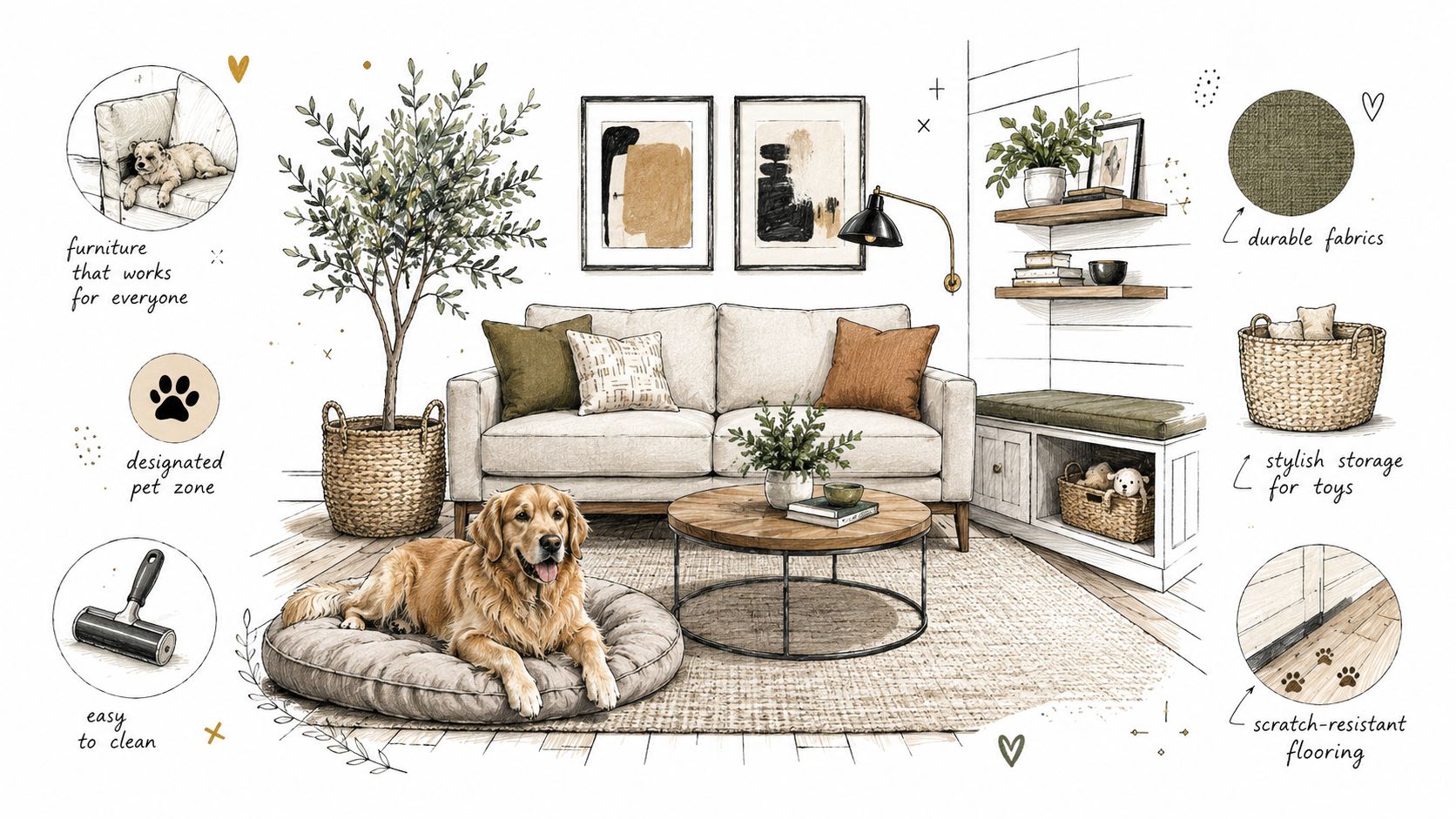
Pet integration is where many furniture guides stop too early. The question isn't only whether a sofa survives claws. It's whether the home can provide pet function without announcing it visually.
Cat caves in side tables create a retreat while preserving the room's furniture language.
Litter cabinets disguised as accent tables give cats a practical zone without making litter equipment the focal point.
Multifunctional storage can hold toys, leashes, cleaning supplies, and throws while maintaining a polished exterior.
Modular seating can adapt when a household adds another animal, changes rooms, or needs a dedicated lounging area.
This approach works particularly well in apartments, smaller homes, and rooms that serve several purposes. Vertical design can free floor space, while integrated zones give pets predictable places to rest instead of encouraging them to claim every cushion.
Design for aging and multi-pet households
Senior-pet planning deserves the same attention as upholstery testing. Ramps and raised access can reduce the need for difficult jumps, while supportive seating arrangements can make it easier for an older animal to move between rest, water, and household activity. Readers researching practical mobility aids for dogs can use those ideas alongside furniture placement, not as an afterthought.
Multi-pet homes benefit from clear zones. A dog may prefer a low, open bed near the family, while a cat may need raised retreat space. Modular pieces, washable accent layers, and furniture with concealed storage help the room accommodate different behaviors without visual clutter.
Lott's Style Quizzes and Interactive Style Guides help homeowners layer these decisions into a preferred look, whether that look is Coastal Chic, Modern Farmhouse, or Timeless Traditional. In-store associates can also help evaluate scale, finish, and comfort so pet accommodations feel intentional rather than improvised.
Cleaning and Maintenance Routines That Extend Fabric Life
A good maintenance routine starts with the correct tool and the correct direction. For pet hair, use a slightly damp microfiber cloth or a rubber glove to reduce static and lift hair from the surface. Follow with a lint roller or upholstery vacuum, using consistent strokes instead of scrubbing, especially on nap-sensitive materials such as velvet.
The care code determines what happens next. W generally indicates water-based cleaning, S calls for solvent-based cleaning, W-S permits either water- or solvent-based products, and X typically limits care to vacuuming or professional methods. These codes aren't decorative labels. Over-wetting a solvent-only or vacuum-only fabric can cause watermarking, finish damage, or a repair problem that a careful spot treatment would have avoided.
A safer response to accidents
Blot first. Press a clean absorbent cloth into the affected area to lift moisture without spreading it across the surface. Rubbing drives the mess deeper and can roughen the fibers.
Enzyme cleaners are useful for pet accidents because they target odor-causing residues rather than merely covering the smell. Apply a product appropriate for the upholstery's care code, then allow enough dwell time for it to penetrate the depth of the spill before drying. Skipping that dwell time often leaves residue below the surface, where odor can return.
Canes Cleaners provides additional upholstery care advice that can help homeowners think through product selection and professional-care situations. Furniture-specific care instructions should always take priority, particularly for delicate finishes, solvent-only upholstery, and cushions with complex construction.
Build a simple rhythm
After visible messes: Blot spills promptly, remove loose hair, and follow the care code before applying any cleaner.
Weekly: Vacuum seating, seams, crevices, and the floor around the furniture. Use a suitable attachment rather than dragging a harsh nozzle across the fabric.
Monthly: Inspect seat fronts, arms, cushion edges, and favorite pet zones for early wear. Address loose threads or developing stains before they become larger problems.
Seasonally: Revisit the room layout, pet access, and protective layers. A growing pet, aging animal, or new household routine may require a different arrangement.
For more detailed guidance, consult how to clean performance fabric. The main principle is consistent: cleaning works best when the homeowner responds early, uses the fabric's approved method, and avoids aggressive moisture or friction.
Your Pet Friendly Furniture Buying Checklist and Next Steps
A durable sofa is only one part of the decision. Before ordering, the household should be able to answer these questions clearly:
Testing: Is the abrasion result documented, and does it meet the intended use?
Method: Is the result reported through Martindale or Wyzenbeek testing?
Cleaning: Does the care code match the cleaning routine the household can realistically follow?
Material: Will the surface handle claws, hair, moisture, and daily wear from the specific pets in the home?
Layout: Have seat fronts, arms, pathways, and favorite resting zones been considered?
Access: Can senior pets reach their resting areas without difficult jumps?
Appearance: Do hidden pet functions, storage, and finishes support the room's established style?
A useful starting point is this guide to sofas for pet owners, followed by a conversation about the actual room and animals. Most vendors in Lott's Special Order Program support personalized designs, including fabrics, finishes, cushion firmness, arm styles, and wood finishes. That makes it possible to specify performance upholstery without giving up the well-fitted proportions or heirloom-quality details that define a well-furnished home.
Brands including La-Z-Boy, Smith Brothers, Stressless, and Hooker Furniture offer different approaches to comfort, construction, and finish. Associates can help shoppers compare those options, use the Style Quizzes and Interactive Style Guides, or consult the Mattress Guide when a complete home furnishing project also includes sleep comfort.
The shopping path stays flexible. A homeowner can browse the digital catalog online, then visit the showrooms in Waycross, GA, or Fernandina Beach, FL, to sit, touch, and compare pieces with knowledgeable associates. Every order also receives a rigorous multi-point inspection before Lott's white-glove, in-home delivery team places the furniture in the room of choice.
Visit Lott's Furniture in Waycross or Fernandina Beach to compare pet-friendly fabrics, seating comfort, and custom-order finishes with knowledgeable associates. Homeowners across South Georgia and North Florida can also begin with an online style consultation, then move from the digital catalog to a showroom decision and convenient white-glove delivery.