Performance Fabrics for Upholstery: Performance Fabrics for


A new sofa should feel like a relief, not a risk. But most of us know that first nervous week after delivery. Someone sets down a coffee mug without a coaster. A dog hops up after a rainy walk. A child appears with grape juice and very good intentions.
That tension is exactly why more homeowners are asking about performance fabrics for upholstery. They want a room that still feels polished and welcoming, but they also want to sit down and live in it. For families in South Georgia and North Florida, that question gets even more practical. Sun, humidity, sandy feet, pets, and frequent guests can all test a fabric faster than a showroom moment ever will.
We've spent decades helping neighbors sort through that decision with a mix of small-town service and big-brand expertise. We've seen the difference a smart fabric choice can make, especially when a piece is meant to stay beautiful through everyday use, not just special occasions. If you're comparing an investment-quality sectional from La-Z-Boy, a finely crafted sofa from Smith Brothers, or a coastal look from Lexington, the fabric deserves as much attention as the frame and cushions.
A good performance fabric isn't magic. It's engineering, testing, and thoughtful construction. Once you understand how it works, the price difference makes more sense, and so does the long-term value.
Table of Contents
- Welcome to Worry-Free Living with Performance Fabrics
- What Makes a Fabric a Performance Fabric
- Decoding Durability Understanding Fabric Ratings
- A Guide to Common Performance Fabric Types
- How to Choose the Right Fabric for Your Lifestyle
- Caring for Your Investment-Quality Upholstery
- Your Performance Fabric Questions Answered
Welcome to Worry-Free Living with Performance Fabrics
A neighbor recently told us she loved her new living room for exactly three days. On the fourth day, a guest tilted a glass, the dog claimed a corner cushion, and suddenly that beautiful sofa felt more like a museum piece than a place to relax. That's a familiar story.
Performance fabrics changed that feeling for many households. They let you choose a sofa for how you live, not for an imaginary version of your home where nobody spills, nobody sheds, and nobody sits in the same seat every evening. That matters if your living room is the true center of the house, or if you're furnishing a vacation property that needs to handle guests without becoming high-maintenance.
We think of performance upholstery as a practical form of comfort. It protects the look of a room, but it also protects your peace of mind. If you're still sorting through sofa shapes, seat depths, and fabric families, our sofa buying guide for your living room is a helpful companion to this conversation.
A beautiful home isn't one you're afraid to use. It's one that keeps its character through real life.
That's why so many shoppers now ask about cleanability and wear right alongside color, silhouette, and cushion feel. The smartest choice usually isn't the flashiest fabric on the hanger. It's the one that keeps looking neat after movie nights, weekend guests, and everyday family routines.
What Makes a Fabric a Performance Fabric
The phrase gets used often, so it helps to pin down what it means. A performance fabric earns that label through construction, fiber choice, and finishing details that make it more durable and easier to live with than a standard decorative textile.
Why this category became so popular
The market moved this way because homeowners asked for it. Sailrite notes that the furniture industry has shifted toward cleanable comfort, with brands such as Revolution, Sunbrella, and Crypton becoming widely recognized because cleanability and durability are now essential for active households with children and pets, not niche upgrades (Sailrite on performance fabrics).
That shift explains why today's upholstered furniture feels different from older generations of “formal” furniture. The goal isn't just to make a fabric attractive on the showroom floor. The goal is to help it hold color, resist wear, and recover from routine messes with less drama.
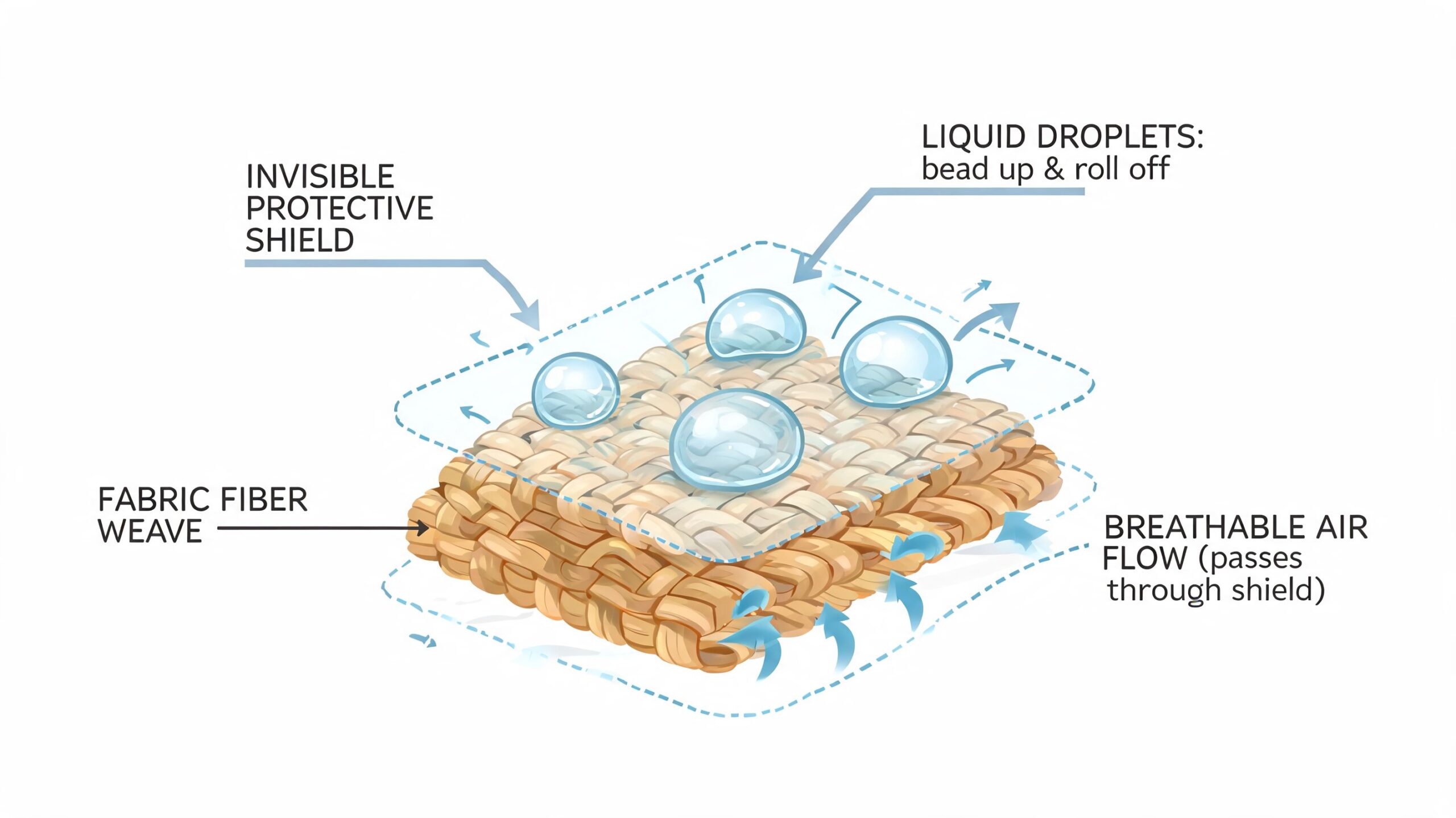
The technology behind the label
Several features tend to show up again and again in performance fabrics for upholstery:
- Solution-dyed fibers help color stay vibrant because the color is built into the fiber, not just added to the surface.
- Tight construction helps prevent snagging, pulling, and premature wear.
- Moisture resistance can keep a spill from soaking in as quickly.
- Higher abrasion resistance helps the fabric stand up to repeated use.
Sailrite also describes performance fabrics as commonly using solution-dyed synthetic fibers for strong color, UV resistance, resistance to moisture, mold, and mildew, plus high abrasion resistance for durability. That combination is a big reason these fabrics moved from specialty use into mainstream upholstery.
Here's the plain-language version. A standard fabric may look wonderful on day one but show stress sooner if your home is busy. A performance fabric is built to slow down the usual trouble spots. Surface wear. Fading. Snags. Stains that settle too fast.
Practical rule: If a fabric's main selling point is only how soft it feels in your hand, keep asking questions. Good upholstery has to survive friction, movement, and cleaning, not just pass a touch test.
That's where expert guidance matters. Our in-store associates can help you compare fabrics beyond color alone, and many shoppers like to browse our digital catalog first, then use the showroom visit to narrow the field by feel. If you want a stronger starting point, our guide to what to look for in your new sofa or chair pairs well with this fabric conversation.
Decoding Durability Understanding Fabric Ratings
Fabric specs can look intimidating at first. They're full of terms that sound technical, but once you translate them into everyday use, they become useful shopping tools instead of background noise.
What double rubs actually tell you
One of the most common durability measures is abrasion resistance, shown as double rubs. Kvadrat's upholstery guidance places light-duty fabrics at about 10,000 to 15,000 double rubs, medium-duty at 15,000 to 30,000, and heavy-duty at 30,000 to 50,000+, with heavy-duty options recommended for commercial seating, hospitality, and public spaces (Kvadrat fabric performance indicators).
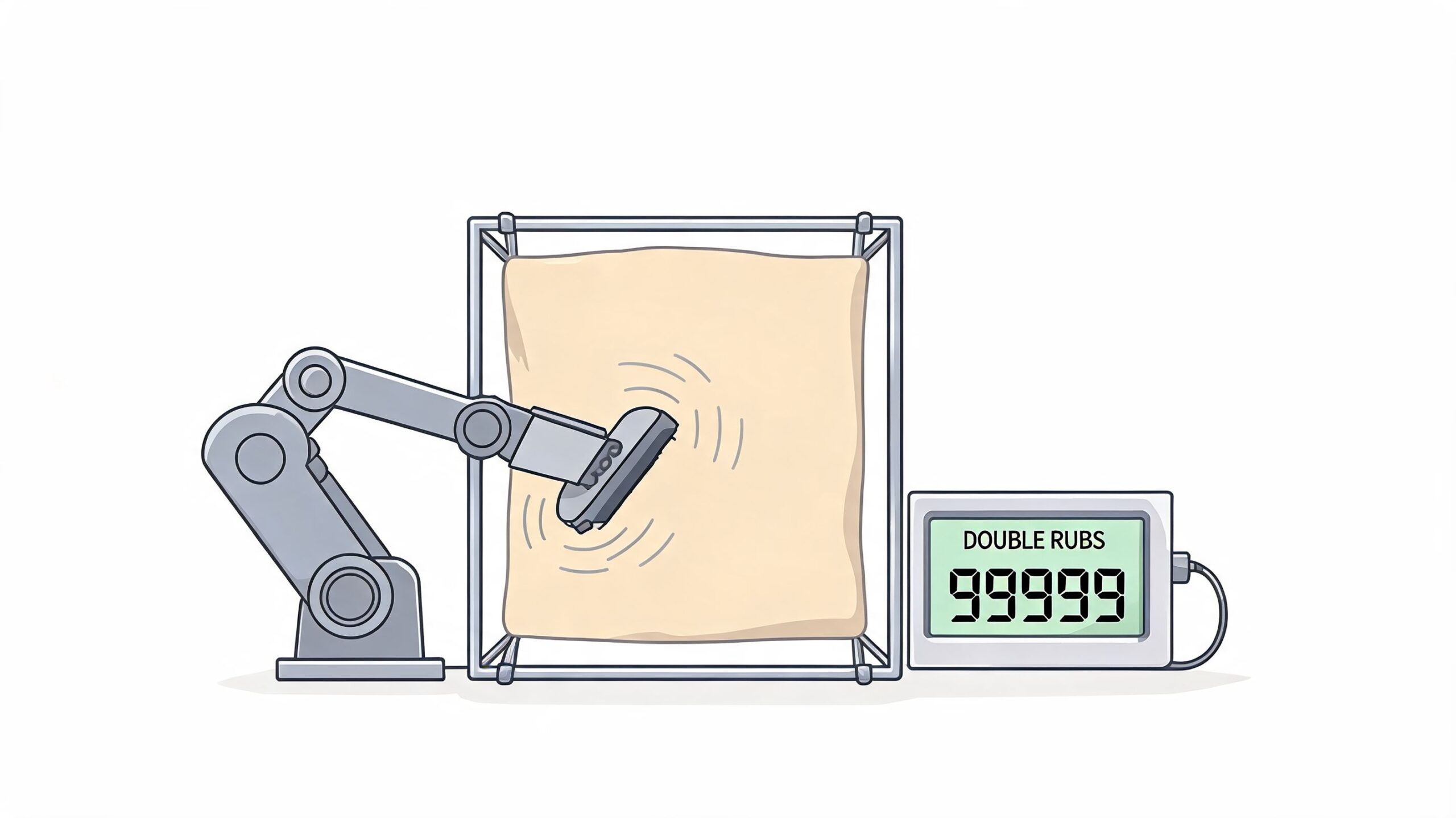
Think of double rubs as a wear test. It doesn't predict every real-life condition, but it does tell you whether a fabric is meant for an occasional chair in a quiet room or a sofa that gets used morning and night.
A simple way to apply it:
- Light-duty range works better for pieces that are seen more than sat on.
- Medium-duty range suits many family rooms and bedrooms.
- Heavy-duty range is the range most shoppers should pay attention to for the main sofa, sectional, or dining chairs that get daily use.
If you're comparing upholstered pieces online and the descriptions start to blur together, our guide to reading furniture product descriptions with confidence can help you sort out what matters.
Why pilling ratings matter too
Abrasion gets the spotlight, but appearance retention matters just as much. Kvadrat also notes that ACT guidelines recommend a minimum pilling rating of 3 for contract textiles, while a 4 to 5 rating is preferred for high-traffic applications to help preserve appearance over time.
That matters because homeowners don't just complain when a fabric tears. More often, they notice that it starts to look tired. Pills form. The seat edge fuzzes. The upholstery loses that precise, crisp appearance that made the piece feel special in the first place.
If your living room sofa is the most-used seat in the house, don't shop it like an accent chair. Treat it like a workhorse and read the rating sheet accordingly.
A strong frame and good cushions still matter, of course. But if the fabric isn't suited to the traffic it will face, the furniture can look older before its structure wears out. For a value-focused buyer, that's where long-term wisdom starts. Not by chasing the lowest upfront number, but by choosing a textile that keeps the piece presentable for longer.
A Guide to Common Performance Fabric Types
Not all performance fabrics behave the same way. Some are chosen for softness. Some are chosen for sun exposure. Others are selected because they help busy households clean up quickly and move on.
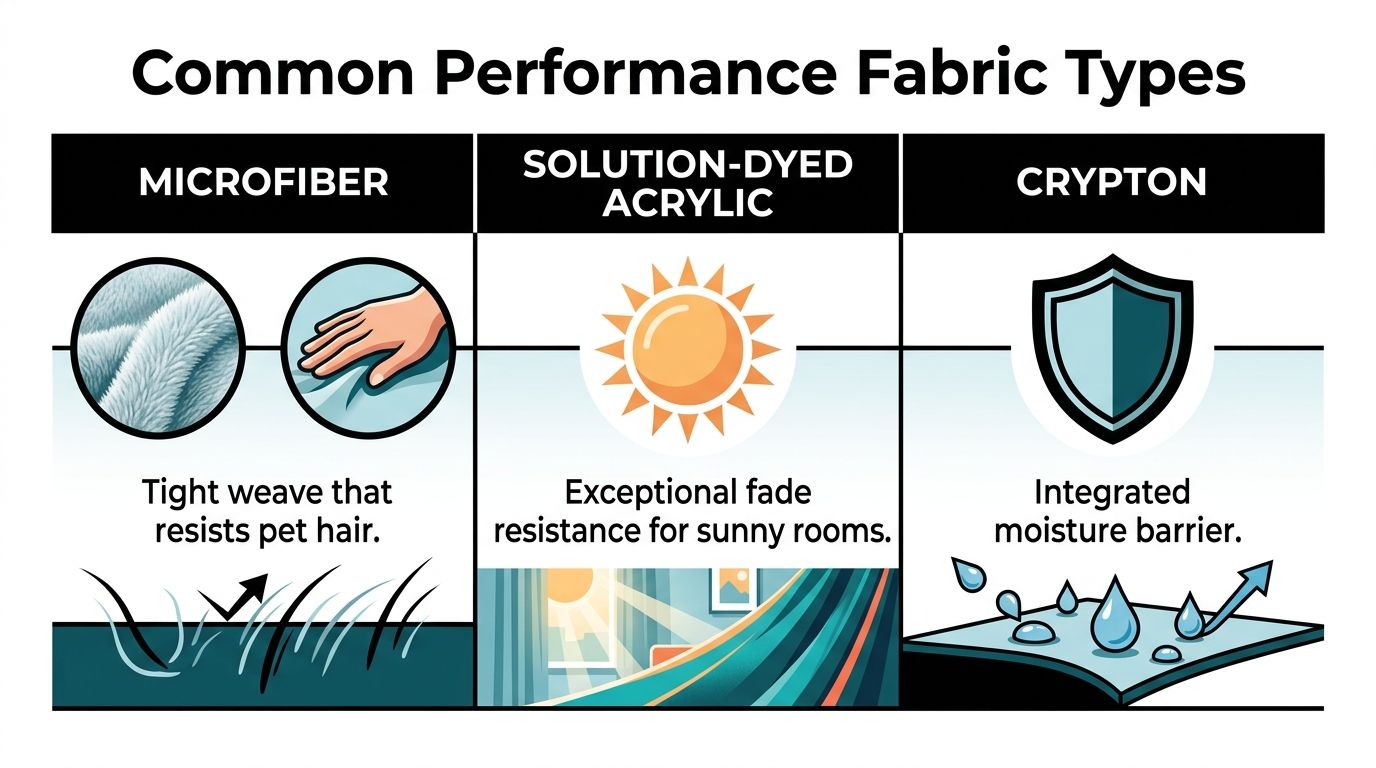
How the main categories differ
Microfiber is often a favorite for families because it has a soft hand and a tight structure. It tends to be approachable, comfortable, and less fussy in everyday spaces. Pet owners often like it because loose hair doesn't bury itself into the fabric as easily as it can in some textured weaves.
Solution-dyed acrylic is the fabric people often appreciate in brighter rooms. If your sofa sits near large windows, a sunroom, or a coastal setting with strong daylight, this category deserves attention because color stability is one of its defining strengths.
Crypton and similar engineered fabrics are often chosen when spill protection is high on the priority list. They're popular for family seating, dining banquettes, and other areas where moisture and accidents are part of normal life.
Modern polyester blends can be an excellent middle ground. They often balance softness, durability, and design flexibility well, which is one reason they show up in many current upholstery lines.
Treated natural-fiber looks appeal to shoppers who want a more relaxed, textured, or linen-inspired appearance without giving up as much everyday practicality. The key is checking the specific construction rather than assuming every “natural look” fabric performs the same way.
Schumacher's upholstery guidance notes that about 30,000 double rubs or more is a widely cited benchmark for high-traffic residential seating, and that level helps slow wear, pilling, and thinning on sofas and chairs used daily. That's a useful lens when comparing categories. Softness alone won't tell you if a fabric belongs on the main family sofa.
Here's a quick side-by-side view.
Performance Fabric Comparison
| Fabric Type | Best For | Key Benefit | Feel & Texture |
|---|---|---|---|
| Microfiber | Family rooms, pet-friendly seating | Tight surface that's practical for daily use | Soft, suede-like, cozy |
| Solution-dyed acrylic | Sunny rooms, coastal homes, outdoor-adjacent spaces | Strong resistance to fading and weather exposure | Smooth to textured, depending on weave |
| Crypton | Dining chairs, busy living rooms, homes with children | Built with strong cleanability and moisture management in mind | Varies widely, from casual to refined |
| Polyester blends | Everyday sofas, sectionals, mixed-use rooms | Good balance of durability, design variety, and comfort | Can range from crisp to plush |
| Treated natural-fiber looks | Relaxed interiors, tailored casual rooms | Softer visual character with improved practicality | Textured, airy, often linen-like |
A few brands illustrate how varied these choices can be across styles:
- Smith Brothers often appeals to shoppers who want well-defined silhouettes with many upholstery options.
- Lexington fits beautifully in refined coastal and casual luxury interiors.
- Hooker Furniture can work well for homeowners mixing upholstery with case goods across a whole room.
If you want a broader grounding in fibers, textures, and upholstery terminology before narrowing to a performance option, our guide to upholstery materials is worth bookmarking.
The right fabric type isn't the one with the fanciest label. It's the one whose strengths match the room, the light, and the people using it every day.
How to Choose the Right Fabric for Your Lifestyle
A sofa can look perfect on delivery day and still become an expensive mistake if the fabric does not match the way your home lives. The better choice is the one that keeps its shape, color, and clean appearance through snack time, movie night, wet swimsuits, sandy feet, and everyday wear in South Georgia and North Florida.

For kids pets and daily use
Start with the room that gets used hardest. In many homes, that is the sectional where everyone gathers, the breakfast banquette, or the sofa that becomes a jumping platform by afternoon and a nap spot by evening.
For those pieces, cleanup and abrasion matter more than a dramatic texture. Tighter weaves usually give spills less room to sink in, and smoother surfaces tend to handle claws, denim, and repeated sitting more gracefully. A highly textured fabric can be beautiful in a quiet room, but in a busy family space it often shows wear sooner and asks more from you.
Pet owners run into a second issue. Snagging. Fabrics with loops or pronounced nubs can catch nails and hold onto fur, which means the material may age faster and look tired before the frame ever does. A smoother performance fabric works more like a durable everyday countertop. It is chosen to handle use, not just to impress in a sample book.
If your home sounds like that, this kid-friendly and pet-friendly furniture guide can help narrow the options.
For sunny rooms and coastal homes
Coastal living adds another layer to the decision. Bright sun, humidity, salt air, and the stop-and-start rhythm of vacation properties can shorten the life of the wrong upholstery, even when the furniture itself is well made.
Face fabric gets most of the attention, but the hidden construction matters too. SBI Finishing notes that polyurethane backing or other moisture-resistant layers can be especially helpful in humid spaces and in coastal vacation homes because they add protection against humidity and spills while helping the upholstery hold together over time (SBI Finishing on upholstery backing materials). That backing can influence whether a fabric stays neat or starts to stretch, bag, or feel less stable after seasons of use.
Room size matters as much as fabric performance. In a beach condo or smaller living room, the wrong scale can force everyone onto the same cushion edges day after day, which speeds up visible wear. Reviewing standard couch measurements for floor plans before you order helps you choose a piece that fits the room and wears more evenly.
Where customization pays off
Customization often makes financial sense. If you already know which seat in the house will carry the heaviest use, it is wise to put a stronger fabric on a frame and cushion style you want to keep for many years. That decision can postpone replacement, reduce frustration, and protect the money you put into the piece the first time.
It helps to view upholstery the way you would roofing or flooring. The least expensive option at purchase is not always the least expensive over the life of the home. Families, pet owners, and coastal homeowners often come out ahead when they choose a fabric designed to resist common damage instead of replacing a worn sofa years earlier than expected.
Brands like Stressless, La-Z-Boy, and Smith Brothers often offer a wide range of upholstery choices across different comfort levels and sizes. Through Lott's Furniture's Special Order Program, shoppers can browse performance options online, then work with in-store associates in Fernandina Beach to compare fabrics, finishes, and comfort details in person. The same guidance mindset shows up in the Style Quizzes and Mattress Guide, which help narrow preferences before a showroom visit.
The payoff is practical. You keep the look you want, match the fabric to the actual conditions in your home, and give the furniture a better chance to age well instead of becoming a replace-too-soon purchase.
Caring for Your Investment-Quality Upholstery
Performance upholstery is easier to live with, but it still benefits from good habits. The goal isn't constant maintenance. It's quick, sensible care that keeps the fabric looking composed.
Simple habits that protect the fabric
Start with the basics:
- Blot spills promptly instead of rubbing them deeper into the fabric.
- Follow the manufacturer's cleaning guidance for the specific textile.
- Vacuum regularly so dirt and grit don't settle into the weave.
- Rotate seat cushions when the construction allows it, so wear stays more even.
- Avoid aggressive cleaners unless the fabric maker specifically approves them.
A lot of upholstery disappointment comes from overreacting to the first spill. Scrubbing hard, soaking the spot, or using the wrong cleaner can create a bigger problem than the spill itself.
Worth remembering: Performance fabric doesn't mean no-care fabric. It means the fabric gives you a better chance to handle ordinary messes without panic.
Delivery and setup matter too. Every piece should begin its life in your home in proper condition, with seams, cushions, and upholstery checked before it arrives. That's why white-glove, in-home delivery and a rigorous multi-point inspection are worth paying attention to when you're buying investment-quality furniture. Whether it's a custom sectional or a floor sample, careful handling protects the look you chose from day one.
Your Performance Fabric Questions Answered
A few questions come up in almost every showroom conversation, and they're good ones.
Do they still feel soft
Yes, many do. One of the biggest surprises for shoppers is how far these textiles have come. Modern performance fabrics for upholstery don't have to feel stiff or overly slick. Some are velvety, some are woven and structured, and some mimic the relaxed character of linen surprisingly well.
That's why touching the fabric matters. A swatch tells you more than a product description ever can.
Can you get them in the style you want
Usually, yes. Special ordering becomes highly valuable in these situations. Many manufacturers now offer broad fabric libraries, including performance options across classic, transitional, and coastal looks. You're not limited to one “family-friendly” appearance.
If you're furnishing a whole room, the easiest path is often to start online, use a Style Quiz to narrow your aesthetic, then visit the showroom to compare textures and comfort in person. Our associates can help you sort through scale, finish, and upholstery choices, and our Mattress Guide is available too if your project includes the bedroom as well as the living room.
Performance fabric also does not need to be reserved for one kind of homeowner. It makes sense for busy families, pet owners, frequent hosts, and coastal homeowners who want upholstery that is easier to maintain in a humid climate. It is a practical choice, but it can still look elegant, refined, and entirely personal.
If you're ready to compare performance fabrics in person, browse the digital catalog or plan a showroom visit with Lott's Furniture. We serve South Georgia and North Florida with expert guidance, custom order options, and convenient in-home delivery from our Fernandina Beach and Waycross locations.