Coastal Dining Room: Design & Style Guide


A coastal dining room often starts with a familiar problem. The space looks bright and inviting in inspiration photos, yet daily life brings spilled drinks, sandy feet, pets, humid air, and dinner guests who pull chairs across the floor. The challenge isn't creating a seaside mood. It's creating one that still looks composed after real meals and regular use.
The strongest coastal interiors balance relaxed beauty with investment-quality construction. Soft color, natural texture, comfortable seating, and carefully chosen finishes can make a dining room feel like a calm extension of the shoreline without turning it into a fragile display. For homeowners across South Georgia and North Florida, that balance matters even more in rooms exposed to humidity, sunlight, and salt-laden air.
Defining Your Coastal Dining Room Vibe
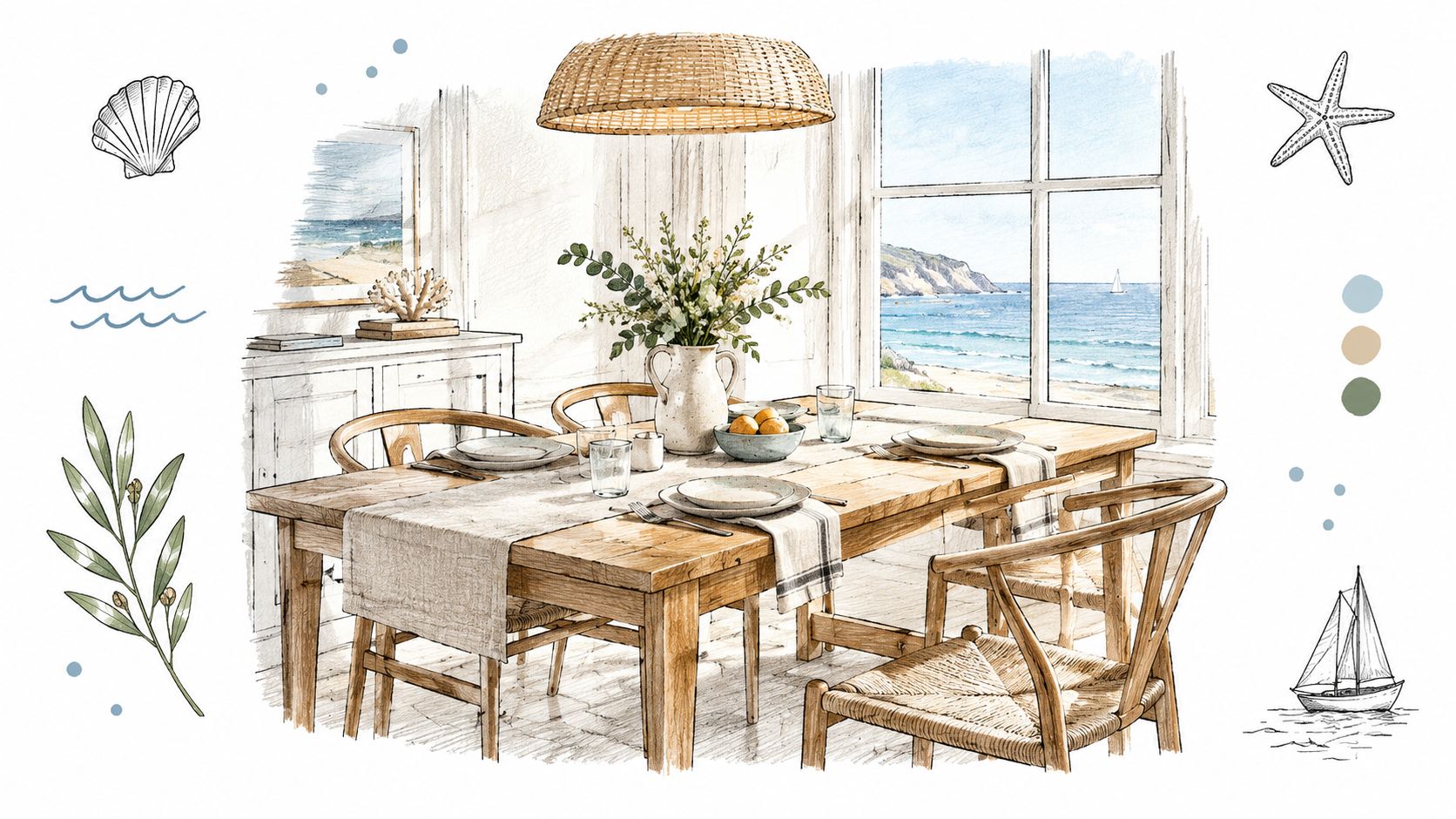
A family arrives home from the beach with damp towels, a basket of groceries, and sand still clinging to everyone's shoes. The dining room sits beside the kitchen, filled with late-afternoon light. A pale wood table anchors the space, upholstered chairs invite lingering, and a simple pendant creates enough polish for a holiday dinner. Nothing feels formal or precious, but the room still looks ready for guests.
That atmosphere is the heart of a successful coastal dining room. It should suggest ease, light, and connection to the outdoors, not a collection of literal nautical decorations. The best rooms feel settled rather than themed. They make everyday breakfasts comfortable and allow a more elegant dinner to happen without changing the entire setting.
Start with the way the room is used
A household that eats at the table every evening needs different furniture from a vacation home used mainly for entertaining. Daily dining calls for surfaces that clean easily, chairs that support long meals, and a layout that lets people move between the kitchen and table without hesitation. A room reserved for guests may allow more delicate detailing, sculptural seating, or a larger statement fixture.
The style's history supports this practical approach. Early coastal homes were compact, lightly built structures with wood shingles, pitched roofs, screened porches, small windows, and simple interiors designed for utility. As coastal properties became primary residences, larger windows, sliding doors, open plans, and connected dining areas made the dining space part of the surrounding setting. Covered outdoor lounges and dining spaces now often function as true rooms rather than leftover areas, as described in this history of modern coastal architecture.
Design principle: A coastal dining room should feel relaxed because its proportions, materials, and lighting work well, not because it contains a pile of seashells.
Choose a mood before choosing furniture
A restrained palette of warm white, sand, pale gray, and faded blue creates a quiet backdrop. A more expressive room might add sea-glass green, navy, or weathered charcoal through artwork, seat fabric, or a cabinet. The choice should reflect the home's architecture and the household's habits.
A narrow dining area may benefit from a round table and a single visual focal point. A wide open-plan room can support a long wood table, a sideboard, and a larger pendant. Homeowners seeking a more specific direction can use a coastal design style guide to decide whether the room should lean toward coastal cottage, refined transitional, or coastal farmhouse character.
The furniture should also relate to nearby rooms. Repeating one wood tone, metal finish, or fabric color helps a dining area connect naturally with the kitchen and living room. That continuity matters in open layouts, where the dining room can't rely on walls to define its identity.
Coastal design also has meaningful market momentum. One forecast places the nautical and coastal decor market at $3.50 billion in 2025, with a projection of $5.26 billion by 2032 and a 6.0% CAGR over that period. The same forecast notes a 15–20% increase in search interest for coastal furniture by summer 2025, which suggests that coastal dining isn't an obscure decorating phrase. It sits within a broader category with expanding consumer attention and demand, according to this nautical and coastal decor market forecast.
Choosing Coastal Colors and Materials
Color establishes the mood, but materials determine whether the room survives daily life. A coastal dining room shouldn't depend on pale finishes alone. It needs a deliberate combination of light-reflecting color, tactile texture, and moisture-aware construction.
Warm white walls and ceilings keep the room airy without making it feel stark. Beige, oatmeal, driftwood, and light gray bring the softness of sand and weathered timber. Blue works best as an intentional accent rather than a full-room command, especially in smaller dining areas. Navy upholstery, a blue-gray cabinet, or a single painted wall can provide depth while preserving the open coastal feeling.
Green offers a different effect. Sea-glass, sage, and muted olive connect the room to coastal vegetation and work especially well with natural wood. The right palette depends on the light entering the room. A south-facing space may need cooler gray or blue undertones, while a shaded room often benefits from warmer ivory and sand.
Build texture with a maintenance plan
Jute, rattan, woven seagrass, and natural wood add the visual variation that keeps a neutral room from feeling flat. They also need thoughtful placement. A woven pendant or decorative basket may be suitable in a protected interior, while untreated natural fiber used beside an open door or humid window can absorb moisture, hold odor, or develop mold.
Performance fabrics provide a stronger answer for upholstered dining chairs. They can preserve the soft, polished appearance associated with coastal interiors while offering better resistance to spills, pets, and frequent cleaning. Sealed wood is preferable to untreated wood for dining tables and storage pieces, particularly where humidity fluctuates.
For rooms exposed to salt air, the finish and hardware deserve as much attention as the silhouette. Coastal furniture guidance identifies marine-grade aluminum, 316 stainless hardware, and UV-resistant powder coatings as stronger choices for demanding environments. It also warns that untreated natural rattan, jute, cotton, and linen are more vulnerable to warping, mold, odor, and degradation in humid conditions. A practical care routine includes weekly fresh-water rinsing for salt-exposed furniture, as outlined in this guide to furniture for saltwater environments.
Match materials to the household
A family with young children should prioritize sealed table surfaces, removable or cleanable seat covers, and finishes that don't show every fingerprint. A couple furnishing a formal second home may prefer more decorative weaving or a lighter upholstery, provided the room's exposure and cleaning routine support those choices.
The most attractive material isn't always the right material. Trend coverage often favors linen, jute, rattan, and pale finishes, but these can show staining, fading, or wear quickly in busy homes. The better question is whether the finish can maintain its character after repeated use.
A durable coastal palette might include:
- Foundation colors: Warm white, ivory, sand, beige, or pale gray.
- Water-inspired accents: Muted blue, navy, sea-glass, or soft green.
- Reliable woods: Sealed oak, maple, or another finished hardwood with visible grain.
- Practical upholstery: Performance fabric selected for cleanability and daily comfort.
- Protected metals: Powder-coated or corrosion-resistant hardware in a finish that complements the room.
The result should look natural without depending on untreated materials. That is the difference between a coastal dining room that photographs well and one that continues to welcome family meals years later.
Selecting the Perfect Dining Furniture
The dining table sets the room's character, but the right choice depends on more than appearance. A long rectangular table offers a traditional entertaining profile and makes efficient use of a long room. A round table softens a compact space, improves conversation, and eliminates sharp corners. An oval table offers some of the visual length of a rectangle while keeping the edges more forgiving.
Homeowners comparing these options can use this guide to round and rectangular dining tables before selecting a final shape. The room's traffic pattern, nearby doors, and the number of people who regularly dine there should lead the decision.
Compare the major furniture choices
A solid wood table brings warmth and visible grain. It pairs naturally with woven seats, painted cabinetry, or upholstered host chairs. A painted table creates a lighter, more cottage-like impression, though it may show marks more readily in a heavily used dining area. A mixed-finish table, such as a stained top with a painted base, offers a custom coastal look without relying on obvious beach motifs.
Extending tables deserve serious consideration in homes that alternate between family dinners and larger gatherings. They preserve a manageable everyday footprint while allowing additional seating when needed. The extension mechanism should feel substantial, align cleanly, and remain easy for the household to operate.
Chairs require an equally careful comparison:
- Wood chairs offer visual lightness and straightforward maintenance.
- Woven seats add coastal texture and a relaxed, handcrafted impression.
- Upholstered chairs provide customized comfort and can introduce color without dominating the room.
- Mixed seating places upholstered armchairs at the table ends and simpler side chairs along the length.
Quality brands such as Lexington, Hooker Furniture, and Smith Brothers can support different levels of formality and customization. Their role in the room should be judged by scale, construction, finish, and comfort rather than by brand recognition alone.
Use customization to solve real problems
A Special Order Program makes sense when a ready-made piece is close but not quite right. Custom furniture choices can include seating comfort, wood type, wood color, finish, and upholstery fabric. One manufacturer describes an offering with several thousand upholstery fabrics, along with piping, trim, braid, nail, gathered, and tufted treatments, as detailed in this custom furniture resource.
Cushion firmness matters at a dining table, especially when meals turn into long conversations. Industry guidance recognizes different firmness and support levels for upholstered furnishings, with the appropriate choice depending on the piece and its intended use, as explained in this guide to commissioning custom upholstered furniture.
That flexibility allows most vendors to support personalized designs involving:
- Fabric: Performance upholstery, texture, pattern, and color.
- Finish: Wood stain, painted color, sheen, and protective treatment.
- Comfort: Cushion firmness, seat support, and chair profile.
- Detailing: Piping, trim, nail accents, or custom edge treatments.
The table remains the anchor, but the chairs determine whether the room feels hospitable. A beautiful coastal dining room should make guests want to stay through dessert.

A centerpiece should reinforce that composition without blocking conversation. Glass vessels, low greenery, driftwood-inspired forms, and restrained blue or green accents can add interest while keeping the tabletop useful. Readers seeking additional ideas can explore this collection of nautical centerpiece inspiration for ways to introduce seaside character with a light touch.
Layout and Lighting for Flow
A coastal dining room should feel open before anyone sits down. Furniture that crowds a doorway or forces guests to twist around a sideboard will undermine even the most carefully chosen palette. Begin with the table, then test how people enter, sit, serve food, and leave the room.
Place the table where it receives natural light without blocking a view or creating a bottleneck. In an open floor plan, align it with the kitchen island, architectural beams, or nearby windows. In a dedicated room, center the table within the strongest visual boundaries, such as a window grouping or an area rug.
Arrange the room in practical steps
- Mark the table footprint. Use painter's tape or temporary furniture to understand how the proposed table occupies the floor.
- Test every chair position. Pull chairs out fully and walk behind them. The route should feel natural rather than squeezed.
- Protect the main passage. Keep the path between the kitchen, entry, and outdoor areas clear.
- Place storage strategically. A sideboard or cabinet should support serving without competing with the table or obstructing doors.
- Check the view from each seat. A coastal room should direct attention toward daylight, artwork, or a calm architectural feature.
For homeowners working with a compact footprint, table shape often matters more than decorative styling. A well-proportioned round table may create better movement than a rectangular table with unused length. A narrower rectangular table may preserve a walkway while still accommodating family meals. More layout ideas appear in this guide to maximizing dining space with table shapes and seating arrangements.
Outdoor living can offer useful inspiration for this indoor arrangement. The same principles used in outdoor restaurant seating ideas apply to a coastal dining room: establish a clear circulation route, group seats around a shared focal point, and avoid placing furniture where movement feels restricted.
Make the pendant do real work
A single large pendant or chandelier centered over the table usually gives a coastal dining room more clarity than several competing fixtures. The fixture base should typically sit 30 to 36 inches above the tabletop to preserve sightlines and provide even task lighting, according to this guidance on coastal dining room lighting.
Scale matters. A small fixture can disappear above a long table, while an oversized opaque shade may block light and overwhelm the room. Woven shades, clear or frosted glass, and open metal forms can support the coastal mood while allowing the fixture to remain visually lighter.
Layer lighting in no more than three levels:
- Primary light: A centered pendant or chandelier over the table.
- Ambient light: Dimmable ceiling or wall lighting that supports the entire room.
- Accent light: One controlled source highlighting art, a cabinet, or an architectural feature.
Dimmers allow the room to shift from bright family breakfast to a lower, more intimate dinner setting. Sheer, unlined window treatments can maximize daylight and soften glare without adding visual weight. The goal isn't to fill every corner with a fixture. It's to make the room feel naturally illuminated, comfortable, and ready for use.
Accessorizing and Maintaining Your Space
Accessories should make a coastal dining room feel personal and useful, not predictable or overly staged. A large piece of coastal interior design art can establish the room's mood more effectively than several small objects. Glass vases, understated ceramic vessels, woven runners, and seasonal greenery add texture while leaving the table ready for meals.
Use one visual anchor and a few supporting pieces. Pair statement artwork with a low centerpiece and a restrained sideboard arrangement. If the pendant has a strong woven shape, keep nearby accessories quieter. Repeating a material or color creates cohesion. Too many unrelated textures collect dust and make the room feel busy.
Style for use, not just photographs
The dining table needs to stay available for serving and eating. Choose a centerpiece that can move easily, and leave enough open surface for plates, drinks, or a carafe. A cabinet can store table linens, entertaining pieces, and everyday items, so the room stays composed without decorative objects covering every surface.
Durability starts with materials that suit the room's daily demands:
- Glass: Reflects daylight and adds a watery, transparent quality. Choose sturdy pieces that can be moved without difficulty.
- Ceramic: Adds handmade character in white, sand, blue, or green. Glazed surfaces are easier to wipe clean than porous finishes.
- Woven fibers: Bring warmth through a runner, pendant, basket, or chair detail. Keep them dry and inspect them for trapped dust or moisture.
- Artwork: Gives the room a sense of place without relying on literal signage. Hang it where splashes and direct handling are unlikely.
- Greenery: Softens wood and painted finishes while keeping the room connected to nature. Use containers with stable bases to protect the table.
A calm palette makes dust, water marks, and spills easier to notice. Build cleaning into the room's routine from the start. Wipe spills from finished wood promptly, follow upholstery care instructions, and do not leave damp textiles against furniture. Natural fibers need extra attention in humid rooms because they can retain moisture and odor.
Protect the finish from coastal conditions
Salt and humidity affect vulnerable points first. Inspect hardware, seams, coatings, and exposed edges regularly. Fresh-water rinsing can reduce salt buildup on exposed pieces, while dry cloths and gentle cleaning help preserve interior finishes. Abrasive products can strip protective layers and leave surfaces more exposed.
Maintenance rule: A relaxed coastal room still needs a routine. Light finishes and natural textures stay beautiful when spills, moisture, and salt are addressed before they become permanent wear.
Spend more on pieces that receive constant contact. A well-made table, comfortable chairs, and a durable cabinet should have construction suited to everyday use. Keep accessories flexible and seasonal, so the room can change without replacing its foundation.
The result is a curated sanctuary rather than a staged set. The room feels fresh because it is edited, comfortable because it works for real meals, and enduring because its materials suit the household and the coastal conditions.
Sourcing Your Coastal Dining Room Pieces
Sourcing a coastal dining room becomes easier when homeowners separate inspiration from specification. First, measure the room and note doors, windows, walkways, and nearby furniture. Next, decide whether the table must expand, whether chairs need performance upholstery, and whether the room requires a cabinet for serving storage.
A showroom visit adds information that photographs can't provide. In Waycross, Georgia, and Fernandina Beach, Florida, shoppers can sit in chairs, compare wood finishes, examine upholstery, and judge table scale in person. In-store associates can help with design decisions, while Style Quizzes provide a starting point for identifying a direction such as coastal chic or a more traditional look.
The same service should remain available online. A digital catalog lets shoppers browse before visiting a showroom, then continue the process in person. The Style Quizzes, interactive style guidance, and the Mattress Guide give customers practical tools for broader home decisions, while associates remain available for questions about furniture selection and custom orders.
The Special Order Program is especially useful when a room needs a particular fabric, finish, configuration, or comfort level. Custom ordering can connect the look of the table, chairs, and storage pieces instead of forcing mismatched compromises.
For homeowners in South Georgia and North Florida, the local furniture team also coordinates white-glove, in-home delivery. The service includes room-of-choice placement, unpacking, professional setup, packaging removal, and a condition review. Each piece receives a rigorous multi-point inspection before it reaches the customer, with delivery personnel inventorying and checking items for damage or missing parts as described in this white-glove delivery process.
Coastal dining tables and coordinated furnishings can be explored through the coastal dining tables collection. The selection can include recognizable names such as La-Z-Boy, Lexington, and Hooker Furniture, alongside custom-order options and in-store guidance.
Lott's Furniture offers coastal dining furniture, Special Order customization, Style Quizzes, in-store associates, digital catalog shopping, and white-glove delivery across South Georgia and North Florida. Visit Lott's Furniture in Waycross or Fernandina Beach, or begin an online style consultation to create a coastal dining room that feels beautiful, comfortable, and ready for real life.