Custom Upholstery Fabric: The Ultimate Guide for 2026


A living room often starts with a practical problem. The sofa has the right proportions, the chair fits beside the window, and the room finally feels balanced, but the available fabric doesn't suit the household, the lighting, or the way the furniture will be used. Custom upholstery fabric turns that compromise into a considered design decision.
A custom sofa can become the visual anchor of a room and the comfortable place where family gathers, guests linger, and everyday routines unfold. The right selection brings together appearance, durability, cleaning requirements, comfort, and personal expression, creating investment-quality furniture with the character of a curated sanctuary.
The Art of Tailored Home Comfort
A homeowner may begin with a simple vision, such as a softly textured sofa in a warm neutral, paired with a deeper chair for reading and a finish that complements existing wood tones. A standard piece might come close, but the fabric may feel too formal, the seat may be too firm, or the color may shift poorly in afternoon light. Custom upholstery allows those details to work together instead of forcing the room to adapt around one limited choice.
At Lott's Furniture, the Special Order Program gives homeowners a path to personalized designs through participating vendors. Most vendors support choices involving fabrics, finishes, and comfort levels, so the finished piece can reflect both the household's style and its daily habits. A family room may call for a resilient woven fabric and supportive cushions, while a quiet sitting room may favor a more tactile surface and a relaxed seat.
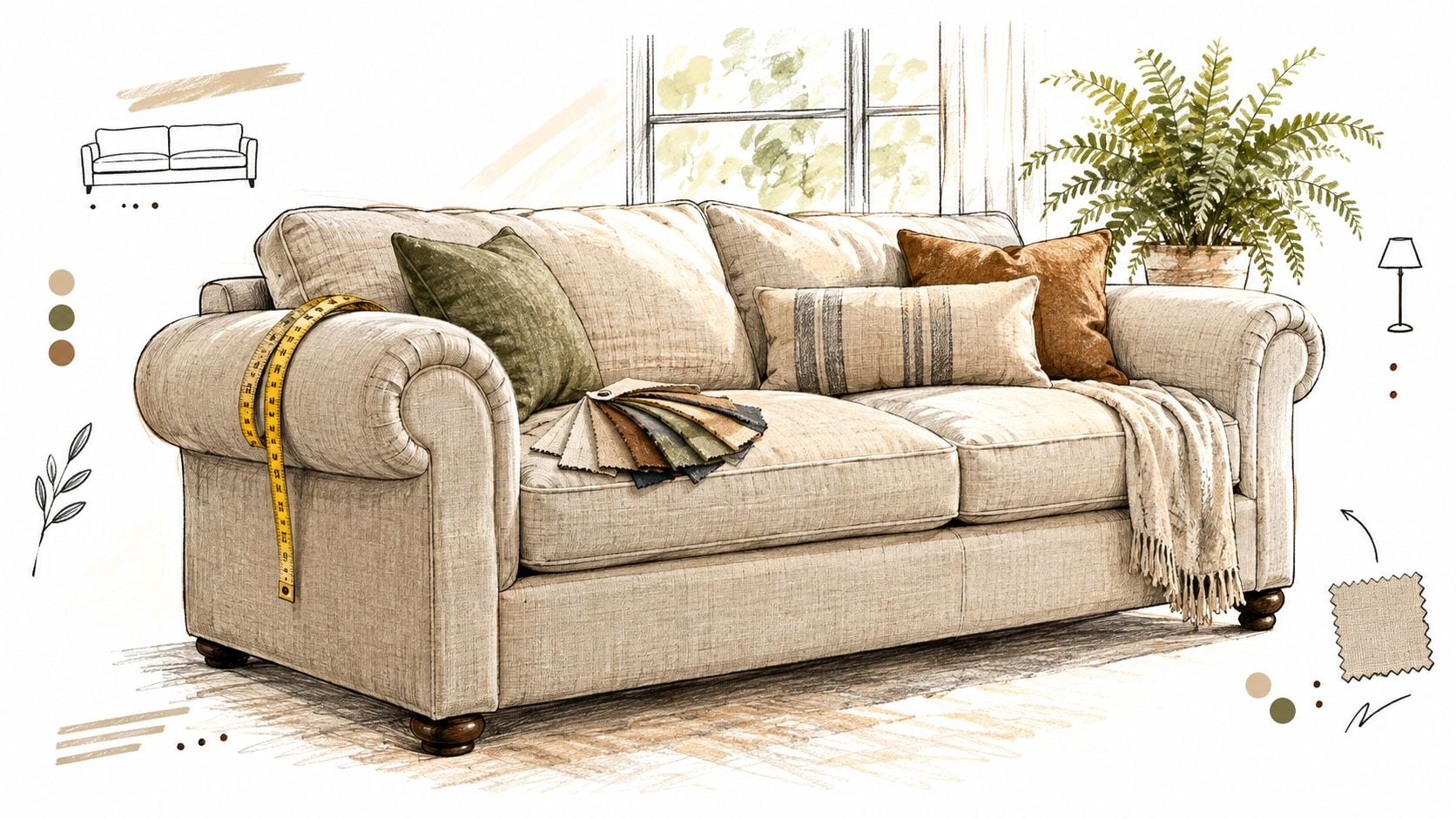
A personal piece with lasting character
Lott's Furniture has served South Georgia and North Florida for over 78 years, connecting the selection associated with recognized brands to the attentive guidance of a locally owned business. That combination matters during a custom order because fabric is only one part of the decision. Proportion, cushion feel, arm style, leg finish, and the relationship between the new piece and the rest of the room all deserve attention.
Core brands such as La-Z-Boy, Smith Brothers, and Lexington give shoppers different paths toward personalized comfort and distinctive design. A homeowner can compare the feel of a reclining chair with the structure of a traditional sofa, then select upholstery that gives both pieces a unified presence.
A useful starting point: The best custom fabric reflects how a room is lived in, not only how the room looks in a photograph.
Custom upholstery fabric therefore becomes more than a covering. It helps establish the mood of the room, protects the investment from premature appearance loss, and gives the furniture a sense of belonging. With guidance from in-store associates, homeowners can turn an appealing idea into an heirloom-quality piece that feels intentional from every angle.
Understanding Custom Upholstery Fabric Performance
A busy family room, a quiet reading corner, and a rarely used formal sitting room all place different demands on upholstery. The word performance describes a category, not a complete buying decision. A fabric marketed as performance upholstery may resist stains, yet the better choice still depends on abrasion, weave structure, cleaning code, sunlight exposure, and expected use.
Abrasion resistance is one of the clearest technical benchmarks because it shows how the face yarns respond to repeated seating friction. The fabric specification and testing guidance explains that the Martindale method rubs fabric in a figure-eight motion against standardized wool until visible change appears. Higher cycle counts indicate greater resistance to that particular type of wear, much like a tread rating describes one condition rather than every road a tire may encounter.
How the ratings work
For residential upholstery, about 20,000 Martindale cycles is commonly treated as a practical minimum. 30,000 to 50,000 or more cycles is more suitable for heavy-use or contract settings. These figures describe resistance to repeated rubbing, not a promise that a sofa will look identical forever.
The Wyzenbeek method uses double rubs rather than Martindale cycles. Manufacturers often describe 15,000 double rubs as general contract upholstery and 30,000 double rubs as heavy-duty upholstery, but the two tests are not directly convertible. Both methods communicate a useful principle: stronger abrasion resistance can help reduce yarn breakage, surface wear, and early loss of appearance under repeated use.
A fabric sample should answer several practical questions:
- Abrasion rating: Is the result appropriate for an everyday sofa, occasional chair, dining seat, or contract setting?
- Cleaning code: Which cleaning methods are permitted, and what should happen immediately after a spill?
- Weave tightness: Does the surface feel stable, or could loose loops catch on claws, jewelry, or clothing?
- Light exposure: Will the piece sit beside a bright window or in a room with limited direct sunlight?
Performance should match the household
A household with pets and children may prioritize easy-care upholstery, while a formal room used for occasional entertaining may not need the highest available abrasion rating. A tactile fabric with moderate performance can offer better value than an extremely heavy-duty textile when the furniture receives light use and softness matters more than maximum resistance.
Performance is therefore a spectrum, not a pass-or-fail label. The right point on that spectrum balances the room's workload with the look and feel the homeowner wants. A tightly woven fabric may suit a frequently used sofa, while a softer, less rugged option may make sense for a low-contact chair.
Cleaning technique also affects results. For guidance to remove stubborn stains from furniture, homeowners can consult a professional upholstery-cleaning resource, while the furniture's care label remains the primary guide for approved methods. Lott's guide to what performance fabric is made of explains how fiber content can influence fabric behavior.
Market figures help explain the range of materials available. Dataintelo's performance fabric market overview (https://dataintelo.com/report/performance-fabric-market) places the global furniture performance fabric market at about USD 4.8 billion in 2025, projecting USD 8.6 billion by 2034 at a 6.7% CAGR. The same overview estimates the broader upholstery fabric market at USD 32.5 billion in 2025, rising to USD 45.8 billion by 2033 at a 4.0% CAGR. Polyester represented 38.4% of furniture performance fabric by material type in 2025, and North America accounted for 34.2% of regional revenue, according to that overview.
Those figures describe a substantial market, not a universal recommendation. The sound choice starts with the room, the people using it, and the evidence in the specification sheet.
Navigating Style Trends with Practical Durability
Warmth has become a defining direction in upholstery design. Current trend coverage points away from cool grays and stark whites toward beige, sand, camel, clay, mushroom, and broader earth tones, with tactile materials such as bouclé, chenille, woven plains, and embroidered details receiving more attention in residential interiors. The 2026 home-textile trend discussion also connects natural or recycled materials with the expectation of practical, easy-care performance.
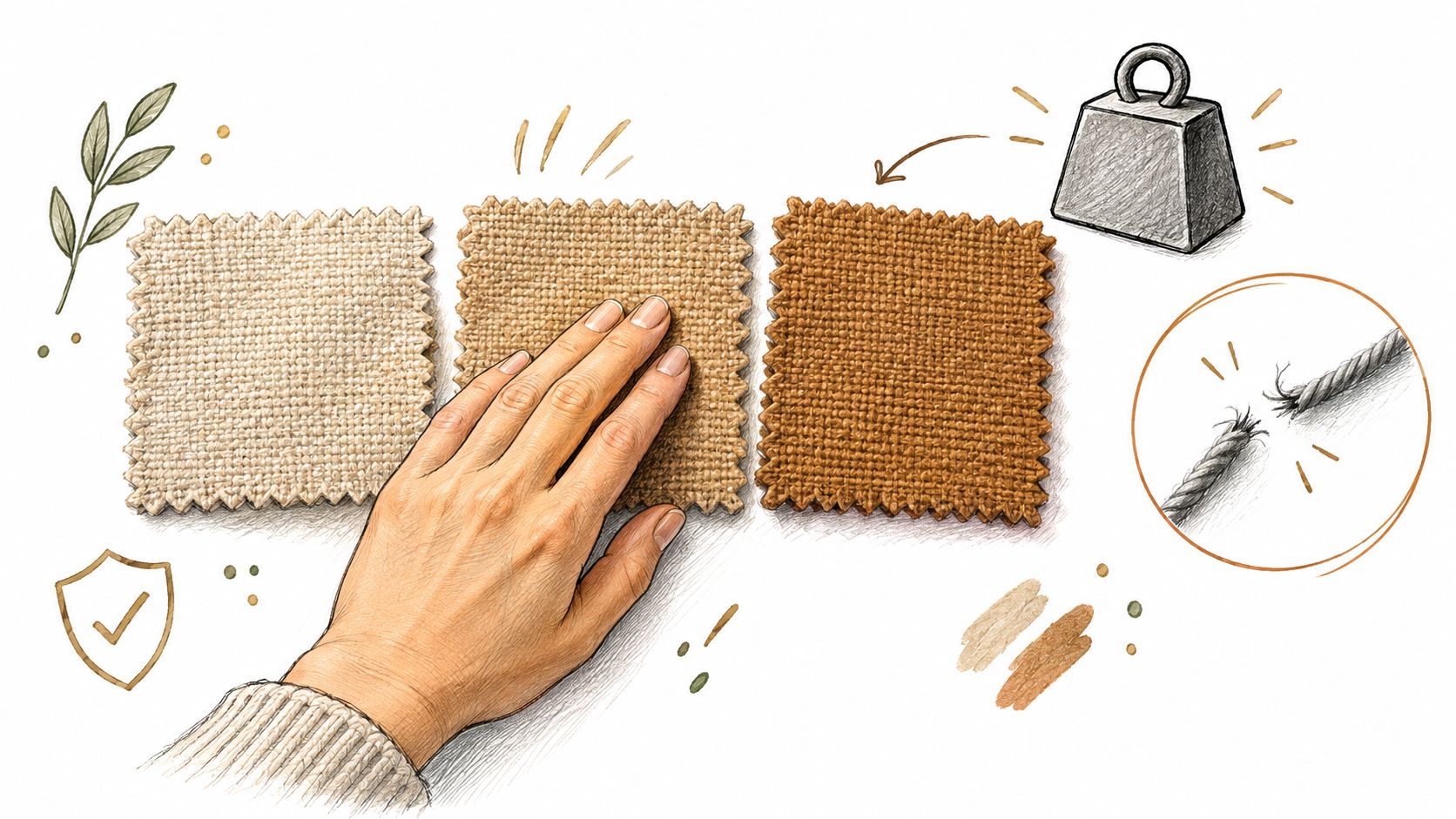
The important question isn't whether a texture is fashionable. It is whether that texture suits the furniture's location and workload. A tightly woven chenille may bring softness and visual depth to an everyday sofa, while a looser bouclé may be better suited to a lower-contact accent chair if its loops could catch on pet claws or rough clothing.
Matching texture to furniture use
A dining chair faces a different kind of wear than a sectional. Repeated sitting, sliding, food exposure, and contact with table edges make cleanability and structural stability especially relevant in the dining area. A sofa may need stronger abrasion resistance, while a decorative chair can prioritize sculptural texture if it receives occasional use.
Natural fibers can bring breathability, softness, and an appealing variation in the weave, but they may also require more careful maintenance and can show wrinkling or wear differently from engineered fibers. Recycled content may support a household's material preferences, yet sustainability should be evaluated alongside cleaning instructions, durability information, and the expected service life of the piece.
A practical style filter
Before falling in love with a sample, homeowners can place it against the room's flooring, wall color, wood finishes, and nearby textiles. A warm neutral may look calm beside natural wood but appear pink or yellow under certain lighting. Texture can also change perceived scale. A large, prominent weave may make a compact chair feel visually heavier, while a quiet woven plain can help a substantial sectional recede into the room.
Lott's collection of textured upholstery fabric offers a useful starting point for comparing tactile surfaces with the intended furniture style. In a showroom, associates can examine samples under different lighting and discuss whether a fabric's maintenance requirements suit the household.
Practical rule: Choose the visual character first, then confirm that the construction, cleaning code, and abrasion information support the way the furniture will be used.
The result doesn't have to be an industrial-looking textile. Performance can exist in a warm, expressive room, especially when the selection balances touch, color depth, weave stability, and maintenance. A fashionable fabric becomes a durable choice when its technical limits match the home's real routines.
Material Options and the Customization Process
Custom upholstery works like a coordinated system. Fabric sets the first impression through color, texture, and hand feel, while leather, cushion construction, trim, wood, and leg finishes influence how the finished piece looks and functions. A successful selection keeps these parts working together instead of treating upholstery as an isolated decision.
A special-order program may include thousands of fabric and leather options, along with cushion styles, contrast fabrics, throw pillows, welts, trims, nailhead finishes, and leg finishes. Shoppers may also be able to choose cushion firmness and wood finishes. Those choices connect the technical side of the furniture to personal comfort and room style.
Comparing material directions
| Material direction | Design character | Practical questions |
|---|---|---|
| Performance weave | Relaxed, versatile, and suitable for many family rooms | Does the cleaning code suit spills, pets, and frequent use? |
| Textured woven fabric | Tactile, layered, and visually inviting | Is the surface tight enough for the room's activity level? |
| Leather | Tailored, substantial, and easy to coordinate with many styles | How will the finish change with use, light, and maintenance? |
| Contrast details | More customized and visually defined | Will the welt, trim, or pillow fabric complement surrounding pieces? |
Performance is a spectrum, not a single label. A tightly woven fabric with an easy cleaning code may suit a busy family room, while a more delicate textile may be the right fit for a lightly used accent chair. The useful question is how the material's documented construction and care requirements match the household's routines.
For a broader foundation, review a complete guide to upholstery materials. Homeowners planning several rooms can also use guidance on choosing textiles for every room when coordinating upholstery with window treatments, rugs, and accent pieces.
From sample to order
A deliberate sequence keeps style preferences and performance information in view:
- Start with the frame and scale. Confirm that the sofa, chair, or sectional fits the room and supports the intended seating posture.
- Narrow the material family. Decide whether the setting calls for a performance weave, textured fabric, leather, or a combination.
- Test the sample. View larger swatches in daylight and evening light, then assess the surface by hand.
- Select comfort details. Compare cushion firmness, seat depth, and back support before finalizing the upholstery.
- Finish the supporting details. Choose legs, wood tones, welts, trims, pillows, and contrast materials as one coordinated group.
Online ordering can make comparisons easier and reduce unnecessary travel. Custom order programs typically offer hundreds of fabric options, with production windows of 5 to 10 weeks depending on the selected configuration and participating vendor. Lott's Furniture can support this decision path through its digital catalog and showroom guidance, depending on the piece being ordered.
The right custom upholstery fabric should make the decision clearer, not more complicated. Start with the furniture's role, confirm that performance suits the home's routines, and then use color, texture, and finishing details to express the room's style.
Omnichannel Shopping with Expert Guidance
A homeowner may spot a sofa silhouette online, compare fabric colors at home, visit a showroom to test the cushions, and return to the digital catalog before ordering. Keeping those choices connected makes the process easier and prevents the need to begin again at every stage.
A practical path from inspiration to selection
Lott's Furniture connects its digital catalog with showrooms in Waycross and Fernandina Beach, FL, serving homeowners across South Georgia and North Florida. Style Quizzes can suggest directions such as Coastal Chic, Modern Farmhouse, or Timeless Traditional. Interactive Style Guides then show how texture, scale, and color can work together in a room.
The Mattress Guide addresses another part of furnishing a home by helping shoppers consider comfort levels and support technologies before a showroom visit. In-store associates can help homeowners compare upholstery by touch, test seat support, and discuss how a fabric may coordinate with furniture they already own.
Why both channels matter
Online browsing helps narrow silhouettes, save inspiration, and review available fabric families. A showroom supplies details a screen cannot fully convey, including the fabric's hand, cushion resilience, arm scale, and the way a finish responds to real interior lighting.
The performance label should also be matched to the household rather than treated as a universal guarantee. A quiet sitting room may need different fabric characteristics from a family room used daily by children or pets. Associates can help connect technical performance information with routines, comfort preferences, and the style a homeowner wants to live with.
Major retailers describe an omnichannel custom-upholstery process that includes showroom browsing, online fabric exploration, free swatch requests, and production within an 8 to 10 week window, as explained in this custom upholstery shopping guide. Timing can vary by vendor, material, and selected configuration, so confirm the current estimate before finalizing an order.
Showroom guidance should clarify choices, not dictate a look. A helpful associate translates preferences into practical criteria, such as softness, cleanability, texture, and visual weight. The result is a focused shortlist that reflects both the home's character and the way the furniture will be used.
The Lott's Delivery Standard and Inspection
The final mile affects how confidently a homeowner can enjoy a custom piece. Large upholstered furniture needs careful handling, and placement matters because a sofa may need to pass through a doorway, move around a stairwell, or settle into a precise room arrangement.
Lott's delivery service follows a white-glove, in-home approach rather than treating furniture as a simple drop-off. The service can include room-of-choice placement, unpacking, light assembly or installation, inspection, and removal of packaging debris. Guidance on what white-glove delivery service includes helps explain why these steps protect both the furniture and the homeowner's experience.
Inspection before enjoyment
Independent coverage of white-glove furniture delivery identifies a multi-point inspection that checks visible surfaces, corners, upholstery, finish areas, hardware, and major components before or during placement, as described in this white-glove delivery service overview. Lott's Furniture applies that quality-first principle to every piece handled by its delivery team.
For an upholstered item, the inspection can identify concerns involving fabric alignment, seams, cushions, exposed edges, finish consistency, or hardware. A Lexington dining set and a Hooker Furniture executive desk require different checks, but both deserve careful attention before reaching the customer's room.
White-glove delivery also gives the household a chance to see the piece positioned in its intended setting. The team can place the furniture in the room of choice, complete applicable assembly, and leave the space ready for use. That level of care supports the purpose of custom upholstery: delivering comfort shaped to the home without leaving the homeowner to manage the most difficult handling steps alone.
Begin Your Custom Furniture Journey Today
The most successful custom furniture decisions begin with a clear picture of daily life. A household may need a stain-conscious sofa for pets, a supportive chair for reading, a softer cushion for lounging, or a warm textured fabric that connects a coastal home with its natural surroundings. Each requirement narrows the selection in a helpful way.
Lott's Furniture offers a Special Order Program where participating vendors support personalized fabrics, finishes, cushion choices, and comfort levels. Homeowners can begin with the custom order guide, explore the digital catalog, take a Style Quiz, or speak with an in-store associate about design decisions.
A practical next step includes:
- Measure the room: Record doorways, walkways, wall space, and the intended furniture footprint.
- Describe the lifestyle: Note pets, children, sunlight, entertaining, relaxation, and maintenance preferences.
- Gather inspiration: Save colors, textures, silhouettes, and finishes that feel right for the home.
- Test the finalists: Visit a showroom to sit on comparable pieces and handle fabric samples.
- Review the order: Confirm upholstery, cushion firmness, finishes, delivery expectations, and care instructions.
The service area includes South Georgia and North Florida, with showroom support in Waycross and Fernandina Beach, FL. Financing options may also help budget-minded families plan an investment-quality purchase without losing sight of the design and comfort priorities that make the piece worthwhile.
A home doesn't need furniture that merely fills a room. It can have custom comfort, expressive texture, and construction selected around the people who live there.
Lott's Furniture offers custom upholstery guidance, Special Order options, digital style tools, and white-glove in-home delivery for homeowners choosing investment-quality pieces. Visit Lott's Furniture to begin an online style consultation or plan a showroom visit in South Georgia and North Florida.