Save 50% Off MRSP on Lexington | Shop the Catalog >

Stain Resistant Upholstery Fabric: A Homeowner’s Guide

A living room can look polished at noon and survive a spilled drink by dinner. That's the standard many homeowners want now, especially in busy homes across South Georgia and North Florida where family time, guests, pets, and everyday routines all happen in the same shared spaces.
That's why stain resistant upholstery fabric draws so much attention. It helps a sofa, chair, or dining bench stay inviting without forcing a home to feel formal or fragile. For renters, growing families, pet owners, and anyone furnishing a curated sanctuary, the goal isn't just beauty. It's beauty that can live through real life.
Creating a Beautiful and Livable Home
A cream sofa often becomes the room's focal point. It softens wood tones, brightens darker walls, and gives a space that refined, heirloom-quality look many homeowners love. Then real life steps in. A child sets down a juice cup too quickly. A guest misses the coaster. A dog comes in after a rainy afternoon.
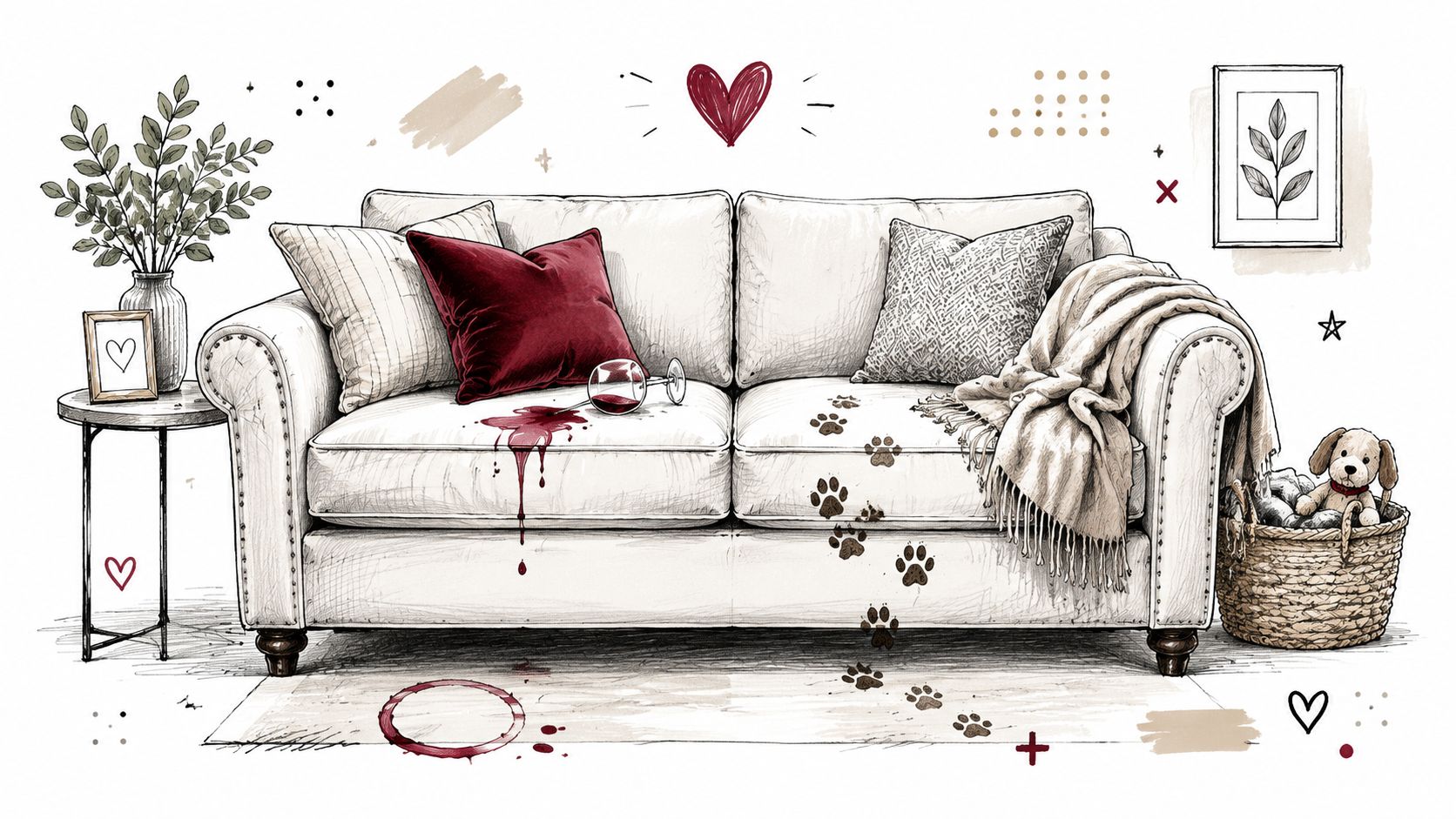
That tension between a beautiful room and an actively used room shapes many furniture decisions. Homeowners don't want to choose between a refined look and peace of mind. They want both. Stain resistant upholstery fabric exists to close that gap.
Why demand keeps rising
The category has moved well beyond a niche upgrade. The global stain-resistant fabric market reached USD 14.3 billion in 2025 and is projected to reach USD 15.2 billion in 2026, reflecting growing demand for durable, easy-to-maintain seating, especially in homes with children and pets, according to Future Market Insights on the stain-resistant fabric market.
That growth makes sense in practical terms. People use every room harder now. Dining chairs host homework. Accent chairs become reading spots. Sofas function as gathering places, nap zones, and movie-night headquarters.
A well-designed home doesn't ask people to tiptoe around the furniture. It supports the way they actually live.
What homeowners usually want from performance upholstery
Most shoppers aren't asking for chemistry first. They're asking for outcomes.
- Less stress around spills: More time to blot and clean before a mark sets in.
- Better long-term appearance: Upholstery that keeps its color, texture, and shape through daily use.
- Confidence in lighter colors: Cream, sand, soft gray, and coastal blue feel more realistic in active homes.
- A livable sense of comfort: Furniture can stay elegant without becoming off-limits.
This matters in homes throughout South Georgia and North Florida, where entertaining is common and rooms often need to balance polish with everyday durability. It also matters when buyers want investment-quality pieces from trusted names such as La-Z-Boy, Smith Brothers, or Lexington and expect them to serve the household beautifully for years.
Many homeowners start online, then want reassurance before making a final selection. Digital catalogs can narrow the field, while a showroom visit in Fernandina Beach, FL gives shoppers the chance to touch the fabric, compare colorways, and evaluate whether a piece fits the room's mood. That blend of online convenience and in-person clarity is often what turns uncertainty into confidence.
The Science of Stain Resistance Explained
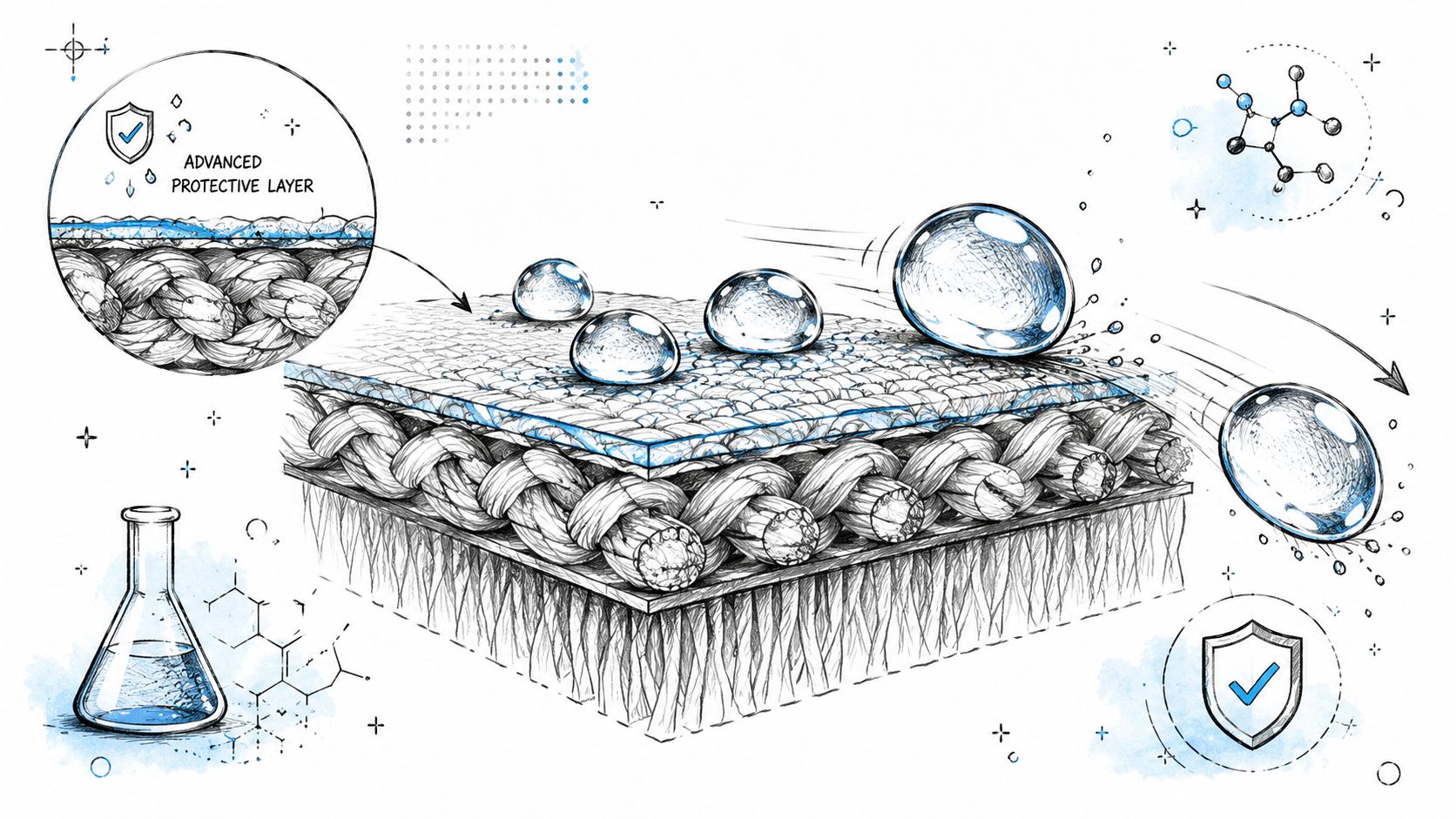
Stain resistance isn't magic. It's fabric engineering designed to slow down absorption and improve cleanability. The simplest way to think about it is this. Some fabrics act like a raincoat at the surface, while others build the protection into the fiber itself.
Two ways fabric resists stains
The first method uses a surface treatment. This creates a barrier that encourages liquid to bead up rather than soak in immediately. That brief delay matters because it gives the homeowner time to blot the spill before it penetrates deeper into the upholstery.
The second method uses fibers with built-in resistance. In these fabrics, the resistance isn't sprayed on after the fact. It's part of the material itself. That can be appealing for buyers who want the fabric's performance tied directly to the yarn.
For homeowners comparing upholstery with floor coverings, the same general principle applies across soft surfaces. A practical companion resource is this guide to protecting your rugs, which helps explain why quick cleanup and material choice matter so much.
Durability matters as much as spill resistance
A fabric can repel a splash and still disappoint if it wears down too quickly. That's where abrasion testing comes in. Upholstery manufacturers commonly use double rubs to estimate how well a fabric handles repeated sitting, shifting, and everyday friction.
According to Schumacher's guide to high-performance fabrics, high-performance indoor upholstery fabrics must withstand abrasion tests showing they can endure up to approximately 30,000 double rubs or more, with premium options exceeding 50,000 double rubs. In plain language, that means many performance fabrics are built for much tougher daily use than standard decorative upholstery.
Practical rule: If a household uses a sofa every day, stain resistance and abrasion resistance should be evaluated together, not as separate features.
What those numbers mean in real life
A double-rub count isn't just a lab detail. It points to whether the fabric can keep its good looks in a family room instead of only in a formal sitting area. Tight weaves, resilient yarns, and well-built construction all contribute to how the upholstery feels after months and years of use.
That's why many buyers benefit from reviewing a focused performance fabrics for upholstery resource before choosing a custom piece. It helps connect technical details to the furniture categories people shop for, from sectionals to accent chairs.
Three practical takeaways help simplify the science:
- Surface protection buys time: Liquids stay on top longer, which makes prompt cleanup easier.
- Fiber construction affects longevity: Some materials resist stains because of what they're made from, not just what's applied to them.
- Testing reveals real-world suitability: A handsome fabric still needs the durability to handle daily living.
A Guide to Popular Performance Fabric Brands
A customer often stands in front of the swatch rack and asks the same fair question. If several fabrics are labeled performance, what is the actual difference?
The answer is similar to shopping for flooring or countertops. Two options can both be practical, but they get there in different ways. One fabric may resist stains because of the fiber itself. Another may rely on a finish that helps spills sit on the surface longer. A third may earn its reputation through a tight weave that handles daily use gracefully. At Lott's Furniture, that distinction matters because the right choice is not just about buying a sofa. It is about choosing a fabric that fits your room, your habits, and the custom options available through our Special Order Program.
Four common performance fabric types
A side-by-side view makes the categories easier to sort through.
| Performance Fabric Comparison | ||
|---|---|---|
| Fabric Type | Key Benefit | Best For |
| Olefin | Built-in stain resistance at the fiber level | Family rooms, pet-friendly seating, everyday sofas |
| Moisture-barrier fabric | Helps keep spills on the surface longer | Dining chairs, frequently used sectionals |
| Microfiber blend | Tight weave supports cleanability and durability | Casual seating, reading chairs, media rooms |
| Indoor-outdoor performance fabric | Better resistance to sun and wear | Bright rooms, sunrooms, coastal interiors |
What makes each one useful
Olefin is a strong candidate for busy households because its stain resistance is part of the fiber, not only a surface treatment. In practical terms, that often means fewer worries about the small accidents that come with children, pets, or everyday lounging. It is a dependable choice when a room needs to feel relaxed rather than fragile.
Moisture-barrier fabrics buy you time. A spilled drink does not disappear into the seat as quickly, which gives you a better chance to blot and clean before the mess settles in. Many homeowners appreciate that extra margin at the dining table and on sectionals where snacks, coffee mugs, and weeknight routines all meet.
Microfiber blends usually win people over with touch. They tend to feel soft and inviting, yet the dense weave can still support easier cleanup and solid day-to-day wear. If you want a chair or sofa that feels cozy the moment you sit down, this category is often worth a closer look.
Indoor-outdoor performance fabrics have become useful well beyond patios. In sunny interiors across South Georgia and North Florida, they can make a lot of sense for rooms that get steady light and regular use. They also pair nicely with coastal and casual design schemes, where you want the room to feel airy without asking the upholstery to be delicate.
Some fabrics sound technical on a tag and feel simple in daily life. That is usually the goal.
How to compare without getting overwhelmed
Start with the furniture piece and the kind of living that happens around it. A dining chair faces different challenges than a formal sofa, even if both look beautiful in the same color family. That is why our showroom team walks customers through fabric choices in context, not as isolated swatches.
- For dining seating: Focus on quick cleanup and spill resistance first. Our guide to performance fabric dining chairs helps connect those fabric features to an everyday-use category.
- For a formal sofa: Texture, shape, and color depth may play a larger role, especially if the room is used more for hosting than for nightly lounging.
- For a family sectional: Choose a fabric that stays composed through repeated use and regular cleanup.
- For an accent chair: Feel and visual character may lead the decision, while performance still adds welcome peace of mind.
Care habits should also factor into the decision. Florida humidity and salt air can affect how a home feels and how often fabrics need attention, so practical homeowners often benefit from reviewing cleaning tips for Florida's salt air alongside fabric samples.
The best brand or fabric line is usually the one that fits your real home. In our Special Order Program, we help narrow those options by style, room use, color palette, and comfort goals so the finished piece feels curated, not guessed at.
Matching Fabrics to Your Florida and Georgia Lifestyle
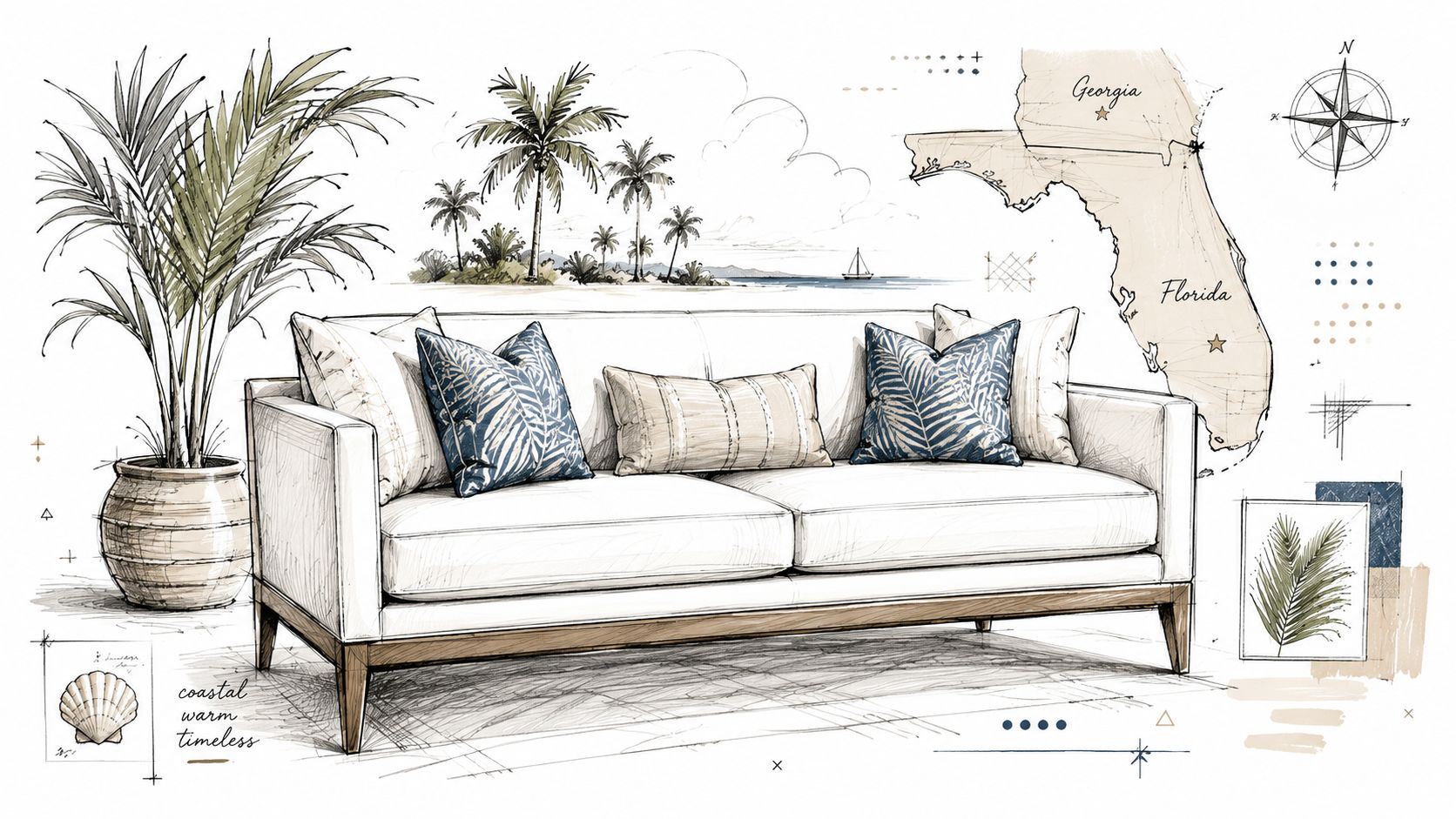
Homes in South Georgia and North Florida ask more from upholstery than a simple style label can capture. A piece may need to hold up to sandy feet, a damp dog after an afternoon outside, or bright natural light pouring into the room day after day. Fabric selection works best when it reflects those habits.
Best matches for common local households
For a home with children and pets, fabrics with stronger stain resistance and dependable wear usually make the most sense. They support the kind of casual, welcoming comfort many families want without asking everyone to be overly careful.
In a coastal or light-filled interior, resistance to sun exposure becomes part of the equation. Some indoor-outdoor performance fabrics work beautifully inside and can support a breezy, crisp look while tolerating brighter conditions better than more delicate choices.
For frequent entertainers, the priority often shifts to confidence. Dining hosts and living-room hosts don't want every glass set down to feel risky. Performance upholstery helps the room stay hospitable.
A room-by-room way to think about it
- Family room: Lean toward durable, forgiving upholstery that can handle repeat use.
- Dining area: Favor fabrics that support easier cleanup after meals and gatherings.
- Sunroom or Florida room: Consider materials suited to brighter exposure and a relaxed coastal mood.
- Guest seating: Balance polish with practical care, especially if the room serves more than one purpose.
A home's surrounding conditions also affect maintenance routines. For households near the coast, airborne moisture and salt can influence surfaces throughout the home. This practical guide to cleaning tips for Florida's salt air offers useful context for keeping interiors fresh in that environment.
Design still matters
Performance doesn't have to flatten a room's personality. A stain resistant upholstery fabric can still look refined, layered, and comfortable. That's especially important in coastal interiors, where the goal is often relaxed elegance rather than purely utilitarian durability.
Homeowners shaping a bright, breezy space can also find inspiration in Florida room decorating ideas. The strongest rooms pair practical material choices with a clear design point of view. Associates in Fernandina Beach, FL can help shoppers connect that inspiration to real swatches, wood finishes, and seating silhouettes, while digital catalog browsing keeps the process convenient before an in-store visit.
The Truth About Stain Resistance A Maintenance Guide
The most common misunderstanding is also the most important one to correct. Performance fabric does not mean stain-proof. Upholstery experts emphasize that point clearly in this discussion on performance fabric limits and maintenance. Liquids may bead for easier wiping, but spills left to sit for hours or aggressive substances such as permanent markers can still stain.
That distinction matters because homeowners often hear “worry-free” and assume “nothing can go wrong.” A better expectation is this. Performance upholstery gives a household a better chance to prevent a lasting mark, not a permanent exemption from care.
Fast action beats strong cleaner. Blot first, stay gentle, and avoid grinding the spill deeper into the fibers.
The right first response
The best immediate response is simple and calm.
- Blot, don't rub: A clean, dry cloth helps lift liquid without spreading it.
- Work from the outside in: That helps keep the spill from widening.
- Use mild cleaning only when needed: Stronger products can create their own problems.
- Check care instructions: Fabric category matters, and one method doesn't fit every upholstery type.
Maintenance habits that protect appearance
Daily life leaves more than dramatic spills. Body oils, snack crumbs, pet residue, and everyday dust all affect how upholstery looks over time.
- Vacuum regularly: Crevices and seams collect abrasive debris.
- Rotate cushions if possible: Even wear helps the piece age more gracefully.
- Treat accidents promptly: Time is the enemy once a spill lands.
- Layer protection thoughtfully: Pet throws and washable coverings can reduce wear in favorite spots.
Pet households often benefit from adding another layer of planning beyond fabric choice alone. This guide on enhancing your home for pets offers practical ideas for reducing day-to-day wear while keeping a space comfortable.
For the broader home, coordinated care matters too. Wood tables, arms, and trim near upholstered seating deserve attention alongside fabric. A practical next read is this guide to protecting wood furniture from scratches and stains, especially for rooms where mixed materials share the same heavy use.
Your Performance Fabric Decision Checklist
A fabric choice gets easier when the questions are asked in the right order. Instead of starting with color alone, it helps to begin with how the piece will be used.
Five questions that narrow the field
- Who uses this piece most often? A formal chair in a quiet sitting room has different demands than the main family sofa.
- What happens in this room every week? Movie nights, takeout dinners, homework, and entertaining all change the ideal fabric choice.
- How much sunlight reaches the upholstery? Bright rooms may call for more resilient material selections.
- What kind of feel suits the space? Some homeowners prefer a crisp structured hand, while others want a softer lounge feel.
- Will the piece be custom ordered? That opens far more options for fabric, finish, and comfort level.
Worth remembering: The best upholstery choice isn't the most technical one on paper. It's the one that fits the room, the routine, and the people using it.
Where guidance helps most
Many shoppers know what they dislike before they know what they want. That's where design tools can be useful. Style Quizzes can help identify an overall aesthetic direction, and a Mattress Guide can be a reminder that comfort decisions deserve the same clarity in every room of the home, not just the bedroom.
Then the tactile part matters. In-store associates can help compare swatches, explain differences in texture, and point out combinations that suit both the room's look and the household's habits. For residents of South Georgia and North Florida, that back-and-forth between online browsing and showroom testing often creates the most confident final decision.
Customize Your Perfect Piece at Lott's Furniture
A family finds a sofa they love on the showroom floor. The shape is right. The scale fits the room. Then the pertinent design question starts. Will that same piece still feel right after busy weeknights, weekend guests, and the everyday wear that comes with a lived-in home?
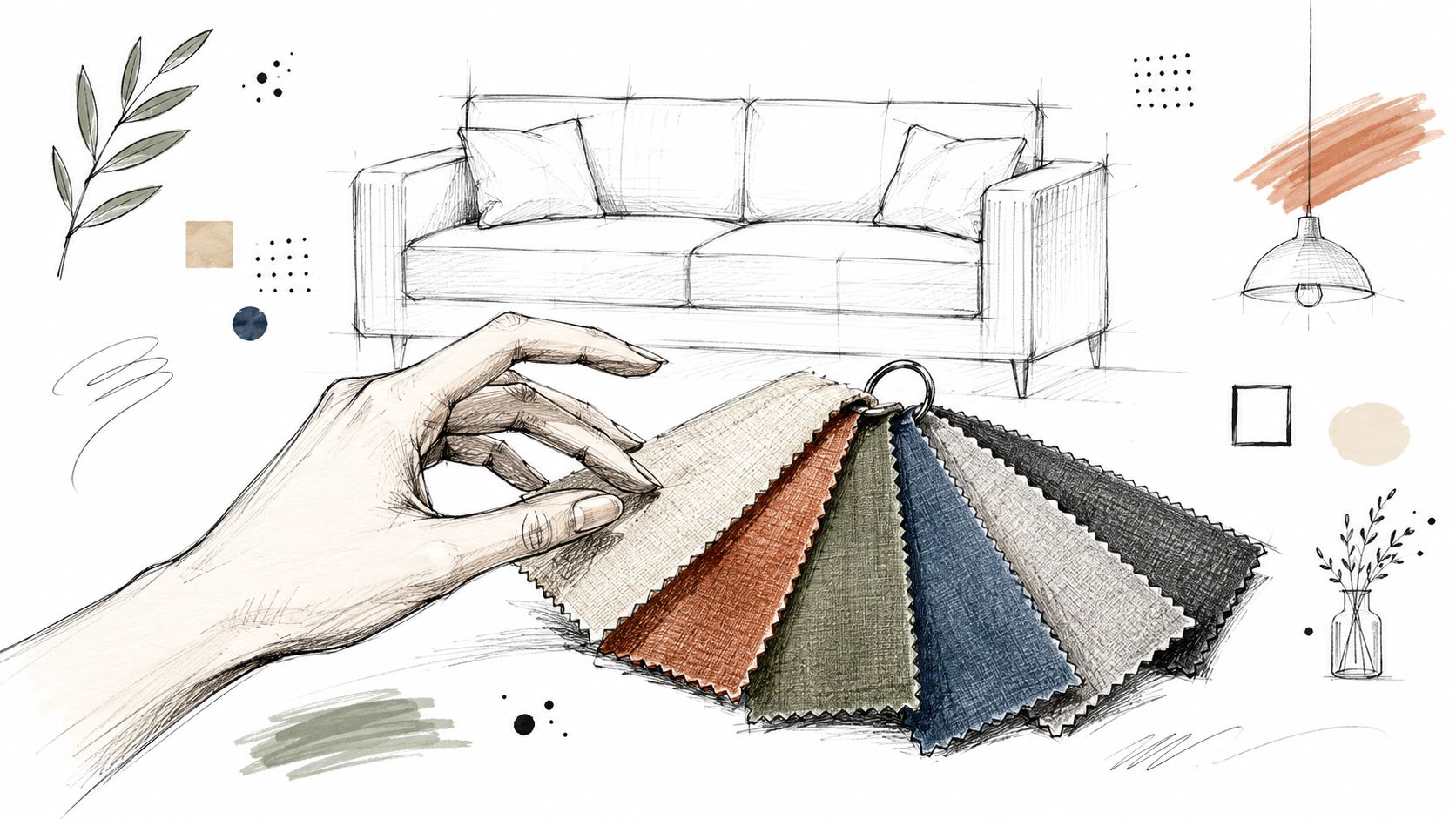
Why customization matters for performance upholstery
Custom upholstery helps solve that question with more precision. Instead of settling for a fabric or cushion that is close enough, you can match the piece to how your household lives. A custom-fitted sofa, chair, or sectional lets you pair the look you want with the stain resistance, seat feel, and finish that make daily use easier.
That matters because performance fabric is only one part of the equation. The frame affects how a piece sits in the room. The cushion construction changes whether it feels supportive or relaxed. The fabric changes both the appearance and the maintenance routine. Put together carefully, those choices create furniture that feels considered from every angle.
For many homeowners in South Georgia and North Florida, that guidance makes the process less overwhelming. A swatch can look perfect under store lighting and feel different once you compare it against wood tones, room size, or the way your family uses the space. Lott's associates help sort through those details in plain language, so the final choice feels clear instead of guesswork.
A practical path from idea to finished room
The process usually starts with a silhouette you already know you like. From there, the details get refined.
- Browse at home: Save styles that fit your room and note which shapes, arm styles, or seat depths stand out.
- Test in person: Visit the showroom to sit, compare fabrics, and see how different textures and finishes change the look.
- Customize with guidance: Work through fabric performance, cushion comfort, scale, and color with an associate who can explain the tradeoffs clearly.
- Receive the piece with care: Each order is inspected before delivery, and white-glove in-home delivery helps the furniture arrive ready for its place in the home.
Homeowners who want a clearer picture of how custom ordering works can start with Lott's guide to getting started with a custom order. It helps connect the showroom conversation to the practical steps of selecting, ordering, and waiting for a piece that is built for your room, not just pulled from a warehouse.
The result is personal. Your upholstery can be soft without feeling fragile, durable without looking stiff, and designed for how your home is used. That is the value of customization at Lott's Furniture. It turns fabric knowledge into a finished piece that supports a beautiful, worry-free home.