Save 50% Off MRSP on Lexington | Shop the Catalog >

How to Style a Bedroom: A Lott’s Furniture Guide


A bedroom often reaches the same awkward stage. The bed is in place, a dresser has been added, lighting was bought at a different time, and a few decorative pieces seemed right in the moment. Nothing is wrong, but nothing feels resolved either.
That's usually the challenge behind how to style a bedroom. Online inspiration makes the room look effortless. Real rooms need scale, function, comfort, and enough personality to feel lived in without tipping into clutter. The most successful bedrooms aren't assembled all at once. They're built in layers, with clear decisions about layout, color, furniture quality, and the details that make the room restful.
Defining Your Bedroom's Purpose and Style
A well-styled bedroom starts with a simple question. What does the room need to do every day?
For some households, the answer is straightforward. The room is a sleep-first retreat with as little visual noise as possible. For others, the bedroom also has to hold a reading chair, a quiet corner for morning routines, or a landing place for winding down at the end of a long day. If the room has to serve several purposes, each one needs to be named early. That step keeps the space from becoming a storage zone with a bed in the middle.

Start With Function Before Decor
A room that's meant for rest should feel different from a room that also has to support reading, dressing, or private relaxation. The furniture mix changes. The lighting plan changes. Even the amount of visible décor should change.
A useful first pass is to write down the room's essential elements:
- Sleep needs first. Mattress comfort, clear walkways, and light control matter more than decorative extras.
- Secondary use next. If the room needs a reading nook or vanity area, that function should have a defined home instead of being squeezed into leftover space.
- Storage with limits. Bedroom storage should support calm, not dominate it.
A bedroom looks finished when every visible piece appears to have a reason for being there.
Personal style comes after function, but it shouldn't be guessed at. A homeowner who's drawn to soft coastal materials usually won't be happy living with a heavy formal room, no matter how polished it looks. Someone who prefers clean lines may find overly romantic furnishings visually tiring over time. A practical shortcut is to use a style tool that narrows the field before shopping begins, such as this bedroom style quiz for every personality.
Build Around Personalization, Not a Matched Set
Bedroom design has moved strongly toward individuality. One in five couples now opt for separate or adjoining bedrooms, allowing each person to decorate a space around personal preferences, according to the trend report cited here. That shift says something broader about styling in general. People want bedrooms that reflect how they live, not rooms that look copied from a display floor.
That's why uniform bedroom suites often feel flat. A more compelling room mixes pieces with character, memory, and contrast. A traditional upholstered bed can sit comfortably with a simpler bench. A warm wood nightstand can balance painted case goods. If a homeowner wants to refine the look further, it also helps to explore mid-century modern aesthetic principles for clean lines, purposeful silhouettes, and a more collected feel.
Creating a Foundation with Layout and Color
The bed decides the room. Once its placement is right, the rest of the layout becomes much easier to resolve.
Place the Bed Before Choosing Anything Else
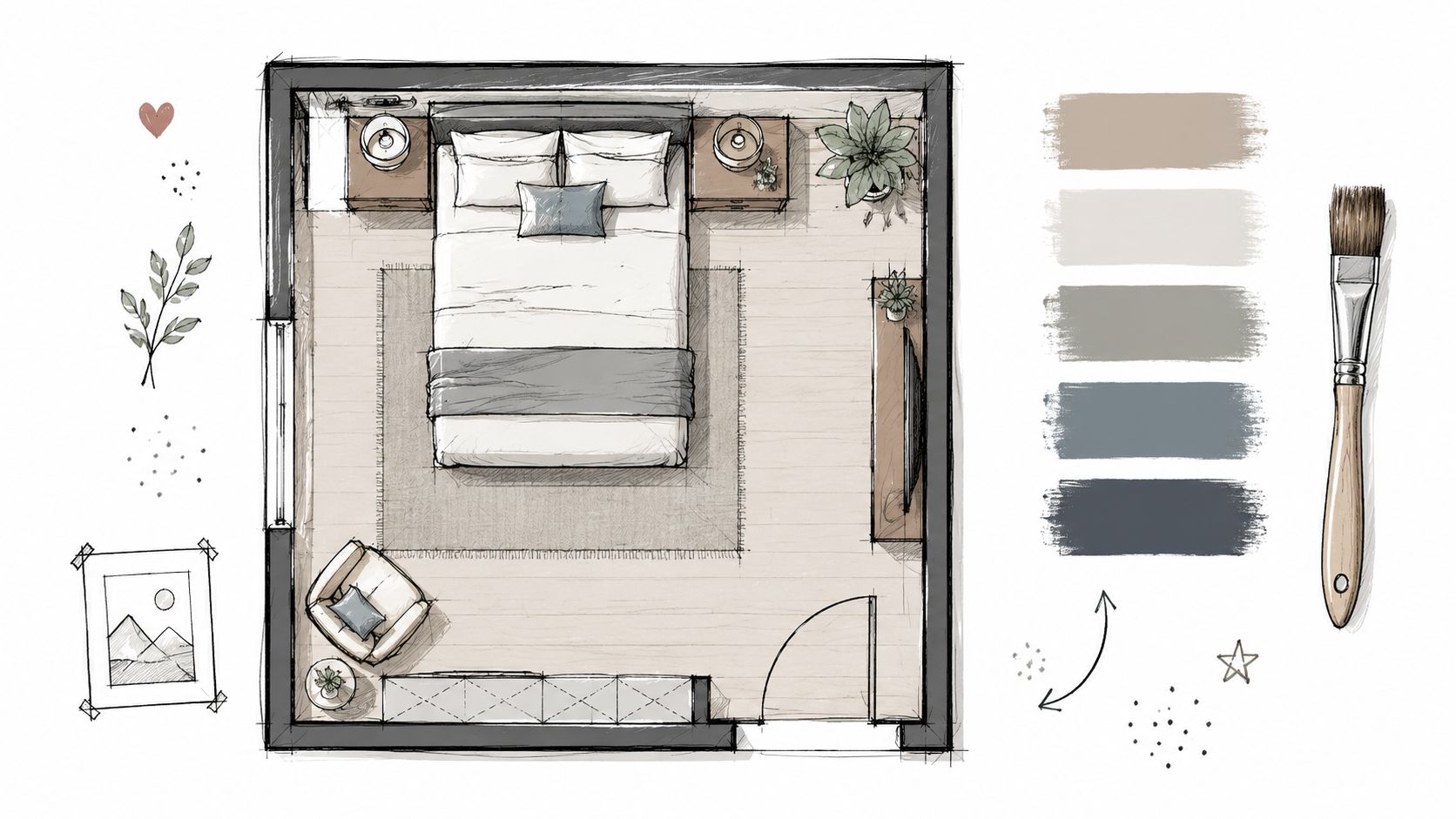
Expert guidelines state that the first step in styling is to establish the bed's position and a neutral color palette. For a balanced look, place the bed centrally on the longest wall, ensure pathways are clear, and mix solid bedding with textured pillows to create visual depth, as outlined in these bedroom styling guidelines.
That guidance holds up because it solves several common mistakes at once. It gives the room a focal point. It protects circulation. It avoids the uneasy feeling that comes from forcing furniture into spaces where it doesn't fit.
A few layout rules consistently work:
- Center the bed when the architecture allows it. Symmetry gives the room immediate calm.
- Protect the walking path. If someone has to turn sideways to move around the bed, the room is overfilled.
- Match furniture scale to the room. Oversized nightstands and bulky benches can make even a good layout feel cramped.
For homeowners dealing with unusual architecture, standard advice isn't always enough. Sloped ceilings and angled walls need zoning by usable height, not just guesswork. That's where placement choices matter even more than decoration. This guide to bedroom furniture arrangement ideas offers a useful starting point for thinking through proportions and flow.
Use a Neutral Base That Supports Layering
Color should steady the room before it adds personality. Bedrooms generally perform better when the envelope feels calm. Off-whites, creams, soft beiges, warm tans, and browns create a quieter backdrop for wood tones, upholstery, and artwork.
That doesn't mean the room has to be plain. It means the larger surfaces should do less so the layered details can do more.
Practical rule: If every piece is trying to be the star, the room won't rest.
A reliable formula is to keep the bedding relationship balanced. If the duvet or quilt is solid, bring in pattern or texture through a blanket and pillows. If the bedding has pattern, simplify the supporting layers. That contrast gives the eye a place to land.
What Works and What Usually Doesn't
| Approach | Usually Works | Usually Doesn't |
|---|---|---|
| Bed placement | Centered and accessible | Pushed into a corner without reason |
| Palette | Soft, cohesive neutrals with depth | Too many competing tones |
| Bedding mix | One dominant idea with supporting texture | Every layer in a different language |
| Traffic flow | Clear paths on both sides where possible | Furniture blocking natural movement |
A strong foundation won't call attention to itself. That's the point. It lets the room feel settled before a single finishing touch is added.
Selecting Investment-Quality Bedroom Furniture
A styled bedroom can't outrun weak furniture choices. If the bed is underscaled, the nightstands feel temporary, or the dresser lacks presence, the room won't gain depth no matter how carefully the accessories are arranged.
Choose Pieces That Carry the Room
Investment-quality furniture earns its place in a bedroom because it contributes more than surface appearance. It carries visual weight, holds up to daily use, and gives the room a sense of permanence. That matters in a space built around rest. The bedroom should feel anchored, not improvised.
The bed frame is the first decision. It's the focal point, and it should look intentional from every angle. Upholstered beds soften a room and absorb visual noise. Wood beds add structure and warmth. Curved silhouettes can soften a room full of hard lines, while clean profiles create a more restrained look.
Projection data for 2026 shows that 62 percent of designers favor artisanal production over mass manufacturing, with strong movement toward refined maximalism and eclectic styles, according to the 1stDibs design trends report. That aligns with what works in a bedroom. Pieces with craftsmanship, texture, and shape hold attention longer than furniture chosen only because it matches.

Scale Matters More Than Most Shoppers Expect
Nightstands should support the bed, not overpower it. Dressers should balance the room's wall space rather than consume it. Benches should feel proportional to the foot of the bed. These aren't small details. They're what separate a room that feels polished from one that feels slightly off.
A practical selection process looks like this:
- Start with the bed. Let the headboard height and visual weight set the tone.
- Choose companion pieces by proportion. Nightstands and dressers should belong to the same visual conversation, even if they don't match exactly.
- Add one piece with distinct character. A chair, chest, or bench often gives the room more life than another matching case piece.
Brand quality plays a role here because construction affects both appearance and longevity. In many bedrooms across South Georgia and North Florida, collections from Hooker Furniture, Lexington, and Stressless are the kinds of pieces that give a room staying power without making it feel rigidly formal.
Don't Separate Styling From Sleep Quality
A beautifully styled bedroom still fails if the bed itself doesn't support rest. Mattress selection belongs in the design conversation, not outside it. Comfort level affects how the room functions every night, and mattress height also influences how bedding, headboard scale, and nightstand proportion work together.
For that reason, it helps to review a practical buying resource before entering the showroom, such as this guide on how to select the perfect bedroom furniture. A digital mattress guide can also narrow comfort preferences and support needs before any final furniture decisions are made.
The strongest bedroom designs don't choose between comfort and style. They solve both at the same time.
The Art of Customization Your Personal Touch
A well-styled bedroom rarely comes entirely off the floor exactly as shown. Real homes ask for adjustments. A wood tone needs to relate to existing floors. Upholstery needs to work with wall color and light. A chair has to fit a reading corner without overwhelming it.
Understand Special Order and Custom Order
The terms often get blurred, but they're not the same. A special order is a ready-made piece from a manufacturer that a retailer doesn't typically keep in stock. A custom order involves the customer selecting the frame and or upholstery to be ordered on their behalf, based on this furniture ordering distinction.
That difference matters because it changes the level of control a homeowner has. Special order expands access to pieces beyond the showroom floor. Custom order shapes the piece itself around the room.
A useful way to consider this:
- Special order fits the room because the right item is brought in.
- Custom order fits the room because the item is customized before it arrives.
Where Personalization Pays Off
Bedrooms reward customization more than many other rooms because the environment is so personal. Fabric texture changes the mood of an upholstered bed. Finish color changes how warm or formal the room feels. Cushion comfort changes whether a bedroom chair is decorative or actively used.
One practical route is to begin with products clearly marked for customization. At Lott's Furniture, personalization is made simple. The website flags customizable items, and trained sales associates guide shoppers through the Special Order Program, helping them select the right frame, fabric, and finish, as described on the custom order information page. Most vendors in this category also support personalized choices in fabrics, finishes, and comfort levels, which gives the bedroom a more customized result than a one-size-fits-all purchase.
That process becomes especially useful for bedrooms that need one carefully chosen accent. A reading chair can shift from ordinary to integrated when the upholstery speaks to the bedding palette. A dresser becomes more at home when its finish connects to heirloom pieces already in the house. Even greenery can be selected with the same level of intention. Homeowners wanting soft, natural styling can find helpful ideas in this guide on how to decorate with houseplants, especially for choosing placement that adds life without crowding surfaces.
Why Guidance Matters
Customization offers freedom, but too many options can make decision-making harder. That's where style quizzes, mattress guidance, and in-store associates become practical tools rather than extras. The digital catalog makes it easy to compare silhouettes and finishes at home. Showroom visits make it easier to confirm scale, texture, and comfort in person, especially for shoppers moving between online research and visits to Fernandina Beach, FL.
Layering Textiles and Lighting for Ambiance
A bedroom can have the right furniture and still feel unfinished. The missing layer is usually softness. Textiles and lighting are what turn a furnished room into a retreat.
A Stark Room Becomes Grounded
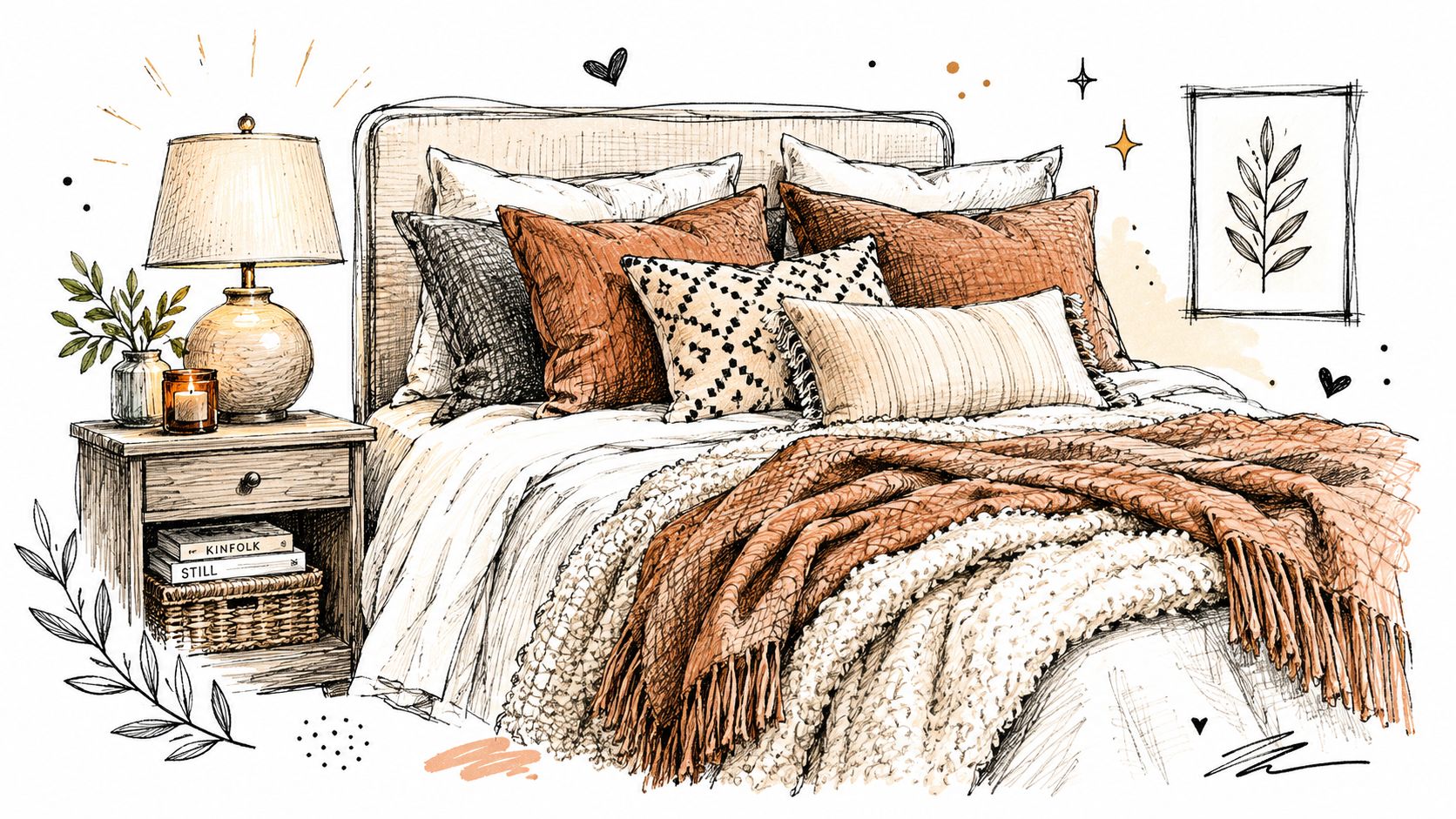
Consider the common before state. The bed is made, but it looks like it's floating because the rug is too small or missing entirely. The windows have simple panels hung right at the frame, which shortens the wall visually. Lighting comes from one overhead fixture, so the room is bright when it should be calm and dim when it needs task light.
The after version is rarely dramatic in terms of quantity. It's about better placement. For a professionally styled look, at least two-thirds of the area rug should sit under the bed, drapes should be hung higher than the window frame to create the illusion of height, and lighting works best with at least two warm light sources on dimmers, according to this bedroom styling reference.
That one set of adjustments changes the room immediately. The rug anchors the bed. The drapery elongates the wall. The lighting gives the bedroom more than one mood.
Layer Bedding and Window Treatments With Intention
A polished bed usually combines smooth surfaces with tactile ones. Crisp sheets, a coverlet or duvet, and accent pillows with a different hand keep the room from feeling flat. The same principle applies to windows. Drapes should feel full enough to frame the opening properly rather than skim it.
A few details make the difference:
- Rug placement first. A rug that barely touches the bed reads underscaled.
- Drapery fullness next. Full panels look polished. Thin panels often disappear.
- Texture in moderation. Linen, cotton, velvet, and woven accents can coexist if the palette stays controlled.
For readers drawn to richer rooms, this article on layering textures in maximalist decor offers useful inspiration for combining softness, pattern, and depth without losing comfort.
Bedrooms should brighten for function and soften for evening. One switch rarely handles both well.
Light the Room at Different Levels
The best bedrooms don't rely on a ceiling fixture alone. They use light where people live inside the room. Bedside lamps support reading. A floor lamp can define a corner chair. Warm bulbs and dimmers help the room shift naturally from morning to evening.
A helpful reference point for this layered approach appears in this guide to creating a sleep sanctuary through lighting, temperature, mattress, and bedding. It reflects the larger truth of bedroom styling. Ambiance isn't one item. It's a sequence of coordinated choices.
The Finishing Touches and Our White-Glove Delivery
The last layer should feel personal, not crowded. Artwork, books, framed photographs, and collected objects work best when they're edited. A bedroom doesn't need every meaningful item from the house. It needs the right few, placed with enough breathing room to let them matter.
One arrangement over a dresser, one stack of books at the bedside, and one object with memory or texture often does more than a dozen scattered accessories. The room should still support rest. Finishing touches should tell a story subtly.
This is also where the gap between online inspiration and real execution usually closes. Homeowners often begin by browsing digital catalogs, narrowing silhouettes, finishes, and color ideas at home. Then they confirm comfort, scale, and material in person. That online-to-showroom rhythm is especially useful for shoppers across South Georgia and North Florida, including those visiting Fernandina Beach, FL.
The last practical step is delivery. Furniture should arrive ready to live with, not as another project. Every piece should be inspected before it enters the home, and placement inside the room should be handled with care. A white-glove standard matters in bedrooms because these rooms rely on exact positioning. Bed placement, rug alignment, and case piece spacing all affect the final look. Homeowners comparing delivery expectations can review what in-home setup includes through this overview of furniture delivery and assembly services.
The result is a bedroom that feels considered from the first layout decision to the final bedside lamp. That's what makes styling successful. The room doesn't just look finished. It works beautifully for the people who sleep there.
For homeowners in South Georgia and North Florida who want help turning inspiration into a finished room, Lott's Furniture offers a practical next step. Browse the digital catalog, take an online style consultation approach with the available guides and quizzes, or visit the Fernandina Beach showroom to compare materials, comfort, and scale in person.