Save 50% Off MRSP on Lexington | Shop the Catalog >

Best Mattress for Motion Isolation: The 2026 Buyer’s Guide

A partner rolls over. The bed answers like a small wave. One sleeper barely notices, the other is suddenly wide awake and staring at the ceiling at 2:13 a.m.
That's usually the moment shoppers start looking for the best mattress for motion isolation. It isn't a luxury problem. It's a sleep system problem, and it affects couples, light sleepers, parents with kids who climb in at dawn, and anyone whose rest gets broken by movement they didn't cause.
For households across South Georgia and North Florida, the right answer usually isn't “buy the softest bed” or “buy the firmest bed.” It's finding the mattress construction that contains motion, then pairing it with the right foundation and testing it the right way. A cleaner sleep routine matters too, which is why practical resources like Protect-A-Bed for healthy sleep can help round out the bedroom environment.
The Search for Undisturbed Sleep
The search usually starts the same way. One partner sleeps soundly through anything. The other feels every shift, every knee bend, every edge sit, every trip back from the bathroom. By morning, both people are annoyed for different reasons.
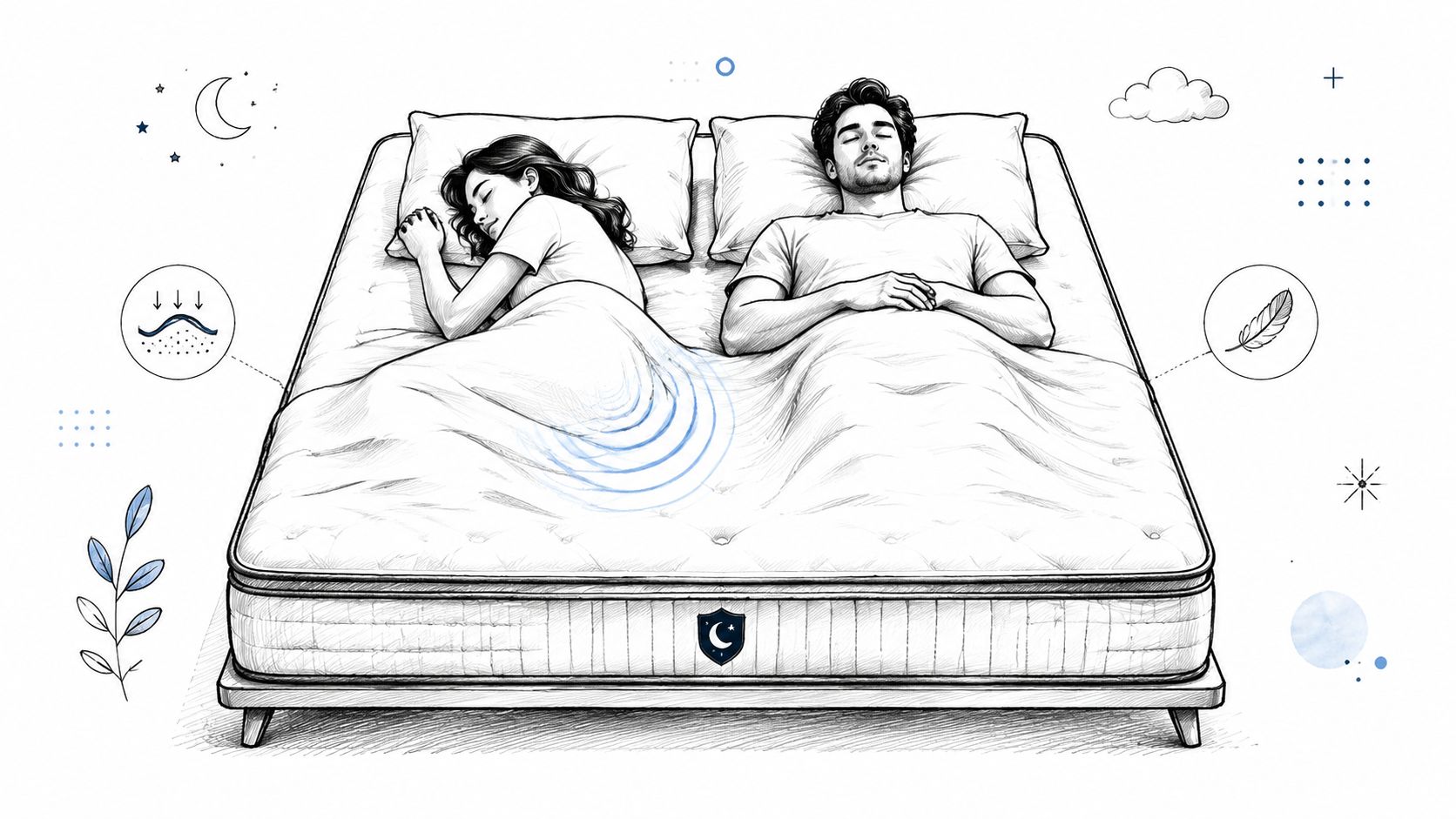
A mattress that handles motion well changes the tone of a bedroom fast. The room feels calmer. Sleep feels deeper. Couples stop negotiating around every small movement and start waking up less irritated.
Why motion isolation matters in real homes
Most shoppers come in thinking motion transfer is just about springs versus foam. That's only part of it. The full picture includes the mattress build, the support underneath it, and whether the feel matches the way both sleepers use the bed.
For many families, the bedroom isn't just a place to sleep. It's where one person reads while the other turns in early. It's where pets jump up. It's where a child lands after a bad dream. A stable mattress keeps those interruptions from spreading across the whole surface.
A peaceful bedroom isn't built by chance. It's built by choosing materials that absorb movement instead of echoing it.
Shoppers in South Georgia and North Florida also don't need to guess their way through the process. The strongest path is simple:
- Start digitally: Use online tools to narrow the field before leaving home.
- Test in person: Visit the showroom in Fernandina Beach, FL, and feel the difference between constructions.
- Ask for guidance: In-store associates, style quizzes, and a mattress guide make the decision clearer.
- Think beyond the mattress: The frame and foundation matter more than most online lists admit.
That mix of digital convenience and in-person testing is where mattress shopping starts making sense.
How Mattress Motion Isolation Really Works
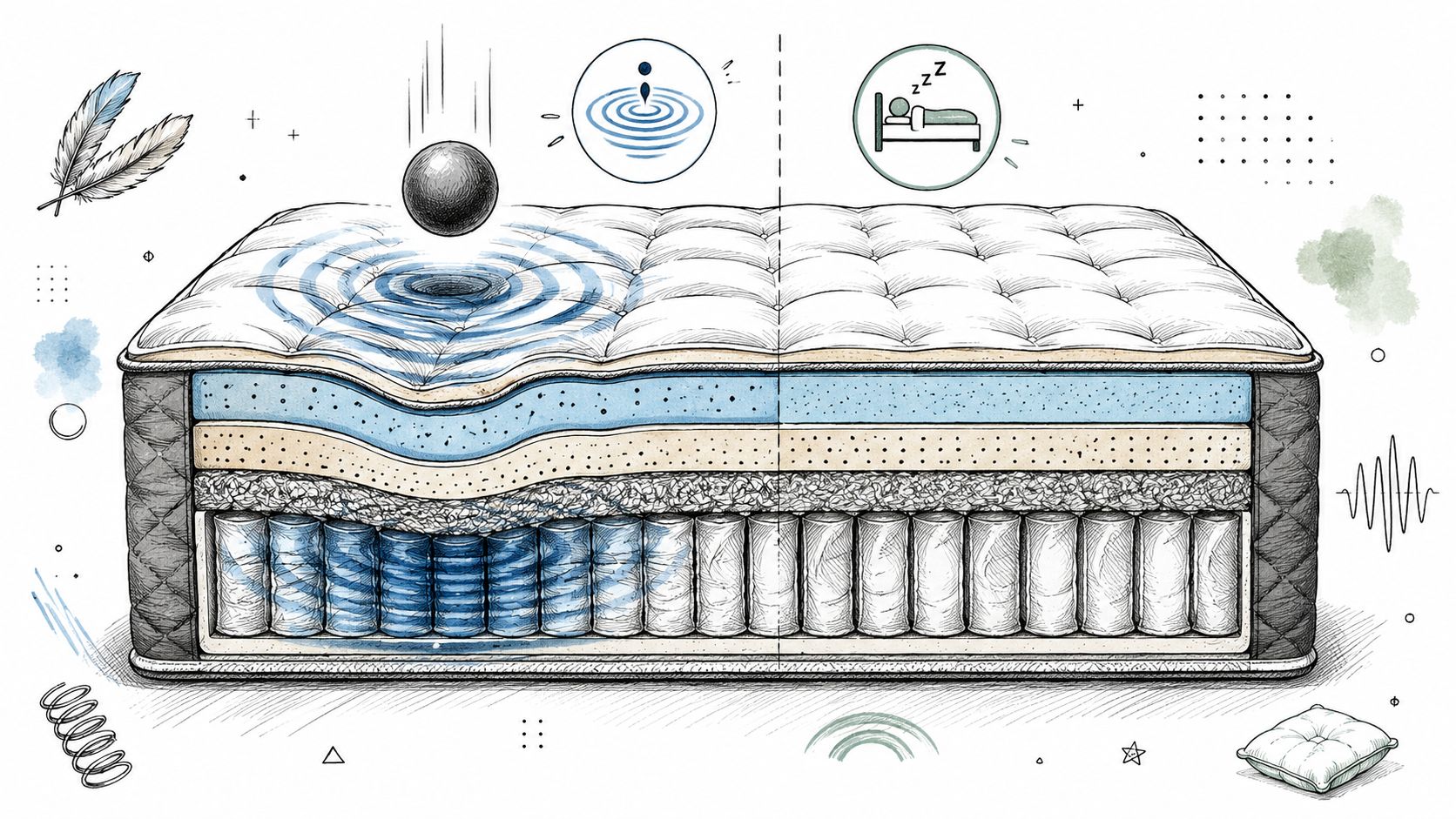
Motion isolation comes down to one question. Does the mattress contain movement at the point of impact, or does it push that movement across the surface?
Beds that share tension across the whole mattress pass motion farther. Beds that compress in a smaller, more controlled area keep one sleeper's movement from bothering the other. That is the difference shoppers feel at 2 a.m. when someone rolls over, gets up early, or climbs back into bed.
The materials that stop movement
All-foam mattresses with a polyfoam support core and a memory foam comfort system consistently rank highest for motion isolation because the dense memory foam absorbs surface-level motion while the polyfoam ensures isolated compression for a stable sleep surface, according to Sleep Foundation's motion isolation methodology.
That principle matters more than marketing terms. A mattress performs well when pressure stays local. One sleeper changes position, the surface responds in that spot, and the rest of the bed stays quieter.
The gap between constructions is not small. Foam tends to absorb movement. Traditional connected-coil designs tend to spread it. If you are deciding between those two categories, this guide to memory foam vs innerspring mattresses gives a clear side-by-side explanation of how each one feels in daily use.
Density and layering decide the outcome
Material type is only half the story. Layer density, layer thickness, and the transition between comfort layers and support layers all affect how much motion gets through.
Higher-density foams usually do a better job of slowing rebound. Thicker comfort systems usually do a better job of softening sharp movement before it reaches the other side of the mattress. Thin foam over a lively support unit often looks good on paper and feels much busier in person.
Hybrids can work very well, but only when the upper foam layers are substantial and the coils move independently instead of acting like one connected network.
The support under the mattress matters too. A quiet mattress on a weak frame, bowed foundation, or loose slats will still feel more active than it should. That is one reason online specs only take a shopper so far. At Lott's, you can lie on the mattress, feel how the layers respond, and judge the whole sleep system the way it will perform in a real bedroom.
Comparing Mattress Constructions for Motion Performance
A couple can agree on firmness and still sleep badly if the mattress passes every turn, shift, and late-night exit across the surface. Construction decides that outcome fast.
Here is the straight answer. Memory foam usually gives couples the calmest sleep. A well-made hybrid comes next. Latex is more responsive and usually a little livelier. Traditional innerspring models are the weakest option for motion control.
Mattress Type Motion Isolation Comparison
| Mattress Type | Motion Isolation Performance | Best For |
|---|---|---|
| Memory Foam | Excellent | Light sleepers, couples, and guest rooms where quiet sleep matters most |
| Hybrid with pocketed coils and thick foam layers | Very good to excellent | Couples who want better motion control without giving up airflow and easier movement |
| Latex | Moderate | Sleepers who like a buoyant, responsive feel |
| Traditional Innerspring | Fair to poor | Shoppers who care more about bounce than partner disturbance |
If you want a coil-and-foam design, this guide on what a hybrid mattress is helps separate a true hybrid from a mattress that just borrows the label.
Memory foam is still the safest pick
Memory foam performs well because it absorbs movement close to where it starts. One sleeper rolls. The foam compresses in that spot and keeps more of that motion from traveling across the bed.
That is why memory foam remains the first recommendation for couples dealing with partner disturbance. If the main goal is fewer wake-ups, start there.
The trade-off is feel. Some sleepers like the close contouring. Others want more bounce and easier repositioning. That does not change the ranking for motion control. It just affects whether the mattress also feels comfortable enough to live with every night.
Hybrids work well when the build is serious
A good hybrid can come very close to all-foam performance, but only if the comfort system is doing real work. Thin foam over springs will not cut it.
Shoppers should look for these details:
- Pocketed coils: Each coil responds on its own instead of pulling neighboring coils into the movement.
- Thicker comfort layers: More foam on top does more to soften sharp movement before it reaches the support core.
- Higher-quality materials: Dense foams and a stable coil unit usually feel quieter and less jumpy.
- A steady support system underneath: The mattress can only perform as well as the frame, slats, or foundation supporting it.
This is one of the biggest gaps between online shopping and trying beds in person. Two hybrids can sound similar in a product description and feel completely different once you lie down on them. At Lott's, shoppers from North Florida and South Georgia can test that difference in a full sleep setup, not just read specs and hope for the best.
Latex lands in the middle
Latex has plenty to like. It sleeps responsive, supportive, and easier to move on than many memory foam beds.
It also carries more motion. The same springy character that makes latex comfortable for active sleepers keeps it from feeling as hushed as foam. For couples who hate a slow-moving mattress, that may be a fair trade. For light sleepers who wake at every shift, it usually is not the best answer.
Traditional innerspring is the wrong place to start for motion issues
Classic innerspring beds with interconnected coils spread force across the mattress. One person moves, the surface reacts beyond that one spot. That bounce can feel lively in a showroom for thirty seconds. It gets old quickly if your partner tosses, turns, or gets up before sunrise.
For shoppers trying to solve motion transfer, traditional innerspring should sit at the bottom of the list.
Store guidance helps here because motion performance is easy to misjudge from marketing copy alone. A mattress may sound quiet on paper and still feel busy once it is paired with the wrong base or set on a frame with flex. That full sleep-system view matters, and it is one reason in-store testing saves many families from buying the wrong mattress the first time.
How to Test a Mattress for Motion Isolation
A mattress can sound perfect online and still fail in person. Motion control has to be felt, not just described.
The old wine-glass idea is fine as a visual trick, but it isn't how real sleepers experience the bed. Human bodies create rolling, twisting, edge-loading movement. That's what needs testing.
The right way to test in a showroom
Shoppers who want the best mattress for motion isolation should test with purpose in the Fernandina Beach showroom. Randomly sitting on a corner for ten seconds won't tell the story.

A practical pre-shopping checklist is available in these tips for buying a new mattress. It helps narrow comfort preferences before a showroom visit, which saves time and usually improves the final choice.
Use this sequence on every mattress under consideration:
- Lie in a real sleep position. One person should settle in naturally, not stiffly.
- Have the partner change positions. Rolling from side to back is more revealing than a gentle hand press.
- Test getting in and out of bed. Entry and exit often create the most noticeable disturbance.
- Check the perimeter. Sit and lie near the edge to see whether the mattress dips or throws motion inward.
- Pause and notice after-movement. The key isn't just what's felt immediately. It's whether vibration lingers.
What shoppers should pay attention to
Shoppers often focus on the big movement and miss the small one. A mattress may hide major turning well but still send subtle tremors through the surface. Light sleepers usually notice those tremors.
Here's what matters most during testing:
- Surface shake: Does the bed flutter after movement?
- Compression spread: Does one sleeper's weight create a broad dip?
- Edge reaction: Does sitting on one side tug the other side downward?
- Recovery feel: Does the bed settle smoothly or keep reacting?
A mattress passes the showroom test when one person can move normally and the other person doesn't feel compelled to brace for it.
Why digital research still helps
Online shopping tools still play an important role. Style quizzes can help match the bedroom aesthetic, and a mattress guide can narrow likely comfort categories before a showroom visit. That digital-to-showroom path is especially useful for busy households in South Georgia and North Florida who don't want to wander through dozens of models without a plan.
The strongest process is simple. Browse the digital catalog first. Save the likely contenders. Then visit Fernandina Beach, FL, and test those finalists with an associate nearby to interpret what the body is feeling.
That's how “try before you buy” becomes useful instead of overwhelming.
Your Bed Frame A Hidden Source of Motion Transfer
A couple can spend good money on a mattress with strong motion control, bring it home, and still wake each other up all night. The mattress gets blamed first. The actual problem is often underneath it.
An old frame, bowed slats, or a weak center support can turn the whole bed into a vibration path. The mattress may do its job on the surface, but the base can carry movement across the room side to side. That is why motion isolation should never be judged as a mattress-only feature. It belongs to the full sleep system.
Here is what usually causes trouble under the bed:
- Flexible slats: Too much bend lets movement travel instead of stopping it.
- Loose joints or hardware: Small shifts in the frame create shake and noise.
- Poor center support: Larger mattresses need solid support through the middle to stay level.
- Worn foundations: Older bases can add bounce that the mattress was never designed to manage.
- Wrong support for the mattress type: Some mattresses need a flatter, firmer base than older setups provide.
Shoppers ask about box springs all the time, and the right answer depends on the mattress and the frame working together. This guide on why some mattresses still need the right kind of box spring support explains which setups hold a bed steady and which ones create extra movement.
For motion-sensitive sleepers, I recommend a rigid platform or the manufacturer-approved foundation first. Stable support keeps the mattress level, keeps the comfort materials working as intended, and cuts down on that ripple effect a partner feels during turns, exits, and late-night readjustments.
Furniture quality matters here too. Well-built bedroom pieces from trusted manufacturers do more than finish the room nicely. They hold the mattress in a calm, even position night after night.
That is one advantage of shopping in person with a local store that knows the homes and sleep habits of North Florida and South Georgia families. You can test the mattress, inspect the support system, and ask whether your current frame is helping or hurting motion control before you buy. That practical advice saves people from replacing a mattress when the actual fix is the structure holding it up.
Finding Your Personalized Comfort at Lott's Furniture
A mattress that keeps one couple asleep all night can leave another pair wide awake by 2 a.m. Motion isolation is only part of the decision. Your body type, sleep position, heat level, and preference for a hugging feel or a quicker response all matter just as much.
For many couples, medium to medium-firm is the right place to start. It usually holds the body steady without feeling hard, and it avoids the excess sink that can make movement feel less controlled.
If your partner wakes easily, start with all-foam. It usually does the best job absorbing movement before it reaches the other side of the bed. If you want more bounce, easier repositioning, or better airflow, move to a hybrid with individually pocketed coils and dense comfort layers on top. That is the practical order I recommend in the showroom because it saves time and rules out poor fits fast.
Shopping well means testing the whole sleep setup, not just the mattress panel you lie on for five minutes. At Lott's Furniture, shoppers in North Florida and South Georgia can research styles online, then come in and feel the difference for themselves. That in-store step matters. You can compare foam against hybrid, check edge support, and ask whether the bed frame and foundation you own will help this mattress stay quiet or work against it.
A smart buying process usually looks like this:
- Start with your sleep habits, not marketing terms
- Narrow the comfort level before you worry about fabric or finish
- Test mattresses in person with your normal sleep position in mind
- Ask how your current frame, slats, or foundation may affect motion control
- Coordinate the mattress with the rest of the room if you are updating more than the bed
That last point gets overlooked all the time.
Many bedroom projects turn into full room updates because people want the sleep space to feel settled, functional, and visually put together. That may include comfortable seating, custom upholstery options in other rooms, or polished bedroom styling that matches the new bed. The goal is not to decorate around a mattress. The goal is to build a room that supports better rest from the floor up.
Lott's also helps close the gap between online browsing and a finished room at home. If you are planning delivery, setup, and room placement, their furniture delivery and assembly service makes that process much easier. The same care people expect from TLC Moving's premium Boston relocation applies here too. Careful handling, correct placement, and a properly assembled sleep setup protect the purchase you just made.
For shoppers in Fernandina Beach and across the region, that mix of local advice, in-person mattress testing, and full-room planning is what makes the decision clearer. You are not guessing from a product page. You are choosing a mattress, support system, and bedroom setup that work together.
The Lott's White-Glove Delivery Standard
A good mattress still needs a proper finish to the buying experience. Delivery matters because setup mistakes, packaging left behind, or a poorly positioned foundation can undercut the whole upgrade.
The practical comfort target usually remains medium to medium-firm, since that level tends to balance stability and pressure relief better than overly hard or overly plush builds, based on the verified guidance for this topic. Once that mattress is chosen, setup should be handled carefully and completely.
A helpful example of what premium handling looks like outside the furniture category appears in TLC Moving's premium Boston relocation, where white-glove service emphasizes care, placement, and a polished final result. That same principle matters in the bedroom.
For shoppers arranging delivery and setup, Lott's process is outlined through furniture delivery and assembly services. Every piece undergoes a rigorous multi-point inspection before it reaches the home, and the in-home team places the furniture in the room of choice rather than leaving the customer with a boxed project at the door.
That's the last step in turning a mattress purchase into a finished sleep space.
For shoppers in South Georgia and North Florida who are ready for quieter nights, Lott's Furniture offers a practical next step. Browse the digital catalog, use the style quizzes and Mattress Guide, then visit the Fernandina Beach showroom for a real motion-isolation test with an in-store associate. The result is a more confident choice, a better-supported sleep system, and a bedroom that feels like a curated sanctuary instead of a compromise.