
Memory Foam Mattress vs Latex: A 2026 Buyer’s Guide


A mattress shopper usually reaches the same point. Two beds feel good for three minutes in the showroom, ten browser tabs say opposite things online, and the core question still hasn't been answered. Which one will feel right at midnight, at 3 a.m., and five years from now?
That's where the memory foam mattress vs latex decision gets real. This isn't just a matter of soft versus firm. It's a decision about how a body settles into the bed, how easily it turns at night, how much heat builds up, and whether the mattress still feels supportive after years of use. The right choice depends less on the label and more on body type, sleep position, and long-term comfort goals.
Choosing Your Foundation for Restful Nights
A good bedroom doesn't start with decorative pillows. It starts with the surface carrying every hour of rest.
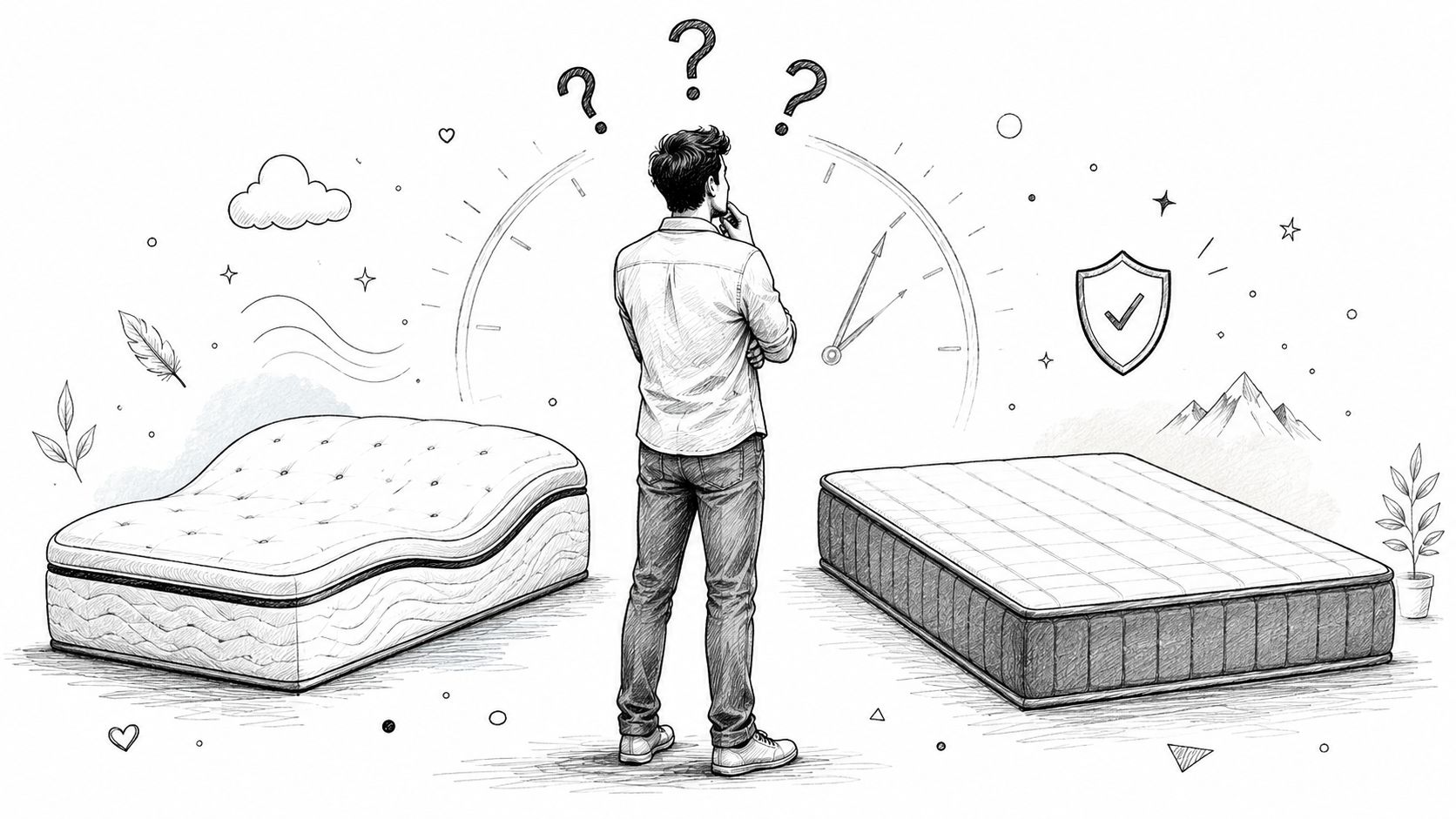
Many shoppers arrive at this decision after a familiar pattern. A side sleeper wakes up with pressure at the shoulder. A stomach sleeper feels the hips dropping too far. One partner loves a soft, cradled feel, while the other wants easier movement and less heat. The mattress that once felt fine has started to feel like compromise.
That's why this comparison matters. Memory foam and latex are both popular for good reason, but they solve comfort in completely different ways. One molds closely and slows movement. The other pushes back, lifts, and responds faster.
Why the confusion happens
Most mattress advice flattens the conversation into simple labels. Plush. Firm. Cooling. Supportive. Those words aren't enough.
A mattress can feel soft on the surface and still hold the spine well. Another can feel supportive for ten minutes but trap heat over the course of a night. Foundation matters too, which is why it helps to understand why a proper box spring or support system still matters for many beds.
The best mattress choice isn't the one with the loudest feature list. It's the one that matches how a specific sleeper rests, turns, and carries weight.
What this decision should be based on
Shoppers comparing memory foam mattress vs latex should focus on four things first:
- Body shape and weight: A mattress reacts differently to a lighter frame than it does to a heavier one.
- Primary sleep position: Side, back, stomach, and combination sleepers need different pressure relief and pushback.
- Temperature preference: Some people sleep comfortably on contouring foam. Others need more airflow.
- Long-term expectations: A value-focused purchase and an investment-quality purchase aren't the same decision.
That's the practical lens. Not hype. Not buzzwords. Just how the mattress feels, supports, and lasts in real life.
The Feel of Memory Foam vs The Feel of Latex
Lie down on memory foam after a long day, and you'll feel the bed give way around your shoulders, hips, and lower back. Lie down on latex, and you'll notice the opposite right away. It holds you up, keeps you lifted, and responds the moment you shift.
What memory foam feels like
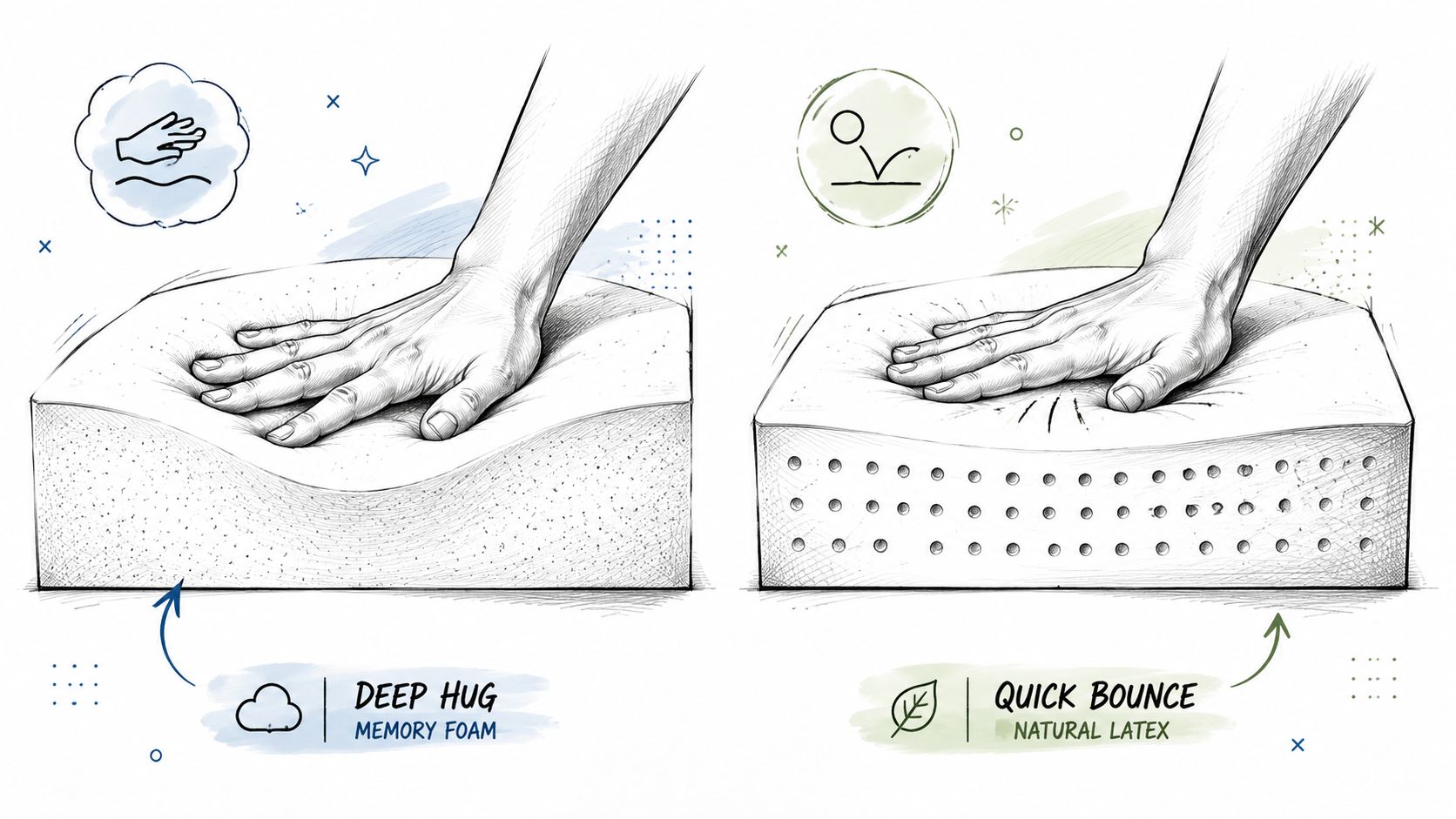
Memory foam gives a deeper cradle. It contours closely, softens under pressure, and creates that familiar body-hugging feel many shoppers ask for the minute they walk into our showroom.
For side sleepers with sharper pressure points, that can feel terrific. The mattress fills in gaps and cushions joints in a way that often feels gentle and quiet. Couples also tend to like the more settled surface because movement on one side of the bed is less noticeable.
The tradeoff is simple. Some sleepers feel stuck.
If you carry more weight through the hips and midsection, or if you switch positions often through the night, memory foam can feel slower than you want. Instead of helping you float back into place, it asks your body to work a little harder. If that concern sounds familiar, it also helps to compare how memory foam differs from a more traditional innerspring feel before you decide what kind of response you prefer.
What latex feels like
Latex feels springier, faster, and more supportive from underneath. You rest on top of it more than inside it. That one difference changes the whole experience.
Back sleepers and combination sleepers often prefer latex because it keeps the body lifted while still offering comfort at the shoulders and hips. Heavier sleepers often notice this even more. Latex tends to resist that swallowed-up feeling and does a better job maintaining an easier, more mobile surface over time.
It feels cleaner in its response too. Press down, and it pushes back quickly. Roll over, and the mattress moves with you instead of a second later.
Why the difference matters in real life
This isn't just about whether a mattress feels soft or firm. It's about how your body meets the surface hour after hour, year after year.
A petite side sleeper who wants pressure relief around the shoulders may love memory foam's close contouring. A tall back sleeper with broader shoulders and more weight through the torso usually does better with latex because the support stays more level and the bed doesn't feel as restrictive. A combination sleeper who twists from side to back to stomach needs quick response, not drag.
That is the main dividing line.
- Choose memory foam if you want a close cradle, quieter motion control, and a more enveloping feel.
- Choose latex if you want easier movement, more pushback, and a surface that keeps you lifted.
- Choose based on your body, not a showroom label. The right feel should match your build, your sleep position, and the kind of comfort you want to live with for years.
The short version
Memory foam suits sleepers who want the mattress to shape itself around them. Latex suits sleepers who want comfort with more freedom to move.
If you're building a sleep setup that feels calm, supportive, and easy to live with long term, this choice sets the tone for the whole room.
A Side by Side Mattress Comparison
Once shoppers move past first impressions, the primary decision usually comes down to ownership. How warm the mattress sleeps. How much movement you feel from a partner. How well the edges hold up. How long the comfort lasts before the mattress starts feeling tired.
That is where the differences get practical.
Memory Foam vs Latex at a Glance
| Feature | Memory Foam | Latex |
|---|---|---|
| Overall feel | Deep contouring, body-hugging | Buoyant, lifted, responsive |
| Ease of movement | Slower response, more sink-in feel | Faster response, easier to turn |
| Motion isolation | Better at absorbing partner movement | More responsive, so some motion is easier to notice |
| Temperature regulation | Can retain more heat | Generally cooler and more breathable |
| Edge feel | Can compress more at the perimeter | Usually feels sturdier at the edge |
| Entry price | Lower upfront cost in many models | Higher upfront investment |
| Longevity | Often wears out sooner | Often keeps its support longer |
| Best fit for | Sleepers who want pressure relief and motion control | Sleepers who want support, bounce, and durability |
Where memory foam earns its place
Memory foam is the stronger pick for sleepers who want a quieter surface. If your partner gets up early, shifts often, or drops into bed late, memory foam usually does a better job muting that movement.
It also gives many shoppers an easier starting price. That matters in guest rooms, first homes, and bedrooms where budget matters but comfort still needs to be right. If you are deciding between all-foam construction and a coil-based bed, our guide to memory foam versus innerspring mattresses can help narrow that down.
For lighter frames and side sleepers, that pressure relief can feel excellent for the first few minutes and the sixth hour.
Where latex justifies the higher price
Latex is the better buy for shoppers who care about staying supported over time. It responds faster, usually sleeps cooler, and keeps a more stable feel as the years pass.
That matters most for heavier body types, combination sleepers, and anyone who dislikes the stuck-in-the-bed sensation. In our showroom, these shoppers usually know quickly when latex is the better fit because they can turn, shift, and get out of bed without fighting the surface.
The edge support often feels more dependable too. If you sit on the side of the bed to get dressed or you share a queen size with a partner, that extra stability makes daily use more comfortable.
The tradeoff that actually matters
Memory foam usually asks for less money upfront. Latex usually gives more back over the life of the mattress.
That is the comparison worth making.
A lower price on day one does not always mean a better value five or eight years from now. If you are building a bedroom that should feel calm, supportive, and finished for the long haul, latex often makes more sense. If you want strong pressure relief now and need to keep the budget tighter, memory foam is still a smart choice.
Our honest recommendation
Choose memory foam if you want:
- Better motion control for couples and light sleepers
- Deeper pressure relief around shoulders and hips
- A lower upfront cost without giving up comfort
Choose latex if you want:
- Easier movement through the night
- A cooler, less heat-trapping surface
- Stronger long-term value and a more investment-grade feel
The best mattress material depends on the body sleeping on it and the years you expect it to perform. Buy for your build, your sleep habits, and how you want the room to feel night after night.
Which Mattress Is Best for Your Sleep Style
The best mattress isn't universal. It's personal. A mattress that feels excellent for a lighter side sleeper can feel unstable to a heavier stomach sleeper.
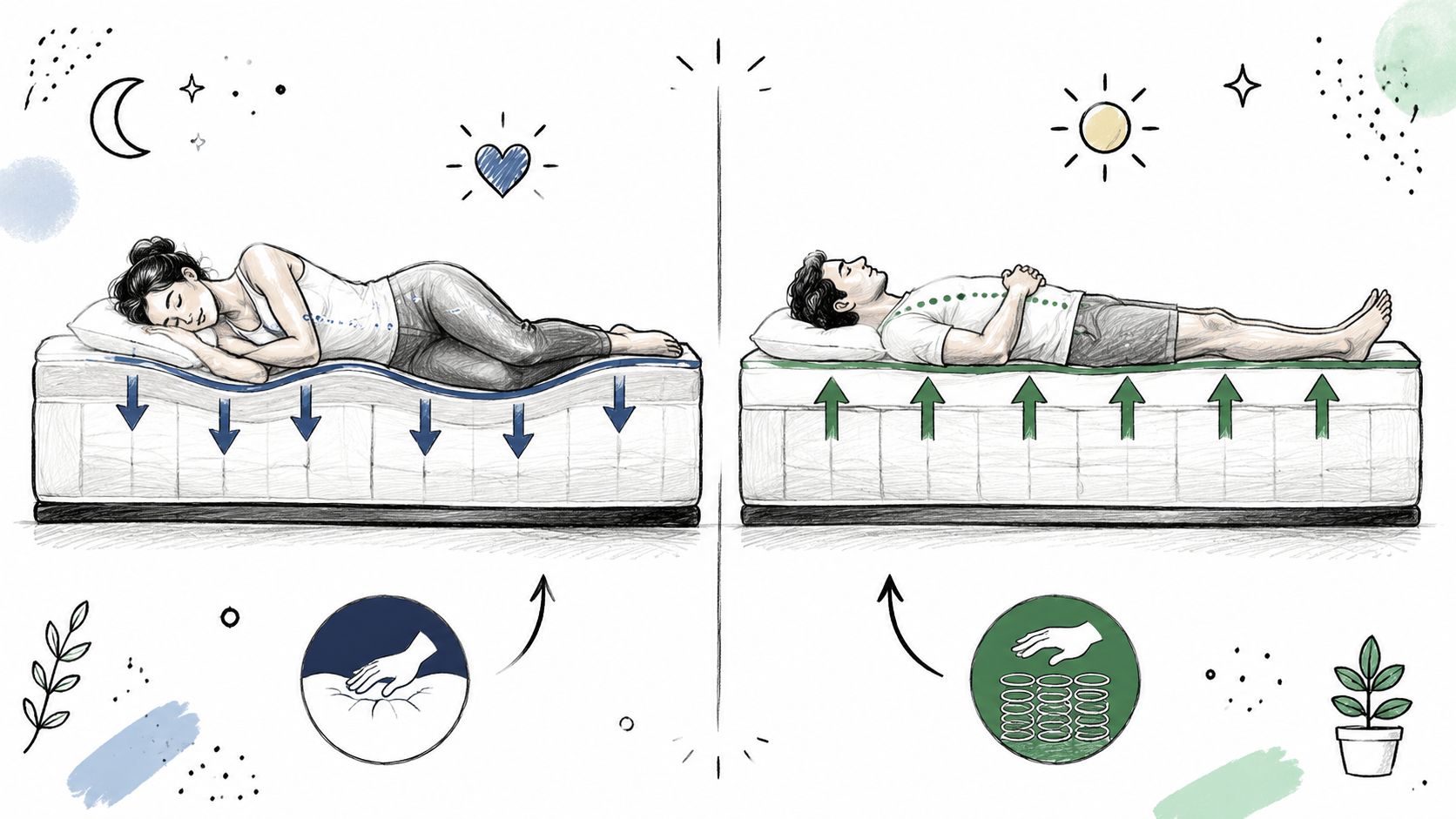
Guidance on this topic is clearest when it focuses on body weight and sleep position. As explained in Airpedic's discussion of latex versus memory foam by sleeper type, memory foam's deep contouring is ideal for pressure relief in side sleepers, while latex's responsive support is often better for heavier sleepers or stomach sleepers who need to avoid excessive sinkage to maintain spinal alignment.
Best choice for side sleepers
Side sleepers usually need the most pressure relief. The shoulder and hip press into the mattress, so a surface that contours well often feels much better over the course of a night.
That points many side sleepers toward memory foam. It cushions those pressure points and creates a more form-fitting cradle. For a lighter sleeper, that closer contouring can feel especially comfortable because the body may not sink far enough into a firmer, springier surface to get the same relief.
Best choice for back and stomach sleepers
Back sleepers need support that keeps the midsection from dipping too far. Stomach sleepers need that even more. Once the hips sink too low, the spine tends to fall out of alignment.
That's where latex often takes the lead. Its responsive lift helps keep the torso supported rather than allowing a deep sag. For many shoppers, that translates to a more stable and balanced sleep posture.
Best choice for heavier sleepers
Heavier sleepers usually do better on a mattress that pushes back more consistently. Deep sink can feel comfortable at first, then become tiring night after night if the mattress doesn't hold the body high enough.
Latex is often the safer recommendation here. It tends to offer a stronger supportive feel and less of the swallowed sensation that some heavier sleepers notice on memory foam.
A sleeper shouldn't have to fight a mattress to turn over or to keep the spine level.
Best choice for combination sleepers
Combination sleepers move. They roll from side to back, back to stomach, or shift often through the night. Slow response can become annoying fast.
Latex usually suits this group better because it rebounds quickly and doesn't hold the body in place the same way. Sleepers who wake up feeling like they worked to change position often prefer a more responsive surface. Shoppers who also run warm may want to review this guide to the best mattress options for hot sleepers.
The clearest recommendations
- Choose memory foam if: the sleeper is primarily on the side, wants pronounced pressure relief, or values a close body contour.
- Choose latex if: the sleeper is heavier, sleeps on the stomach, changes position often, or wants a more lifted feel.
- Take extra care with mixed needs: Couples with very different sleep styles should test both feels carefully instead of buying by description alone.
Many mattress purchases succeed or fail depending on one key element. The label matters less than the match.
Beyond Comfort Health and Durability Considerations
Comfort gets the sale. Durability and health-related factors decide whether the purchase still feels smart later.
Durability changes the value equation
Latex has the stronger long-term reputation, and the benchmark data supports that. High-density natural latex models can sustain structural integrity for 15 to 20 years, while premium memory foam typically degrades after 7 to 10 years due to viscoelastic breakdown and permanent sinkage. That doesn't mean every memory foam mattress fails quickly. It means latex generally offers more staying power when quality is high.
That matters because mattress wear isn't just cosmetic. When support changes, sleep quality often changes with it. A mattress can still look acceptable while no longer holding the body correctly.
Heat and airflow affect sleep quality
Latex also has a practical edge for warm sleepers. Its open-cell structure promotes airflow more effectively than dense memory foam, which is why it's often the cooler-feeling option in daily use. People who consistently wake up hot usually notice this difference quickly.
A mattress alone won't solve every sleep problem, though. Bedtime habits, light exposure, pain levels, and sleep schedule all affect rest. For readers who want broader wellness support beyond the mattress itself, these science-backed sleep habits offer useful guidance.
A supportive mattress helps, but sleep quality always depends on the full routine around it.
Material sensitivity and off-gassing concerns
Material origin matters to some shoppers just as much as feel. Natural latex is plant-derived and generally associated with lower off-gassing. Memory foam is synthetic and commonly has a more noticeable “new mattress” smell at first.
For shoppers focused on a cleaner material profile, latex usually feels like the more comfortable choice philosophically as well as physically. For shoppers focused on contouring comfort first, memory foam may still be the better fit, but it's worth going in with clear expectations.
Practical ways to protect either mattress
A good mattress lasts longer when it's cared for properly. That means keeping the foundation appropriate, rotating when recommended, and protecting the surface from moisture and buildup. This guide to mattress maintenance and cleaning tips that extend lifespan is worth keeping handy after purchase.
A few basics matter most:
- Use proper support: An unsupported mattress won't wear evenly.
- Keep it clean: Moisture and debris shorten the life of comfort materials.
- Follow the manufacturer's care instructions: Rotation and handling guidance differ by construction.
The strongest advice in this section
If long-term durability, reduced heat retention, and a more natural material story matter most, latex is the stronger choice. If the sleeper values deep contouring enough to accept a shorter performance window and more heat retention, memory foam still earns a place.
That's the trade. It should be named plainly.
How to Choose Your Perfect Mattress at Lotts Furniture
Buying the right mattress gets easier once the shopper stops chasing labels and starts testing response. Ultimately, the decision happens when the body lies down, turns, settles, and gets honest about what feels supportive after several minutes instead of several seconds.

Start online, then test in person
A smart shopping process should move easily between digital research and in-store testing. That's especially true for homeowners across South Georgia and North Florida who want to narrow choices before stepping onto the showroom floor.
Lott's Furniture makes that easier with digital tools that support real decisions, not guesswork:
- Style Quizzes: Helpful for shoppers building a full bedroom retreat, not just replacing one mattress.
- Mattress Guide: A straightforward way to compare comfort levels and support styles before visiting.
- Digital catalog browsing: Useful for pre-shopping, measuring, and narrowing the field from home.
Then comes the important part. Testing in person in Fernandina Beach, FL. Memory foam and latex can sound clear on paper, but the body usually decides quickly once it feels the difference in contour, bounce, and support.
Don't settle for almost right
Mattress shopping shouldn't end with “good enough.” One of the strongest advantages at Lott's Furniture is the Special Order Program, which opens the door to more personalized comfort choices. Many vendors support customization across comfort levels and related bedroom details, just as shoppers can personalize upholstery, finishes, and specific comfort in other categories from respected names such as La-Z-Boy, Stressless, and Hooker Furniture.
That matters because a curated sleep sanctuary rarely comes from a one-size-fits-all mindset.
The right mattress should fit the sleeper. The sleeper shouldn't have to adapt to the mattress.
Use expert guidance instead of trial and error
Online reviews can describe feel. They can't assess a shopper's sleep posture in real time. In-store associates can.
That's where experienced guidance changes the process. A knowledgeable team can help identify whether the issue is pressure relief, spinal alignment, heat, motion transfer, or the support system underneath the mattress. Shoppers considering added comfort features can also explore how adjustable bases can help address several common health concerns.
Delivery matters more than most people expect
A quality purchase can still go sideways if the delivery experience is careless. Lott's Furniture keeps the standard high with white-glove, in-home delivery, room-of-choice placement, and a rigorous multi-point inspection before the piece reaches the customer. That level of handling matters for mattresses just as much as it does for case goods and upholstery.
It's the same service philosophy that supports other investment-quality pieces across the home, including collections associated with Lexington and Smith Brothers. The product matters. The process matters too.
The clearest path is simple. Research online. Use the style tools. Visit the Fernandina Beach showroom. Test memory foam against latex with expert guidance. Then order the mattress that matches the body, the room, and the long-term plan.
For shoppers ready to create a more supportive, customized sleep sanctuary, Lott's Furniture offers the best of both worlds: digital convenience, expert in-store guidance, and personalized options through its Special Order Program. Homeowners across South Georgia and North Florida can explore the online catalog, take the Style Quizzes, use the Mattress Guide, or visit the Fernandina Beach showroom to test comfort in person. Once the right fit is found, Lott's Delivery brings it home with white-glove care and a rigorous multi-point inspection before arrival.


