Save 50% Off MRSP on Lexington | Shop the Catalog >

Coastal Accent Chairs: Style, Scale, and Placement Guide


A coastal room can look almost finished and still feel flat. The sofa is in place, the windows bring in plenty of light, and the palette has the right sandy neutrals, yet one corner remains empty and characterless. A well-chosen coastal accent chair can solve that problem, provided it does more than echo the room's colors.
The right chair should bring relaxed character, practical comfort, and dependable construction to the space. That means looking beyond pale linen and woven texture to consider salt air, moisture, pets, sand, doorway access, and the realities of smaller vacation homes. For homeowners across South Georgia and North Florida, coastal design works best when breezy beauty meets investment-quality performance.
Transforming Your Space with Coastal Charm
A single chair can change the emotional temperature of a room. Set beside a bright window, it creates a quiet reading spot. Positioned across from a sofa, it gives conversation a natural balance. Tucked into a bedroom corner, it turns unused space into a personal retreat without requiring a complete redesign.
The strongest coastal rooms feel collected rather than themed. Blue tones, natural textures, and restrained silhouettes create the familiar sense of a relaxed shoreline interior, while the chair supplies the visual punctuation. Major retailers commonly define coastal seating through combinations of soft blue, wicker, rattan, jute, and light upholstery, a style signal reflected in current coastal furniture collections such as Lott's coastal design style.
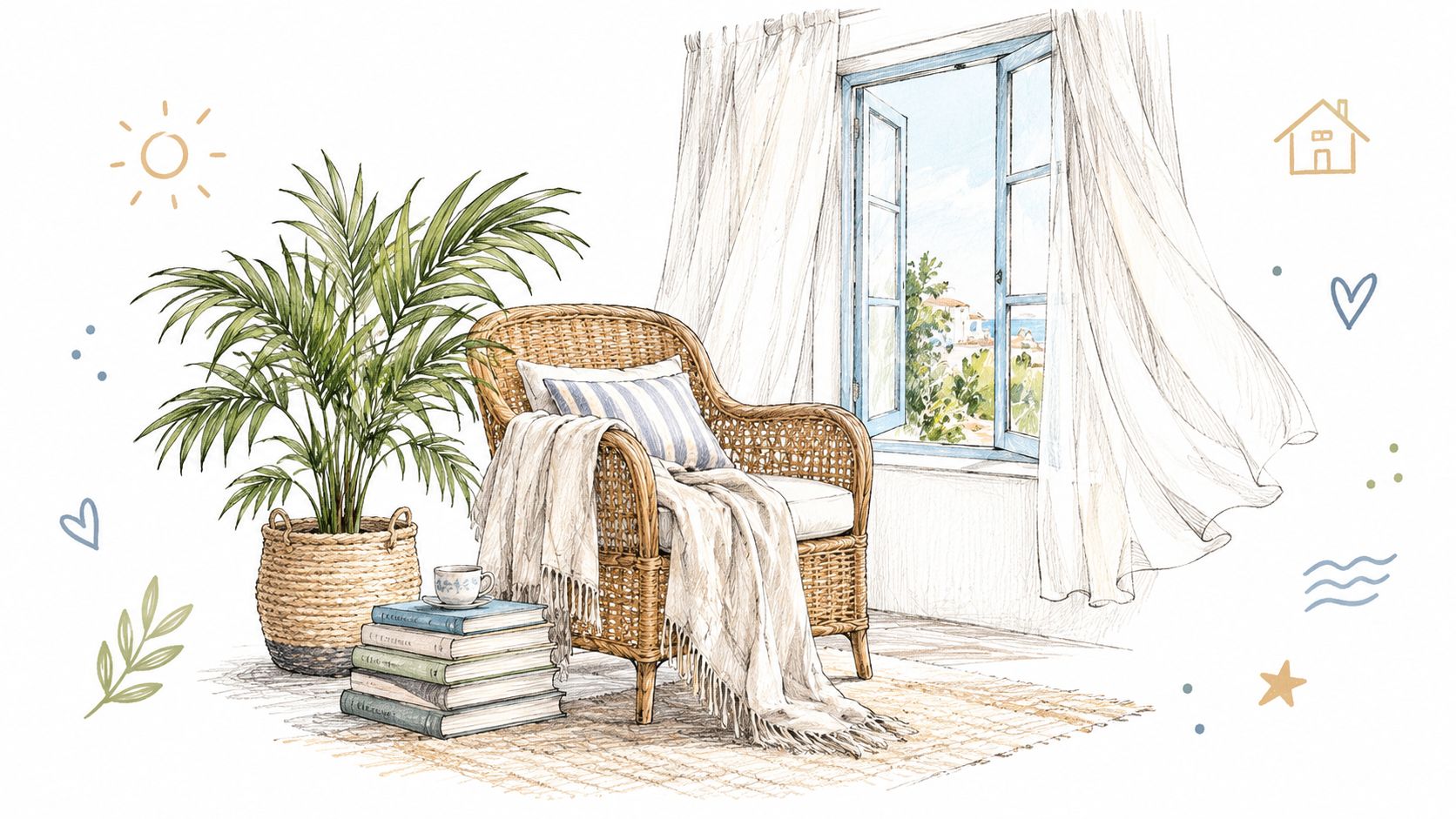
The chair as a room anchor
A coastal accent chair shouldn't compete with the primary upholstery. It should clarify the room's purpose and add a layer the sofa can't provide. A woven chair introduces tactile warmth, a crisply upholstered chair adds polish, and a swivel design improves flexibility in an open-plan layout.
The broader accent chair market was valued at $8.2 billion globally in 2025 and is projected to reach $11.9 billion by 2034, with a 5.3% CAGR, according to market data on accent chairs. North America represents 62.2% of that market, while residential use accounts for 62.3% of revenue, reinforcing the role of occasional seating in everyday homes.
That market context matters locally. Coastal accent chairs aren't merely decorative accessories for beach houses. They serve as adaptable seating in living rooms, sunrooms, bedrooms, rental properties, and second homes where a single refined piece can refresh the entire atmosphere.
Design rule: Choose the chair that makes the room feel more usable, not simply more coastal.
Exploring Diverse Coastal Chair Styles
Coastal style has several distinct personalities, and the difference often comes down to silhouette and finish rather than color alone. A rounded rattan chair feels informal and resort-like. A linen barrel chair feels softer and more contemporary. A slim upholstered chair with tapered legs can bring coastal influence to a traditional room without turning it into a theme space.

Matching the silhouette to the setting
Wicker and rattan bring open texture and visual lightness. They're strong choices for sunrooms, covered porches, and interiors that already use woven baskets, jute rugs, or natural wood. Their relaxed appearance works especially well with loose cushions and soft throws.
Upholstered coastal chairs offer more support and a broader range of comfort options. Look for softly structured arms, a gently curved back, and fabric in sea-glass blue, sand, ivory, or muted gray. These chairs pair easily with custom sofas and can move between coastal, transitional, and contemporary rooms.
Modern coastal chairs reduce decorative detail. Clean lines, slim arms, pale wood, and brushed metal create a fresher interpretation of the style. This approach suits smaller rooms because the chair can carry coastal character without adding visual bulk.
Nautical-inspired designs can be appealing, but restraint matters. Rope details, striped fabric, and weathered finishes work best as one deliberate reference rather than a collection of obvious seaside motifs.
For a broader overview of proportions and living-room applications, the Woodstock Furniture accent chair guide offers useful general selection context.
Compare the visual cues
- Open arms and woven sides: Airy, casual, and suited to layered natural textures.
- Track arms and fitted upholstery: Calm, polished, and compatible with structured furniture.
- Skirted or slipcovered forms: Soft, relaxed, and practical for rooms that need an approachable feel.
- Swivel bases: Flexible for conversation areas, views, and open-plan spaces.
- Wood legs: Warm and organic, especially with light or weathered finishes.
- Metal details: More contemporary, particularly when the frame has a protected finish.
The right style should connect with the room's existing language. A coastal chair doesn't need to look handmade or weathered to feel at home near the Atlantic. It needs the right balance of texture, proportion, and ease.
Choosing Durable and Breathable Materials
Salt air changes the material conversation. In a coastal home, moisture doesn't disappear as quickly as it does in a dry interior, and salt can keep fabrics and metal components damp for longer periods. That combination can encourage mildew in foam and accelerate corrosion in frames, so construction deserves as much attention as color.
Start with the upholstery
Solution-dyed performance fabrics are a strong choice for rooms exposed to humidity, active children, pets, sunscreen, or damp clothing. The color is integrated into the fiber, and the fabric category is designed for demanding use. Marine-grade vinyl and outdoor textiles can also make sense when easy cleaning and moisture resistance take priority.
Quick-dry or reticulated foam deserves particular attention in covered outdoor areas and moisture-prone rooms. Its open structure helps water move through instead of remaining trapped inside the cushion. For indoor chairs, breathable upholstery and removable cushions can support better airflow and easier maintenance.
The accent chair fabric collection can help shoppers compare texture, color, and performance options before committing to a custom selection.
Specify the frame with care
Material hierarchy matters in hot, humid, salt-air environments. Neutral durability guidance places powder-coated aluminum, teak, and HDPE or resin wicker among the strongest options for rain, humidity, and ultraviolet exposure. Ordinary steel, softwoods, and low-grade plastic wicker require more caution because they can corrode, warp, or degrade sooner under coastal conditions. The guide to outdoor furniture care provides additional maintenance context for exposed furnishings.
A chair intended for a porch or sunroom should have a non-ferrous frame or a well-protected finish. Indoor chairs still benefit from thoughtful construction when they're used in a vacation property that may remain closed for stretches of time.
Keep moisture from becoming a service problem
Durability isn't only a product specification. Owners also influence service life through placement and care.
- Improve airflow: Avoid pressing the chair tightly against a damp exterior wall.
- Dry promptly: Remove wet throws and cushions so moisture doesn't remain inside the chair.
- Control indoor humidity: Dehumidification reduces the time salt and water stay on the product.
- Limit direct exposure: Window coverings help reduce fading and heat buildup.
- Clean gently: Follow the manufacturer's fabric and finish instructions rather than applying harsh household products.
Material advice: In coastal homes, the most beautiful fabric is the one that still looks composed after real life happens.
Natural materials remain welcome. Rattan, wicker, teak, and woven fibers deliver the texture people want from coastal interiors. They need the right location, protection, and maintenance routine.
Mastering Scale and Placement
A coastal chair can have the correct color and still be completely wrong for the room. Scale determines whether the space feels open and restful or crowded and hard to maneuver, especially in condos, compact vacation homes, bedrooms, and open-plan rooms.
Recent neutral buying guidance places compact accent chairs at roughly 28 to 32 inches wide, with about 20 to 22 inches of seat depth and at least 30 inches of walking clearance, as detailed in this accent chair sizing guide. Those measurements aren't rigid design laws, but they provide a practical starting point for planning.
Measure the path, not only the corner
A chair must fit through the front door, hallway, stair turn, and room entrance before it can fit beside the sofa. Measure the narrowest passage and compare it with the chair's packaged and assembled dimensions. Pay close attention to arm height and overall depth, since these can create problems even when the listed width appears manageable.
Place seating where it supports movement. A chair angled slightly toward the sofa feels inviting, while a chair pushed directly into a traffic route becomes an obstacle. In a reading nook, leave enough room to operate a floor lamp or side table without forcing the user to squeeze past the chair.
Avoid the oversized coastal trap
Oversized accent chairs can reach 40 to 60 inches wide, making them risky in compact rooms according to the same sizing guidance. Their generous proportions may look luxurious in a large great room, but they can visually clog a smaller space and make a breezy palette feel heavy.
A better approach is to decide what the chair must do first:
- Conversation seating: Prioritize a comfortable angle toward the sofa.
- Reading corner: Allow room for a lamp and a small table.
- Bedroom seating: Choose a narrower profile that preserves circulation.
- Sunroom use: Consider open sides and moisture-tolerant construction.
- Rental or second-home use: Favor durable upholstery and straightforward maintenance.
For additional furniture-flow guidance, the living room furniture placement guide offers a useful planning reference.
Integrating Chairs into Coastal Chic Palettes
A coastal accent chair should look as though it belongs in the room, not as though it arrived with a separate decorating agenda. The most convincing spaces combine one or two coastal signals with quieter supporting pieces. A pale chair beside a natural wood table can feel more refined than a room filled with overt nautical motifs.

A living room with quiet contrast
Consider a warm ivory sofa, a woven rug, and a chair upholstered in dusty blue. Add a light wood side table, a ceramic lamp, and one patterned cushion that repeats the blue without copying the chair exactly. The room feels coastal because of its color temperature and texture, not because every object announces the beach.
The reverse approach also works. A neutral upholstered chair can balance a blue sofa, particularly when the room includes rattan, jute, pale oak, or weathered finishes. A restrained palette creates more freedom to change accessories seasonally.
For readers exploring how color affects atmosphere, this colour guide for interiors offers helpful perspective on selecting hues with intention.
A vacation home that handles real use
A second home in South Georgia or North Florida needs an attractive arrival experience, but it also needs resilience during periods of heavy use. A compact chair in a performance fabric can sit near the entry without becoming a fragile display piece. A woven basket, washable throw, and durable rug can absorb the practical demands of sand, damp towels, and frequent guests while maintaining a curated sanctuary.
Blend materials instead of matching sets
Coastal rooms benefit from contrast. Pair a smooth upholstered chair with a rougher woven surface. Place a leather chair near linen or cotton upholstery. Combine pale wood with a darker accent so the room doesn't become washed out.
The guide to mixing leather and cloth furniture is useful when a room needs more material depth. Leather can ground a pale coastal scheme, while fabric softens the visual weight of leather and makes the seating arrangement feel more welcoming.
The strongest result usually comes from one clear focal chair, supporting texture, and enough negative space for the room to breathe.
Customization and Expert Guidance at Lott's
A ready-to-deliver chair can solve an immediate furnishing need, but coastal homes often benefit from more precise decisions. The frame, fabric, finish, cushion feel, and arm profile all affect how the chair looks and how it performs. A Special Order Program gives shoppers room to make those choices instead of forcing the room to accommodate a close approximation.
Most vendors support personalized designs involving fabrics, finishes, comfort levels, frame details, and configurations. That may include a performance textile for a busy family room, a softer cushion for extended reading, or a wood finish that connects the chair to an existing dining or living collection.
Use guidance before making the choice
Online tools can narrow the field before a showroom visit. Style Quizzes help identify whether a room leans toward Coastal Chic, Modern Farmhouse, or Timeless Traditional. Interactive style guides can help shoppers assess texture and scale, while the Mattress Guide supports broader comfort decisions for the home, even when the immediate project centers on seating.
In-store associates add a different kind of value. They can inspect the chair's proportions, discuss fabric behavior, compare cushion support, and help determine whether the piece will work with an existing sofa. That conversation is especially useful when a photograph makes a chair appear smaller, softer, or more neutral than it feels in person.
The design consultation services provide a practical path for homeowners who want help translating an idea into a livable room.
Build around the household
Customization should respond to daily life, not only a mood board.
- For pets and children: Select a durable, forgiving upholstery with a texture that won't magnify every mark.
- For frequent guests: Choose supportive cushions and arms that make sitting and standing easy.
- For a quiet retreat: Consider a deeper seat, a higher back, and a fabric with a softer hand.
- For a polished traditional room: Explore fitted upholstery and refined wood finishes.
- For a relaxed sunroom: Use breathable materials and an open silhouette.
Core brands such as La-Z-Boy, Smith Brothers, Lexington, Stressless, and Hooker Furniture represent different approaches to comfort, craftsmanship, and finish. Associates can help match the brand family and construction style to the role the chair needs to play.
Seamless Shopping and White-Glove Delivery
A successful furniture purchase doesn't end when the chair is selected. The process should move smoothly from inspiration to measurement, customization, delivery, and placement. Shoppers can begin with a digital catalog, use Style Quizzes and guides to narrow the direction, then visit a showroom in Fernandina Beach, FL to sit in the chair and assess its scale in person.
Lott's Furniture connects online browsing with showroom assistance, including access to in-store associates who can help with design decisions. The transition works in both directions. A shopper can discover a fabric or silhouette online, then test comfort in the showroom, or begin with an in-person conversation and continue reviewing options through the digital catalog.
Delivery should protect the decision
Lott's Delivery follows a white-glove, in-home standard. Premium service can include inside delivery, placement in the room of choice, unpacking, assembly or light installation, inspection, packaging removal, and a final walkthrough, as outlined in this white-glove delivery explanation.
Every piece also undergoes a rigorous multi-point inspection before it reaches the customer. That standard matters for a coastal accent chair because the final result depends on more than the chair itself. The delivery team must confirm its condition, place it where the room can breathe, and make sure the homeowner can review the result before the crew leaves.
The best coastal chair is a balanced decision: attractive enough to anchor the room, compact enough to preserve movement, and durable enough for the local climate. With customization, expert guidance, convenient delivery, and service across South Georgia and North Florida, homeowners can create a coastal setting that feels relaxed without becoming delicate.
Visit Lott's Furniture in Fernandina Beach, FL, to test coastal accent chairs, compare materials, and speak with in-store associates about scale and comfort. Shoppers can also begin with an online style consultation, then use the Special Order Program to tailor fabrics, finishes, and comfort levels for a chair built around the home.