Accent Chair Fabric: Expert Guide for 2026 Choices


The room is nearly finished. The sofa feels right, the rug anchors the space, the lamps are in place, and one corner still looks unresolved. That's usually where the accent chair enters the conversation. Then actual hesitation starts. The frame may be easy to like, but the fabric can stop the whole process cold.
That pause makes sense. Accent chair fabric changes more than color. It changes mood, texture, maintenance, and how the chair lives in the room day after day. Homeowners across South Georgia and North Florida often discover that the fabric choice is the moment a chair either becomes a comfort piece that feels just right or stays a nice idea that never quite fits.
Finding the Soul of Your Accent Chair
You find the chair shape quickly. Then the fabric samples come out, and the decision slows down.
That shift happens for a reason. The frame gives an accent chair its outline, but fabric decides how that chair will feel in the room once the lamps are on, the coffee is set down, and someone sits there. One upholstery can make the same silhouette feel crisp and neat. Another can make it feel warm, relaxed, and ready for a long evening with a book.

Fabric works like the finishing note in a room. It can soften hard lines, add depth to a flat color scheme, or introduce pattern without asking you to redo the whole space. On an accent chair, that effect is especially strong because upholstery covers most of what your eye notices first. A simple chair in a textured cream fabric can quiet a busy room. The same chair in a saturated print can become the detail everyone remembers.
Why Fabric Changes the Whole Room
A chair frame sets the silhouette. The fabric gives it a voice.
That voice can be subtle or expressive. A floral pattern can wake up a neutral corner near a window. A tightly woven solid can make a room feel more orderly. A plush, touchable surface can bring welcome softness to a space full of wood, metal, and straight edges. Fabric also affects how the chair relates to the sofa, rug, and nearby tables. It does not need to match every other piece to belong there. In many well-furnished homes, the accent chair is the piece that adds contrast on purpose.
Scale matters too. Accent chairs are usually compact enough that the upholstery carries much of the personality, almost like the cover on a favorite book. The shape may stay the same, but the story changes with the material.
A Familiar Decision in Real Homes
Shoppers at Lott's often discover this in real time. They pick a chair they like, then watch it change character as different fabrics are laid across the cushion and arms. One option feels traditional. Another feels coastal. A third feels cleaner and more modern, even though the frame never changed.
That is why fabric selection works best as part of a guided buying process, not as an isolated swatch decision. In a local showroom, you can compare the chair to your room goals, your color palette, and the way your household lives. Placement matters too. Many homeowners get clearer on fabric once they see five ways to use an accent chair and picture where the piece will sit, what light hits it, and how often it will be used.
The right fabric usually feels honest. It suits the room, supports daily life, and gives the chair a sense of belonging that looks natural from the start.
Your Guide to Common Accent Chair Fabrics
Some fabrics invite a formal look. Others encourage a more relaxed, sink-in feeling. The most useful way to shop is to compare them side by side, with an eye on texture, mood, and where the chair will live.
Recent design commentary has leaned toward tactile surfaces. Modern accent-chair fabric trends have shifted toward bouclé, velvet, and chenille because these materials create visible texture and a more premium feel, as described in this overview of modern accent chair trends.
Accent Chair Fabric Comparison
| Fabric Type | Key Characteristics | Best For |
|---|---|---|
| Velvet | Soft hand, gentle sheen, dramatic color depth | Formal sitting rooms, statement chairs, moody spaces |
| Linen | Relaxed look, airy character, tailored but casual feel | Coastal rooms, lighter interiors, decorative use |
| Cotton | Familiar softness, versatile appearance, easy to style | Everyday rooms that need a classic look |
| Wool | Naturally resilient feel, refined texture, more technical performance | High-use spaces where durability matters |
| Chenille | Plush surface, rich texture, inviting comfort | Cozy living rooms, transitional interiors |
| Bouclé | Nubby, sculptural texture with strong visual presence | Trend-forward spaces, lighter-looking room compositions |
| Leather-like or synthetic performance upholstery | Hard-wearing, practical feel, easier everyday upkeep | Family rooms, daily seating, homes with active use |
How These Fabrics Feel in Daily Life
Velvet tends to catch light in a way that makes jewel tones and neutrals alike feel richer. It's memorable, but it also asks a homeowner to think about spills and frequent contact. Linen feels breezier and less formal, which is why it suits coastal and casual interiors so well.
Cotton and woven blends often land in the middle. They don't demand attention the way high-sheen or heavily textured textiles can, but they're flexible and easy to integrate. Chenille brings softness and warmth, making it a natural fit for rooms that need visual comfort.
Practical rule: If the room already has pattern in the rug, drapery, or pillows, a more textural solid often gives better balance than another busy print.
The Difference Between Trend and Foundation
Bouclé has become a favorite because it adds shape and softness at the same time. It can make a chair feel sculptural, almost like an object piece. That's useful in a room where the chair needs to stand apart from a larger sofa.
Still, not every home needs a fabric that speaks first. Many rooms benefit from a foundation fabric that lets wood tones, art, and lighting carry more of the design story. Buyers trying to sort through those choices often find this guide to upholstery materials helpful because it frames fabric as both a design and use decision.
A broad custom fabric library also matters here. Brands often associated with custom upholstery, such as Smith Brothers, Lexington, and Hooker Furniture, tend to appeal to shoppers who want more than a standard floor sample. Most vendors support personalized designs through special-order programs, including fabric, finish, and comfort options, which makes it easier to fit a chair to the room instead of forcing the room to fit the chair.
Decoding Fabric Performance Ratings
A beautiful chair that can't hold up to real use becomes frustrating quickly. Performance ratings give shoppers a way to look past the showroom surface and judge whether a fabric suits daily life.
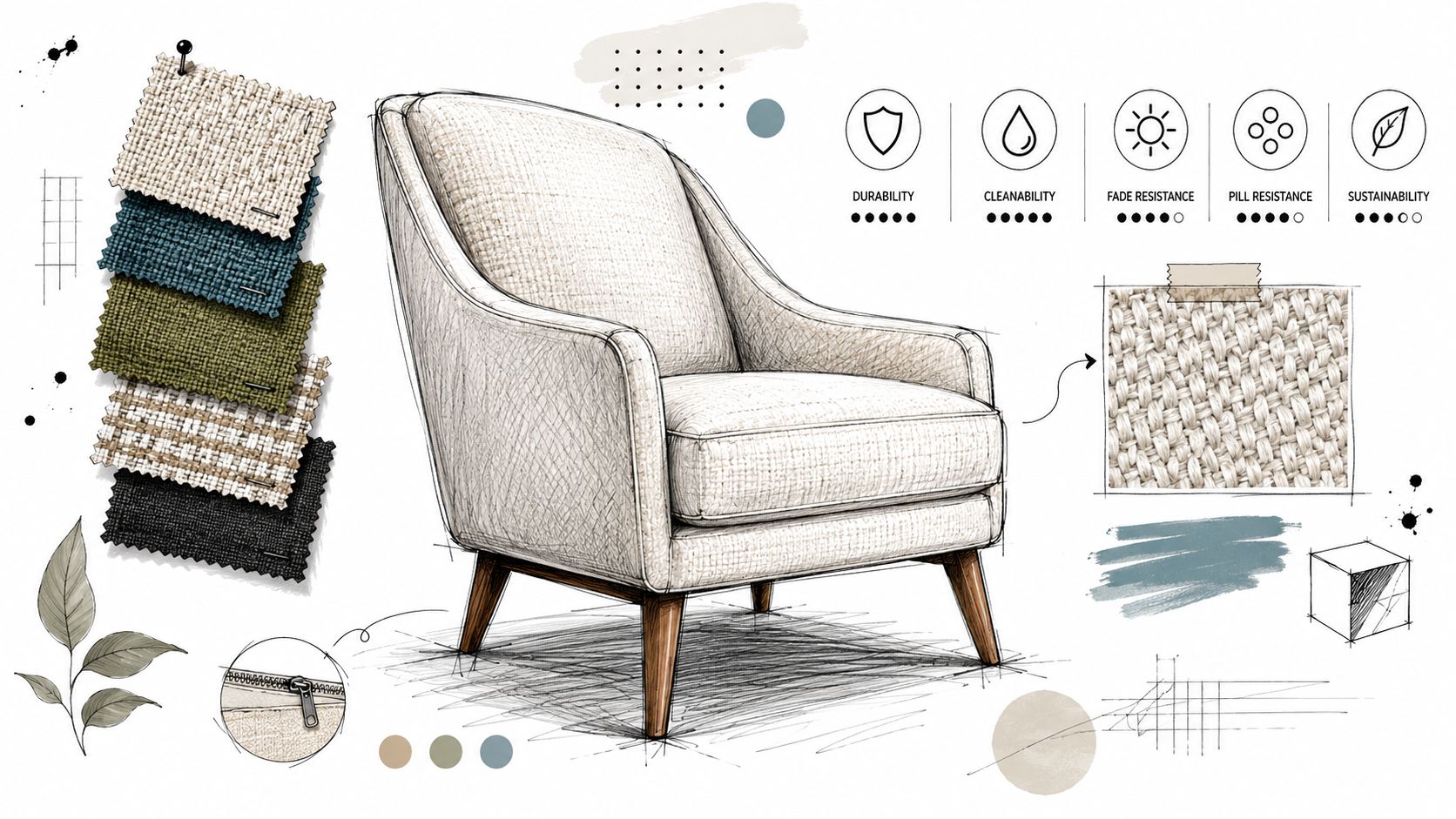
The most important term to know is double rub. Upholstery durability is measured by a double rub abrasion rating, and residential fabrics typically need 15,000 to 20,000 double rubs for frequent use, while 30,000+ double rubs are commonly recommended for high-traffic areas or homes with children and pets, based on this explanation of upholstery durability ratings.
What a Double Rub Count Actually Means
The term sounds technical, but the idea is simple. It measures how well a fabric stands up to repeated contact. Every sit, shift, and slide across the seat creates wear over time. The higher the rating, the more abrasion the fabric is designed to handle before showing significant breakdown.
That doesn't mean a homeowner should chase the highest number automatically. A decorative bedroom chair used occasionally doesn't need the same level of endurance as the chair beside the family room sectional where someone reads, snacks, and watches television every evening.
A Better Way to Read a Fabric Tag
Three questions usually narrow the decision fast:
- How often will the chair be used: Daily lounging asks more from a fabric than occasional seating.
- Who will use it: Kids, pets, and frequent guests increase wear and raise the value of easier-care upholstery.
- Where will it sit: A tucked-away bedroom corner has different demands than a main traffic path in the living room.
Higher performance matters most when the chair is expected to work, not just decorate.
For shoppers comparing swatches online before visiting a showroom, this overview of performance fabrics for upholstery can help translate technical language into everyday buying decisions. It's especially useful for anyone who loves the look of soft upholstery but also wants resilience that feels investment-quality rather than temporary.
Choosing the Right Fabric for Your Lifestyle
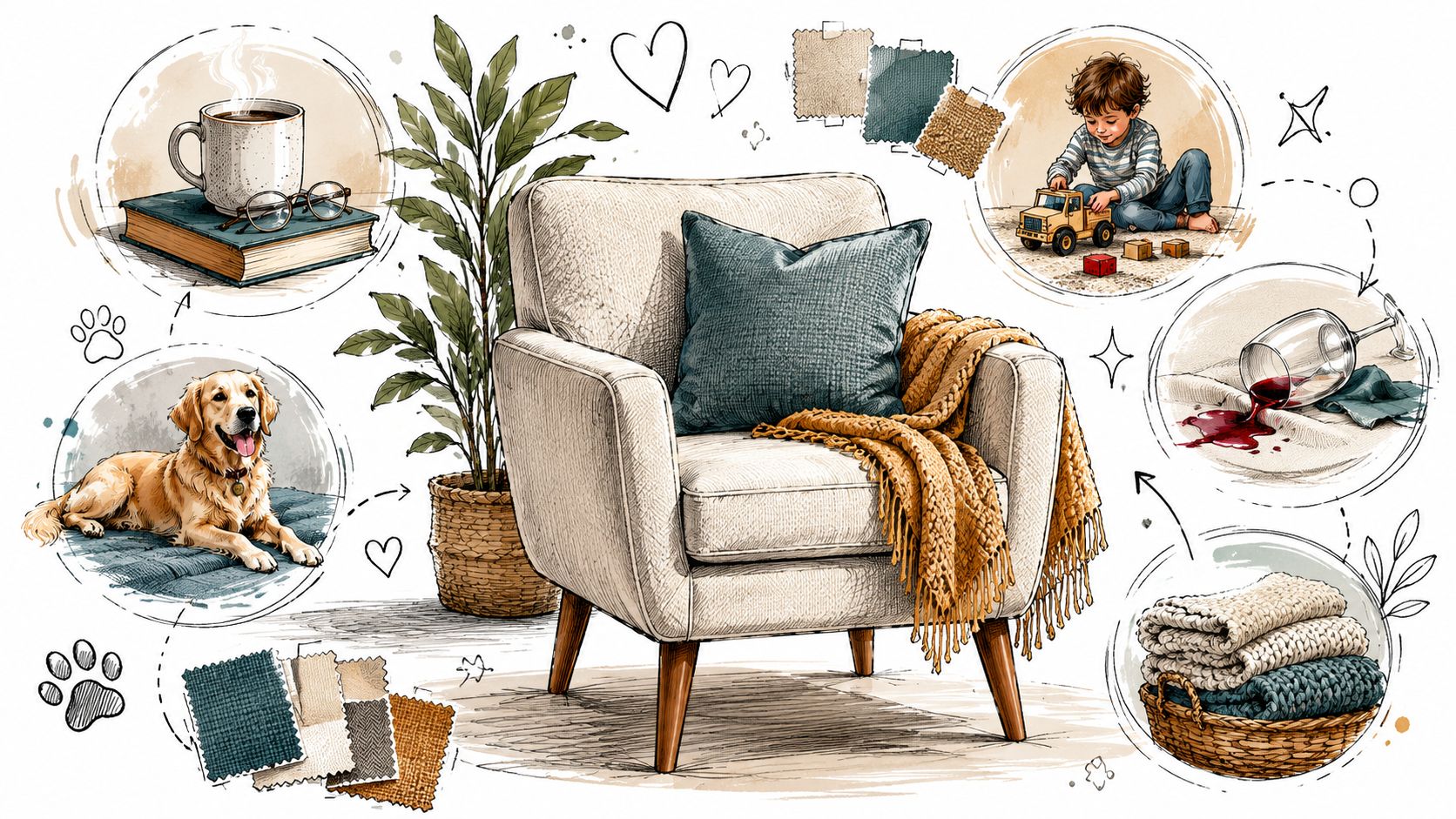
Saturday morning often settles the question. One person curls up with coffee, a child climbs onto the arm instead of the seat, and the dog circles twice before claiming the cushion. In a home like that, fabric is not just a color or texture choice. It is part of how comfortably the chair fits real life.
That is why this step matters so much in a custom buying process. At Lott's Furniture, fabric selection works best when it starts with the room, the people using it, and the habits the chair needs to handle. A beautiful swatch can still be the wrong pick if it asks for more caution than the household can realistically give.
For the Busy Family Room
In a high-use space, the chair needs to behave more like a good pair of everyday shoes than a special-occasion coat. Softness still matters, but easy cleanup, resistance to snags, and a forgiving texture usually matter more.
Natural fibers and textured fabrics can be appealing, yet they do not all respond the same way to spills, wrinkles, or pet traffic. General upholstery guidance from this accent chair buying guide notes that cotton, linen, velvet, and wool each bring different strengths and tradeoffs, especially in rooms where the chair sees regular use.
For homes with kids or animals, it often helps to choose a fabric with a tighter weave, visual texture that disguises minor marks, and a color that will not show every paw print or drip. Families sorting through those practical details often start with pet-friendly couch fabric ideas, since the same wear patterns usually show up on accent chairs.
For the Formal or Low-Use Room
A guest room or quiet reading corner gives you more freedom.
In spaces like these, fabric can carry more of the chair's personality. Velvet can add depth and a soft glow. Linen can bring a relaxed, airy character. Textural fabrics can turn a simple silhouette into something memorable because they are not being tested by constant traffic.
This is usually where personal taste gets to speak a little louder. At Lott's, that often means helping a shopper match fabric to mood, not just durability. One chair may need to feel calm and coastal. Another may need to feel warm, refined, or collected over time.
For Smaller Rooms and Open, Airy Homes
Fabric affects visual weight more than many shoppers expect. A chair with a bulky-looking weave or a dark, flat surface can feel heavier in a small room, even if the frame itself is modest.
Lighter tones, soft patterns, and fabrics with subtle dimension often help an accent chair sit more comfortably in a compact space. The effect is similar to clothing. Some materials look crisp and light on the body, while others read dense and substantial. The same principle applies to furniture.
If the room already has a lot happening, patterned drapery, bold rugs, busy shelving, a simpler upholstery choice often gives the eye a place to rest. If the room feels plain, a richer texture can do some of the decorating work without adding clutter.
Let Daily Habits Break the Tie
Two fabric options can both look good on the showroom floor. The better choice is usually the one that matches the way the chair will be used next month and next year.
A shopper who wants a statement texture but also expects nightly use should be honest about maintenance. A chair always feels more luxurious when its fabric still looks inviting after ordinary life happens. If routine upkeep is part of the concern, J.G. Carpet Cleaning's upholstery care tips offer a helpful outside perspective on how often upholstered furniture may need attention in active homes.
That practical lens is one of the biggest advantages of buying from a local family business instead of treating fabric as a disconnected online decision. At Lott's Furniture, the goal is not to push a swatch. It is to help you choose a fabric that suits your room, your habits, and the way you want the chair to feel every time you sit down.
How to Care for Your Accent Chair Fabric
Once the chair is in place, care becomes part of protecting the purchase. Good upholstery doesn't ask for complicated maintenance, but it does respond well to consistency.
Care guidance for fabric accent chairs recommends regular vacuuming, immediate stain treatment with an appropriate cleaner, and the optional use of an upholstery protector to reduce fading and improve stain resistance, as noted in this maintenance guide for modern fabric accent chairs.
The Everyday Care Routine That Works
A simple rhythm keeps most chairs looking fresh:
- Vacuum the fabric regularly: Dust and grit settle into upholstery and can dull the surface over time.
- Blot spills quickly: Fast attention matters more than aggressive scrubbing. Scrubbing can push a spill deeper or rough up the fabric face.
- Use the right cleaner: Always match the cleaner to the upholstery type and follow the care code if one is provided.
- Consider a protector: In sunny rooms or heavily used seating areas, a protector can add a useful layer of defense.
Clean upholstery gently and early. Most fabric problems get worse because a spill sits too long, not because the chair lacked quality.
Long-Term Protection for Investment Pieces
Some chairs are decorative accents. Others become favorite seats for years. Both benefit from placement awareness. Strong sunlight, daily body oils on arm panels, and repeated contact in one seat spot can age fabric unevenly.
Helpful maintenance reminders can also come from service professionals. Homeowners who want a practical checklist can review J.G. Carpet Cleaning's upholstery care tips for signs that deeper cleaning may be worthwhile.
Every delivery detail matters, too. Each piece should arrive ready for immediate enjoyment, and the delivery experience should support the life of the furniture from the start. A white-glove, in-home delivery process paired with a rigorous multi-point inspection helps ensure the chair is placed properly, checked carefully, and set up for long-term care rather than rushed drop-off handling.
Begin Your Custom Design Journey at Lotts
The most successful accent chair choices rarely come from picking a random swatch in isolation. They come from pairing fabric knowledge with guided decision-making. Texture, scale, use, comfort, and color all work better when they're considered together.
That's where a local buying process can be more useful than a simple browse-and-click transaction. Shoppers often need to sit in the chair, compare several fabrics in natural light, and test whether the upholstery supports the room they're building. They may also want to compare comfort levels, wood finishes, or the visual weight of one fabric against another.
Why Customization Matters in Accent Chair Fabric
Special ordering opens the door to a more exact result. Most vendors support personalized designs, including fabric selections, finishes, and comfort levels. That flexibility matters because the right chair isn't just the right silhouette. It's the right silhouette in the right textile for that household.
Lott's Furniture offers a custom-order starting point for furniture shoppers, including access to options that help connect room style with fabric, finish, and comfort choices. For shoppers in South Georgia and North Florida, that process works especially well when paired with broad product categories from names such as La-Z-Boy, Stressless, and Hooker Furniture.
A Smoother Way to Make the Final Decision
A guided process doesn't have to feel formal. Many homeowners start online by browsing a digital catalog, narrowing silhouettes, and using style tools before they ever step into a store. Style Quizzes can help define whether the room leans coastal, traditional, or more transitional, while the Mattress Guide shows the same commitment to expert guidance in another major furniture category.
Then the showroom visit does what a screen can't. Associates can compare warm and cool neutrals side by side, explain how one weave differs from another, and point out when a trend fabric may not fit the room's daily demands. That smooth transition between shopping online and visiting the showroom in Fernandina Beach, FL gives customers a practical path from inspiration to a chair that feels ideal for the home.
The result is usually a better room, but it's also a calmer buying experience. The fabric choice stops feeling like a gamble and starts feeling like part of a well-guided design decision.
Homeowners across South Georgia and North Florida can explore accent chairs, custom fabrics, and customized comfort options through Lott's Furniture. A showroom visit in Fernandina Beach, FL or an online style consultation can help turn fabric ideas into a finished chair that fits the room, the lifestyle, and the home.