
Pet Friendly Couch Fabric: A Guide to Lasting Style

A sofa starts showing its true character the moment a dog claims one cushion and a cat tests the arm for traction. Fur gathers in the corners. A muddy paw lands where guests usually sit. A beautiful fabric that looked refined in the store suddenly feels high-maintenance at home.
That's usually the moment shoppers start assuming they have to choose between a polished living room and a home that welcomes pets.
They don't. A thoughtful fabric choice turns that false compromise into an informed decision. The American Pet Products Association estimated that 66% of U.S. households owned a pet in 2023, which helps explain why pet friendly couch fabric has become a mainstream furnishing category rather than a niche add-on, as noted in this upholstery overview. For families across South Georgia and North Florida, that shift matters because the sofa isn't just décor. It's the shared landing spot for everyday comfort.
Creating a Pet-Friendly Sanctuary in Your Home
A pet-friendly living room doesn't need to look defensive. It doesn't need plastic covers, fussy “no dogs allowed” rules, or a sofa that feels chosen only for survival. The strongest rooms balance warmth, durability, and a sense of ease.
In real homes, the frustration is rarely one dramatic event. It's the accumulation of small annoyances. Hair that won't lift out. A woven texture that keeps catching claws. A pale seat cushion that starts looking tired long before the frame does. That's why the right question isn't “What fabric can survive pets?” It's “What fabric still looks inviting after ordinary life happens on it?”
What pet owners are actually buying
Most families aren't shopping for a sofa based on looks alone. They're buying easier ownership over time.
That usually means looking for fabric that can handle:
- Everyday contact: jumping, nesting, circling, and repeated use on the same favorite cushion
- Visible mess: fur, dirt, drool, and the marks that show up between deep cleanings
- Lower-effort upkeep: surfaces that vacuum cleanly and don't trap debris deep in the weave
A pet-friendly sofa should feel livable, not guarded.
For households trying to keep up with shedding, a practical cleaning routine matters almost as much as the upholstery itself. Pet owners who want a quick maintenance refresher may find this guide on how to tackle pet hair useful between deeper cleanings.
A strong starting point is choosing furniture with materials and construction suited to real use, not just showroom appeal. That's why many shoppers begin with guidance like kid-friendly and pet-friendly furniture tips before narrowing down fabric swatches.
Heirloom quality can still be pet friendly
The goal isn't to lower standards. It's to choose smarter. An heirloom-quality room can still welcome dogs on movie night and the occasional cat nap in the sun. The difference is that each fabric decision gets filtered through daily life.
That's where a curated sanctuary starts. Not with restriction, but with materials that let the home stay beautiful without becoming precious.
Understanding the DNA of Pet Friendly Fabrics
The biggest mistake shoppers make is focusing on fiber name alone. Leather, microfiber, polyester, and performance fabrics can all behave differently depending on how they're made. The hidden story is in the construction.
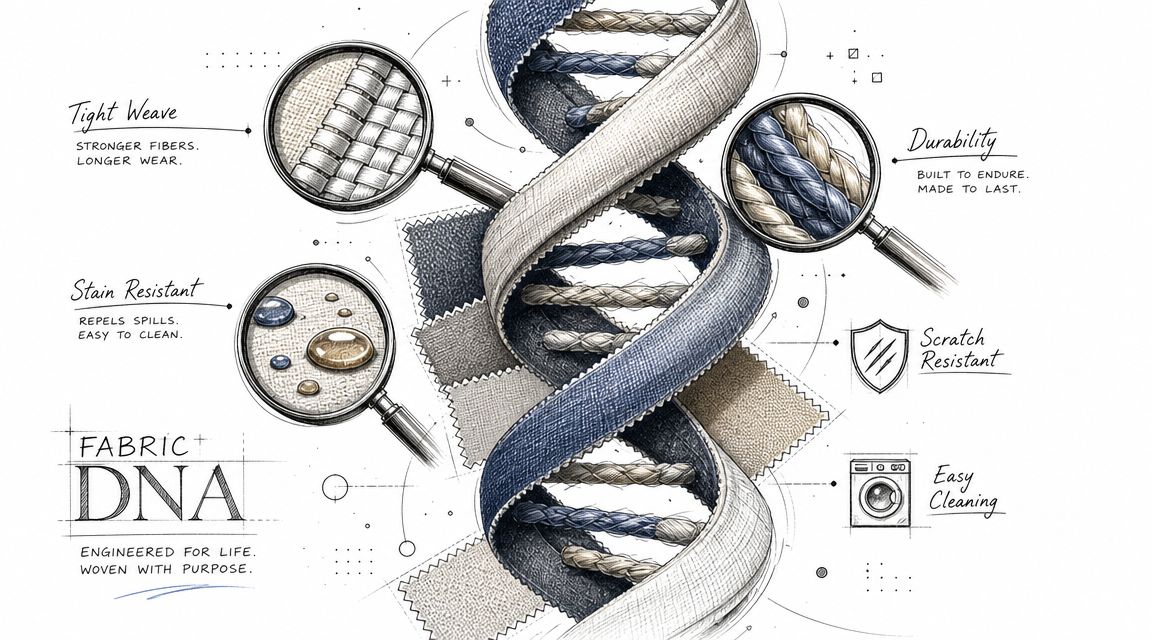
A useful way to think about pet friendly couch fabric is to picture the surface as a shield. A loose, open, textured weave has small entry points where claws, hair, and grit can work their way in. A dense weave closes those openings and keeps more of the mess near the surface, where it's easier to remove.
Sources describing pet-friendly upholstery note that a dense weave of about 180 to 220 threads per inch is better at deflecting claw impacts and preventing pet hair from embedding, while loose or high-pile structures are more prone to snagging and trapping fur, according to this pet couch materials guide.
Three traits matter most
A sofa for pet households should be judged on three practical qualities.
Durability
This is the fabric's ability to resist scratching, friction, and the repeated wear that comes from pets climbing onto the same seat every day. A durable fabric keeps its face intact and doesn't start looking fuzzy or pulled too quickly.
Cleanability
Some fabrics let dirt, moisture, and accidents sit on the surface long enough to blot and clean. Others absorb quickly or hold onto residue. In daily life, easy cleanability often matters more than a fabric's first impression in the sample book.
Hair and dander resistance
Pet owners feel this immediately. Smooth or tightly woven upholstery tends to release fur more easily. Textured fabrics often hold onto it.
Practical rule: If hair disappears into the fabric instead of sitting on top of it, upkeep will feel harder every week.
What often goes wrong in the showroom
Shoppers naturally reach for tactile fabrics first. Soft nubby textures, thick boucle looks, or heavily raised patterns can feel inviting in the hand. They often create problems once pets enter the picture.
A better evaluation method is simple:
- Run a hand across the surface: If the texture catches skin or jewelry, claws may catch too.
- Look closely at the weave: Fewer visible gaps usually mean less snagging and easier cleaning.
- Ask how debris behaves: Hair that stays near the surface is far easier to remove than hair that buries itself deep in the textile.
Detailed upholstery education helps here, especially when comparing texture, fiber, finish, and wear behavior side by side. A broader primer on upholstery materials and how they perform can make sample books much easier to read.
Pet-friendly starts with construction, not marketing
“Pet-proof” sounds reassuring, but the smarter approach is to inspect the physical traits that affect ownership. Dense weave. Lower texture. Easier cleanability. Better resistance to visible wear.
That foundation makes every later decision more confident, whether the final choice is leather, microfiber, or a specially designed performance textile.
Comparing the Top Pet Friendly Couch Fabric Options
Different fabrics solve different problems. Some release fur beautifully but show scratches. Some resist spills well but feel warmer or more formal. The right choice depends on whether the household is dealing with claws, shedding, accidents, or all three.
Pet-Friendly Fabric Comparison
| Fabric Type | Scratch Resistance | Stain Resistance | Hair/Fur Removal | Best For |
|---|---|---|---|---|
| Leather | Moderate to strong, depending on finish | Strong with prompt cleanup | Excellent | Dogs, lower-shed homes, classic interiors |
| Microfiber | Strong | Strong | Very good | Busy family rooms, frequent lounging |
| Performance fabrics | Strong | Strong | Very good | Households wanting softness with easier upkeep |
| Tightly woven synthetics | Moderate to strong | Good to strong | Good to very good | Value-focused durability and everyday use |
| Loose-weave or high-texture fabrics | Weak to moderate | Varies | Poor | Homes where pets rarely use the sofa |
One broad category many shoppers explore is performance upholstery fabrics, especially when they want a softer hand without giving up practical cleanability.
Leather for easy surface cleanup
Leather remains a smart option for many pet owners because fur usually sits on the surface instead of weaving in. Day-to-day cleaning is straightforward, and spills are often easier to spot and address quickly.
The trade-off is visible marking. Active claws can leave impressions or scratches, and some households don't mind that patina while others do. Leather also changes the visual mood of a room. In some spaces it reads relaxed and structured. In others it can feel more formal than the family wants.
Leather often works best when the goal is:
- Fast cleanup
- Low fur cling
- A refined, structured look
Microfiber for forgiving daily use
Microfiber is often one of the safest all-around answers. It tends to have a tight construction, it's generally easy to vacuum, and it handles day-to-day use with less drama than many decorative fabrics.
For families with shedding pets, this can be the sweet spot between comfort and practicality. It usually feels softer and warmer than leather, which matters in rooms used for long evenings, naps, and everyday lounging.
Performance fabrics for balance
Performance fabrics are popular for good reason. They're often designed to resist stains, release hair more easily, and maintain their appearance under heavy use. They also cover a wide style range, which matters for shoppers who don't want a living room that looks selected only for resilience.
Customization offers particular advantages. Through special-order upholstery programs, many vendors support choices in fabric, finish, and comfort details. That gives shoppers room to pair pet-conscious fabric selections with silhouettes they already love. In practice, that might mean a precisely styled sofa from Smith Brothers, a family-room sectional from La-Z-Boy, or a more polished living room profile with customizable upholstery options.
The best-performing fabric on paper still has to suit the way the room feels at eight o'clock on a Sunday night.
Tightly woven synthetics for practical durability
This category covers many of the quiet workhorses in upholstery. They may not sound glamorous in a sample book, but they often perform well in homes where the sofa sees constant traffic from both people and pets.
Their strengths usually include easier maintenance, solid resistance to visible wear, and less hair entanglement than open textured weaves. The main caution is feel. Some tightly woven synthetics can read a bit more utilitarian if the color, pattern, and silhouette aren't chosen carefully.
Fabrics that usually create trouble
Some materials demand more from the homeowner than most pet households want to give.
Use caution with:
- Bouclé and looped textures: claws can catch, and fur can settle deep inside
- Chenille and loose weaves: they often trap debris and show wear sooner
- Silk and delicate decorative textiles: they don't match the realities of pet use
- Traditional high-pile velvets: beautiful in the right setting, but often harder to maintain as a main family sofa
The contradiction many shoppers notice is real. A textured pattern may hide fur visually, but a snag-prone surface can still be the wrong long-term choice. That's why the best pet friendly couch fabric isn't the one that hides the problem from across the room. It's the one that reduces the problem in the first place.
Looking Beyond the Weave for True Durability
A durable sofa isn't only about the upholstery face. The deeper ownership story includes abrasion resistance, cushion design, cover construction, and how easily the piece can be cleaned after months or years of use.
What abrasion ratings actually tell you
For long-term use, one expert guide recommends targeting at least 45,000 double rubs, while premium pet-oriented options can exceed 100,000 double rubs for heavy-use environments, as outlined in this guide to pet-friendly fabric durability. That number matters because repeated friction is exactly what sofas face in active homes.
The practical takeaway is simple. If a fabric has the right look but a lighter-duty wear profile, the sofa may age faster than expected in a pet household. Abrasion ratings don't tell the whole story, but they help separate marketing language from measurable performance.
The features that help with odor and dander
Odor, dander, and deep-seated residue often become the main maintenance issue. Surface stain resistance helps, but it doesn't solve everything.
Pet owners should pay attention to details such as:
- Removable covers: easier access for deeper cleaning after accidents or seasonal shedding
- Separate, zippered cushions: more practical than fully attached cushions when one area gets repeated use
- Washable components where available: especially useful on favorite pet perches
- Cushion construction that allows airflow: less likely to feel stale over time than densely sealed, hard-to-access upholstery builds
A sofa can look clean from the doorway and still hold onto odor in the seat deck or cushion core.
Fabric weight can also affect how a textile feels and performs, even though it should never be used alone to judge suitability. Shoppers who want to understand that variable more clearly may appreciate this guide to fabric GSM, especially when comparing swatches that seem similar at first glance.
The whole piece has to earn its place
A pet-friendly sofa should be evaluated as a complete product.
That means checking:
- Frame stability: movement and flex can shorten upholstery life
- Seam quality: stressed seams reveal wear quickly in active households
- Zipper strength: important if covers need periodic removal
- Cushion fit: loose, sloppy cushions collect more debris and wear unevenly
A broader checklist for evaluating build quality can be helpful before committing to a large upholstered piece, especially one meant for daily family use. This overview of what to look for in a new sofa or chair covers the kinds of details that affect ownership long after the fabric is chosen.
Every piece handled through Lott's Furniture also goes through a multi-point inspection before in-home delivery, which matters for practical details like fit, finish, and hardware readiness. In a pet household, those small checks aren't cosmetic. They support easier use from the day the sofa arrives.
Balancing Pet Practicality with Personal Style
Many pet owners get stuck on the same question. If the most durable fabrics are also the least inviting, what's the point of investing in a beautiful living room at all?
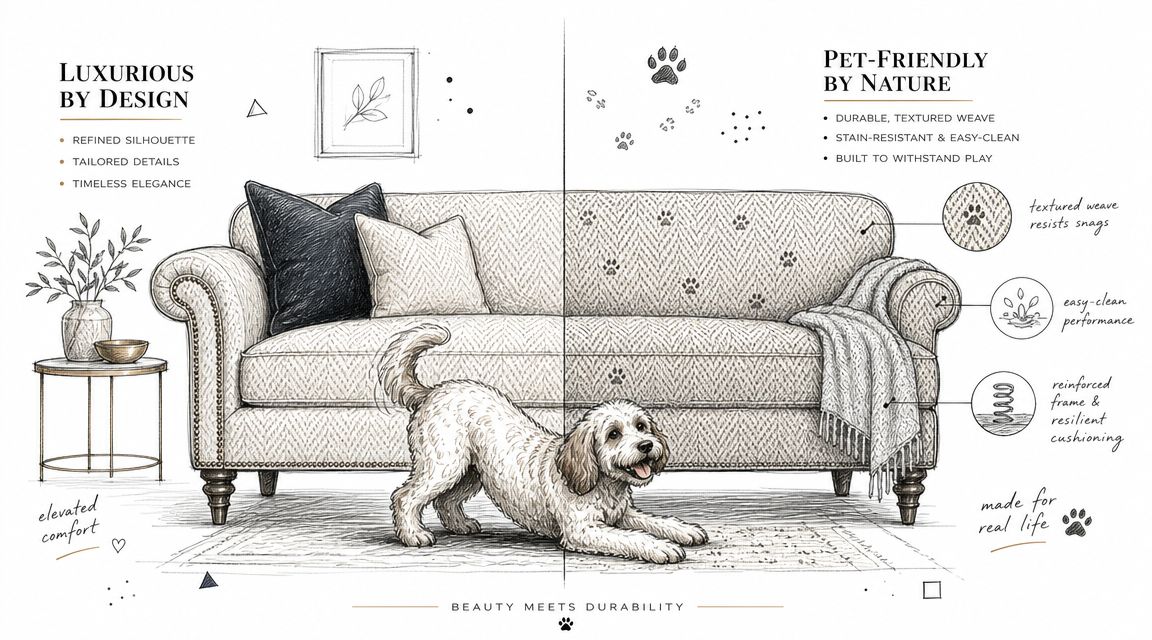
That tension is real. A key challenge for shoppers is the trade-off between pet-friendly performance and style, since many guides recommend durable but potentially less comfortable fabrics without giving a clear framework for choosing something attractive and pet-tolerant, as discussed in this furniture fabric perspective.
The textured fabric contradiction
Shoppers encounter mixed messages. One school of thought says texture and pattern help disguise fur. That can be true visually. But some textures also create snag points and hold onto debris.
The better rule is to separate visual texture from physical texture.
- Visual texture works well: subtle tonal variation, heathered color, small-scale pattern
- Physical texture needs caution: loops, open weave, nubby surfaces, heavy pile
That distinction helps solve a common problem. A sofa can hide stray hair without inviting claw damage if the pattern comes from color variation rather than raised construction.
A more useful style framework
Shoppers choosing pet friendly couch fabric should judge each option by four real-world questions:
Does it suit the room's mood
A coastal living room may call for a softer, airy hand. A formal study may welcome leather or a more structured weave. Performance still matters, but the room shouldn't feel emotionally wrong just because the fabric is practical.
Will fur show constantly
A solid dark fabric can make light fur obvious. A pale solid can spotlight muddy paws. Mid-tone, multi-tonal, and softly patterned upholstery often creates a more forgiving visual field.
Can the household live with the feel
Some durable fabrics feel warmer, slicker, firmer, or more synthetic than expected. That tactile experience matters in family rooms used every day.
Does the surface invite trouble
If the weave looks like it wants to catch a claw, it probably will.
The strongest choice is usually the fabric that disappears into daily life. It doesn't ask for constant attention, and it doesn't fight the room's style.
Customization makes the best answers possible
Special ordering changes the conversation. Instead of choosing between one attractive sofa and one practical one, shoppers can often personalize the same silhouette with different fabrics, finishes, and comfort preferences. Many vendors support those combinations, which makes it easier to align durability with personal taste.
For design-forward homes in South Georgia and North Florida, that opens far more possibilities. A shopper may prefer the refined lines associated with Lexington, the character and storage presence of Hooker Furniture, or a comfort-driven seating plan with custom upholstery options. The key is that style no longer has to be surrendered to get a more worry-free room.
For temporary protection on a favorite seat or during heavy shedding seasons, some households also use washable coverings. This roundup on how to find the best pet sofa covers can help pet owners think through that layer of protection without relying on it as a substitute for choosing the right upholstery in the first place.
Begin Your Journey to a Worry-Free Living Room
A beautiful home with pets isn't a compromise project. It's a better-informed one. The right sofa doesn't just survive claws, fur, and accidents. It supports the way the household lives and still looks appropriate in a carefully furnished room.
The most reliable path is to evaluate upholstery through the lens of ownership. Look at construction, not just color. Weigh cleanability alongside comfort. Pay attention to removable covers, cushion design, and long-term wear, not only the first impression of a swatch.
The easiest way to shop with confidence
Many shoppers start online because it's easier to compare silhouettes, colors, and room styles from home. Then they narrow the field in person, where fabric hand, cushion comfort, and scale become much clearer. That kind of omnichannel process works especially well for upholstered furniture, since the final decision is both visual and tactile.
Helpful tools can make that decision smoother:
- Style quizzes: useful for clarifying whether the room leans coastal, farmhouse, traditional, or more distinctive
- In-store associates: valuable when comparing texture, cleanability, and comfort side by side
- A mattress guide: helpful for shoppers furnishing more than one room and wanting practical support across categories
For families in South Georgia and North Florida, the ability to browse digitally and then visit the showroom in Fernandina Beach, FL makes it easier to move from inspiration to confident selection without guesswork.
Lasting furniture should feel easy to live with
The best pet friendly couch fabric is rarely the flashiest swatch in the book. It's the one that keeps the room feeling calm, clean, and welcoming months after delivery. Add thoughtful customization, a practical comfort level, and dependable in-home setup, and the sofa becomes more than a purchase. It becomes part of a worry-free sanctuary.
A broader planning resource like this sofa buying guide for your living room can help tie those final decisions together before a showroom visit or online consultation.
A pet-friendly living room can still feel polished, warm, and investment-worthy. Explore the digital catalog, take a style quiz, or schedule a consultation with Lott's Furniture to compare fabrics online and then experience them in person in Fernandina Beach. White-glove, in-home delivery and a careful multi-point inspection help ensure the piece that arrives is ready for real life from day one.


