Save 50% Off MRSP on Lexington | Shop the Catalog >

Find Recliners with Good Lumbar Support: Shop Lott’s


A lot of shoppers are in the same spot right now. The old recliner feels soft for about ten minutes, then the lower back starts complaining. Online photos all look comfortable, every product description promises support, and none of that tells a homeowner whether the chair will fit the body sitting in it.
A recliner with good lumbar support should do one job first. It should support the lower back in a way that keeps the spine aligned while the body rests. Everything else, including fabric, color, and even overall plushness, comes after that. For households across South Georgia and North Florida, that distinction matters because a recliner isn't a throwaway purchase. It's an investment in daily comfort.
Understanding What Makes Lumbar Support Truly Good
Good lumbar support isn't extra padding stuffed into the lower back area. It's support that preserves the spine's natural lower-back curve instead of flattening it or letting the body slump. That ergonomic principle is clearly outlined in guidance on preserving the spine's natural lower-back curve in a supportive recliner.
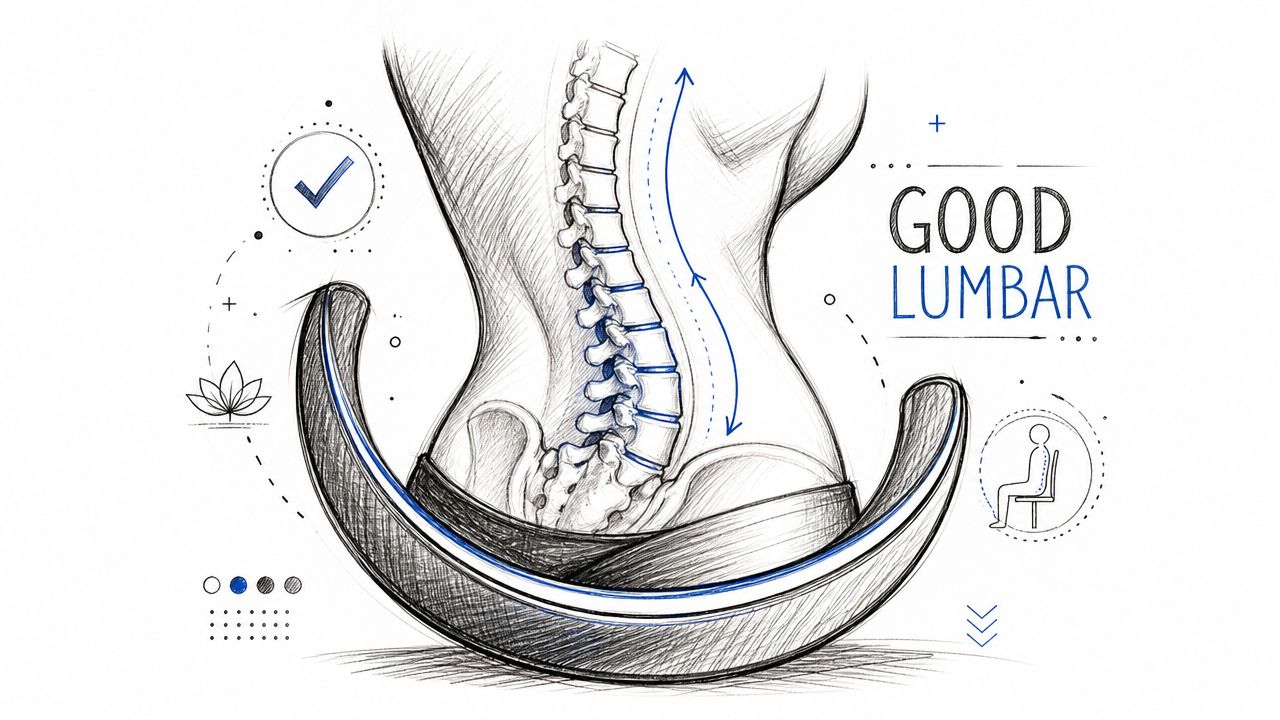
A well-designed recliner fills the gap between the lower back and the chair back. That reduces strain on the muscles and spinal structures. A poorly designed recliner does the opposite. It lets the pelvis roll backward, the shoulders drift forward, and the lower back lose contact with the chair.
Cushioning Is Not the Same as Support
Plenty of recliners feel inviting on a quick sit. That's not the same thing as lasting ergonomic support.
Three common problems show up fast:
- Overly soft seats let the body sink too far, which can create pressure points and break contact at the lumbar area.
- Flat back cushions may feel neat and tidy in a showroom but often fail to follow the body's actual lower-back shape.
- Fixed, generic support works only if the chair happens to match the sitter's spine and proportions.
That's why shoppers looking at different types of power reclining seating should pay attention to adjustability, not just motion. Power features matter most when they help the chair keep support in place as the body changes position.
What to Look for in Recliners With Good Lumbar Support
Certain features tend to separate decorative comfort from real support.
- Adjustable lumbar support helps the chair meet the user's lower-back curve instead of forcing the body into a preset shape.
- Adjustable headrest matters because neck position affects the rest of the spine.
- Stable seat cushioning helps maintain the chair's support geometry instead of collapsing under regular use.
Practical rule: If a recliner feels wonderful at first sit but loses lower-back contact once it reclines, it isn't doing the job.
Brands known for ergonomic thinking, such as Stressless and La-Z-Boy, are often part of this conversation because shoppers can compare different support profiles instead of judging every recliner by softness alone. For people also working on pain management habits beyond furniture, this overview of physical therapy for lower back pain is a useful companion resource.
For style-minded households, support doesn't have to mean clinical-looking furniture. A recliner can still feel well-designed, polished, and appropriate for a curated sanctuary. That's where thoughtful selection matters most.
How to Measure for Your Perfect Recliner Fit
A recliner can be beautifully made and still be wrong for the person using it. Fit decides whether the chair supports the body or slowly works against it.
The most reliable method is simple and professional. Guidance on testing seat depth, lumbar contact, and recline angle in sequence recommends starting with the pelvis fully against the backrest, then checking for about 2–3 fingers of space between the seat edge and the back of the knees. That spacing helps avoid pressure behind the knees and supports circulation.
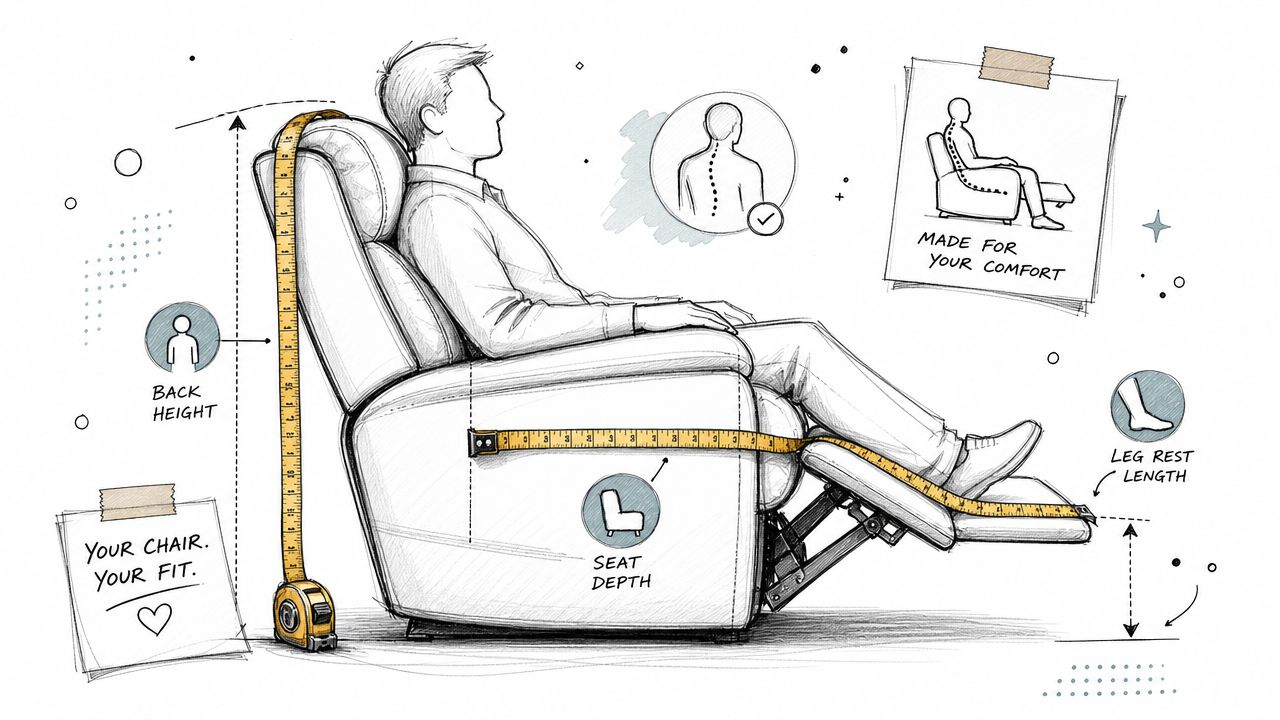
The Three-Step Fit Check
A strong recliner fitting process should happen in order. Skipping around usually leads to bad decisions.
-
Check seat depth first
Sit fully back in the chair. If the seat is too deep, the body will slide forward and slouch. If it's too shallow, the legs may not feel properly supported. -
Check lumbar contact second
The lower back should feel a gentle, spread-out pressure. It shouldn't feel like a hard knob pushing in one spot. -
Check recline angle third
Recline partway and notice what changes. The lower back should still feel supported, and the head and neck should stay in a neutral position.
Red Flags That Mean the Fit Is Wrong
A bad fit usually reveals itself quickly once the shopper knows what to watch for.
- The seat pushes into the back of the knees. That's a depth problem.
- The lower back loses contact during recline. That's a support geometry problem.
- The chin juts forward as the chair reclines. That points to poor headrest shape or an over-reclined position.
- The body sinks and twists. That usually means the chair is too soft.
A recliner should support the body in motion, not just at the first upright sit.
Homeowners who want to prepare before visiting a showroom should review how to measure furniture for the home. Room dimensions matter, but body dimensions matter just as much.
Fit Should Match the Person, Not the Marketing
This is where expert guidance earns its keep. Associates in a well-run showroom can help shoppers compare seat depths, back heights, and lumbar feel across multiple silhouettes. That's especially useful for households in South Georgia and North Florida furnishing shared spaces, where one recliner may need to satisfy more than one body type.
Digital tools also help before the visit. Style Quizzes can narrow the aesthetic direction, and the Mattress Guide is another example of support-focused guidance that helps customers think in terms of body fit instead of surface feel. The smartest recliner purchase starts there.
Your In-Showroom Checklist for Testing Recliners
A five-second sit tells a shopper almost nothing. A proper showroom test reveals whether a recliner will still feel good after reading, watching television, or unwinding for the evening. For recliners with good lumbar support, in-person testing isn't optional.
The first issue to settle is one many shoppers misunderstand. Medical discussion around seating comfort notes that the real question isn't always whether lumbar support feels “firm,” but whether it is present and properly placed, since too much or poorly placed support can work against some users, including those with spinal stenosis, degenerative disc disease, or sciatica. That perspective appears in this discussion of individualized seated comfort for sciatica and related issues.
The Showroom Test That Separates Good From Disappointing
A shopper should spend real time in the chair. Not a polite moment. Long enough to notice what the body is doing.
Use this checklist:
- Sit all the way back. The pelvis should settle naturally against the backrest.
- Stay upright for a few minutes. Early comfort can hide weak support.
- Recline in stages. Don't jump straight to fully reclined.
- Test every control. Power headrest, power lumbar, footrest, lift function if applicable.
- Notice pressure points. Lower back, hips, shoulders, and behind the knees tell the story.
- Listen to the mechanism. Smooth operation usually reflects better everyday usability.
Firm Isn't Automatically Better
Many shoppers make a mistake. They assume stronger pressure in the lower back must mean stronger support. It doesn't.
Support should feel:
- Evenly distributed, not poking
- Noticeable, not aggressive
- Consistent through movement, not present only in one position
A recliner can feel plush and still be supportive. It can also feel firm and still be wrong. That's why a hands-on visit with a guide such as the ultimate recliner buying guide is far more useful than shopping by specs alone.
Some bodies want more pronounced lumbar contact. Others need lighter support and a more open seated position. The correct choice is the one that matches the person using it.
Why the Showroom Matters
The digital catalog and the store floor should work together. A shopper can narrow styles online, then test proportions, support feel, and motion in person in Fernandina Beach, FL. That process is especially helpful when comparing silhouettes from La-Z-Boy or Smith Brothers, where the visual style may be similar but the seat geometry can feel completely different.
A low-pressure showroom should let shoppers take their time, sit twice, and rule out what doesn't fit. That's not hesitation. That's smart buying.
Tailoring Your Comfort With Our Special Order Program
Finding the right support profile is only half the purchase. The other half is making sure the recliner belongs in the room and in the household's daily life.
A custom order often starts with a practical need. A homeowner wants good lumbar support, a cleaner arm profile, and upholstery that won't fight the rest of the room. The right process turns that list into a finished piece that looks intentional instead of compromised.
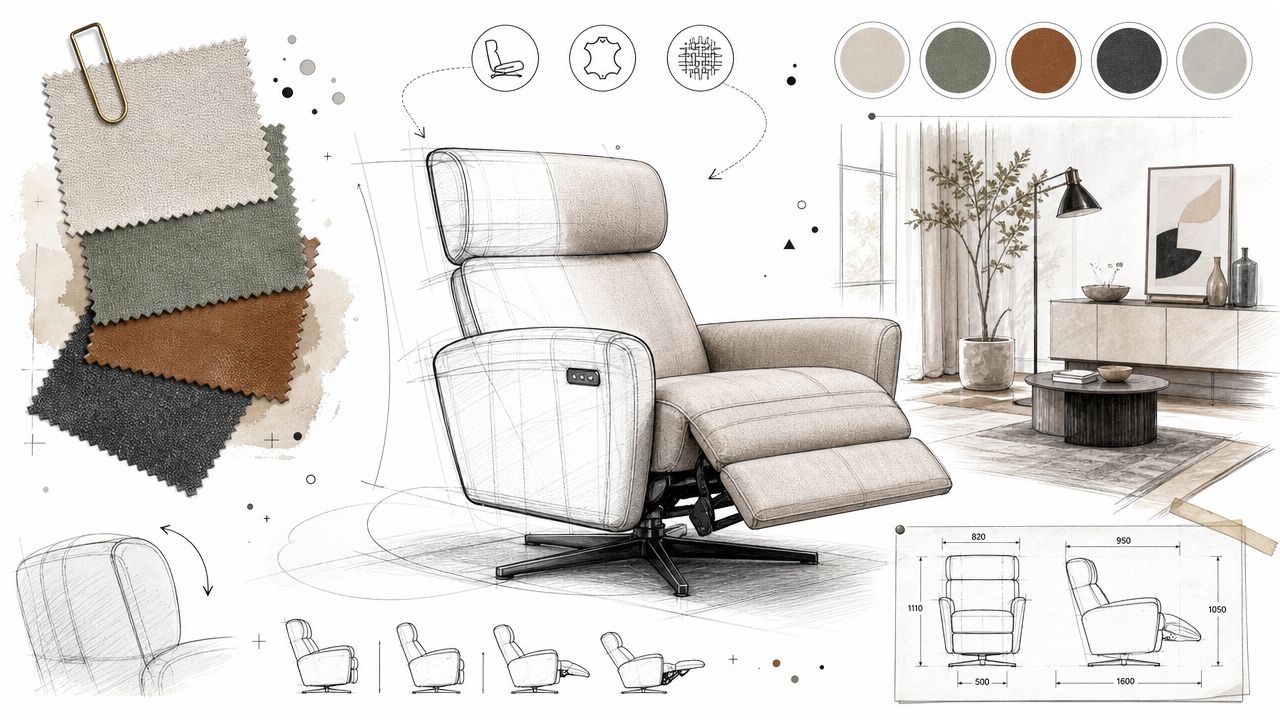
How a Personalized Recliner Comes Together
A shopper may begin with support concerns and end up designing a chair that anchors the room.
That process often includes choices such as:
- Fabric or leather selection for visual tone and daily use
- Performance upholstery for households with pets, children, or frequent guests
- Comfort preference adjustments where available through vendor programs
- Wood finish and design details that tie into nearby tables, casegoods, or flooring
Many vendors support this kind of personalization, which is exactly why the custom order getting started guide matters. It helps shoppers move from a general idea to a precise specification.
Support and Style Shouldn't Compete
A recliner doesn't have to look bulky to be useful. It also doesn't need to disappear into the room. Good design balances both goals.
That's especially true with brands such as Smith Brothers, Stressless, and Lexington, where shoppers often want one of two outcomes. Some want the recliner to blend into a refined living room. Others want it to stand out as a statement piece with heirloom-quality presence.
A well-guided custom process helps answer questions like these:
- Should the chair visually soften the room or add structure?
- Does the household need a smoother leather for easier care, or a warmer woven fabric?
- Would a more fitted silhouette improve the room's scale?
The right recliner should look chosen, not tolerated.
Expert Guidance Makes Customization Easier
In-store associates are particularly helpful. They can translate style preferences into actual furniture decisions, especially when a customer arrives with Style Quiz results or a clear sense of the home's palette. Lott's Furniture also offers a Special Order Program that allows shoppers to personalize recliners through many vendor options, including upholstery and comfort selections, while moving between online browsing and in-store decision-making.
That combination matters because customization can become overwhelming without someone narrowing the field. Good guidance keeps the focus on function first, then finishes the piece so it feels at home in the space.
From Our Showroom to Your Sanctuary The Lott's Standard
Buying the recliner is not the final test of a furniture store. Delivery is. A chair can fit the body perfectly and still disappoint if it arrives mishandled, poorly assembled, or dropped into the room without care.
That's why white-glove service matters on investment-quality furniture. Households across South Georgia and North Florida aren't just buying a mechanism and a cushion. They're buying a complete experience that should end with the recliner properly placed and ready to use.
What White-Glove Delivery Should Include
The standard should be simple. The chair should arrive inspected, protected, and positioned correctly in the home.
A strong in-home process includes:
- A multi-point inspection before the piece goes out for delivery
- Professional placement in the room of choice
- Setup and assembly handled by the delivery team
- Final positioning that accounts for walking paths, wall clearance, and usability
Homeowners can review the details of furniture delivery and assembly services before purchase so there are no surprises on delivery day.
The Last Step Protects the Whole Investment
This matters more than shoppers sometimes realize. Recliners with power functions, adjustable headrests, or lift capabilities need proper setup. A rushed drop-off can leave cords awkwardly placed, controls unexplained, or the chair positioned where full recline won't work in the room.
The same service standard should apply across categories. If a retailer handles a Hooker Furniture desk or a Lexington dining piece with care, that same discipline should show up in recliner delivery too.
Practical Ownership Advice
A few habits help protect comfort and appearance over time.
- Follow care guidance for the chosen upholstery. Leather and fabric need different routines.
- Use the mechanism as intended. Don't force positions manually on powered models.
- Keep paperwork organized. Warranty information belongs in an easy-to-find place.
- Ask questions before delivery day. Clearance, power access, and room layout should be settled early.
For many households, financing also plays a role in the decision. That's not about cutting corners. It's about making room for a better long-term choice instead of settling for a chair that looks acceptable and fits poorly.
A recliner should arrive feeling like part of the home, not like a project waiting to be finished.
Begin Your Journey to Tailored Comfort
A well-fitted recliner changes the way a room works. It becomes the chair that gets used every day, not because it looks good in the corner, but because the body wants to sit in it. That's the difference between a generic recliner and one chosen with care.
Shoppers who focus on fit, lumbar contact, and real-world testing make better decisions. They also avoid the common mistake of choosing softness over support. The strongest choice is usually the recliner that keeps the lower back supported, the head neutral, and the whole body comfortable through more than one position.
For homeowners in South Georgia and North Florida, that search doesn't need to happen blindly. Digital shopping can narrow the field. Style Quizzes can sharpen the aesthetic direction. The Mattress Guide shows the same support-first philosophy in another category. Then the showroom visit does what a screen never can. It lets the shopper feel the difference.
Stressless, Smith Brothers, and La-Z-Boy each bring something different to the conversation. The right answer depends on the room, the body, and how the chair will be used. A thoughtful test sit, a smart custom order when needed, and careful delivery complete the purchase the right way.
For homeowners ready to compare recliners with good lumbar support in person or start with an online style consultation, Lott's Furniture offers a seamless path from digital browsing to showroom guidance in Fernandina Beach, FL and Waycross, GA, along with white-glove in-home delivery for South Georgia and North Florida.