
Fabric Sectional Sofas: The Lott’s Furniture Buying Guide


The living room usually reaches a decision point before the homeowner does. The old sofa starts crowding the walkway, seating never quite works for guests, and one corner of the room becomes dead space no one uses. That's when fabric sectional sofas start to make sense, not as a design trend, but as a practical answer to how people live.
A well-chosen sectional becomes the room's anchor. It holds family movie nights, visiting relatives, afternoon naps, and the everyday sprawl of real life. The right one also has to do more than look inviting. It has to fit the room, suit the household, and hold its shape and character through years of use.
Your Guide to Heirloom-Quality Comfort
A homeowner often starts with a simple picture in mind. A generous corner seat for weekend lounging. Enough room for children and guests. A refined silhouette that doesn't feel bulky. Then reality enters the room. The entryway is narrow. The windows need breathing room. The dog claims one cushion every night. The right answer isn't a random large sofa. It's a sectional chosen with purpose.
Fabric sectional sofas work so well because they solve several problems at once. They define space, soften a room visually, and offer flexibility that a single fixed sofa rarely can. Their staying power isn't accidental either. Upholstered sofas emerged in the late 16th to early 17th centuries, and sectional sofas are closely associated with the Victorian era, when modular seating answered changing domestic interiors, as outlined in this history of sofa development.
That long design lineage matters. It explains why a sectional still feels current. It isn't a novelty piece. It's an evolved form of comfort.
A sectional should solve a room before it decorates it.
The strongest buying decisions usually follow three priorities. First, the layout has to fit the room cleanly. Second, the upholstery has to match the household's real habits. Third, customization should refine the piece instead of rescuing a bad initial choice.
A thoughtful starting point is this sofa buying guide for your living room, especially for shoppers weighing scale, seating needs, and long-term comfort. For homes across South Georgia and North Florida, that process matters even more because many households need furniture that balances hospitality, family use, and everyday durability without sacrificing visual polish.
Choosing the Right Sectional Layout and Size
A sectional can improve a room dramatically, or overwhelm it completely. Size mistakes happen because shoppers focus on seating capacity before they study circulation. The room has to function first.
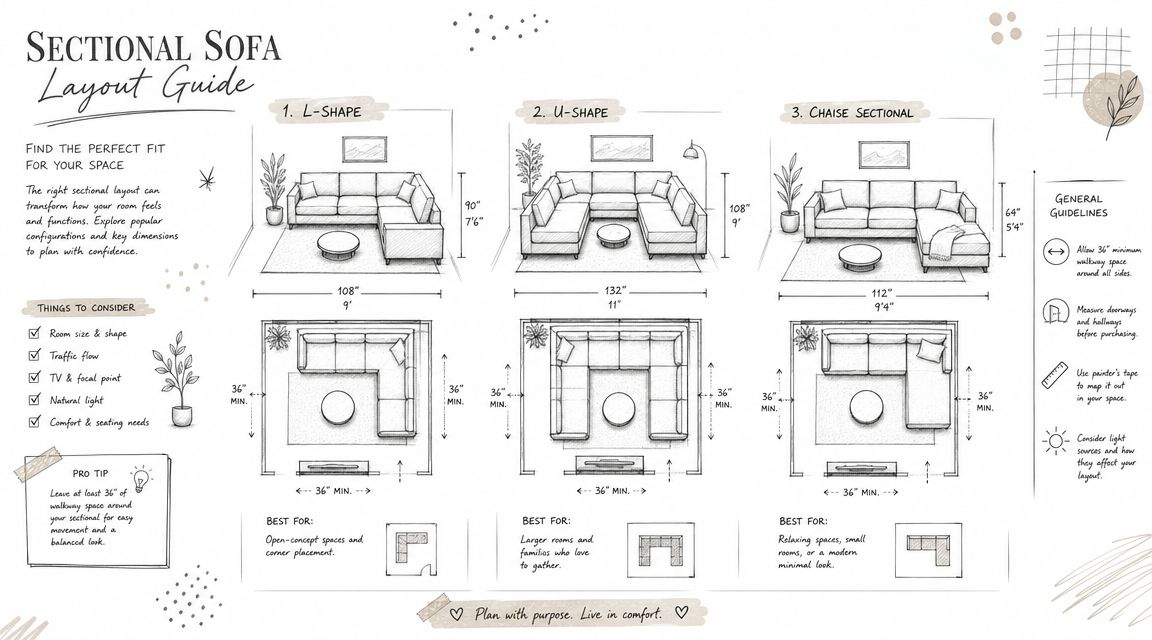
Start with the room, not the sofa
The smartest approach is to map the room before looking at upholstery samples or arm styles. That means identifying doors, windows, fireplace walls, traffic lanes, and the furniture that must stay. A sectional should support movement through the room, not interrupt it.
For a strong planning framework, this guide to living room furniture layout ideas helps clarify how seating groups, sightlines, and open pathways should work together.
Use this order:
- Measure the room shell. Record wall lengths and note every interruption, including openings and trim.
- Mark traffic paths. People need to move naturally from doorway to doorway without stepping around a chaise.
- Check delivery access. Hallways, stair turns, elevators, and door frames matter just as much as room dimensions.
- Tape the footprint. Painter's tape on the floor quickly exposes whether the sectional feels balanced or oversized.
Match the layout to the way the room is used
Not every sectional shape belongs in every home. The right form depends on both the room and the household rhythm.
- L-shaped sectionals work well in corners and open-concept rooms that need a defined seating zone.
- U-shaped sectionals suit larger gathering spaces where conversation and shared lounging are the priority.
- Chaise sectionals fit households that want one strong lounging seat without committing to a bulkier footprint.
- Modular arrangements make sense for unusual floor plans, second homes, and households that like the option to reconfigure.
A helpful outside resource for measurement basics is these custom sectional tips for homeowners. The value is simple. It pushes shoppers to think beyond the wall where the sectional will sit and account for the full route into the home.
Practical rule: If the sectional fills the room on paper, it will dominate the room in person.
Don't ignore orientation
Right-arm and left-arm decisions sound minor until the piece arrives and blocks the room. The chaise or return should support the natural focal point, whether that's a television wall, fireplace, or conversation area. In many homes, the best orientation is the one that leaves the center of the room feeling open.
For shoppers in South Georgia and North Florida, showroom planning is often where clarity happens. Associates can help translate rough room measurements into a realistic footprint, especially when evaluating modular collections from makers such as Smith Brothers.
A Guide to Performance and Style in Upholstery
Fabric choice is where a sectional either becomes easy to live with or frustrating to own. Too many shoppers choose upholstery as if they're selecting drapery. A sofa doesn't live at a distance. It handles skin oils, denim friction, snacks, pets, humidity, and constant repetition.
That's why fabric sectional sofas should be chosen with equal attention to touch, appearance, and performance. Softness matters. So does resilience.
Standard upholstery versus performance fabrics
Homes in coastal and family-oriented markets need a blunt answer to a common question. Yes, fabric can be practical. No, every fabric isn't equally practical. Retail guidance often treats fabric as generically soft and breathable, but the key distinction is between standard decorative upholstery and more durable performance-oriented options for high-use seating.
For a deeper look at performance fabrics for upholstery, shoppers should pay attention to cleaning expectations, weave density, and daily wear patterns rather than color alone.
Industry guidance is clear on one point. Tightly woven synthetic fabrics such as microfiber, polyester, and olefin are favored for durability because their fiber structure improves abrasion resistance and helps reduce snagging from daily contact, and performance fabrics with stain-resistant or easy-clean finishes are better choices for high-use sectionals.
Fabric Performance Comparison
| Fabric Type | Durability | Stain Resistance | Best For |
|---|---|---|---|
| Microfiber | Strong choice for frequent use | Often easier to manage than many textured weaves | Family rooms, pet homes, everyday seating |
| Polyester | Dependable for active households | Better suited to spill-prone spaces than many delicate natural fibers | Busy living rooms, rentals, mixed-use spaces |
| Olefin | Well suited to heavy contact | Helpful in homes concerned about moisture and cleanup | Coastal homes, casual spaces, high-traffic seating |
| Linen-look standard upholstery | Better for lower-intensity use | Usually requires more careful maintenance | Formal rooms, lower-traffic sitting areas |
| Velvet-style upholstery | Stylish and rich in appearance | Less forgiving in heavy daily use unless designed for performance | Statement seating, design-first rooms |
What should most buyers choose
For most households, the sensible recommendation is straightforward:
- Choose performance upholstery if children, pets, guests, or everyday lounging drive the room.
- Choose tightly woven synthetics if the sectional will be used from morning to night.
- Choose texture carefully if the room gets humid or the sofa sits in direct daily use.
- Choose delicate fabrics only with intention if the room is more formal than functional.
There's no virtue in buying a beautiful fabric that makes the owner anxious. A sectional should invite use. It shouldn't require constant vigilance.
Homes with pets, vacation traffic, or heavy family use usually do better with fabrics chosen for cleanability first and romance second.
Brands such as La-Z-Boy often appeal to this buyer because worry-free upholstery options align with real household use, not showroom fantasy. That's the standard worth following.
The Art of Customization with Our Special Order Program
A sectional feels right when it fits your room and your routine so precisely that nothing about it nags at you later. That is the core value of custom order. The seat depth suits the way you lounge. The arm style respects the room's footprint. The fabric looks right in your light, not just under showroom lighting or in a phone photo.
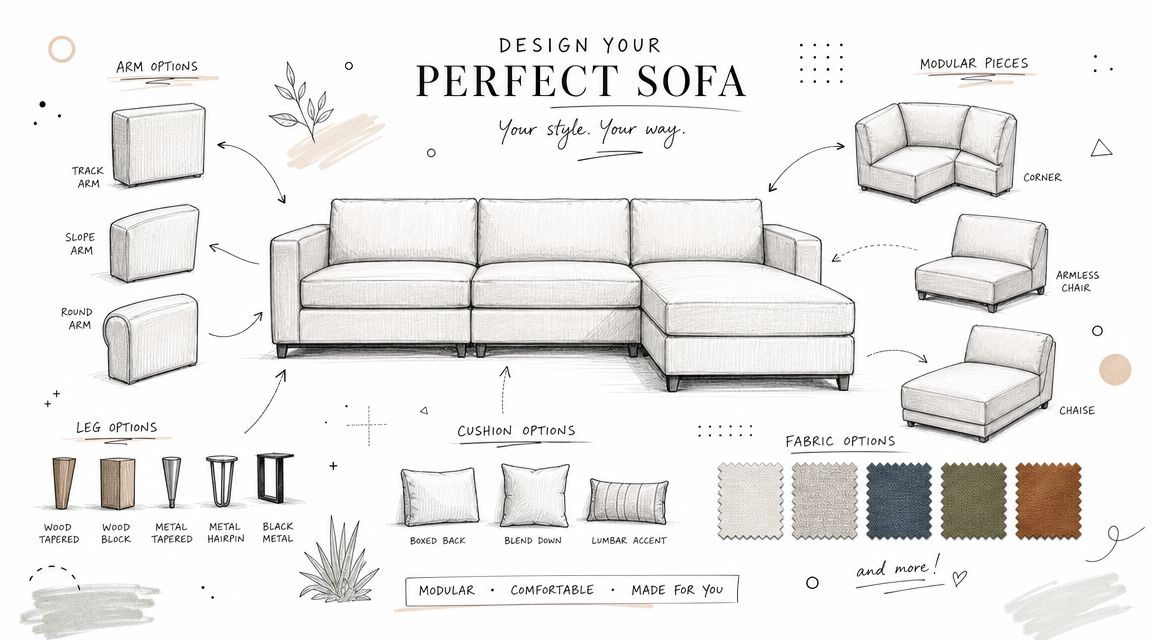
Why customization pays off
Custom work matters because a sectional is a large, daily-use piece. Small mistakes become daily irritations. A seat that is too shallow changes how you relax. Arms that are too bulky waste space. A fabric that looked appealing online can feel completely wrong once it is sitting under your home's natural light.
Fabric also drives a meaningful part of the investment. A typical fabric sectional sofa can require a substantial amount of upholstery material, as explained in this sectional fabric yardage guide. That is why the fabric decision deserves the same attention as the frame, layout, and cushion feel. It affects price, appearance, maintenance, and how the sofa will age in your home.
For customers shopping from inspiration photos, room measurements, and finish samples, visual planning helps prevent expensive mistakes. It is useful to compare furniture 3D modeling options before placing a custom order, especially when scale, corner orientation, or module spacing could change how the whole room works.
What should be customized first
Start with the decisions that affect comfort and fit every single day.
- Seat depth and cushion feel decide whether the sectional supports upright conversation, stretched-out lounging, or both.
- Arm style changes the look of the piece and the amount of usable seating space.
- Configuration determines traffic flow, sightlines, and whether the sectional suits the room rather than merely filling it.
- Fabric and color shape maintenance, texture, visual warmth, and how forgiving the piece will be over time.
- Leg style and finish matter most when the sectional sits alongside visible wood tones, exposed tables, or more traditional furnishings.
These choices should be made in that order. Comfort first. Fit second. Surface details last.
Where the process becomes easier
At Lott's Furniture, custom ordering is not a guessing game or a stack of swatches dropped in your lap. Our team helps customers in South Georgia and North Florida sort through layout options, fabric families, finish details, and scale questions with the room itself in mind. That matters when you are trying to turn online inspiration into a sectional that looks settled and properly sized once it is delivered.
The practical starting point is getting started with custom order. That page gives you a clear path into the process, but the main advantage is the guidance behind it. We help you narrow the field, rule out costly mismatches, and build a sectional that feels composed, personal, and built for long-term living.
Styling Your New Fabric Sectional Sofa
A sectional should anchor the room, not consume it. Styling is what turns a large upholstered piece into a composed living space with rhythm, contrast, and warmth.
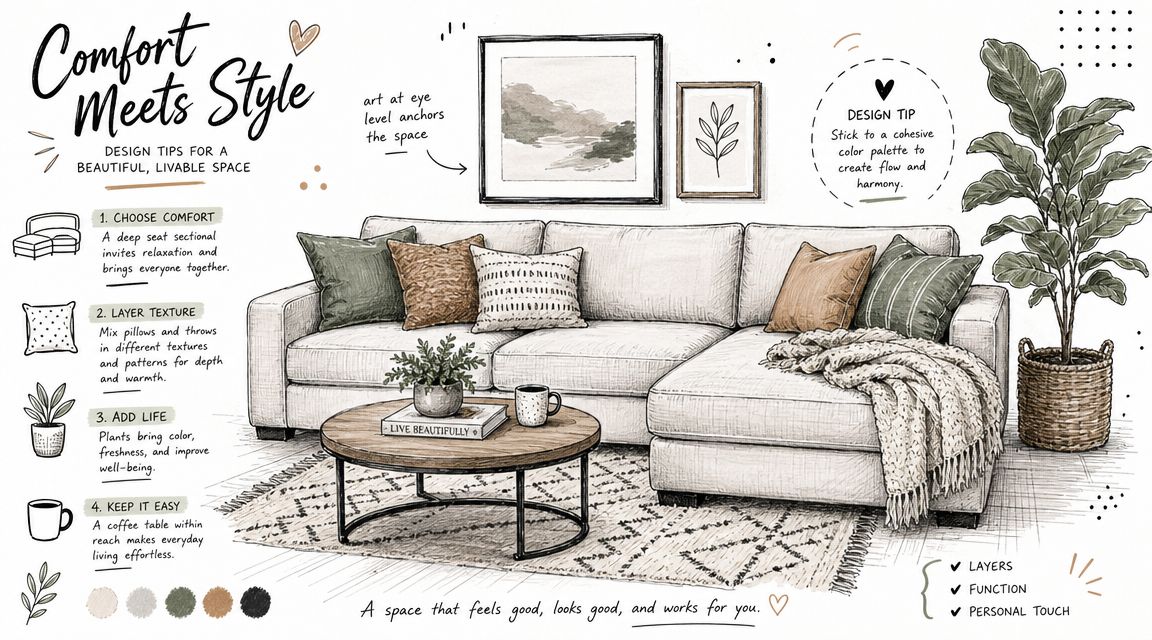
Build the room in layers
Start with the sectional's visual weight. If the upholstery is quiet and clean-lined, the room can handle more texture in pillows, throws, and rugs. If the sectional already has a pronounced weave or a strong color, keep the supporting pieces calmer.
A few styling moves work reliably:
- Use pillows with contrast. Mix scale and texture instead of repeating one matching set.
- Ground the seating area with a rug. The rug should connect the sectional to the tables around it.
- Add a coffee table with presence. A sectional needs a central surface that feels proportionate, not undersized.
- Include one organic element. Wood, woven texture, or greenery keeps upholstery-heavy rooms from feeling flat.
For shoppers who want a more polished drape on throws, this guide to draping luxury faux fur offers simple visual techniques that translate well to sectional styling too.
Keep the surrounding furniture disciplined
The biggest styling mistake is overfurnishing. A sectional already provides visual mass. The supporting pieces should complement, not compete. That's why cleaner coffee tables, lighter end tables, and deliberate lighting usually outperform heavy matching suites.
Lexington and Hooker Furniture collections can help create continuity when the room needs case pieces with a coherent finish story. Style Quizzes are useful here too. They give shoppers a practical way to clarify whether the room should lean coastal, traditional, or modern farmhouse before accessories start piling up.
A sectional looks more sophisticated when the room around it has restraint.
Maintaining Your Investment for Lasting Beauty
A fabric sectional should never be treated like a fragile object, but it does need disciplined care. Most upholstery problems start small. Dust settles into seams. One seat gets all the use. A spill gets rubbed instead of blotted. Consistency matters more than dramatic cleaning efforts later.
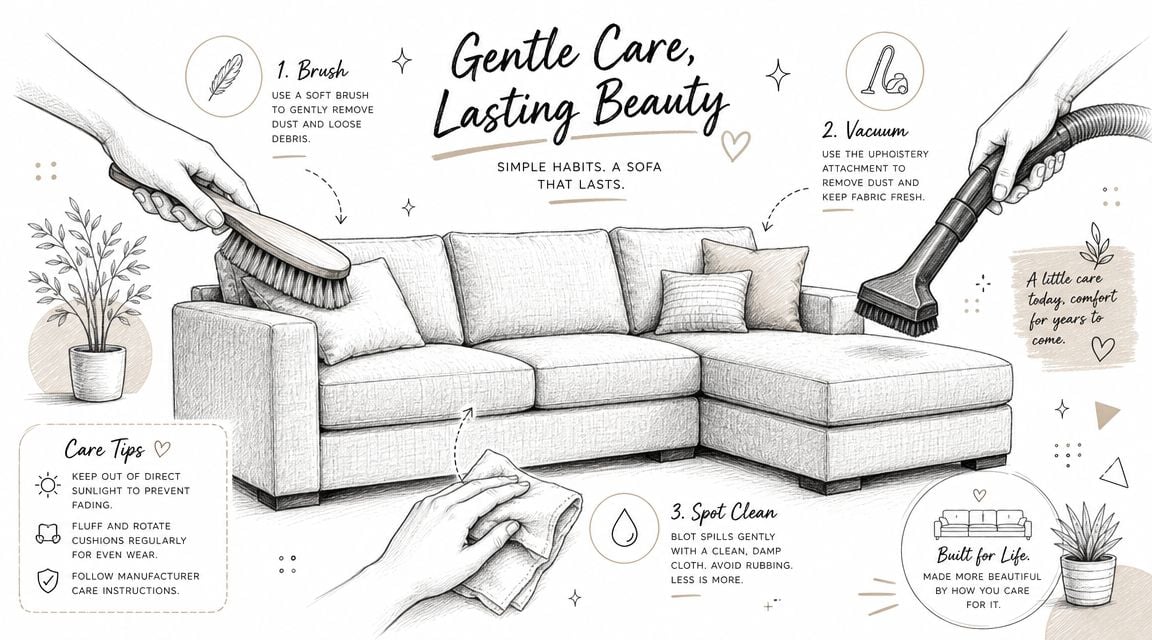
Weekly habits that protect the upholstery
A few maintenance habits preserve both appearance and comfort.
- Vacuum the fabric regularly with an upholstery attachment. Dirt and grit wear fabric faster than often realized.
- Rotate and fluff loose cushions so one seat doesn't age faster than the others.
- Check arms and chaise ends often because those spots collect the most body oils and friction.
- Limit strong direct sunlight where possible. Even durable fabrics benefit from protection against prolonged exposure.
These routines don't take long, and they prevent the sectional from developing that tired, flattened look that makes a room feel older than it is.
Handle spills the right way
Panic ruins more upholstery than the spill itself. The first response should be calm and immediate.
- Blot, don't scrub. Use a clean, dry cloth to lift moisture.
- Work from the outside inward so the affected area doesn't spread.
- Use the cleaning code for the fabric before applying any product.
- Test any cleaner discreetly before touching the visible surface.
Coffee, wine, juice, and pet accidents all tempt people to overwork the spot. That's usually the mistake. Aggressive rubbing can push the spill deeper and roughen the surface.
Clean the spill quickly, then stop. Over-cleaning often leaves a larger problem than the original mark.
Think long term, not just stain by stain
Maintenance also includes prevention. Keep food habits realistic. Use throws where pets repeatedly settle. Rebalance the room occasionally if one seat gets all the traffic. For households furnishing second homes or busy family spaces in South Georgia and North Florida, that steady care is what keeps fabric sectional sofas looking investment-quality instead of merely well-used.
The same logic applies to the full home. Tools like Style Quizzes and the Mattress Guide help shoppers make more cohesive decisions across rooms, so comfort and practicality stay aligned rather than becoming isolated one-off purchases.
The Lott's Experience From Our Showroom to Your Home
You spot a fabric sectional online that looks perfect. Then it arrives, the chaise faces the wrong traffic pattern, the seat depth feels off, and getting it through the front door becomes its own problem. A purchase at this level deserves better than guesswork.
That is why Lott's Furniture treats the process like a real consultation, not a checkout page. Customers across South Georgia and North Florida often start online to narrow the style, scale, and fabric direction. Then they come into our Fernandina Beach showroom to sit, compare, and feel the difference for themselves. That step matters because comfort is physical, proportions change from room to room, and a beautiful photo cannot tell you how a sectional will live in your home.
Our job is to connect those steps with clear guidance. We help you sort through layout questions, review upholstery options, and confirm the details that prevent expensive mistakes later. If a piece needs to be customized, we walk you through the choices in plain language and keep the focus on long-term satisfaction, not quick decisions.
The process works best in this order:
- Start online to save inspiration, compare silhouettes, and identify the fabric sectional sofas that fit your style.
- Visit the showroom to test seat height, back support, arm shape, and overall scale in person.
- Work with our team to refine configuration, fabric, and finishing details for your room and your routine.
- Complete the purchase with professional furniture delivery and assembly so the sectional is placed correctly and ready to enjoy.
Delivery is part of the furniture experience, not an afterthought. A sectional should be inspected before it leaves, handled carefully in transit, and set in place by people who understand how modular pieces fit and function. That saves you from wrestling with boxes, hardware, and heavy components after the sale.
A well-bought sectional feels right from day one. It suits the room, supports the way you live, and arrives fully set up so your home feels finished, not halfway done.
Explore Lott's Furniture online, visit our Fernandina Beach showroom, or schedule a style consultation to turn inspiration into a fabric sectional sofa that looks right, fits right, and serves your home for years.


