Save 50% Off MRSP on Lexington | Shop the Catalog >

Hand Painted Furniture: Techniques & Styling Guide


A lot of homeowners reach the same point at once. The sofa works, the rug works, the room is nicely arranged, yet the space still feels like it could belong to almost anyone. What's missing usually isn't more furniture. It's a piece with a point of view.
Hand painted furniture fills that gap better than most categories in the home. A painted chest, console, side table, or accent cabinet can bring color, craftsmanship, and a sense of history into a room without making the whole space feel busy. It sits in a rare middle ground between furniture and art. For buyers who want a home to feel collected rather than copied, that matters.
In South Georgia and North Florida, that choice also needs to be practical. Finish quality, humidity resistance, maintenance, and long-term wear all matter just as much as the visual effect. A hand-painted piece should feel special on day one and still look right after everyday living, coastal moisture, and regular use have had their say.
Creating a Curated Sanctuary with Hand Painted Furniture
A common decorating moment starts with a nearly finished room. The seating is comfortable. The case pieces are useful. The color palette is close. But the room still feels a little too uniform, as if every item arrived from the same page of a catalog. One hand-painted piece often changes that feeling quickly.
A painted bombe chest in an entry can soften hard architectural lines. A floral-front nightstand can warm up a guest room that feels too plain. A softly antiqued sideboard can make a dining room feel established instead of newly assembled. The value isn't only visual. These pieces give a room memory, even when the home itself is new.
Why a single painted piece changes the whole room
Hand painted furniture works well because it adds variation in a controlled way. It introduces brushwork, layered color, and often a bit of patina. That contrast makes nearby upholstery, wood, metal, and lighting look more intentional.
For many households, that's the difference between decorating and curating.
Practical rule: A hand-painted piece usually works best as an accent, not a room-wide formula. One strong cabinet can anchor a space more elegantly than several painted pieces competing for attention.
Color is often where shoppers get stuck. A painted finish may feel bolder in theory than it does in a real room. Pairing it with an existing rug, drapery, or wall tone usually solves that uncertainty. Readers sorting through those choices can use this guide to the perfect color palette to narrow what belongs together before making a commitment.
A more personal shopping path
This category rewards a slower, more thoughtful process. Many buyers begin by browsing a digital catalog, saving silhouettes, painted finishes, and room looks that feel right. Then they want to see scale, texture, and color in person. That online-to-showroom rhythm is especially useful for households furnishing second homes, refreshing a primary residence, or trying to bridge coastal and traditional influences.
That's where expert guidance matters. Style Quizzes help clarify whether a home leans Coastal, Modern Farmhouse, or Timeless Traditional. In-store associates help translate those results into real pieces, real finishes, and real room balance. For shoppers in Fernandina Beach and across South Georgia and North Florida, that mix of digital inspiration and in-person help makes hand painted furniture feel far less intimidating.
Defining Hand Painted Furniture Beyond the Brushstroke
Hand painted furniture is not merely furniture with paint on it. The category means the finish shows direct human workmanship. The color application, decorative motifs, glazing, edge treatment, and aging effects are created by hand rather than stamped out in a uniform factory pattern.
That distinction matters because true hand-applied work has variation. Brush movement changes slightly from one panel to the next. Layering isn't perfectly mechanical. Small irregularities aren't flaws. They're evidence that a person, not an automated process, shaped the final surface.
What counts as authentic hand-painted work
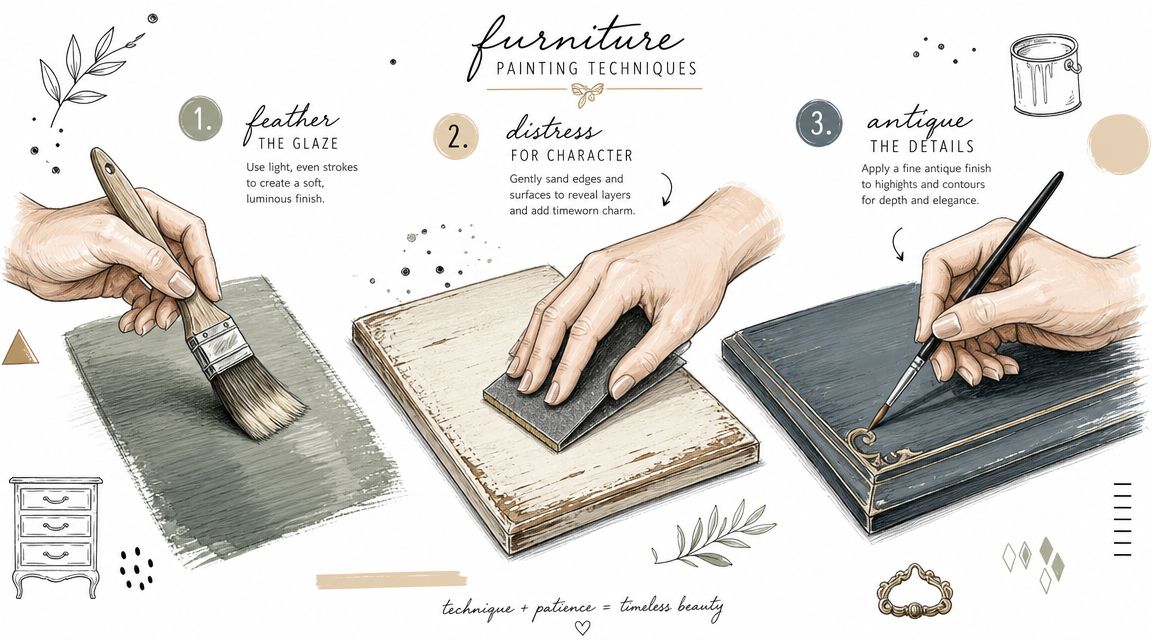
A professionally painted piece may include several hand processes, such as layered base coats, hand-rubbed glaze, selective distressing, edge shading, or decorative linework. Some pieces are painterly and expressive. Others are restrained and precisely styled, using only subtle tonal variation to add depth.
That's why a hand-painted finish can look at home in very different settings:
- Coastal rooms with airy color washes and softened edges
- Traditional interiors with antiqued creams, blacks, or muted greens
- Collected eclectic spaces with floral panels, striping, or old-world motifs
What ties them together is craftsmanship, not one specific look.
Why this craft has staying power
Hand painted furniture isn't a passing design novelty. The craft developed in Europe from the 14th century to the 20th century, and painted seating also appears in North American decorative history in the late colonial and federal periods. Records note painted figures on seating furniture as early as August 23, 1786, showing a decorative tradition with deep roots across centuries and markets, as outlined in the HEART heritage history of painted furniture.
That long history helps buyers understand something important. Painted furniture was never only about ornament. It was part of everyday domestic design, adapted across regions, tastes, and price points.
Natural variation is one of the clearest signs a painted piece was made with care. Uniformity may look neat, but it rarely looks storied.
Where shoppers often get confused
Many people assume hand painted means heavily distressed, floral, or overtly vintage. It doesn't. A modern painted dresser with a soft mineral finish can still be hand-finished. A classic accent chest with only light antiquing can still qualify. The central question is whether the surface shows intentional hand-applied artistry.
That's also where expert guidance in a showroom is useful. Associates can point out the difference between decorative painting, antiquing, and standard painted finishes, then help match that finish style to the architecture and mood of the home.
Exploring Hand Painted Techniques and Finishes
The look of hand painted furniture depends on two separate decisions. First comes the artistic technique. Second comes the protective finish. Buyers often focus on the first and overlook the second, even though both shape how the piece lives in a real home.
A painted chest can feel crisp and refined, soft and timeworn, or richly layered with depth. Those outcomes come from specific methods, not just color choice.

Common hand painted techniques and what they do
Some of the most recognizable finishes are easy to spot once the eye knows what to look for.
- Distressing brings gentle wear to corners, edges, and raised details so the piece feels softened by time.
- Antiquing adds age through toned layers, shading, and patina rather than obvious chipping.
- Color washing creates a thinner, more translucent effect that lets some texture and undertone show through.
- Stenciling or motif painting adds pattern, borders, florals, or graphic detail.
- Glazing settles tinted finish into recesses and carvings, making details stand out with more depth.
For readers who want a plain-language explanation of how glaze changes the final look, the Resurrect Wood Refinishing glazing guide gives a useful overview.
Why prep matters more than people expect
Even the most beautiful finish fails if it isn't built on proper preparation. Practical finishing guidance notes that paint applied over glossy, laminate, waxed, or other low-porosity surfaces is more likely to chip or fail unless the surface is scuffed or bonded with a specialty primer. That same guidance recommends cleaning first and applying multiple thin coats rather than one thick coat, because thin coats reduce sagging and improve leveling, as explained in this step-by-step furniture painting guide.
That information matters even for buyers who will never paint furniture themselves. It helps them ask smarter questions about how a piece was finished.
A durable painted surface starts long before the color goes on. Prep work is part of the finish, not a separate chore.
The topcoat is part of the buying decision
The protective layer affects sheen, touch, and maintenance. Some finishes feel soft and velvety. Others feel slicker and more sealed. A household with children, pets, or frequent entertaining may want a more durable topcoat than a low-traffic guest room requires.
A useful buying lens is to think in terms of placement:
| Room or use | Finish priority |
|---|---|
| Entry or hallway | Easier cleaning and stronger surface protection |
| Dining room accent piece | Resistance to light handling and occasional splashes |
| Bedroom chest | Softer visual depth may matter more than heavy-duty durability |
| Vacation or coastal home | Stable performance in humidity becomes more important |
For buyers comparing premium case goods, painted finishes often appear on pieces from brands such as Hooker Furniture and Lexington, where artisanal surface work is paired with furniture built for long-term use. The finish should always be judged alongside the construction underneath it. A lovely paint treatment on a weak piece isn't an investment. A well-built frame with a thoughtfully applied finish often is.
Readers concerned about everyday wear can also review this guide to protecting wood furniture from scratches and stains to understand how placement and care habits affect longevity.
Professional Artistry vs DIY The True Value of an Expert Finish
DIY painted furniture has its place. It can be creative, satisfying, and useful for casual projects. But it doesn't automatically produce the same result as a professionally finished piece meant to live in a home for years.
The difference usually shows up in three places at once. Surface preparation, visual realism, and long-term wear.

What professionals get right
A professional finisher controls restraint. That sounds simple, but it's one of the hardest parts of painted furniture. Too little aging and the piece looks flat. Too much and it starts to look theatrical.
Experts also know how authentic wear should behave. Guidance on painted furniture forensics notes that natural wear appears in random widths, directions, and depths. Repeating parallel lines or similar scratch patterns often point to machine-made distressing or artificial aging. The same guidance explains that paint inside cracks, gouges, or dents is a strong sign the finish came after the damage, not before, which can indicate later repainting or contrived aging, as detailed in this painted furniture authenticity article.
That's a valuable insight for buyers. It shifts attention away from color alone and toward craftsmanship.
A side-by-side buying lens
Here's a simple comparison that helps clarify the value question.
DIY project outcome often depends on limited prep, fewer finish layers, and general-purpose products.
Professional finish outcome usually reflects a planned sequence of surface prep, layered application, controlled drying, and a finish selected for the piece's intended use.
DIY distressing can look repetitive because the maker is trying to create age consciously.
Professional distressing tends to look more believable because placement follows natural contact points and wear logic.
DIY value may be fine for utility furniture or a casual refresh.
Professional value is better suited to investment-quality furniture where appearance and durability both matter.
Some homeowners also compare paint with alternative update methods. For a lightweight overview of another route, this article on upcycling furniture using vinyl wraps is a helpful contrast because it shows how surface transformation can happen without paint at all. It also makes clear why a true painted finish carries a different kind of depth.
Where customization becomes worth it
A special-order approach makes sense. Many vendors support personalized designs that let buyers choose finishes, fabrics, comfort details, and other specifications instead of settling for a standard floor sample. A store such as Lott's Furniture offers a custom-order path that helps shoppers define those details with an associate before the piece is built or finished.
That matters most when the painted piece has a specific job to do. Maybe it needs to soften a room with heavy wood tones. Maybe it needs to bridge a coastal palette with traditional architecture. Maybe it needs to feel old enough for the house without looking artificially aged. Those are professional finish conversations, not just color swatch conversations.
How to Style Hand Painted Furniture for Any Decor
A hand-painted piece doesn't need a themed room around it. In most homes, it looks better when it plays the role of accent, counterpoint, or anchor. That approach keeps the room from feeling costume-like and gives the painted finish room to breathe.
Painted furniture has belonged to everyday design for a long time. In American and European folk art, handcrafted painted furniture reached a peak from the 1790s to the 1880s, and common forms such as post-and-rung and Windsor chairs were often painted, helping establish the look within vernacular interiors, as noted in the Getty conservation research on painted wood and furniture surfaces.
Coastal rooms
In coastal interiors, painted furniture works best when the finish feels sun-softened rather than bright and glossy. A sea-glass chest, an airy console with subtle antiquing, or a pale blue-green nightstand can add color without competing with natural light.
Pairing helps here. Linen upholstery, woven textures, light wood tones, and simple lamps keep the painted piece grounded. For homeowners building around blue accents, this look at brown and blue living room design is a useful reference for balancing cool and warm tones so the room still feels settled.
Modern farmhouse rooms
Farmhouse spaces benefit from painted furniture when the piece has some structure and restraint. A black sideboard with softened edges, a cream server with aged hardware, or a muted green cabinet can bring age and contrast into a room that might otherwise lean too new.
A good rule is to let one painted item do the talking. If the room already has exposed beams, textured rugs, and rustic accessories, the furniture finish should be edited, not overworked.
Keep the finish expressive and the styling calm. That balance helps painted furniture feel collected instead of crowded.
Timeless traditional rooms
Traditional spaces often suit hand painted furniture especially well because the finish can highlight shape and detail. Cabriole legs, carved aprons, paneled drawer fronts, and framed cabinet doors all respond beautifully to glazing or light antiquing.
In these rooms, painted furniture can act almost like punctuation. A chest between upholstered chairs, a painted writing desk in a study, or a refined accent table in a bedroom can break up expanses of stained wood and add needed depth.
Placement ideas that work in real homes
A few placements tend to succeed across styles:
- Entry focal piece with a mirror or artwork above it
- Dining room sideboard that softens a room full of harder surfaces
- Bedroom accent chest that keeps matching furniture sets from feeling too uniform
- Living room console that introduces color without demanding a full redesign
Shelves around a painted piece matter too. They should support the look, not clutter it. Readers working on that balance can use these shelf decorating ideas for any room to keep surrounding styling consistent with the furniture's character.
Your Guide to Buying and Customizing Hand Painted Furniture
A buyer can admire hand painted furniture in a showroom and still miss the most important questions. The visible artistry matters, but so do the substrate, sealant, and use case. Those details determine whether the piece is decorative only or suited for regular living.
That practical side is especially important in coastal and humid markets. Guidance focused on painted furniture points out that buyers need to ask how the finish handles humidity, scratches, and everyday use, and whether the sealant is appropriate for the piece's role in the home, as discussed in this hand-painted furniture durability article.
Questions worth asking before buying
These questions help separate a pretty piece from a sound investment.
- What is the base material: Solid wood, veneer over quality construction, and engineered components all behave differently under finish and moisture.
- How was the surface prepared: A buyer doesn't need a chemistry lesson, but the answer should suggest a deliberate process rather than a quick repaint.
- What kind of topcoat protects it: That question matters for sideboards, entry pieces, and nightstands that will see regular contact.
- Where is this piece meant to live: A low-traffic guest room allows different finish priorities than a busy breakfast area.
- How should it be cleaned: If the seller can't explain routine care clearly, that's a warning sign.
- Is the distressing intentional and consistent with the style: Good aging should look believable, not stamped on.
- Can the finish be customized: That's often the difference between “close enough” and a piece that belongs in the room.
Customization options that add real value
Most vendors in higher-quality furniture support some level of personalization. That may include finish selection, paint color family, hardware tone, fabric pairing on adjacent seating, or even comfort options on other coordinating pieces in the room.
For shoppers building a broader room plan, that flexibility matters across categories. A painted cabinet may need to sit near a bespoke recliner from Stressless, a sofa from Smith Brothers, or a dining grouping from Lexington without looking disconnected.
Useful decision tools can make that process easier:
- Style Quizzes help identify whether the room should lean Coastal, Farmhouse, or Traditional.
- The Mattress Guide may seem unrelated, but it shows the same principle of guided decision-making across comfort and design purchases.
- In-store associates can compare finish samples, room photos, and floor plans to narrow the right direction.
Don't overlook delivery standards
The finish journey doesn't end at purchase. Painted furniture can be vulnerable to poor handling, rough placement, and rushed setup. White-glove, in-home delivery matters because it reduces unnecessary stress on the finish during the last stage of the process.
A rigorous multi-point inspection also matters. It gives the customer a better chance of receiving a piece whose finish, hardware, and overall condition have been checked before arrival. For households across South Georgia and North Florida, that kind of follow-through is part of buying investment-quality furniture, not an optional extra.
Caring for Your Hand Painted Furniture Investment
Good hand painted furniture should be lived with, not hidden away. Care is mostly about consistency, not fuss. A few steady habits protect the finish far better than occasional deep cleaning.
Dust with a soft, dry cloth. Wipe spills promptly. Avoid harsh chemical cleaners, abrasive pads, and heavy rubbing on decorative details. If the piece holds lamps, drinks, or serving pieces, use felt pads, trays, and coasters so the painted surface isn't doing all the protective work on its own.
Smart habits for humid homes
North Florida and South Georgia homes often deal with moisture, changing temperatures, and high seasonal humidity. That doesn't mean painted furniture is a poor choice. It means placement and care need a little thought.
Keep pieces away from direct sunlight when possible, and avoid placing them right against heat sources or in spots where condensation is common. If a painted chest is headed to a vacation property or enclosed porch-adjacent space, ask for care instructions tied to that setting.
Gentle use preserves character. Neglect creates damage that no finish was designed to celebrate.
Long-term care that protects the finish
The best maintenance plan is simple enough to follow every week. That's why overly complicated routines tend to fail. A painted piece usually needs a calm environment, light routine cleaning, and protection from repeated friction at the same touchpoints.
Readers who want a straightforward care baseline can review this wood furniture care guide for practical maintenance habits that support long-term appearance.
Hand painted furniture earns its place by doing two jobs at once. It gives a room identity, and it rewards careful buying with years of use. For homeowners who want a home to feel collected, comfortable, and distinctly their own, that combination is hard to beat.
For homeowners across South Georgia and North Florida, Lott's Furniture offers a practical next step. Browse the digital catalog, take the Style Quizzes, or use an online style consultation to narrow the right look, then visit the Fernandina Beach showroom to see finishes and craftsmanship in person. In-store associates can help evaluate custom options through the Special Order Program, including personalized designs from vendors that support finish, fabric, and comfort choices. Every piece also benefits from white-glove, in-home delivery and a multi-point inspection before it reaches the home.