
Find Your Perfect Dining Room Table Protector Pad


A family dinner often starts with a small hesitation. A casserole dish comes out of the oven, someone reaches for the center of the table, and all attention shifts for a second from the meal to the finish on the wood. That moment says a lot about how people live with a cherished dining table. They want to use it fully, but they also want it to stay beautiful.
That's where confusion creates costly mistakes. Many households assume a decorative tablecloth is enough. It usually isn't. A tablecloth can soften the look of the room and catch crumbs, but it offers minimal protection against heat or dents. A true dining room table protector pad serves a different purpose. It acts as the working shield that stands between an heirloom-quality surface and the daily wear of meals, serving pieces, spills, and impact.
Protecting Your Dining Table The Heart of Your Home
A dining table holds more than plates. It carries holiday meals, school projects, coffee cups, and the kind of family routines that slowly turn furniture into memory. That's why a scratch, heat mark, or dent feels personal on a well-made table. Damage doesn't just affect the finish. It changes how the piece feels in the room.

The most common misunderstanding is simple. People treat a tablecloth and a protector pad as if they do the same job. They don't. User forums reveal a persistent, unaddressed question: “Should I use a pad UNDER a tablecloth, or is the pad enough?” Pads are specifically designed to be used under tablecloths to prevent scratches and reduce noise from glassware, while tablecloths alone offer minimal heat or dent protection, as discussed in this Reddit conversation about dining table top pads.
Why a Tablecloth Isn't the Protective Layer
A cloth helps with presentation. It can also offer a light barrier against minor spills if they're cleaned quickly. But cloth alone won't reliably shield a fine wood top from:
- Heat exposure: Hot serving dishes can stress a finish.
- Moisture contact: Condensation and spills can sit longer than expected.
- Impact marks: Heavy platters, dropped utensils, and elbows can leave dents.
- Surface abrasion: Dishes and centerpieces can grind lightly against the finish.
A protector pad is built for those practical threats. The tablecloth is the decorative layer. The pad is the functional one.
A beautiful dining table should be used with confidence, not guarded with worry through every meal.
Households that are already thinking about broader home preservation often benefit from practical resources outside the dining room too, including furniture protection advice from Central Coast experts that explains how vulnerable fine surfaces can be during handling and transport.
The Right Way to Think About Protection
The simplest way to frame it is this: a tablecloth changes the appearance of the table, while a dining room table protector pad changes what the table can safely handle. That distinction matters most for antique, custom-finished, or frequently used wood tables.
For readers who want to build a fuller care routine around their dining set, this guide to protecting wood furniture from scratches and stains offers helpful support. The strongest protection plan usually isn't one product. It's a habit of layering the right materials for the way the room is used in practice.
Choosing Your Shield Protector Pad Materials Explained
Not every dining room table protector pad performs the same way. Some materials focus on heat resistance. Others help more with slip control, scratch prevention, or preserving the look of the tabletop. The best choice depends on how the table is used, how often protection comes on and off, and whether the priority is maximum defense or a lighter-touch solution.
Multi-Layer Vinyl and Backed Construction
For many heirloom wood tables, multi-layer vinyl remains the practical standard. Dining room table protector pads are typically constructed with multi-layer vinyl of at least 3mm thickness to ensure durability and effective heat resistance, and that construction often includes a felt or flannel backing for stronger scratch resistance and impact absorption, according to this dining table pad buying guide.
That combination matters because the top and bottom layers do different jobs. The vinyl handles spills and heat. The felt or flannel backing cushions the table surface and reduces abrasion from daily use.
Practical rule: If a household regularly serves hot dishes directly from the oven, a protector pad should clearly state its temperature capability and not rely on appearance alone.
One overlooked detail deserves attention. Many shoppers ask only about maximum heat resistance, but that isn't the whole story. Some luxury protection solutions also specify heat recovery time, which affects how quickly a pad can safely handle another hot dish after the first one is removed. In a busy holiday setting with multiple casserole dishes or serving pieces, that detail can matter just as much as the top heat rating. This hidden gap is discussed in guidance on dining room table protector pads and heat recovery.
Silicone, Felt, and Glass Options
Silicone protectors appeal to homeowners who want a thinner, flexible layer that's easy to handle. They can help with slip resistance and light-duty daily use. Their trade-off is that they typically don't provide the same substantial barrier as a thicker, layered pad designed specifically for heirloom wood protection.
Felt on its own works better as a supporting material than a complete solution. It softens contact and helps reduce scratching, but by itself it isn't the best answer for hot serving dishes or full moisture defense.
Tempered glass creates a different kind of protection. It preserves visibility of the tabletop and offers a permanent, structured surface. It can suit some modern interiors well, but it doesn't provide the same removable, cushioned character as a traditional dining room table protector pad.
For households weighing broader performance choices across the home, the same thinking often applies to upholstery and dining surfaces alike. Materials should match real use, not just appearance. This is why many readers also explore performance fabrics for upholstery when planning a room that has to handle everyday living gracefully.
Dining Table Protector Pad Material Comparison
| Material | Heat Resistance | Scratch/Impact Protection | Best For |
|---|---|---|---|
| Multi-layer vinyl with felt or flannel backing | Strong protection when properly specified | Strong protection from abrasion and impact | Heirloom wood tables, daily dining, entertaining |
| Silicone | Better for lighter-duty use | Moderate surface buffering | Casual use, thinner removable coverage |
| Felt | Limited as a stand-alone heat barrier | Soft contact against the table | Backing layer, delicate surface contact |
| Tempered glass | Good practical surface protection | Strong scratch barrier but not cushioned | Homeowners who want to keep the table visible |
What Material Choice Really Means Day to Day
The right material isn't always the one with the sleekest look. It's the one a household will use every week. A protector pad that's easy to wipe down, easy to place, and suited to the table's role tends to stay in rotation. That's what preserves the furniture.
How to Measure Your Dining Table for a Flawless Fit
A family sets the table for a holiday meal, lays down a pretty cloth, and assumes the wood underneath is protected. Then a serving dish leaves heat haze, or a shifted centerpiece grinds grit into the finish. That mix-up happens because a tablecloth decorates. A protector pad shields. For a pad to do its job, it has to fit the tabletop closely, like a custom-fit cover for the working surface of the table.
A loose fit leaves exposed edges. An oversized pad can bunch, creep, or hang where hands catch it. A custom fit keeps protection where the table needs it.
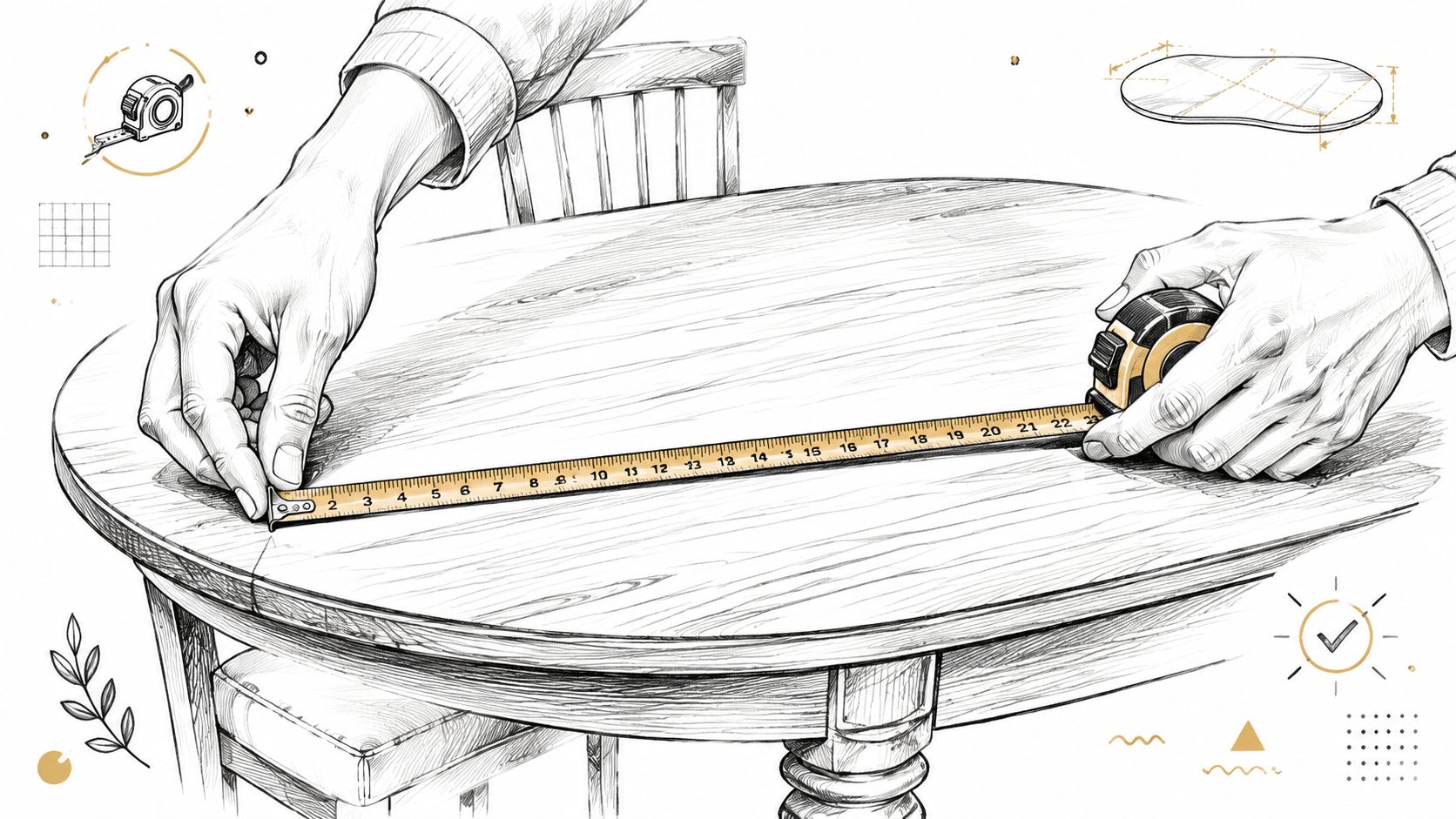
Start With the Usable Surface
Measure the flat top where the pad will rest. Do not measure the apron, pedestal, or the widest decorative detail below the top edge.
That distinction matters more than many homeowners expect. On heirloom tables, the profile often includes bevels, molded edges, and shaped corners that extend past the true resting area. A protector pad is made for the tabletop surface, not every carved detail around it.
Use a simple routine:
- Clear the table completely. Remove runners, placemats, and centerpieces so you can see the true edge.
- Measure the top from edge to edge across the flat surface. Keep the tape straight and level.
- Write each number down right away. Memory is unreliable during custom ordering.
- Measure a second time. Small errors on paper become obvious once a pad arrives.
How to Measure Common Table Shapes
Rectangular tables are straightforward. Measure the full length and full width of the usable top.
Round tables need the diameter, taken straight across the center point. Oval and racetrack tables need the longest length and the widest center width. If the corners are clipped, rounded, or otherwise shaped, note that clearly. Those details change how a protector pad sits, especially near the edges where accidental bumps and dish contact happen most often.
Shaped tables deserve extra care. A paper pattern is often the safest method for boat shapes, clipped corners, and other custom silhouettes. Guidance from woodworkers and measuring specialists often points to the same lesson: measure the exact surface you need to cover, and document unusual contours carefully to avoid ordering mistakes.
Leaves, Extensions, and Real-Life Use
Extension tables call for one more decision. Are you protecting the table in its closed position, its extended position, or both?
That question trips people up because they picture the room rather than the routine. If the table spends most of its life closed and only opens on holidays, one pad size may be enough. If leaves stay in place for long stretches, those dimensions should be measured as the primary setup.
Careful habits matter in other home projects too. The same attention to exact dimensions helps ensure perfect window treatment installation. The principle is simple. Measure the surface you will use.
Common Measuring Mistakes
A few errors come up again and again:
- Measuring the widest ornament instead of the flat top
- Estimating curved corners instead of recording them
- Forgetting to measure with leaves in place
- Assuming a standard size will be close enough for a fine table
Homeowners ordering custom pieces often benefit from reviewing a broader guide on how to measure furniture correctly before placing an order. The habits are the same. Slow down, measure what matters, and protect the craftsmanship you want to pass down.
The Art of Customization Your Perfect Table Protector Pad
A custom protector pad does more than cover the surface. It behaves like a fitted component made for the table itself. That difference shows up in how it lies flat, how it handles pressure, and how naturally it becomes part of the household routine.
Custom-fitted table protector pads are engineered with a total thickness of ⅝ inch (approximately 15.9mm) to maintain structural rigidity while keeping enough flexibility to lie completely flat, and the layers are bonded with water-based adhesives to meet environmental safety standards, as detailed in this custom table pad product overview.
Why Custom Engineering Matters
That thickness isn't a random detail. It supports the balance between stability and flexibility. A flimsy pad can shift or curl. One that is overly bulky can feel awkward at the edge and harder to manage.
Water-based adhesives matter for a more practical reason. Dining spaces are intimate rooms. Families gather there for meals, conversation, homework, and holiday traditions. Materials used in protective products should support a comfortable home environment, not work against it.
Custom Fit Respects the Table's Craftsmanship
A well-made dining table often includes careful details such as shaped corners, extension systems, edge profiles, and finish tones chosen to suit the room. Protection should respect that level of craftsmanship. A generic cover tends to look like an afterthought. A custom-cut pad feels intentional.
That same belief in customized design appears across investment-quality furniture programs. Special order furniture programs allow customers to select frame materials, upholstery fabrics, wood finish stains, and other personalized details before manufacturing begins. The distinction matters because a special order is a ready-made piece ordered from a manufacturer that may not be stocked, while a custom order allows the customer to choose elements such as frame, upholstery, cushion firmness, arm styles, and wood finishes, as outlined in this special order furniture guide.
Digital shopping tools make that process easier to visualize. Online customization tools can help shoppers preview fabrics, view sectional arrangements from multiple angles, and use style quizzes or guides to clarify aesthetic preferences before visiting a store, as described in this overview of online special order customization.
A Broader Design Mindset
The same homeowner who values a custom protector pad often values thoughtful personalization throughout the home. That could mean selecting wood finishes for a dining set, refining comfort in a living room chair, or coordinating upholstery across adjoining spaces.
For readers considering a more personalized furniture purchase later, this custom order starting guide is a useful next step. Good homes rarely come together through one-size-fits-all decisions. They're shaped through careful choices that suit the people living in them.
Simple Installation and Long-Term Care for Your Pad
A protector pad usually enters the story right before a holiday meal, a birthday dinner, or a long evening of card games. The table looks beautiful, the dishes are ready, and someone reaches for a tablecloth. That is often where heirloom tables get unintentionally put at risk. A tablecloth softens the look of a room, but a protector pad is the working layer that stands between fine wood and heat, moisture, scratches, and pressure.
Getting the Pad in Place
Start with the tabletop itself. Make sure the surface is clean and fully dry so the pad can rest flat without trapping crumbs or moisture underneath. Then place each section carefully, lining up the edges with the shape of the table rather than forcing the pad into position.
A well-made pad should sit like a properly fitted lid. It covers the surface evenly, stays settled during normal use, and does not leave gaps near the edge where a hot dish or spilled drink can reach the finish.
If your pad has a locking or joining system, fasten it according to the product instructions. If you prefer help with setup for larger household pieces that arrive with professional care, Lott's also offers furniture delivery and assembly services that reflect the same careful approach homeowners want for prized furnishings.
Everyday Cleaning and Ongoing Care
Protector pads do not ask for much, but they do reward good habits. After use, wipe the surface with a soft damp cloth and a mild soap if needed, then dry it completely before folding or storing it. That last step matters more than many homeowners expect. Trapped moisture can lead to odor, warping, or surface wear over time.
Choose cleaners with the same restraint you would use on the table itself. Harsh chemicals and abrasive scrubbers can shorten the life of the pad. Homeowners who prefer gentler options can review non-toxic cleaning sprays and select one that fits a family dining space.
A simple routine works best. Wipe after use. Let it dry. Put it away properly.
Storage Habits That Preserve the Fit
Storage affects how the pad performs the next time you use it. Fold it only along its intended seams, or store it flat if that is how the construction is designed. Avoid wedging it into a narrow closet corner or stacking heavy items on top, because pressure in the wrong place can distort the shape.
That point is easy to overlook. A protector pad is not a decorative linen you can toss into a drawer. It is more like a fitted shield made for one specific surface, and it keeps doing its job only if it keeps its shape.
These habits help it last:
- Clean spills promptly: Dried residue is harder to remove later.
- Dry before storage: Moisture should never be sealed in.
- Store with support: Give the pad enough space to hold its form.
- Use it for the jobs it was made for: Serving dishes, projects, and busy gatherings call for protection, while a tablecloth alone is mainly for appearance.
The Lotts Furniture White-Glove Experience
A dining table protector pad solves one part of the home care equation. The larger goal is building rooms that are beautiful, comfortable, and prepared for daily life. That's where thoughtful guidance and dependable service matter just as much as the products themselves.
For homeowners across South Georgia and North Florida, the best furnishing experience usually blends online convenience with in-person expertise. Some decisions are easier from the sofa, while others benefit from seeing the finish, touching the material, and talking through the details with a knowledgeable associate.

Expert Guidance That Feels Personal
Shoppers often need more than product specs. They need help making decisions that fit their homes. That may mean comparing finishes for a dining room, refining comfort preferences in upholstery, or coordinating a full-room plan around heirloom pieces already in the home.
Lott's Furniture supports that process with digital tools and in-store guidance, including:
- Style Quizzes: Helpful for identifying a look such as Coastal Chic or Modern Farmhouse before narrowing choices.
- Interactive style support: Useful for layering textures and scaling pieces to the room.
- Mattress Guide: A practical digital tool for comparing comfort and support before a showroom visit.
- In-store associates: Available to help shoppers make sense of materials, fit, and customization.
That blend of support makes it easier to move between a digital catalog and the showroom in Fernandina Beach, FL, without losing momentum. It also reflects the kind of service people appreciate when furnishing homes with recognizable names such as La-Z-Boy, Smith Brothers, Lexington, Stressless, and Hooker Furniture.
Customization With Omnichannel Ease
Most vendors in a strong Special Order Program support personalized design choices such as fabrics, finishes, and comfort levels. That matters for households furnishing around a long-term vision instead of settling for whatever happens to be on the floor.
Browsing online helps narrow the field. Visiting the showroom helps confirm scale, feel, and finish. Together, that creates a smoother shopping path for custom and special-order pieces.
The Lott's Delivery Standard
The final step matters because even exceptional furniture can disappoint if delivery feels careless. White-glove delivery standards for custom order furniture mandate rigorous multi-point inspections for every piece before it reaches the customer, with professional teams providing full in-home delivery that places furniture in the room of choice and ensures proper positioning, as described in this overview of custom order service and delivery.
That's the difference behind Lott's Delivery. It isn't box-drop service. It's in-home placement, careful positioning, and the confidence that every piece has gone through a rigorous inspection first. Readers who want the service details can review furniture delivery and assembly information.
For families furnishing homes in South Georgia and North Florida, that combination of small-town service and big-brand expertise creates a more reassuring experience from first click to final placement.
For homeowners ready to protect a cherished dining table or plan a full-room refresh, Lott's Furniture offers a smooth path from online inspiration to in-person guidance. Browse the digital catalog, take advantage of style tools and consultation support, or visit the showrooms in Fernandina Beach, FL, and Waycross, GA to explore customization, craftsmanship, and the white-glove care behind every delivery.


