Save 50% Off MRSP on Lexington | Shop the Catalog >

Recliner with Cup Holder: A Buyer’s Guide to Comfort


Friday night has arrived. The footrest is raised, the remote is within reach, and a cold drink sits in the built-in holder beside the arm. That small convenience feels perfect, but the better buying question is whether the chair will still feel and function that way years later, after condensation, daily reclining, cleaning, and ordinary family use.
A recliner with cup holder belongs to a larger ownership pattern. The holder's location affects how easily drinks spill onto upholstery. The material influences cleaning. The recline mechanism, frame, wiring, and replacement parts determine whether the chair remains an investment-quality piece or becomes difficult to maintain. This guide helps homeowners in South Georgia and North Florida choose the complete seating experience, not just the most attractive showroom feature.
Settling Into the Decision
Friday evening often reveals whether a recliner fits real life. The chair handles reading, television, gaming, or conversation, while the drink stays within reach. That convenience deserves a closer look because ownership costs begin with small daily habits.
Condensation can collect around an insert. A leak may reach the space beneath a removable liner. Wooden surfaces can develop rings, and power controls or illuminated features need careful cleaning. Choose a recliner with cup holder for the maintenance routine you can manage, not only for the showroom comfort it provides.
The furniture industry's history explains the feature's staying power. U.S. consumer spending on reclining chairs reached an estimated $3.8 billion in 2010, representing 5% of total furniture and bedding spending, according to historical recliner market context. Cup holders joined an established seating category built around home leisure. They made everyday use easier, but they also introduced another surface and collection point to maintain.
What to decide before choosing the holder
Start with three practical questions:
- What does the room support? A compact reading nook needs a smaller footprint than a shared media room.
- What does the household use daily? Water bottles, wide tumblers, mugs, snacks, and remotes favor different holder designs.
- What can the owner maintain? Removable liners and wipe-clean surfaces make sense for homes with children, pets, or frequent entertaining.
Lott's Special Order Program gives shoppers a way to pursue the chair configuration that matches those answers, rather than settling for an attractive feature with inconvenient upkeep. A detailed recliner buying guide can organize the decision before a showroom visit. Test the chair as a long-term household tool, including access to the holder, cleaning points, and controls.
Practical rule: A cup holder should make the chair easier to live with, not create a hidden cleaning problem beside the armrest.
Cup Holder Designs Worth Knowing
Construction matters more than a product photograph suggests. A fixed holder built into the arm looks finished and keeps the drink in a predictable location, but the layout can't be changed later. A removable tray offers more versatility, while a folding surface disappears when the chair needs to look less like a media seat.
Comparing the main constructions
A built-in arm holder suits a solo recliner where the user always sits in the same position. It provides a clean silhouette and reliable access, but a spill may travel toward nearby seams. A removable liner improves maintenance because the insert can be lifted, wiped, and dried separately.
A folding tray works well for occasional drinks and snacks. It keeps the arm clear when folded away, though it may feel less stable than a dedicated cup well. A center console makes more sense in a reclining loveseat. It can combine cup holders with storage for remotes, glasses, or reading material.
A pull-out drawer or flat arm surface, available on some Smith Brothers configurations, prioritizes snacks and accessories rather than deep beverage containment. That design may be friendlier to families who want a surface that can be cleared quickly, but it demands more attention to spill control.
| Design Type | Spill Resistance | Flexibility | Best Room Fit |
|---|---|---|---|
| Built-in arm holder | Good when the liner fits securely | Low | Solo recliner or dedicated reading chair |
| Removable insert | Strong maintenance advantage | Moderate | Family room with frequent daily use |
| Folding tray | Moderate | High when folded away | Flexible living room or occasional seating |
| Center console | Good for shared seating | Moderate | Reclining loveseat or media room |
| Pull-out drawer surface | Better for snacks than open liquids | Moderate | Conversation room or family room |
Match the holder to the seat
La-Z-Boy seating often makes sense for shoppers who want familiar reclining functionality and configurable upholstery. Smith Brothers is worth considering when custom upholstery and a more furniture-like presence matter. Stressless designs appeal to shoppers focused on refined ergonomic support, where the holder's finish and placement should complement the chair rather than dominate it.
A useful overview of power reclining seating types can help narrow the mechanism and layout before comparing finishes. The right choice isn't automatically the deepest holder. It's the design that matches the beverages, traffic, pets, and cleaning habits already present in the room.
Matching Features to Your Living Room Habits
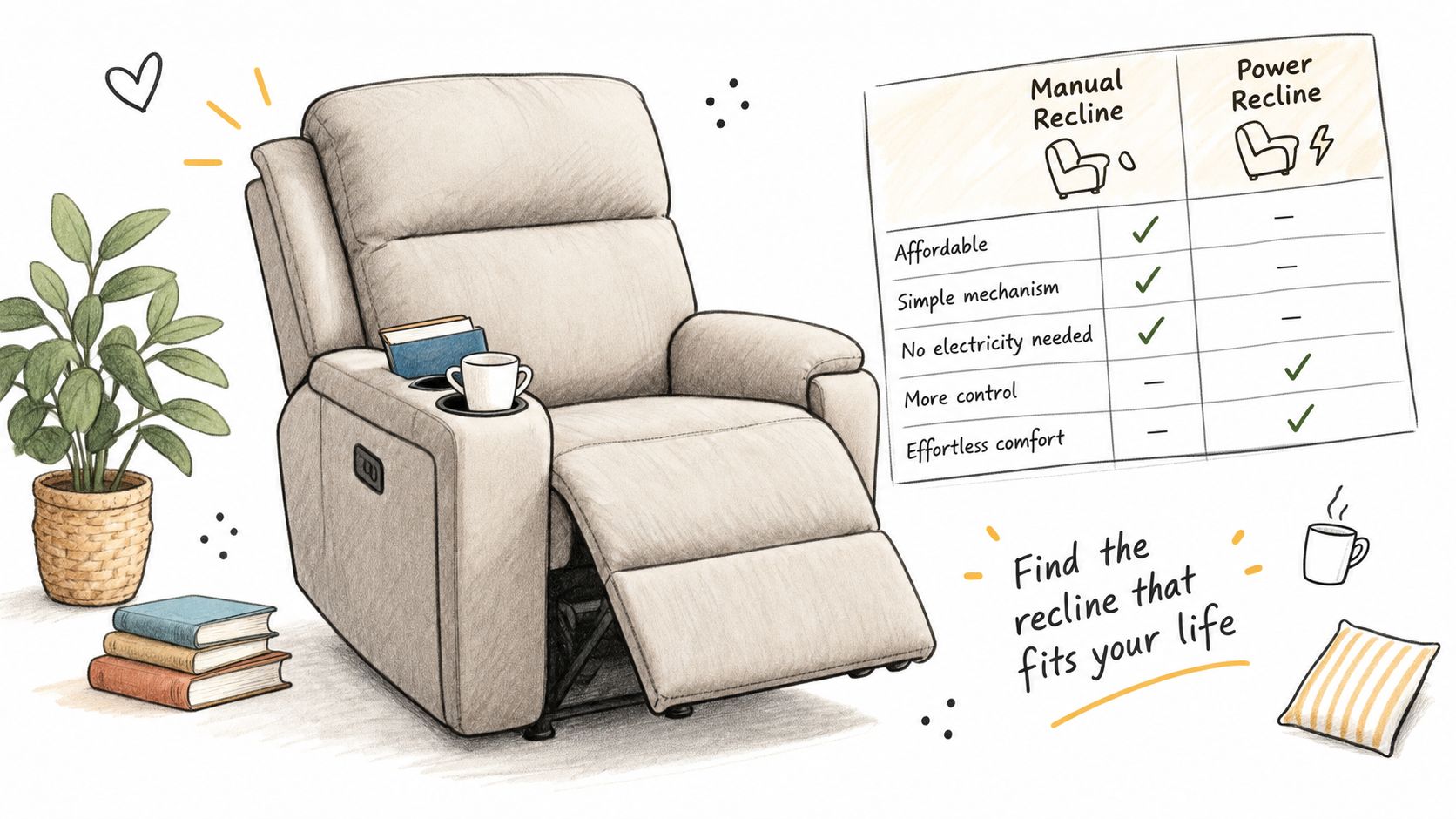
A chair should be selected around behavior, not an impressive list of options. Manual reclining remains a sensible choice for a reading nook or occasional-use room because it doesn't depend on an outlet and usually has fewer powered components. Power reclining suits a primary relaxation seat when precise positioning, powered head support, or coordinated features matter more than simplicity.
The cup holder becomes more useful when it works alongside the rest of the chair. A storage console beats a tray for remotes and reading glasses. A tray wins during snack-heavy gatherings because it provides a broader surface. Neither is universally superior.
A practical feature matrix
| Decision | Better choice for | Main trade-off |
|---|---|---|
| Manual recline | Reading rooms, occasional use, rooms without convenient outlets | Less precise positioning |
| Power recline | Primary seating, users who want controlled movement | More components require careful maintenance |
| Storage console | Remote controls, glasses, books, shared loveseat use | Adds width and visual mass |
| Folding tray | Snacks, flexible layouts, occasional entertaining | May offer less beverage stability |
| Leather upholstery | Quick wipe-downs and tailored appearance | Wear can show around frequently used arms |
| Performance fabric | Family rooms, pets, and a softer visual texture | Cleaning codes still need to be followed |
Upholstery changes the spill story. Leather generally allows surface moisture to be addressed quickly, but repeated contact around the holder can show wear. Performance fabric can disguise minor marks longer, yet it still needs prompt blotting and correct care products. The cup holder, cushion, arm, and recline controls should be considered one maintenance zone.
For a layered comfort setup, a shopper may also want to find your cosy wearable blanket, especially in a reading corner where warmth and relaxation are part of the chair's purpose. That accessory doesn't replace proper lumbar support or a well-fitted seat, but it can reinforce how the recliner will be used.
Test the complete routine
During a showroom test, the shopper should:
- Sit with feet flat and then raise the footrest.
- Reach for the holder without twisting the shoulder.
- Place the household's widest everyday tumbler inside.
- Check whether the console blocks knees or walking paths.
- Operate the controls repeatedly and listen for unusual movement.
- Confirm that the upholstery feels comfortable against bare arms and clothing.
A cup holder is successful only when it supports the room's real habits without making the chair harder to clean, service, or place.
Sizing and Room Placement That Actually Work
The tape measure should come out before a favorite silhouette is chosen. Start at the doorway, not the wall where the chair will eventually sit. Measure the opening diagonally, account for trim and handles, and leave practical clearance for maneuvering the chair into the room.
A room sketch should mark the door swing, traffic routes, outlets, windows, and nearby tables. Power seating needs a realistic electrical plan, while a console adds width between seats and can alter the path through a living room. A traditional recliner also needs more room behind it than a wall-hugging design.
Recliner sizing reference
Exact dimensions vary by model, so the table below is a planning framework rather than a product specification.
| Recliner Type | Typical Width | Min. Wall Clearance | Best For |
|---|---|---|---|
| Solo recliner | Compact to broad, depending on model | Model-dependent | Reading nook, bedroom, or individual seating |
| Reclining loveseat | Wider shared seating with center console options | Model-dependent | Couples, family rooms, and media rooms |
| Reclining sectional | Largest footprint and multiple seating zones | Model-dependent | Open living spaces with dedicated relaxation areas |
Measure for movement, not just footprint
A recliner's closed dimensions can be misleading. The footrest extends forward, and the back may move toward the wall during operation. A console between loveseat seats also changes the usable width, while a side table or floor lamp can make the chair feel cramped even when the measurements technically fit.
Wall-hugging models are useful when the room has limited depth, but they still need enough front clearance for the footrest and walking path. Traditional models need a more generous zone behind the back. The safest approach is to mark the chair's closed and open positions on the floor with painter's tape.
The living room furniture placement guide provides a useful planning reference before a purchase. Lott's associates can also review a room sketch, discuss body fit, and help determine whether a solo recliner, loveseat, or sectional will preserve comfortable circulation.
Care, Cleaning, and the Spill Story Most Guides Skip
A cup holder doesn't prevent spills. It contains a drink only until condensation, a cracked lid, an unstable bottle, or an overfilled cup introduces moisture. Liquid can collect in the holder well, reach foam, wick toward the frame, and become especially troublesome around powered controls, lights, USB ports, speakers, seams, and console openings.
That risk deserves attention because feature-rich seating puts more functions in one zone. The recliner maintenance and spill guidance highlights the importance of removable liners and moisture-resistant construction, rather than treating the holder as a purely decorative convenience.

A simple care routine
- Inspect the insert regularly: Lift a removable liner and check beneath it for moisture, residue, or trapped crumbs.
- Wipe with restraint: Use a slightly damp microfiber cloth, then dry the holder fully before replacing the insert.
- Protect electronics: Never spray cleaner into buttons, ports, lights, speakers, seams, or openings around the console.
- Blot fabric: Press against a fresh spill rather than rubbing it deeper into the upholstery.
- Condition leather appropriately: Follow the upholstery manufacturer's care code and keep the surrounding arm surface free from pooled moisture.
- Ask about serviceability: Confirm whether replacement inserts, control components, or liners are available for the chosen model.
Plastic, metal, wood, and food-grade silicone are common holder materials, and each brings a different tactile and cleaning experience. Stainless steel and fixed plastic surfaces usually need a damp wipe and thorough drying. Wood may need more careful moisture control, especially where finish meets upholstery.
The upholstery stain removal resource can support the response to accidents, but the strongest protection remains prevention. A coaster, lidded tumbler, and consistent wipe-down routine cost less effort than allowing sticky residue to settle around a powered console.
How Lott's Turns the Search Into the Right Chair
Online browsing can identify styles, but it can't reveal whether a holder sits comfortably under the shopper's hand or whether the lumbar support feels right after the footrest rises. A showroom test should include the complete sequence: sit naturally, operate the recline, reach for the drink, check the arm height, and assess whether the chair supports the body without forcing a posture.
Lott's Furniture connects that hands-on process with a digital catalog and showrooms in Fernandina Beach, FL, serving homeowners across South Georgia and North Florida. Shoppers can move from online browsing to an in-person test without abandoning the design work already completed online.
Customization makes the feature more useful
The Special Order Program is the practical route when a ready-made chair gets close but misses an important detail. Most vendors support personalized designs, including:
- Fabrics and leathers: Select a color, texture, and performance level suited to the room.
- Finishes: Coordinate wood tones, trim, and visible holder details with existing furniture.
- Comfort levels: Discuss cushion feel, support preferences, arm styles, and recline configurations.
- Feature layouts: Evaluate console storage, holder placement, lighting, and powered functions as part of the full design.
La-Z-Boy, Smith Brothers, and Stressless each offer distinct approaches to comfort, construction, and appearance. The selection process should focus on which configuration serves the household, rather than forcing every shopper into the same holder style.
Guidance continues beyond the showroom floor
Lott's Style Quizzes help shoppers identify a direction such as Coastal Chic, Modern Farmhouse, or Timeless Traditional. The Mattress Guide is also available for broader comfort and support decisions, while in-store associates can help connect those preferences to upholstery, scale, and seating posture.
A careful delivery process protects the purchase after the decision is made. White-glove furniture delivery typically includes inside delivery, room-of-choice placement, unpacking, assembly or light installation, inspection, packaging removal, and a final walkthrough while the crew remains present, as described in this white-glove delivery overview. Independent delivery guidance also emphasizes receiving, documenting damage, taking photographs, and identifying imperfections before final placement, as outlined in white-glove inspection procedures.
That standard matters for a recliner with cup holder because the item includes upholstery, moving parts, and sometimes electronics. The Lott's delivery standard calls for in-home, white-glove service and a rigorous multi-point inspection before the piece reaches the customer, so the chair can be evaluated in the intended room rather than left for the homeowner to assemble and assess alone.
Your Next Step Toward the Right Recliner
The right chair comes down to three decisions. First, choose the cup-holder style that matches the household, whether that means a fixed holder, removable insert, folding tray, or center console. Second, decide whether manual simplicity or powered positioning better suits the room and daily routine. Third, choose upholstery with a care plan that the household will follow.
A showroom visit in Fernandina Beach, FL, or Waycross, GA, gives shoppers the chance to sit, lean back, raise the footrest, reach for a cup, and compare models from La-Z-Boy, Smith Brothers, and Stressless. That physical test reveals details a product page can't, including arm height, holder reach, seat depth, control placement, and the way the chair feels in its fully reclined position.
Prepare for a more confident consultation
A one-on-one consultation can help with:
- Room measurements: Review doorway dimensions, traffic paths, wall clearance, and outlet locations.
- Fabric selection: Take swatches home and compare them with flooring, rugs, lighting, and existing upholstery.
- Special ordering: Discuss available fabrics, finishes, comfort levels, configurations, and expected ordering stages.
- Delivery planning: Review convenient delivery arrangements and the in-home placement process.
- Payment planning: Explore financing options that divide the investment into predictable monthly payments rather than requiring a single lump sum.
The Lott's white-glove delivery service belongs in that conversation from the start. Delivery access, room placement, inspection, and packaging removal all affect how smoothly the chair moves from showroom selection to everyday use.
The strongest recommendation is simple. Don't select a recliner with cup holder from a photograph alone. Confirm the holder style, recline mechanism, and upholstery care requirements in person, then match the final configuration to the room and the people who will use it.
Lott's Furniture offers personalized recliner options through its Special Order Program, practical guidance from showroom associates and digital style tools, and white-glove in-home delivery across South Georgia and North Florida. Visit Lott's Furniture to browse the digital catalog, schedule an online style consultation, or plan a showroom visit in Fernandina Beach or Waycross.