Save 50% Off MRSP on Lexington | Shop the Catalog >

Upholstery Stain Removal That Actually Works at Home


Coffee has just left the mug, crossed the room, and landed in the center of a brand-new sectional cushion. The instinct is understandable: grab a wet towel, scrub hard, and reach for the nearest spray bottle. That reaction can turn a manageable mark into a permanent moisture ring, spread the coffee through the weave, or damage the backing beneath it.
Effective upholstery stain removal starts with a less dramatic move. Find the furniture tag, read the cleaning code, and match the treatment to the fabric before applying anything. A performance textile can resist everyday spills while still reacting badly to the wrong solvent, too much water, or aggressive friction. The same care applies to comfort from brands such as Smith Brothers and La-Z-Boy, where the fabric, cushion construction, and finish all deserve a controlled approach.
Why the Cleaning Code on Your Furniture Changes Everything
The cleaning code is the first decision point, not an afterthought. It's usually printed on a tag beneath a loose seat cushion, attached to the frame, or tucked under the furniture near the deck. If the tag is missing, the material is delicate, or the piece is an heirloom, professional guidance is safer than guessing.
Code W permits water-based cleaners. Code S requires solvent-only treatment, so water can leave discoloration, shrinkage, or a visible tide mark. Code WS generally accepts either water-based or solvent cleaners, while Code X means vacuuming or light brushing only, with no liquid cleaner. This code framework is summarized in upholstery fabric cleaning code guidance.
The showroom rule: The safest stain remover is the one the furniture tag allows, not the one that worked on a different sofa.
Performance fabric doesn't mean stain-proof fabric. It means the textile has been engineered to handle particular kinds of use and particular cleaning methods. The furniture's construction matters as well. A small amount of moisture on the surface can become a much larger problem inside a cushion if the fill absorbs it.
Upholstery cleaning codes at a glance
| Code | Meaning | Safe methods | Avoid |
|---|---|---|---|
| W | Water-based cleaning allowed | Sparing water-based solution, blotting, controlled rinsing | Solvents unless the manufacturer permits them |
| S | Solvent-only cleaning | Appropriate dry solvent applied carefully | Water, steam, soaking, and wet scrubbing |
| WS | Water or solvent cleaning allowed | Tested water-based or solvent method | Unchecked saturation and heat |
| X | Vacuum or brush only | Vacuuming, gentle brushing, professional assessment | All liquid cleaners and home steam treatment |
The difference between W and S is especially important on natural fibers, velvet blends, and custom upholstery. Even a mild household mixture can swell fibers, pull dirt outward as it dries, or alter the finish. Guidance on performance fabrics for upholstery helps explain why a fabric's resistance features never replace code-specific care.
Your Pre-Treatment Routine for Any Upholstery Stain
A reliable routine begins before the cleaner touches the fabric. The first task is to stop the spill from traveling deeper or wider.
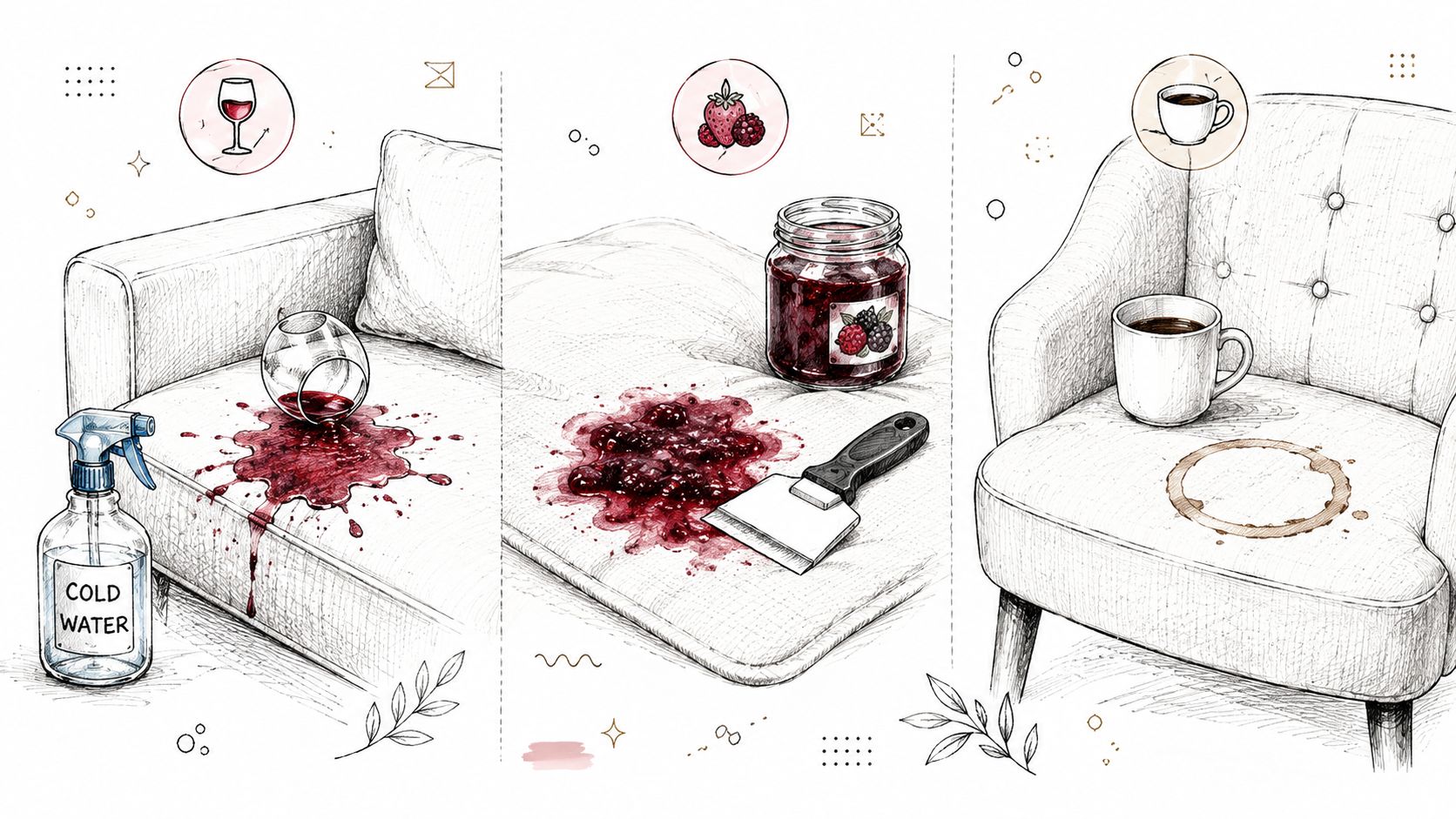
Five moves that prevent bigger damage
Blot the surface. Use a clean white microfiber cloth and press firmly without rubbing. Start at the outside edge and work toward the center. Rubbing pushes liquid sideways, roughens the pile, and can drive pigment into the backing.
Read the code. Don't choose a solution until the tag has been checked. A safe method for Code W can be damaging on Code S, and Code X should receive no liquid treatment at home.
Test an unseen area. Apply a small amount beneath a cushion or behind the furniture, then wait ten minutes before judging the result. Look for color change, texture change, stiffness, or a damp outline. Performance fabrics can react unexpectedly to detergents that seem mild.
Match the solution to the stain. Water-based stains, oily marks, tannin-rich drinks, ink, and biological residue need different treatment priorities. The cleaning code limits the available options, but stain chemistry determines what should happen next.
Control moisture and residue. Apply the smallest practical amount, then blot repeatedly. For washable fabrics, Consumer Reports recommends blotting, applying a sparing cleaning solution, and finishing with water dabs to remove detergent before drying, using 1/4 teaspoon of dishwashing liquid per 1 cup of warm water as its DIY benchmark in its stain removal guidance.
Loose crumbs and dry soil should be vacuumed away before liquid treatment. Otherwise, damp cleaning can turn surface grit into a paste and grind it farther into the weave. A clean white cloth also makes transfer visible, so the cleaner can tell whether the stain is lifting or merely spreading.
For homeowners working with performance textiles, this guide to cleaning performance fabric provides useful care context. The central principle remains simple: use less liquid, apply less pressure, and stop if the fabric changes appearance.
Stain-by-Stain Treatment Guide for Common Household Spills
Treat stains by chemistry rather than alphabetically. A food pigment, an oil mark, and a protein spill don't behave alike, so they shouldn't receive the same routine.
Wine and berry stains
Red wine and berry residue contain strong color compounds that can spread quickly through absorbent upholstery. On Code W and Code WS fabrics, blot immediately, then use cool water sparingly. An appropriate enzymatic cleaner may help with organic residue, but it still needs a hidden-area test and controlled application.
Heat is a poor choice here. It can set tannin-rich color and make later removal harder. Don't pour water directly onto the cushion, and don't scrub from the center outward. Use a dampened cloth, lift residue gradually, and follow with clean-water dabbing to reduce detergent residue.
For another practical perspective on how to clean sofa stains, focus on the same fundamentals: immediate blotting, fabric compatibility, and restraint.
Ink and marker
Ink calls for a different approach. On Code S fabrics, a small amount of suitable rubbing alcohol can be placed on an absorbent cloth, never poured directly onto the upholstery. Work slowly from the outer edge inward and change to a clean section of cloth as pigment transfers.
Code W and WS fabrics may tolerate alcohol, but the code alone doesn't guarantee compatibility. Test first, because alcohol can alter dyes, coatings, or the hand of a performance finish. Code X upholstery shouldn't receive this treatment at home.
Oil, grease, and buttery food
Oil spreads invisibly before it becomes obvious. Start dry. Sprinkle cornstarch or baking soda over the affected area, allow the powder to draw out surface oil, and vacuum it away gently before considering any liquid.
A grease mark that remains after dry absorption needs code-approved solvent or detergent treatment. Water alone often moves oil without dissolving it, leaving a larger shadow. Patience matters more than force.
Coffee, tea, and chocolate
Coffee and tea contain water-soluble color along with compounds that can leave a brown outline as they dry. Code W and WS fabrics can receive a carefully controlled water-based treatment. Some upholstery-care approaches use glycerin-based solutions for these stains, but the hidden test remains mandatory.
Chocolate should be allowed to cool if soft, then lifted with a dull edge rather than scraped aggressively. Follow with a mild, code-approved detergent solution. Don't use hot water, which can spread fats and drive residue deeper.
Candle wax
Wax requires a dry removal stage first. Let it harden, lift what can be removed without cutting the fibers, and use the iron-and-paper-bag approach only on fabrics confirmed to tolerate that heat. Keep the iron away from delicate, coated, velvet, or unknown upholstery.
A warm tool can flatten pile, shift color, or melt synthetic fibers. If the fabric code or manufacturer guidance doesn't clearly permit heat, stop with mechanical lifting and seek professional advice.

Independent testing at Virginia Tech found that fabric type, stain type, and remover type all affected color-change outcomes. Milk and mustard were easier to remove in that study, while oil and syrup were more difficult, as reported in the Virginia Tech upholstery stain-removal research. That finding supports a practical rule: don't judge a cleaner by its label alone. The fabric and the spill determine the result.
For leather surfaces, a fabric-cleaning recipe isn't appropriate. Use the care instructions for the material, and consult guidance on how to clean leather furniture at home before applying any household mixture.
Tackling Pet Accidents, Odors, and Biological Stains
Pet accidents need deeper thinking than surface stain removal. Urine carries salts and odor compounds into the cushion, while vomit, blood, and sweat contain proteins that can bind to fibers. A clean-looking surface doesn't prove that the padding is clean.
Hot water is especially risky with protein-based stains. Heat can set proteins into the fibers and make odor more persistent. Cold or cool treatment is the safer starting point for blood, fresh vomit, and urine.
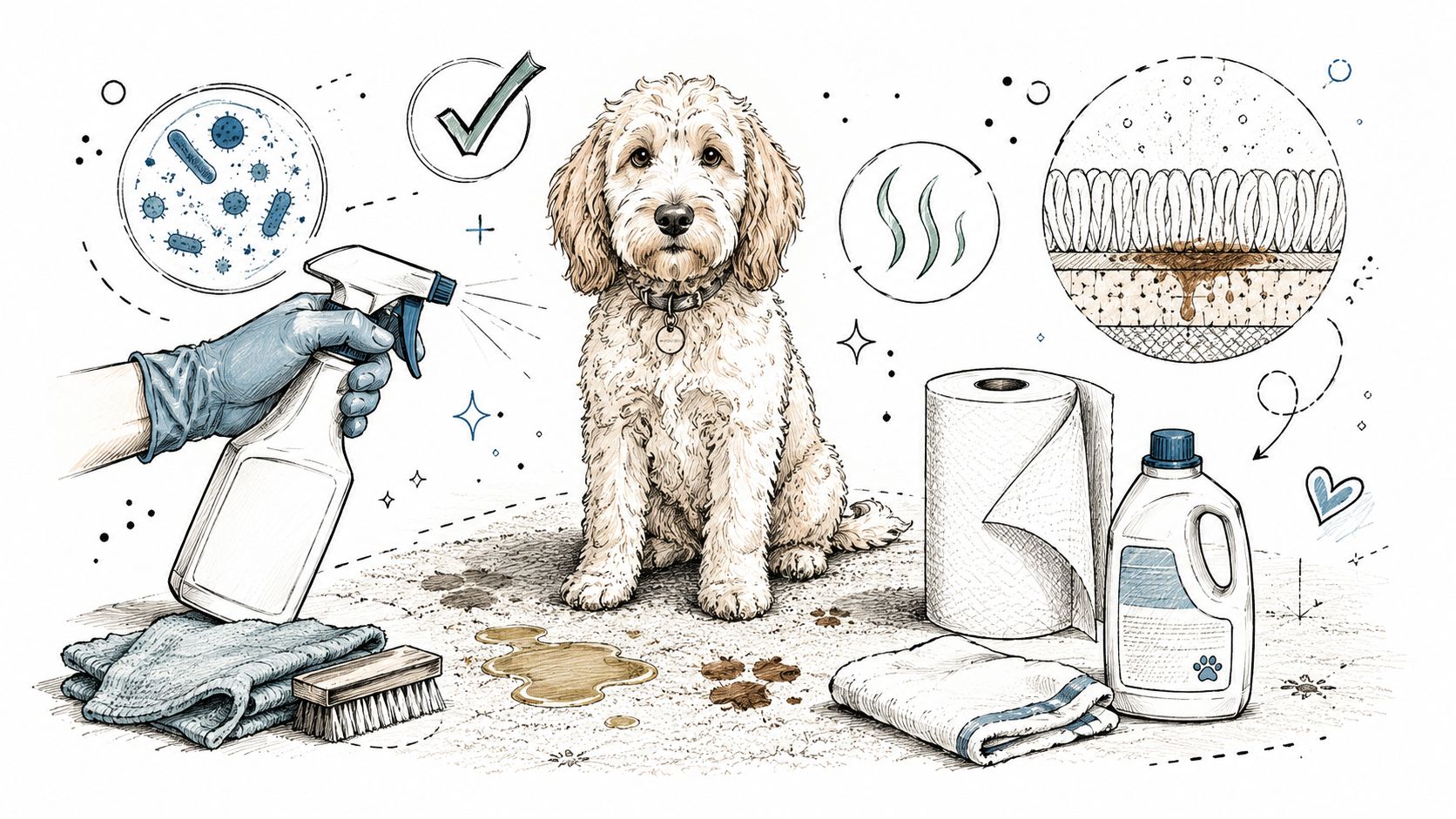
Fresh urine and set-in odor
For fresh urine on Code W or WS upholstery, remove the cushion cover if the manufacturer allows it, blot the surface thoroughly, and apply an appropriate enzymatic cleaner sparingly. The cleaner needs contact with the residue, but flooding the cushion is counterproductive.
If urine has reached the padding, surface blotting won't be enough. A controlled saturation-and-extraction process may be needed to pull moisture and salts from the interior. That work is best handled with equipment designed to remove the solution quickly, especially when the cushion contains foam.
Set-in urine odor, recurring marking, or a smell that returns after drying points to contamination below the fabric. Ammonia-based cleaners should be avoided because their odor can resemble urine and may encourage repeat marking by some animals.
Blood and vomit
Blood should receive cool-water blotting on water-safe fabrics, followed by a carefully tested treatment. Hydrogen peroxide can affect dyes and finishes, so it belongs only in a hidden-area test and should never be applied casually to unknown upholstery.
Vomit should be lifted rather than smeared. Remove solids, apply a light baking-soda pre-treatment to absorb remaining moisture and odor, vacuum it away, and then use the code-approved cleaner. Do not combine multiple cleaners, especially products with incompatible ingredients.
Sweat and body oils along armrests and headrests usually require repeated low-moisture cleaning rather than one aggressive pass. For broader pet-odor decisions, this homeowners guide to stopping pet smells offers useful restoration context. Households choosing pet-friendly furniture should still treat stain resistance as a risk reducer, not permission to ignore the care tag.
Drying Right and Keeping Stains From Coming Back
The stain isn't finished when the surface looks clean. Drying determines whether residue stays removed or migrates back into view.
As water evaporates, dissolved soil and detergent can travel toward the edge of the damp area. That movement creates the familiar halo or moisture ring. Oversaturation also risks the backing, cushion fill, and foam, which is why operational upholstery procedures emphasize low-moisture application, dwell time, and extraction rather than soaking.
A controlled drying sequence
- Remove excess liquid: Press with dry white towels until transfer decreases. Don't twist or grind the fabric.
- Create airflow: Use a fan aimed across the surface, not a concentrated blast directly into one wet spot.
- Open the room: Ventilation helps moisture leave the upholstery. A dehumidifier can help in a humid space.
- Rotate removable inserts: Turn or reposition cushions when the care instructions permit, so both sides dry evenly.
- Restore the pile: Once dry, brush the nap or textured surface gently in the original direction.
Hair dryers are a poor substitute for airflow. Concentrated heat can shrink some fibers, shift color, flatten a pile, or dry the perimeter faster than the center. A cushion that feels dry on top may still hold moisture inside, particularly when foam or dense fill is involved.
Low-moisture cleaning suits homes with children, pets, and allergy concerns because it reduces the amount of liquid left behind. It also limits the chance that detergent residue will attract new soil. If odor returns after the fabric has dried, the source may be inside the cushion rather than on the surface.
When to Call a Pro and How to Prevent the Next Spill
DIY cleaning has a clear boundary. Professional help is the better choice when the code is missing, the textile contains velvet or silk blends, water has reached the structure, the stain has aged beyond the practical surface-treatment window, or pet odor keeps returning.
A professional upholstery service can assess the fiber, use controlled chemistry, extract moisture from the cushion, and adjust drying to the construction. That matters for investment-quality furniture, where an incorrect home treatment can affect appearance, warranty support, and long-term comfort.
Step back from home treatment when
- The code is unknown: Guessing is especially dangerous on antique, custom, and solvent-only upholstery.
- The stain is structural: Water damage beneath the fabric requires more than surface blotting.
- The odor returns: Repeated pet odor usually signals contamination in padding or backing.
- The fabric is delicate: Velvet, silk blends, and unusual finishes can show permanent texture changes.
- The surface keeps browning: A recurring halo may indicate soil migration or moisture movement beneath the weave.
A prevention plan starts before the spill. Performance weaves, treated leathers, and slipcover-friendly designs give families more practical recovery options. Custom ordering also lets homeowners select fabrics, finishes, and comfort levels suited to children, pets, entertaining, or a quieter heirloom-quality room.
For households in South Georgia and North Florida, the furniture-buying experience should include more than a showroom floor. Associates can help interpret care tags, explain fabric choices, and connect a design to realistic maintenance. Style Quizzes, the Mattress Guide, and in-store guidance support decisions across the home, while a digital catalog makes it easier to continue browsing before or after a showroom visit in Fernandina Beach, FL.
Keeping Your Investment-Quality Furniture Looking New
Good upholstery care is a rhythm, not an emergency performance. Rotate reversible cushions monthly when the design permits, vacuum weekly with an upholstery attachment, keep furniture away from direct ultraviolet exposure, and address a fresh spill within 15 minutes. Quick action reduces the amount of liquid and pigment that can settle into the fibers.
Performance fabrics from manufacturers such as Smith Brothers and La-Z-Boy can bring useful stain resistance to comfort. Options such as Crypton, Sunbrella, and Revolution are designed for demanding rooms, but every textile still needs its own care code and a restrained treatment plan. The right starting point is stain-resistant upholstery fabric, selected before the furniture enters the home.
Keep a small spot kit nearby:
- Clean white cloths: Use several so lifted soil isn't transferred back.
- The approved solution: Keep the appropriate W or WS cleaner available only after confirming the tag.
- Care references: Photograph the manufacturer tag and store the instructions where the household can find them.
For major leaks or soaked cushions, surface cleaning won't solve the construction problem. Restoration guidance on sofa restoration after water damage can help clarify when extraction, drying, and structural assessment are necessary.
Consistent five-minute maintenance protects the look, cushion support, and comfort that make furniture an investment. Lott's Furniture supports customers with care guidance, cleaning advice, warranty support, Special Order Program access, personalized fabrics and finishes, and white-glove in-home delivery. Every piece receives a rigorous multi-point inspection before it reaches the customer, whether it comes from La-Z-Boy, Smith Brothers, Lexington, Stressless, or Hooker Furniture.
Visit Lott's Furniture in Waycross or Fernandina Beach, FL, or begin with an online style consultation to find upholstery that matches the household's care needs and design goals. The team serves South Georgia and North Florida with expert associates, Style Quizzes, the Mattress Guide, custom ordering through the Special Order Program, and a path from digital catalog browsing to showroom guidance.


