Save 50% Off MRSP on Lexington | Shop the Catalog >

10 Modern Farmhouse Design Ideas for 2026


Modern farmhouse design became more than a visual trend. Zillow reported that homes with “modern farmhouse” in the listing sold for a 10.3% premium, about $25,000 on a typical American home, making the style a documented value signal rather than a passing décor preference (Builder Online). The strongest interiors, however, don't reproduce a rustic theme. They balance weathered character with personalized comfort, practical storage, durable materials, and a sense of personal history.
The ten modern farmhouse design ideas below translate that balance into livable decisions for living rooms, kitchens, bedrooms, dining areas, home offices, and outdoor-influenced spaces. The approach also suits South Georgia and North Florida, where natural light, coastal air, family gatherings, pets, vacation homes, and relaxed entertaining all shape furniture choices.
Lott's Furniture helps homeowners explore brands, fabrics, finishes, comfort levels, and custom orders through its showrooms in Waycross and Fernandina Beach. Shoppers can use Style Quizzes, the Mattress Guide, and knowledgeable in-store associates for guidance, then move between the digital catalog and showroom experience without losing momentum. Every piece also receives a rigorous multi-point inspection before white-glove, in-home delivery places it in the room of choice. For more seasonal inspiration, explore these seasonal barn decor ideas.
1. Reclaimed Wood and Vintage Accents
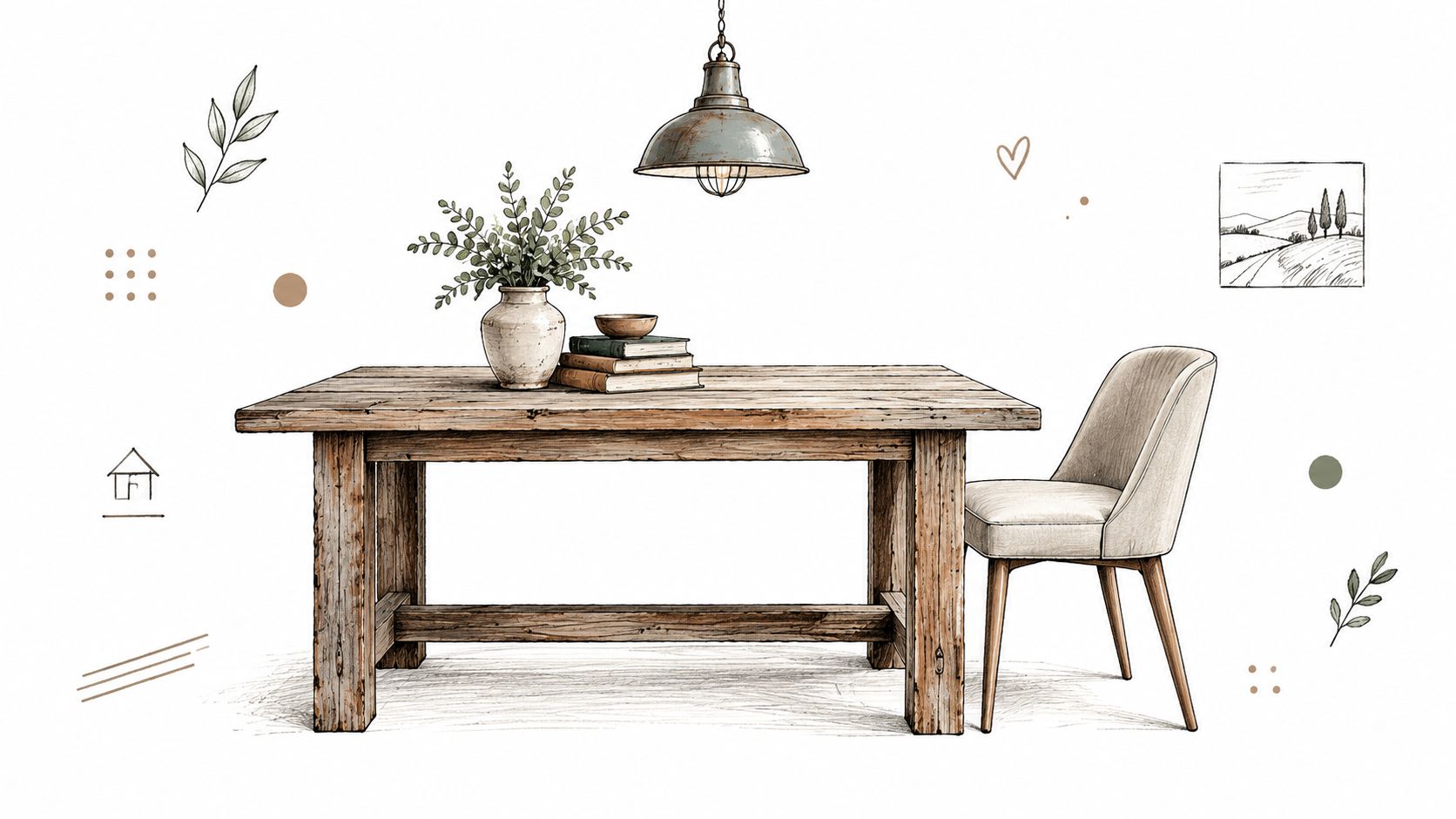
Reclaimed wood gives modern farmhouse interiors an immediate sense of history. Barn siding, salvaged beams, and weathered timber can become a dining table, floating shelf, accent wall, or architectural detail. The best pieces show variation in grain and tone without making the room feel like a themed lodge.
A Hooker Furniture dining table with a naturally distressed finish can anchor a farmhouse kitchen while leaving room for contemporary chairs and refined lighting. Lexington storage pieces can provide a cleaner counterpoint in a dining room or entryway. In a bedroom, authentic barn siding behind the bed adds texture, while salvaged beams can create floating shelves in a home office.
The trade-off is visual weight. Too much reclaimed wood can make a room feel dark, rough, or overly rustic, particularly in smaller rooms.
Balance weathered character with tailored comfort
Modern upholstery keeps reclaimed materials from dominating. A Smith Brothers sofa or dining chair introduces cleaner lines and more controlled proportions, while performance fabric helps protect investment-quality furniture from everyday wear.
Custom finishes also matter. Lott's Special Order Program allows shoppers to explore personalized wood finishes, including natural and gray-washed directions, along with fabric choices that coordinate with existing floors and cabinetry. The most successful pairing often uses one prominent reclaimed element, then repeats its tone subtly in a mirror frame, tray, or side table.
For more selection guidance, browse reclaimed wood furniture. A well-chosen piece should look collected, not newly distressed for effect.
2. Open Shelving and Display Styling
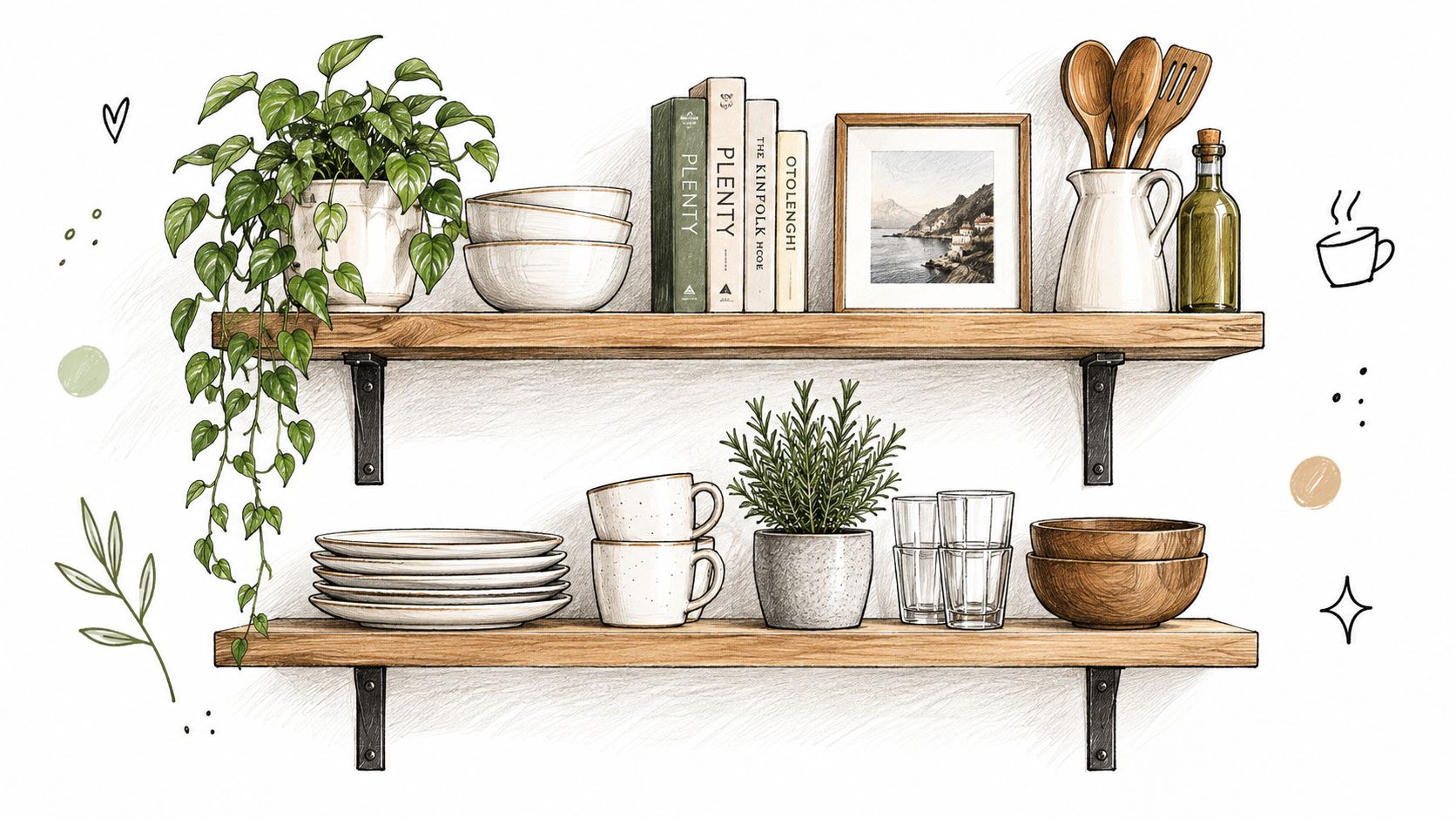
Open shelving works because it turns useful objects into part of the room's visual language. Ceramic dishes, cookbooks, cutting boards, framed photographs, woven baskets, and greenery can create a display that feels personal instead of showroom-perfect.
In a kitchen, shelves might hold everyday farmhouse dishware beside a small piece of contemporary art. A dining room can display heirloom serving pieces near a sculptural vase, while a home office can combine work materials with photographs and collected objects. Hooker Furniture and Universal offer shelving directions that can bridge industrial structure and farmhouse warmth.
The challenge is maintenance. Open shelves expose dust, clutter, and inconsistent storage, so they need enough restraint to remain useful.
Style shelves for real life
A practical arrangement alternates function and decoration. Cookbooks should remain reachable, frequently used dishes should sit at comfortable heights, and fragile objects should stay away from busy work zones. The Lott's guide to decorating shelves in any room offers a useful framework for balancing scale and repetition.
- Group with intention: Use varied heights and odd-number groupings to create rhythm without filling every inch.
- Repeat materials: Echo wood, ceramic, metal, or woven fibers elsewhere in the room so the shelves feel connected.
- Leave breathing room: Empty space keeps meaningful objects visible and prevents the display from becoming visual noise.
- Choose durable pieces: Everyday dishware and washable baskets make open storage more practical for families.
A South Georgia kitchen may benefit from shelves near a breakfast area, while a North Florida vacation home might use them for beach-inspired ceramics, cookbooks, and locally collected objects.
3. Neutral Color Palette with Strategic Warmth
Modern farmhouse rooms need a neutral foundation, but neutral doesn't mean flat. Warm whites, creams, beiges, greiges, taupes, black accents, and natural wood create the high-contrast framework associated with the style (Decor Quarter). Texture and material variation then provide the depth that color might otherwise supply.
A Smith Brothers sectional in cream performance upholstery can anchor a bright living room without becoming precious. A Stressless recliner in warm gray leather can establish a comfortable reading corner in a bedroom, office, or sunroom. White or beige dining chairs around a natural wood table keep the room welcoming, especially when plants, woven runners, and softly patterned artwork add variation.
The risk is overusing cool gray and bright white. That combination can feel sterile and disconnected from the welcoming rural character that makes farmhouse design appealing.
Use warmth through materials first
Linen, wool, leather, natural wood, and textured rugs create a layered neutral scheme. A camel throw, clay-colored pillow, mushroom taupe accent, deep olive artwork, or charcoal lamp can update the palette without forcing a complete redesign. Current style coverage points toward warmer neutrals, earthy tones, and more personalized interiors rather than a standardized white-and-gray formula (EcoFlow).
Practical rule: Keep the large furniture pieces calm, then use smaller accents to test stronger color. That makes seasonal changes and future updates easier.
Lott's fabric library helps shoppers compare neutral performance fabrics for children, pets, rentals, and vacation properties. The farmhouse color schemes guide can help coordinate upholstery, wall color, wood tones, and accent pieces before a larger purchase.
4. Shiplap, Barn Doors and Architectural Details
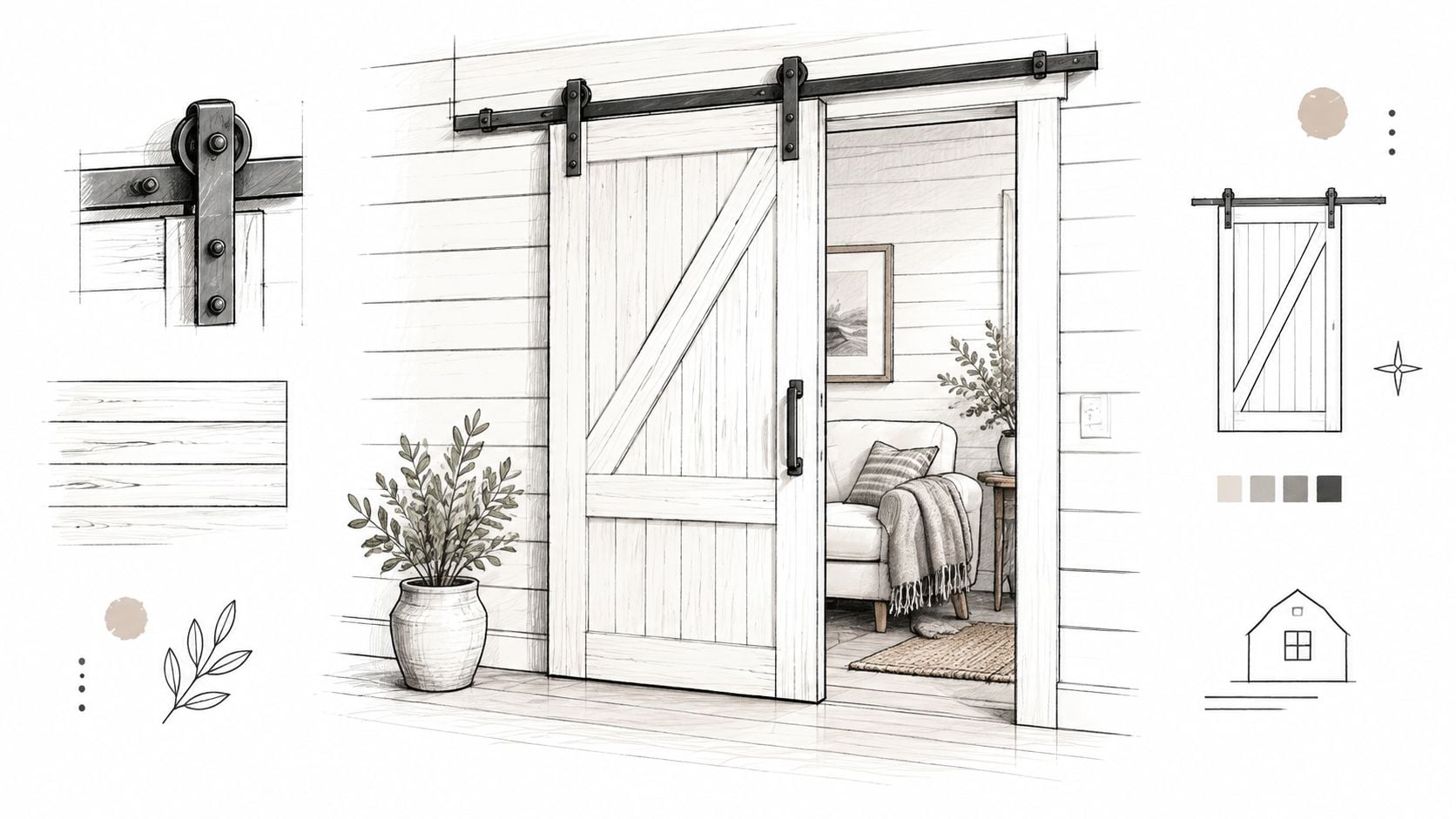
Shiplap and barn doors remain recognizable modern farmhouse details, but restraint keeps them from feeling dated. Horizontal planks add rhythm and texture to an accent wall, while a sliding barn door can define a pantry, office, closet, or ensuite without requiring a traditional hinged-door swing.
A white or cream shiplap wall behind a bed can provide a quiet backdrop for a Lexington dresser and a Stressless reading chair. In a kitchen, shiplap above open shelving gives the display a finished architectural frame. A barn door at a home office entrance creates separation while preserving the visual connection between rooms.
The main trade-off is permanence. Unlike a pillow or lamp, wall paneling and door hardware require more effort to alter. Full-room shiplap can also overwhelm a smaller space, especially when paired with several other rustic features.
Treat architectural details as framing devices
One or two focused applications usually deliver more impact than covering every wall. A feature wall behind the bed, fireplace, or dining banquette gives the room a clear focal point. Barn-door hardware should coordinate with nearby lighting, cabinet pulls, and furniture legs rather than introduce an unrelated metal finish.
Before installation, confirm that the wall structure can support the door hardware and that the door clears furniture, trim, and walking paths. Quality furniture from Lexington, Hooker Furniture, or Theodore Alexander can provide the refined visual anchor that keeps these architectural elements from becoming theatrical.
For a more current interpretation, review the range of double barn door styles for 2026, then choose the scale and finish that suit the room rather than copying a complete look.
5. Vintage and Farmhouse Lighting
Lighting can make a neutral farmhouse room feel warm, layered, and lived in. Vintage-inspired chandeliers, industrial pendants, wrought-iron sconces, and aged-metal lanterns connect the room to rural and workshop traditions without requiring every furnishing to look antique.
A Lexington wood table under a vintage iron chandelier creates a strong dining focal point. Over a kitchen island, a group of industrial pendants can provide task lighting while reinforcing the room's material story. In a bedroom, sconces beside the headboard free nightstand space and create a softer alternative to overhead lighting.
A single statement fixture isn't enough for most rooms. Modern farmhouse spaces work best with several layers that support different activities.
Build three useful lighting layers
- Ambient lighting: Use ceiling fixtures or broad lamps to provide general illumination.
- Task lighting: Add reading lamps, under-cabinet fixtures, or focused pendants where work happens.
- Accent lighting: Use sconces or small lamps to highlight artwork, shelving, architectural details, or a mantel.
Warm bulbs around 2700K are commonly selected for a cozy atmosphere, but the fixture's scale and placement matter just as much. A large chandelier can dominate a modest dining area, while undersized pendants may look lost above a generous island.
Smith Brothers and Stressless seating deserve lighting that supports comfort rather than decorating the room. Lott's Style Guides and in-store associates can help shoppers consider furniture scale, sightlines, and the practical effect of each fixture before installation.
6. Mixed Material Furniture and Textural Layering
Mixed materials give modern farmhouse rooms their collected character. Use reclaimed or lightly finished wood as a base, then introduce iron, linen, leather, glass, and woven fibers to create contrast without making the room feel disjointed. The goal is a clear material hierarchy, not an assortment of unrelated finishes.
Start with the room's largest pieces. A Rowe sectional in a pale linen-like fabric can soften a coffee table with hairpin metal legs and a live-edge wood top. Wesley Hall dining chairs with upholstered seats and wood frames can add comfort around a reclaimed table. In a home office, pair a wood-and-metal desk with a woven chair, leather accessories, and a textured rug.
Choose one anchor material before shopping for accents. Wood usually provides the warmest farmhouse foundation. If metal dominates, add warmer upholstery and wood accessories to temper an industrial feel. If wood fills the room, black hardware, clear glass, or smooth leather can sharpen the composition.
Use these checks while building the room:
- Repeat one finish: Echo a black metal tone in lighting and table legs.
- Vary texture: Combine smooth leather, woven fabric, wool, and distressed wood.
- Control contrast: Keep the color palette restrained when the materials already create visual variety.
Furniture customization helps keep the mix intentional. Lott's Special Order Program can coordinate wood finishes, metal finishes, upholstery, and comfort levels across many vendors, which is useful when several custom pieces must relate without becoming a matching set. For coastal homes in South Georgia and North Florida, lighter woods, woven textures, and durable upholstery can bring in relaxed coastal character while preserving the farmhouse structure.
Build the room in stages with this furniture and decor layering guide.
7. Comfortable, Oversized Seating
Modern farmhouse seating should invite daily use. Generously scaled sofas, wide-armed recliners, deep sectionals, and substantial ottomans support family life better than delicate furniture that looks attractive but limits how people sit.
A La-Z-Boy sectional with a chaise can organize a family room around conversation, television, or a fireplace. A Smith Brothers sofa in performance fabric may provide a more refined silhouette while still supporting long evenings and weekend guests. Two high-backed recliners can create an intimate seating arrangement in a reading room, guest suite, or vacation property.
Oversized furniture has a real trade-off. It can improve comfort while making circulation difficult, particularly in rooms with narrow doorways or multiple openings.
Measure for comfort and movement
Room dimensions, doorway widths, stair turns, and elevator access should be checked before selecting a large piece. A sectional that fits the floor plan may still fail at the entry door. Modular configurations can offer useful flexibility when a household expects to rearrange the room later.
Cushion comfort deserves the same attention as mattress comfort. Lott's oversized chair with ottoman selection can help shoppers consider proportion, leg support, and the relationship between chair depth and available floor space.
Custom upholstery programs commonly allow shoppers to choose comfort levels such as soft, medium, or firm, along with fabric and finish options. The Lott's Mattress Guide can also provide a helpful comfort-first mindset, even when the purchase is seating rather than a bed.
8. Vintage Textiles and Quilts as Décor
Vintage textiles give modern farmhouse rooms their handmade character. Quilts, woven blankets, runners, and heirloom linens add pattern and memory without forcing a bright wall color or ornate furniture.
Use each piece according to the room's demands. A vintage quilt over a clean-lined living-room sofa softens the seating area and adds seasonal flexibility. In a bedroom, an heirloom textile above a bed frame can serve as wall art while connecting the space to family history. A runner on an ottoman brings color and texture, while also protecting the upholstery from everyday use.
The practical question is condition. Light, friction, moisture, and repeated washing can weaken older fabric, so fragile pieces need a more careful role.
Keep delicate textiles away from strong direct sunlight, and rotate them when possible. A washable reproduction or sturdy woven throw suits a frequently used sofa better than an irreplaceable heirloom. Durable materials can also work well on beds, benches, and family-room seating, especially in coastal homes across South Georgia and North Florida where humidity and active indoor-outdoor routines affect maintenance.
- Use a wall display: Mount or frame delicate textiles beyond regular contact with hands and pets.
- Layer selectively: Let one expressive quilt lead, then keep upholstery and pillows calm.
- Choose practical substitutes: Reserve reproductions and sturdy weaves for high-use furniture.
- Coordinate by tone: Repeat one textile color in nearby artwork, a rug, or accent chair.
Lott's Furniture can help match the textile to furniture scale, upholstery durability, and room use. Investment-quality construction provides a stable foundation for changing layers, so a living room, bedroom, or guest space can develop over time without losing its farmhouse character.
9. Fireplace as Central Gathering Point
A fireplace naturally organizes a room around warmth, conversation, and shared attention. Whether the home has an original brick hearth, a stone surround, a shiplap wall with an insert, or a contemporary gas unit, the fireplace can provide the visual center that determines furniture placement.
A pair of Stressless recliners can flank a brick fireplace in a quiet sitting room. A La-Z-Boy sectional can face a shiplap surround in a family room, while a bedroom fireplace can support a smaller reading arrangement with two compact chairs. The right choice depends on whether the room prioritizes conversation, television viewing, reading, or several activities at once.
Furniture shouldn't block the hearth, controls, vents, or safe clearances. That practical requirement can make a strict semicircle impossible, especially in open-plan rooms.
Build a flexible fireside arrangement
Angle chairs toward the fireplace while preserving a clear path through the room. A sofa can face the hearth, with side chairs turned slightly inward so people can see one another rather than only the flames. An ottoman can provide flexible seating and leg support without creating the visual bulk of another chair.
The mantel should have layered height, not a row of similarly sized objects. Frames, candlesticks, seasonal pieces, and one larger artwork can create structure, while a few personal objects keep the display from feeling staged.
A fireplace should organize the room, not consume it. Comfortable seating, clear walkways, and practical viewing angles matter more than filling every surface around the hearth.
The Lott's Mattress Guide encourages shoppers to think carefully about support and firmness, a useful approach when choosing fireside recliners that will see daily use.
10. Functional Kitchen Islands and Storage Solutions
A modern farmhouse island earns its place by supporting the way the kitchen is used. It can provide prep space, casual dining, serving capacity, homework support, and everyday storage, but its footprint must preserve comfortable movement between the sink, range, refrigerator, and surrounding cabinetry.
Start with circulation, then choose the island's size and shape. An oversized piece that tightens the walkways can slow cooking and cleanup, even if it looks impressive in a showroom. In coastal homes across South Georgia and North Florida, durable finishes also matter. Sealed wood, washable paint, and performance upholstery handle humidity, sand, and frequent family use more reliably than delicate decorative surfaces.
A Hooker Furniture island direction with a reclaimed wood top, painted base, open shelving, and vintage-inspired hardware can establish the room's character. Storage can also extend beyond the island. A pantry zone, beverage station, or dining transition may solve organizational gaps where standard cabinetry falls short.
Make the island work harder
Assign each compartment a job. Use drawers for utensils, sturdy lower storage for cookware, and accessible shelves for dishes used every day. Open shelving suits display areas and seating zones, while less attractive appliances belong behind doors. Stools or benches should provide enough back and seat support for breakfast, homework, and longer conversations.
- Protect circulation: Keep adequate walking space around the island. 36 inches as a minimum walkway guideline supports ordinary kitchen traffic flow.
- Coordinate materials: Relate a wood top and painted base to the existing cabinetry, counters, and nearby dining furniture.
- Place daily items within reach: Store cookbooks, serving pieces, and everyday dishes without forcing people through the main work zone.
- Choose seating by use: Select stools or benches for comfort, height, and the length of time people will sit.
Value-focused planning helps control the budget. Spend more on surfaces, hardware, and seating that receive daily wear, then use simpler storage components where they remain functional and visually quiet. Lott's Special Order Program can customize finishes and upholstery so island seating connects with adjoining dining and living areas.
Modern Farmhouse Design: 10-Point Comparison
| Element | Implementation complexity | Resource requirements | Expected outcomes | Ideal use cases | Key advantages |
|---|---|---|---|---|---|
| Reclaimed Wood & Vintage Accents | Moderate, sourcing, finishing, occasional restoration | Premium reclaimed timber, skilled craftsmen, sealing/maintenance | Distinctive, character-rich focal pieces with natural patina | Dining tables, accent walls, bespoke furniture | Sustainable, one-of-a-kind pieces that age gracefully |
| Open Shelving & Display Styling | Low–Moderate, mounting and ongoing styling discipline | Shelves/fixtures, curated objects, regular dusting | Airy, curated displays; easier access to everyday items | Kitchens, dining areas, home offices | Creates openness; highlights personal & heirloom items |
| Neutral Color Palette with Strategic Warmth | Low, paint/fabric selection and textural layering | Neutral paints, performance fabrics, natural textiles | Calm, timeless backdrop that maximizes light and cohesion | Living rooms, bedrooms, gallery-like spaces | Versatile, visually enlarges space, long-lasting appeal |
| Shiplap, Barn Doors & Architectural Details | High, carpentry and possible structural work | Wood/planking, heavy hardware, professional installation | Strong architectural focal points and added texture/depth | Accent walls, room dividers, entryways | Dramatic character; barn doors save swing space |
| Vintage & Farmhouse Lighting | Low–Moderate, fixture selection and wiring | Specialty fixtures, warm bulbs, possible electrician | Warm, flattering ambiance and sculptural focal points | Dining rooms, kitchens, living spaces | Mood-setting illumination; aesthetic statement pieces |
| Mixed Material Furniture & Textural Layering | Moderate, coordination of finishes and fabrics | Multiple materials (wood, metal, leather, textiles), custom finishes | Collected, layered rooms with tactile and visual interest | Living/dining rooms, eclectic interiors | Adds depth and flexibility; ages well with mixed styles |
| Comfortable, Oversized Seating | Low (selection) to Moderate (delivery/placement) | Large-scale upholstery, quality suspension, space for placement | Inviting, family-friendly seating that prioritizes comfort | Family rooms, media rooms, large living areas | Comfort-first design; durable and sociable seating |
| Vintage Textiles & Quilts as Décor | Low, sourcing and preservation/display methods | Vintage or reproduction textiles, care/storage materials | Warmth, handcrafted detail, and narrative layering | Sofas, beds, wall hangings, mantels | Authenticity and tactile warmth; easily reconfigured |
| Fireplace as Central Gathering Point | Moderate–High, installation/venting and safety | Fireplace unit or retrofit, surround materials, maintenance | Strong focal point that organizes furniture and ambiance | Living rooms, master bedrooms, family gathering areas | Emotional centerpiece; provides warmth and display surface |
| Functional Kitchen Islands & Storage Solutions | High, construction, possible plumbing/electrical | Cabinetry, countertops, hardware, installation services | Enhanced workflow, storage, and casual seating hub | Kitchens and open-plan living/kitchen areas | Central multifunctional element that optimizes use and storage |
Bring Your Modern Farmhouse Vision Home
A successful modern farmhouse room doesn't require every recognizable feature. Start with one foundational palette or material, then solve the room's primary comfort or storage need before adding architectural details, lighting, and personal textiles. A reclaimed wood table may be the right starting point for a dining room, while a performance-fabric sectional may matter more in a family room with children and pets.
The style also works best when its rustic elements receive modern editing. Keep shiplap to a deliberate focal wall, use open shelving for objects that deserve to be seen, and introduce stronger colors through accents rather than permanent surfaces. In coastal areas of North Florida, lighter woods, woven textures, soft blue, muted green, and breathable upholstery can bring an outdoor-influenced ease to the farmhouse framework. South Georgia homes may lean into deeper wood tones, porch-inspired seating, and practical materials suited to frequent gatherings.
Choose the right purchasing tier
A phased update can begin with durable upholstery, a dining table, or a well-scaled storage piece. Investment-quality furniture should solve an everyday need and remain useful as the room evolves. Smaller additions, such as lighting, quilts, artwork, and accent tables, can then build personality without requiring a complete redesign.
A larger custom project makes sense when the room needs coordinated upholstery, specific dimensions, customized finishes, or a unified comfort plan. Lott's Special Order Program supports personalized fabrics, finishes, and comfort levels across most vendors, so shoppers can create a more precise result instead of settling for a close match. Custom upholstery programs may include choices such as cushion firmness, fabric, leather, arm style, and wood finish, depending on the vendor.
Use guidance before committing
Lott's Style Quizzes can help clarify whether a room leans toward Modern Farmhouse, Coastal Chic, or another design direction. The Mattress Guide provides a structured way to think about support and comfort, while in-store associates can help evaluate scale, upholstery, finish coordination, and room placement.
Shoppers can browse the digital catalog, save ideas, and then visit the Waycross or Fernandina Beach showroom to sit in a La-Z-Boy recliner, assess a Stressless chair, examine Smith Brothers upholstery, or compare Lexington and Hooker Furniture finishes in person. That smooth transition between online shopping and showroom service is useful when a design decision depends on both visual coordination and physical comfort.
Every piece receives a rigorous multi-point inspection before Lott's white-glove, in-home delivery. The delivery team places furniture in the room of choice, checks its condition, and helps ensure the arrangement is ready for use. For homeowners and renters across South Georgia and North Florida, that service turns a carefully chosen modern farmhouse plan into a finished, comfortable room.
Lott's Furniture offers personalized fabrics, finishes, comfort levels, trusted furniture brands, Style Quizzes, and showroom guidance for modern farmhouse projects across South Georgia and North Florida. Visit Lott's Furniture online or in Waycross and Fernandina Beach, and schedule an online style consultation or showroom visit to begin shaping a collected, comfortable home.