Save 50% Off MRSP on Lexington | Shop the Catalog >

What Is Modern Farmhouse Style? Your 2026 Guide


A lot of homeowners are in the same spot right now. They've seen modern farmhouse on renovation shows, in new neighborhood builds, and all over social media, but they still pause at the same question. What is modern farmhouse style, really?
The confusion makes sense. One room has black windows and pale oak floors. Another has barn doors and distressed signs. A third feels clean and neat, while a fourth feels overly themed. The name gets used broadly, but the best version of modern farmhouse is much more refined than a pile of rustic accessories.
Across South Georgia and North Florida, many homes naturally suit this look because people want spaces that feel comfortable, practical, and welcoming without feeling old-fashioned. Homeowners researching personalized home interiors often discover that the strongest results come from understanding the structure of the style first, then adapting it to real life, local light, and daily routines. A helpful companion for that thinking is this look at farmhouse and transitional style differences, especially for anyone deciding how rustic or polished their home should feel.
Your Guide to Modern Farmhouse Style
Modern farmhouse style blends traditional farmhouse warmth with clean contemporary editing. It keeps the comfort. It removes the fuss. That's why it appeals to families who want a home that feels settled and livable, but still current.
The easiest way to understand it is to separate the two halves of the name.
Traditional farmhouse brings in the familiar pieces people associate with home and heritage. Think substantial wood, welcoming porches, practical layouts, and materials that feel grounded rather than glossy. Modern design contributes restraint. Lines become simpler. Ornament is reduced. Rooms feel open, airy, and uncluttered.
Modern farmhouse isn't “old farmhouse with trendy paint.” It's a carefully balanced mix of rustic character and visual discipline.
That balance matters in South Georgia and North Florida homes, where comfort has to work hard. A room can't just look nice for a photo. It has to handle sandy feet, family gatherings, pets, humidity, and the kind of everyday use that reveals whether a design choice was smart or only stylish.
Why people often misread the style
Many people think modern farmhouse begins with shiplap, sliding doors, and black light fixtures. Those can appear in the style, but they aren't the definition of it.
A better way to identify it is by asking a few questions:
- Does the room feel warm without feeling heavy?
- Are the furnishings simple rather than ornate?
- Do rustic textures appear in a controlled, intentional way?
- Does the space feel collected and comfortable instead of themed?
If the answer is yes, that's usually modern farmhouse done well.
What makes it last
This style has remained popular because it supports how people live. Soft neutrals calm busy households. Straightforward furniture silhouettes are easy to place. Natural textures age gracefully. And the overall mood feels relaxed enough for daily life, yet polished enough for entertaining.
That's the heart of the look. It isn't about copying a showroom scene from a certain year. It's about creating a home that feels rooted, edited, and personal.
The Heart of Modern Farmhouse Design

Modern farmhouse starts with architecture and proportion before it reaches furniture or decor. That's where many homeowners get turned around. They try to create the look with accessories, but the style is strongest when the bones and the visual language support it.
According to a detailed modern farmhouse architectural analysis, the style is defined by steep roof pitches ranging from 8:12 to 12:12 and by gable-end orientations that typically face the street to create a symmetric or near-symmetric facade. It also pairs traditional agrarian forms such as board-and-batten siding and large covered porches with contemporary details like clean lines and minimal trim.
Traditional form with modern restraint
That contrast is the whole point. The house keeps familiar farmhouse shapes, but it strips away ornate historical detailing.
Instead of decorative trim with lots of visual fuss, modern farmhouse favors:
- Simple siding treatments such as board-and-batten
- Large porches that feel usable and inviting
- Straightforward columns rather than embellished supports
- Dark metal accents on windows or roofing
- Flat, clean surfaces instead of layered ornament
The result is what many homeowners describe as rustic yet chic. The house feels connected to rural building traditions, but it doesn't feel frozen in the past.
For readers sorting out whether they prefer a more rugged look or a cleaner one, this guide to rustic design style helps clarify where rustic ends and modern farmhouse begins.
The feeling inside the home
Good modern farmhouse design creates rooms that feel calm, open, and grounded. The style doesn't chase formality. It leans toward comfort, but not slouchiness. It respects heritage, but it doesn't recreate a museum version of country living.
A few emotional cues help identify the look:
| Design choice | Effect in the room |
|---|---|
| Clean-lined millwork | Keeps the space from feeling dated |
| Covered porch and classic gables | Adds familiarity and welcome |
| Dark accents against light surfaces | Sharpens the overall look |
| Reduced ornament | Makes the home feel fresher and more current |
Practical rule: If a detail feels decorative just for decoration's sake, it probably belongs more to an older traditional style than to modern farmhouse.
This is why modern farmhouse often feels so approachable. It doesn't ask a home to become precious. It asks the home to become clear, comfortable, and well-edited.
Core Elements of the Modern Farmhouse Aesthetic
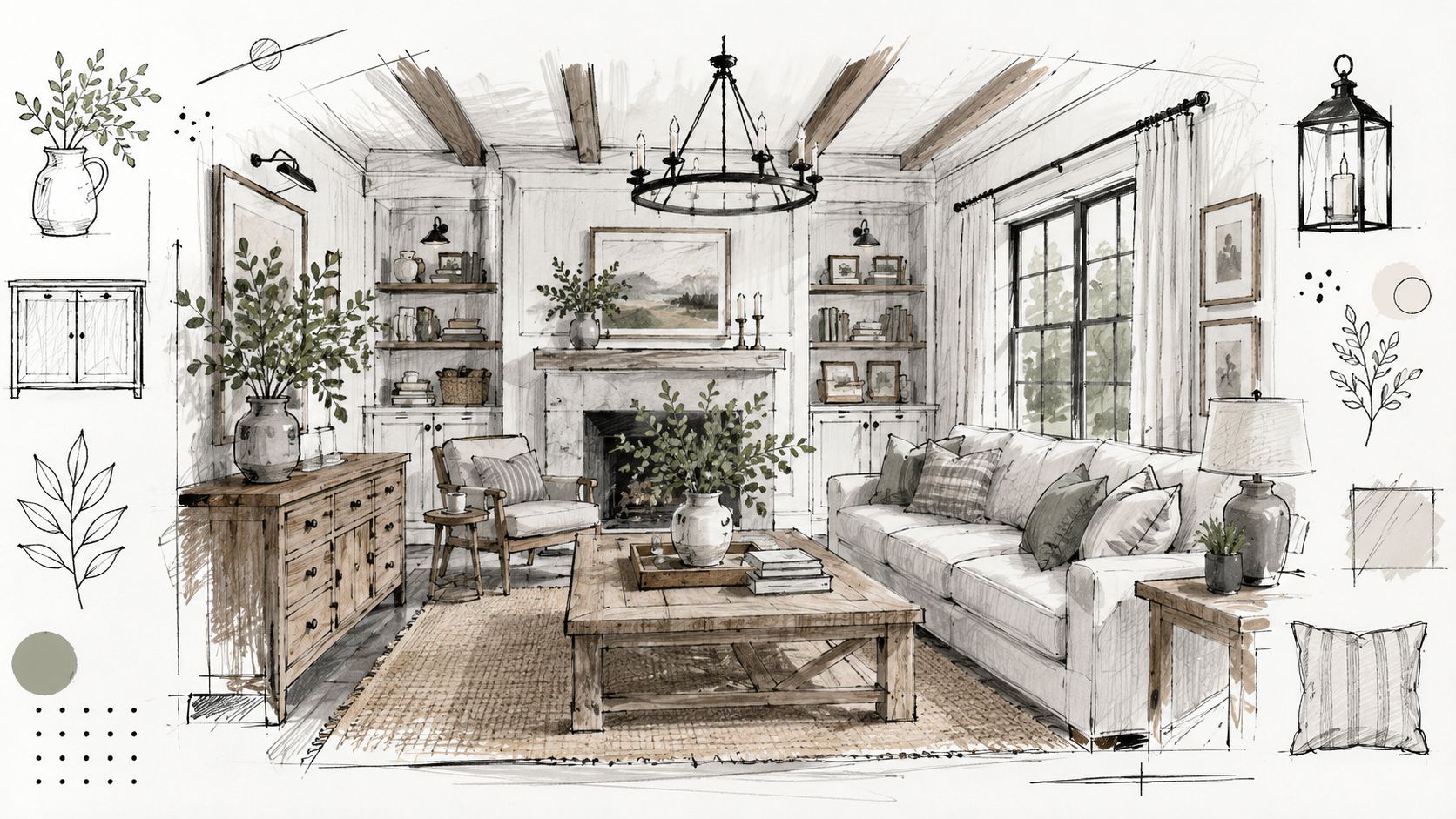
Once the architectural language is in place, the interior relies on a very specific recipe. This recipe determines whether many rooms come together beautifully or drift into a generic rustic look.
A modern farmhouse decor guide notes that two paint colors, Sherwin-Williams Alabaster and Benjamin Moore White Dove, account for approximately 80% of wall applications, creating a warm neutral base. The same source explains that matte black serves as the primary metal finish for hardware and fixtures, which is why furniture in this style tends to stay clean-lined rather than ornate or heavily distressed.
Color and contrast
Modern farmhouse doesn't use white in a cold, stark way. The whites are usually soft and warm, with enough creaminess to make a room feel relaxed.
That warm base needs contrast, or the room can look washed out. Matte black usually supplies that contrast through:
- Cabinet hardware
- Light fixtures
- Window frames
- Door hardware
- Furniture accents
The black is important because it gives the room a modern edge. Without it, the palette can slide too far into cottage or casual coastal territory.
Materials that keep the room grounded
The style works best when surfaces feel tactile. Smooth and rough materials play off each other.
A strong modern farmhouse room often includes:
- Raw or lightly finished wood for tables, beams, or case pieces
- Cotton and linen textures for upholstery, pillows, or drapery
- Iron or blackened metal for contrast and structure
- Stone, brick, or concrete notes in small doses
- Natural fiber elements that soften the harder finishes
Anyone considering a barn door detail in a bath or powder room may find your complete guide to bathroom barn doors useful, especially for deciding whether that element adds function or just visual theme.
Furniture silhouettes that fit the style
The furniture shouldn't look ornate, fussy, or overly distressed. It should feel substantial, straightforward, and comfortable.
That often means pieces such as:
- A tailored sofa from Smith Brothers with a simple arm and durable upholstery
- A supportive recliner from La-Z-Boy in a refined fabric or leather
- A solid dining table from Hooker Furniture with a clean, weighty profile
This broader look at the elements of a modern home is helpful for homeowners who want to keep the farmhouse warmth while sharpening the contemporary side of the room.
The furniture should look like it belongs to everyday life, not like it was chosen to perform a rustic costume.
That's often the missing piece. Modern farmhouse isn't about buying “farmhouse furniture.” It's about selecting investment-quality pieces with honest materials, controlled lines, and enough softness to make the room welcoming.
Bringing Modern Farmhouse into Your Home Room by Room
A modern farmhouse home rarely succeeds if only one room carries the look. The best homes feel cohesive, but not identical, from space to space. In South Georgia and North Florida, that usually means keeping the palette light, choosing durable materials, and letting the home breathe.
Living room comfort with cleaner lines
The living room often sets the tone. A family might start with a soft neutral sofa in a performance fabric, then add a wood coffee table, a black floor lamp, and textured pillows in linen or cotton. The room feels relaxed, but the shapes stay clean-lined.
For homeowners comparing sizes, layouts, and upholstery options, this overview of living room furniture types helps translate the look into practical decisions.
Window treatments matter more than many people expect. Heavy drapery can fight the style, while airy panels or woven shades usually support it better. Homeowners exploring Modern farmhouse window treatments often find that the right softness at the windows can make the whole room feel more settled.
Dining spaces that feel gathered, not formal
A dining room in this style works best when it feels generous rather than stiff. A substantial wood table anchors the room. Dining chairs can be mixed, but they should still share a quiet silhouette. Lighting overhead should add contrast without becoming ornate.
A room like this usually benefits from restraint:
- Choose one strong wood tone instead of several competing finishes
- Keep the light fixture simple with black or dark metal
- Use a rug only if it helps the room feel softer and more finished
- Let the table be the hero instead of crowding the room with extra decor
Bedrooms that stay soft and uncluttered
The modern farmhouse bedroom should feel restful. Upholstered beds, warm whites, simple nightstands, and natural texture usually do the work better than decorative slogans or heavily distressed furniture.
A useful approach is to think in layers:
- Start with a quiet backdrop in warm white or another soft neutral.
- Add one grounding wood finish through the bed, bench, or case pieces.
- Bring in black sparingly through lamps or hardware.
- Use bedding with texture rather than busy ornament.
A bedroom in this style should feel like a retreat, not a collection of themed accents.
That room-by-room approach keeps modern farmhouse believable. Each space shares the same design language, but each one answers a different need.
Common Mistakes and How to Evolve the Style

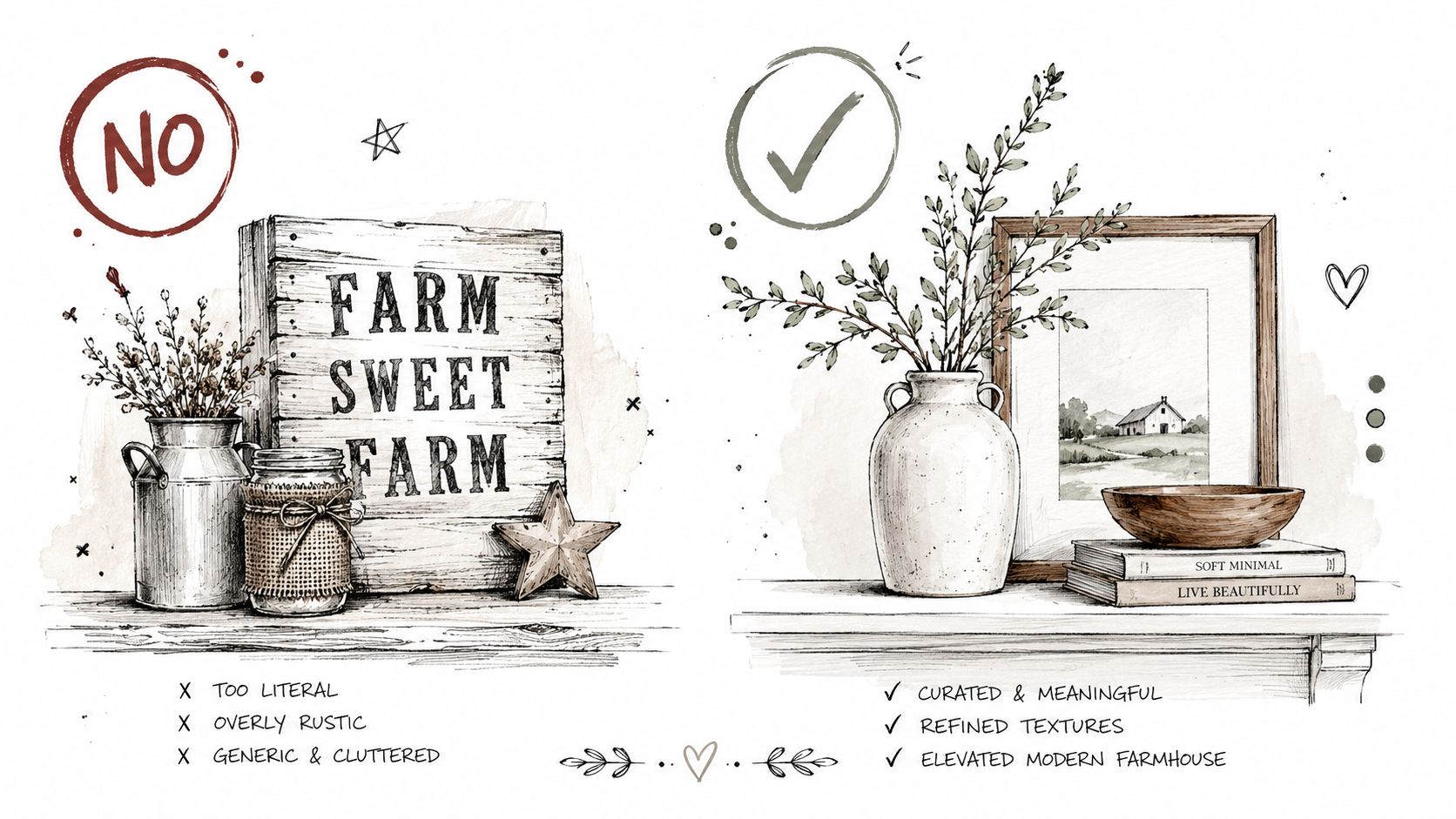
The biggest mistake in modern farmhouse is assuming the style is a fixed checklist. It isn't. That thinking leads to rooms with the same signs, the same shiplap, the same distressed finishes, and the same predictable black fixtures, all without much personality.
A recent look at how modern farmhouse is evolving points out that designers in 2025 to 2026 are moving away from formulaic versions of the style. The emphasis has shifted toward real patina and mixed eras, with designer Heidi Caillier warning against using only rustic pieces and recommending abstract art or funky textiles to add contemporary edge.
What dates a room quickly
A room starts to feel stale when every choice announces the theme too loudly.
Common problems include:
- Too much faux distressing
- Rustic signage used as a substitute for art
- Identical finishes on every surface
- Overuse of shiplap
- Furniture that looks decorative instead of usable
These choices flatten the room. They remove the tension that makes the style interesting.
How the style feels current now
The most appealing modern farmhouse interiors have more range. They allow old and new to sit together.
That might look like:
- A weathered farm table paired with contemporary dining chairs
- A quiet neutral living room with one abstract painting
- Classic cabinetry softened by a vintage rug
- Clean upholstery layered with a patterned textile that has some surprise to it
Homes feel more authentic when every piece doesn't come from the same visual era.
This shift matters because modern farmhouse was never meant to become a costume. It works best when it reflects lived-in character. Real wood wear, natural variation, and a few unexpected elements give the style depth.
For homeowners who feel stuck between “too plain” and “too themed,” the answer usually isn't adding more farmhouse details. It's adding contrast, history, and a little personality.
Your Modern Farmhouse Journey with Lott's Furniture
A successful modern farmhouse home usually comes together through decisions made in the right order. First comes clarity about the overall look. Then comes customization. Then comes careful delivery and placement so the finished room feels polished from day one.
For homeowners in South Georgia and North Florida, that process is easier when design help is available both online and in person. Style Quizzes help narrow the aesthetic direction, and a Mattress Guide helps sort through comfort choices with the same practical mindset used for furniture selection. In-store associates can then help refine scale, upholstery, wood tone, and layout so the home feels consistent rather than pieced together.
Personalization makes the style feel authentic
Modern farmhouse looks best when it reflects the household, not a template. That's where a Special Order Program becomes especially useful. Many vendors support personalized choices in:
- Fabrics and leathers
- Wood finishes
- Comfort levels
- Seat cushions and silhouettes
Brands such as Smith Brothers, Lexington, and Stressless give homeowners room to create a more personalized version of the look, whether the home leans more coastal, more classic, or more contemporary. For readers exploring that path, this guide to getting started with custom order furniture is a practical next step.
A polished finish depends on the final details
Modern farmhouse also asks for discipline in the finishing layer. According to this guidance on mixed metals in modern farmhouse design, a room should use no more than three mixed metals, and matte black should remain the primary hardware finish. That simple rule keeps the room from drifting into visual clutter.
The shopping experience matters too. Many homeowners want the convenience of browsing a digital catalog at home, then visiting showrooms in Fernandina Beach, FL, to test comfort and finishes in person. That blend of online ease and in-store expertise removes a lot of guesswork.
The final layer is delivery. A well-made room can still feel stressful if installation is sloppy. White-glove, in-home delivery, paired with a rigorous multi-point inspection before each piece reaches the customer, protects the investment and helps the room come together the way it was planned.
Homeowners across South Georgia and North Florida can explore a personalized modern farmhouse look with Lott's Furniture. Browse the digital catalog, take the Style Quiz, use the Mattress Guide, or visit the Fernandina Beach showroom for expert help with custom fabrics, finishes, comfort options, and white-glove in-home delivery backed by a careful multi-point inspection.