Save 50% Off MRSP on Lexington | Shop the Catalog >

Living Room Furniture High End: An Investment Guide


The old living room usually gives itself away before anyone says a word. The sofa still “works,” but nobody loves sitting in it. The tables feel too small, too light, or too temporary. The room doesn't look bad. It just doesn't feel finished.
That's where high-end living room furniture earns its place. The goal isn't status. The goal is permanence, comfort, and a room that feels settled the moment someone walks in. Families across South Georgia and North Florida don't need a showroom that looks untouched. They need livable luxury. Pieces with presence, perfectly matched comfort, and enough durability to handle real life.
Creating Your Curated Sanctuary
A refined living room starts with a simple shift in mindset. High-end furniture isn't about paying more for a label. It's about choosing pieces that hold their shape, keep their comfort, and still look right years from now.

That mindset lines up with the broader market. The global luxury furniture market was valued at USD 28.79 billion in 2021 and is projected to reach USD 41.82 billion by 2030, reflecting sustained demand for design, craftsmanship, and customization in investment-quality furnishings, according to Strategic Market Research's luxury furniture market outlook.
A polished room also depends on what surrounds the furniture. Upholstery and case goods set the foundation, but layered finishes complete the space. For homeowners refining light control, privacy, and softness at the windows, this guide on how to elevate your home with window treatments adds useful context.
What a curated sanctuary actually means
A curated sanctuary isn't overfilled. It isn't built from impulse buys. It's assembled with intention.
- Comfort that lasts: Seat depth, cushion resilience, and support matter more than flashy detailing.
- A consistent visual language: Wood tones, metal finishes, fabrics, and scale should speak to one another.
- Pieces with staying power: Timeless shapes age better than novelty silhouettes.
Practical rule: If a room looks finished but nobody wants to sit there for an evening, it isn't luxury. It's staging.
The right goal for living room furniture high end
The smartest buyers don't ask, “What looks expensive?” They ask, “What will still feel right in five or ten years?” That's the better standard for living room furniture high end.
That standard favors strong frames, substantial materials, and customization that fits the home instead of fighting it. It also keeps costly mistakes out of the room. A beautiful sofa with the wrong scale, the wrong fabric, or the wrong seat comfort isn't an investment. It's a lesson.
Decoding High-End What Quality Truly Means
“High-end” is one of the most abused terms in furniture. In practice, it means a piece earns its place over years of daily use, not just on delivery day. For families in South GA and North FL, that standard matters even more. Heat, humidity, kids, pets, and constant traffic will expose weak furniture fast.
Quality starts with substance you can feel. Better furniture has weight where it should, a steadiness in the frame, and upholstery that doesn't look tired after one busy season. Luxury becomes personal once the piece fits your home, your routine, and the way your family lives.
Better materials make a room feel settled
You do not need flashy materials to buy well. You need materials that wear with dignity.
Top-grain leather, performance fabrics, solid wood, stone accents, and well-applied veneers all have a place in a high-end living room. The deciding factor is not how dramatic the finish looks under showroom lights. It is how the material handles sunlight, spills, claw marks, humidity, and repeated use. In coastal homes especially, that difference shows up quickly.
Fabric choice is a perfect example. A beautiful sofa in the wrong textile becomes a maintenance project. A well-built sofa in the right textile stays attractive and usable for years. If you want a practical breakdown of performance, feel, and upkeep, our guide to upholstery materials for everyday living will help you narrow the field.
Craftsmanship shows up in use
Good furniture does not need to announce itself. You notice it when an arm feels solid under pressure, when cushions keep their shape, and when the piece still sits level after being rearranged, cleaned around, and used hard.
Look for these signs of care:
- Precise tailoring: Seams run straight, pattern matches line up, and welting looks intentional.
- Dependable feel: The piece sits firmly on the floor without sway, creak, or twist.
- Even finish work: Stain, paint, and protective coatings stay consistent across corners, edges, and flat surfaces.
- Comfort with structure: The seat feels supportive, not stiff, and it recovers well after people get up.
If a chair is attractive but feels uncertain the moment someone sits down, it is not high-end. It is dressed-up furniture.
Design quality lasts longer than decoration
Families often mistake elaborate detail for luxury. It usually ages badly. Heavy ornament, exaggerated shapes, and novelty silhouettes date a room faster than almost anything else.
Well-designed furniture has balance. The proportions feel settled. The lines are clear. The comfort makes sense for real evenings at home, not just for photographs. That is the sweet spot of livable luxury. A room can feel polished and still welcome movie night, muddy paws, and a full house at the holidays.
A strong high-end silhouette usually has three traits:
| Design trait | Why it matters |
|---|---|
| Balanced proportion | The piece feels grounded and works with the room instead of dominating it |
| Restrained detailing | It stays relevant as your rugs, lighting, and accessories change |
| Functional comfort | The room looks refined and still gets used every day |
That is what quality means here. Furniture with staying power, built for real homes, and backed by service close to home when you need it.
Assessing Investment-Quality Construction and Materials
Most furniture reveals its worth underneath the fabric and behind the finish. Buyers who know where to look can separate an investment-quality piece from one that only photographs well.
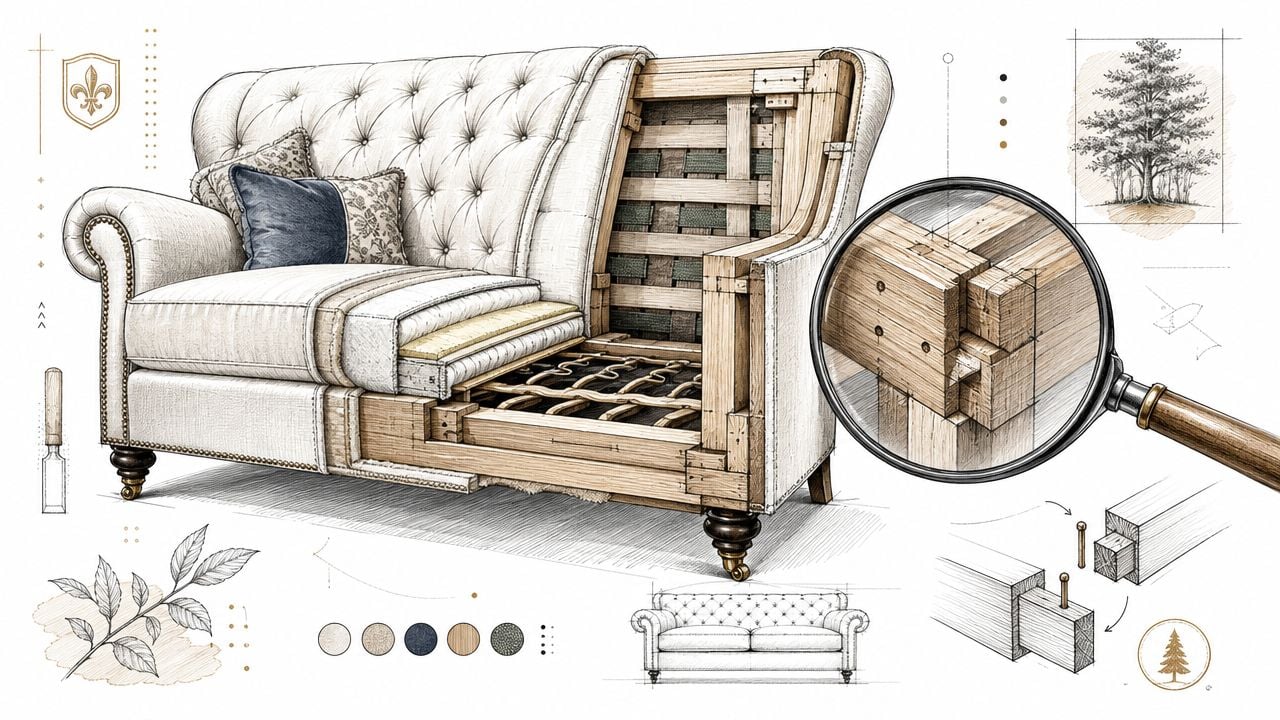
For wood furnishings, the market tells a clear story. In the North American furniture market, wood represented 38.73% of material share, underscoring how strongly buyers still value craftsmanship, durability, and the timeless appeal of solid wood construction in premium pieces, according to Mordor Intelligence's living and dining room furniture market analysis.
What to inspect on upholstered seating
The frame is the first checkpoint. A sofa can wear a beautiful fabric and still fail if the structure underneath is weak.
Look for these signals:
- Kiln-dried hardwood frames: They're chosen because they're more stable and less likely to twist or warp over time.
- Reinforced joinery: Dowels, corner blocks, and traditional joinery methods indicate a piece built to take daily use.
- Support systems with substance: Better seating support keeps cushions from collapsing prematurely and helps the seat stay comfortable.
The next checkpoint is cushion design. A showroom seat can feel plush for five minutes and disappointing by month five. Cushion quality should be judged by resilience, shape retention, and whether the support fits the household's habits.
For a deeper look at fabric, leather, and performance options, this guide to upholstery materials and how they wear is worth reviewing before a purchase.
What separates strong case goods from weaker builds
Tables, consoles, and cabinets need just as much scrutiny as seating. Buyers should open drawers, inspect the underside, and pay attention to weight and stability.
A fast inspection often tells the story:
- Drawer interiors: Clean construction and smooth operation usually point to better workmanship.
- Back panels and undersides: Manufacturers hide less when the build is sound.
- Finish quality: A good finish has depth, consistency, and protection. It doesn't look cloudy or thin.
Workshop note: Lift the corner of a table slightly if possible. A piece with real substance usually feels grounded before it ever says a word visually.
Best material choices for livable luxury
Families in South Georgia and North Florida need more than elegant materials. They need materials that can live with children, pets, guests, and changing humidity.
A practical high-end mix often includes:
- Performance upholstery: Better for everyday living when softness and cleanability both matter.
- Quality leather: Strong choice for rooms that need character, easier wipe-down care, and a finish that improves with age.
- Solid wood on key surfaces: Ideal for anchor pieces that should last through moves, rearrangements, and years of use.
The smartest purchase isn't the most delicate one. It's the one that still looks refined after real life happens.
Finding Your Perfect Fit Brands and Customization
Luxury becomes personal once the piece fits the home, the family, and the way the room is used. That's where brand selection matters, but customization matters even more.

A well-curated showroom should offer recognizable quality from brands with distinct strengths. In this category, names such as Smith Brothers, Lexington, Hooker Furniture, La-Z-Boy, and Stressless make sense because they cover different aesthetics and comfort priorities without forcing a homeowner into one look.
Customization is the real luxury
Ready-to-deliver furniture has its place. Custom furniture is where a room starts to feel intentional.
That can include choices such as:
- Fabric and leather selection: Texture, color, pattern, and cleanability should fit the household, not just the display floor.
- Wood finishes: A finish should connect with flooring, trim, and adjacent pieces instead of competing with them.
- Comfort preferences: Seat firmness, back support, and cushion feel should match how the room is used.
- Style details: Arm shape, leg style, and trim choices can shift a piece from formal to relaxed very quickly.
Most vendors in a strong Special Order Program support some level of personalization. That matters because one homeowner may want a personalized neutral sectional for a coastal vacation property, while another may want a classic sofa in a richer textile for a primary residence.
Homeowners who want to understand the process before stepping into a showroom can review how custom furniture orders take shape.
Guidance prevents expensive guesswork
Too many shoppers choose high-end furniture by appearance alone. That's how they end up with the wrong seat depth, the wrong arm height, or a fabric that looked polished under showroom lighting but feels impractical at home.
Useful support should come from more than a sales floor conversation. Strong retailers make room for:
- Style Quizzes that help narrow the aesthetic direction
- A Mattress Guide for shoppers also coordinating comfort decisions in other areas of the home
- In-store associates who can help compare scale, finishes, and room function
Lott's Furniture offers that combination through digital browsing, in-store guidance, and a Special Order Program that lets buyers adjust fabrics, finishes, and comfort details to fit the room more precisely.
Customization isn't excess. It's how a homeowner avoids settling for a close-enough piece in a room that deserves better.
Styling Your Space with Proper Scale and Layout
You feel the problem the minute you walk into the room. The sofa looks expensive, the chairs look beautiful, and nothing feels settled. That is usually a scale and layout issue, not a furniture issue.

In larger living rooms, undersized furniture creates a scattered look fast. In family homes across South GA and North FL, we see this all the time. Homeowners buy a sofa that would work in a condo, place it in an open-plan room with tall ceilings, and the whole space loses definition. A high-end room needs pieces with enough visual weight to hold the space together, while still leaving clear paths for daily life.
Good layout starts with three practical rules. Keep enough space between major pieces so people can walk naturally. Set the coffee table close enough to reach without leaning forward out of the seat. Choose a coffee table that looks proportionate to the sofa instead of floating like an afterthought. General planning guidance in this living room size and scale guide supports those fundamentals, and they hold up in real homes.
The room also has to live well. Kids cut through to the kitchen. Dogs claim the rug. Guests pull in an extra chair. Luxury that cannot handle movement is decorating, not furnishing.
Layout choices that make a room feel finished
The best living rooms usually share a few traits:
- The seating is anchored around conversation first. A fireplace or TV matters, but people should still be able to talk without twisting sideways.
- The rug is large enough to connect the group. At minimum, the front legs of the main seating pieces should sit on it.
- The sofa does not have to hug the wall. Floating it often improves traffic flow and gives an open room real structure.
- Accent chairs solve awkward angles. Swivels are especially useful in rooms with windows, fireplaces, and media walls competing for attention.
- Walkways stay open. A room feels calmer when people can move through it without clipping a corner every time.
Awkward rooms do not need perfect symmetry. They need balance, clear function, and a focal point that makes sense for how your family uses the space. Design advice from Castlery's awkward living room layout ideas makes the same point. A room can feel polished without being rigid.
For homes built around entertainment, the screen should support the room instead of taking it over. These Home AV Pros smart home upgrades are worth reviewing if you want technology to sit more discreetly inside a well-designed space.
If you want practical room-by-room examples before you visit the showroom, this guide to living room furniture layout ideas gives a strong starting point.
The right layout makes expensive furniture look intentional, comfortable, and ready for real life.
Budgeting for Longevity Care and Financing
Investment-quality furniture should be judged over years, not on the day of purchase alone. A well-built sofa or wood table usually costs more upfront because it's designed to avoid the cycle of replacement, disappointment, and compromise.
That's the right way to budget for living room furniture high end. The useful question isn't “What's the lowest number today?” It's “What will still be comfortable, attractive, and structurally sound years from now?”
Protecting the investment after delivery
Care matters because premium materials respond well to consistent maintenance. They don't need fuss. They need attention.
A practical care routine usually includes:
- Rotating and fluffing cushions: This helps upholstered seating wear more evenly.
- Using the right cleaning method for the material: Fabric, leather, and finished wood each need different treatment.
- Keeping surfaces clean and dry: Especially important in coastal or humid environments.
- Addressing small issues early: A loose cushion insert or minor finish concern is easier to solve before it becomes a bigger problem.
Homeowners selecting wood tables, consoles, and accent pieces should review this guide to wood furniture care and maintenance.
Financing should support the plan, not distort it
Financing can be useful when it allows a homeowner to buy the right piece once instead of buying the wrong piece twice. That's a practical decision, not an indulgent one.
The key is discipline. Choose financing that supports the room plan already in place. Don't use it to overload the room with extras that dilute the design. Start with the anchor pieces. Get the sofa, chairs, and tables right. Layer the rest with patience.
The Lotts Experience From Showroom to Home
The shopping experience should feel as considered as the furniture itself. Homeowners often begin online, narrowing styles, finishes, and silhouettes from a digital catalog. Then they visit a showroom in Fernandina Beach, FL, where scale, comfort, and construction become easier to judge in person.
That blend of online research and in-person confirmation is the right approach for a meaningful furniture purchase. It gives buyers convenience without asking them to make a major comfort decision from a screen alone.
What happens before the furniture enters the home
The service standard matters most after the purchase, not before it. Every piece should arrive ready to justify the investment.
At Lott's, that process includes:
- A rigorous multi-point inspection: The piece is checked before it reaches the customer.
- White-glove, in-home delivery: Furniture is placed in the room of choice, assembled properly, and packaging is removed.
- A smoother handoff from showroom to home: Fewer surprises, fewer unfinished details, less stress for the homeowner.
That delivery process is outlined in the furniture delivery and assembly details here.
Why this matters for South Georgia and North Florida homes
Service becomes even more important in homes with layered design plans, second residences, family schedules, and coastal conditions. Buyers in South Georgia and North Florida often aren't just filling a room. They're coordinating an entire environment, from layout and upholstery choices to finish durability and access for delivery.
A careful in-home setup protects the piece, the home, and the original design intent. That's what turns a furniture purchase into a finished room rather than another project on the list.
A well-designed living room should feel calm, capable, and built for real life. Homeowners ready to explore custom options, compare premium brands, or get expert help with layout and materials can browse Lott's Furniture online, use the style tools, or visit the Fernandina Beach showroom for a more hands-on consultation.