
Oversized Chair with Ottoman: The Complete Buyer’s Guide


The chair looked perfect in the showroom. At home, the doorway may be too narrow, the ottoman may interrupt the walking path, and the seat may be so deep that shorter occupants lose proper leg support. An oversized chair with ottoman earns its place through more than generous cushioning. It needs the right proportions, a realistic delivery route, durable upholstery, and a finish that belongs in the room.
The format has lasting furniture history. The ottoman traces its roots to the Ottoman Empire in modern-day Turkey, where it served as a central residential seating piece before the term spread into Europe in the late 1700s. By the Victorian era, upholstered low seating was associated with luxury lounging, and by the mid-1900s, matching chair-and-ottoman sets were being mass-produced for the broader market historical overview of the ottoman).
That history still makes sense today. A large comfort-first chair paired with a coordinated footrest can create a curated sanctuary for reading, television, conversation, or quiet afternoon rest. The following guidance focuses on the details that determine whether the purchase feels personalized and investment-quality after delivery.
Measuring Your Space and Delivery Path
A chair can fit the room and still fail at the doorway. Measure the destination, the moving route, and the space needed for the ottoman and any reclining action before choosing a frame. Oversized seating demands planning in three dimensions, including width, depth, height, and the clearance required to use it comfortably.
Start with the room, not the showroom
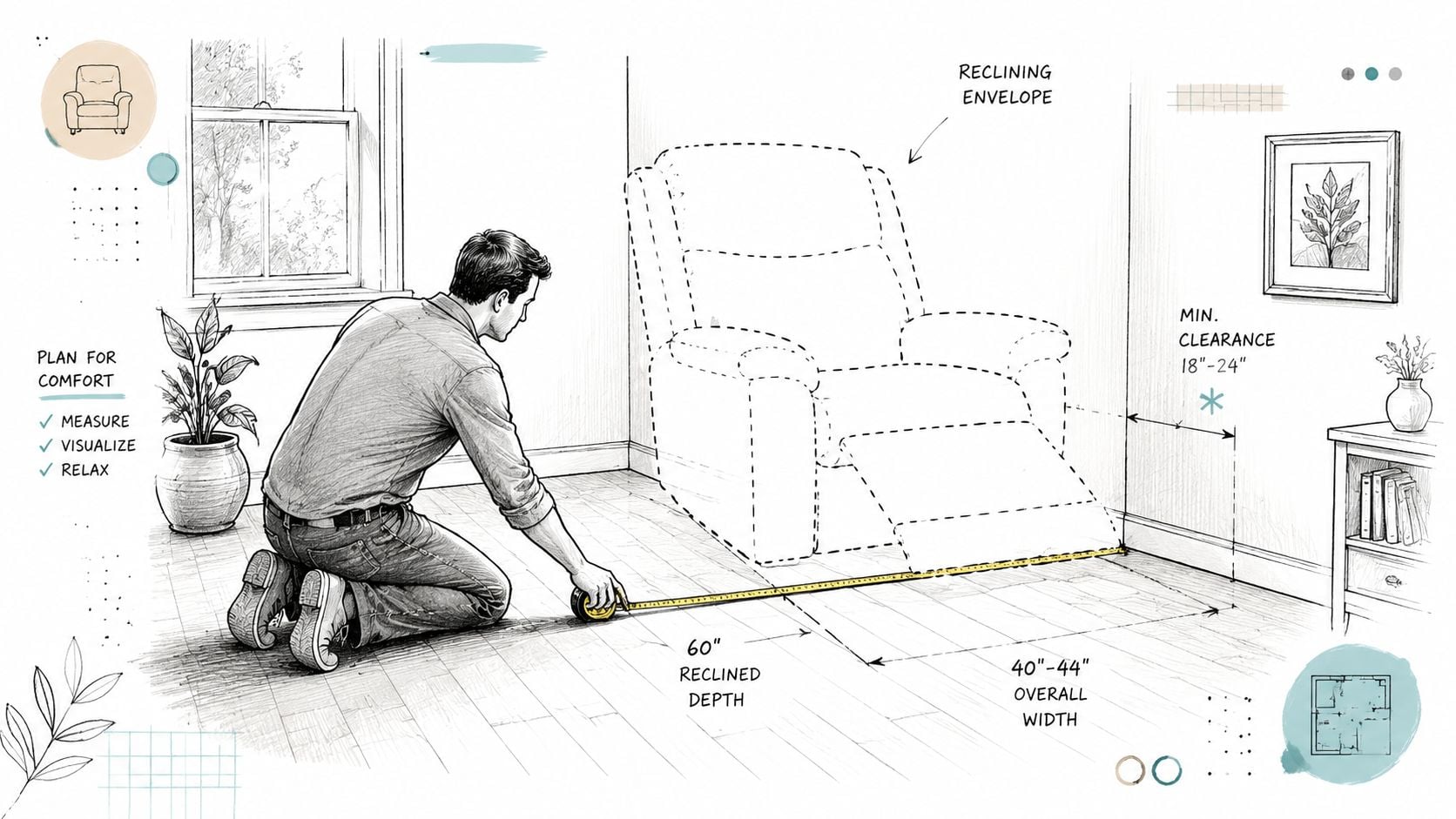
Measure the destination wall, usable floor width, and full depth from the chair back to the nearest table, wall, or walkway. For a recliner, record the reclining envelope, the complete area occupied as the back moves and the footrest extends. Upright dimensions alone do not show whether the opened chair will block circulation.
Use a chair and ottoman planning guide to check the relationship between both pieces, then record these measurements:
- Chair footprint: Measure the full width, depth, and height, not only the seat.
- Ottoman position: Test the space with the ottoman centered, angled, and moved aside.
- Front clearance: Reclining chairs commonly need 24 to 36 inches of clear space in front when extended.
- Rear clearance: A reclining mechanism may need 12 to 18 inches of clearance behind the chair, depending on its design and movement path. Confirm the mechanism's actual requirement before ordering.
The ottoman needs its own floor plan. One published oversized chair measures 41.4 inches wide by 35 inches deep by 33 inches high, while its ottoman measures 35 inches wide by 22.4 inches deep by 19 inches high. Placed in front, the stated overall length reaches 57.4 inches published chair and ottoman dimensions.
Trace the delivery route
Measure the narrowest doorway, hallway, stair turn, elevator opening, and interior passage. Ask for packaged dimensions when available, because a boxed chair may require more room than the finished piece. Check diagonal depth for pivots, since large furniture often enters at an angle.
Allow 1 to 2 inches of hallway buffer, and inspect back cushions, handles, door stops, and trim that could interfere with a turn. A published recliner-and-ottoman listing specifies a 25-inch minimum doorway clearance and 12 inches of wall clearance. Other assembled sets reach approximately 39.8 inches wide by 55.3 inches deep furniture fit guidance.
Practical rule: Measure the narrowest point, then add turning room. A destination wall cannot reveal a delivery problem.
Use Lott's room-by-room furniture measuring guide to organize the measurements. Send the complete list to the furniture associate before finalizing the order, especially for upstairs rooms, tight staircases, or older homes with narrow openings.
Ergonomics and Proportional Support
An oversized chair earns its footprint only when the body stays supported and the room remains usable. Extra cushion area can still leave the feet unsupported, push the shoulders forward, or make standing difficult. Pair the chair and ottoman as one ergonomic system, with enough surrounding clearance to preserve the main walking route. Review this chair and ottoman pairing guidance before comparing showroom models.
Match the heights
For a high-use oversized chair, start with a seat height of about 17 to 19 inches and an ottoman around 15 to 18 inches high. Adjust that relationship for the user's proportions, cushion softness, and preferred posture. An ottoman that sits too low can raise the knees above the hips. One that sits too high can press behind the knees.
Ottoman width should support both legs without forcing the hips outward. A practical proportion is approximately 60% to 80% of the chair's width. Test the set with both feet fully supported, the pelvis settled naturally, and the lower back touching the cushion. Keep the ottoman close enough for comfortable leg support, but not so close that it blocks a passage or door swing.
Seat depth controls posture more than many shoppers expect. Published oversized sets show deep-seat measurements ranging from 23 to 46 inches, including one seat listed at 26 inches wide by 46.3 inches deep and another at 24.8 inches wide by 23.03 inches deep. Use those figures as comparison points, not as a substitute for sitting in the actual chair.
Choose the posture before the upholstery
A very deep seat suits reclined reading, relaxed television viewing, and lounge-bed-style use. A shallower deep chair works better for upright conversation, reading with a book in hand, and frequent movement in and out of the seat. Decide how the chair will be used before selecting its fabric, because posture determines the support the frame and cushions must provide.
A showroom evaluation should cover these checks:
- Knees: The cushion edge should not press sharply behind them.
- Feet: Both feet should rest securely on the ottoman without stretching.
- Back: The lumbar area should remain supported in the intended sitting position.
- Movement: The user should stand without pulling on the arms.
- Circulation: The ottoman should support the legs without narrowing the principal walking route.
Cushion size is only one measure of comfort. A chair that overwhelms the room or misaligns the body is a poor long-term investment. For a broader buying checklist, review what to look for in a new sofa or chair.
Selecting Performance Fabrics and Upholstery
South Georgia and North Florida homes need upholstery that looks refined and handles real use. Sun exposure, children, pets, humidity, and frequent lounging all affect the right material. Judge every fabric by its hand feel, appearance, cleanability, and fit with the household's routine.
Compare the main upholstery priorities
Traditional textures add depth and visual warmth. Woven patterns, solid tones, and tactile surfaces can make an oversized chair feel collected rather than bulky. They also require careful placement and regular maintenance, especially in homes with active pets or frequent entertaining.
Performance upholstery suits rooms where daily care matters. Worry-free fabrics from La-Z-Boy and Smith Brothers are designed for households that want easier maintenance without giving up a polished appearance. Choose based on the room's light exposure and the family's habits, not on technical terminology alone.
| Upholstery priority | Traditional texture | Performance finish |
|---|---|---|
| Visual character | Rich, layered, and refined | Polished with practical versatility |
| Daily care | Rewards prompt attention | Often chosen for easier routine maintenance |
| Best fit | Formal rooms and lower-traffic settings | Family rooms, pets, children, and frequent lounging |
| Design direction | Classic, collected, and tactile | Relaxed, durable, and adaptable |
No upholstery is maintenance-free. Address spills promptly, and test cleaning products in an inconspicuous area before treating a visible section. Homeowners who prefer hands-on care can review these fabric-safe DIY upholstery cleaning steps first.
Coordinate fabric with scale
An oversized chair carries more visual weight than a petite accent chair, so upholstery scale deserves careful attention. A subtle solid can calm a broad silhouette, while a restrained pattern gives the piece personality without making the room feel crowded. Use the same upholstery on the ottoman for a unified look, or select a related texture when you want gentle contrast.
Fabric should also support the chair's placement. Strong daylight can change how color and texture read, while a busy pattern may compete with nearby rugs, wood finishes, or artwork. Keep the chair and ottoman visually connected, especially when their combined footprint already commands significant floor space.
Review this performance upholstery guidance before visiting a showroom. Ask associates how each fabric behaves in daylight, how its texture works with the room's wood finishes, and whether the color supports the existing palette. A well-chosen performance fabric protects the chair's appearance while keeping the oversized seating comfortable for everyday use.
The Value of Customization and Special Orders
A showroom-floor chair can solve the immediate need, but a special order can solve the actual design problem. The strongest oversized chair with ottoman is sized, upholstered, and cushioned for the people who will use it, not for an anonymous room display.
Lott's Special Order Program gives shoppers a path beyond a single available finish. Most vendors support personalized designs involving fabrics, finishes, and comfort levels, and the available choices may include thousands of upholstery options, wood finishes, cushion firmness levels, arm styles, and related details. The result is comfort crafted to personal preference rather than a compromise disguised as convenience.
Personalize the parts that affect daily use
Fabric color receives attention because it's visible, but cushion firmness and arm shape influence comfort every day. A softer cushion may suit relaxed lounging, while a firmer feel can make upright sitting and standing easier. Arm height and width affect how the occupant settles into the chair, particularly during extended reading.
A special order also helps the chair belong to the room. The ottoman can coordinate with surrounding wood tones, the upholstery can echo existing textiles, and the overall finish can support either Coastal Chic or Timeless Traditional styling without looking mass-produced.
Customization deserves a measured approach. A larger selection creates more decisions, so shoppers should bring room photographs, floor samples, and a clear description of how the chair will be used. The custom order starting guide offers a useful preparation point before a showroom consultation.
Lott's Furniture provides the Special Order Program as one route for personalizing oversized seating. In-store associates can help narrow the choices, while the digital catalog allows shoppers to browse from home before testing comfort in person.
A tailored chair should support the body first and express the room second. The best designs accomplish both without making either priority feel forced.
White-Glove Delivery and Professional Setup
A large chair can fit the room on paper and still fail at the front door. Its weight, deep frame, and wide ottoman create difficult pivot points, especially through narrow halls, stair turns, and finished flooring. Plan delivery as carefully as the purchase. Professional handling protects both the upholstery and the home during the most vulnerable stage.
What careful delivery looks like
Lott's Delivery Standard includes white-glove, in-home delivery. The professional team brings the furniture to the room of choice, positions it, and checks the placement for immediate use. Each piece receives a rigorous multi-point inspection before it reaches the customer, adding quality control before the chair enters daily service.
A well-managed delivery begins with the route, not the truck. The team reviews measurements, protects walls and floors, checks turning points, and handles the chair according to its construction. After placement, the ottoman should align with the chair without blocking the walking path. If the chair reclines, leave its full operating envelope clear, including space behind and in front of the frame.
Setup also deserves attention. One published oversized-chair listing states that its chair-and-ottoman set can be assembled in about 5 minutes using illustrated instructions, a useful product-specific example of convenient setup published assembly details. That example does not apply to every large seating item. Some frames, mechanisms, or modular components need more careful handling. Professional setup helps prevent forced connections, uneven placement, and positioning that restricts movement.
Protect the investment during the move
Clear the route before delivery. Remove fragile decor, secure loose rugs, open interior doors, and identify the exact final position. A narrow passage or stair landing may require a different approach than the room dimensions suggest.
Homeowners can review practical preparation advice in this Perth furniture movers guide, including planning, protection, and careful handling. Those principles apply to hallways, stair turns, and finished floors alike.
The furniture delivery and assembly service explains what professional placement can include. For an investment-quality oversized chair, delivery belongs in the buying decision, because correct setup protects comfort, clearance, and the furniture itself.
Styling and Maintenance for Lasting Comfort
Place an oversized chair where its generous scale feels intentional. Give the chair and ottoman a clear walking route, then support the grouping with a nearby table, lamp, rug, or related textile. This arrangement can define a reading corner, conversation anchor, or private retreat without forcing every other furnishing to compete for attention.
Build the surrounding composition
For Coastal Chic, pair pale upholstery with woven accents, blue decor elements, and light wood to keep the large silhouette visually light. Timeless Traditional rooms suit deeper fabric tones, turned wood details, a substantial lamp, and a patterned rug that grounds the chair. In a Modern Farmhouse setting, performance upholstery, relaxed texture, and a simple side table balance the chair while preserving usable clearance.
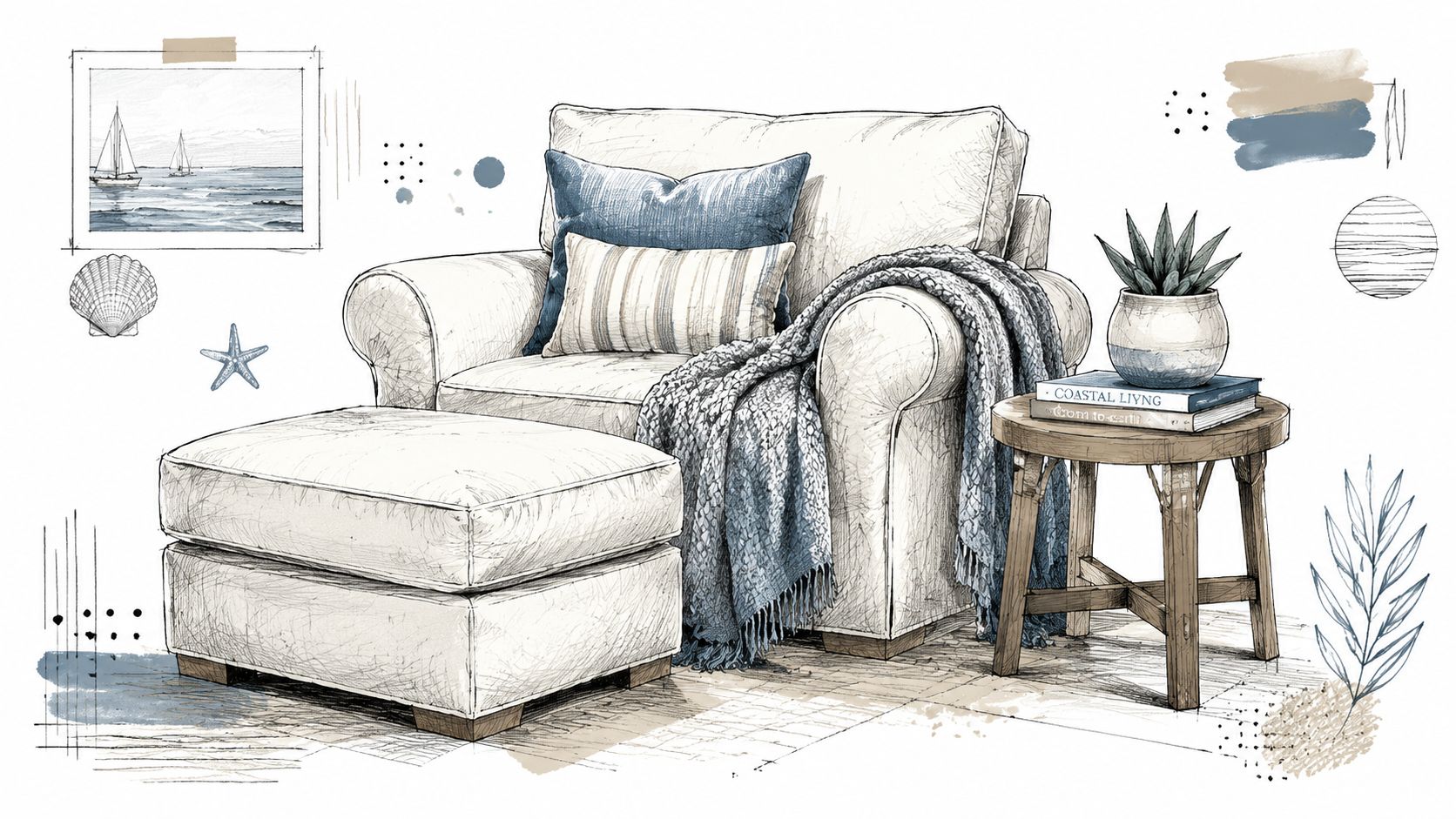
Keep the ottoman flexible. Place it directly in front for full leg support, angle it toward a conversation area, or offset it to protect the walking path. It may serve as a temporary surface beside the chair only when its construction allows that use. Arrange the pieces around daily habits, not a showroom pose.
Soft accessories add comfort without burying the upholstery. Choose a textured throw, a lumbar pillow, or a compact side table, and leave enough seat and arm surface visible to preserve the chair's generous profile. Tactile inspiration from these ash faux fur hooded lounger details shows how texture can create a cocooning mood, although that item belongs to another product category.
Keep the upholstery looking considered
Vacuum loose debris with an upholstery attachment. Rotate removable cushions only when the manufacturer permits it, and treat spills according to the fabric's care instructions. Limit harsh direct sunlight where possible. Keep the ottoman away from sharp table edges that can catch or abrade the fabric.
Choose materials for the household's real routines. Performance upholstery suits frequent use, children, and pets, while delicate textiles demand stricter care. Review the chair's cleaning code, cushion construction, and fabric texture before ordering, because attractive styling cannot compensate for upholstery that does not fit the room's demands.
Lott's Style Quizzes, the Mattress Guide, and in-store associates can help shoppers define a preferred look and comfort level. The digital catalog and showrooms in Waycross, Georgia, and Fernandina Beach, Florida let residents across South Georgia and North Florida browse online, then test seat depth, ottoman height, fabric texture, and overall scale in person.
Lott's Furniture offers oversized seating, special-order upholstery and comfort options, Style Quizzes, the Mattress Guide, and in-store associates for shoppers across South Georgia and North Florida. Visit Lott's Furniture online or in the Waycross and Fernandina Beach showrooms to verify the fit and arrange white-glove in-home delivery with multi-point inspection.


