Memory Foam Mattress vs Gel: A Lott’s Furniture Guide


Tossing and turning over a warm mattress can make a good night feel long and sloppy. The sheet feels fine at bedtime, then by midnight the bed feels like it's holding onto yesterday's heat. That's usually when shoppers start comparing memory foam mattress vs gel, and the key question isn't just softness, it's whether the mattress supports rest without trapping warmth.
At Lott's Furniture, we talk about mattresses the same way we talk about any heirloom-quality home purchase, as an investment in daily comfort. We serve South Georgia and North Florida with the same mix of small-town service and big-brand selection that keeps the process clear instead of confusing. A mattress should fit the sleeper, the room, and the way the home lives.
| Feature | Traditional Memory Foam | Gel-Infused Memory Foam |
|---|---|---|
| Core feel | Deep contouring, slower sink | Similar contouring with a slightly quicker recovery |
| Main strength | Pressure relief and motion isolation | Better temperature control |
| Cooling effect | Tends to hold more heat | Designed to draw heat away |
| Lifespan | About 8-10 years | About 8-10 years |
| Best for | Sleepers who want a classic cradling feel | Sleepers who want foam comfort with less heat |
The Search for Undisturbed Sleep
A restless night usually starts small. The pillow gets shifted, the top sheet gets kicked off, and the mattress starts to feel like it's working against the body instead of with it. That's why the memory foam mattress vs gel decision matters, because the wrong surface can turn a quiet bedroom into a nightly struggle.
Gel-infused memory foam entered the market in 2006 as a newer modification to traditional memory foam, not a totally separate mattress family, and a 2026 consumer survey still found 62% of respondents chose traditional memory foam as the best foam type, while 18% chose gel foam, which tells us the classic feel still has a strong hold on shoppers memory foam and gel foam survey details. That split makes sense. Traditional foam brought people into the category first, and gel came along to solve one stubborn complaint, heat retention.
For shoppers sorting through options, a good outside resource on the impact of air beds on your back can be useful too, because it shows how much support design matters when sleep gets disrupted. For motion concerns, our own motion isolation mattress guide helps frame why the surface feel matters just as much as cooling.
Practical rule: if the bed already feels supportive but runs warm, the material change matters more than a total mattress overhaul.
Understanding Traditional Memory Foam
Traditional memory foam earned its reputation by behaving like a conforming cushion, not a springy pad. It softens under body heat and weight, then settles around the sleeper's shape, which is why so many people describe it as a cradling or body-hugging surface. That slow, deeper sink is the heart of the classic foam feel.
Why the original foam still has loyal fans
The key mechanical difference is simple. Standard memory foam is known for its slower, deeper sink and longer shape-holding properties, which creates that familiar deep contouring sensation, while gel foam tends to recover a little faster when the sleeper changes positions Casper's gel foam vs memory foam guide. That slower response is not a flaw for everyone. For side sleepers and anyone who likes a cocoon-like bed, it often feels like the mattress is making room for the body instead of pushing back.
That contouring also helps create a calmer sleep surface. Movements stay localized, so a partner's shift doesn't travel across the bed the way it can on more responsive constructions. For couples, that's often the primary benefit, less nighttime noise in the mattress and fewer jarring wake-ups.
Traditional foam also has a certain lived-in honesty to it. It's not trying to feel flashy. It's trying to distribute weight, ease pressure, and settle into a sleeper's shape in a steady, predictable way.
- Deep contouring: Good for shoulders, hips, and anyone who wants the mattress to “hug” more than “bounce.”
- Motion control: Helpful when one sleeper moves a lot.
- Classic feel: Best for people who want familiar, body-molding comfort instead of a livelier surface.
For a plain-language breakdown of how the material is built, our memory foam mattress guide keeps the basics easy to follow.
The Gel-Infused Foam Innovation
Gel foam is a cooling modification added to memory foam, so the bed keeps that contouring feel while handling heat buildup better. The gel shows up as particles, beads, or swirls depending on the build, and the goal is simple, pull heat away from the body instead of letting the foam hold onto it.

How the Cooling Layer Works
The cooling benefit is real, but it is not magic. Gel particles are meant to slow the first wave of heat buildup, and the effect tends to level off after a few hours, so long-term temperature feel depends more on the foam's structure and density than on the gel label alone thermal performance overview. Shoppers miss that all the time. Gel can help the surface feel cooler at first, but it does not turn an all-foam bed into an air-conditioned mattress.
That is why gel works best as a thermal-management upgrade. It gives warm sleepers useful help, especially in rooms that stay hot overnight. It does less for a mattress that uses dense base foam and poor airflow, because the heat still has nowhere good to go.
If you wake up sweaty, start with Lott's Furniture's guide to the best mattress for hot sleepers. The key is in the whole build, not the marketing copy on the tag.
A gel layer can soften the first wave of heat, but it cannot make up for a mattress built with weak airflow.
A Detailed Comparison of Mattress Feel and Performance
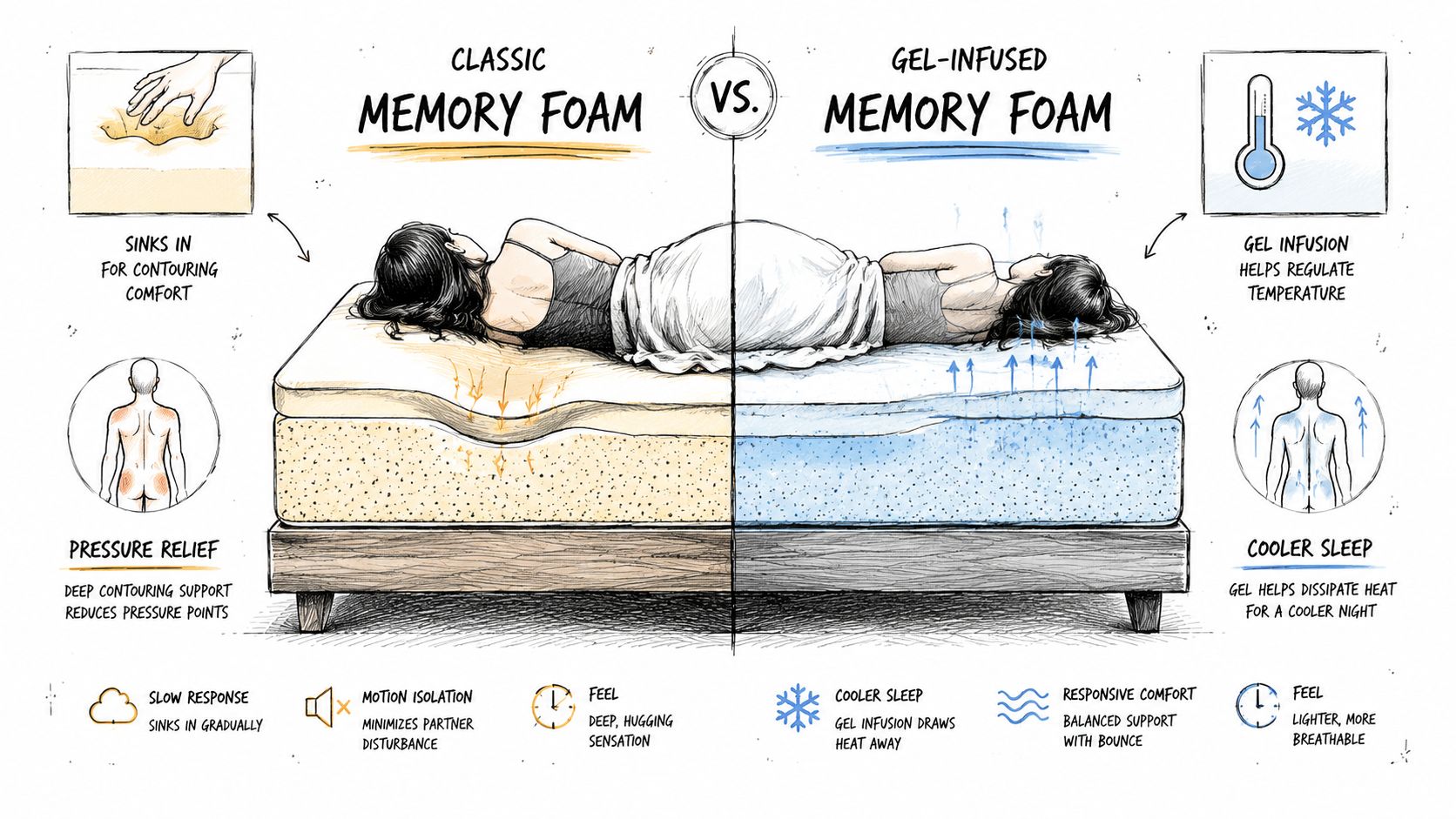
A mattress should be judged by how it sleeps, not by what the tag promises. The feel at bedtime, the way it handles heat after midnight, and how it holds up after years of use matter more than the label on the side. That is the practical difference in memory foam mattress vs gel.
Temperature control comes first
Gel foam has the clearer edge for surface cooling. The foam is designed to slow heat buildup and keep the top layer from feeling as warm right away, while traditional memory foam is more likely to hold onto body heat as the night goes on temperature comparison and lifespan data.
That advantage is real, but it is modest. A cooler first feel helps hot sleepers, yet the whole mattress build still decides how long that comfort lasts. Dense foam, a thick cover, and weak airflow can cancel out a lot of the benefit.
Feel and responsiveness shape the nightly experience
Traditional memory foam gives the slowest, deepest sink. Gel foam still contours closely, but it usually comes back a little faster, so changing positions feels less like pulling your body out of wet sand. For sleepers who shift during the night, that quicker recovery can make the bed feel easier to live with.
The difference is subtle, but sleepers notice it fast. One bed hugs and holds. The other still cradles, just with a touch more give when you move.
Pressure relief is a shared strength
Both types belong to the same foam family, so both do a good job of spreading weight across the body. Shoulders, hips, and lower backs still get the contouring support people want from memory foam, and gel does not erase that familiar close-fitting feel. It mainly changes how the mattress manages heat, not how it supports the body.
Durability is not the deciding factor
Buyers often expect gel to last longer, but that is not the determining factor. Foam density, construction quality, and the support layers beneath the comfort foam matter more than the presence of gel. For a clean way to judge firmness before you pick a material, use Lott's Furniture's mattress firmness guide.
A good mattress is built like a solid chair frame, not a fancy cushion. If the base is weak, the top layer cannot save it.
Bottom line: choose gel if heat is your main complaint, choose standard memory foam if you want the classic slow-sinking hug, and judge both by the full construction, not the cooling claim alone.
Matching a Mattress to Your Sleep Style
The right choice depends on how the body sleeps, not on what sounds newest. Some people want a mattress that holds them in place. Others want one that lets them move without overheating. Those are different needs, and they should lead to different purchases.
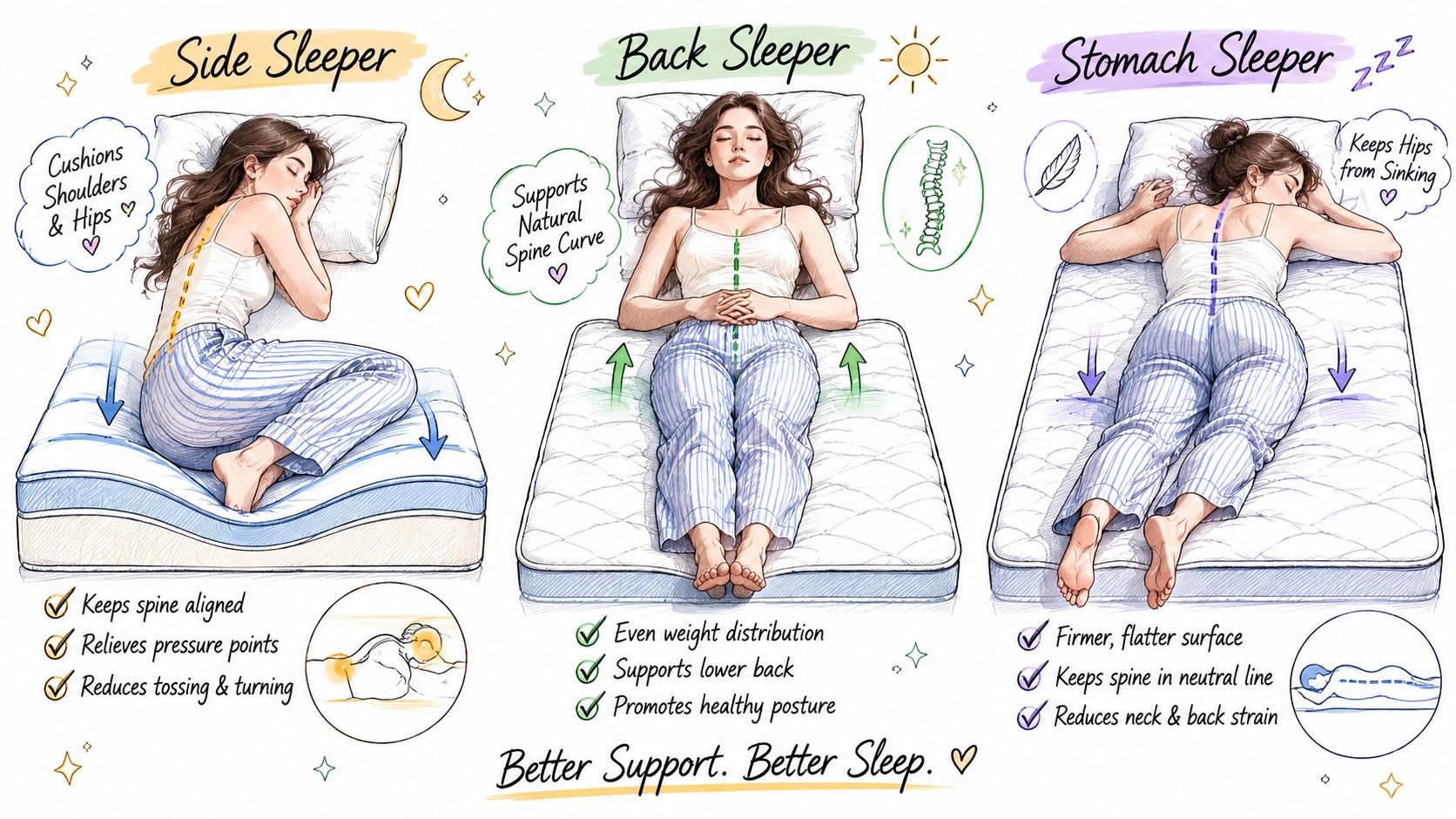
Side sleepers and couples usually lean toward traditional foam
Side sleepers often want the deepest pressure relief at the shoulders and hips, and traditional memory foam usually delivers the most pronounced cradle. Couples also tend to like the way it absorbs movement, because a mattress that isolates motion keeps one person's tossing from disturbing the other. For those shoppers, the old-school foam feel is still hard to beat.
Hot sleepers should look at gel, but not stop there
Gel-infused foam makes more sense when heat is the main complaint. It gives the sleeper the same contouring base with a cooler surface, which is useful for warm rooms or people who naturally run hot. But the cooling benefit is still limited by the foam structure, so it's smart to pay attention to cover breathability and support layers, not just the gel content.
Combination sleepers need quicker recovery
People who shift between positions during the night often prefer a mattress with a little more responsiveness. Gel foam generally rebounds faster than standard memory foam, which can make movement feel easier. For combination sleepers, that quicker recovery can be the difference between feeling boxed in and feeling supported.
For a deeper look at mixed-position comfort, our best mattress for combination sleepers guide fits right into the decision.
Practical rule: if the body wakes up from heat, start with cooling. If the body wakes up from pressure, start with contouring.
Your Sleep Sanctuary at Lott's Furniture
A good mattress decision usually needs more than a product page. It needs the kind of guidance that helps a shopper compare comfort levels, support layers, and room fit without getting buried in jargon. That's why our Special Order Program matters, most vendors support personalized designs with fabrics, finishes, and comfort levels that can be matched to the way a home lives.

The best path usually starts online and ends in the showroom. Our digital catalog, Style Quizzes, and Mattress Guide make it easy to narrow choices before visiting our showrooms in Fernandina Beach, FL, where associates can help translate sleep needs into a real purchase decision. That smooth transition from browsing to testing is useful when the choice is as personal as a mattress.
We also carry trusted home brands like La-Z-Boy, Smith Brothers, and Stressless, which helps keep the larger room plan consistent instead of pieced together. And every piece goes through the Lott's Delivery standard, with a rigorous multi-point inspection before white-glove, in-home delivery places it where it belongs.
For households also thinking about air quality and overnight comfort, a practical read on best air purifiers for allergies can round out the bedroom setup. A mattress should work with the room, not fight it.
Frequently Asked Questions
Is gel memory foam worth the extra cost?
For some sleepers, yes, but only if heat is the main problem. The cooling effect is usually modest and can fade after a short stretch, so the higher price only makes sense when a warm sleep surface keeps interrupting rest cooling duration and hybrid alternative guidance. If a mattress already feels comfortable through the night, paying more for gel just to chase a slight temperature change is usually not the smartest buy. The safer move is to judge the whole bed, not just the gel tag. Foam density, cover fabric, and the support layers underneath do more to shape long-term comfort than the gel beads alone.
Is gel the answer for very hot sleepers?
A lot of the time, no. For sleepers who run very hot, a breathable hybrid or latex mattress can bring a stronger, longer-lasting cooling feel than an all-foam bed with gel added in. That is the honest answer buyers need, because the primary sleep difference usually comes from airflow and construction, not a cooling claim on the label. Gel can help a little, but the mattress build matters more than the surface treatment.
Which one should a careful shopper choose first?
Start with pressure relief, then look at temperature. If the body needs deep contouring and motion isolation, traditional memory foam is the better fit. If the main complaint is warmth, gel-infused foam is the better place to begin, but it still needs to be judged by the full mattress build, not just the cooling language.
What matters more than gel in a mattress?
The support layers, the foam density, and the cover materials. Those parts decide whether a mattress keeps its shape, breathes well, and stays comfortable after the novelty wears off. Gel can soften the heat feel, but it cannot rescue a weak mattress build. A well-made foam bed without gel can outlast and outperform a flashy one that cuts corners underneath.
How should shoppers compare memory foam and gel foam in person?
Lie down long enough to notice pressure points, sink, and surface temperature. Pay attention to how the mattress feels under the shoulders and hips, then notice whether the top cover traps heat or lets air move. That real-world test tells you more than marketing copy does. Lott's Furniture helps shoppers compare mattress comfort, test real support levels, and choose a design that fits the room and the sleeper. Visit Lott's Furniture to browse the digital catalog, use the Mattress Guide, or stop into the showroom and get clear, local advice before you buy.