Pillow Topped Mattresses: What to Know Before You Buy


The mattresses look almost identical until someone lies down. One feels gently cushioned beneath the shoulders and hips; the other holds the body closer to the surface. For a homeowner replacing an uncomfortable bed, that softer quilted top can feel like an immediate solution.
The harder question is whether that welcoming feel will remain comfortable after repeated use. At our family-owned store, we help shoppers weigh the comfort layer, support beneath it, heat retention, and warranty documentation together. Pillow topped mattresses can provide comfort, but softness alone isn't enough to make a sound purchase.
Pillow Topped Mattresses Explained
A pillow top is a separately quilted comfort layer stitched above a mattress's primary support unit. Its filling may include foam, fiber, latex, or a blend. Beneath it, coils or structural foam provide support.
The construction works like a quilted duvet attached to a mattress: the upper layer changes the initial feel and cushions protruding joints, while the support unit remains underneath. Because the comfort compartment is usually permanently attached, its feel and durability are part of the mattress itself.

Pillow Top Mattress Layers From Top to Bottom
- Cover: The outer textile and quilting shape first-touch softness and can affect breathability.
- Comfort layer: Foam, fiber, latex, or blended upholstery cushions the shoulders and hips.
- Support core: Coils or structural foam resist deeper sinking and help maintain body alignment.
- Foundation: A platform, approved base, or foundation carries the mattress and distributes its load.
A pleasant surface does not guarantee the whole bed will feel right. Shoulders may feel cushioned while hips sink too far; a substantial core may still feel warm under a dense top. Try the complete mattress in your usual sleep position, not just the quilted surface.
Why Pillow Tops Became Popular
The history helps explain the pillow top's association with comfort and luxury. The Strategist's pillow-top explainer recounts these milestones:
- In the 1970s and early 1980s, innersprings represented as much as 92% of U.S. mattress sales.
- Bedding described manufacturers adding pillow tops and using “gently firm” in 1977.
- By the mid-1990s, pillow tops had become associated with luxury.
- Consumer-experience figures from Sleep Like the Dead indicated approximately 30% higher average prices for pillow-top models than for non-pillow-top models.
The higher price is a construction and comfort premium. It does not establish better support or longer life, so check how the cushioning feels and how it holds up with use.
Buying principle: Choose the support system for alignment, then choose the surface cushioning for comfort.
Treat the pillow top as a comfort layer sitting on a support core. During a showroom comparison, assess both separately, then consider whether the plushness seems likely to remain comfortable over time, alongside heat and warranty documentation.
How Pillow Tops Compare to Euro-Top, Loft, Memory Foam and Hybrid Mattresses
A pillow top is a comfort layer, not a support system. Its foam, fiber, latex, or blended upholstery sits above a coil or foam core, so judge the top for surface cushioning and the core for its response. The labels also overlap: a hybrid can have a pillow top, and memory foam can appear in either a pillow-top or euro-top design.
Pillow Top and Alternative Mattress Types Compared
| Option | Comfort layer | Feel and pressure relief | Heat and airflow | Durability watch-point | Best fit |
|---|---|---|---|---|---|
| Pillow top | Quilted foam, fiber, latex, or blend stitched above a coil or foam core | Cushioned surface with shoulder and hip sink | Fill and cover affect ventilation | Upper upholstery can compress before the core | Side sleepers seeking surface cushioning |
| Euro-top | Flush-edged cushioning sewn within the mattress profile; some designs use denser fill | Flatter appearance; test firmness in person | Less enveloping contact may allow more airflow; construction varies | Inspect fill specifications and watch for compression | Sleepers wanting cushioning without a pronounced pillow-like edge |
| Loft | High-loft fiber or foam comfort layer | Springy initial feel with less slow contouring | Airy fiber can ventilate well; check the cover | Watch for flattened fill | Combination sleepers who prefer easy movement |
| Memory foam | Viscoelastic foam that contours gradually | Close conformity and slower response | Dense foam can retain warmth | Check density, thickness, and warranty terms | Pressure-sensitive sleepers who enjoy a hugging feel |
| Hybrid | Pocketed coils beneath foam or latex comfort layers | Responsive support with surface cushioning | Coil spaces provide ventilation beneath the upholstery | Assess both upholstery and core | Couples and mixed-position sleepers |
Materials and construction matter more than a category label when estimating how a mattress will hold up. A pillow top may flatten while its support core remains intact, so ask what the comfort layer contains and how its warranty addresses compression. With euro-tops and loft designs, inspect the fill and stitching rather than assuming a flush edge or a taller profile means greater durability.
How to Read Mattress Construction Labels
- Euro-top placement: The edges sit flush with the mattress rather than forming a visibly separate panel. That shape alone does not tell you whether the top is thinner, firmer, or more durable.
- Pillow-top depth: The distinct quilted compartment can compress under the body. Ask what materials are inside instead of using height as a quality measure.
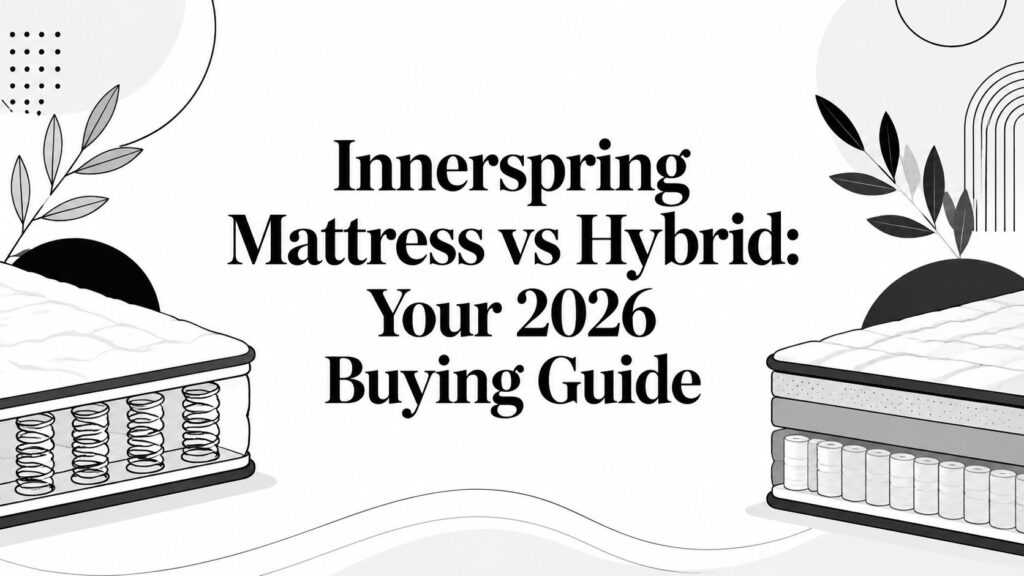
- Hybrid response: Pocketed coils provide the underlying spring response, but thick upholstery can still slow turning. This hybrid and innerspring coil-gauge guide explains how to distinguish core construction from surface feel.
For a couple, test the mattress together. Have each sleeper lie on their side, roll toward the edge, and note whether the upholstery pulls them back. Then check whether the edge feels stable during entry and exit, and whether either person rolls toward the other. These checks reveal how the comfort layer and support core work as a complete bed, not just how plush the surface feels at first.
How the Comfort Layer Changes Feel and Heat Retention
A side sleeper settles into a plush top, allowing the shoulder to descend while the mattress supports the waist and pelvis. When that balance is right, the sleeper feels cradled without folding into the bed. When it isn't, deeper hip sinking can make an initially inviting surface difficult to move on.
Thick, soft upholstery redistributes contact by compressing around the body. More material can provide cushioning, but it also places more material around the sleeper, particularly when the surface closely conforms.
Pillow Top Materials and Sleeping Temperature
In owner-experience figures reported by Sleep Like the Dead, bothersome heat retention affected about 9% of pillow-top owners versus 5% of non-pillow-top owners. Those reports describe owner experiences, not a temperature rating for a particular mattress.
Memory foam deserves extra attention from hot sleepers because dense foam can restrict airflow and retain body heat. Fiber, latex, and polyurethane-foam constructions don't all respond alike, so the filling description matters more than the pillow-top label.
The heat column in the comparison table is a starting point, not a cooling guarantee. A ventilated core can't fully compensate for an enveloping upper layer and a cover that limits air movement.
Practical Heat Checks Before Buying
- Inspect the cover: Ask about its fiber content and construction. Touch alone won't establish breathability, especially through a showroom display protector.
- Ask about comfort-layer airflow: Identify the filling, ventilation features, and any dense foam directly beneath the sleeping surface.
- Stay on the mattress: Compare warmth and ease of movement after settling in, not just during the initial lie-down.
Our guide to mattresses for hot sleepers helps shoppers assess cooling features alongside pressure relief. At home, breathable bedding and sensible room ventilation also influence the result.
A thicker pillow top isn't automatically a higher-quality or more supportive mattress.
For coastal homes across South Georgia and North Florida, moisture and warmth deserve attention alongside softness. A guest bedroom with limited ventilation may need a different comfort package from a regularly cooled primary bedroom. Choose the surface for the sleeper, the room, and the service life expected from the investment.
Choosing Firmness, Sleep Position and Materials
Firmness and Construction by Sleep Position
A pillow top is the comfort layer; the support core beneath it determines how much resistance the mattress provides. Choose the surface for pressure relief, then check that the core keeps your body aligned as the cushioning compresses.
| Sleep position | Comfort layer to look for | Support core to look for | Showroom check |
|---|---|---|---|
| Side sleeper | Medium-plush cushioning that accommodates the shoulder and hip | Support that keeps the pelvis aligned | Shoulder settles without the hips feeling trapped |
| Back sleeper | Moderate-depth, medium to medium-plush cushioning | Medium-firm support for the lumbar curve | Lower back feels supported without forced flattening |
| Stomach sleeper | Thinner, firmer cushioning to limit sinking | Firm, resilient support | Hips don't dip excessively beneath the torso |
| Combination sleeper | Medium cushioning with quick recovery | Responsive core, such as a hybrid | Turning doesn't require pushing out of a deep impression |
| Higher body weight | Resilient upholstery with disclosed density | Firmer or higher-density support suited to the sleeper | Surface doesn't bottom out during an extended test |
Firmness labels are useful for narrowing choices, but they can't account for individual proportions, sensitivity, or how a sleeper compresses the comfort layer. Compare the actual feel and support rather than choosing by label alone.
Why Pressure Relief and Support Must Work Together
Pressure-mapping research on uniform polyurethane-foam mattresses found that increasing firmness raised average pressure and reduced contact area. Softer and medium-firm surfaces lowered peak pressure relative to firm surfaces. In the showroom, lie in your usual sleeping position for at least 10–15 minutes to assess the fit.
That finding describes a design principle, not a rating of commercial pillow tops. A very firm surface may create pressure for a side sleeper, while deep cushioning may let the pelvis sink more than a sleeper prefers. The right balance depends on how the comfort layer and core work together.
Use a pillow similar to the one you sleep with at home. For side sleeping, ask a partner or associate to check your alignment, then turn naturally and notice whether your hips feel caught in an impression. If neck comfort affects your position, the guidance on resting better with a sore neck can help you consider pillow placement. Persistent or worsening pain needs clinical assessment.
Pillow Top Purchase Checklist
- Thickness and density: Request the comfort-layer specifications, including density where disclosed. Thickness alone doesn't show how resilient the layer will feel.
- Material identity: Ask whether the fill is fiber, latex, polyurethane foam, or memory foam. A generic “premium foam” description doesn't identify the construction.
- Replaceability: Check whether the comfort component is permanently attached or serviceable.
- Base compatibility: Confirm the approved foundation, platform spacing, and adjustable-base suitability.
- Cover and warranty: Review cleaning restrictions, indentation coverage, and exclusions. Compare the documented terms with the softness you feel in store.
The mattress firmness guide can help turn comfort labels into a practical shortlist. Then compare the actual construction and ask how the comfort layer is expected to feel as it compresses with use. A mattress that feels plush at first still needs a support core that suits your position and a comfort layer whose materials are clearly identified.
Durability, Warranty Limits and Care Routine
Pillow Top Durability and Warranty Figures
| Measure | Pillow top | Non-pillow top | What it means |
|---|---|---|---|
| Significant sagging or compression within three years | At least 30% of owners | About 17% of owners | Sleep Like the Dead's owner-experience reporting reports these figures, roughly 1.8 times the rate for pillow tops. They are owner averages, not guarantees. |
| Warranty sag threshold commonly cited | About 1.5 inches or more of indentation | Confirm the individual warranty; no category-wide comparison established | Manufacturer warranties set their own indentation thresholds. Shallower impressions may not qualify. |
| First component to show wear | Upper upholstery may compress before the core | Comfort materials can also wear; core failure is a separate issue | Surface compression and structural sag require different assessments. |
A pillow top adds upholstery above the support core, and that extra comfort layer can lose loft before the core stops functioning. The practical question is whether its materials hold their feel through years of repeated use, and what the warranty covers.
Surface Compression Isn't the Same as Core Failure
Shoulders, hips, and the torso repeatedly load particular areas. Fiber can lose loft and foam can soften locally while the support unit remains functional.
A flattened quilted panel may change comfort without producing a deep structural dip. A hammock-like impression involving the mattress beneath it is more consequential, although an unsuitable base can also create that appearance. Assess the mattress in person rather than diagnosing the problem from a photograph alone.
Warranty reality: A mattress can feel less comfortable before its visible indentation meets the manufacturer's replacement criteria.
Before purchase, ask for the written warranty, the indentation measurement method, and the required foundation specification. Check the foam type, fiber or latex content, and total top thickness in the product documentation. Also separate the comfort-exchange policy from defect coverage. They serve different purposes.
Use this guide to how long mattresses last to frame replacement decisions around the mattress's condition and comfort, not an assumed lifespan.
How to Document a Developing Impression
Remove bedding and let the unloaded mattress recover according to the manufacturer's procedure. Photograph the whole surface, then the affected area, including enough surrounding detail to show where the impression sits.
Lay a rigid straightedge across unaffected high points without pressing into the upholstery. Use a tape measure or ruler to record the vertical gap at the deepest point, following the warranty's instructions.
Keep dated photographs with the receipt, product identification, and foundation information. Don't cut open the top, insert filling, or attempt repairs before contacting the seller or manufacturer.
The fixed comfort layer generally can't be removed and laundered. Moisture that reaches deep upholstery is harder to remove than moisture on a washable protector.

A Practical Pillow Top Care Routine
- Install protection immediately. Use a breathable, waterproof mattress protector from the first night. Check the fit so it doesn't pull the quilted top taut and change the feel.
- Rotate only as directed. Follow the manufacturer's schedule and get help handling a heavy mattress. Flip it only if it's explicitly designed for sleeping on both sides.
- Maintain the foundation. Inspect slats, center supports, joints, and legs for movement or damage. Don't place a new mattress on a sagging frame.
- Blot spills promptly. Remove wet bedding and press a dry, absorbent cloth against the spill without rubbing liquid deeper into the top.
- Avoid saturation. Don't steam-clean or soak the mattress unless the manufacturer expressly approves the method. Use only permitted spot-cleaning products and let the mattress dry fully before remaking the bed.
- Manage bedding and moisture. Air the sleeping surface regularly and change sheets weekly. Ventilate humid rooms and address dampness rather than covering it with fresh bedding.
Pillow Top Mistakes That Undermine the Purchase
Buying on first impression can leave material quality unexamined. Skipping the protector creates preventable cleaning problems, while failing to rotate a mattress that is approved for rotation concentrates use in the same areas.
An incompatible foundation can undermine support and complicate a warranty claim. Care won't restore exhausted upholstery, but it can reduce avoidable wear and keep the records needed to assess a problem. Check the care instructions and warranty before settling on a mattress, then follow them from the first night.
Safety Labels and Compliance Checks Before You Buy
Mattress sets manufactured, imported, or renovated for sale in the United States must meet the applicable federal open-flame requirements. Plush upholstery isn't excluded from the safety evaluation because it sits above the core.
Under 16 C.F.R. Part 1633's test requirements, the 30-minute test requires a peak heat-release rate at or below 200 kilowatts throughout, and total heat release at or below 15 megajoules during the first 10 minutes. The applicable mattress or mattress-and-foundation configuration is evaluated, not merely its visible cover.
What the Mattress Fire Test Measures
The federal test procedure uses two propane burners, exposing the top and side, including the foundation when applicable, while oxygen-consumption calorimetry measures heat release. The purpose is to limit the size of a mattress fire, not certify that the mattress is fireproof.
That distinction matters when comparing heavily upholstered designs. A reassuring fabric description isn't a substitute for the finished product's compliance documentation.
Mattress Safety Verification Checklist
- Inspect the attached label: The federal labeling rule requires a permanent, conspicuous, legible English label. Keep it attached and retain purchase records.
- Confirm the configuration: Establish whether the mattress is labeled for sale with or without a foundation, and confirm the selected base before purchase.
- Check special orders: The federal scope and exemption provisions permit a narrow one-of-a-kind exception under 1633.13(c); personalized choices don't automatically qualify.
Our associates can help interpret the label and selected configuration before delivery. Our mattress buying guide also helps organize the questions worth bringing to the showroom.
Keep safety compliance separate from comfort evaluation. A compliant mattress still needs the right support, surface feel, and care requirements for the household.
Pillow Top Mattress FAQs
How Long Should a New Pillow Top Take to Break In?
Give the comfort layer time to settle through regular use, then reassess whether it still cushions you evenly. If the surface feels uneven or uncomfortable, check the care instructions and contact the retailer rather than trying to alter a sewn-in top.
What Should I Do if the Top Feels Hot During the First Week?
Check whether the warmth comes from close contouring, bedding, or the room, and try lighter bedding before judging the mattress. If it remains uncomfortable, review the material specifications and exchange terms.
Can the Comfort Layer Be Replaced?
Ask before purchase and get the answer in writing. A permanently sewn top usually isn't designed for homeowner replacement; a separate topper gives you a different way to adjust the surface later.
Are Memory Foam Pillow Tops Good for Hot Sleepers?
If close contouring tends to feel warm to you, compare how the surface feels during normal sleep, including when you turn. Don't choose on cooling terminology alone; consider temperature and pressure relief together.
How Can I Tell if the Pillow Top Is Still Comfortable?
Notice whether the surface cushions you evenly in your usual sleeping position and whether you can change positions comfortably. Recheck after the initial break-in, since the feel of a comfort layer can change with use.
What Should I Ask About the Materials?
Request the product's material specifications and care instructions before buying. These details help you compare the feel of the comfort layer and understand how to maintain it.
What Should I Do if I'm Unsure About the Fit?
Use your usual sleep position and current discomfort as a starting point, then assess alignment and movement on the mattress. Confirm the exchange terms and approved base before making a decision.
Choose Your Pillow Top at Our Showrooms
A Comfortable Decision Path
A pillow top may feel inviting in a showroom, but the comfort layer has to work with the support core and your usual sleep position. Start online with the Mattress Guide to narrow comfort and support options, then test your shortlist in person.
Visit our showrooms in Fernandina Beach, FL, or Waycross, GA. Lie down in your normal sleeping position and stay long enough to notice pressure, ease of movement, and heat. Ask an associate to explain the mattress materials and confirm whether the model works with your foundation.
Bring saved selections, your current bed dimensions, and details about the existing foundation. Before choosing a special-order mattress, confirm which mattress-specific options are available for that exact model. Fabric, finish, and cushion choices for other furniture do not establish what can be changed in a mattress.
From Mattress Selection to In-Home Placement
Before purchase, check the product label, foundation requirements, care instructions, and written warranty. Ask how the warranty defines sagging or body impressions, and what documentation is needed if you make a claim. Confirm the total bed height and measure the route into the room, including stairs, narrow doors, and tight turns.
Lott's Furniture offers in-home delivery, with the team placing the mattress in your room of choice. Confirm delivery arrangements before ordering, and have the approved foundation ready. Those practical checks help avoid surprises on delivery day.
The showroom test is only the first part of the decision. Compare the feel with the written product details, and consider whether the comfort layer is likely to suit your needs as it settles with regular use. A pillow top should fit your sleeping habits, room setup, and care expectations, not just feel soft for a few minutes.
At Lott's Furniture, the Mattress Guide and in-store associates can help you compare pillow-top comfort, support, heat, and care. Visit a showroom in Fernandina Beach or Waycross to test options and confirm the details before arranging in-home delivery.