Save 50% Off MRSP on Lexington | Shop the Catalog >

Best Mattresses for Pressure Relief: A Lott’s Guide


A sore shoulder. A numb arm. A hip that starts complaining before the coffee is ready. That's often where the search begins. Many people across South Georgia and North Florida aren't just shopping for a new bed. They're trying to stop waking up tired, stiff, and frustrated.
The missing piece is often pressure relief. A mattress can feel soft in a showroom and still create concentrated force on the body overnight. The right mattress does something different. It cushions the body's heavier areas, supports the spine, and helps reduce the need to toss and turn in search of comfort.
For households sorting through online reviews, material names, firmness options, and long lists of features, the process can feel harder than it should. That's why a clear, practical approach matters. Good mattress shopping should feel less like guesswork and more like building a curated sanctuary for real rest.
Across South Georgia and North Florida, families often want both research and reassurance. They want to study options online, then confirm that comfort in person. That bridge matters. National digital sellers can provide information, but they can't replace guided testing in a showroom, help from trained associates, or the confidence that comes from lying down and feeling the difference firsthand.
Your Search for a Pain-Free Morning Starts Here
A mattress that no longer fits the body can affect far more than bedtime comfort. It can leave the neck tight, the lower back irritated, and the shoulders tender before the day even starts. For readers also dealing with upper-body discomfort, these expert tips for neck pain relief offer useful guidance on how sleep position and support work together.
Pressure relief matters because discomfort rarely begins everywhere at once. It usually starts at the points where the body presses hardest into the bed. For one person, that may be the shoulder. For another, the hips or knees. The mattress has to spread that force more evenly so sleep feels restorative instead of restless.
Many shoppers begin with symptoms, not specifications. They know they're waking up sore, but they don't yet know whether the issue is firmness, support, material, or aging construction. That's where education helps. A straightforward explanation of pressure relief can turn a confusing purchase into a more confident decision.
For readers exploring whether sleep surface changes may help, this guide on helping back pain with the right mattress offers a practical next step.
A mattress shouldn't force the body to endure the night. It should help the body settle into it.
In South Georgia and North Florida, mattress shopping also tends to be part of a larger home conversation. People may be updating a bedroom while also considering heirloom-quality pieces from names such as Hooker Furniture, Lexington, or Smith Brothers. The best sleep setup fits that same standard. It should feel perfectly suited, durable, and well chosen, not temporary.
That's why an omnichannel approach works so well. Online education helps narrow the field. In-store guidance helps confirm what the body is feeling. Along the way, shoppers can use Style Quizzes, the Mattress Guide, and knowledgeable showroom associates to move from research to real clarity. For those who need something more personalized, the Special Order Program allows many vendor options for custom comfort levels, along with personalized fabrics and finishes throughout the home. And whether someone begins online or visits Fernandina Beach, FL, the path can flow smoothly from digital catalog to showroom floor.
What Exactly Is Mattress Pressure Relief
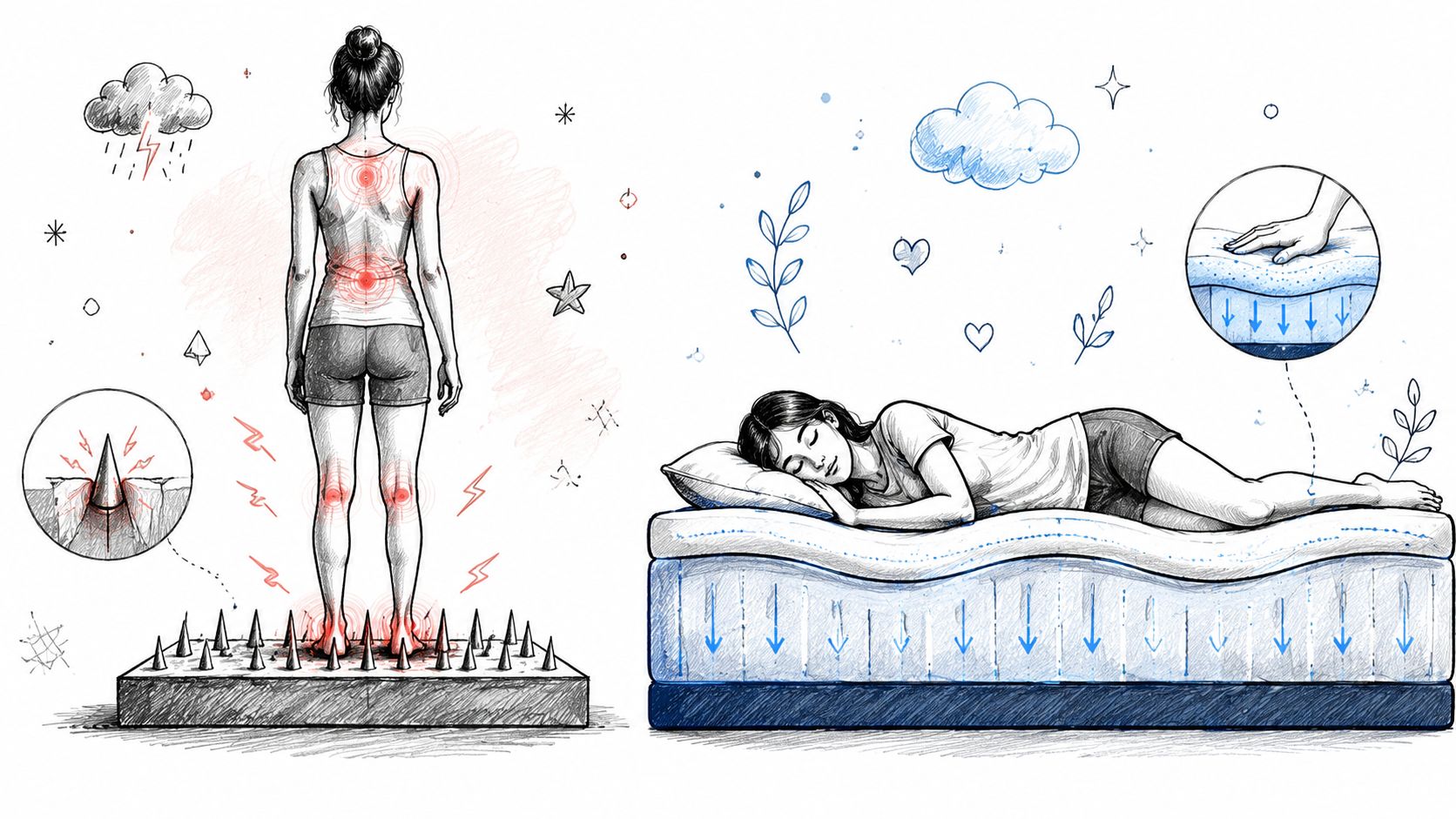
Pressure relief sounds technical, but the idea is simple. If body weight presses into a small area, that area feels more force. If the mattress spreads that same weight across a wider surface, the body feels less strain.
Think of the difference between a high heel and a snowshoe. One concentrates weight into a tiny point. The other distributes it. A pressure-relieving mattress is trying to do the snowshoe job every night.
Where pressure points usually show up
Pressure is most clearly felt at the body's heavier or sharper contact points:
- Shoulders often carry too much force for side sleepers.
- Hips sink deepest and can pull the spine out of balance.
- Knees may rub or press uncomfortably, especially in side sleeping.
- Lower back and pelvis need support beneath the contouring layers.
A mattress with good pressure relief doesn't just feel plush on top. It allows those areas to settle in enough for comfort while keeping the rest of the body supported.
Contouring and support have to work together
Shoppers frequently misunderstand this concept. Pressure relief is not the same thing as softness. A mattress can be very soft and still fail if the body sinks too far and loses alignment. It can also be very firm and create discomfort because it doesn't conform where it needs to.
The sweet spot feels more like a gentle floating sensation. The comfort layers cradle the body. The support layers beneath keep it level.
Weight changes this equation in a major way. According to Tom's Guide's pressure relief overview, heavyweight sleepers over 230 pounds generally need firmer mattresses to align pressure points and prevent sinking, while lightweight sleepers under 130 pounds often need softer surfaces with thicker comfort layers to cushion pressure points without bottoming out.
Practical rule: The best pressure relief happens when the mattress lets the body sink in enough for cushioning, but not so much that the spine starts bending out of shape.
A shopper reading online can learn the theory quickly, but the body tells the truth faster than any product description. That's why research and real testing belong together. For a deeper look at how mattress quality connects to long-term wellness, this article on why investing in a high-quality mattress is essential for long-term health adds helpful perspective.
What pressure relief should feel like
A good pressure-relieving mattress usually creates these sensations:
- Even contact instead of sharp force at one point
- Gentle contouring around the shoulders and hips
- Stable support through the middle of the body
- Less fidgeting because the body isn't constantly trying to escape discomfort
That's the foundation for finding the best mattresses for pressure relief. Material choice, sleep position, and body type all build on this basic principle.
Comparing Mattress Technologies for Pressure Relief
Material changes how pressure is spread across the body. A mattress can feel soft at first touch and still press too hard on the shoulders, or it can feel supportive without creating those sharp morning sore spots. The goal is not just softness. The goal is weight distribution, steady support, and enough cushioning where the body naturally presses harder into the bed.
A simple way to picture it is to compare three different shoe soles. One compresses and molds around your foot. One has a springy, rubbery give. One combines cushioning on top with firmer structure underneath. Mattresses work in a similar way.
Memory foam and close contouring
Memory foam is known for contouring closely around curves like the shoulders, hips, and knees. That close contact can help spread pressure over a wider area instead of concentrating it in one spot. For sleepers with tender joints, that can feel like the difference between resting on sand and resting on pebbles.
The tradeoff is feel. Memory foam usually responds more slowly, so some sleepers enjoy the cradled sensation while others feel stuck when they turn. That is one reason online research only gets you part of the way.
For shoppers comparing classic coil support with foam contouring, this guide to memory foam vs. innerspring mattress differences helps explain what changes in real use, not just in product labels.
Latex and responsive relief
Latex relieves pressure in a different way. It cushions the body, but with more pushback and faster recovery than memory foam. Instead of a deep hug, the feeling is usually more lifted and lively.
That can be helpful for sleepers who want joint relief but also want to move easily from one position to another. Many families also like latex because it tends to keep its feel longer than softer foams that can lose comfort sooner with regular use.
Hybrid designs and balanced performance
Hybrid mattresses pair comfort materials on top with coils underneath. In practical terms, that often gives sleepers a mix of surface cushioning and deeper support. The top layers help reduce pressure at the shoulders and hips. The coil unit helps keep the body from sinking too far through the middle.
For many shoppers, hybrids make sense because they sit in the middle ground. They do not usually feel as slow-moving as memory foam, and they often cushion pressure points more evenly than a basic firm innerspring.
Readers researching medical or mobility-related pressure concerns can also learn from a therapeutic mattress for pressure relief, which shows how pressure redistribution is handled when skin protection and extended bed use matter more than a showroom feel test.
Mattress Material Pressure Relief Comparison
| Material | Pressure Relief Capability | Feel | Best For |
|---|---|---|---|
| Memory foam | Close contouring around major pressure points | Body-hugging, slower response | Sleepers who want deeper cushioning at shoulders and hips |
| Latex | Gentle contouring with more pushback | Buoyant, responsive, easier to move on | Sleepers who want pressure relief without a stuck-in-the-bed feel |
| Hybrid | Cushioning at the surface with support underneath | Adaptive, supportive, easier for repositioning | Sleepers who want a blend of comfort and structure |
The right material often becomes clear when you lie still for ten minutes, then roll, sit up, and lie back down again.
That hands-on testing is where Lott's omnichannel approach helps. You can learn the language online, narrow the field before you visit, and then feel the difference in person with guidance from a local team that sees how real bodies respond to real beds every day. A showroom visit often clears up confusion faster than a week of scrolling, because pressure relief is something your shoulders, hips, and lower back recognize immediately.
Matching Your Mattress to Your Body and Sleep Style
The same mattress can feel balanced to one sleeper and uncomfortable to another. Sleep position changes where pressure lands. Body weight changes how much the body engages the comfort layers. Put those together, and the choice becomes much more personal.

Side sleepers and sharper pressure points
Side sleeping usually creates the most obvious pressure at the shoulders and hips. Those areas bear a large share of body weight, so the mattress needs enough contouring to cushion them.
According to Vitality Medical's guidance on pressure-relieving mattresses, sleep sideers and individuals with higher mobility often benefit most from pressure-relieving mattresses like gel-infused or high-density foam designs that mold to body contours. That makes sense in practice. Side sleepers typically need a surface that softens impact without sacrificing support underneath.
Back and stomach sleepers need a different balance
Back sleepers usually need more support through the lumbar area and a stable surface beneath the hips. Too much sink can flatten the body into an awkward curve. Too little contouring can leave the lower back unsupported.
Stomach sleepers often need firmer support still. If the midsection drops too far, the spine can fall out of a neutral position. Pressure relief still matters, but the mattress has to deliver it without letting the torso sag.
A helpful way to narrow choices is to look at sleep posture as part of the whole equation. Readers working on alignment can explore these ways to fix sleep posture for added context on how position affects overnight comfort.
Body weight changes firmness feel
A mattress doesn't feel the same to every body. A lighter sleeper may barely engage the comfort layers on a firm bed and experience it as hard. A heavier sleeper may compress the same mattress further and need firmer support to avoid sinking too far.
That's one reason firmness labels can be misleading without context. “Medium” on paper may feel plush to one person and supportive to another. The body decides.
Here's a simple way to think about the match:
- Lighter sleepers often need more surface give so the mattress can contour.
- Average-weight sleepers usually have the widest flexibility across comfort categories.
- Heavier sleepers often need stronger underlying support to keep pressure relief from turning into collapse.
A pressure-relieving mattress should respond to body weight, not ignore it.
Combination sleepers and mobility
People who change positions often during the night need two things at once. They need enough contouring to avoid pressure buildup, and enough responsiveness to move without effort. A mattress that feels wonderful in one position but difficult to turn on may not be the right fit for a restless sleeper.
Customizable options are beneficial. Through a Special Order Program, many vendors support personalized comfort levels rather than a single standardized feel. That flexibility can be especially useful for households sharing a bed, where two people may have very different pressure relief needs. Many also appreciate using digital tools first. Style Quizzes and the Mattress Guide help narrow the field before a showroom visit in Fernandina Beach, FL brings the body into the decision.
For those evaluating body type more closely, this guide to which mattress is right for your body type gives a practical framework.
A quick fit guide by sleep style
Side sleeper with sore shoulders
Softer contouring comfort layers often help cushion the upper body.Back sleeper with morning stiffness
A balanced feel usually works best, with contouring on top and steady support beneath.Stomach sleeper with low-back discomfort
A firmer, flatter surface often prevents the midsection from dipping too much.Combination sleeper who moves a lot
Responsive materials can make repositioning easier while still relieving pressure.
That's the heart of choosing among the best mattresses for pressure relief. The mattress has to match the body that's sleeping on it, not an average sleeper on a specification sheet.
How to Shop for a Mattress The Lotts Way
A lot of mattress shoppers arrive after doing hours of homework. They have read about memory foam, hybrids, latex, pressure points, and firmness levels. Then they lie down on a bed for 30 seconds and still feel unsure. That gap between research and real comfort is where a local showroom helps.
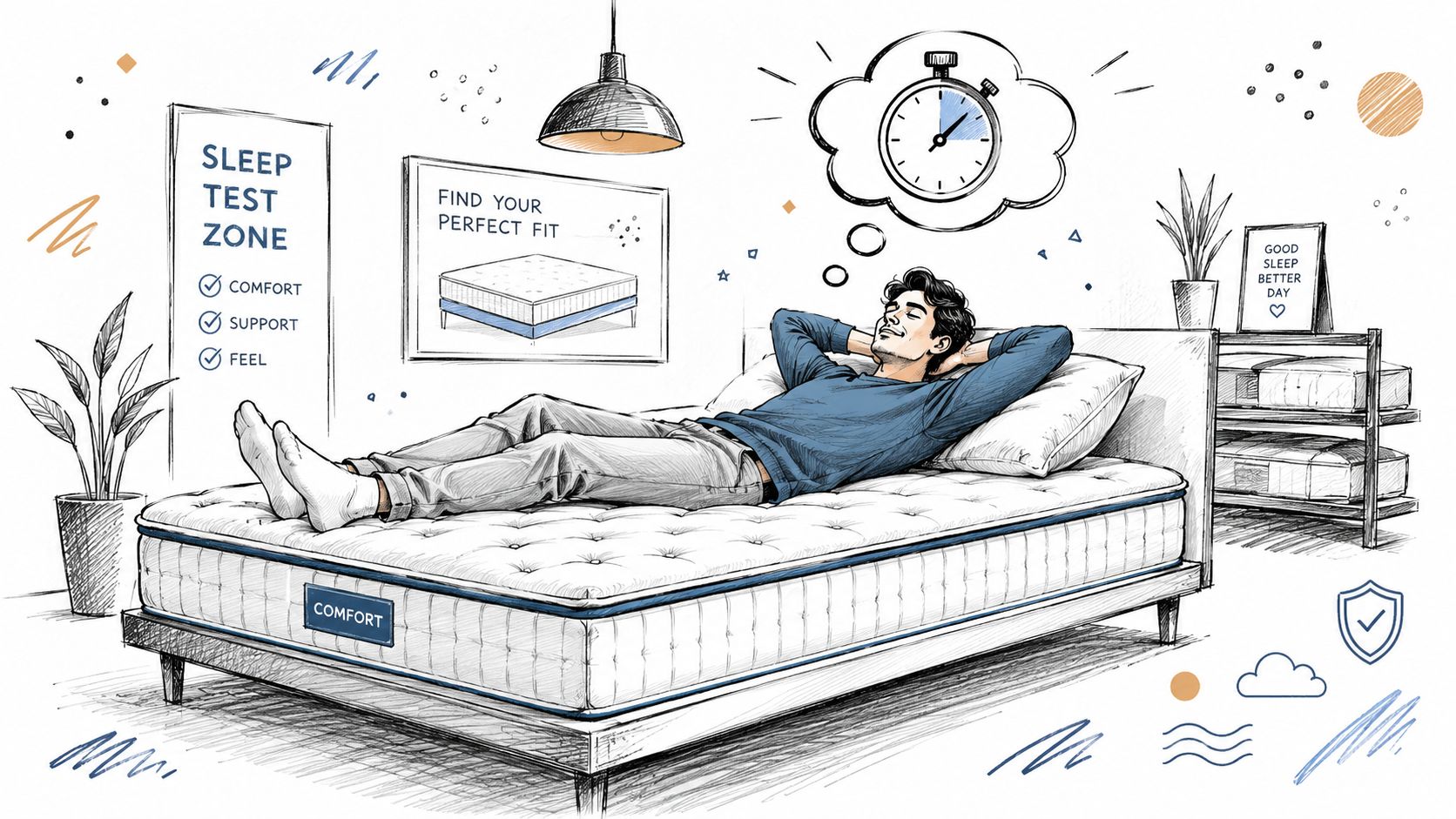
At Lott's, the goal is to connect both parts of the process. Online tools help narrow the field. In-store testing shows how a mattress responds to an actual body, in an actual sleep position. Families often need both. Reading teaches the vocabulary. Lying down reveals the truth.
Start online, then confirm with your body
Shopping from home is a good first step because it helps organize the choices before the showroom visit. The digital catalog lets shoppers compare mattress constructions, comfort descriptions, and bedroom options at their own pace. The Mattress Guide helps narrow preferences, and the Style Quizzes can help households that are updating the whole room, not just the mattress.
Then the process becomes more hands-on. A showroom visit in Fernandina Beach, FL gives shoppers a chance to feel differences that a product page cannot fully explain. Pressure relief is a good example. Two mattresses can sound similar online and feel completely different once shoulders, hips, and lower back settle into the surface.
Lott's Furniture also offers a bed-matching system that helps identify pressure points and guide recommendations based on body response. Used with showroom testing, that tool helps turn online research into a shorter, more focused list.
How to test a mattress in the store so it tells you something useful
Store testing works best when it feels a little more like bedtime and a little less like a quick errand.
A mattress should be tested in the position the shopper uses at home. A side sleeper needs to spend time on one side. A back sleeper should stay flat long enough to notice whether the lower back feels supported or strained. A combination sleeper should change positions and see whether movement feels easy or awkward.
A simple method helps:
- Lie down in your primary sleep position instead of sitting on the edge and judging from there.
- Stay still for a few minutes so muscles can relax and the comfort layers can respond.
- Notice where tension shows up first. For many people, that means the shoulders, hips, lower back, or knees.
- Pay attention to movement if you change positions often during the night.
One quick rule helps many shoppers. If a mattress only feels good during a careful test, it may not feel as good at 2 a.m. when the body is tired and fully relaxed.
Look beyond the first soft impression
The first minute can be misleading. A mattress that feels plush right away may still allow the body to sink too far or create pressure after several minutes. Pressure relief should feel calm and supported, not merely soft.
Durability matters here too. Comfort materials need to keep their shape and support over time, especially under the heavier parts of the body. That is one reason it helps to ask about construction, layer quality, and whether comfort options are available through special order if the floor sample feels close but not quite right.
It also helps to ask direct, plain-language questions. Does this model cushion the shoulders? Does it hold the hips level? Is it easy to turn over? Good showroom guidance should answer those questions clearly, without making the shopper decode technical jargon.
For anyone getting ready for a visit, these tips for buying a new mattress can help organize the decision before stepping into the store.
A key advantage of shopping this way is confidence. You can learn at home, then confirm the fit in person with guidance from people who do this every day. That bridge between research and real-life testing is hard to replace, especially for shoppers who want pressure relief that still feels right long after delivery.
Your Pre-Purchase Checklist and Final Steps to Better Sleep
The last part of mattress shopping often happens in a quiet moment. You have narrowed the choices, you have felt a few beds in person, and one of them leaves your shoulders, hips, or lower back noticeably calmer. That is usually the sign to slow down and confirm the practical details, not rush past them.
A mattress is a lot like a pair of work boots. If the fit is right, your body notices the relief every day. If one part is off, even slightly, small discomfort can build into a long night.
Questions worth asking before purchase
Before you buy, ask a few plain questions and listen for clear answers.
How does the mattress feel in your main sleep position?
Side sleepers, back sleepers, and combination sleepers load a mattress differently. The bed should be judged in the position you use most, not just by a quick sit on the edge.Are comfort choices available through special order?
Sometimes a mattress feels close, but not quite right. Special order options can help fine-tune comfort, materials, or finish details so the fit is better for the long term.How durable does the construction appear to be?
Pressure relief should still be there after months and years of use. Ask what materials are doing the cushioning, what is providing the support underneath, and how well those layers tend to hold their shape.What support system is inside the mattress?
Foam, innerspring, and hybrid designs can all relieve pressure in different ways. What matters is how well the comfort layers cushion sharper points like shoulders and hips while the support core keeps the spine from dipping out of line.
Don't overlook delivery and setup
A good choice can still be undermined by poor setup. A mattress needs the right foundation, careful placement, and a room-ready installation so it starts life in your home the way it was meant to.
Lott's Delivery includes white-glove, in-home delivery and a multi-point inspection before the piece reaches the customer. That matters because pressure relief is not only about what you felt in the showroom. It is also about protecting that feel once the mattress arrives.
This is one place where the online research and local showroom approach really helps. You can study materials and construction at home, then confirm the feel in person, ask final questions face to face, and have the setup handled with care. National online-only sellers can ship a box. They cannot watch how your shoulders settle on the bed, answer follow-up questions in real time, and help you leave knowing why a mattress fits your body.
The final step is simple
Choose the mattress that leaves your body more at ease, gives clear support in your usual sleep position, and comes with details you understand before you buy.
That kind of confidence matters. Better sleep usually starts before the first full night on a new mattress. It starts when the research makes sense, the showroom test confirms it, and the final decision feels settled instead of uncertain.
For shoppers ready to move from research to real comfort, Lott's Furniture offers a smooth path between the digital catalog and the showroom experience in Fernandina Beach, FL. Schedule an online style consultation, explore the Mattress Guide and Style Quizzes, or visit in person to test comfort levels, ask questions, and find a customized sleep solution with white-glove delivery and careful in-home setup.