Save 50% Off MRSP on Lexington | Shop the Catalog >

Mattress with Lumbar Support: A Homeowner’s Guide


At 2 a.m., a restless sleeper shifts again, presses a hand into the small of the back, and feels the mattress dip beneath the hips. The room is quiet, but the body keeps searching for a position that feels supported. By morning, the lower back may be stiff, the shoulders may feel tense, and the mattress may seem like the obvious culprit, even though the issue is often more specific: the sleep surface isn't keeping the lumbar area comfortably aligned.
A mattress with lumbar support isn't just a hard mattress or a thick pillow top. It manages the relationship between pressure relief and structure, helping the hips, shoulders, and lower spine settle into a more natural position. This guide approaches the purchase as a body-and-sleep-position conversation, with practical testing moments that help homeowners in South Georgia and North Florida make a confident choice.
When Your Back Tells You Something at 2 a.m.
The sleeper in the opening scene may try a familiar remedy, turning onto the side, pulling one knee forward, or folding a pillow under the waist. Those adjustments sometimes help briefly, but they can also reveal what the mattress isn't doing. If the hips sink farther than the ribcage, the lower back may spend hours compensating instead of resting.
Lumbar support is the quiet middle ground between a surface that feels pleasantly cushioned and one that keeps the body from collapsing into an uneven shape. The mattress should give at the shoulders and hips while still supporting the area between the ribcage and pelvis. A mattress can feel luxurious at first touch and still leave the lower spine poorly supported after several hours.
People with persistent or radiating symptoms shouldn't treat a mattress purchase as a substitute for medical evaluation. A resource such as back pain specialists for athletes can help explain when lower-back discomfort needs professional attention, particularly if pain, numbness, or tingling continues beyond ordinary morning stiffness.
The quiet clues worth noticing
- Repeated repositioning: The body may be trying to find a posture the mattress can't maintain.
- A tired lower back on waking: Stiffness can indicate that the lumbar region stayed outside a comfortable neutral line.
- Uneven sinking: A deep hip impression can alter the relationship between the pelvis and shoulders.
- Comfort that fades overnight: A surface can feel inviting in a brief showroom test but lose its balance under sustained body weight.
A useful first step is to record what happens during a typical week. Note the sleep position, where discomfort appears, whether it improves after moving around, and whether heat or motion contributes to waking. The mattress guide for back pain relief can help turn those observations into more focused questions before a showroom visit.
The right process doesn't require jargon or sales pressure. It starts with the body's complaints, moves through the mattress mechanics, and ends with hands-on testing, delivery planning, and a decision that fits the home.
What Lumbar Support Actually Means in a Mattress
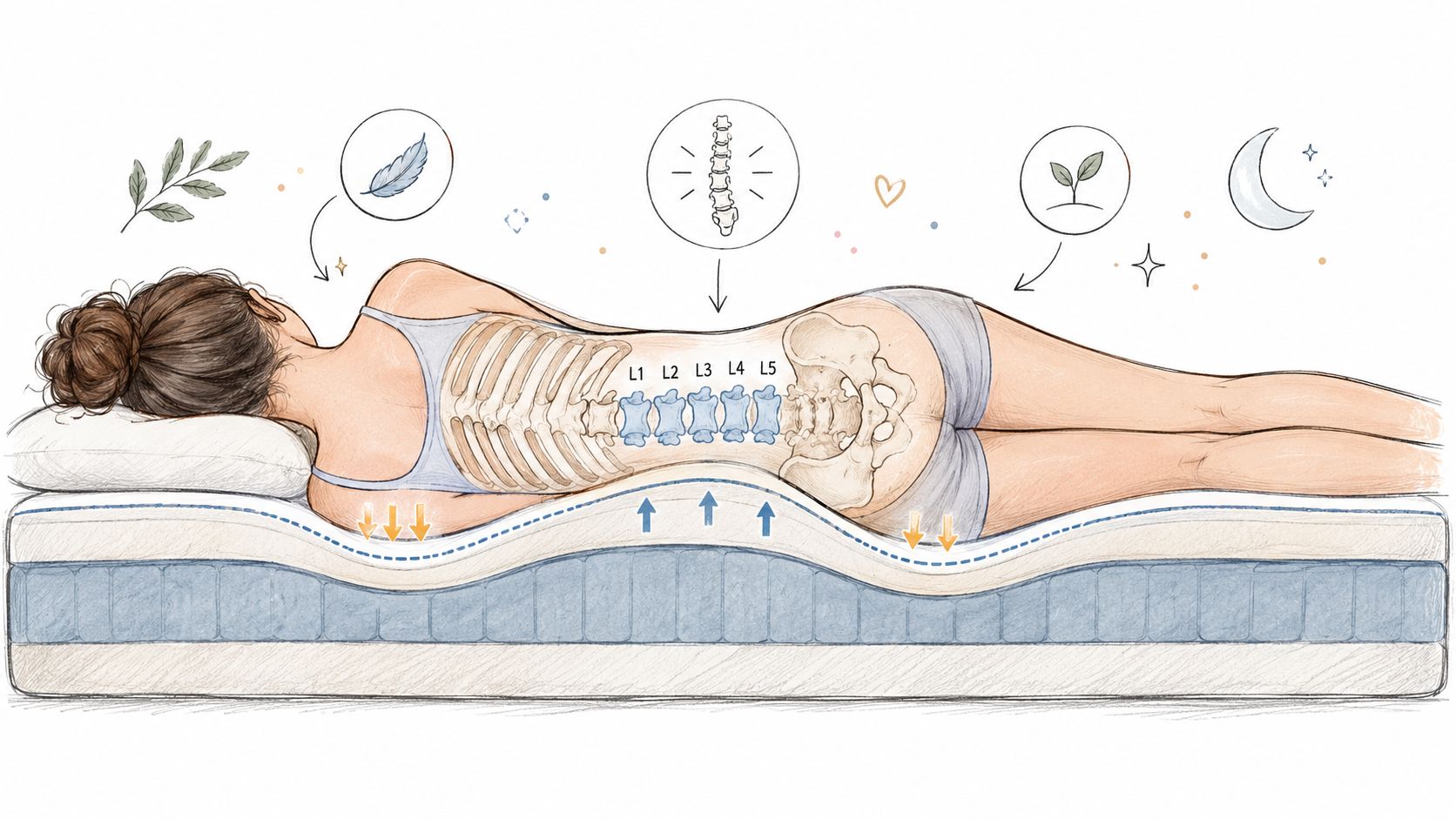
The lumbar region refers to the five vertebrae between the ribcage and pelvis. A mattress supports this area through two connected jobs. First, it redistributes pressure so the shoulders and hips don't carry too much concentrated load. Second, it maintains a reasonably natural lower-back position instead of allowing the pelvis to fall too far below the rest of the body.
A simple cushion-and-board analogy makes the difference clear. Place a soft cushion over a firm board, and the hips can settle into the cushion while the board prevents the middle from collapsing. Put that same cushion over a sagging foundation, and the hips drop lower, changing the shape of the lower back. The cushion hasn't changed. The support beneath it has.
Pressure distribution is the practical mechanism
Biomechanical testing of a lumbar-support insert found that its principal action was redistributing contact pressure, not dramatically reshaping the spine. The insert created a more homogeneous pressure pattern across the pelvic, lumbar, and thoracic regions during supine posture, spreading force over a broader area rather than concentrating it at the low back. This research on lumbar-support pressure distribution helps explain why a well-designed mattress can feel more settled without feeling rigid.
That distinction matters because firmness alone isn't a reliable shortcut. A very hard surface can still leave the lumbar area unsupported if the body rests unevenly. A very soft surface can feel soothing at the shoulders while permitting the pelvis to sink too far.
Structure and comfort must cooperate
A pocketed coil system, foam comfort layer, latex surface, or adjustable base may all contribute to the result, but the label matters less than the interaction between layers. A shopper looking for supportive relief should ask how the mattress fills the space under the lower back, manages hip compression, and responds when the sleeper changes position.
For readers comparing external support products as well as mattresses, an overview of lightweight back supports may offer useful context about how external and sleep-surface support differ. The mattress remains the larger support environment, so the showroom test should focus on the whole body rather than one isolated lumbar feature.
The guide to pocketed coil mattresses can also help clarify why coil construction should be evaluated by its support pattern and comfort layers, not by marketing language alone.
Practical rule: A supportive mattress should feel like it is holding the lumbar curve, not forcing the lower back into a new shape.
Telltale Signs Your Current Mattress Is Failing Your Lower Back
Morning stiffness is one of the most recognizable clues, especially when the lower back loosens after ordinary movement. That pattern doesn't prove the mattress caused the discomfort, but it suggests the spine may have spent the night in a position the body didn't tolerate well. A mattress that keeps the pelvis and ribcage at different levels can ask the muscles around the lumbar region to stabilize the body for hours.
The hammock effect is another useful visual. If the hips sink while the shoulders remain relatively high, the torso forms a shallow valley. The lower back may flatten or arch beyond its comfortable resting shape, and the sleeper may respond by twisting, bending a knee, or rolling over.
What the body may be reporting
- Stiffness that eases after getting up: The mattress may not be maintaining a comfortable neutral position during sleep.
- A visible or felt hip depression: The comfort layers or foundation may no longer distribute weight evenly.
- Pain that appears after lying down: Sustained loading can expose a support problem that isn't obvious while standing.
- Numbness or tingling down one leg: This deserves medical attention rather than a simple firmness experiment, because nerve-related symptoms can have causes beyond the mattress.
- Frequent turning: Repositioning may be the body's attempt to escape pressure or restore alignment.
- Heat paired with soreness: Heat can encourage movement, while compressed comfort layers may fail to spread pressure as effectively as they once did.
A worn mattress doesn't always announce failure with a dramatic crater. Sometimes the change is gradual. The surface may still look attractive, but the materials can respond differently under the hips, shoulders, and midsection than they did when new.
Test the mattress, not just the morning
A quick glance across the bed won't reveal how the support behaves under sustained weight. A partner can observe whether the sleeper's midsection appears lower than the chest and legs, while the sleeper notices pressure at the hips, shoulders, and lumbar area. A long, slow roll from back to side can show whether the surface returns promptly or holds the body in a depression.
These signs are diagnostic clues, not a verdict. A construction with better pressure redistribution, more appropriate zoning, or a more suitable comfort depth may address several problems at the same time. Persistent pain, progressive symptoms, or leg numbness still call for clinical guidance.
How Different Mattress Types Deliver Lumbar Support
Mattress construction changes the way support reaches the body. Coils tend to provide responsive pushback, foam molds around pressure points, latex offers buoyant lift, and adjustable air chambers allow the feel to be altered. None is automatically correct for every sleeper, because the useful result depends on position, body proportions, comfort preference, and temperature sensitivity.
| Mattress Type | How It Supports the Lumbar | Typical Feel | Best For |
|---|---|---|---|
| Innerspring | Coil tension and support zoning can resist excessive hip sink | Responsive and gently buoyant | Sleepers who prefer easier movement |
| Memory foam | Contouring can fill gaps beneath the lumbar area and spread pressure | Close, slower-moving cradle | Sleepers who value pressure relief and motion control |
| Latex | Resilient material provides lift without deep immersion | Springy and responsive | Sleepers who dislike a sinking sensation |
| Hybrid | Coil support works with foam or latex comfort layers | Balanced, adaptable feel | Couples seeking both contouring and movement |
| Air-adjustable | Chambers can be tuned to change support across the bed | Customizable, from plush to firmer | Partners with different comfort needs |
Matching mechanics to priorities
An innerspring or hybrid may suit a sleeper who changes position often and wants the mattress to respond quickly. Memory foam can be appealing when the shoulders and hips need deeper cushioning, although some sleepers dislike the enclosed sensation or warmth associated with dense contouring. Latex tends to feel more lifted, which can make turning easier while still softening pressure at contact points.
Air-adjustable designs create a different kind of flexibility. They can help partners explore separate support preferences, but advanced systems shouldn't be treated as automatically superior. A 25-year systematic review of 47 studies concluded that medium-firm mattresses were the most defensible general recommendation for adults with nonspecific low-back pain or morning stiffness, while zonal, air-adjustable, and customized designs showed potential but lacked enough consistency for meta-analysis. The systematic review on mattress support and back comfort provides useful perspective for shoppers weighing advanced features against established basics.
A broader discussion of mattress technology can help readers understand why materials and adjustability matter, but showroom testing remains essential. Heat retention, motion transfer, edge stability, and long-term resilience all influence whether the mattress continues to feel supportive in daily use.
The comparison of innerspring and hybrid mattresses offers another way to sort the construction choices before visiting a showroom.
The support layer is only half the experience
The comfort layer determines how much the body sinks before reaching the support core. A substantial support unit can still feel wrong if the upper layers permit too much pelvic travel. Conversely, a supportive core may feel unwelcoming when the surface doesn't provide enough shoulder or hip relief.
The strongest candidate is the one that keeps the body level without creating pressure hotspots. That is a more useful test than counting coils or choosing the firmest label.
Choosing the Right Lumbar Support for Your Sleep Style
Sleep position changes the shape the mattress must support. A side sleeper creates a larger gap between the waist and the surface, while a back sleeper distributes weight more broadly. A stomach sleeper places greater emphasis on preventing the pelvis from dropping too far.
Side sleepers often need enough contouring at the shoulders and hips to keep the spine from bending sideways. The surface should cushion those wider pressure points while supporting the waist rather than leaving it suspended. A back sleeper generally needs steadier central support so the pelvis doesn't tip forward into the mattress.
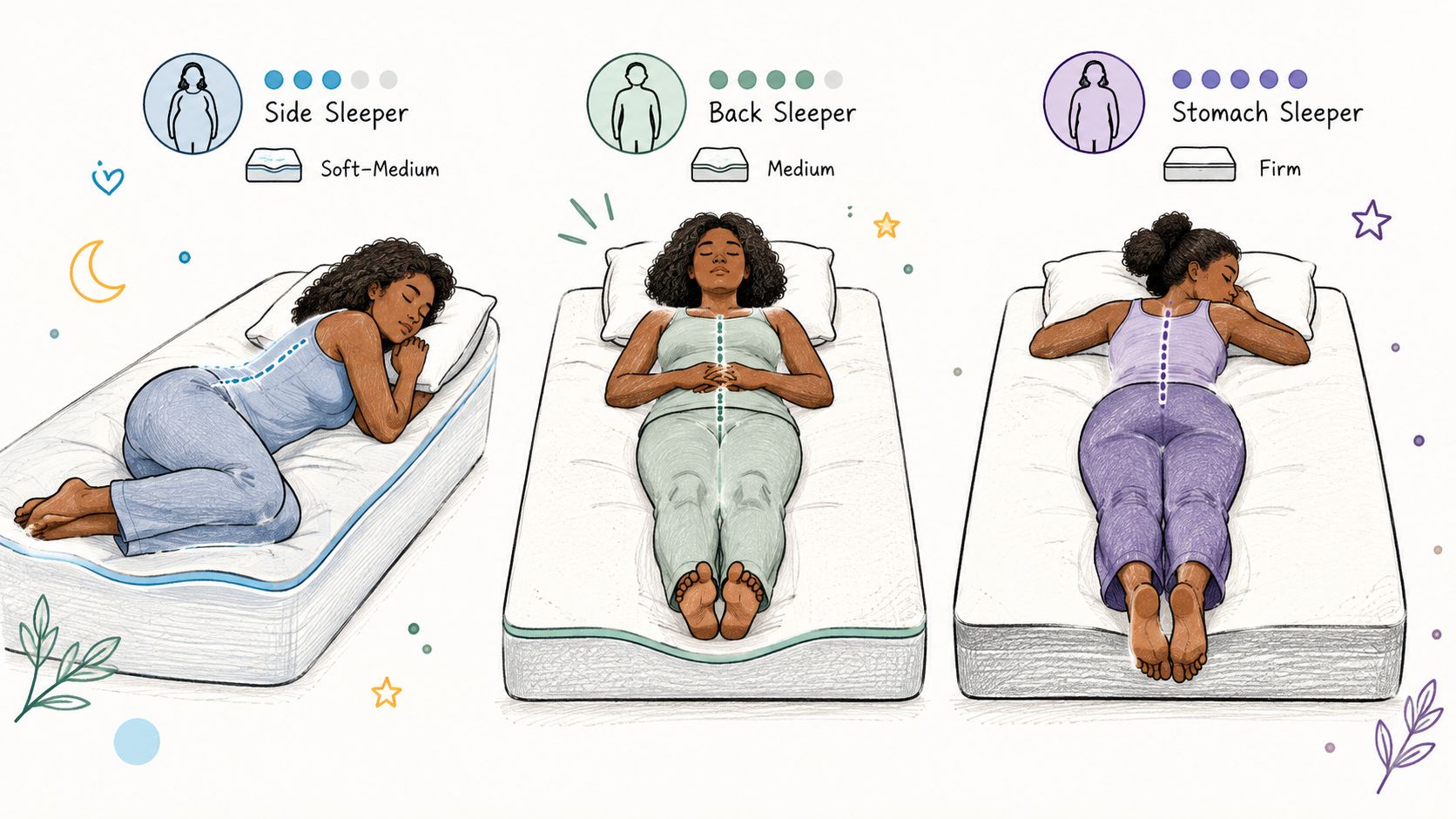
Position comes before firmness
Stomach sleepers often prefer a surface with stronger resistance under the midsection, because excessive sink can place the lower back in an uncomfortable arch. Combination sleepers need a responsive design that supports more than one posture without feeling trapped in the comfort layers.
Body type also changes the experience. A heavier sleeper may compress the comfort layers farther and therefore need a sturdier support core or reinforced zoning. A lighter sleeper may rest closer to the surface and feel contouring more readily, making a plush or conforming design feel softer than its showroom label suggests.
- Side sleeping: Look for shoulder and hip relief with enough lumbar fill to prevent the waist from sagging.
- Back sleeping: Seek balanced contouring and a supportive center section that keeps the pelvis from dropping.
- Stomach sleeping: Prioritize resistance under the hips and midsection, with careful attention to pressure at the chest and shoulders.
- Combination sleeping: Favor responsiveness, because changing positions shouldn't require climbing out of a deep cradle.
Why zoning can matter more than a firm label
A zoned mattress varies support across different regions. The center may push back more firmly under the pelvis, while the shoulder area allows deeper compression. This approach can offer structure where body weight concentrates without turning the entire surface into a hard platform.
A 25-year review of 47 studies found medium-firm mattresses most consistently improved pressure distribution, sleep quality, morning stiffness, and low-back pain, while very firm and very soft surfaces performed worse. The review of mattress firmness and back outcomes also emphasizes that body habitus, age, sex-related anthropometry, sleep position, and thermal comfort deserve consideration. Those factors explain why one firmness label can't settle every purchase.
At Lott's Furniture, the Special Order Program allows shoppers to discuss personalized designs with participating vendors, including fabrics, finishes, and comfort levels across relevant home furnishings. Style Quizzes, the Mattress Guide, and in-store associates can narrow the field before the shopper lies down and evaluates the actual feel. The mattress guide for back sleepers is a practical starting point for readers who primarily sleep on their backs.
Testing, Delivery, and Buying With Confidence in Our Region
A showroom test should resemble an ordinary night more than a quick sit on the edge. A shopper in Waycross, Georgia, or Fernandina Beach, Florida, can start with the position used most often at home, then remain there long enough for the shoulders, hips, and lumbar area to settle. A partner should test separately if the bed is shared, because two bodies can experience the same surface very differently.
A deliberate showroom test
- Bring the usual pillow when practical. Head and neck height can change the way the rest of the spine rests.
- Lie down in the primary sleep position for at least ten minutes. A brief first impression may miss pressure or hip sink that appears later.
- Check the lumbar gap. A hand can slide beneath the lower back, but the goal isn't to force contact. The surface should feel as though it supports the curve without pushing aggressively.
- Roll from side to side. Notice whether the mattress responds easily or holds the body in a depression.
- Test the edge. Sitting down and rising can reveal whether the perimeter feels secure.
- Ask about the foundation or adjustable base. A compatible base can change the final support experience.
Warranty terms, trial windows, and return policies should be confirmed before committing. Those details matter because a mattress is a long-term investment-quality purchase, and comfort can change after repeated nights at home.
Lott's Furniture offers a transition between a digital catalog and physical showrooms in Fernandina Beach and Waycross. Shoppers can browse online, use Style Quizzes and the Mattress Guide, then speak with associates in person about construction, comfort, and bedroom setup. The assortment can also be considered alongside brands such as Stressless, La-Z-Boy, and Smith Brothers when the broader bedroom and living-room design needs attention.
Service after the selection
Delivery is part of the buying decision, not an afterthought. Lott's white-glove, in-home delivery places the mattress and related bedroom pieces in the chosen room, while every piece undergoes a rigorous multi-point inspection before it reaches the customer. The white-glove mattress delivery service explains the care involved in moving a significant home investment from the showroom to the bedroom.
A shopper can also ask about convenient delivery options, old-mattress removal where available, foundations, adjustable bases, and financing plans. The Special Order Program can provide a path toward a more customized configuration when the standard floor options don't match the sleeper's position or comfort needs.
Building Your Best-Night's-Sleep Plan
Lumbar support is a coordination problem. The mattress should cradle the lower back's natural curve in a reasonably neutral line, but firmness is only one tool in that process. The useful choice combines sleep position, body type, construction, and in-person testing.
A homeowner can carry a short checklist into the decision:
- Sleep position: Identify the posture used most often, then consider whether the mattress supports that posture without forcing the body into a twist.
- Body type: Ask how the comfort layers and support core respond to the sleeper's weight and proportions.
- Construction: Compare responsive coils, contouring foam, buoyant latex, hybrid layering, and adjustable support according to the desired feel.
- Testing: Use the usual pillow, lie down for at least ten minutes, roll between positions, and assess the lumbar area after the body settles.
- Service details: Confirm trial terms, warranty coverage, financing options, compatible foundations, and white-glove in-home delivery before purchase.
A local plan for better alignment
The digital catalog can help establish a shortlist before a visit, while a showroom reveals what specifications can't. A shopper can complete a Style Quiz, review the Mattress Guide, and then visit a Lott's Furniture showroom in Waycross or Fernandina Beach to test the candidates with an associate's guidance. That smooth movement between online research and in-person evaluation is especially useful for couples who need to compare motion, edge support, and separate comfort preferences.
A pillow from home can make the test more realistic. The sleeper should notice whether the waist feels supported, whether the hips sink too far, whether turning requires effort, and whether the surface remains comfortable after the initial welcome fades.
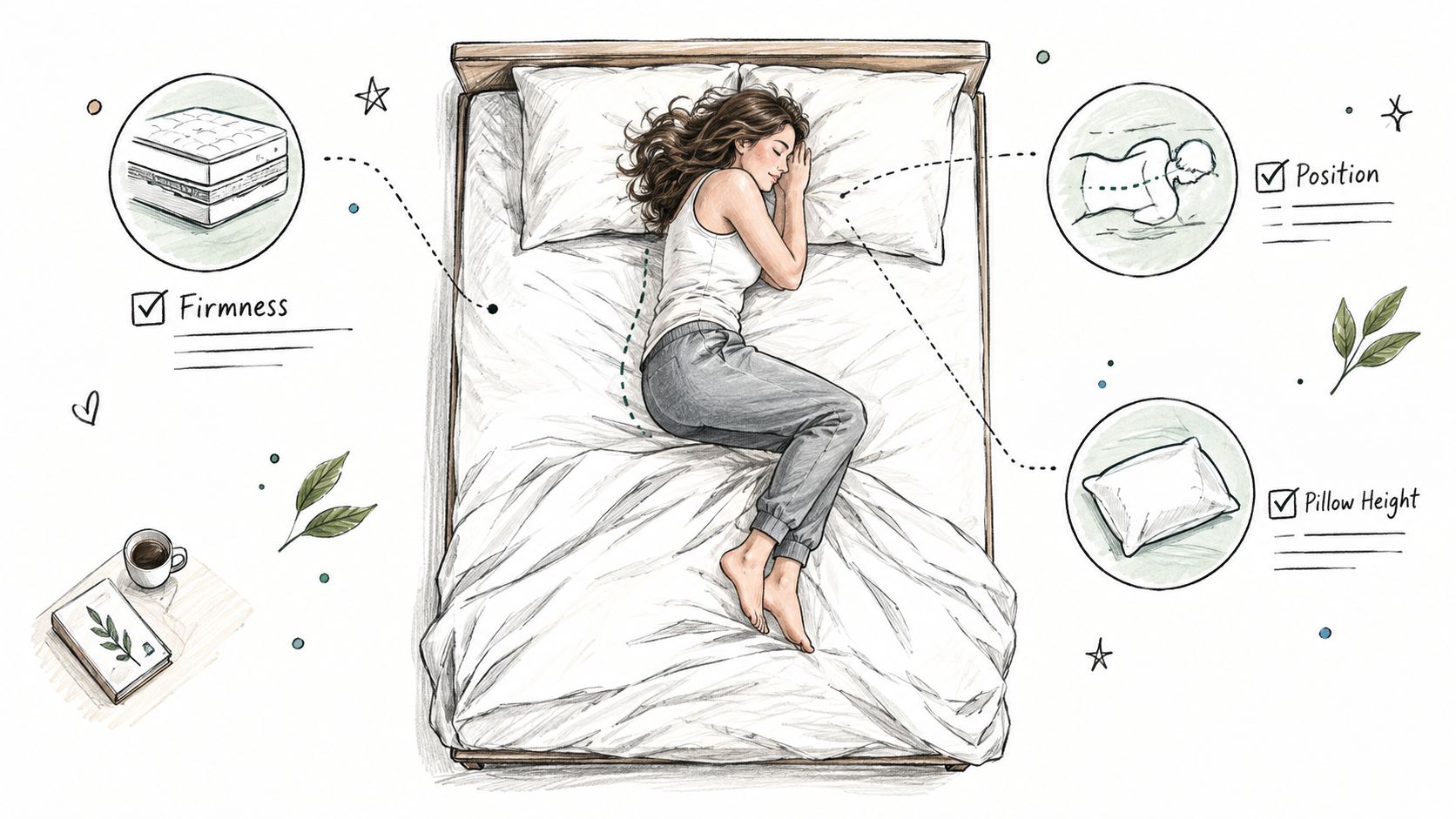
A confident purchase: The right mattress isn't the one with the strongest label. It's the one that supports the sleeper's actual body, position, and nightly habits, then arrives with service that protects the investment.
For homeowners across South Georgia and North Florida, the next step is concrete. Book a showroom visit, bring the pillow used at home, and ask an associate to help compare lumbar support in the positions that matter most. An online style consultation can begin the process when a showroom trip needs to wait.
Lott's Furniture offers mattress guidance, Style Quizzes, personalized Special Order options, and a smooth path between the online catalog and showrooms in Waycross and Fernandina Beach. Visit Lott's Furniture to schedule a showroom visit or online style consultation and find a mattress with lumbar support that fits the sleeper, the bedroom, and the way the household rests.