Save 50% Off MRSP on Lexington | Shop the Catalog >

Memory Foam Mattress Brands: A Complete Guide for 2026


A mattress search often starts the same way. A shopper opens a few tabs, reads a handful of glowing reviews, sees bold promises about cooling and support, and quickly realizes that many memory foam mattress brands sound nearly identical.
That confusion makes sense. Most brands talk about pressure relief, motion control, and comfort on night one. Far fewer help people understand what the mattress may feel like after years of real use, or which details matter most for durability, sagging resistance, and long-term value. For households across South Georgia and North Florida, that missing piece matters just as much as softness.
Navigating the World of Memory Foam Mattress Brands
The hardest part of comparing memory foam mattress brands isn't finding options. It's sorting through language that sounds technical but often leaves out the basics a homeowner needs.
A mattress can feel wonderfully plush in a showroom or during the first few weeks at home. That doesn't automatically mean it will hold its shape well, stay supportive, or suit the sleeper's habits long term. The better approach is to look past broad marketing claims and focus on construction, density, temperature tendencies, and how the mattress matches the person using it.
Many shoppers also get stuck trying to choose between memory foam and more traditional builds. For anyone weighing those categories side by side, this guide to memory foam vs. innerspring mattresses helps clarify the core feel differences before comparing specific brands.
Why shoppers often feel overwhelmed
Several issues tend to create the fog:
- Too many similar promises. Many brands describe their beds as supportive, pressure relieving, and cooling, even when the actual feel can be very different.
- Too much attention on first-night comfort. Reviews often focus on the first impression rather than how materials may age.
- Too little detail on real construction. Buyers may see words like “premium foam” without learning how the mattress is layered or whether the brand is transparent about materials.
- Conflicting advice for sleep styles. One sleeper wants a close contouring feel. Another needs easier movement. Those aren't the same need.
The right mattress brand isn't the one with the loudest language. It's the one whose construction and feel match the sleeper's body, habits, and expectations over time.
Local guidance remains important. In South Georgia and North Florida, shoppers often want more than a boxed product with a catchy name. They want clear answers, practical comparisons, and a way to test options in person after browsing online. That same blended approach also helps when furnishing the rest of the home, whether the room includes a custom bed frame, a Stressless recliner, or case goods from Hooker Furniture.
What Defines a Modern Memory Foam Mattress
Modern memory foam isn't just “soft foam.” It's a material designed to respond to weight and pressure in a way that lets the surface contour around the body.
The easiest way to picture it is this. A traditional spring bed tends to push back and hold the sleeper more on top of the mattress. Memory foam tends to let the body settle in, almost like a gentle molded cradle that follows the shape of the shoulders, hips, and lower back.
The feel that sets memory foam apart
That contouring feel is why many sleepers choose memory foam in the first place. It can create a more cushioned surface around pressure points, especially where the body presses further into the bed.
For some people, that feels calming and secure. For others, especially combination sleepers who turn often, it can feel a bit restrictive if the foam is slow to bounce back. That difference in response is one reason memory foam mattress brands can vary so much, even when they all use the same category name.
The main types shoppers will see
Most modern memory foam mattresses fall into a few broad designs:
- Traditional memory foam. This is the classic body-contouring feel. It usually delivers the strongest “hug.”
- Gel-infused memory foam. Brands often add gel materials in an effort to moderate warmth and create a slightly different surface feel.
- Open-cell memory foam. This version is built to allow more airflow through the foam structure, which can help with temperature management.
A lot of mattresses combine more than one approach. A brand may use contouring foam near the top, a more responsive transition layer underneath, and then add a breathable cover to make the whole build feel less heat-retentive.
Shoppers who tend to wake up warm should pay close attention to that complete package. This guide to the best mattress options for hot sleepers is useful because heat control rarely comes from one feature alone.
A cooling label on the cover doesn't change the core personality of a mattress. The foam itself, the layering beneath it, and the sleeper's own temperature needs all shape the result.
Why the category keeps expanding
Memory foam has become more advanced because brands are trying to solve the same challenge. People want contouring and motion control, but they don't want to feel overheated or trapped in one position.
That push has produced better layering, more breathable covers, and more refined comfort choices. It has also made comparison harder, because a modern memory foam mattress may behave very differently from the old stereotype many shoppers still have in mind.
How Memory Foam Mattress Brands Truly Differ
Significant differences between memory foam mattress brands show up in the details that aren't always obvious from a product photo. Two mattresses can look similar on a website and perform very differently in a bedroom.
Foam density and why it matters
Density is one of the most important clues to long-term character. According to this memory foam material overview, one major manufacturer states that it uses 3.5 lb, 5 lb, and 8 lb memory foams and describes these as some of its highest-quality, densest foams. In practical terms, higher-density viscoelastic foam generally increases contouring and durability, but it also tends to retain more heat.
That single point helps explain a lot of brand variation.
- Lower-density feel can seem easier to move across and sometimes less heat-trapping, but it may not deliver the same long-lasting contouring character.
- Higher-density feel often creates a more substantial, deeper conforming sensation and may support better long-term shape retention, though it can also feel warmer and slower to respond.
- Balanced builds often try to combine denser comfort layers with airflow-focused design choices so the sleeper gets contouring without as much heat build-up.
Shoppers comparing brands should ask for density information whenever possible. If a brand won't explain what it's using, that lack of transparency is useful information by itself.
Cooling features beyond the label
Cooling language can be one of the most confusing parts of mattress shopping. Not all “cooling” features work the same way, and no single feature changes everything.
Common approaches include:
- Gel additions that aim to alter surface feel
- Open-cell foam structures that encourage airflow
- Breathable covers designed to reduce heat build-up near the sleeping surface
- Layer combinations that use less restrictive transition foams below the top comfort layer
A mattress that feels cool for a few minutes in a showroom may still sleep warm overnight if the deeper foam layers hold heat. That's why the full build matters more than one cooling phrase on a tag.
Layering and support design
Memory foam mattress brands also separate themselves through construction. The top layer creates the first impression, but the transition and support layers determine whether the mattress keeps the sleeper aligned.
A stronger build usually works like this:
- Comfort layer at the top cushions the body and shapes the pressure-relieving feel.
- Transition layer in the middle keeps the sleeper from sinking too abruptly.
- Support core underneath provides the deeper structure that keeps the bed from feeling unstable.
That layered relationship becomes even more important for people with broader shoulders, heavier hips, or a tendency to sleep in one position for long stretches. This guide on which mattress is right for your body type can help shoppers think through those fit questions more carefully.
Store-floor rule: A soft top layer can be lovely. If the deeper layers don't hold the body in healthy alignment, that comfort often fades into frustration.
Certifications and warranty language
Certifications matter because they help clarify material standards. Shoppers often look for foam certifications to confirm the materials meet recognized testing requirements.
Warranties matter for a different reason. They tell the buyer how the brand handles problems, especially body impressions and loss of support. The most useful reading isn't the headline warranty length. It's the fine print about what counts as a defect, what level of sagging is covered, and whether the coverage changes over time.
A long warranty can sound reassuring, but what matters most is whether the terms match the issues that concern the buyer most.
Your Checklist for Finding a Lasting Memory Foam Mattress
A lasting mattress choice starts with fit, not hype. The right memory foam mattress brands become easier to sort when the buyer uses a practical checklist that reflects real sleep habits.
Start with sleeper type and movement
Independent testing summaries show a familiar trade-off pattern across memory foam brands. The comparison overview here notes that TEMPUR-Adapt scored highest for pressure relief and motion isolation, while giving up ground on cooling and ease of movement. More balanced all-around picks such as Loom & Leaf, Amerisleep AS3, and Leesa Original were rated more evenly. For shoppers, the practical takeaway is that side sleepers and couples often benefit from stronger pressure relief and motion control, while combination sleepers usually do better with a less restrictive foam profile.
That trade-off should shape the first round of decisions.
- Side sleepers usually need cushioning at the shoulders and hips, so close contouring may feel especially comfortable.
- Back sleepers often do well with a balance of cushioning and steadier support underneath.
- Stomach sleepers usually need to be careful with overly deep sink, which can throw off alignment.
- Combination sleepers should pay close attention to how easily they can roll or change position.
Check durability signs before the comfort pitch
One of the most overlooked shopping angles is longevity. The Sleep Foundation discussion of memory foam mattresses points out that many high-ranking roundups focus heavily on pressure relief and motion isolation, yet the market still lacks a simple brand-level durability guide backed by publicly standardized, long-term field data. It also highlights an important caution. “Best overall” lists may overstate satisfaction for shoppers who care most about longevity, because a mattress can feel excellent in early testing and still disappoint after several years.
That means buyers should actively screen for durability clues.
- Ask about material transparency. Brands that explain their foams and layer roles tend to be easier to evaluate.
- Read sagging language carefully. Warranty details on impressions and support loss matter more than broad promises.
- Notice excessive softness up top. A very plush first feel can be inviting, but buyers should still ask what supports that softness underneath.
- Match the bed to actual use. A primary bedroom mattress deserves stricter standards than a lightly used guest room.
The mattress that feels the most dramatic in the first five minutes isn't always the one that makes the soundest long-term investment.
A practical online step can help before any showroom visit. The mattress buying tips page gives shoppers a useful framework for narrowing comfort and support needs before they start testing beds in person.
Factor in body weight and temperature
Body size changes how foam feels. A mattress that feels gently contouring to one person may feel much softer or much firmer to another, depending on how much the body engages the layers.
Temperature also matters. Sleepers who run warm should be skeptical of mattress descriptions that focus only on softness and pressure relief. The right choice may involve a more breathable memory foam design or even a different category altogether if heat is the biggest concern.
For homes that also need flexible guest accommodations, some of the same principles apply to secondary sleep surfaces. A helpful outside resource on choosing a quality sofa bed mattress can help shoppers think through support and comfort in multipurpose rooms as well.
A digital-first shopper may also find value in using Lott's Furniture's online mattress guide before visiting the showroom, since it gives a straightforward way to organize preferences around feel, support, and temperature needs.

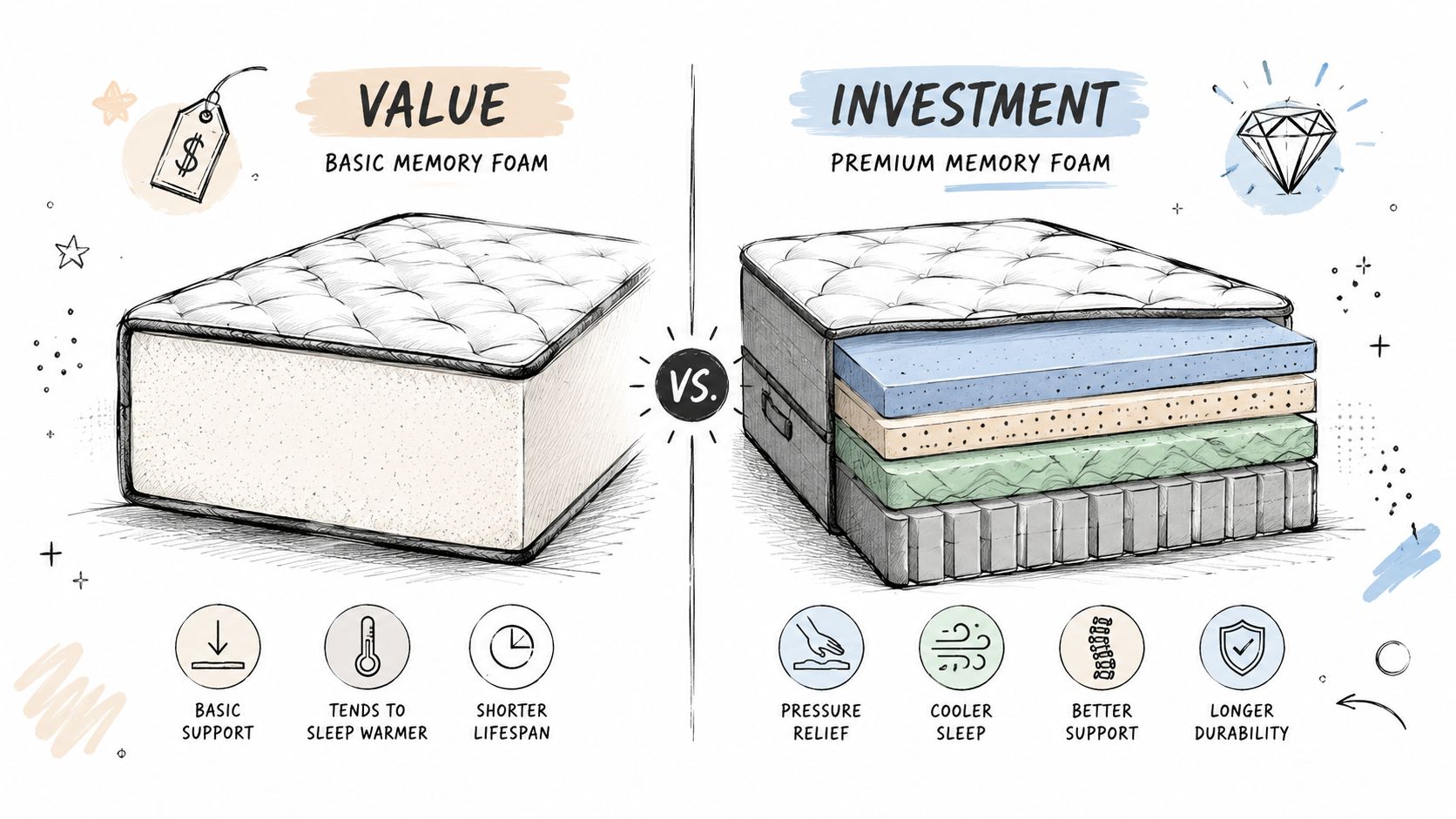
What to Expect from Different Mattress Price Tiers
Price tiers can be helpful if they're used the right way. They shouldn't tell a shopper what to buy. They should help set honest expectations about construction, feel refinement, and long-term value.
Value-focused tier
This tier often appeals to guest rooms, first apartments, vacation spaces, or shoppers who need a simpler solution. These mattresses may still feel comfortable at first, but the buyer should pay close attention to transparency about materials and support layers.
Common expectations include:
- Simpler all-foam builds
- Fewer specialized cooling elements
- Less nuanced transition layering
- A comfort-first presentation that may not tell the full story on durability
Mid-range tier
This is often where many households find the best balance. The materials may feel more substantial, the support layering usually becomes more deliberate, and the mattress often offers a more polished mix of contouring and movement.
This tier tends to suit shoppers who want an everyday primary-bedroom mattress without jumping to the most elaborate construction options. For many buyers, that's where value and performance begin to align in a more dependable way.
Premium investment tier
At the premium end, shoppers usually pay for more than surface softness. They often get more carefully engineered layering, more advanced temperature strategies, and a feel that's tuned with greater precision.
This tier may be the right fit for a household that sees the mattress as a long-term bedroom investment, much like choosing heirloom-quality case pieces from Lexington or custom seating from Smith Brothers rather than making a quick stopgap purchase.
For readers thinking in those long-term terms, this article on why investing in a high-quality mattress matters for long-term health adds useful context.
Memory Foam Mattress Price Tiers Compared
| Feature | Value-Focused | Mid-Range | Premium Investment |
|---|---|---|---|
| Foam feel | Basic contouring feel | More balanced contouring and support | More refined contouring with better overall tuning |
| Cooling approach | Limited or surface-level cooling features | Noticeable attention to breathability and cover design | More complete temperature-management strategy across layers |
| Layer complexity | Simpler construction | More developed transition and support design | More sophisticated, purpose-built layering |
| Ease of movement | Varies widely | Often more balanced | Can range from highly contouring to carefully balanced, depending on design |
| Durability outlook | More variable | Often steadier for regular use | Usually stronger long-term expectations when materials are transparent |
| Best fit | Guest rooms, lighter use, temporary needs | Many primary bedrooms | Shoppers prioritizing tailored comfort and long-term value |
A higher price doesn't guarantee a better match. It usually buys more design complexity and potentially better materials, but the sleeper still has to suit the mattress.
How to Properly Test a Mattress in Our Showroom
Online research can narrow the field, but memory foam still needs to be felt. A mattress that sounds ideal on paper may feel too slow, too warm, or too firm once the sleeper lies down on it.
Give the mattress time to respond
Memory foam changes under pressure. A quick sit on the corner won't tell much.
A better in-store test looks like this:
- Lie down in your usual sleep position. Side sleepers should stay on their side. Back sleepers should settle fully onto the back.
- Stay there long enough to notice pressure points. The foam needs time to contour.
- Roll to another position. This reveals whether the bed feels easy to move across or a bit sticky.
- Sit on the side. Edge behavior matters for getting in and out of bed and for using the full surface.
Pay attention to body feedback, not just softness
A mattress can feel plush and still be wrong. Shoppers should notice whether the lower back feels supported, whether the shoulders sink comfortably, and whether the hips stay aligned with the rest of the body.
Couples should test together when possible. Motion sensitivity and shared comfort often become clearer when both people are on the bed at the same time.
If a shopper has to talk themselves into a mattress after lying down, the fit probably isn't right.
Use the showroom visit to compare the whole room
A mattress doesn't live in isolation. Many homeowners use the showroom visit to think about the entire bedroom, including bed frames, nightstands, and accent pieces that shape the room's atmosphere. That can mean pairing a mattress with a matching bedroom collection or coordinating surrounding furniture with brands such as Hooker Furniture or Lexington.
For South Georgia and North Florida households, the value of the showroom isn't pressure. It's clarity. Associates can help shoppers compare comfort levels, movement, support feel, and bedroom styling details after they browse the digital catalog from home or visit Fernandina Beach in person.
Creating Your Ideal Sleep Sanctuary with Lotts
A mattress often feels different after the excitement of the showroom wears off and real life begins. The first few nights matter, but the months and years after that matter more. For households in South Georgia and North Florida, where a mattress needs to hold up through humid seasons, changing routines, and nightly use, long-term value deserves as much attention as first-night comfort.
That is why the final decision should come down to more than a quick impression. A good memory foam mattress should keep its support, manage heat in a way that fits the sleeper, and show clear signs of quality in its materials and construction. A mattress works a lot like a good pair of work shoes. It should feel right on day one, but its real value shows up in how well it performs after steady use.
Confidence usually comes from a clear buying process, not from guesswork. At Lott's Furniture, shoppers can narrow down options at home, then visit the Fernandina Beach showroom to feel the differences for themselves. That direct connection between online research and in-store testing helps people compare what sounds good on paper with what supports their body.
The details that help shoppers choose well
A strong purchase often comes from three practical pieces working together:
- Clear guidance through mattress education, digital tools, and experienced showroom associates who can explain how different builds may feel now and wear over time
- Personalized options through special-order comfort choices and flexible selections when different designs are available
- An easy process that lets shoppers browse online, refine their preferences, and then test options in person in Fernandina Beach
That kind of planning often shapes the whole bedroom, too. A mattress sets the tone for how the room functions each day. Some homeowners also use the visit to choose coordinating pieces that make the space feel calm, useful, and built for everyday living.

The part many shoppers overlook after the sale
Delivery and setup affect the experience more than people expect.
A memory foam mattress is not a small purchase, and careful in-home delivery helps protect that investment. Proper placement, setup, and inspection reduce the chances of avoidable problems at the last step. For many shoppers, that peace of mind matters because the goal is simple. The mattress should arrive ready to use, fit the room properly, and support better sleep for the long haul.
For homeowners ready to compare comfort levels in person or narrow choices from home, Lott's Furniture offers an easy connection between its online catalog and showroom experience in Fernandina Beach, FL. Shoppers can schedule an online style consultation, explore mattress education and style quizzes, or visit the showroom to test options firsthand and build a sleep space that feels personal and built to last.