
Choose Your Upholstered Headboard: 2026 Style Guide


A lot of bedrooms in South Georgia and North Florida already have the basics. A good mattress. Nightstands that do their job. Lamps that give off a soft glow. Yet the room can still feel unfinished. The bed may look more practical than inviting, especially when the wall behind it is bare, hard, or visually flat.
That's usually where an upholstered headboard changes the conversation. It adds softness where the eye expects comfort, and it gives the bed a clear focal point without making the room feel heavy. For homeowners leaning coastal, traditional, or somewhere between the two, it's often the piece that helps the bedroom feel considered instead of pieced together.
From Bedroom to Sanctuary The Role of an Upholstered Headboard
A bedroom retreat doesn't have to be elaborate. Often, it just needs one strong anchor. An upholstered headboard does that by adding texture, visual height, and a more comfortable surface behind pillows.
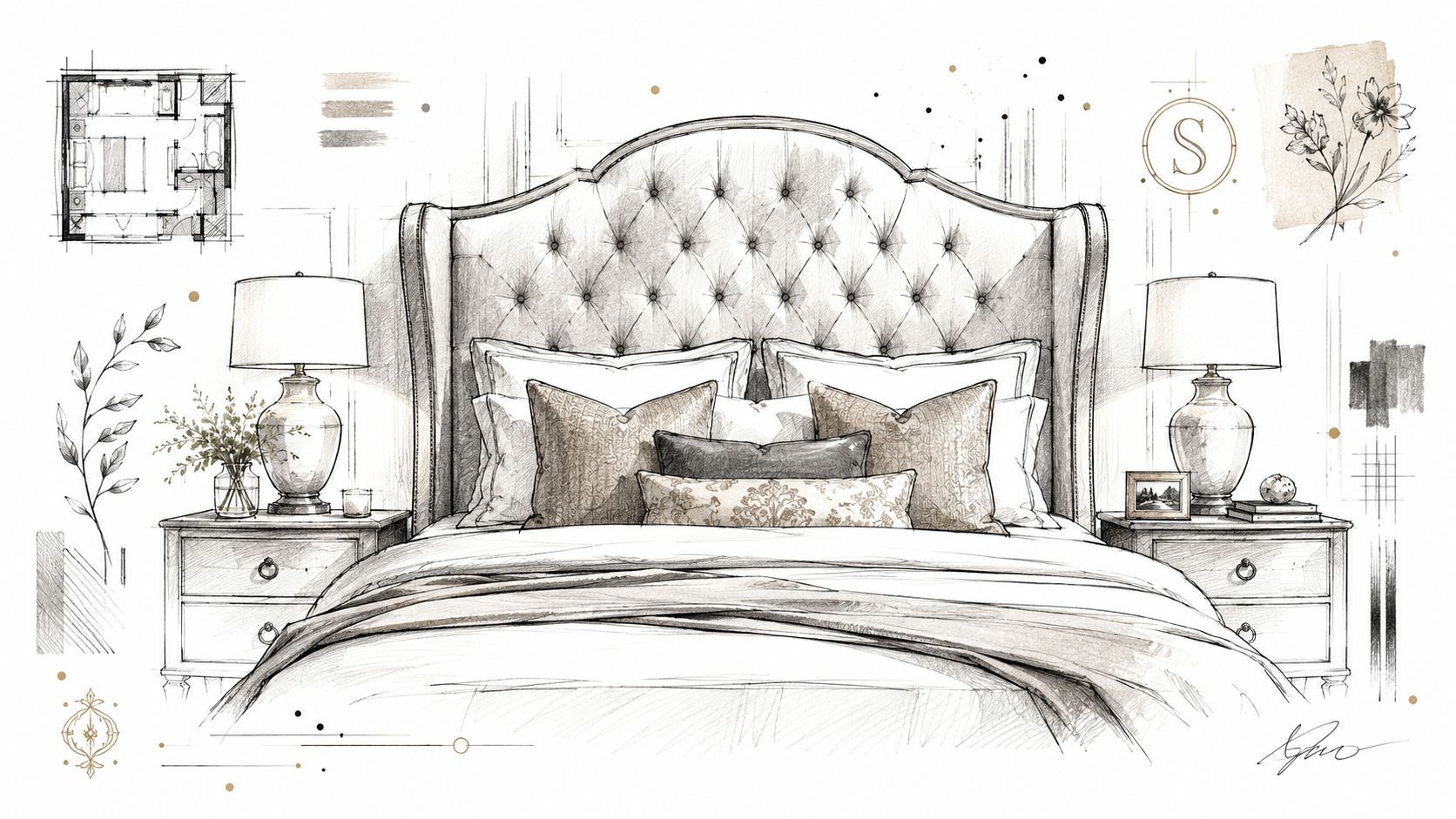
For many households, the change is immediate. A simple bed frame can feel stark against painted drywall, while a padded headboard makes the bed read as a destination. That matters in primary suites, guest rooms, and even rental properties where a more polished look helps the whole room settle into place.
Why this piece still feels timeless
The upholstered version didn't appear out of nowhere. According to the history of headboards, headboards evolved from a much older tradition that reaches back to ancient Greece and medieval Europe, where they helped shield sleepers from cold walls. Their modern upholstered form became a distinct design category in the 19th and 20th centuries, valued for both comfort and decorative potential.
That history explains why the piece still works so well today. It solves a practical problem and a design problem at the same time. People want a softer place to sit up with a book, and they also want the bed to look layered and intentional.
Upholstered headboards endure because they balance function with finish. They soften the room without giving up structure.
How local style affects the choice
In South Georgia and North Florida, bedrooms often lean toward airy coastal palettes or rooted traditional details. Both styles benefit from the same principle. The headboard becomes the bridge between comfort and architecture.
A well-designed upholstered silhouette can support:
- Coastal calm: lighter fabrics, relaxed texture, and an open, breezy mood
- Traditional warmth: deeper color, classic shaping, and a more formal presence
- Mixed interiors: a neutral fabric that connects inherited pieces with newer furnishings
Shoppers comparing layouts should also think about bed function. If the room includes an adjustable base, adjustable bed headboard considerations can help clarify attachment and clearance questions before ordering.
Those exploring a more classic look can also browse traditional design inspiration to see how upholstered forms support layered, timeless bedrooms.
Understanding Heirloom Quality Upholstered Headboard Construction
Two upholstered headboards can look similar from across the room and feel completely different after a few months of use. The difference usually comes down to what's underneath the fabric.
A well-made piece is built in layers, and each layer has a job. If one layer is skimpy, the whole headboard can wrinkle, wear unevenly, or feel harder than expected when someone leans against it.
What sits beneath the fabric
Quality custom builds typically start with a solid plywood base, then foam, then batting, then the final fabric. A practical upholstery workflow described in this headboard construction guide uses foam often in 2-inch thickness, batting that wraps 3.5 to 4 inches around the back, and fabric with about 3 to 4 inches of excess per side for tensioning and stapling.
That layering matters for several reasons:
- Plywood base: gives the headboard its structure and helps it hold shape over time
- Foam layer: creates the cushion that makes the headboard comfortable to lean against
- Batting wrap: softens transitions and helps prevent the harder profile of the board from showing through
- Extra fabric allowance: gives the upholsterer room to pull the fabric tight and fold corners cleanly
Without that allowance, the finished face may look smooth at first but loosen quickly once it's in regular use.
Small construction details that make a big difference
Corners are one of the easiest places to spot quality. Rounded or softened edges tend to reduce stress on the fabric, while sharp transitions can create wear points. Over time, that affects appearance and durability more than many shoppers expect.
Craft note: Smooth tension and clean corners rarely happen by accident. They usually reflect better prep work before the fabric is ever stapled in place.
The same is true of seam quality and profile depth. If a headboard feels too thin, it often looks thin too. A fuller build tends to read as more refined and more substantial in the room.
For households comparing upholstery options across brands or custom programs, it helps to review upholstery material guidance alongside the frame build itself. Fabric choice matters, but the layers under the fabric are what let that finish look refined year after year.
This is also where craftsmanship shows up in better-known furniture lines carried in many full-service stores, including names such as Smith Brothers and Hooker Furniture. The visible beauty comes last. The hidden build usually determines whether the piece remains crisp, supportive, and attractive over time.
Sizing Your Headboard for a Perfect Fit
Proportion is where many bedrooms go off track. The headboard may be attractive on its own, but if it's too narrow or too slight for the mattress, the whole bed can feel visually off-center.
The easiest place to start is width. Standard guidance from Casper's headboard sizing guide places a full headboard at about 56 inches, a queen at about 62 inches, and a king at about 80 inches. The same guide notes that upholstered models should have a minimum thickness of about 2 inches so the padding doesn't feel flimsy or look underscaled.
Why width matters more than many people think
Pillows spread. Bedding shifts. The eye reads the full width of the bed, not just the frame hardware. If the headboard is undersized, the bed can look pinched or disconnected from the rest of the room.
A properly scaled upholstered headboard helps with:
- Visual alignment: the mattress and headboard read as one complete composition
- Pillow support: there's enough padded area behind standard pillow groupings
- Perceived quality: the bed looks intentional rather than improvised
A simple way to check fit before ordering
Shoppers don't need advanced design training to get this right. A tape measure and a quick wall check will answer most questions.
| Bed size | Typical headboard width |
|---|---|
| Full | 56 in |
| Queen | 62 in |
| King | 80 in |
After width, thickness comes next. Upholstered headboards need enough build-out to accommodate padding and fabric wrap. If the piece is too thin, the surface can telegraph the harder structure beneath it.
The best-looking headboard usually isn't the tallest one. It's the one that matches the mattress width cleanly and feels substantial from the side view.
Shoppers wanting a larger-scale look in a primary bedroom can compare silhouettes and proportions through king-size fabric headboard options before deciding between a frame-attached or wall-mounted style.
In-store associates can also help translate a rough room measurement into a more confident choice, especially when existing bed rails, mattress height, or layered pillows complicate the visual balance.
The Art of Customization Fabrics and Finishes
An upholstered headboard is one of the easiest bedroom pieces to personalize because the form is only half the story. The surface changes everything. The same silhouette can feel coastal, formal, relaxed, or structured depending on the fabric, trim, and detailing.
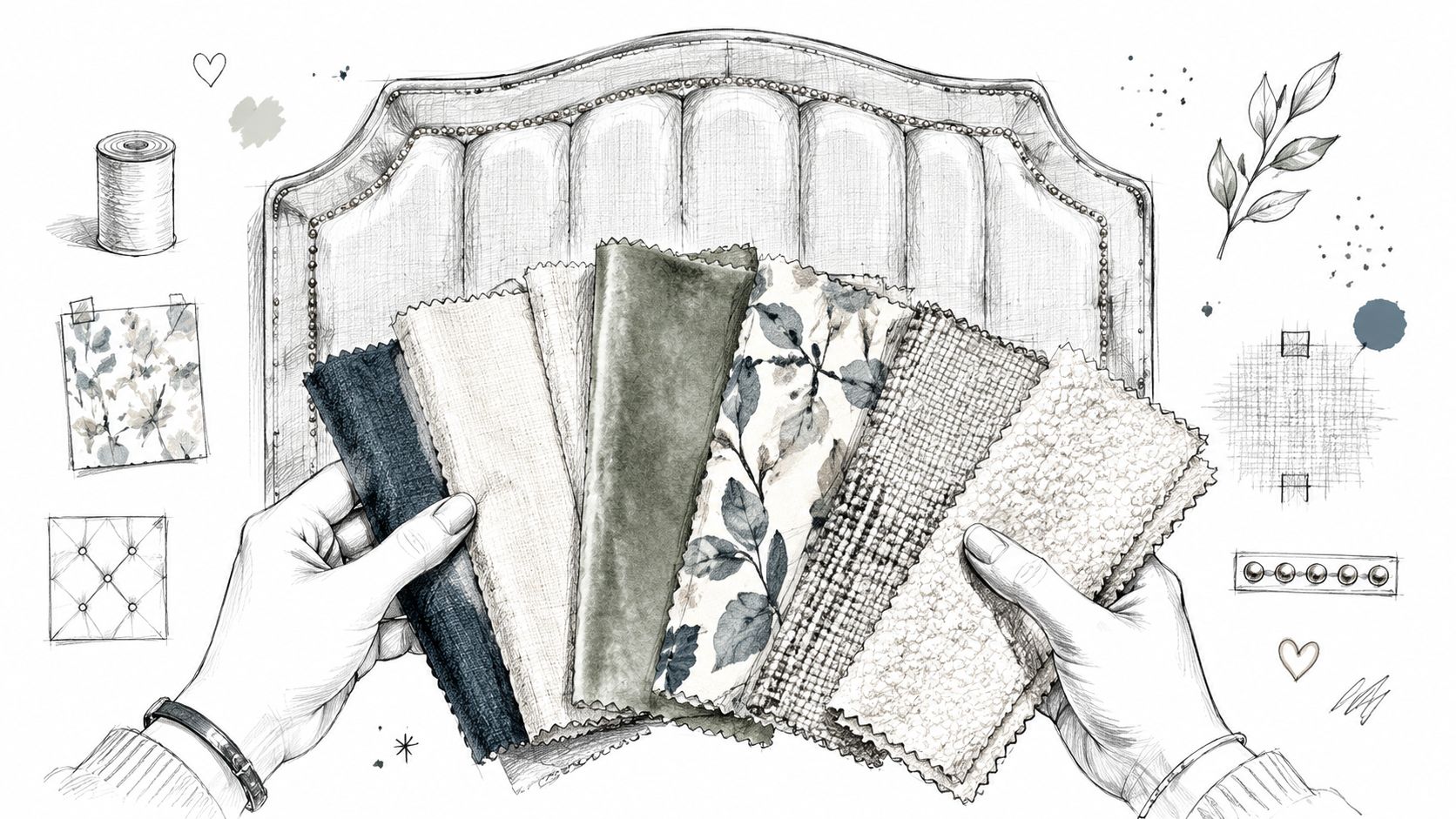
That's why customization matters so much. Many vendors in a strong Special Order Program support personalized combinations of fabrics, finishes, and comfort-oriented details. Instead of settling for a close-enough option, shoppers can shape the piece around the room they live in.
Fabric changes the mood first
Some fabrics create softness in a visual sense. Others create softness in a tactile sense. The best choice often depends on both.
A few common directions include:
- Textured woven fabrics: relaxed and versatile, especially in casual or transitional bedrooms
- Velvet and suede-like looks: richer and more formal, with a more dramatic surface presence
- Linen-look options: airy and understated, often favored in lighter regional palettes
- Leather or leather-like finishes: cleaner-lined and easier to wipe down in some settings
Performance matters just as much as appearance. Homes with pets, children, frequent guests, or seasonal use often benefit from materials designed for easier upkeep. That's one reason many shoppers spend time reviewing performance fabrics for upholstery before they ever settle on a color.
Details that define the style
Once the fabric is chosen, the silhouette and finish details do the rest of the design work. A smooth panel headboard has a very different personality from one with pronounced shaping.
These features tend to drive the final look:
- Tufting: adds depth and a more classic, refined feel
- Winged sides: creates a wrapped, architectural effect around the bed
- Nailhead trim: introduces definition and a more traditional edge
- Soft curves: keeps the piece approachable and often a little more relaxed
- Straight lines: sharpens the room and works well with simpler bedding
Selection rule: If the bedding already carries pattern and contrast, a quieter headboard often creates better balance. If the bedding is simple, the headboard can carry more personality.
One factual example worth noting is that Lott's Furniture offers a custom express upholstered bed with an upholstered headboard featuring solid American oak trim and a performance linen-look fabric described as easy to clean, stain resistant, and durable. That kind of product is useful for shoppers who want the visual softness of upholstery with practical everyday maintenance in mind.
How customization works best in real life
The strongest results usually come from pairing digital browsing with hands-on review. Online catalogs help narrow the field, while fabric swatches and showroom comparisons help confirm scale, texture, and color in person. That blend is especially useful for homes in South Georgia and North Florida, where light quality, humidity, and regional style preferences influence how a fabric will live.
Many homeowners also benefit from guided tools rather than starting from a blank page. Style quizzes can help clarify whether the bedroom is leaning coastal, traditional, or transitional. Mattress guides can help align bed height and comfort with the look of the headboard. In-store associates can then fine-tune the final combination.
That omnichannel ease matters. A shopper can begin online, save options, and then visit the Fernandina Beach showroom to compare the feel of fabrics and the shape of different profiles with much less guesswork.
Styling Headboards for Coastal and Traditional Tastes
Regional taste has a rhythm to it. In South Georgia and North Florida, bedrooms often land in one of two broad families. Some feel bright, breezy, and coastal. Others lean rooted, layered, and traditional. An upholstered headboard works beautifully in both, but the right version looks different in each room.
Coastal bedrooms call for lightness
A coastal bedroom usually benefits from restraint. The headboard can still be substantial, but the mood should feel breathable rather than formal.
That often means:
- Simpler silhouettes: cleaner lines keep the room open
- Light-toned upholstery: soft neutrals and linen-look textures support an airy palette
- Gentle texture: woven surfaces add interest without heaviness
Those looking for that lighter regional aesthetic can browse coastal design style ideas to see how upholstered forms support a relaxed, polished bedroom.
Traditional bedrooms need structure and depth
Traditional spaces usually ask more from the headboard. The bed often serves as the visual anchor, so richer texture and stronger detailing make sense.
A traditional upholstered headboard may include:
- Deeper tufting
- More pronounced shaping
- Richer fabric character
- A stronger sense of symmetry with nightstands and lamps
Collections associated with names such as Lexington can fit naturally into a layered bedroom story, especially when paired with case goods that carry some heritage in their lines and finishes.
Coastal style tends to let the room exhale. Traditional style tends to give the room ceremony. The right upholstered headboard supports whichever feeling the home already has.
Humidity should influence the style decision
Style can't be separated from climate. In more humid or coastal conditions, upholstered headboards need thoughtful planning. Guidance discussed in this humid-climate headboard reference notes that upholstered options can be more susceptible to moisture and mildew than hard-surface choices if ventilation is poor. It also points shoppers toward performance fabrics and proper airflow behind the headboard as key durability strategies.
That's especially relevant in guest rooms, second homes, and spaces that may sit closed up for stretches of time. A beautiful fabric won't stay beautiful if the room never breathes.
For many local homeowners, the smartest choice isn't to avoid upholstery. It's to choose upholstery with the climate in mind.
Care Maintenance and Protecting Your Investment
An upholstered headboard rewards steady, simple care. It doesn't need elaborate treatment, but it does benefit from consistency.
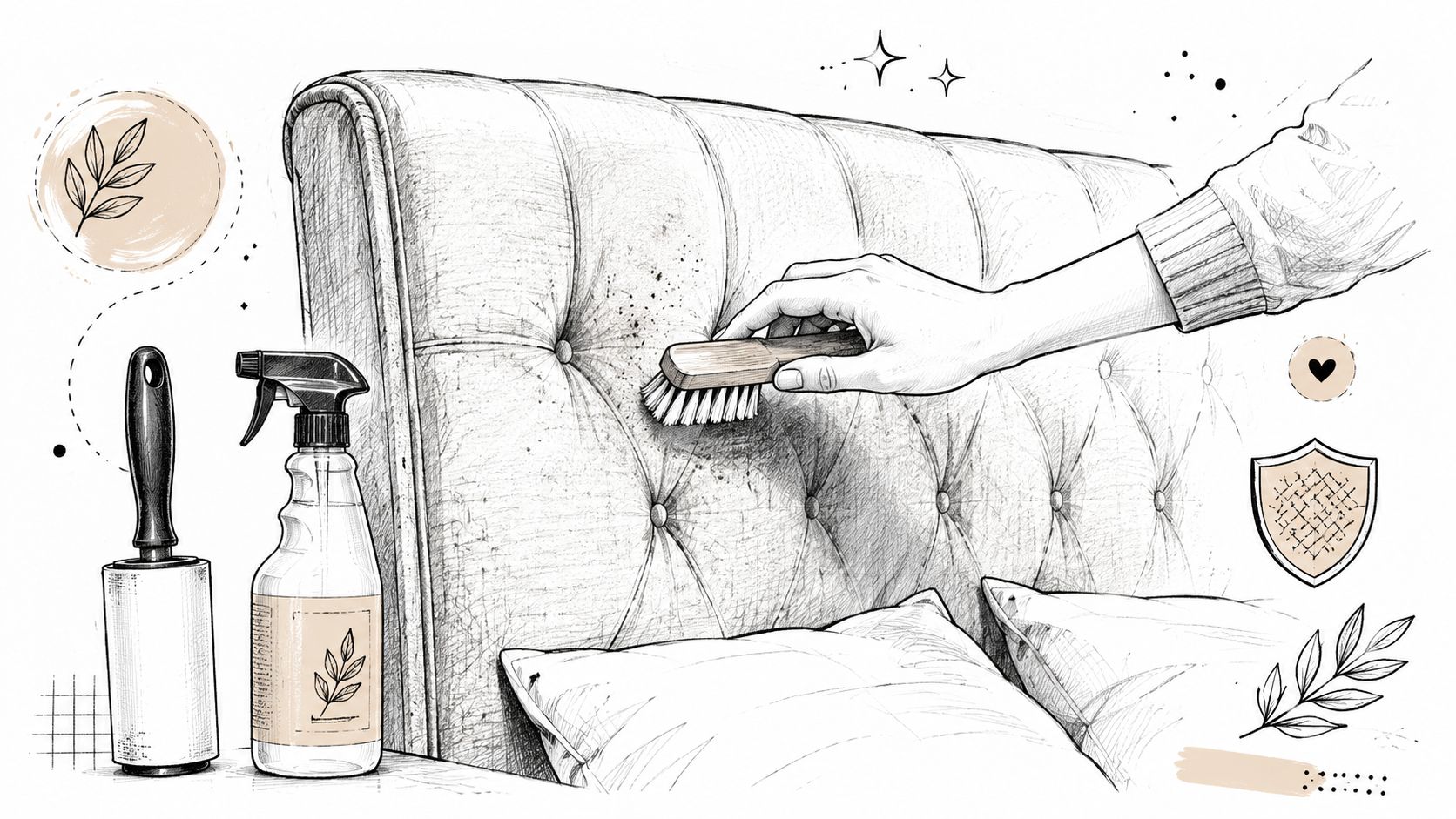
Dust settles where fabric gives it a place to land. In bedrooms, that matters for appearance and for everyday indoor comfort. Public guidance on upholstered furniture and indoor air concerns highlights that fabric surfaces can accumulate dust and allergens, which is why weekly vacuuming with a brush attachment and spot-cleaning as needed is a sensible routine for an upholstered headboard.
A care routine that's easy to keep
The best maintenance plan is the one a household will follow. For most rooms, that means a short weekly pass rather than occasional deep cleaning after buildup becomes visible.
A practical routine looks like this:
- Vacuum weekly: use a brush attachment to lift dust from seams, edges, and the upper panel.
- Use a gentle touch: delicate fabrics respond better to light, controlled cleaning.
- Spot-clean quickly: address spills or marks before they settle deeper into the upholstery.
- Watch room conditions: in more humid homes, airflow matters just as much as cleaning.
Why regular upkeep pays off
An upholstered headboard is often a more premium, comfort-focused choice than a simple wood alternative. That means maintenance should be viewed as part of ownership, not as a drawback. A little care protects the appearance, helps the room feel fresher, and supports longer-lasting satisfaction with the purchase.
Practical habit: If the headboard is visible every morning, it should be cleaned on a schedule simple enough to remember every week.
White-glove service also plays a role in protecting the investment from day one. At stores with a strong delivery standard, each piece goes through a rigorous multi-point inspection before it ever reaches the home. Proper in-home placement matters too, especially when wall clearance and alignment affect long-term airflow and daily use.
That level of delivery care is especially valuable for larger upholstered pieces, which can be awkward to move, easy to scuff, and difficult to position accurately without help.
Your Questions Answered Our Expert FAQ
Can an upholstered headboard attach to an existing bed frame
Often, yes. The key is confirming compatibility before purchase. Frame style, mounting points, and the desired finished height all affect whether a new headboard will pair cleanly with an existing setup.
Is an upholstered headboard a good choice for a rental or guest room
It can be. Many renters and second-home owners choose one because it makes the room feel finished without requiring a full redesign. Fabric selection matters more in these spaces, especially if the room may sit unused and collect dust between visits.
How should headboard height be chosen
The best height is the one that still shows above the pillows and feels in proportion to the room. If tall layered pillows hide most of the panel, the headboard can lose its design impact. If it towers over a low bed in a modest room, it can feel out of scale.
Where can shoppers get help narrowing the options
Style quizzes, mattress guidance, and in-store associates all help reduce guesswork. Many shoppers in South Georgia and North Florida start with the digital catalog, then visit the Fernandina Beach showroom or the Waycross location to compare fabrics, silhouettes, and room fit in person. Brands such as La-Z-Boy, Stressless, and Hooker Furniture also help round out a whole-home perspective when the bedroom update connects to other rooms.
For homeowners ready to refine the bedroom with a personalized upholstered headboard, Lott's Furniture offers a convenient path from online inspiration to in-person decision-making. The digital catalog, style quizzes, and mattress guide make it easy to start from home, while showrooms in Fernandina Beach, FL, and Waycross, GA provide hands-on support from knowledgeable associates. Every delivery follows a white-glove, in-home process, and each piece receives a multi-point inspection before arrival, which helps the room come together with less stress and more confidence.


