What Is a Pocketed Coil Mattress and Is It Right for You


A partner rolls over to check the time, and the other sleeper wakes as the mattress ripples beneath them. The problem usually isn't a lack of firmness. It's the way the support system transfers movement across the bed. Understanding what is a pocketed coil mattress helps make that distinction clear, especially for couples comparing innerspring, foam, and hybrid designs.
Pocketed coils can offer customized comfort, airflow, and localized support, but the springs are only part of the story. The foam, latex, fiber, quilting, zoning, and edge construction above and around the coils shape how the mattress feels, how warm it sleeps, and how well it holds its structure. This guide walks through those details in plain language, so shoppers across South Georgia and North Florida can move from confusing specifications to a confident choice.
Why Pocketed Coil Mattresses Solve a Familiar Sleep Problem
The quiet engineering behind a pocketed coil mattress begins with separation. Each steel spring sits inside its own fabric pocket, allowing it to compress independently instead of pulling an entire network of connected springs along with it. That construction is the main reason pocketed coils generally reduce motion transfer compared with traditional interconnected innerspring systems. This historical overview of pocket coil mattresses describes the important shift from linked springs to individually encased coils.

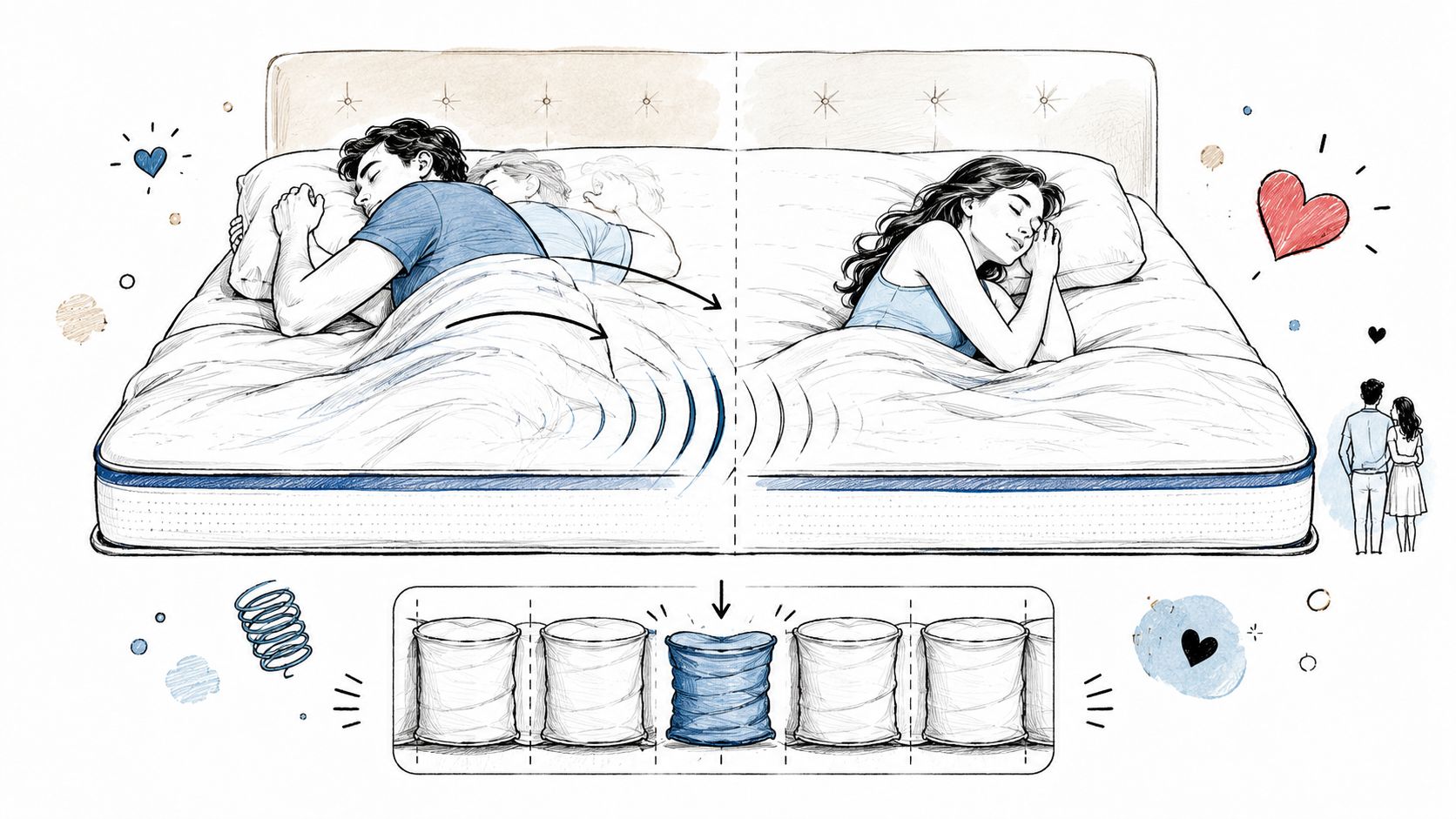
That difference matters most in a shared bed. If one person turns, the coils beneath that person respond locally, while the other side can remain comparatively settled. The mattress still has some responsiveness and lift, but it doesn't have to rock like one broad sheet of metal.
The familiar problems a mattress must solve
A shopper choosing a new bed is often balancing several needs at once:
- Restless partners: Independent coil movement can reduce the sensation of a partner shifting nearby.
- A sinking middle: Zoned support and reinforced construction can help a mattress resist uneven loading.
- Nighttime heat: The open space around coils can encourage airflow through the support core.
- Confusing specifications: Coil count, wire gauge, turns, and comfort-layer thickness all affect the final experience.
The last point deserves special attention. A pocketed coil unit may provide responsive support, but a thick, contouring foam layer can make the same unit feel softer and warmer than a thinner, more breathable comfort package. Neutral mattress guidance notes that many beds described as innerspring designs are effectively hybrids because wrapped coils sit beneath substantial foam or latex layers. This overview of innerspring and hybrid construction helps explain why the upper layers deserve as much attention as the spring unit.
Practical rule: The coil system determines much of the support character, but the comfort layers determine what the sleeper actually feels first.
Room conditions matter, too. A breathable mattress can still feel uncomfortable if the bedroom holds excess humidity or bedding traps heat. For broader sleep-environment ideas, the Covenant Aire Solutions sleep guide offers useful context about moisture and bedroom comfort.
How Pocketed Coil Construction Actually Works
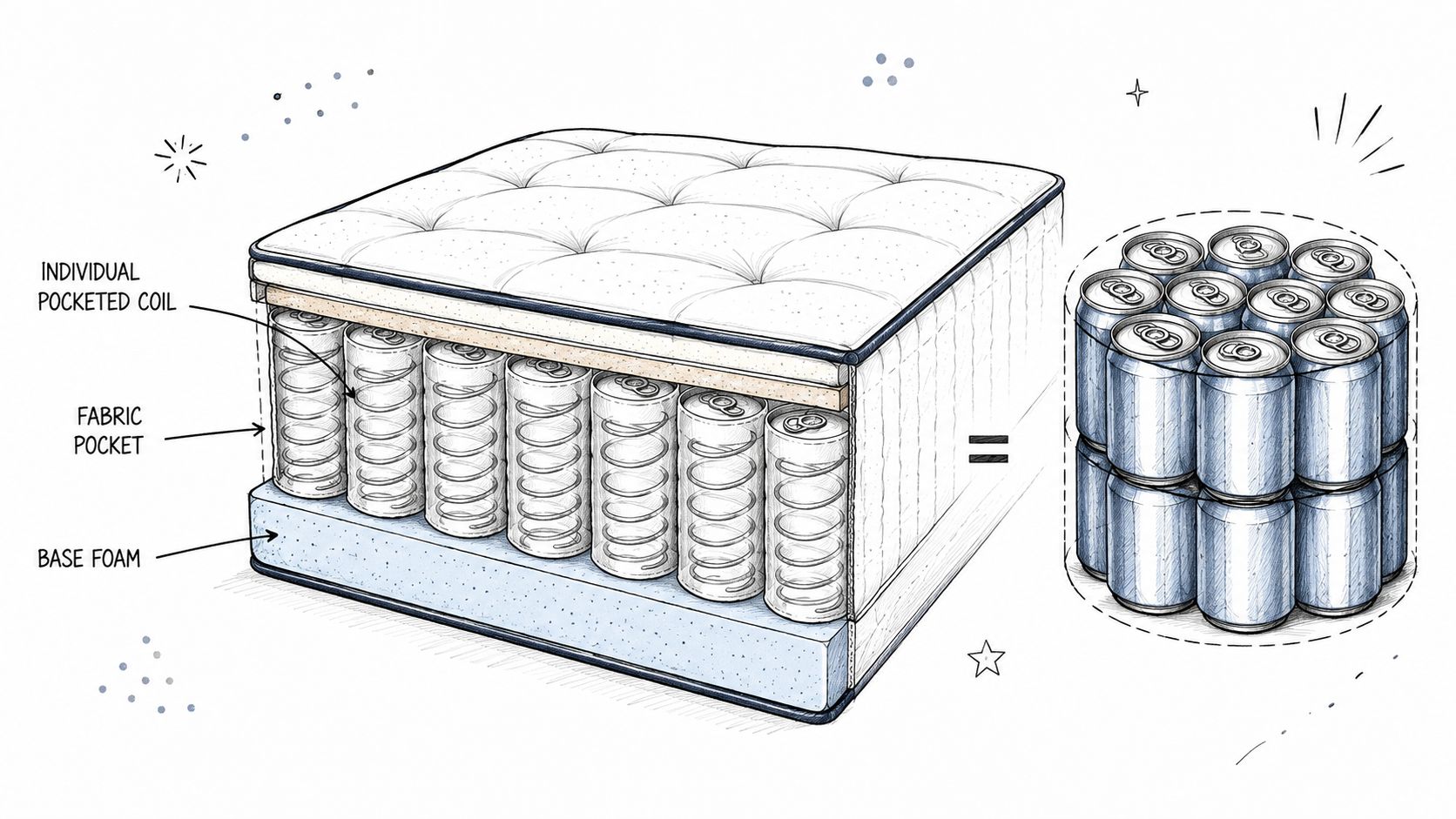
A simple analogy makes the structure easier to picture. Imagine a row of aluminum cans standing side by side, with each can enclosed in its own soft sleeve. If one can is pressed down, it can move without forcing every can in the row to tilt. Pocketed coils work on a similar principle, although the springs flex and rebound rather than acting like rigid cans.
The layers from the foundation upward
A typical pocketed coil mattress can be understood as a stack of working parts:
- Foundation or base layer: A foam base or insulator pad supports the coil unit and separates it from the foundation beneath.
- Pocketed coil array: Individual steel springs sit inside fabric sleeves. The sleeves are connected side by side, often through stitching or adhesive, while still allowing each spring to compress on its own.
- Transition and comfort materials: Foam, latex, fiber, or quilted padding soften the initial contact and shape pressure relief.
- Quilted cover: The outer fabric and padding establish the first impression of softness, surface texture, and temperature.
The pockets keep the springs from scraping directly against one another, which can help the mattress operate more softly. The spaces around the coils also create air channels through the support core, although the comfort layers above can limit how much of that airflow a sleeper notices.
Coil shapes vary. Barrel-shaped springs can provide a balanced combination of compression and rebound. Hourglass shapes may feel more progressive as the sleeper moves deeper into the mattress. Nested designs place coils close together to refine support and reduce unused space. Taller coils generally allow deeper compression and can contribute to a plusher, more responsive feel, but the top padding still determines how quickly the sleeper reaches that spring response.
Why the comfort package changes the experience
Two mattresses can use pocketed coils and still feel very different. A slim layer of resilient foam may create a buoyant, easy-to-move surface, while a thicker contouring layer can produce a slower, more embracing feel. Fiber quilting may provide immediate cushioning without the same deep sink associated with dense foam.
This is why pocketed coils often appear in hybrid designs. The spring unit supplies localized support and lift, while the materials above it add contouring. Shoppers comparing spring construction with other support systems can also review Lott's guide to eight-way hand-tied springs to understand how different spring architectures serve different furniture and seating applications.
Reading the Specs That Change How It Feels
A specification sheet becomes useful when each term is translated into a physical sensation. Coil count tells shoppers how many springs the unit contains, but it doesn't tell the whole quality story. A queen-size pocketed coil unit may range from about 600 coils to more than 2,000 in premium builds, according to an independent guide to pocket coils. The guide to pocket coil specifications also emphasizes that coil count should be read alongside gauge, turns, and zoning.
Four specifications worth comparing
Coil count can indicate how finely the mattress divides support across the surface. More coils may allow more localized response, but a high count alone doesn't guarantee durability or comfort. Pocket material, steel quality, comfort layers, and perimeter construction still matter.
Wire gauge describes the thickness of the spring wire. Lower gauge numbers indicate thicker wire and generally firmer support, while higher gauge numbers indicate thinner wire and a softer, more flexible response. One expert overview gives examples from about 1.28 millimetres for softer support to 1.6 millimetres for firmer support. This explanation of pocket-sprung mattress science also notes that manufacturers may use different pocket fabrics, including spunbond polyester and calico.
Turn count refers to how many times the wire spirals within the spring. Industry guidance commonly identifies five to seven turns in higher-quality coils, with additional turns supporting more progressive compression and resilience. The effect isn't “more is better.” The ideal response depends on the sleeper, the surrounding layers, and the overall design.
Zoning places different coil tensions, gauges, or counts under different body regions. A mattress may advertise five-zone or seven-zone construction, and some designs use up to nine zones. Firmer support can be placed beneath the lower back and hips, while more yielding sections can accommodate the shoulders. The goal is a more balanced posture, not an artificial ridge beneath the body.
| Spec | What It Means | Effect on Feel |
|---|---|---|
| Coil count | The number of individual springs in the unit | Can support finer, more localized response |
| Wire gauge | The thickness of the spring wire | Lower numbers generally feel firmer, higher numbers more flexible |
| Turn count | The number of wire spirals in each coil | More turns can create progressive, resilient compression |
| Zoning | Different support characteristics across mattress sections | May improve targeted support for shoulders, hips, and lumbar areas |
Before choosing, shoppers can use Lott's mattress firmness guide to connect specifications with sleeping position and comfort preference.
Shopping checkpoint: Compare coil count, gauge, turns, zoning, and comfort-layer thickness together. A single headline number rarely predicts the complete feel.
Pocketed Coils Compared to Other Mattress Types
Pocketed coils sit between traditional spring systems and solid foam designs. They offer more localized movement than Bonnell or continuous-wire innersprings, while retaining more lift and airflow than many dense foam constructions. Hybrids extend that middle ground by combining the coil unit with substantial comfort layers.
| Feature | Pocketed Coil | Traditional Innerspring | Memory Foam | Hybrid |
|---|---|---|---|---|
| Motion isolation | Good, because coils compress independently | More limited, because connected springs can transfer movement | Very strong, depending on foam formulation | Often good, with coils beneath motion-absorbing layers |
| Contouring | Moderate and highly dependent on top padding | Usually more surface-level | Deep and close-fitting | Adjustable through foam or latex thickness |
| Bounce | Noticeable, with localized pushback | Broad and lively | Limited and slower | Balanced between lift and cushioning |
| Temperature | Open coil channels can support airflow | Open spring space can support airflow | May retain more warmth in dense layers | Depends heavily on the comfort materials |
| Edge support | Depends on perimeter reinforcement | Often structured around the edge | Depends on foam density and design | Can be strong when the perimeter is reinforced |
| Value over time | Depends on steel, zoning, and comfort layers | Varies widely by construction | Depends on foam quality and thickness | Depends on both the coil unit and upper layers |
Traditional Bonnell and continuous-wire systems connect their springs, so pressure in one area can affect a larger portion of the surface. Pocketed coils respond more locally. That distinction can make them a sensible option for couples who want support without broad movement.
Memory foam offers a more enveloping feel. It can suit sleepers who want pronounced pressure relief and minimal bounce, but some people find deep contouring makes repositioning harder or feels warmer. Pocketed coils generally provide easier movement and more open space through the core, though the foam above them may still affect temperature.
Why hybrids require closer inspection
A hybrid mattress pairs pocketed coils with foam, latex, or fiber comfort materials. Many hybrids place two to four inches of foam above the coil unit, so the upper layers determine how much of the spring response reaches the sleeper. A plush hybrid can feel cushioned and slow, while a firmer build can feel buoyant and more breathable even when both use similar coils.
Shoppers weighing these choices can read Lott's comparison of innerspring and hybrid mattresses before testing beds in person. The most useful comparison is the one that matches actual sleeping habits, not the label printed on the mattress tag.
Who Sleeps Best on a Pocketed Coil Mattress
Couples often notice the primary benefit first. Because the coils respond beneath the area receiving pressure, one sleeper's movement doesn't need to travel across the entire surface. The result isn't complete stillness, but it can make nighttime turning, getting up, or adjusting bedding less disruptive.
Combination sleepers also tend to appreciate the responsive lift. Someone who moves from side to back to stomach during the night can reposition without feeling held by the mattress. The support core pushes back locally, while the comfort layers determine how much cushioning protects the shoulders and hips.
Matching the construction to common sleep needs
- Couples and co-sleepers: Independent spring response can limit the spread of movement from one side to the other.
- Back and stomach sleepers: Firmer central support and a stable perimeter can help maintain a more even sleeping posture.
- Heavier sleepers: A well-built unit with suitable wire gauge, zoning, and edge reinforcement can provide steadier support than a minimally structured design.
- Hot sleepers: Air channels through the coil core can help heat escape, although thick foam, dense quilting, protectors, and bedding still influence the final temperature.
- Allergy-sensitive households: Open space between coils can discourage the compact, enclosed feel associated with a solid foam block, but regular cleaning and a breathable protector remain important.
Strict side sleepers with lighter body weights may need more cushioning than a firmer pocketed coil surface provides. A mattress with deeper pressure-relieving comfort layers, such as plush foam or latex, may feel more forgiving at the shoulder and hip.
Sleep preference matters just as much as body type. A sleeper who wants a zero-motion, sink-in sensation may prefer a deep-contouring foam design. Someone who values easy movement, a lifted feel, and a less enclosed surface may respond better to pocketed coils or a hybrid.
A personalized match requires more than a label. Lott's guide to choosing a mattress for different body types offers a starting framework for evaluating support and comfort together.
Choosing and Customizing Your Mattress at Lott's
A practical mattress decision can begin online, then continue in a showroom without losing momentum. A shopper may start with the Style Quizzes and the Mattress Guide, using sleep position, firmness preference, and comfort priorities to narrow the field before visiting a local associate. The digital catalog and showroom experience are designed to work together, so browsing from home can lead naturally to testing mattresses in person at the Fernandina Beach, FL showroom.
A guided path from questions to comfort
The first question should be functional: does the sleeper need pressure relief, easier movement, stronger edge stability, cooler airflow, or better motion control? The next question concerns the layers. A pocketed coil unit with a thinner comfort package may feel more responsive, while a more generous upper layer can soften the surface and reduce the sensation of the springs.
The Special Order Program supports personalized designs when a showroom model doesn't provide the right combination. Most vendors support choices involving:
- Fabrics and finishes: Materials can be selected to suit the room and household.
- Comfort levels: A shopper may seek a softer surface, firmer support, or a custom balance.
- Personalized dimensions and construction details: Certain projects may require a specific size or design approach.
Mattress shoppers can also use Lott's guide to getting started with a custom order to understand how a personalized selection unfolds. Although mattresses are the focus here, the same service philosophy extends across the home, from the comfortable La-Z-Boy seating and Smith Brothers upholstery to the refined bedroom and living designs associated with Lexington, Stressless, and Hooker Furniture.
Service that continues beyond the showroom
In-store associates can help interpret coil count, gauge, turns, zoning, and comfort-layer materials without reducing the decision to one number. A shopper can test several firmness levels, discuss sleeping positions, and compare how the surface responds during movement.
The transition between the online catalog and the Fernandina Beach showroom is smooth, while the broader service area includes South Georgia and North Florida. Lott's delivery standard includes white-glove, in-home delivery, and every piece undergoes a rigorous multi-point inspection before it reaches the customer. The delivery team places the purchase in the room of choice, creating a complete path from selection to settled comfort.
Care, Lifespan, and Your Next Step Toward Better Sleep
A pocketed coil mattress needs the right foundation beneath it. The manufacturer's instructions should determine whether the mattress belongs on a slatted base, a solid platform, or an adjustable foundation. Improper spacing, inadequate center support, or an incompatible adjustable base can change how the coils carry weight and may affect the feel across the surface.
Rotation can help distribute wear, but the correct schedule depends on the mattress maker's guidance. A mattress designed for one sleeping direction shouldn't be flipped unless the manufacturer specifically permits it. A breathable protector can guard the comfort layers from moisture, while seasonal surface vacuuming helps remove dust and debris without saturating the mattress.
Small habits protect the support system
Repeatedly sitting on the same edge places concentrated stress on the perimeter. Sitting briefly is normal, but using the mattress edge as a regular seat can soften edge support over time. Bedding that allows some airflow can also help the upper layers feel less confined, particularly in a hybrid with thicker foam.
Durability depends on more than coil count. Wire gauge, tempering, zoning, pocket construction, and perimeter reinforcement all affect how well the mattress retains its support. A queen-size pocket coil mattress is often considered adequate at roughly 800 to 1,000 coils, but independent guidance emphasizes that this range isn't a guarantee of longevity. This discussion of pocketed coils versus traditional innersprings explains why structural design matters more than a headline count.
A mattress should be judged as a system. Steel, fabric pockets, comfort layers, foundation support, and perimeter construction all contribute to the result.
Signs that replacement may be appropriate
Watch for changes that affect sleep rather than relying only on age:
- Visible sagging: A pronounced dip, especially one deeper than one inch, can signal weakened support.
- Softened edges: The perimeter no longer feels stable when getting in or out of bed.
- New creaking: Fresh sounds during turning may indicate movement within the support structure.
- Morning aches: New or persistent discomfort can suggest that the mattress no longer distributes weight appropriately.
Testing remains the most reliable next step. Shoppers can visit a Lott's Furniture showroom in South Georgia or North Florida to compare pocketed coil and hybrid surfaces, use the online Mattress Guide and Style Quizzes, or speak with an associate through an online consultation. The Special Order Program can also help tailor comfort layers, finishes, and other design details for a more personal, investment-quality sleep setup.
Lott's Furniture offers guided mattress shopping through its digital catalog, Style Quizzes, Mattress Guide, showroom associates, Special Order Program, and white-glove in-home delivery with multi-point inspection. Visit Lott's Furniture to explore pocketed coil options online, schedule an online style consultation, or visit the Fernandina Beach showroom for personal testing and advice.