
What Is My Home Design Style Quiz and How It Works


A home design style quiz is a short, preference-based assessment that uses answers about color, materials, silhouettes, mood, and lifestyle to suggest a primary style and useful neighboring styles. Some quizzes use about 10 visual questions, while broader formats can match people with 75+ design styles based on their choices (DSA Society).
A half-finished living room can make every decision feel bigger than it should. Paint swatches sit beside saved inspiration images, a sofa looks promising in one photograph but too formal in another, and the question becomes less “Which chair is beautiful?” and more “Will this belong in the room?”
A well-made quiz gives that uncertainty a useful vocabulary. It doesn't decide the entire home, but it can reveal whether relaxed textures, clean silhouettes, warm wood, or airy color combinations consistently attract attention. That starting point helps homeowners and renters shop with more confidence, especially when existing pieces need to remain part of the plan.
What a Home Design Style Quiz Reveals
A homeowner might begin with a room that feels visually undecided. The sofa is comfortable, the dining table is staying, and the walls are ready for a new color, but the inspiration folder contains coastal rooms, traditional libraries, and modern farmhouse kitchens. A style quiz turns those scattered preferences into patterns.
The result usually identifies a primary design direction, then points toward adjacent influences. Someone who favors pale colors, natural materials, and loose seating might receive a Coastal Chic profile with Modern Farmhouse or Organic Modern suggestions nearby. Someone drawn to deep wood tones, symmetry, and patterned textiles may receive a Timeless Traditional result with transitional accents.
Practical rule: Treat the result as a design vocabulary, not a permanent identity.
The quiz can reveal recurring visual themes:
- Color language, such as warm neutrals, cool blues, earthy greens, or saturated jewel tones.
- Material preferences, including linen, leather, rattan, reclaimed wood, or polished metal.
- Shape preferences, from clean angular frames to rounded arms and carved details.
- Lifestyle priorities, such as family durability, pet-friendly upholstery, entertaining space, or quiet comfort.
The result can't produce a perfect floor plan, guarantee that one look suits every room, or replace measurements and practical judgment. It also shouldn't pressure a renter to erase existing pieces or encourage a homeowner to furnish every corner from one narrow category. The home design starting point is more useful when it helps a household make the next decision, such as choosing a sofa silhouette or narrowing fabric options.
Style quizzes have remained part of mainstream digital home discovery for years. HGTV's “Find Your Design Style” quiz has been online since at least January 15, 2016, and a New York Times quiz published in July 2026 presented American home design as a 250-year story connected to household taste and buying decisions (New York Times). Those examples show why a quiz can feel familiar while still serving a practical purpose.
How a Home Style Quiz Works
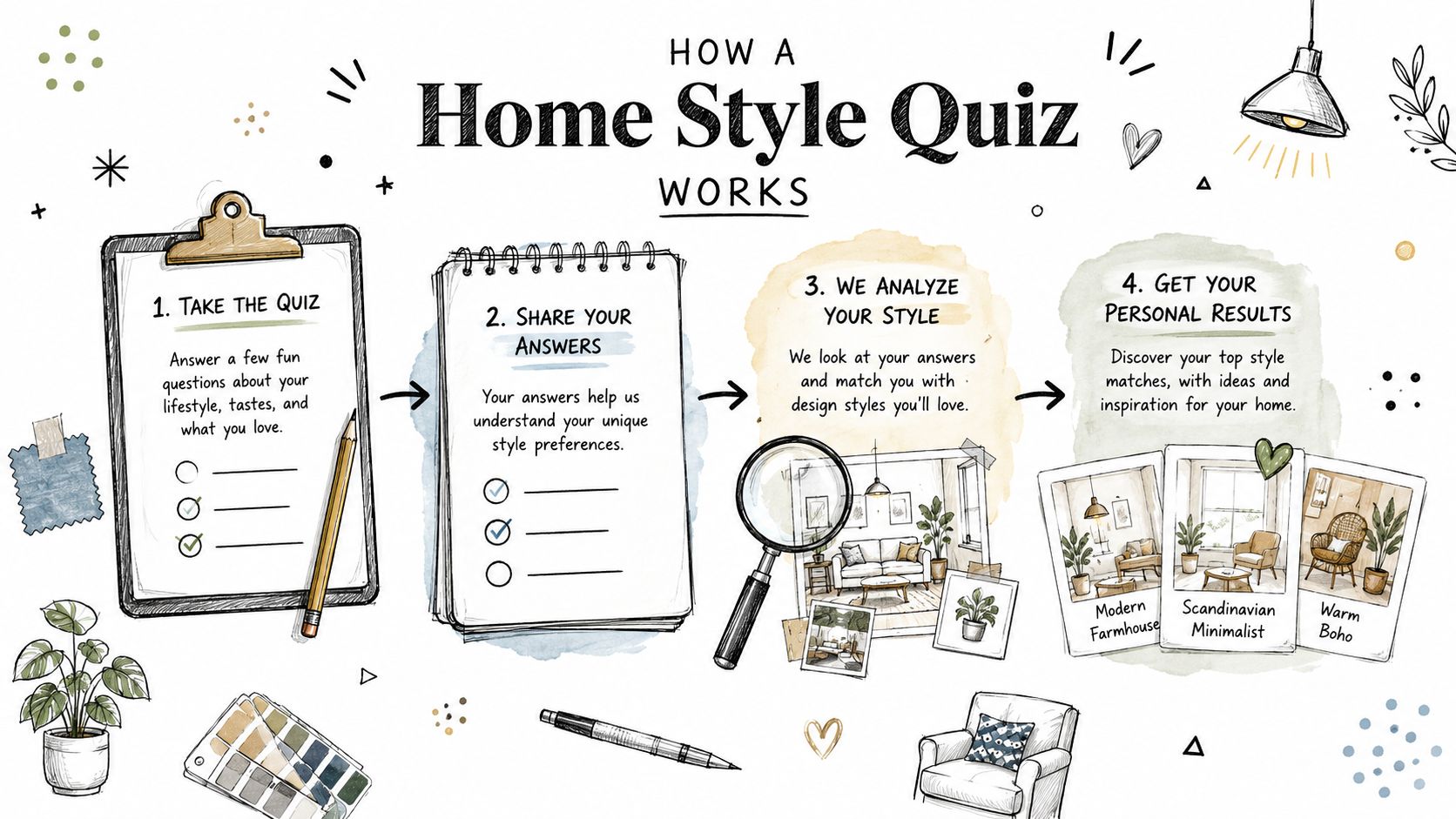
The process is simple for the respondent, but useful quizzes organize answers across several design dimensions. Each choice acts as a small signal, and the combined pattern produces a more nuanced result than any single preference could provide.
Start with visual choices
A question might ask whether weathered driftwood or polished walnut feels more inviting. Another may compare crisp white linens with patterned velvets, or soft coastal light with a dramatic gallery wall. Image-led answers often work better than abstract descriptions because shoppers can respond to what they see before they know the formal name for it.
Industry guidance recommends about 10 questions, with image answer choices for at least two-thirds of them, so the quiz remains focused and visually grounded (TryInteract). A short assessment also reduces fatigue and keeps the respondent focused on instinct.
Group the preferences
The answers are then organized into categories such as:
- Color, including temperature, saturation, and contrast.
- Material, including wood, fabric, leather, stone, and metal.
- Shape, including curved, angular, tapered, ornate, or sleek forms.
- Mood, such as breezy, cozy, refined, rustic, or formal.
- Lifestyle, including entertaining, family use, pets, and everyday comfort.
A respondent who repeatedly chooses soft palettes, natural textures, and relaxed seating may receive Coastal Chic as a primary direction with Modern Farmhouse accents. Another respondent may prefer the same light palette but choose crisp silhouettes and restrained finishes, producing a coastal-modern blend instead.
For readers who want another low-pressure way to think about lifestyle and surroundings, it can help to discover which home suits you before making larger furnishing decisions. The value isn't a perfect label. The value is noticing which environments feel natural.
Turn the result into a conversation
Results become more useful when they connect to actual furniture. A style consultation can help translate a profile into sofa scale, dining proportions, finish samples, and room-by-room priorities. Lott's design consultation services support that next step, whether the shopper starts online or visits a showroom in Fernandina Beach, FL.
Key Signals Used to Identify Your Style
A quiz can identify style more accurately when it looks at several signals instead of relying on a simple modern-versus-traditional choice. The strongest results recognize that a room's character comes from the interaction of color, texture, proportion, mood, and daily life.
Color creates the first impression
Warm terracotta and sage suggest a different atmosphere from icy gray and blue-white. Warm, earthy, or highly saturated palettes often support bohemian, organic-modern, or layered interiors, while restrained neutrals can support minimalist, coastal, or contemporary directions. The important question isn't only which color someone likes, but how much contrast and intensity feels comfortable.
A useful color exercise is to sort inspiration images by emotional response. Do the preferred rooms feel sunlit and open, grounded and collected, or dramatic and formal? A practical guide to choosing the perfect color palette can turn that reaction into wall color, upholstery, and accent decisions.
Materials communicate character
Reclaimed wood brings irregular grain and history. Rattan introduces lightness and texture. Linen feels relaxed and breathable, leather adds visual weight and develops a richer presence, and metal finishes can make a room feel polished, industrial, or contemporary.
No single material determines a style. A linen sofa with dark wood can feel coastal, transitional, or traditional depending on its shape and surrounding pieces. A leather chair can anchor a modern room or add warmth to a farmhouse setting.
Silhouette and mood narrow the direction
Curved forms often align with contemporary or Japandi-inspired rooms, while angular forms can support minimalism or mid-century modern design. Ornate curves, rolled arms, and carved details tend to create a more traditional impression. Relaxed coastal profiles usually depend on softer proportions, slipcovered forms, and an easy sense of movement.
Lifestyle signals keep the result grounded. A household with pets may prioritize durable upholstery, while frequent entertainers may need generous seating and surfaces that support conversation. Readers seeking a broader explanation of how design choices form a unified concept can explore this realtor's guide to design concept.
A fixed label can feel limiting because most homes combine signals. Neighboring styles matter because they show how to preserve a dominant mood while making room for existing furniture, architecture, and personal history.
Comparing Coastal Chic, Modern Farmhouse, and Timeless Traditional
Coastal Chic, Modern Farmhouse, and Timeless Traditional each offer a distinct route to a comfortable home. None is universally better. The right direction depends on the architecture, climate, household routines, treasured pieces, and level of visual formality a room can support.
Coastal Chic usually begins with breezy whites, weathered driftwood tones, soft blues, and seafoam accents. Slipcovered seating, natural rattan, linen drapery, and sun-washed finishes help the room feel open without becoming bare. It suits households that want relaxed comfort and a light visual rhythm.
Modern Farmhouse balances familiar materials with cleaner lines. Matte black hardware, shiplap or board-and-batten walls, butcher-block or reclaimed-wood tables, creamy upholstery, and vintage-inspired signs create warmth, while sleek silhouettes keep the room current. A dedicated guide to modern farmhouse style can help clarify where rustic character ends and simple elegance begins.
Timeless Traditional relies on balance and layered detail. Rich wood tones, wing chairs, rolled arms, pleated skirts, damask or paisley textiles, layered rugs, and symmetrical arrangements produce a collected, heirloom-quality atmosphere. The style can still feel welcoming when comfort, scale, and light are handled carefully.
| Design Element | Coastal Chic | Modern Farmhouse | Timeless Traditional |
|---|---|---|---|
| Color | Breezy white, soft blue, seafoam | Cream, charcoal, muted earth tones | Rich neutrals, deeper wood tones, classic accents |
| Materials | Rattan, linen, driftwood | Reclaimed wood, painted finishes, iron | Fine wood, tailored textiles, layered rugs |
| Furniture shape | Relaxed, softened, slipcovered | Streamlined with familiar forms | Rolled arms, wing chairs, balanced proportions |
| Atmosphere | Airy and sun-washed | Warm and approachable | Refined, storied, and composed |
| Best blend | Coastal with modern accents | Farmhouse with coastal lightness | Traditional with transitional simplicity |
A Modern Farmhouse kitchen may borrow coastal brightness through lighter walls and linen window treatments. A Traditional dining room can become more approachable with a simpler rug and less formal upholstery. Inspiration for farmhouse kitchen design ideas can help shoppers see how finishes and function work together.
Furniture, fabrics, and finishes can support each profile through core collections and custom orders. La-Z-Boy, Smith Brothers, and Lexington offer different pathways to comfort, craftsmanship, and personalized room planning, while a neighboring accent profile keeps the finished space personal rather than staged.
How to Interpret and Apply Your Results
A quiz result becomes useful only after it meets the actual room. The primary style provides direction, while neighboring styles offer permission to adjust the look around architecture, existing furniture, and personal habits.
Start by reviewing the full result rather than stopping at the first label. Then compare it with three things already present:
- The furniture that must remain.
- The paint swatches and finishes already under consideration.
- The accents that feel most personal, such as art, inherited pieces, or favorite textiles.
Next, describe the room with three design words. “Breezy, warm, and relaxed” leads to different choices from “balanced, and storied.” Those words help filter furniture more effectively than a broad label alone.
Build a restrained direction
Identify the dominant wood tone before selecting case goods. Decide whether the room should lean toward pale oak, medium walnut, painted wood, or deep traditional finishes. Then create a restrained three-color palette with one accent. The palette doesn't need to exclude every other color, but it gives upholstery, rugs, and wall treatments a clear relationship.
A Modern Farmhouse living room can gain Coastal Chic breeziness through blue-gray pillows, linen drapery, and lighter accessories. A Timeless Traditional dining set can feel more approachable with matte black hardware, a lighter wall color, and a simpler upholstered chair.
Use the result room by room
A homeowner may keep a Traditional dining room while choosing a relaxed coastal bedroom. A renter may use a Modern Farmhouse vocabulary in removable textiles and lighting without changing permanent finishes. These choices don't contradict the quiz. They show how a primary profile can guide a home while neighboring styles provide flexibility.
In-store associates can help test fabric, scale, and comfort before a purchase. The Style Quizzes and Mattress Guide also give shoppers a way to organize questions before visiting a showroom, so design decisions and sleep-comfort decisions receive the same practical attention.
Turning Your Style Profile Into a Shopping Plan
A style profile should shape the order of purchases, not just the mood board. Starting with the largest, hardest-to-replace pieces creates a stable foundation and prevents smaller accents from forcing the entire room in an unintended direction.
Begin with the sofa, dining table, bed frame, or primary storage piece. These items establish scale, material, and silhouette. Then add case goods, accent chairs, rugs, and lighting. Textiles, pillows, art, and smaller décor can arrive last, giving the household room to introduce a neighboring style or change an accent seasonally.
Match the plan to the purchase
A Coastal Chic profile may point toward a relaxed sofa, pale wood, woven texture, and soft blue accents. A Modern Farmhouse profile may prioritize a substantial dining table, creamy upholstery, and dark hardware. A Timeless Traditional profile may require careful attention to arm shape, wood richness, patterned fabric, and symmetry.
Lott's Furniture offers a digital catalog for early browsing and showrooms in Fernandina Beach, FL, where shoppers can examine scale, finishes, and comfort in person. The same family-owned service supports customers across South Georgia and North Florida, helping a digital shortlist become a more informed showroom conversation.
Customization is particularly valuable when a ready-made piece doesn't fit the room. Through the Special Order Program, most vendors support personalized designs involving fabrics, finishes, comfort levels, cushion firmness, arm styles, wood tones, and selected configurations. That flexibility allows a shopper to keep the quiz's design direction without sacrificing room dimensions or household needs.
Core brands can support different stages of the plan:
- La-Z-Boy for adaptable comfort and upholstery choices.
- Smith Brothers for precision seating and personalized materials.
- Lexington for coordinated case goods and dining or bedroom planning.
- Stressless for comfort-focused seating.
- Hooker Furniture for desks, storage, and refined supporting pieces.
A smart furniture shopping guide can help organize measurements, priorities, and finish decisions before ordering. Lott's Delivery then carries the plan into the home with white-glove, in-home placement, setup where applicable, and removal of packaging debris. Every piece undergoes a rigorous multi-point inspection before it reaches the customer, so the furniture arrives ready for its intended room.
Your Next Step Toward a Personalized Home
A quiz result doesn't need to dictate every corner of a home. Real rooms develop through layers, neighboring influences, inherited pieces, changing routines, and occasional updates. The most useful result gives a household words for what already feels right, then helps narrow the next furniture decision.
A practical next step is to save the result, photograph the room, record measurements, and bring those details to a showroom visit or online style consultation. Associates can help compare silhouettes, test comfort, review fabric and finish choices, and identify whether a Special Order configuration makes more sense than a standard piece.
That support extends from the digital catalog to the Fernandina Beach, FL showroom, with convenient delivery across South Georgia and North Florida. The Mattress Guide, Style Quizzes, in-store guidance, and white-glove service make personalization an ongoing process rather than a one-time label.
Lott's Furniture offers style quizzes, expert showroom guidance, a digital catalog, and Special Order options for homeowners shaping a primary style with neighboring influences. Visit Lott's Furniture to begin an online style consultation or plan a showroom visit in Fernandina Beach, FL.