Traditional Style Couch: The Complete Buyer’s Guide


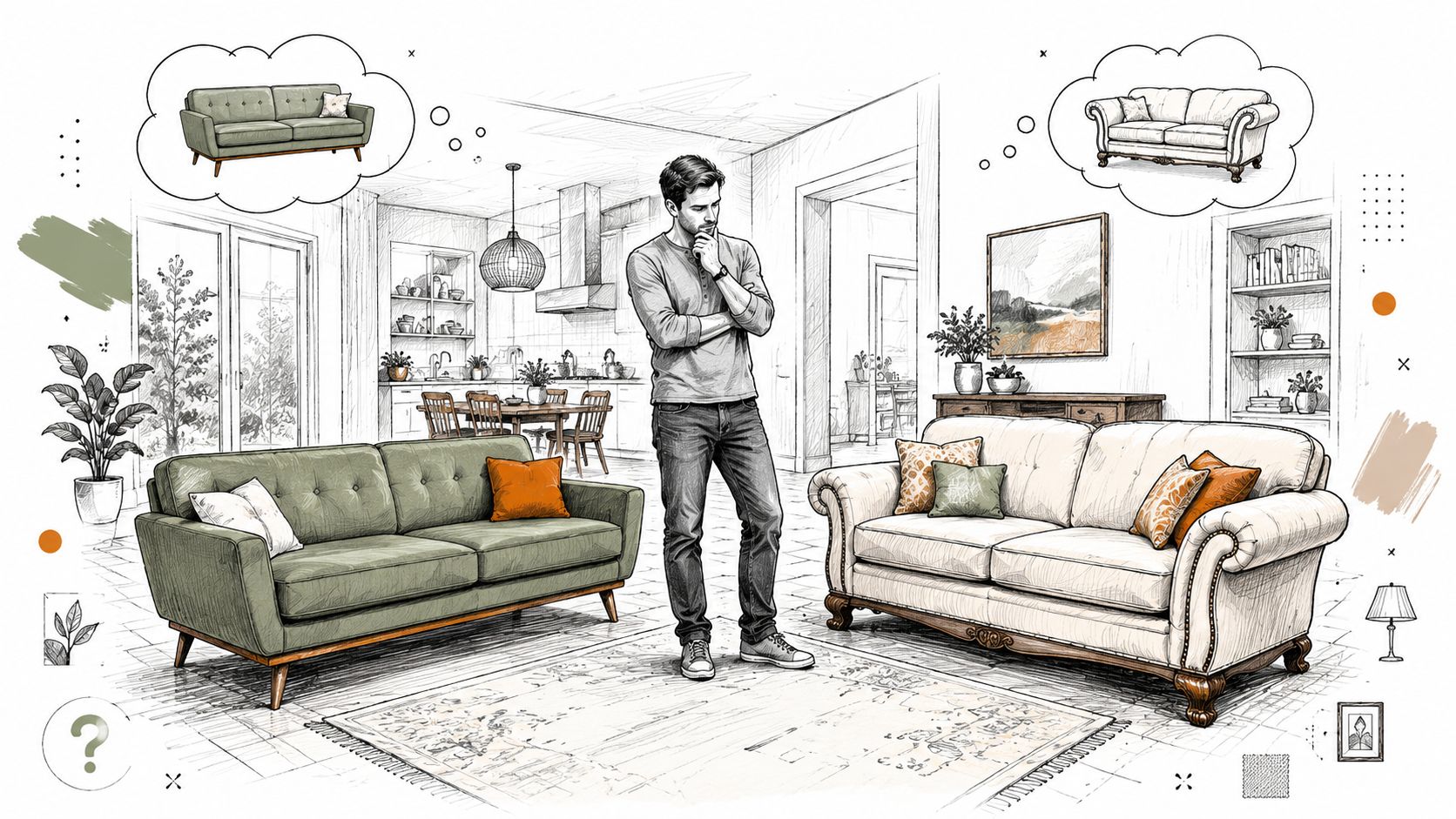
A homeowner can stand in an open-plan living room with two appealing choices in front of them. One sofa has crisp, modern lines. The other has rolled arms, generous cushions, and the quiet authority of the formal parlor remembered from childhood. The question isn't which look is more attractive. It's whether a traditional style couch can deliver the heritage, comfort, proportion, and everyday practicality the room requires.
For homes across South Georgia and North Florida, that decision often becomes more nuanced. Coastal light, open layouts, children, pets, guests, and limited circulation can all challenge a large, formal silhouette. A well-chosen traditional sofa, however, can become an heirloom-quality anchor rather than a piece that merely imitates the past.
Defining the Traditional Style Couch
A traditional style couch is defined less by age than by its visual language. Symmetrical proportions, shaped arms, refined upholstery, exposed wood, and a deliberate sense of balance distinguish it from casual contemporary seating. Its design vocabulary developed through European and American traditions, including English Regency, French Provincial, and American Federal interiors.
The style also has deep historical credibility. The traditional-style couch most closely associated with the Chesterfield has origins dating to the late 1700s, with historical accounts placing its emergence in England around the mid-to-late 18th century and connecting it with Lord Philip Stanhope, the 4th Earl of Chesterfield. It became strongly associated with Victorian interiors during the 19th century, when upholstered seating began moving from formal status furniture toward more widely desired comfort and elegance. That history gives the form more than decorative appeal. It helps explain why the style has remained relevant for more than 200 years. (The history of the Chesterfield sofa)
The vocabulary buyers should know
A camelback sofa has a raised center back that curves down toward the arms. It creates an architectural profile and works well in formal rooms or spaces that need clear back support.
A Chesterfield typically features deep button tufting, rolled arms, and a substantial presence. A leather version feels club-like and authoritative, while a linen or performance textile can make the same frame lighter and more relaxed.
A Lawson silhouette usually has loose back cushions and a more approachable posture. It can still look traditional, especially with rolled arms, turned feet, piping, or a skirt, but it tends to support modern family use more naturally than a rigid formal frame.
Other hallmarks include damask, toile, floral, stripe, and herringbone upholstery, along with carved or turned wood details. Traditional doesn't mean every surface must be ornate. A clean frame in a pale fabric can feel coastal, while a darker wood finish and patterned textile can create a collected library atmosphere.
The most useful distinction is this: traditional describes the character of the design, not a requirement for a stuffy room. A homeowner can preserve the proportions and craftsmanship of a classic frame while changing its mood through fabric, finish, cushion depth, and surrounding furniture. Lott's traditional design style guide offers a useful visual reference for identifying those distinctions before a showroom visit.
Anatomy and Construction Hallmarks
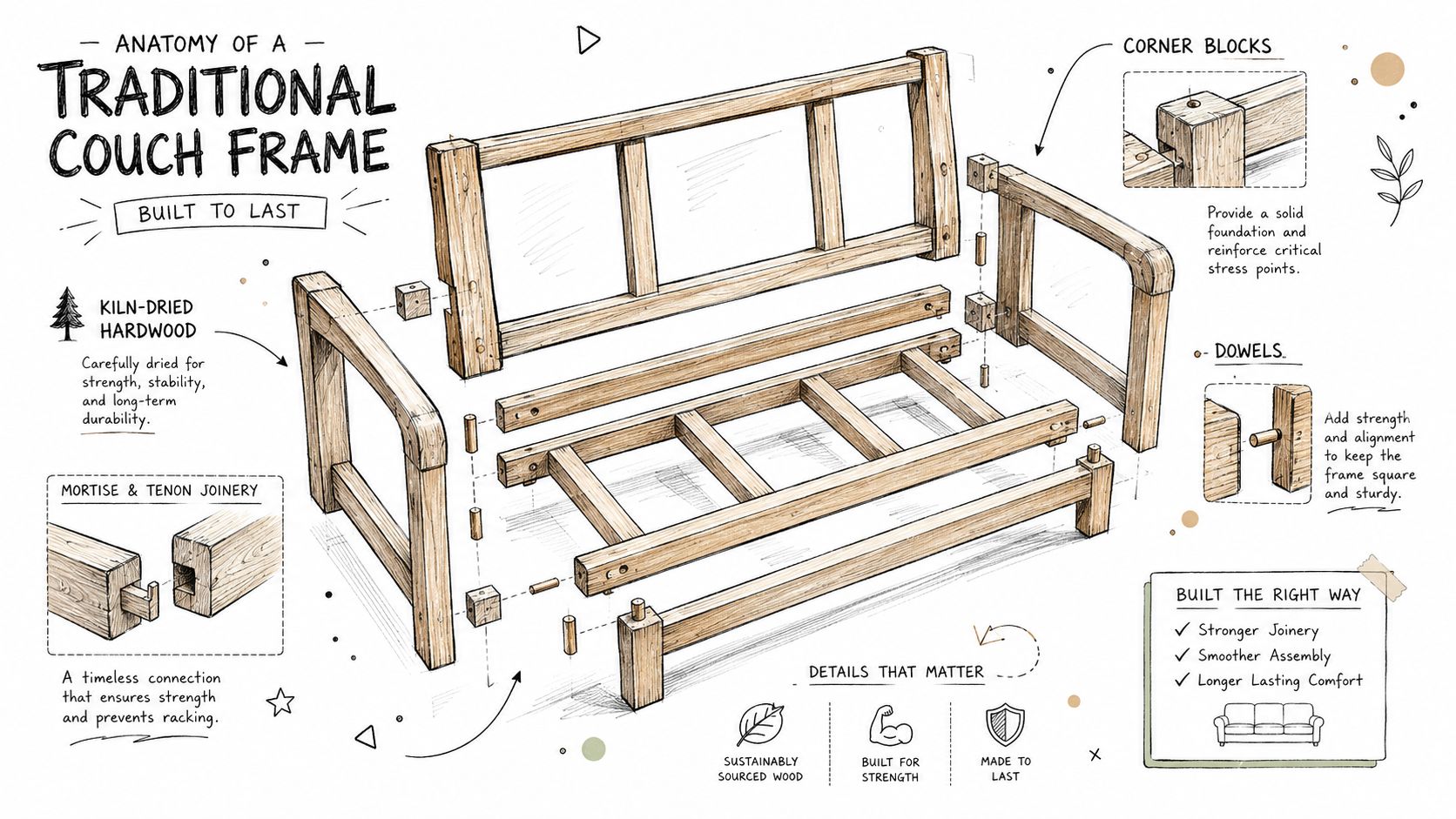
A durable traditional sofa starts with the frame. Hardwood construction provides the structural backbone, while stronger examples use mortise-and-tenon or dowelled joints to resist racking and long-term loosening. Corner reinforcement, accurate alignment, and a frame that feels substantial when lifted or shifted are practical signs that the builder treated the sofa as a long-term piece rather than a temporary decorative object.
The seat foundation matters just as much. Traditional hand-built pieces may use individual coil springs hand-stitched to webbing, then build upward through webbing, canvas, padding, and the top cover. That layered construction distributes load and creates resilient bounce, which helps explain why these sofas are associated with more even comfort and less bottoming-out than simpler spring systems. (A guide to upholstery foam and seat construction)
Shape, trim, and tactile character
The silhouette communicates the sofa's design intent before anyone sits down. Rolled arms soften the profile and encourage a more generous, lounging posture. Camelback curves add formality. Tight backs and tight seats look refined, while loose cushions create a relaxed appearance and allow easier repositioning or servicing.
A skirted base conceals the lower frame and contributes to a softer, grounded look. Exposed legs, especially turned or tapered legs, lift the visual weight and can help a substantial sofa feel more breathable in an open room. Carved wood trim in cherry, mahogany, or walnut finishes adds contrast, while nailhead accents define edges with a crafted, decorative rhythm.
Buyers evaluating an authentic traditional construction should use a simple showroom checklist:
- Frame stability: Press the arms and front rail gently. Excessive movement suggests weakness or looseness.
- Weight and balance: A substantial frame should feel planted, not hollow or unstable.
- Seam integrity: Look for even piping, aligned patterns, clean corners, and smooth transitions around arms.
- Cushion resilience: Sit in the usual position, then observe how quickly the cushion recovers and whether the body sinks to the deck.
- Foundation quality: Ask whether the seat uses coil springs, webbing, or another support method, and whether the method suits the intended level of use.
For readers specifically comparing spring construction, Lott's explanation of eight-way hand-tied springs provides useful terminology for a conversation with an associate. The point isn't to purchase a construction label blindly. The point is to understand how the frame, foundation, padding, and cover work together.
Pros and Cons for Modern Living
A traditional couch works best when its heritage silhouette supports the household's real routines. Choose it for lasting character and physical substance, then test its scale, comfort, and visual weight against the room. In an open-plan home, the frame must define the living area without closing off sightlines. In a coastal home, its details need lighter partners.
Where the style performs well
A hardwood frame and carefully built seat foundation can handle demanding daily use. The style also holds its appeal beyond short-lived trends. A classic rolled arm or balanced Lawson profile can be reupholstered later, letting owners change color and texture while keeping the underlying form.
Comfort remains a strong reason to choose the style. Traditional proportions often provide supportive backs, generous padding, and cushions suited to upright conversation and longer relaxation. The recognizable shape can also carry heirloom value as surrounding décor changes.
The broader upholstered furniture market reflects continued interest in sofas that combine comfort, construction, and customization. One current market estimate projects growth from USD 65.72 billion in 2025 to USD 89.36 billion by 2031, at a 5.25% compound annual growth rate, with sofas representing 31.37% of upholstered furniture market share in 2025. These figures describe the category rather than traditional couches specifically, but they reinforce the practical value of choosing furniture built for continued use. (Upholstered furniture market overview)

Where buyers need a plan
Scale creates the biggest challenge. Rolled arms, deep cushions, skirts, and carved details can crowd a small living room or disrupt circulation in an open plan. Select an apartment-scale frame, consider exposed legs, and measure the entire footprint, including arms and depth, rather than using seating width alone.
Construction and customization can raise the price. Hardwood, labor-intensive joinery, hand-applied details, and custom upholstery each add value when they match the expected use. To keep the look more accessible, choose a simpler frame with a performance textile. Lott's guide to performance fabric sofas explains how to evaluate fabric ratings for busy households.
Visual weight requires attention in coastal interiors. An ornate silhouette pairs better with airy neutral fabric, pale wood, open-legged occasional tables, and a low-contrast rug. Custom-order availability can also limit immediate selection, so homeowners planning a move or renovation should confirm delivery expectations before finalizing the room.
Its success depends on proportion, fabric, and the way people sit. Heritage appeal earns its place when those choices support comfortable daily living.
Styling Traditional Frames for Any Room
A traditional frame becomes current through contrast. The sofa supplies history and structure, while textiles, lighting, rugs, and nearby furniture determine whether the room feels coastal, relaxed, or formal.
A lighter coastal arrangement
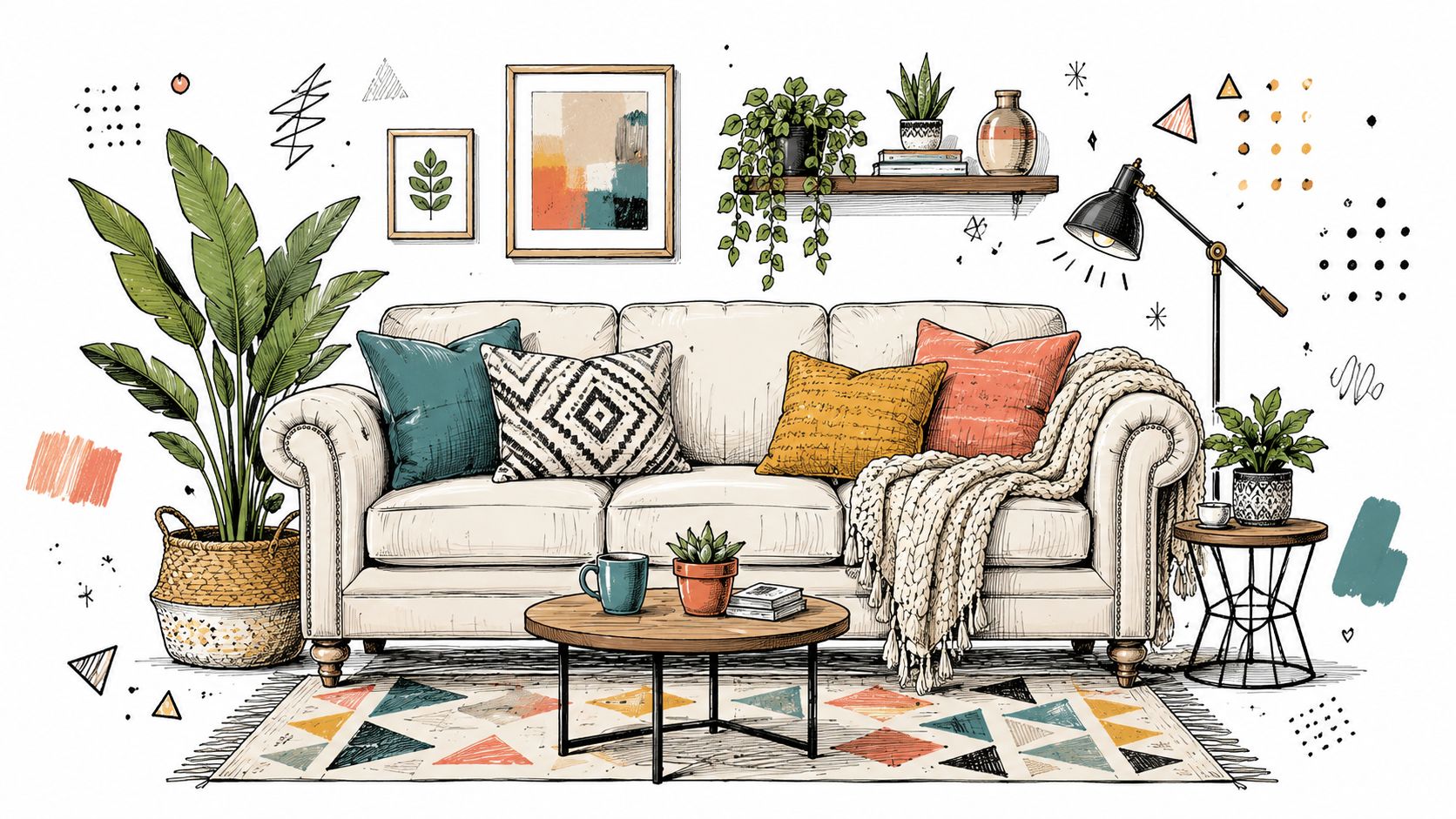
For a coastal home or vacation property, a rolled-arm sofa in light linen, a cotton blend, or a performance textile makes the traditional outline feel sun-washed rather than formal. Weathered wood, woven baskets, a jute-style rug, and blue-gray or sea-glass accents reinforce the relaxed setting without turning the room into a theme.
Keep the surrounding pieces visually open. A coffee table with a lighter base, slender lamps, and chairs positioned to preserve walking paths can offset the sofa's substantial arms. In an open plan, the couch should help define the living area without blocking the visual connection to the dining or kitchen zone.
Wall art can complete the arrangement, especially when it echoes the sofa's scale rather than competing with it. For homeowners planning a collected gallery wall, Colorado Art Services professional hanging offers practical guidance on arranging and installing artwork with a polished result.
A family room with tailored comfort
A deep-seated traditional sofa can feel remarkably relaxed when paired with chunky knit throws, velvet lumbar pillows, and a warm-toned area rug. Choose rust, olive, camel, softened navy, or muted terracotta for a lived-in palette that hides everyday visual disruption more gracefully than a stark monochrome scheme.
Use one larger textile at the back or arm rather than covering every surface. That preserves the frame's character and keeps the room from looking crowded. A nearby ottoman can serve as a footrest, extra seating, or a flexible surface, while a side table keeps drinks and books within reach without forcing people to lean across the cushions.
The most effective styling principle is restraint. A classic frame already provides detail, so accessories should create comfort and rhythm rather than compete for attention. Lott's guide to layering furniture and decor can help homeowners balance scale, texture, and negative space.
A more formal living room
Formal rooms can emphasize the sofa's architectural qualities. Pair carved or turned legs with brass floor lamps, silk-look drapery, a mirrored coffee table, and carefully edited accessories. Damask, subtle floral, or refined stripe upholstery can reinforce the traditional identity without requiring every piece in the room to match.
Center the seating arrangement around conversation rather than a television whenever possible. Leave enough space for people to move around the coffee table, and use matching or complementary chairs to create symmetry without making the room feel staged.
A single traditional style couch can therefore support several personalities. Light upholstery and open surroundings create coastal ease. Textured layers create family warmth. Brass, symmetry, and polished surfaces produce formality. The frame stays recognizable, but the room tells a different story.
Choosing the Right Fabric and Finish
Fabric determines whether a traditional silhouette feels crisp, relaxed, dramatic, or practical. Classic patterns such as damask, toile, floral, stripe, and subtle herringbone reinforce the heritage of the frame, while velvet, mohair, boucle-like textures, and performance chenille introduce tactile depth. Recent design coverage points to stronger interest in patterned sofas and expressive textures, but style should never outrank the cleaning demands of the household. (Patterned sofa direction in current interiors)
For children, pets, frequent entertaining, or coastal guest turnover, a tight weave and easy-care finish generally make more sense than a fragile decorative textile. Performance fabric, treated linen, and solution-dyed acrylic can support a relaxed traditional look while offering better resistance to spills, fading, and routine wear. Delicate silk and untreated cotton may be beautiful in a low-traffic formal room, but they require more careful placement and maintenance.
Traditional couch fabric and finish comparison
| Fabric/Finish Type | Durability Rating | Best For | Maintenance Level |
|---|---|---|---|
| Performance chenille | High | Family rooms, pets, daily seating | Moderate, follow cleaning code |
| Treated linen blend | Medium to high | Coastal rooms and relaxed traditional interiors | Moderate |
| Solution-dyed acrylic | High | Sunlit, humid, or guest-heavy coastal spaces | Low to moderate |
| Velvet | Medium to high | Formal rooms and tactile accent upholstery | Moderate |
| Damask or toile | Medium | Low-traffic formal rooms and heritage styling | Moderate to high |
| Leather | High | Heavily used seating and tailored interiors | Low to moderate |
| Untreated cotton or silk | Low to medium | Decorative, low-traffic rooms | High |
| Exposed wood in driftwood finish | Medium to high | Coastal traditional rooms | Low |
| Dark walnut, cherry, or espresso finish | High | Library, formal, or classic interiors | Low |
The table's ratings are practical design guidance rather than laboratory measurements. Upholstery quality varies by weave, backing, finish, and maintenance instructions. Buyers should request the cleaning code, ask how the fabric handles moisture and abrasion, and order a physical sample before committing to a large sofa.
Wood finish changes the sofa's personality as much as the fabric. Espresso and dark walnut create gravitas. Cherry adds warmth. Driftwood or lightly weathered finishes make carved details feel less formal and integrate more easily with coastal flooring and pale walls. Lott's textured upholstery fabric selection gives shoppers a useful starting point for comparing tactile options before choosing a frame finish.
Customization and the Buying Process
A traditional style couch should be ordered around the household, not forced into a preset configuration. The process begins with the frame silhouette, whether that means a Chesterfield, Lawson, English rolled-arm, camelback, or a simpler panel-arm design. From there, the buyer can address the decisions that affect both appearance and use.
Build the specification in the right order
Start with room measurements, doorway clearance, circulation paths, and the preferred sitting posture. A buyer who sits upright may need a different seat depth and cushion profile from someone who lounges sideways or naps. The frame should fit the room before fabric and trim enter the discussion.
Next, compare upholstery samples in the actual light of the home. Special-order programs can offer extensive personalization, and one modern upholstery program describes 500+ fabrics, 50+ leathers, and 200+ frames, along with configurable arms, legs, welt or no-welt details, cushion cores, and finishes. (Custom upholstery program options) Another industry description outlines graduated customization tiers, from standard fabrics to designer selections and premium options with unlimited fabric choices. (Custom furniture program tiers)
Cushion firmness deserves a direct conversation. Plush cushions feel more enveloping but may require more maintenance and reshaping. Medium cushions offer a balanced posture for mixed households. Firm cushions provide stronger initial support and a more structured appearance. For daily-use foam cushions, upholstery guidance commonly places high-density foam around 1.8 to 2.5 lb/ft³, with 2.0 lb/ft³ and above often treated as performance-oriented seating foam. (Cushion foam density guidance)
Confirm logistics before approving the order
Custom lead times vary by frame, fabric, production schedule, and shipping route, so the written estimate matters more than a general promise. Financing plans may also be available for investment-quality furniture, allowing a household to select the construction and comfort it needs without compromising the design.
Delivery should include more than a drop at the curb. White-glove service means in-home placement, unpacking, setup or assembly when needed, and debris removal. (White-glove delivery standards) A detailed process may also include inspection of visible surfaces, corners, upholstery, finish areas, hardware, and major components before or during placement. (Furniture delivery inspection process)
A useful order checklist includes:
- Room fit: Confirm overall dimensions, doorway access, and circulation.
- Body fit: Test seat depth, seat height, back support, and arm height.
- Fabric suitability: Match the weave and cleaning requirements to children, pets, sun, sand, and moisture.
- Construction: Ask about frame joints, seat foundation, cushion core, and warranty coverage.
- Finish: Compare exposed wood tones beside flooring and nearby case goods.
- Delivery: Confirm in-home placement, inspection, setup, packaging removal, and expected timing.
Experience the Lott's Difference
A traditional sofa deserves physical testing. Sitting reveals whether the arms support the preferred posture, whether the seat depth encourages relaxation or leaves feet unsupported, and whether the cushion feels resilient after several minutes. Photographs can't provide that information.
Lott's Furniture connects online research with showroom guidance for homeowners throughout South Georgia and North Florida. Shoppers can move between the digital catalog and the showrooms in Fernandina Beach, FL, while in-store associates help compare frame silhouettes, fabric libraries, finishes, and comfort levels. The experience can also include Style Quizzes, interactive style guidance, and the Mattress Guide for shoppers coordinating a broader home furnishing plan.
The Special Order Program adds the personalization that traditional frames often need. Most vendors support choices such as fabrics, finishes, arm details, leg profiles, and comfort levels, allowing a classic silhouette to suit a coastal retreat, family room, formal sitting area, or smaller residence. Core brand categories available through the business include La-Z-Boy, Smith Brothers, Lexington, Stressless, and Hooker Furniture, giving shoppers access to different approaches to comfort and craftsmanship.
Local service remains valuable after the purchase. In-home measurements, white-glove placement, rigorous multi-point inspection, and post-purchase support give homeowners a clearer path from selection to daily use. A traditional style couch is a long-term decision, and the right guidance helps preserve its heritage appeal without sacrificing modern livability.
Lott's Furniture offers traditional sofas, special-order upholstery choices, Style Quizzes, in-store associates, digital catalog shopping, and white-glove in-home delivery for homeowners across South Georgia and North Florida. Visit Lott's Furniture to explore traditional frames online, then schedule a style consultation or stop by the Fernandina Beach showroom to sit, compare fabrics, and choose comfort with confidence.