
Farmhouse Style Couches: A Definitive Buying Guide


A familiar decorating moment happens right around the point when a living room looks almost finished. The rug feels right. The paint feels calm. The tables are in place. But the couch still doesn't feel like home. It may look too formal, too stiff, or too polished for the way a household lives.
That's where farmhouse style couches make sense. They soften a room without making it sloppy. They bring warmth without asking for a full rustic makeover. Most of all, they support the kind of living rooms people use for morning coffee, movie nights, visiting family, and long afternoons when everyone ends up in the same seat.
For homeowners across South Georgia and North Florida, that choice also has practical layers. Humidity matters. Sun exposure matters. So does delivery, fit, and whether a fabric will still look inviting after real daily use. A farmhouse sofa should feel relaxed, but the buying decision shouldn't be casual.
Creating Your Sanctuary with Farmhouse Comfort
A farmhouse couch works best when it's understood as the anchor of a room, not just another place to sit. The style is built around comfort, approachability, and a sense that the space has been lived in well. That's why these pieces often feel at home in both a historic house and a newer build that needs warmth.
Farmhouse style couches also help solve a common design problem. Many living rooms feel caught between two extremes. One side leans too rustic and starts feeling themed. The other leans too formal and loses softness. A farmhouse silhouette usually lands in the middle. It keeps clean structure, but the attitude is easier and more welcoming.
What people usually mean by farmhouse
Most shoppers aren't looking for a literal antique sofa. They're usually responding to a combination of visual cues and emotional comfort:
- Relaxed shapes that don't feel rigid or overly formal
- Soft, touchable fabrics in quiet, natural-looking colors
- Simple detailing that supports the room instead of dominating it
- Everyday comfort that suits family life, guests, and lounging
That blend is why farmhouse style couches remain so versatile. They can sit comfortably beside painted casegoods, natural wood tables, woven accents, and even more polished pieces without looking out of place.
A good farmhouse sofa should feel settled, not staged.
Why the style lasts
The lasting appeal comes from balance. A farmhouse couch can feel timeless because it doesn't chase novelty. It usually avoids exaggerated shapes and flashy trim. Instead, it relies on proportion, comfort, and materials that read as familiar.
That's especially useful for households that want a living room to grow gracefully over time. Pillows can change. Lamps can change. Wall art can change. The sofa still needs to make sense years later. A farmhouse frame often does exactly that.
The Signature Features of a Farmhouse Style Couch
A true farmhouse couch earns its place the same way an old kitchen table does. It looks welcoming on day one, and it still makes sense after years of daily use. That is the heart of the style.
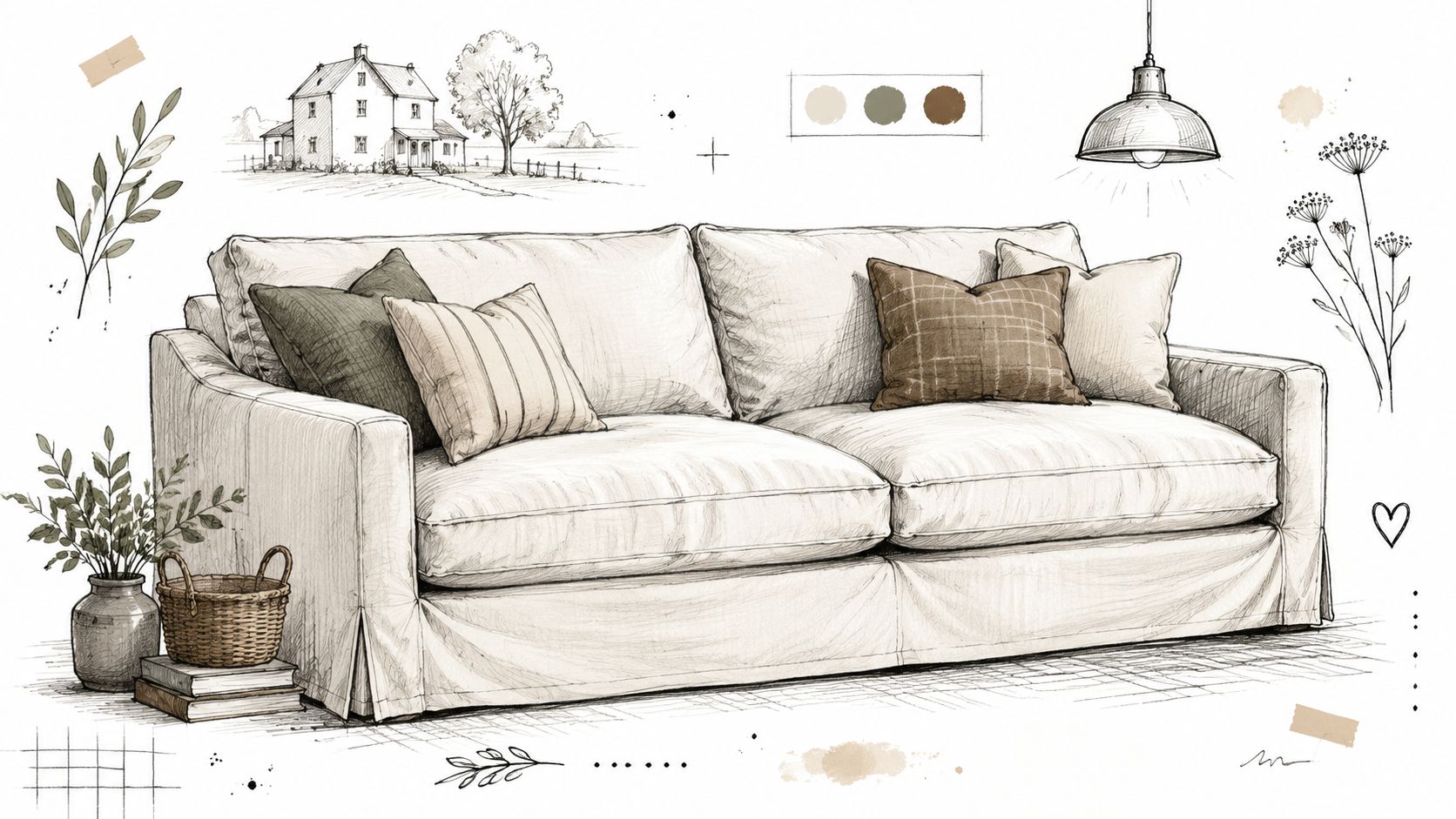
Many shoppers hear "farmhouse" and picture something overly rustic or heavy. In practice, the style is much more balanced. A farmhouse sofa usually has gentle lines, familiar proportions, and details that support comfort first. In South Georgia and North Florida homes, that balance matters even more because a couch has to look relaxed without feeling flimsy in rooms that see heat, humidity, sandy feet, and regular family traffic.
The silhouette that gives the style away
The frame is usually the first clue. Farmhouse couches tend to have shapes that feel settled and approachable, much like a well-built porch swing. Nothing is shouting for attention, but every part feels easy to live with.
Common features include:
- Rolled or softly shaped arms that make the piece feel warmer and less formal
- Loose back or seat cushions that create a comfortable, casual look
- Slipcovered, skirted, or closely fitted bases that keep the profile relaxed
- Turned or tapered wood legs that add character without fuss
- Deeper seats that invite reading, visiting, or an afternoon nap
Rolled arms are especially common because they soften the outline. If square arms are very sharp and slim, the sofa starts to drift toward a more modern or urban look. A farmhouse version usually keeps a little visual softness around the edges.
What separates farmhouse from other casual sofas
Many homeowners often get tripped up on this point. Casual and farmhouse are not always the same thing.
A casual sofa can be almost any comfortable shape. A farmhouse couch usually adds a sense of tradition. You often see symmetry, balanced proportions, and details that feel rooted in familiar American furniture forms. The result is calm rather than trendy.
That calm look helps a room age well. If you swap lamps, rugs, or accent pillows over the years, the sofa still belongs.
The construction details that matter
Under the upholstery, good farmhouse seating should be built to handle real life. A sturdy hardwood frame, supportive seat construction, and cushions with enough depth to feel comfortable without collapsing too quickly all matter more than decorative extras. Our family has been helping customers choose furniture for generations, and this is one lesson that never changes. Pretty lines cannot rescue weak construction.
Wood legs are another small detail with a big effect. They work like the cuff on a good pair of jeans. They finish the piece and give it character. Turned legs feel more classic. Tapered legs feel a little cleaner. Either can work, as long as the overall shape still feels warm and grounded.
If you want a practical checklist before you shop, these sofa and chair buying considerations can help you judge more than just appearance.
Texture belongs in the design, not only in the pillows
Farmhouse style depends on softness you can see. Even before you touch the couch, the upholstery should suggest comfort. That often comes from woven fabrics, slipcover-style tailoring, and finishes that do not look shiny or stiff. For homeowners comparing materials, understanding sofa fabric options helps explain why texture changes the whole personality of a sofa.
That point is especially useful near the coast. In South Georgia and North Florida, a farmhouse couch has to do more than look right. It has to hold its shape and stay comfortable in humid conditions. The best choices pair the farmhouse look with upholstery and cushion options that handle moisture, everyday wear, and frequent cleaning more gracefully. That is one reason custom ordering can be so helpful. It lets you keep the signature farmhouse silhouette while choosing materials that suit your home instead of fighting your climate.
Details that usually pull a sofa out of farmhouse territory
Some pieces get tagged as farmhouse even though their design tells a different story. Watch carefully if you see:
- Heavy carving or ornate trim
- Very thin, severe arms
- Shallow seats that look formal
- Glossy fabrics that read dressy instead of relaxed
- Exaggerated shapes that feel more trendy than timeless
A farmhouse style couch should feel edited, but never cold. The best ones have a quiet confidence. They look welcoming, sit comfortably, and make a room feel lived in from the start.
Choosing the Right Fabric for Your Farmhouse Couch
A farmhouse couch can look perfect the day it arrives and still disappoint six months later if the fabric was the wrong choice for the house. We have watched that happen for generations. A family falls in love with a soft cream sofa, then finds the fabric wrinkles too much, holds moisture, or fades faster than expected in a bright South Georgia or North Florida room.
Fabric decides how the couch lives, not just how it photographs.
That matters even more in our part of the world. Homes near the coast often deal with humidity, strong sun, sandy traffic, and doors that open often to porches or patios. A fabric that behaves well in a dry, shaded room can age very differently in a humid living room with afternoon light.
Start with feel, then judge function
Farmhouse upholstery usually looks best in fabrics with visible texture and a relaxed surface. Linen, cotton blends, and performance fabrics that mimic linen all help create that comfortable, settled-in character people want from farmhouse style. Cream, oatmeal, flax, soft gray, muted green, and warm beige all fit naturally here because they support the calm, lived-in look without feeling formal.
The easiest way to judge a swatch is to ask two questions at once. Does it look soft enough for farmhouse style? Does it have the staying power your household needs?
Here is a simple comparison:
| Farmhouse Couch Fabric Comparison | Pros | Cons | Best For |
|---|---|---|---|
| Linen | Beautiful texture, airy appearance, relaxed drape | Wrinkles easily and often needs more care | Lower-traffic rooms and homeowners who like a casual, natural look |
| Cotton blend | Soft, familiar feel, easy to decorate around | Durability varies by blend and weave | Everyday family spaces with moderate use |
| Performance-linen | Keeps the farmhouse texture with better stain and wear resistance | Quality differs from one fabric line to another | Busy homes with kids, pets, guests, or daily lounging |
A good fabric works like a good porch screen. It should let the room feel easy and breathable while still standing up to real life.
Coastal homes need a different kind of fabric check
Shoppers in South Georgia and North Florida often ask for light, relaxed upholstery, and that can work beautifully. The key is being more selective about fiber content, weave, and cleanability. Humidity can slow drying after a spill. Direct sun can dull lighter fabrics over time. Cushions in heavily used rooms can also hold that damp, warm feeling if the upholstery and fill are not suited to the space.
So ask more than, "Is this stain-resistant?"
Ask where the couch will sit. Ask how much sun hits it at 4 p.m. Ask whether the room stays consistently conditioned, or whether it warms up when the family is in and out all day. Those details change what fabric makes sense.
For a broader primer before you start comparing samples, understanding sofa fabric options can help you sort out texture, wear, and upkeep terms.
A farmhouse look should still match the way you live
A slipcovered sofa in a bright white fabric may be exactly right for one household and a constant frustration for another. In a quieter formal sitting room, that airy look can be lovely. In a family room near the coast with pets, grandchildren, or frequent visitors from the backyard, a washable slipcover or a performance weave in a softer ivory or flax tone often gives you the same style with fewer headaches.
That is where custom ordering helps in a very practical way. Lott's custom order program lets homeowners keep the farmhouse shape they love while choosing upholstery better suited to local humidity, sunlight, and everyday wear. Instead of settling for whatever fabric comes on the floor model, you can match the material to your room and your routine.
If you want help sorting through fibers, weaves, and cleanability ratings, this guide to upholstery materials and how they perform in everyday use is a useful next step.
Questions worth asking before you choose
Bring these questions with you when you start looking at swatches:
- Will the couch sit near strong natural light?
- Do you want a casual rumpled look, or a cleaner neat surface?
- Will children, pets, or guests use it every day?
- Do you need a fabric that wipes clean easily, or a slipcover that can be removed?
- Does your home stay cool and dry, or does the room collect humidity?
The right farmhouse fabric should feel welcoming on day one and still feel right after years of use. That is the standard we encourage because a good couch is not only a style choice. It is part of how a home takes care of the people living in it.
Styling and Pairing Your Farmhouse Couch
Late afternoon light hits the living room, the kids come in from the yard, and the air still carries a little South Georgia or North Florida humidity. In homes like these, a farmhouse couch has to do more than look inviting. It has to ground the room, feel comfortable every day, and work with materials that hold up well in a warm coastal climate.
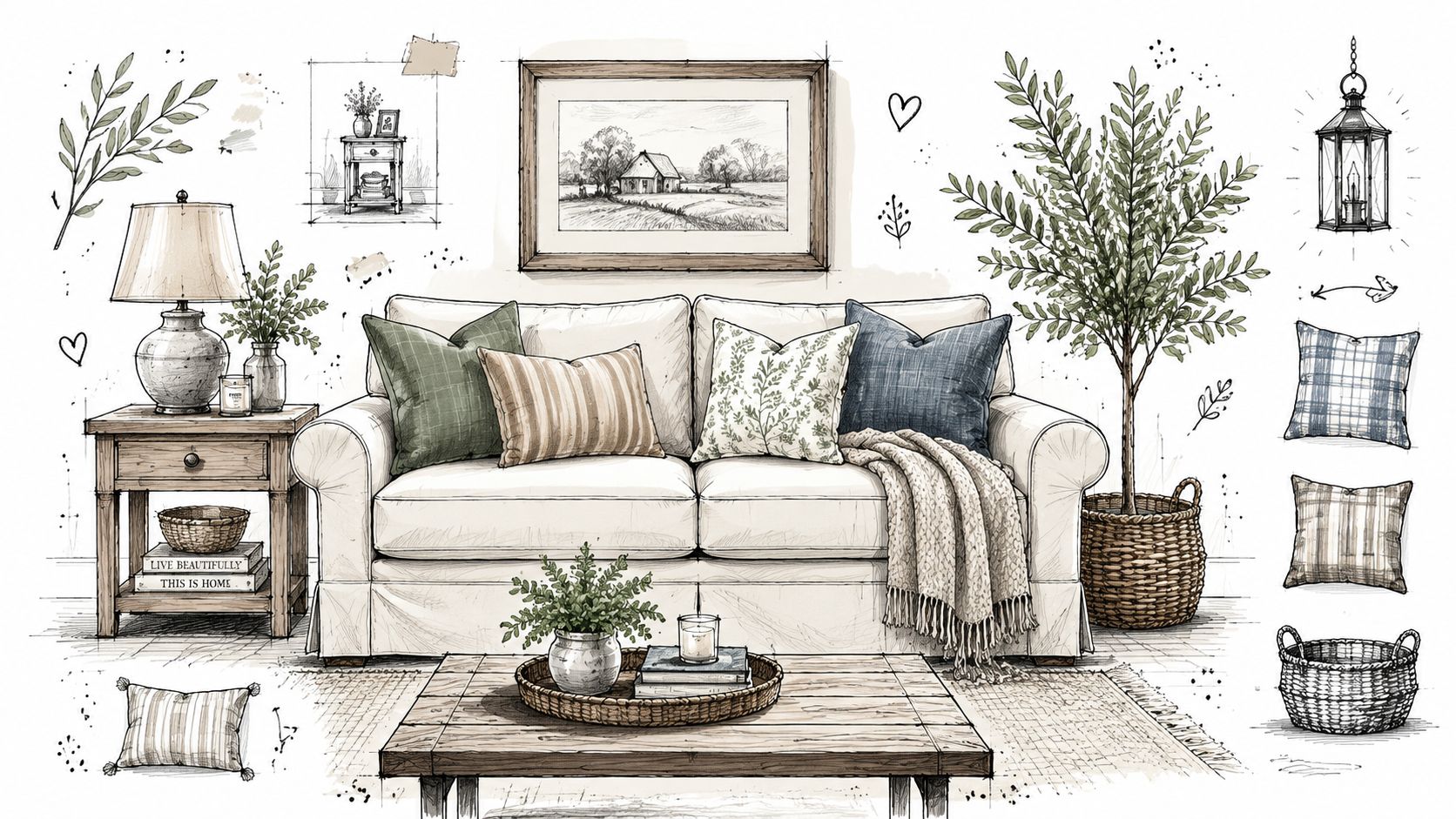
The easiest way to style it is to treat the sofa as the room's steady center. Then build outward with pieces that add contrast in a calm, usable way. A farmhouse couch usually brings softness through its cushions, slipcover shape, or rounded arms. The supporting pieces should bring definition through wood grain, woven texture, metal, and a few darker accents.
Build the room in layers
A good farmhouse room usually comes together in three clear layers.
First is the anchor, your couch.
Second are the working pieces that make the seating area feel lived in and complete:
- Wood tables with visible grain, plank tops, or simple painted finishes
- Textiles such as throws, lumbar pillows, and woven rugs that soften the room without making it feel fussy
- Lighting with warm shades, ceramic bases, iron details, or aged finishes
Third comes the visual balance above and around the sofa. Wall art matters here because scale can make a room feel settled or slightly off. Over a farmhouse couch, grouped artwork often looks more natural than one small frame floating on a wide wall. These triptych styling tips can help if you are trying to get the spacing right.
Pair shape with shape
This is the part many homeowners miss.
If your couch has a relaxed silhouette with loose cushions and a softer skirt or slipcovered look, pair it with cleaner side tables or a more structured coffee table. If the sofa has straighter lines and a more defined profile, add warmth with a chunky knit throw, a braided rug, or baskets with some texture. The goal is balance. Too many soft-edged pieces can make the room feel sleepy. Too many hard lines can make farmhouse style lose its comfort.
Open-frame or heavily deconstructed sofa designs can be beautiful in the right room, especially if you want a collected, rustic look. For everyday family seating, though, they often feel less forgiving over time than fully upholstered farmhouse styles. In humid climates, practical comfort usually wins. That is one reason many homeowners around Valdosta, Lake Park, and North Florida ask about custom order options at Lott's. They want the farmhouse look, but with a fabric and cushion setup that fits real daily use.
Use contrast, but keep it gentle
Farmhouse rooms rarely need sharp color swings. They look best when contrast comes in small, steady notes.
If your couch is cream, flax, greige, or soft white, try adding contrast with:
- a black or oil-rubbed lamp
- a weathered wood cocktail table
- muted green pillows
- a striped rug with a little charcoal or brown
- pottery in clay, sand, or soft blue
That approach keeps the room from drifting into one flat beige tone. If you want help pulling those shades together, this expert guide to choosing a balanced farmhouse color palette is a helpful next read.
In coastal parts of North Florida and the South Georgia line, this kind of styling has another benefit. Natural textures and medium wood tones tend to hide the small signs of everyday moisture and traffic better than bright white, high-contrast rooms. The result feels relaxed, which is exactly what farmhouse style should do.
How to Ensure Your New Couch Fits Perfectly
You find a farmhouse couch you love. The shape feels warm and welcoming, the cushions look generous, and the color is just right for your home. Then it arrives, and the room suddenly feels tighter than expected. That usually comes down to planning for scale, not style.
Farmhouse sofas often sit deeper and look fuller than many homeowners expect from a quick glance on a showroom floor. Broad arms, thick back cushions, and sturdy frames give them that settled, comfortable look, but they also claim more visual and physical space. In South Georgia and North Florida homes, where family rooms often need to handle daily traffic, pets, and long afternoons indoors during hot weather, a good fit means more than getting the sofa through the door. It means leaving enough room for the house to work the way you live in it.
Measure the room before you measure the sofa
Start with the space itself. Measure the wall where the couch will sit, then measure out into the room so you can see how far the piece will project. A farmhouse sofa works like a deep porch swing. It invites you in, but it still needs breathing room around it.
A simple process keeps you out of trouble:
- Tape off the full footprint on the floor with painter's tape.
- Walk around it as if the sofa were already there.
- Check table spacing so knees, shins, and coffee tables are not fighting for the same space.
- Stand in nearby doorways to see whether the sofa blocks the room's natural sightlines.
That last step gets missed often. A couch can fit the measurements on paper and still make the room feel heavy if it cuts across the view from the kitchen, foyer, or hallway.
Measure the path into the home
Delivery day is where many sizing mistakes show up. Front doors, hallway turns, stair rails, low light fixtures, and tight corners all need attention before you place the order.
Older homes around this region can be especially tricky. Some have generous living rooms but narrower entry points, and some newer homes have open layouts with a sharp turn near the front hall. A solid farmhouse sofa does not offer much flexibility once the delivery team starts working through those angles.
For a clear checklist, use Lott's guide on how to measure furniture for delivery and room fit before you buy.
Check fit in two ways
Physical fit is only half the job. Visual fit matters too.
For example, a sofa may clear the wall perfectly but still look too low under a tall bank of windows, or too bulky beside a delicate end table. Farmhouse rooms usually feel best when the sofa looks grounded without seeming crowded. If your room already has heavy wood pieces, a couch with slimmer arms or a slightly higher leg can keep the space from feeling weighed down.
This is also where local climate should shape the choice. In coastal North Florida and along the South Georgia line, many homeowners prefer washable slipcovered looks or performance fabrics, but those design choices still need the right proportions. A skirted sofa that runs too deep in a compact room can feel dense fast, especially when humidity already makes a home feel visually fuller with layered textiles and wood tones.
Why careful delivery planning matters
A well-chosen couch should arrive, fit the room, and settle into place without last-minute problem solving. White-glove, in-home delivery helps protect the frame, the fabric, and the walls around it. That matters even more with heavier farmhouse silhouettes and custom-order pieces, where the goal is long-term comfort, not a quick replacement.
After generations in the furniture business, we have seen the same truth hold up again and again. Measuring carefully saves money, stress, and disappointment. It also gives you something better: a couch that feels like it belonged in your home from the start.
Your Style Your Way with Lott's Custom Orders
A good farmhouse couch should feel like it was chosen for your home, not borrowed from a showroom display. That is especially true in South Georgia and North Florida, where the right sofa has to do more than look warm and welcoming. It also has to hold up to humidity, sandy feet, pets, grandchildren, and the steady wear of everyday living.
That is why custom ordering matters. Lott's Furniture offers a Special Order Program that lets shoppers adjust many upholstery details through participating vendors, including fabric, finish, and comfort options. After generations in the furniture business, we have seen how small choices change the whole result. A slightly tighter arm can make a sofa feel cleaner and more refined. A washable slipcover or performance fabric can make a coastal household breathe easier.

Custom does not have to feel confusing
Many homeowners hear "custom order" and picture a long, complicated process with too many decisions. In practice, it works more like building a well-balanced meal. You start with the main course, the sofa shape. Then you choose the ingredients that affect daily comfort and long-term wear, such as fabric texture, cushion support, and the finish on the legs.
For farmhouse style, the choices usually stay grounded and simple. Homeowners often prefer soft neutrals, relaxed textures, rolled or track arms, and details that feel welcoming rather than fussy. In coastal parts of North Florida and the South Georgia line, this is also the stage where climate should guide the final call. A beautiful fabric that traps moisture or shows every mark can become frustrating fast. A performance weave, washable cover, or easier-care blend usually gives the same farmhouse character with less upkeep.
The process tends to work best when online planning and in-person testing support each other.
Helpful parts of that process include:
- Style quizzes that help narrow the overall look before you sort through fabric options
- In-store associates who can explain how one fabric feels crisp and structured while another feels softer and more casual
- Room-by-room guidance for shoppers furnishing more than one space and wanting the home to feel consistent without looking overly matched
The showroom in Fernandina Beach, FL gives shoppers a chance to sit, compare, and refine details before placing an order. That hands-on step clears up a lot of common uncertainty. A fabric sample in your hand is helpful. Sitting on the actual cushion tells you much more.
The details that make the biggest difference
Some custom choices are decorative. Others shape how the couch will live in your home for years.
For farmhouse style couches, these details usually matter most:
- Fabric texture, because it sets the tone between relaxed farmhouse and more polished farmhouse
- Arm profile, because it can make the sofa read cottage-soft, classic, or structured
- Leg finish, because wood tone adds warmth and helps the piece connect with other farmhouse furniture in the room
- Cushion feel, because a pretty couch still has to support family movie nights, afternoon naps, and everyday use
- Care level, especially in humid coastal homes where easier-clean fabrics and slipcovered looks can save time and worry
If you want to see how the process works before visiting the store, Lott's custom-order starting guide walks through the basics in a clear, practical way.
Your Farmhouse Furniture Questions Answered
Are farmhouse style couches only for rustic homes
No. They work well in newer homes, coastal homes, and transitional interiors because the shapes are usually simple and the fabrics are easy to pair with other styles.
Which brands tend to fit a farmhouse look
La-Z-Boy often works well for approachable comfort. Smith Brothers suits shoppers who want more tailoring and upholstery options. Lexington can pair beautifully in a full-room plan when the goal is a layered, refined farmhouse setting.
Is custom ordering worth it for this style
Often, yes. Farmhouse looks rely on subtle choices. The right greige fabric, cushion feel, or leg finish can make the sofa feel much more at home in the room.
What should shoppers expect from delivery
A strong delivery standard matters with upholstered furniture. White-glove, in-home delivery allows the team to place the piece where it belongs after a rigorous multi-point inspection, which helps protect both the sofa and the home.
A farmhouse living room should feel comfortable, grounded, and personal. For homeowners in South Georgia and North Florida, the easiest next step is to browse the digital catalog, take an online style quiz or style consultation, and then visit the showroom in Fernandina Beach, FL to test comfort, compare fabrics, and finalize a couch that fits the room and the way the home is lived in.


