Save 50% Off MRSP on Lexington | Shop the Catalog >

Mattress for Back Sleepers: Your Comfort Guide


The alarm goes off, and the back sleeper who went to bed expecting a restful night rolls onto the edge of the mattress with a stiff lower back. The bed may look substantial, feel comfortable in the first few minutes, and still be working against the body for hours. A mattress for back sleepers has one job above all others: keep the spine supported without forcing the hips to sink or the shoulders to bear unnecessary pressure.
That balance takes more than choosing the hardest surface in the showroom. Firmness, support, body weight, pressure distribution, construction, and lumbar contouring all affect how a bed feels beneath a back sleeper. The guidance below treats mattress shopping like a practical showroom conversation, with clear recommendations for lighter, average, and heavier sleepers and a closer look at personalized comfort through Lott's Special Order Program.
Why the Right Mattress Changes Everything for Back Sleepers
A back sleeper may wake with a tight lower back, tender shoulder blades, or the sense that the body kept shifting all night. That discomfort does not automatically call for a firmer bed. The surface may fail to fill the lumbar curve, while the support core lets the hips sink too far.
The wrong mattress often creates several problems at once:
- Insufficient lumbar support: The midsection drops while the upper body and legs stay higher.
- Shoulder-blade pressure: A rigid comfort layer fails to accommodate the upper back.
- Restless repositioning: The body keeps searching for a neutral position.
- Morning stiffness: Muscles work overnight to stabilize an unsupported posture.
A mattress for back sleepers must support heavier areas without making the body feel flat and rigid. Because the back rests against a broad surface, the mattress must provide enough contouring to support the natural curves through the lumbar area and pelvis.
The hidden cost of guessing
Choosing by the firmness label alone leads many shoppers astray. One manufacturer's “firm” can feel unlike another's because the label describes the surface impression, not how the deeper support layers respond beneath the hips. A bed may feel hard at first touch and still permit excessive sinkage after the sleeper remains in one position.
The 2003 randomized, double-blind, multicenter trial published in The Lancet followed 313 adults with chronic nonspecific low back pain for 90 days. Participants assigned to a medium-firm mattress reported better outcomes than those assigned to a firm mattress, including pain while lying in bed and disability outcomes, as documented in the clinical mattress trial record. The result does not make every medium-firm mattress appropriate for every body, but it does make choosing the hardest available bed poor advice.
Showroom rule: A good mattress should feel supportive before it feels impressive. If the bed makes the lower back arch, compress, or strain, ignore the firmness label and keep testing.
Your body weight and pressure profile should guide the final choice. A lighter back sleeper may need more surface cushioning to avoid shoulder-blade pressure. A heavier sleeper generally needs stronger underlying resistance so the pelvis does not settle too much. The right match balances both responses rather than chasing a universal firmness rating.
People who stay active while managing back discomfort can also review practical guidance on safe running with back issues, especially when exercise and sleep affect recovery together. Spending time testing construction and support is part of investing in a high-quality mattress for long-term health. Lott's Special Order Program gives shoppers a practical route to personalized comfort when standard showroom feels do not fit their body.
Spinal Alignment and the Medium-Firm Sweet Spot
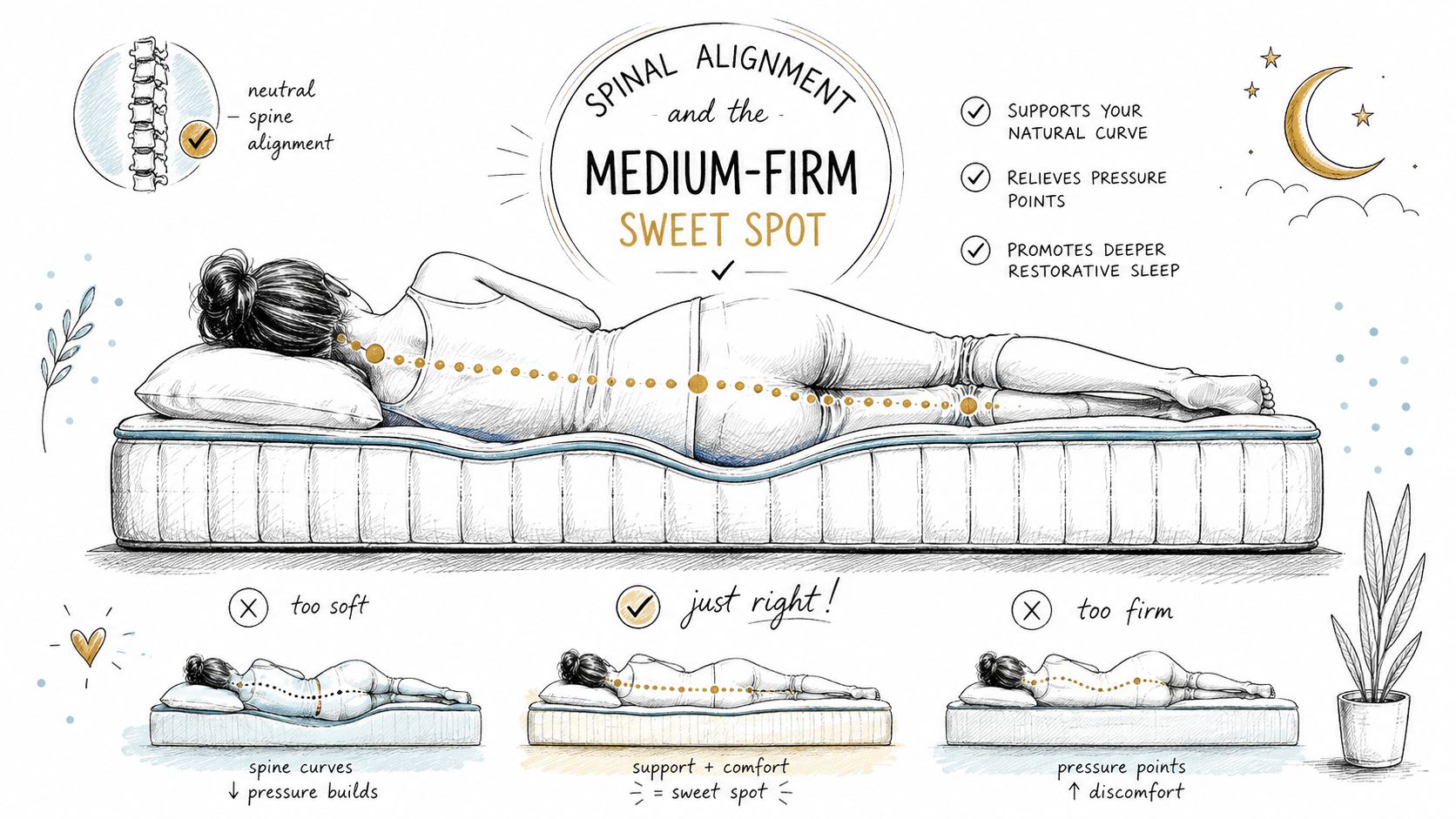
A back sleeper's spine should rest like a balanced ruler from the hips through the neck, preserving the body's natural curves without exaggerating them. The mattress needs to rise gently into the lumbar area, support the pelvis, and cushion the shoulder blades. If the hips drop into a hammock, the lower back loses neutral positioning. If the surface is too rigid, the lumbar curve can remain unsupported while pressure concentrates beneath the upper back and pelvis.
That makes neutral alignment the first test, not softness or firmness by itself.
Firmness and support aren't interchangeable
Firmness describes the initial surface feel. It answers the question, “How hard or plush does the top feel when the sleeper first lies down?” Support describes how the deeper construction resists sinkage and keeps the spine in position. A mattress can feel plush on top and still offer strong support underneath, or feel hard at the surface while failing to support the lumbar region correctly.
The strongest general baseline is medium-firm. A 2021 systematic review concluded that medium-firm mattresses promote comfort, sleep quality, and spinal alignment, making them the most consistently supported general recommendation in mattress research, as summarized in this review of mattress firmness and spinal health research. The same review summarized a controlled study in which medium-firm bedding reduced back pain by about 48% and improved sleep quality by 55% over the measured period. Those findings appeared across age, weight, height, and BMI categories, but they don't eliminate the need for individual fitting.
The practical checklist is simple:
- Neutral spine: The hips shouldn't sit visibly lower than the rib cage.
- Filled lumbar curve: The lower back should feel supported, not suspended above a hollow gap.
- No shoulder pressure points: The upper back should settle without a hard ridge beneath the shoulder blades.
- Stable hips: The pelvis shouldn't wobble or sink into a pronounced C-shaped posture.
Lott's mattress firmness guide helps shoppers translate labels into actual comfort decisions. Medium-firm is a range, not a single setting, so the right choice depends on the sleeper's weight, shape, and sensitivity to pressure.
Comparing Mattress Constructions for Back Sleepers
The construction underneath the cover determines how a mattress supports the lower back, releases heat, and responds when a sleeper turns. Four broad designs deserve a place in the showroom comparison, but they don't perform identically.
How each construction behaves
Memory foam is the contour specialist. It can cradle the lumbar curve and reduce motion transfer, which suits a back sleeper who prefers a settled, enveloping feel. The tradeoff is slower response, potential heat retention, and deeper sinkage for heavier sleepers if the comfort layers lack a strong support core.
Traditional innerspring offers bounce and airflow. That responsive feel can make repositioning easier, but older coil formats may distribute pressure less evenly beneath the shoulder blades and lumbar region. An innerspring bed can work well for a sleeper who likes a lifted, traditional surface, especially when paired with an appropriate comfort layer.
Hybrid mattresses combine a pocketed coil support core with foam or latex comfort layers. They generally provide the most balanced starting point for back sleepers because the coils resist deep pelvic sinkage while the upper layers cushion the lumbar curve. Shoppers unfamiliar with spring construction can review how a pocketed coil mattress works before testing a hybrid.
Latex feels buoyant and quick to respond. It keeps the body lifted rather than letting it settle slowly into the surface, and it typically sleeps cooler than traditional memory foam. The higher material cost can make latex a more selective choice, but its combination of resilience and pressure distribution suits many back sleepers.
| Construction | Lumbar Support | Contouring | Temperature Regulation |
|---|---|---|---|
| Memory foam | Good when the support core is substantial | Deep and close-fitting | Fair to good, depending on ventilation |
| Innerspring | Responsive, though dependent on coil design | Limited to moderate | Good airflow |
| Hybrid | Strong balance of core support and cushioning | Moderate to substantial | Usually good because of coil airflow |
| Latex | Buoyant and resilient | Moderate, with less “hug” | Usually good |
The showroom recommendation is direct: start with hybrids and latex, choose memory foam if deep contouring matters most, and consider traditional innerspring if a lifted feel and airflow take priority. A sleeper focused on value may also choose an innerspring and add a carefully selected topper, but the topper shouldn't erase the support the mattress needs to provide.
Matching Firmness to Your Body Weight and Sleep Profile
A firmness label changes under different bodies. A medium mattress that feels supportive to a lighter back sleeper may compress substantially more beneath a heavier midsection. The mattress for back sleepers should be selected according to how the comfort layers compress and whether the lumbar area receives steady resistance.
Sleep Foundation testing reports that back sleepers over roughly 130 pounds often prefer medium-firm or firm models, with firmer options becoming more suitable as body weight increases, as described in its weight-based mattress testing guidance. That isn't a reason to skip cushioning. It means the support core must match the load while the top layers prevent pressure.
| Body Weight | Recommended Feel | Why It Works | Watch Out For |
|---|---|---|---|
| Under 130 pounds | Medium, with responsive cushioning | Lighter bodies may not compress firm comfort layers enough to reach their intended contour | A rigid top that leaves the lumbar curve unsupported |
| 130 to 230 pounds | Medium-firm | This range usually balances pelvic support with pressure relief | Excessive plushness that lets the hips settle too low |
| Over 230 pounds | Firm or supportive medium-firm, preferably with reinforced lumbar support or zoning | Stronger resistance helps limit mid-mattress sinkage | Thin comfort layers, weak edges, and a deep hammock effect |
Body shape changes the recommendation within each category. A broad shoulder area can create pressure against a firm surface, while a larger midsection places more demand on lumbar reinforcement and the support core. A sleeper with morning stiffness may need a different balance from someone whose main complaint is shoulder pressure.
The body-type mattress guide provides a useful starting point before a showroom visit. The final decision should come from lying down, not from assuming a weight category determines the answer by itself.
Features That Actually Matter for Back Sleepers
Mattress feature lists can become crowded with technical language, but only a few details consistently change the feel beneath a back sleeper. The useful question is whether a feature improves alignment, pressure distribution, temperature, or everyday usability.
Construction details worth inspecting
Zoned support places firmer coils or denser foam beneath the lumbar and pelvic area. That arrangement can help a back sleeper whose hips sink more than the chest and legs. The best zoning feels subtle. A pronounced ridge beneath the lower back is not targeted support, it's a pressure point.
Pocketed coil systems allow springs to respond more independently than broad connected structures. Coil count can matter as a sign of construction density, and a queen mattress with 800 or more individually wrapped coils is a useful specification to compare when evaluating responsive contouring. The number alone doesn't guarantee comfort, because gauge, arrangement, foam quality, and zoning also affect performance.
The comfort layers control much of the surface experience:
- Latex: Buoyant, responsive, and generally cooler.
- Ventilated memory foam: More contouring with improved airflow compared with dense traditional foam.
- Traditional memory foam: Deep pressure relief, with a greater chance of heat retention.
- Pillow tops: Initial plushness, but layers exceeding two inches can allow a sleeper to settle too far into the support system.
Edge support matters when the sleeper sits down, shares the bed, or uses the full sleep surface. Motion isolation helps couples with different schedules, while a breathable cover can improve comfort for people who sleep warm. Those are legitimate quality-of-life upgrades, but copper infusions and fabric treatments rarely deserve more attention than the support core.
A back sleeper whose neck also feels strained should review practical advice on how to avoid neck pain while sleeping. The mattress and pillow work together, and a correctly aligned lower spine can't compensate for a pillow that pushes the head too far forward.
Your In-Store Testing Checklist and Delivery Plan
Online specifications narrow the field, but a disciplined floor test reveals whether a mattress fits. The test should recreate the sleeper's normal position rather than a quick sit on the edge followed by a decision based on the showroom label.
Use the five-minute floor test
Lie on each candidate in the usual back-sleeping position for at least three minutes. Bring the pillow used at home, wear loose clothing, and let the body settle before judging the first impression.
Check the following:
- Lumbar contact: Slide a hand beneath the lower back. A small natural space can be normal, but a pronounced unsupported gap suggests the surface is too firm. If the body presses down without any sense of gentle support, the comfort layers may be collapsing.
- Hip position: The pelvis shouldn't feel lower than the rib cage.
- Shoulder comfort: The shoulder blades should rest without sharp pressure.
- Movement: Turning should feel controlled, not like climbing out of a depression.
- Edge stability: Sit and lie near the edge to test whether the perimeter remains dependable.
A morning coffee routine can make a quick test less reliable, so shoppers should give the body time to relax. Before purchasing, the buyer should also confirm the warranty, return terms, and any trial period in writing.
Plan the room before delivery
Measure doorways, stairwells, elevators, and the bedroom footprint before the mattress arrives. The delivery schedule should prevent a gap between removing the old bed and setting up the new one.
Lott's white-glove service includes in-home placement and convenient delivery. Every piece undergoes a rigorous multi-point inspection before it reaches the customer, and the delivery team handles setup and packaging details rather than leaving the homeowner with a wrapped mattress to manage. Shoppers can review the white-glove mattress delivery process while planning the room.
Financing can spread an investment-quality purchase across predictable monthly payments, helping shoppers focus on construction and spinal support rather than choosing a bed solely by its initial payment.
Common Mattress Myths Worth Retiring
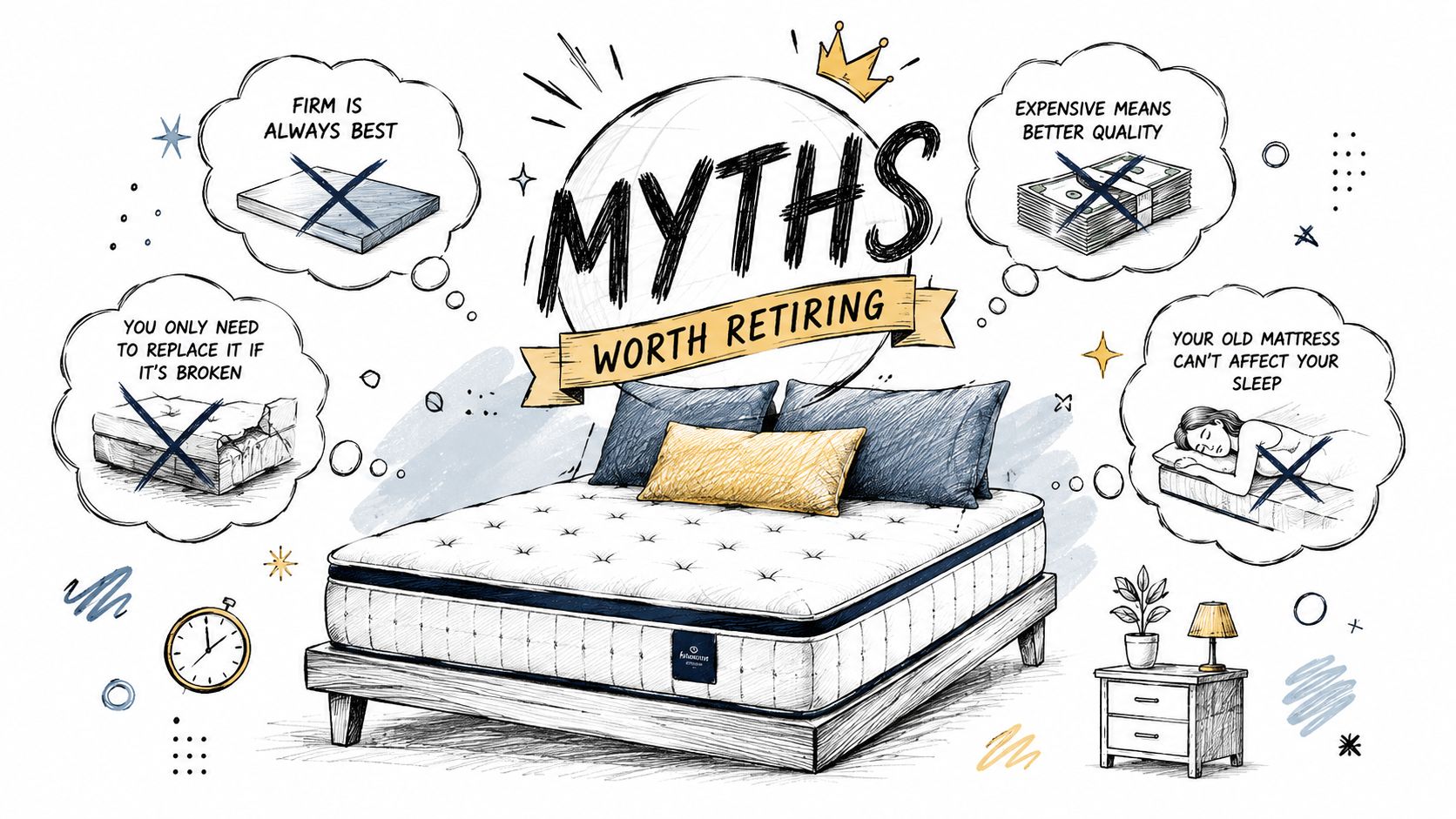
A back sleeper who wakes with a sore lower back may blame the mattress's age or brand first. Start with the advice itself. Much of it treats firmness, durability, price, and material as guarantees, when the fit depends on body weight, pressure profile, and support through the lumbar area.
Myth one says firmer is always better
A very firm surface can leave the lumbar curve unsupported while concentrating pressure beneath the shoulders, pelvis, and heels. The Lancet trial discussed earlier reported better outcomes for adults assigned to a medium-firm mattress than for those assigned to a firm mattress, including pain while lying in bed and disability outcomes, as reflected in the published clinical evidence. Use that finding as a starting point, not a universal prescription. A lighter back sleeper may need more surface cushioning, while a heavier sleeper often needs stronger resistance against sinkage. “Hardest available” is not a support strategy.
Myth two says every mattress lasts a decade
Replacement depends on materials, construction, usage, body weight, and wear. A mattress with a permanent depression, new pressure points, or weakened alignment support has reached its practical limit, regardless of its calendar age. Inspect how it feels, not just how long you have owned it.
Myth three says price guarantees support
A higher price may reflect materials, finish, customization, or brand positioning. It does not prove that the lumbar zone suits your body. Zoning, comfort-layer thickness, coil design, and pressure distribution matter more than prestige.
Myth four says back sleepers must avoid memory foam
Memory foam can suit back sleepers when the support core and lumbar design control sinkage. Judge whether it contours around the body without letting the pelvis settle into a deep hollow. Lott's Special Order Program gives shoppers a practical route to a closer fit when a stock configuration falls short. Vendor options may include fabrics, finishes, and comfort levels, allowing the shopper to match the mattress more closely to body weight and pressure needs instead of accepting a generic setup.
Bringing It All Together With Lott's Personalized Approach
The buying framework is straightforward. A back sleeper should first identify the body-weight category, begin with a medium-firm baseline, match the construction to the pressure profile, and test the mattress in the actual sleep position. Targeted lumbar support and gentle contouring matter more than raw firmness.
Personalization becomes especially useful when a standard model gets close but not quite right. Lott's Special Order Program gives shoppers access to vendor options that can include different comfort levels, fabrics, finishes, cushion firmness, and design details. For a mattress for back sleepers, the conversation should focus on the firmness tier, comfort-layer material, support zoning, temperature preference, and the way the body settles through the hips and lumbar area.
The broader home experience can be guided through Lott's Style Quizzes, Mattress Guide, and in-store associates. Those resources support a smooth transition between browsing the digital catalog online and visiting showrooms in Fernandina Beach, FL, or Waycross, GA. Lott's service area includes South Georgia and North Florida, with brand collections that include La-Z-Boy, Smith Brothers, Lexington, Stressless, and Hooker Furniture across the home.
Delivery completes the purchase. Lott's white-glove, in-home delivery includes setup, while each piece receives a rigorous multi-point inspection before it reaches the customer. The result is a more considered path from mattress research to a curated sanctuary, with comfort selected around the sleeper rather than imposed by a generic label.
Visit Lott's Furniture to test mattresses in the Fernandina Beach or Waycross showrooms, use the Mattress Guide and Style Quizzes, or arrange an online style consultation. Lott's associates can help match body weight, pressure profile, construction, and personalized comfort options, then coordinate white-glove delivery for the finished sleep setup.