Hybrid Mattress Medium Firm: A Complete Buyer’s Guide


A shopper can spend an afternoon comparing mattresses and still leave with the wrong answer. One tag says “plush,” another says “medium,” and a third promises “hybrid support,” yet none explains how the surface will feel after several hours, when shoulders begin to ache or the lower back needs steadier support.
A hybrid mattress medium firm is a strong starting point for many sleepers, but it isn't a universal prescription. Body weight, body shape, sleep position, comfort-layer materials, and sensitivity to pressure all change the experience. The right buying decision comes from translating the label into real lying-down feel, then testing construction, alignment, pressure relief, movement, and delivery support.
When a Mattress Label Is Not Enough
A shopper standing in a mattress gallery often sees a wall of confident promises. “Firm” suggests support, “plush” suggests indulgence, and “medium” appears to offer a safe middle ground. The problem is that firmness scales vary between brands, so a mattress described as a 6 out of 10 in one showroom can feel noticeably different from another mattress carrying the same rating.
A label can narrow the field, but it can't decide the purchase. The same hybrid may feel firmer to a lighter sleeper who doesn't compress the comfort layers, while a heavier sleeper may experience more sink and need stronger coil resistance. A side sleeper may notice pressure at the shoulder and hip long before a back sleeper notices a support problem.
Showroom rule: Treat “medium firm” as an invitation to test, not as a promise that every body will experience the same surface.
A major randomized, double-blind, multicenter clinical trial by Kovacs and colleagues compared firm and medium-firm mattresses for adults with chronic, nonspecific low-back pain. After 90 days, the medium-firm group achieved better outcomes for pain while lying in bed, pain on rising, and disability-related measures, challenging the longstanding assumption that the firmest possible mattress is best for back health. Later reviews reached a similar general conclusion, connecting medium-firm designs with comfort, sleep quality, spinal alignment, and potential back-pain relief. The clinical review of medium-firm mattress evidence provides the relevant research context.
That evidence makes medium firm a clinically meaningful comfort category, not merely a marketing phrase. It still doesn't mean every hybrid with that label will suit every sleeper. The useful consultation is more practical: identify the construction, understand the feel, compare softer and firmer alternatives, test normal sleep positions, and confirm the retailer can support the purchase after delivery.
Shoppers in South Georgia and North Florida can use that process across digital catalogs and local showrooms in Waycross and Fernandina Beach, FL. Style Quizzes, the Mattress Guide, and in-store associates can help narrow the selection before a shopper commits to an heirloom-quality sleep surface.
What a Hybrid Mattress Actually Is
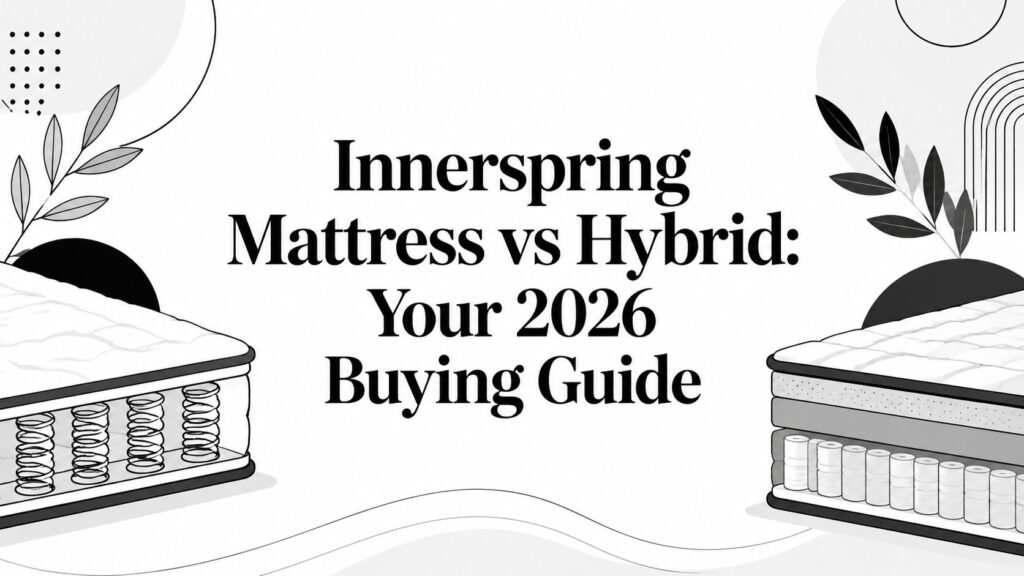
A hybrid mattress combines a spring support core with cushioning layers made from foam, latex, or related materials. The simplest way to picture the build is as a sandwich.
- The bottom layer is the bread. Individually pocketed coils or another responsive spring system provide the structure, load-bearing support, edge stability, airflow, and bounce.
- The middle layers are the filling. Foam, latex, or micro-coils shape pressure relief and determine how much the body settles into the mattress.
- The top cover is the first touch. Quilting and upholstery materials influence the initial softness before the deeper comfort layers engage.
The coils matter because they respond under different parts of the body rather than acting like one solid slab. They can make repositioning easier and allow more air movement than a dense all-foam design. Reinforced perimeter support can also make sitting on the edge or sleeping near it feel more secure.
The comfort stack changes the experience. A thicker, more conforming foam layer can make a spring core feel softer and more enveloping. A thinner comfort layer over responsive coils can feel buoyant and easier to move across. Latex tends to add resilient cushioning, while memory foam usually creates a slower, closer cradle.

A hybrid sits between several familiar categories:
- All-foam mattresses usually provide deeper contouring and less bounce.
- Latex mattresses generally feel buoyant, responsive, and more surface-oriented.
- Traditional innerspring mattresses emphasize spring response, though their cushioning can vary widely.
- Hybrids combine coil support with a more customized pressure-relief system.
A helpful comparison of memory foam, hybrid, and innerspring construction can help shoppers understand those trade-offs before testing individual models.
The springs don't determine firmness by themselves. The entire comfort stack, including coil resistance, transition materials, foam density, quilting, and the sleeper's body, creates the final feel. That's why two mattresses carrying the same medium-firm description can produce very different experiences.
What Medium Firm Really Feels Like
Medium firm should feel welcoming at the surface, but not engulfing. The shoulders and hips should receive enough give to avoid concentrated pressure, often with roughly an inch or two of sink depending on the sleeper and the mattress materials. Beneath that initial cushioning, the support system should push back steadily enough to keep the torso from collapsing into a hammock.
Side sleepers usually notice the surface first at the shoulder and hip. A suitable hybrid lets those wider areas settle while filling the space at the waist, so the spine stays reasonably level. Back sleepers should feel the lower back supported without the hips dropping too far. The body should feel held, not suspended over a hard platform.
A surface that's too firm often announces itself through pressure at the shoulders, hips, or other prominent areas. A surface that's too soft may feel comfortable during the first few minutes, then allow the pelvis and lower back to sink out of line. Medium firm aims for the middle ground, enough contouring for pressure relief and enough pushback for stable posture.
Three showroom checks
- Roll onto the side. Turning should feel controlled rather than effortful. Excessive sink can make movement feel trapped, while an overly rigid surface can create sharp pressure.
- Check the lower back. On the back, a hand should slide beneath the small of the back without being forced through a large empty gap or pushed away by excessive arching.
- Notice the body position. A balanced medium-firm hybrid usually makes the sleeper feel more “on” the bed than “in” it, while still allowing the shoulders and hips to settle.
Research supports medium firm as a useful general-purpose category for adults with nonspecific low-back pain or morning stiffness. A systematic review of 39 studies found that medium-firm mattresses generally improved comfort, sleep quality, and spinal alignment compared with softer or firmer alternatives. In a randomized trial involving 313 adults, the medium-firm group had better 90-day odds of improvement in pain while in bed, with an odds ratio of 2.36, and disability, with an odds ratio of 2.10, compared with the firm group. These findings appear in the systematic review and clinical trial report.
That evidence supports a starting point, not a guarantee. The mattress firmness guide helps shoppers connect the label with actual pressure, support, and movement checks.
Comparing Medium Firm to Soft and Firm Options
A soft hybrid offers a deeper hug. Its comfort layers allow the shoulders and hips to settle more generously, which can benefit sleepers who feel pressure on rigid surfaces. The trade-off is a greater risk of feeling stuck during turns or allowing the pelvis to sink too far, particularly when the comfort system lacks enough resistance beneath it.
A firm hybrid feels more buoyant and surface-oriented. It makes repositioning easy and can provide a reassuringly strong push beneath the torso, but it may press uncomfortably against a side sleeper's shoulder and hip. Medium firm sits between those experiences, combining a balanced cradle with responsive support.
| Firmness | Side Sleepers (Light / Average / Heavy) | Back Sleepers (Light / Average / Heavy) | Stomach Sleepers (Light / Average / Heavy) |
|---|---|---|---|
| Soft | Light: pressure relief may suit the shoulders. Average: useful for pronounced pressure points. Heavy: may allow excessive hip sink without robust support. | Light: can feel comfortable if the lumbar area remains supported. Average: watch for pelvic dip. Heavy: usually needs stronger underlying resistance. | Light: may work if the torso stays lifted. Average: monitor lower-back arching. Heavy: generally risks too much midsection sink. |
| Medium firm | Light: choose enough cushioning for the shoulder and hip. Average: often a versatile starting point. Heavy: look for responsive coils and restrained sink. | Light: can cushion the lumbar curve. Average: strong all-purpose match. Heavy: prioritize stronger support through the center. | Light: may work if the hips stay level. Average: choose firmer within the category if needed. Heavy: seek robust pelvic support. |
| Firm | Light: may create pressure at the shoulder and hip. Average: can suit sleepers who prefer a lifted feel. Heavy: may provide useful resistance. | Light: can feel rigid if cushioning is limited. Average: may support a flatter posture. Heavy: often offers stronger pushback. | Light: can maintain a lifted torso. Average: commonly suits the position. Heavy: may help prevent pelvic collapse. |
This matrix is a decision aid, not a substitute for testing. A study summarized by the World Sleep Society evaluated spinal alignment in 59 healthy participants using visually identical mattresses with soft, medium, or firm spring units beneath the same gel-foam comfort layer. No statistically significant overall alignment difference appeared among the three configurations, but body characteristics changed the results. Higher-weight participants tended to align more neutrally on the firmer mattress, lower-weight participants generally suited softer support, shorter participants aligned better on softer surfaces, and the medium mattress produced more neutral alignment among taller participants. The World Sleep Society study summary explains why one universal firmness recommendation is weak.
Medium firm is often the most forgiving choice for couples with different preferences because it avoids an extreme feel. It can also adapt better when a sleeper's comfort needs change between cooler and warmer seasons, though material airflow and heat retention still deserve a direct test.
Matching Medium Firm to Your Sleep Position and Body
A side sleeper with a narrow waist may feel perfectly supported on one medium-firm hybrid, while a broader sleeper may feel pressure at the shoulder or excessive sink at the pelvis. Sleep position is a useful starting point, but body shape determines how you meet the mattress. Choose the surface that keeps your spine reasonably neutral while giving the shoulders, hips, chest, and waist the support each area needs.
Side sleepers need pressure relief first
Side sleepers place concentrated load on the shoulder and hip. A medium-firm hybrid works well when its comfort layers conform enough to fill the waist gap without allowing the pelvis to fall below the chest. Petite sleepers may prefer more cushioning within the medium-firm range because they may not compress the upper layers as much. Larger-framed side sleepers should look for stronger coils and comfort materials that limit excessive hip sink without reinforced coil support and higher-density transition foam.
Back sleepers need a stable middle
Back sleepers often suit medium-firm support because it cushions the lumbar curve while resisting collapse through the hips. A lighter sleeper may experience the same mattress as firmer, while a heavier sleeper may need more resistance through the center third. Your lower back should feel supported, and the mattress should not push the spine into an exaggerated arch. If the pelvis sinks noticeably below the torso, choose a model with firmer transition support or stronger coil pushback.
Stomach sleepers need lift beneath the torso
Stomach sleepers need the chest, abdomen, and pelvis to remain lifted. A medium-firm hybrid on the firmer side of its category may suit this position better than a heavily cushioned model. Any sensation of the hips dropping below the chest indicates that the comfort system is too yielding for your body and sleeping position. Heavier sleepers should seek stronger pushback under the pelvis from a higher-gauge coil unit or firmer transition layer.
A controlled sleep study tested 12 adults with moderate body mass index on soft, medium, and firm mattress levels. The medium mattress produced the most favorable results in that study, including optimized sleep architecture and reduced sleep-onset latency, but body weight, height, and hip circumference affected alignment. Heavier sleepers tended to align better on firmer surfaces, while larger hip circumferences increased the risk of misalignment on softer mattresses. The controlled mattress firmness study reinforces the need to judge the complete mattress and the individual sleeper together.
A practical alignment check
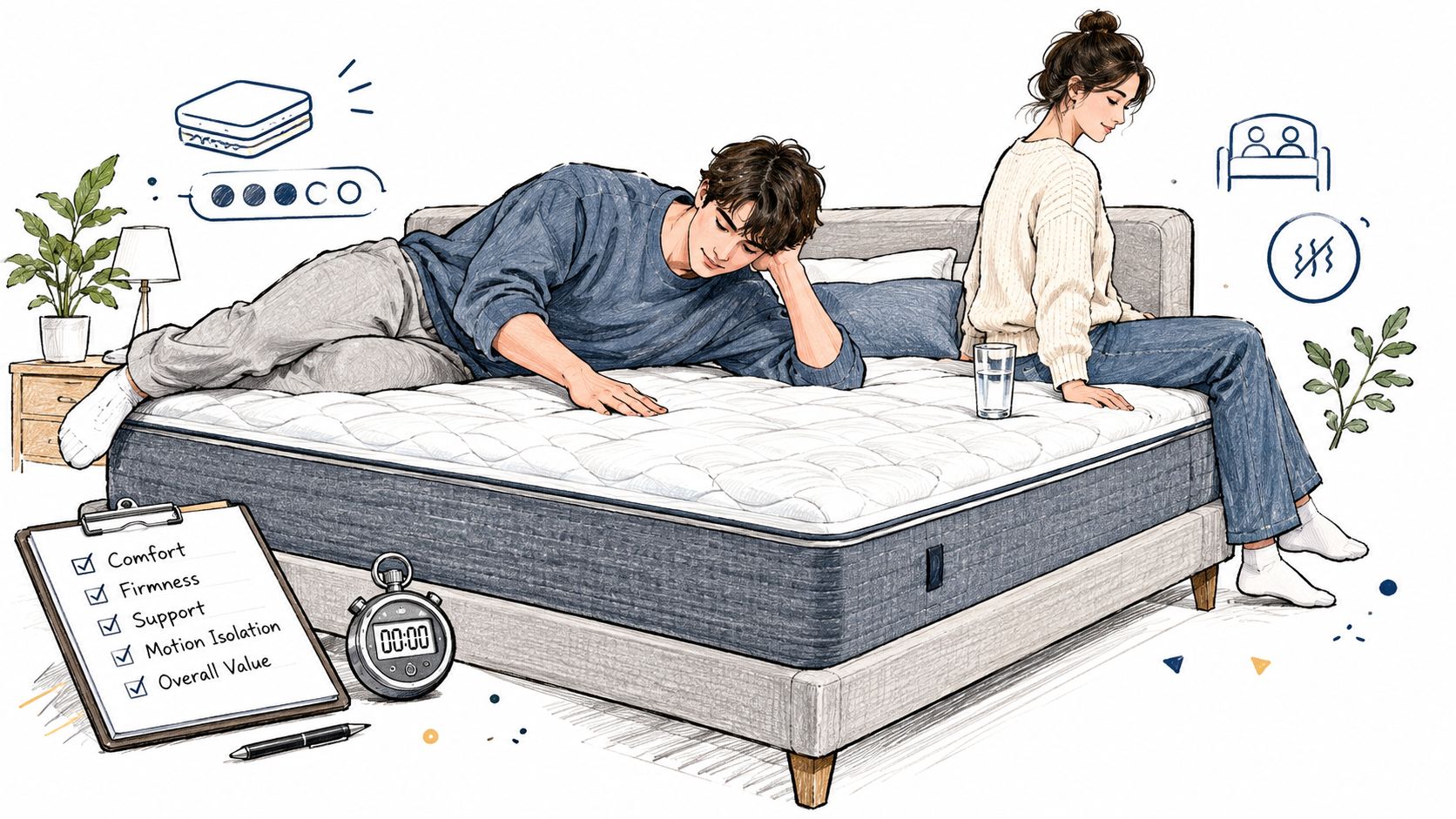
Lie in your normal position and ask a partner or associate to view your spine from behind. A hand can check the spaces around the chest, waist, and hips. Large unsupported gaps suggest insufficient conformity, while a torso that visibly sags points to excessive softness.
Use Lott's body-type mattress guide and Mattress Guide tool to organize the decision around pressure points, pelvic position, turning effort, partner movement, and temperature. If a standard model misses your needs, Lott's Special Order Program can help specify a better fit. White-glove delivery adds practical support at home, including handling the mattress in a way online-only mattress brands cannot replicate.
Testing and Buying a Hybrid With Confidence
A showroom test should answer practical questions, not confirm a label. Give the hybrid a proper fifteen-minute lie-down. Remove your shoes, bring your usual pillow when possible, and settle into the position you use most often. A quick sit can hide pressure, weak support, or difficult movement.
What to check on the mattress
- Side comfort: Your shoulder and hip should settle without sharp pressure, tingling, or numbness.
- Back support: The lumbar area should feel supported while your hips remain level with your torso.
- Rolling effort: Turn from side to side. You should move easily, without feeling held in a deep cradle.
- Edge stability: Sit and lie near the perimeter. The edge should feel dependable rather than collapsing beneath you.
- Partner disturbance: Ask your partner to turn. Their movement should not send an exaggerated wave across your side.
- Temperature: Cover materials, foam thickness, coil openness, bedroom conditions, and personal heat sensitivity all influence how warm the mattress feels.
A controlled study of 128 healthy adults found substantial individual variation while participants used seven mattresses for approximately four weeks each. Firmness significantly affected 9 of 11 major actigraphy and diary-based sleep measures. The controlled mattress performance study supports judging a mattress by your sleep experience, not by “medium firm” printed on a tag.
Online research becomes more useful when you request details that product pages often simplify. Ask for layer specifications, support-core information, firmness descriptions, home-testing terms, and return conditions in writing. Use our tips for buying a new mattress for a practical checklist covering timing, budget, and trial terms. Then test shortlisted models in person whenever possible.
The Special Order Program gives you another way to pursue the feel you want. Rather than accepting a generic firmness description, discuss your preferred balance of cushioning and support with a showroom associate. The program can support custom designs involving fabrics, finishes, and comfort levels, with additional selections available across relevant home furnishings.
Prepare before your visit with the Mattress Guide and Style Quizzes. Bring those preferences to the showroom, then let an associate translate them into a surface you can test. Sleep concerns also vary with lifestyle and body needs, so this complete sleep guide for women provides broader context alongside mattress shopping.
Finish the purchase by confirming the delivery service. Lott's white-glove standard includes a multi-point inspection before the mattress reaches you, followed by in-home placement. That support matters with a heavy hybrid and gives you practical help that online-only purchasing cannot provide.
Bringing Your New Mattress Home
Delivery day should feel like the final step of a considered purchase, not another home project. A scheduled window allows the household to prepare the bedroom, clear the pathway, and decide whether old bedding should be removed. Professional delivery teams place the hybrid in the bedroom, position it correctly, and complete setup so the sleep surface is ready for use that night.
That service matters because a hybrid mattress can be substantial and awkward to maneuver through doorways, hallways, and stairs. White-glove handling avoids the strain of wrestling a compressed package into place and reduces the risk of damaging walls, floors, or the mattress itself.
A delivery-day checklist
- Prepare access: Clear the route from the entrance to the bedroom.
- Confirm placement: Make sure the foundation and bed frame are ready before the scheduled arrival.
- Review the inspection: The delivery crew should check the mattress condition before leaving.
- Discuss old bedding: Ask about optional removal of the existing mattress if that service is needed.
- Keep the contact information: A local showroom team remains available for practical follow-up.
The white-glove mattress delivery service gives shoppers a direct alternative to managing every part of setup alone. If the feel seems unusual after the first 30 nights, a showroom team is available by phone or in person, rather than leaving the customer to deal with an impersonal chatbot.
A confident purchase can be reduced to four checks:
- The comfort layers relieve pressure at the shoulders and hips.
- The support core keeps the pelvis and torso aligned.
- Turning and partner movement remain comfortable.
- The delivery, inspection, and follow-up process match the value of the mattress.
Shoppers across South Georgia and North Florida can begin in the Waycross or Fernandina Beach gallery, or start online through the digital catalog. The Mattress Guide can narrow the choices before a visit, while the Special Order Program can open additional paths for personalized comfort and coordinated home design. The same showroom experience also supports broader furnishing decisions, from a Stressless recliner to upholstery from La-Z-Boy or Smith Brothers and investment-quality pieces from Lexington or Hooker Furniture.
The Lott's Furniture team offers hybrid mattress guidance, personalized Special Order options, Style Quizzes, a Mattress Guide, and white-glove delivery with multi-point inspection for homes across South Georgia and North Florida. Shoppers can visit the Waycross or Fernandina Beach showroom, or begin with an online style consultation to find a medium-firm hybrid that fits the body, the bedroom, and the way the household sleeps.