Save 50% Off MRSP on Lexington | Shop the Catalog >

Best Mattress for Combination Sleepers: 2026 Guide

A restless sleeper usually knows the pattern. Falling asleep on one side feels fine, then the shoulder wants relief. The back feels better for a while, then the hips shift again. By morning, the mattress hasn't felt supportive in every position. It has felt negotiable.
That's the core challenge of finding the best mattress for combination sleepers. A single surface has to cushion pressure points, keep the spine aligned, stay easy to move on, and remain comfortable through repeated position changes. Most mattress advice flattens that into one generic recommendation. Real comfort rarely works that way.
Across South Georgia and North Florida, many homeowners and renters arrive at the same conclusion. The mattress isn't just too soft or too firm. It's mismatched to the way they sleep. A better fit starts with how often the body rotates, which position shows up most often, and how the mattress responds when weight shifts.
| Sleeper pattern | Usually needs most | Often struggles with |
|---|---|---|
| Side to back | Pressure relief plus steady support | Surfaces that feel too rigid at the shoulder |
| Back to stomach | Firmer pushback through the middle | Mattresses that let the hips dip |
| Side to stomach | Cushioning with quicker rebound | Slow foam that makes turning feel like work |
| All-position sleeper | Balanced feel with strong edge support | One-note comfort that only suits one posture |
Are You a Combination Sleeper
A combination sleeper doesn't stay in one posture all night. The body cycles between side, back, and sometimes stomach sleeping based on pressure, temperature, habit, and comfort. Some people spend most of the night switching between two positions. Others seem to use the whole mattress map before sunrise.
A common local example is the shopper who says the bed feels fine at first, but sleep still ends with a stiff lower back or a sore shoulder. That usually points to a mattress that works for one position and punishes the next. The issue isn't indecision. It's that the sleeper needs adaptive comfort, not a single-position design.
The signs usually show up in the morning
A combination sleeper often notices a few repeated clues:
- Shoulder soreness: Side sleeping needs enough give to cushion the upper body.
- Hip fatigue: Back or stomach phases need stronger support through the middle.
- Crowding at the edge: Frequent movers use more of the sleep surface and notice weak perimeter support quickly.
- A fighting-the-bed feeling: If turning takes effort, the mattress is slowing the sleeper down.
That's why mattress shopping for this sleep style should feel less like guessing and more like matching function to habit. Helpful guidance starts with understanding sleeping style, body build, and comfort preference, which is why many shoppers begin with a practical resource like this guide to choosing the right mattress for your sleeping style.
The right mattress for a combination sleeper doesn't lock the body into one position. It supports movement without asking the sleeper to work for it.
A tailored sleep sanctuary matters more here
Combination sleepers need a mattress that behaves well under changing pressure. That means one part of the bed can't feel inviting while another feels punishing. It also means generic advice like “just buy medium-firm” often leaves important details unresolved.
For households in South Georgia and North Florida, the better path is a more customized one. The mattress should fit the dominant sleeping position, body weight, and comfort expectations, then become part of a broader bedroom that feels calm, refined, and restorative. That's the difference between owning a mattress and creating a true sleep sanctuary.
Key Features for All-Night Comfort
A combination sleeper asks more from a mattress than a single-position sleeper. The bed has to cushion pressure when the body settles on a shoulder, then hold the spine level when the sleeper rolls to the back or stomach, all without making the next turn feel labored.
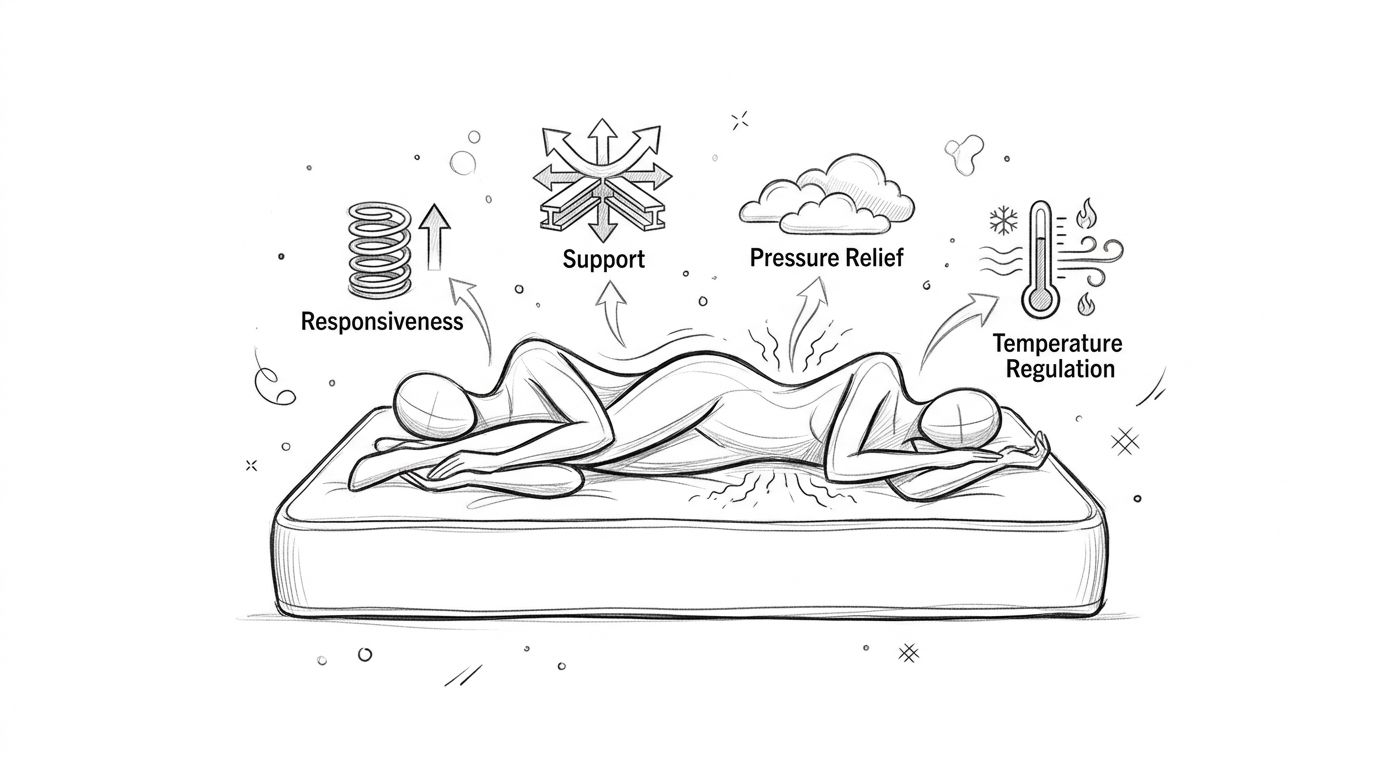
Responsiveness sets the pace
In the showroom, I look for a surface that rebounds promptly after you shift. If the mattress keeps your body print for more than a moment, many combination sleepers start using extra effort to turn. That usually shows up as a bracing elbow, a twisted hip, or a brief wake-up that the sleeper may not even remember in the morning.
Responsive materials help the body move naturally. Slow-recovery foams can still work for some people, but they need to be paired with the right body weight and dominant sleeping position. A lighter side sleeper may enjoy more contour. A heavier back or stomach sleeper often does better on a mattress with quicker pushback.
Pressure relief has to match where you spend the most time
Pressure relief matters most during the side-sleeping part of the night, but the right amount depends on build. A mattress that feels pleasantly cushioned to a smaller sleeper can feel thin and hard to someone with broader shoulders or more body weight.
Generic advice often falls short. Combination sleepers do better when pressure relief is matched to the position they return to most often. If side sleeping is the dominant position, the comfort layers need enough give at the shoulders and hips. If back or stomach sleeping takes up more of the night, too much softness can let the midsection sink and create next-day tightness.
Motion isolation matters more for couples
Frequent repositioning can travel across the mattress surface. Good motion isolation keeps one partner's turn from becoming the other partner's wake-up call.
For shared beds, I usually tell shoppers to test this directly. Have one person roll and change positions while the other stays still. If the whole mattress reacts, the bed may feel fine alone but become frustrating over time.
Edge support affects more than sitting
Strong edges give combination sleepers more usable space. That matters for couples, taller sleepers, and anyone who drifts toward the perimeter during the night.
Weak edge support also changes how secure the mattress feels during a turn. If the side compresses too easily, the bed can feel smaller and less stable than its actual size.
Cooling helps limit restless movement
Heat buildup often triggers extra tossing and turning. For many households in South Georgia and North Florida, that is not a small detail. Breathable covers, airflow through the support core, and less heat-trapping comfort materials can help the sleeper stay settled longer. Shoppers who know temperature is part of the problem can compare materials in this guide to the best mattress for hot sleepers.
The five-part checklist
- Responsive surface: Lets the body change positions without a delayed, stuck feel.
- Pressure relief: Cushions shoulders and hips, especially for side-dominant sleepers.
- Motion isolation: Reduces partner disturbance during overnight repositioning.
- Edge support: Keeps more of the mattress usable and stable near the perimeter.
- Cooling design: Helps prevent heat buildup that can lead to extra movement.
Practical rule: Start with your dominant sleep position, then adjust for body weight. That approach usually leads to a better mattress match than defaulting to a generic medium-firm feel.
Hybrid vs Memory Foam vs Latex What Is Best
Material choice changes how a mattress feels at 2 a.m. when a sleeper rolls from the shoulder to the back, or from the back to the stomach. For combination sleepers, the right category is the one that matches the position they spend the most time in, then supports how their body weight interacts with that surface.

Hybrid mattresses
A hybrid uses coils for support and a comfort layer of foam, latex, or both. That build gives many combination sleepers the easiest balance of pressure relief and repositioning.
In the showroom, hybrids tend to fit the widest range of sleepers because the coil unit adds lift under the body while the top layers soften the sharper contact points. Side-dominant combination sleepers often do well on hybrids with a plusher top. Back- or stomach-dominant sleepers usually need a firmer comfort package so the hips do not settle too far.
The category matters, but the build on top matters just as much. A soft hybrid and a firm hybrid can feel like two completely different beds.
Memory foam mattresses
Memory foam works best for shoppers who want closer contouring and less surface bounce. It often suits side-dominant combination sleepers, especially lighter to mid-weight sleepers who need more cushioning at the shoulder and hip.
The trade-off is response speed. Some memory foam beds recover slowly enough that a sleeper has to put in more effort to turn. I see this issue most often with stomach-dominant combination sleepers and heavier shoppers, who usually need a mattress that lets them change position without feeling held in place.
For couples, memory foam can also be a good fit when partner movement is the bigger complaint than ease of turning.
Latex mattresses
Latex has a quicker, springier response than traditional memory foam. It cushions the body, but it usually keeps the sleeper more on the mattress than in it.
That feel can be excellent for back-dominant and mixed-position sleepers who want easier movement through the night. It can also work well for heavier combination sleepers because latex tends to hold its shape well under load. Some side-dominant sleepers love it. Others want deeper pressure relief than latex usually gives on its own, especially at lighter body weights.
Latex comfort is distinctive. Some shoppers notice that right away and either love it or move on quickly.
Side-by-side trade-offs
| Mattress type | Best for | Main strength | Main trade-off |
|---|---|---|---|
| Hybrid | Combination sleepers who need balance | Mixes cushioning with easier movement | Quality and feel vary a lot by comfort layers |
| Memory foam | Side-dominant sleepers who want contouring | Strong pressure relief and reduced motion transfer | Slower response can make turning harder |
| Latex | Sleepers who want buoyancy and quick rebound | Fast recovery and stable support | Feel can be springier and less contouring |
What usually works best in real bedrooms
If a shopper asks me for the safest starting point, I usually start with hybrid. It covers the most bases without forcing a major compromise in either movement or comfort, which is why so many combination sleepers end up there after trying the other two types.
That does not mean hybrid is automatically best for everyone. A side-dominant sleeper under a lighter body weight may prefer memory foam because it allows more pressure relief with less pushback. A back- and stomach-dominant sleeper, or a sleeper over a higher body weight range, often prefers the added lift and mobility of a hybrid or latex model.
Shoppers who want more detail on coil-and-foam construction can read this guide on what a hybrid mattress is.
A simple decision filter
- Choose hybrid if the sleeper changes positions often and wants the broadest balance of comfort, support, and ease of movement.
- Choose memory foam if the sleeper is side-dominant and wants deeper contouring more than quick rebound.
- Choose latex if the sleeper wants a buoyant surface with faster response and a more lifted feel.
Finding Your Perfect Firmness Level
A shopper can change positions all night and still need a very specific feel. The main question is where that sleeper spends the most time, and how much weight the mattress needs to carry without letting the body fall out of alignment.

Dominant sleeping position changes the answer
"Medium-firm" gets repeated so often that many shoppers assume it is the default answer for every combination sleeper. In the showroom, that shortcut misses plenty of people.
A side-dominant combination sleeper usually needs more pressure relief at the shoulder and hip. A stomach-dominant combination sleeper usually needs a firmer, flatter surface to keep the midsection from sinking too far. Back-dominant sleepers often land in the middle, with enough cushioning for occasional side sleeping and enough support to keep the lower back from bowing.
That is why the best firmness choice starts with the dominant position, not with a generic label.
Body weight changes how the same bed feels
Firmness is never just about the mattress tag. It is also about how far the body settles into the comfort layers and how strongly the support core pushes back.
Lighter sleepers often stay closer to the surface, so a bed can feel firmer to them than it does to someone heavier. Heavier sleepers press further into the mattress, which can make the same model feel softer and less supportive, especially after several position changes through the night.
Two people can test the same mattress and both give accurate feedback.
One feels pressure at the shoulder. The other feels the hips dipping.
A more useful way to choose
Side-dominant combination sleeper
Start around a medium or slightly softer medium feel. The goal is enough cushioning for the shoulder and hip, with enough support to keep the waist from collapsing.
Back-dominant combination sleeper
A true medium to medium-firm feel is often the safest range. It keeps the spine on a more even plane and still allows comfortable movement into a side position.
Stomach-dominant combination sleeper
Start firmer. Too much plushness under the pelvis can pull the lower back out of alignment, even if the bed feels comfortable for the first few minutes.
Higher-body-weight combination sleeper
Pay close attention to support, not just softness. Many sleepers in this group do better with a firmer comfort profile, denser materials, or a stronger coil system that stays stable as they shift positions.
For a closer explanation of how firmness labels translate to real comfort, read what nobody tells you about mattress firmness before you buy.
Your In-Store Mattress Buying Guide
A showroom test matters most after the first two minutes.
Combination sleepers often lie down, say a mattress feels comfortable, then realize at home that turning takes effort, the shoulder jams on one side, or the hips sink too far after a few position changes. In the store, the goal is to test how the bed behaves once your body settles and starts moving the way it does through the night.
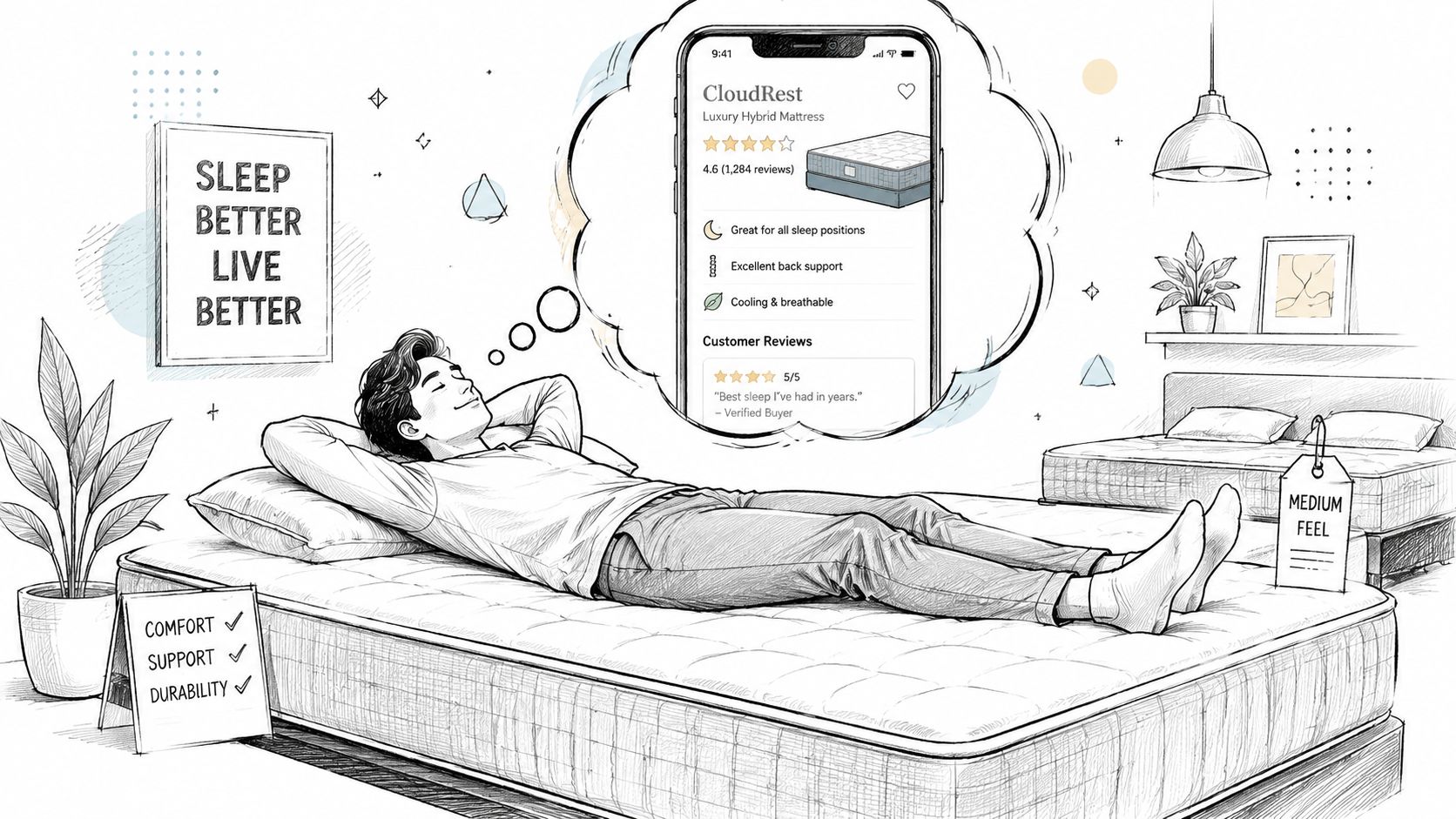
Start with a short list, then test with purpose
Online research helps narrow the field, but the store is where comfort becomes specific. Shoppers usually do better when they arrive knowing two things: their dominant sleep position and their body weight range. Those two details shape how a mattress feels far more reliably than a simple label like medium-firm.
A good prep step is reviewing these tips for buying a new mattress, then coming in ready to compare a few models instead of trying every bed on the floor.
How to test a mattress in a way that actually tells you something
Use the same routine on each mattress. That keeps the comparison honest.
- Lie in your dominant position first. Stay there long enough for your shoulders, hips, and lower back to settle.
- Roll into your secondary position. Pay attention to how easily the mattress lets you turn and whether it keeps support under you once you move.
- Check for pressure and drift. Side sleepers usually notice the shoulder first. Back and stomach sleepers often notice the pelvis dipping or the lower back tightening.
- Sit on the edge and stand up. Edge support affects daily use more than many shoppers expect, especially if you dress at the side of the bed or share the mattress.
- If you sleep with a partner, test together. One person should change positions while the other stays still and notices motion transfer.
In our showroom, I usually tell combination sleepers to spend enough time on each candidate mattress to move naturally, not perform a quick comfort check. A mattress can feel plush at first and still be a poor fit if it resists movement or loses support under the heavier parts of the body.
Ask better questions while you test
Ask what is in the comfort layers, how dense the foams are, and what kind of support core sits underneath. Responsive materials usually help combination sleepers change position without fighting the bed. Stronger support systems tend to hold alignment better over time, especially for higher-body-weight sleepers or couples.
Ask about the return policy, foundation requirements, and whether comfort adjustments are available. Those details matter just as much as the first showroom impression.
Lott's Furniture offers digital style tools, a Mattress Guide, and in-store support in Fernandina Beach, FL, so shoppers can compare options with a clearer plan and a more personal fit. After the mattress is chosen, bedroom comfort also depends on the environment around it. Clean textiles and cleaner air can help reduce home allergens and dust mites, especially in homes where stuffiness or dust affects sleep quality.
Creating Your Curated Bedroom Sanctuary
A combination sleeper often feels the whole room, not just the mattress. If the bed supports your shoulders and hips but the room runs hot, collects dust, or lacks the right setup around it, sleep still feels broken.
The bedroom works best as a system. Mattress choice starts it, but the frame, bedding, lighting, and air quality all shape how restful the room feels night after night.
For combination sleepers, the best sanctuary starts with a mattress that matches the sleeper, not a generic rule. A side-to-back sleeper under 160 pounds may rest well on a slightly softer, more pressure-relieving surface. A back-to-stomach sleeper with more body weight usually needs a firmer, more responsive build to keep the midsection from sinking too far. That same personalized approach should carry through the rest of the room, so the space supports your dominant sleep position, temperature preferences, and nightly routine.
Build the room around how you actually sleep
A well-furnished bedroom should make getting into bed, settling in, and waking up feel easy. Good pairings often include:
- Lexington bed frames: Refined styling with the structure to support an investment mattress properly.
- Hooker Furniture nightstands: Useful bedside storage that keeps glasses, chargers, and nightly basics within reach.
- Stressless seating: A comfortable spot for reading or winding down without turning the bed into the only place to relax.
Clean air matters, too. For homeowners trying to reduce home allergens and dust mites, cleaner textiles, regular mattress protection, and a fresher bedroom environment can make sleep feel more comfortable, especially during allergy season in South Georgia and North Florida.
Small details count. Breathable sheets, a mattress protector that does not trap heat, and blackout window treatments often make a noticeable difference.
Delivery and setup shape the final result
I have seen plenty of good mattress purchases lose momentum because the setup was handled poorly. A quality mattress and bedroom set should arrive ready for placement, with each piece checked before it enters the home.
White-glove delivery helps the room come together the way it should. Proper setup protects the mattress, keeps the foundation and frame working together, and saves homeowners from wrestling heavy pieces down a hallway after delivery day.
At Lott's Furniture, that matters because many shoppers are furnishing a full room, not replacing one item. For homes across South Georgia and North Florida, careful delivery, inspection, and special-order options help create a bedroom that feels personal, finished, and built for better rest.
Frequently Asked Questions About Combination Sleeper Mattresses
Does pillow choice matter for combination sleepers
Yes. A pillow that's too tall or too flat can undo good mattress support. Combination sleepers usually do best with a pillow that keeps the neck from tilting too far while moving between positions.
Can a mattress topper fix the wrong mattress
Sometimes, but only in a narrow way. A topper may soften a mattress that feels too firm at the surface, but it usually won't correct deeper support problems or improve poor responsiveness. If the sleeper is fighting the bed while turning, the mattress itself is often the issue.
How long should a new mattress be tested before judging it
A mattress needs time for the body to adjust and for the comfort materials to settle. First impressions matter, but they aren't the whole story. Consistent sleep over a reasonable adjustment period gives a clearer answer than one night alone.
What should couples focus on most
Couples should test two things together. First, how much movement travels across the surface when one person turns. Second, whether the edge still feels usable when both sleepers spread out.
Is online shopping enough for a combination sleeper
Online research is a smart starting point, especially with Style Quizzes and a Mattress Guide. But combination sleepers benefit from in-person testing because movement, edge feel, and pressure relief are easier to judge on the mattress itself. The easiest path is usually an omnichannel one, moving from the digital catalog to a showroom visit in Fernandina Beach, FL.
What should be brought to the showroom
Comfort preferences, the dominant sleep position, and honest notes about what hurts in the morning. That information helps associates guide the search toward a more personal fit, especially when custom comfort options are available through special order programs from brands such as La-Z-Boy and Smith Brothers.
Visit Lott's Furniture to explore the digital catalog, take a style consultation, or plan a showroom visit in Fernandina Beach, FL. For shoppers across South Georgia and North Florida, it's a practical way to compare personalized comfort options, use the Mattress Guide and Style Quizzes, and experience white-glove, in-home delivery backed by a rigorous multi-point inspection.