
Your Mattress Buying Guide to a Perfect Night’s Sleep


A restless night usually starts the same way. Someone flips the pillow to the cool side, shifts to the edge of the bed, then wakes up wondering whether the mattress is the problem or whether sleep has become harder with age, stress, or routine. Mattress shopping often doesn't occur until that question starts showing up night after night.
That's why a good mattress buying guide should do more than define materials and firmness labels. It should help narrow the gap between what looks promising online and what feels right in a bedroom at home. For households across South Georgia and North Florida, the smartest approach is often a blend of digital research, careful testing, and expert guidance that turns mattress jargon into everyday comfort.
A mattress isn't just another household purchase. It shapes how the body settles, how the room functions, and how restful a home feels. The right fit can make a bedroom feel less like a place to collapse and more like a curated sanctuary built for steady, personalized comfort.
The Foundation of Your Sanctuary A Lotts Guide to Choosing a Mattress
A mattress often gets judged by the first minute someone lies down on it. That's understandable, but it misses the bigger picture. The mattress that feels plush in a showroom might leave the hips unsupported at home, while the one that feels firmer at first may provide the steadier support the body needs over a full night.
That's where many shoppers get stuck. They know they want better sleep, but they're trying to compare comfort words that sound similar and materials they can't see beneath the cover. A helpful guide starts with a simpler idea. The mattress should fit the sleeper's habits, body position, and sense of comfort, not just the trend of the moment.
Why the mattress matters beyond bedtime
The bed is the visual and practical center of most bedrooms. It affects not only sleep but also how the room feels to walk into when you return home. A well-chosen mattress supports the goal of creating a bedroom that feels calm, balanced, and worth coming home to.
For shoppers furnishing a full sleep space, the mattress also needs to work with the rest of the room. Investment-quality bedroom pieces from names such as Hooker Furniture and Lexington can help frame that larger vision, especially when a homeowner wants an heirloom-quality look instead of a patchwork setup.
A mattress should solve a nightly problem, not create a new one six months later.
Personalization changes the outcome
Mattress shopping becomes easier when buyers know they don't have to settle for a one-size-fits-all answer. A strong Special Order Program matters because most vendors support personalized comfort choices, and in many home categories they also support customized details such as fabrics and finishes. That same mindset of customization helps mattress shoppers focus on fit rather than guesswork.
Digital tools can help before anyone steps into a showroom. Style Quizzes can clarify the look of the bedroom, and a dedicated Mattress Guide can narrow the comfort conversation before testing begins in person. For many households, the most comfortable path is starting online, saving favorites from the digital catalog, and then visiting the showroom in Fernandina Beach, FL to compare options with an associate who can translate product language into practical advice.
Decoding Comfort How to Match Firmness to Your Sleep Style
Firmness is where most mattress decisions succeed or fail. Many shoppers assume firm means supportive and soft means comfortable, but the better question is whether the mattress keeps the body in a neutral spine position. Think of the spine like a line that should stay fairly even while sleeping. If the mattress lets the hips sink too far or pushes the shoulders too high, the body spends the night compensating.
That's why sleep position matters more than marketing labels.
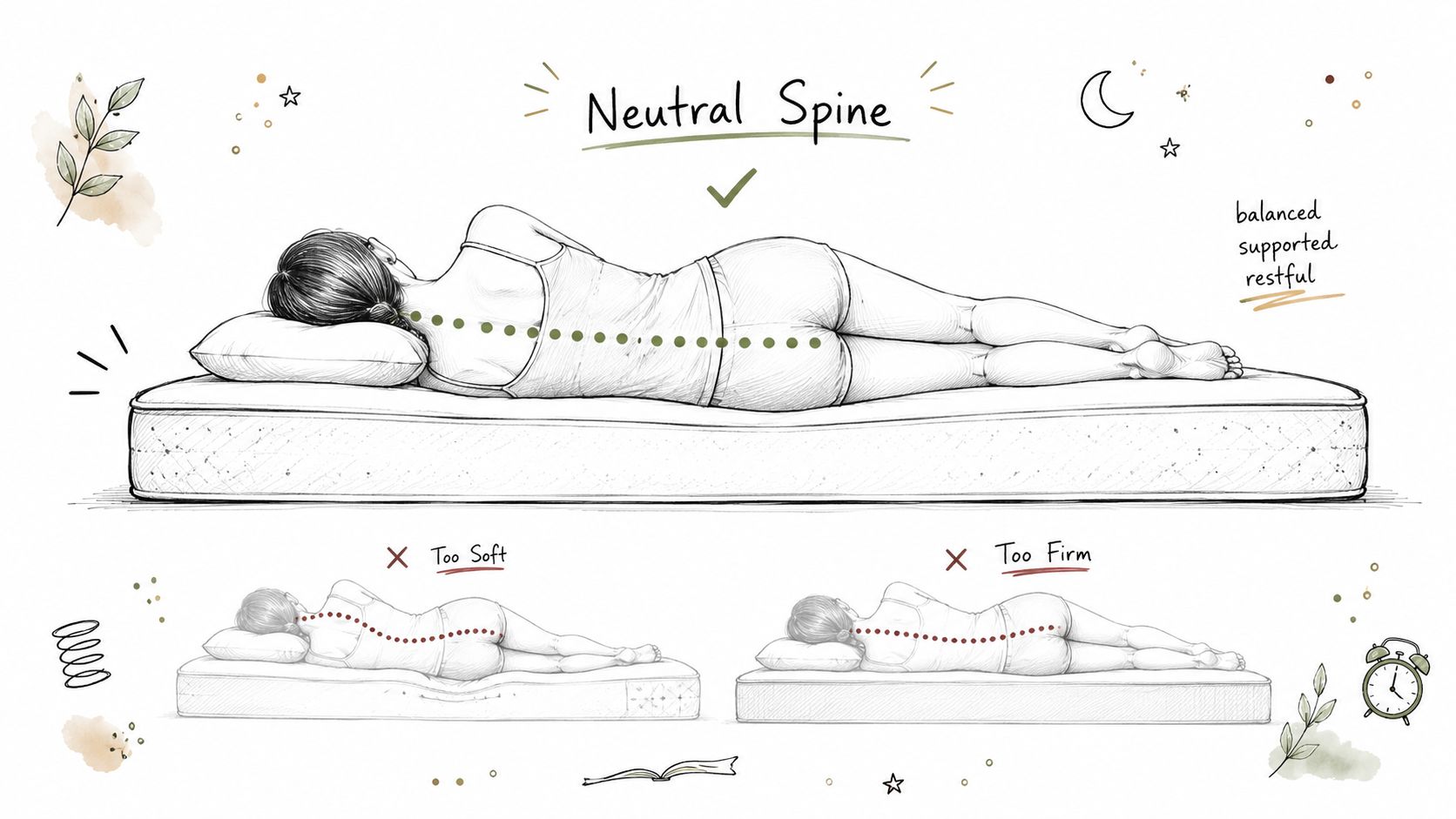
Side sleepers usually need more pressure relief
Side sleeping places more weight on the shoulders and hips. If the mattress is too firm, those areas can feel pushed up rather than cushioned. A surface with more give often helps the body settle more naturally.
Common signs a side sleeper may need a softer feel include:
- Shoulder pressure: The upper arm or shoulder feels compressed instead of cushioned.
- Hip discomfort: The hip doesn't sink enough to keep the spine from tilting.
- Frequent repositioning: The sleeper keeps turning to escape pressure points.
Back sleepers usually need balanced support
Back sleepers often do well on a mattress that feels steady through the middle without being hard on the upper back or heels. The goal is to support the lower back while still allowing the body to relax into the surface a bit.
A back sleeper may prefer a firmer comfort level than a side sleeper, but “firm” shouldn't mean rigid. It should mean the pelvis stays supported and the torso doesn't hammock.
Practical rule: If the lower back feels strained or the hips seem to drop below the chest, the mattress may be too soft for that sleeper's shape.
Stomach sleepers need extra attention
Stomach sleeping can be the trickiest position because it tends to pull the lower back out of alignment if the middle of the body sinks too much. These sleepers often benefit from a firmer, flatter feel that keeps the torso lifted.
The confusion here is common. A stomach sleeper may think a plush mattress feels pleasant at first touch, but comfort in the first minute isn't the same as support through the night.
Combination sleepers need responsiveness
Some people start on their side, wake up on their back, and spend part of the night moving between positions. These sleepers often do best with a mattress that responds quickly when weight shifts. Too much sink can make movement feel like climbing out of a hollow.
For buyers sorting through the details, this deeper look at what mattress firmness shoppers often miss before buying can help clear up the gray areas.
Why expert guidance matters here
Firmness labels aren't universal. One brand's medium can feel closer to another brand's firm. That's why online research works best when paired with real guidance. The Mattress Guide, the support of in-store associates, and the option to move from online browsing to in-person testing in Fernandina Beach give shoppers a more reliable way to match comfort to the way they sleep.
Exploring Mattress Types Pros and Cons
Most mattress materials sound more complicated than they need to be. Underneath the labels, the main question is simple. Does the mattress offer the kind of support, pressure relief, temperature feel, and movement response that suits the sleeper?
The four main categories cover most needs. Traditional innerspring, memory foam, latex, and hybrid designs each create a different sleep experience.
Mattress Type At-a-Glance
| Type | Best For | Feel | Lifespan (Approx.) |
|---|---|---|---|
| Innerspring | Sleepers who like a traditional, lifted feel | Supportive, springy | Varies by materials and construction |
| Memory Foam | Sleepers who want closer contouring | Cushioned, body-hugging | Varies by foam density and care |
| Latex | Sleepers who want buoyant support | Responsive, gently contoured | Often considered durable with proper care |
| Hybrid | Sleepers who want balance | Supportive with added cushioning | Varies by coil system and comfort layers |
Innerspring mattresses
An innerspring mattress uses a coil support system as its core. This is the style many people grew up with, though modern versions can feel more refined than older spring beds.
Pros
- Familiar support: Many sleepers like the classic lifted sensation rather than a deep sink.
- Ease of movement: Changing positions often feels simpler on a springier surface.
- Breathable structure: Coil systems generally allow airflow through the mattress.
Cons
- Less contouring: Some sleepers want more cushion at the shoulders and hips.
- Motion awareness: Depending on construction, a partner's movement may be more noticeable.
- Feel can vary sharply: Pillow tops and tighter tops may feel quite different even within the same category.
Memory foam mattresses
Memory foam responds to pressure and shape, creating a more contouring cradle around the body. Some sleepers love that close-fitting feel, while others find it too enveloping.
Pros
- Pressure relief: This type often suits sleepers who want cushioning around prominent joints.
- Motion isolation: Couples often appreciate how foam can limit movement transfer.
- Quiet comfort: Foam mattresses generally don't have the springy feel some people dislike.
Cons
- Slower response: Some sleepers feel slightly “held” in place rather than lifted on top.
- Heat perception: Certain models can sleep warmer depending on materials and room conditions.
- Less bounce: Shoppers who want quick movement may prefer something more responsive.**
Latex mattresses
Latex offers a different kind of softness. It usually feels more buoyant and resilient than memory foam, with support that pushes back gently instead of allowing a deep sink.
Pros
- Responsive comfort: The surface tends to adapt quickly when the sleeper changes positions.
- Balanced pressure relief: It cushions without creating the same hugged feeling as memory foam.
- Often chosen for durability: Many shoppers see latex as an investment-quality option.
Cons
- Distinct feel: People expecting a plush memory foam sensation may find latex too buoyant.
- Weight: These mattresses can be heavier and harder to move.
- Preference-driven: Some love the lively support, others don't connect with it.
The best mattress type often becomes obvious once a sleeper notices how they react to movement, pressure, and heat, not just softness.
Hybrid mattresses
A hybrid combines a coil support core with comfort layers such as foam or latex. This category aims to blend support, contouring, airflow, and ease of movement in one design.
Pros
- Versatility: Hybrids often appeal to a wide range of sleep styles.
- Couple-friendly performance: Many shoppers like the mix of motion control and support.
- Cooling potential: The coil base can help promote airflow compared with all-foam builds.
Cons
- Feel varies widely: “Hybrid” is a broad label, so one model may feel very different from another.
- More details to compare: Coil systems, comfort layers, and top construction all matter.
- May cost more than simpler builds: Added features can raise the investment.
For a closer side-by-side look at spring-based designs, this comparison of innerspring and hybrid mattresses helps clarify where each one shines.
Where customization fits in
A mattress category can narrow the field, but personalization often finishes the job. The Special Order Program matters here because many vendors support comfort customization, and in other home categories they also offer personalized fabrics and finishes that help create a complete bedroom environment. That broader ability to tailor a room is one reason shoppers often pair sleep pieces with curated furnishings from brands such as Lexington, Hooker Furniture, and Stressless when building a more cohesive sanctuary.
Expert guidance also keeps the process grounded. Associates in-store, along with digital tools such as Style Quizzes and the Mattress Guide, help translate broad mattress categories into practical choices for real homes in South Georgia and North Florida.
Sizing and Budgeting for Your Investment
After mattress type and comfort level are narrowed down, two practical questions remain. Will the mattress fit the room well, and does the investment match the way the bed will be used?
Both matter. A mattress can feel perfect in theory and still become a poor choice if it crowds a bedroom, overwhelms a guest space, or leaves too little room to move around the bed comfortably.
Choosing the right mattress size for the room
Most shoppers know the names of standard sizes, but the better approach is to think about lifestyle first.
- Twin or Twin XL: Often useful in smaller rooms, children's spaces, or guest settings where floor space matters.
- Full: Gives a solo sleeper more room to spread out without dominating the room.
- Queen: Common for primary bedrooms because it balances shared sleeping space with practical room planning.
- King or California King: Better suited to larger rooms or taller sleepers who want a more expansive layout.
The room itself needs measuring, but so do doorways, stair turns, and the path into the bedroom. This guide to choosing the best bed mattress size for a home is useful for shoppers who want to avoid sizing surprises.
Reframing the budget conversation
Mattresses are often discussed like simple price tags. That usually leads shoppers to compare models too narrowly. A better lens is long-term value. The mattress supports nightly rest, daily comfort, and the overall quality of the bedroom experience.
That doesn't mean every buyer needs the most elaborate option. It means the right mattress should feel like an investment-quality purchase rather than a disposable one. Buyers should weigh comfort, support, materials, and expected use instead of focusing only on the initial number on the tag.
A primary bedroom mattress should be chosen like a foundational home piece, not an impulse item.
Think about the whole bedroom
A mattress rarely lives alone. It sits within a room that includes the bed, nightstands, lighting, and storage. Buyers who want a cohesive result often think of the mattress as the starting point of a larger sanctuary, then build around it with coordinated case goods and bedroom furniture.
That's where well-made collections from Hooker Furniture or Lexington can complement the sleep setup. For shoppers who want a more personalized look, the Special Order Program adds flexibility across many product categories, with vendor support for individualized designs, fabrics, finishes, and comfort preferences. Digital browsing can start the process, and in-person guidance in Fernandina Beach, FL helps translate those choices into a room that feels considered rather than pieced together.
The Lotts Buying Experience In-Store and Online
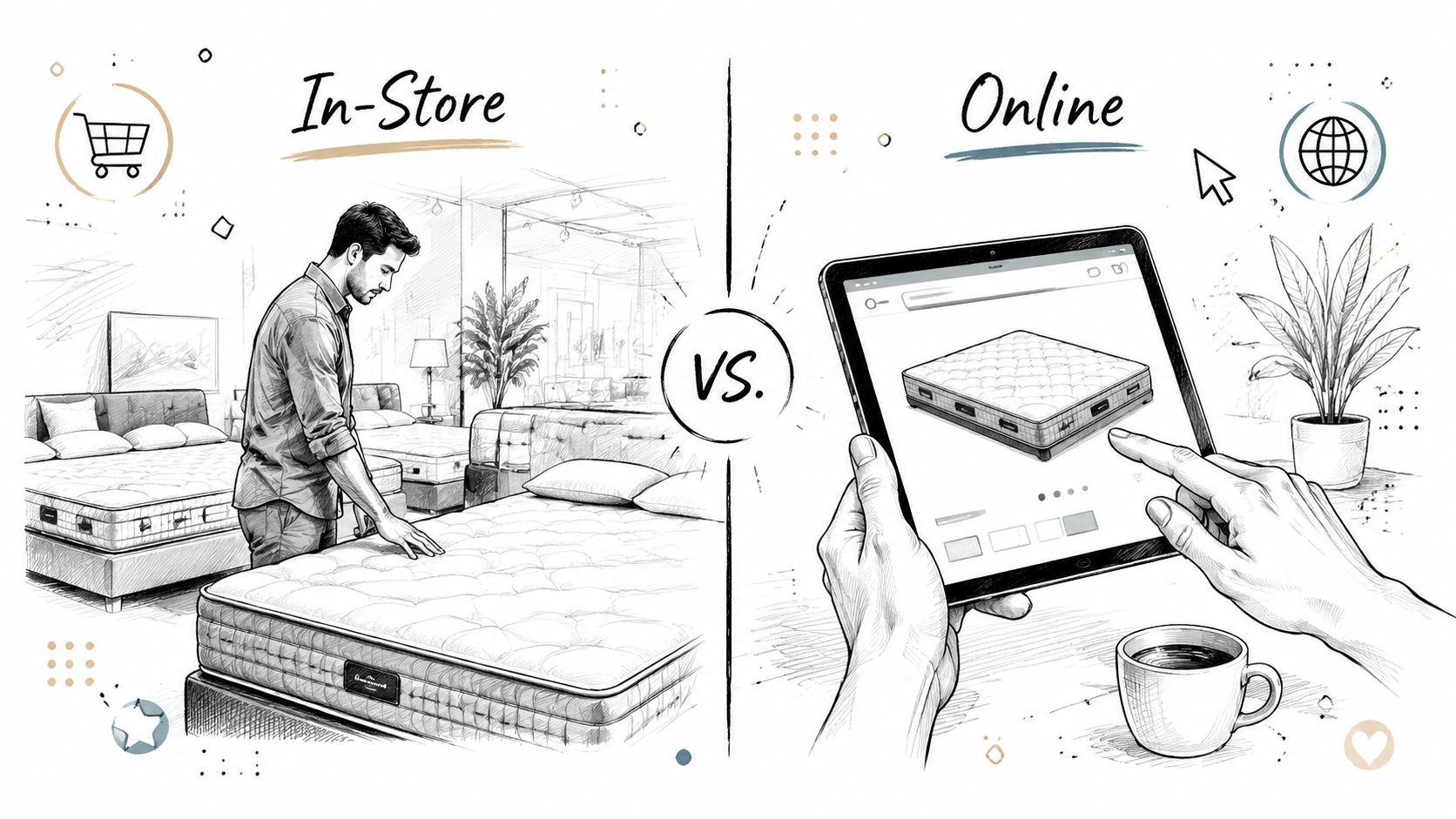
Online mattress research is useful for narrowing choices. In-person testing is useful for confirming them. The strongest buying experience doesn't force shoppers to choose one or the other. It lets both work together.
That's especially important with mattresses because descriptions such as plush, medium, responsive, and contouring only go so far. A buyer can read every product detail online and still need a few quiet minutes lying in a normal sleep position before deciding.
What online shopping does well
The digital catalog is a strong first stop for busy households. It lets shoppers compare mattress types, comfort descriptions, and bedroom styles from home without feeling rushed. That's often where the process becomes clearer.
Helpful online tools include:
- The Mattress Guide: A practical way to sort comfort and support preferences before testing in person.
- Style Quizzes: A useful shortcut for shoppers trying to coordinate the mattress with the rest of the bedroom.
- Product browsing: A simple way to save favorites and narrow the field before a showroom visit.
What the showroom adds
A showroom visit answers the part the internet can't. It lets shoppers feel the difference between support systems, comfort layers, and edge stability in real time. It also helps buyers notice details they may not think to search for on their own, such as ease of movement, how a mattress feels near the edge, or whether the surface settles too much beneath the hips.
For shoppers in South Georgia and North Florida, the showroom in Fernandina Beach, FL offers that hands-on clarity. Associates are available to help interpret what the body is reacting to, which is often more useful than repeating product labels.
Some buyers need five minutes on a mattress before they know more than an hour of online reading could tell them.
Why the combination works better
The strength of an omnichannel experience is continuity. A shopper can begin with the digital catalog, use the Mattress Guide, note a preferred feel, and then test those choices in person. Or the process can start in-store and continue online later, once the buyer has had time to think through room style, bed size, and complementary pieces.
That flexibility also benefits shoppers working on a full bedroom project. A mattress decision may lead into bed frames, bedroom storage, or accent seating from brands such as La-Z-Boy, Stressless, and Hooker Furniture. If personalization matters, the Special Order Program gives many buyers the confidence that they won't have to force a near match when one perfectly suited to their preferences is possible. That same bridge between online convenience and in-person expertise is what makes the process feel coherent and straightforward instead of fragmented.
From Our Floor to Your Door The Lotts Delivery Standard
The buying decision doesn't end at checkout. The final impression often happens on delivery day, when the mattress moves from a showroom floor into a real bedroom with narrow hallways, existing furniture, and a homeowner eager for the room to feel finished.
That's where white-glove, in-home delivery makes a visible difference. Instead of a box left at the entrance, the mattress is handled with care from the start. Before it goes out, each piece goes through a rigorous multi-point inspection so problems are more likely to be caught before they reach the home.
Why setup matters as much as delivery
Professional placement protects both the product and the room. The team brings the mattress into the room of choice, handles the heavy lifting, and makes sure the setup feels complete rather than halfway finished. Shoppers who want background on the labor involved may find this guide to understanding bed assembly costs helpful, especially when comparing what true setup service includes.
That full-service approach matters because assembly and placement can be awkward, time-consuming, and easy to underestimate.
A careful finish to the buying experience
For many households, delivery day is when the purchase becomes real. The bed is placed, the room comes together, and the investment starts to feel worthwhile. A strong in-home process supports that moment by reducing hassle and making sure the mattress is ready for immediate use.
Shoppers who want details on what that service includes can review in-home furniture delivery and assembly. It's a practical extension of the same small-town care and big-brand expertise buyers expect during the selection process.
Your Ultimate Mattress Buying Checklist
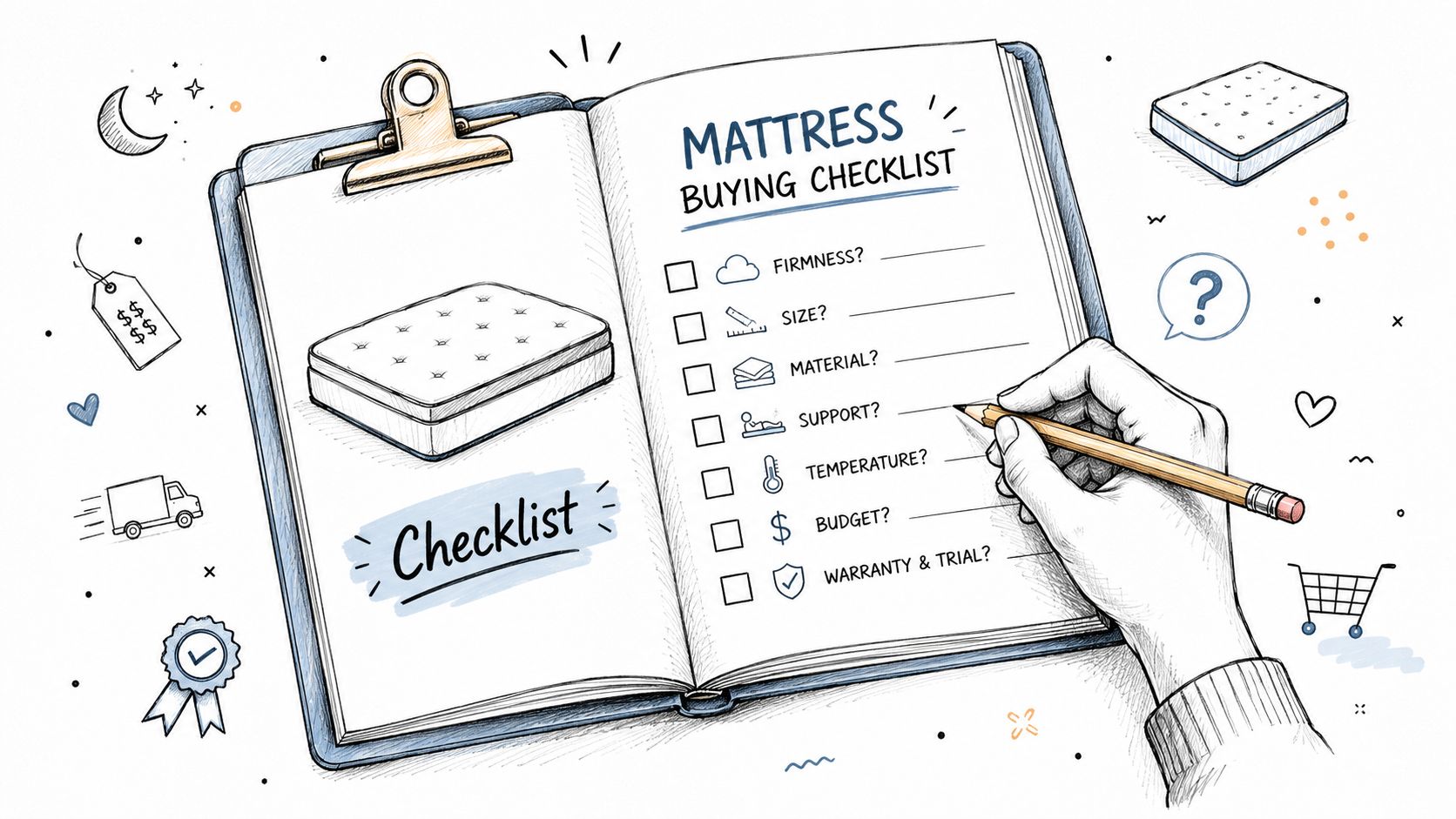
A mattress buying guide is most useful right before the purchase, when a shopper needs a quick way to confirm the decision. At that stage, the goal isn't more information. The goal is confidence.
This checklist helps keep the decision grounded in fit, room planning, and long-term comfort rather than impulse.
Questions to answer before shopping
- Sleep position: Is the sleeper mostly on the side, back, stomach, or moving between positions?
- Temperature preference: Does the sleeper tend to feel warm at night and want more breathability?
- Shared sleep needs: Will a partner's movement, edge support, or differing comfort preferences matter?
Questions to ask while comparing mattresses
- Support feel: Does the mattress keep the body aligned without creating pressure at the shoulders or hips?
- Material preference: Does the sleeper prefer contouring foam, buoyant latex, traditional innerspring, or a balanced hybrid?
- Policies and protection: What are the warranty details, trial options, and care recommendations for this mattress?
A mattress protector is often part of protecting the purchase over time. Buyers comparing sleep accessories can review mattress protector features and benefits as part of that final decision.
Final room and delivery checks
Measure the bedroom. Measure the entry path. Then measure once more before placing the order.
- Room fit: Will the mattress size leave enough walking space and work with the bed frame?
- Access path: Can the mattress move easily through doorways, halls, and stair turns?
- Bedroom vision: Does the purchase support the larger goal of a restful, personalized bedroom?
The strongest mattress choices usually come from a blend of online clarity and in-person reassurance. For shoppers across South Georgia and North Florida, that means using digital tools such as Style Quizzes and the Mattress Guide, exploring the online catalog, and then visiting Fernandina Beach, FL for hands-on guidance when needed. For those planning a full-room update, the Special Order Program and curated collections from brands such as La-Z-Boy, Lexington, and Hooker Furniture can help turn a mattress purchase into a complete sanctuary.
For homeowners ready to upgrade sleep with expert guidance and an effortless shopping experience, Lott's Furniture offers the best of both worlds. Browse the digital catalog, explore the Mattress Guide and Style Quizzes, or visit the showroom in Fernandina Beach, FL for personalized help selecting a mattress and coordinating the rest of the bedroom.


