
Glass Top Wooden Table: A Complete Buyer’s & Care Guide


A lot of homeowners arrive at the same point. They love the richness of wood, but they don't want a dining room to feel heavy, dark, or crowded. They want warmth without bulk, polish without fuss, and a piece that still feels grounded after trends move on.
That's where a glass top wooden table earns its place. It holds onto the depth, character, and permanence of wood while letting light travel through the room. In a coastal cottage, it can keep a breakfast nook airy. In a traditional home, it can soften a substantial dining base. In a mixed-style space, it often becomes the bridge between old and new.
Across South Georgia and North Florida, that balance makes sense. Homes near the coast often need furniture that feels refined but not formal, practical but still beautiful. A glass top over wood can create that balanced middle ground, especially in spaces that double as gathering spots, homework stations, holiday tables, and everyday living areas.
The Elegant Solution for Modern and Classic Homes
A well-designed room needs something to anchor it. Wood does that naturally. It gives a room visual weight, texture, and a sense of permanence. The challenge is that a fully solid top can sometimes make a smaller dining area feel closed in, especially when the room already has darker flooring, painted cabinetry, or less natural light.
A glass top wooden table solves that tension with quiet confidence. The wood base still brings the heirloom-quality presence people want, while the glass keeps the surface visually open. The result feels substantial without looking bulky.
That combination also matches broader buying behavior. The global wooden table market is projected to reach approximately USD 11.36 billion by 2033, with a 6.3% annual growth rate, reflecting continued demand for wood's durability and timeless look, while hybrid designs such as glass-top tables appeal to buyers who want brightness and sleek aesthetics, according to wooden table market projections.
In practical terms, this type of table works for more than one design problem at once:
- Rooms that need lightness often benefit from a transparent top that doesn't block sightlines.
- Homes with beautiful millwork or flooring gain a surface that lets those details stay visible.
- Families who appreciate craftsmanship still get the warmth and character of a wood base.
A strong table shouldn't force a homeowner to choose between warmth and openness.
Many readers who are refining a living or dining space find that this style also fits beautifully with clean-lined interiors, layered coastal rooms, and transitional homes. Helpful inspiration often starts with broader room principles, such as balance, contrast, and material mix, which are explored in this guide to the elements of a modern home.
The Artful Fusion of Wood and Glass Construction
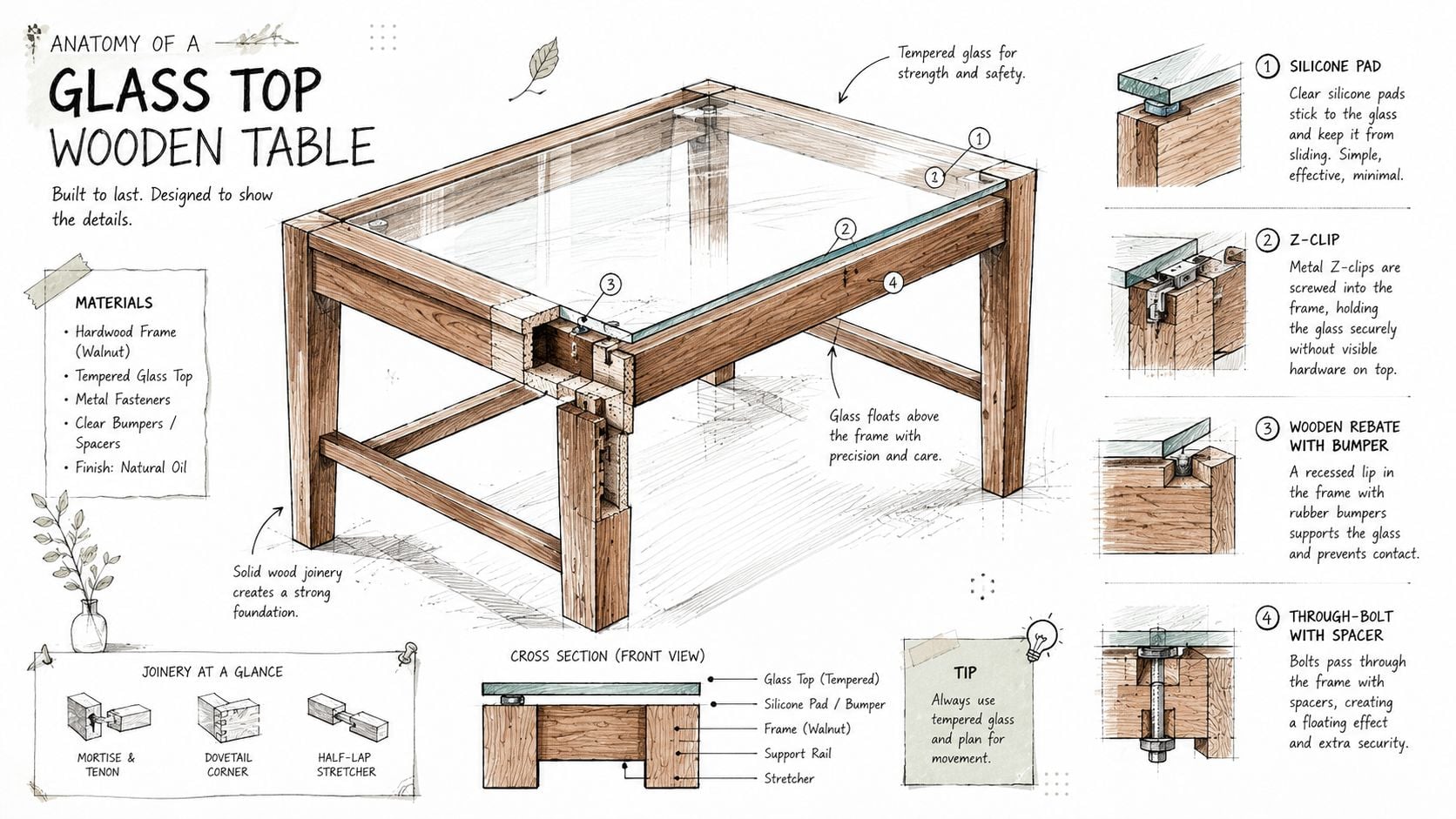
A glass top wooden table isn't one single construction type. Shoppers often use the same phrase for several different designs, and that's where confusion starts. The look may seem similar at first glance, but the structure underneath changes how the table performs, how it feels in a room, and what kind of care it needs.
Three common construction styles
Inset glass sits inside a wood frame. The wood defines the outline, and the glass fits into a recessed opening. This style feels classic and refined. It often works well in traditional and transitional rooms because the wood remains the visual star.
Protective overlay glass rests on top of an existing wood surface. Here, the wood top carries the structural load, and the glass acts as a shield. This is a smart choice for preserving a favorite dining table, showing off figured grain, or protecting a treasured finish from daily wear.
Structural glass on a wood base uses the glass itself as the primary top surface. In that design, the base matters enormously. Support points, span, and level placement all affect safety and long-term performance.
Why the base matters as much as the glass
The glass thickness depends on how the table is supported. For freestanding glass tops supported only at the ends, safety requires 1/2 inch (12mm) to 3/4 inch (19mm) glass. By contrast, tables with a full pedestal base or edge support can safely use 3/8 inch (10mm) glass, which gives a lighter appearance while maintaining strength, based on glass tabletop support guidelines.
That distinction is important because many buyers focus on style first. They see a trestle base, pedestal, or sculptural support and assume any glass top will behave the same way. It won't. A long span with minimal support asks more of the glass than a top with continuous support near the edges.
Practical rule: If the glass is doing structural work, the support design should be part of the decision, not an afterthought.
Craftsmanship details worth noticing
Wood quality also shapes the final result. A beautifully made base should have crisp joinery, a finish that feels even to the touch, and proportions that match the scale of the glass. Collections influenced by brands such as Lexington and Hooker Furniture often show how well wood and glass can work together when the base has real design intention rather than looking like a generic support.
For readers comparing material choices, this breakdown of solid wood vs veneer helps clarify what to expect from each construction approach.
Clarity matters, too. Some homeowners prefer a softer, standard clear appearance. Others want a cleaner, less tinted look that keeps pale finishes and coastal palettes especially crisp. For those evaluating visual clarity in architectural glass, this overview of ultra clear glass for frameless showers offers a useful reference point for understanding how glass transparency can affect the overall aesthetic.
How the best tables feel in a room
A well-made glass top wooden table doesn't feel like two separate materials competing for attention. The wood should give the piece soul. The glass should add ease, light, and refinement. If one element overwhelms the other, the design usually feels off.
That's why the best examples feel composed rather than flashy. They're not trying to disappear, and they're not trying to dominate. They enable the room to work better.
Weighing the Benefits and Practical Considerations
A glass top wooden table offers real advantages, but it isn't the right answer for every household. The best decision comes from looking at daily use, not just showroom appeal. A retired couple using the table for evening dinners will live with it differently than a family with school bags, crafts, and constant activity around the chairs.
Glass Top Wooden Table At a Glance
| Benefit | Consideration |
|---|---|
| Keeps a room visually open by allowing light to pass through the top | Shows fingerprints and smudges more quickly than an opaque surface |
| Protects beautiful wood grain when used as a cover over a finished top | Needs regular streak-free cleaning to keep its polished look |
| Feels versatile across coastal, traditional, and transitional interiors | Can sound harder or cooler than an all-wood top in everyday use |
| Makes decorative bases more visible so craftsmanship isn't hidden | Requires careful leveling and placement to avoid stress on the glass |
| Wipes clean easily after meals or casual entertaining | May feel less forgiving in homes that prefer a softer, fully wood character |
| Balances classic and contemporary elements in one piece | Can make clutter more obvious because the eye sees more of the room |
Where it shines most
This table style tends to work especially well in homes with one or more of these traits:
- Compact dining areas where visual openness matters
- Beautiful rug or flooring selections worth keeping in view
- Detailed wood bases that deserve to be seen, not hidden under a solid slab
- Coastal and vacation properties that benefit from a lighter, brighter feel
A glass top also helps in rooms where several wood finishes already exist. Because the top itself is transparent, the base can carry warmth without adding another large plane of color.
Where buyers should pause
Some households prefer the softened, quiet feel of a full wood top. Glass has a different presence. It reflects light, reveals dust more quickly, and asks for more frequent touch-up cleaning if the goal is a pristine appearance.
Homes with active daily use can still enjoy glass successfully, but they do best when the table is chosen with lifestyle in mind, not just first impressions.
Another practical point is emotional, not structural. Some people relax around glass immediately. Others remain slightly cautious with it, especially if children tend to lean, climb, or drag objects across surfaces. That doesn't make glass a poor choice. It just means comfort level should be part of the decision.
The strongest purchases usually happen when style and routine agree. If a homeowner wants an investment-quality centerpiece that feels airy and polished, this category has a lot to offer. If the goal is a softer, more rustic, no-thought-needed surface, a different construction may be a better fit.
Styling Your Space Around Your New Table
The beauty of a glass top wooden table is its flexibility. It can lean coastal, traditional, or modern farmhouse depending on the base shape, chair choice, and the materials layered around it. That makes it a strong foundation piece for homes across South Georgia and North Florida, where interiors often blend relaxed coastal cues with established Southern warmth.

Coastal elegance without the theme-room look
For a coastal aesthetic, the key is restraint. A wood base in a lighter or weathered finish pairs beautifully with woven textures, soft blues, sandy neutrals, and airy upholstery. The glass helps the room feel breezy instead of overly decorated.
Try building around these elements:
- Chair choice with slipcovered lines, woven backs, or soft upholstered seats
- Textiles in linen-like textures rather than shiny, formal fabrics
- Centerpieces that feel organic, such as a low ceramic bowl or gathered greenery
The goal isn't to make the room look beachy. It's to make it feel calm and sunlit.
Traditional and transitional approaches
In more classic homes, a darker or medium-tone wood base can create depth without making the room feel crowded. A pedestal or trestle form often works especially well because the glass lets the base remain visible. That gives the room craftsmanship and presence while reducing visual heaviness.
For transitional rooms, a glass top can act as the balancing element between elegant dining chairs and more sculptural lighting. It connects old and new materials with less friction than a strongly rustic or strongly modern top might create.
The most successful dining rooms usually repeat a few materials on purpose. Wood, glass, fabric, and metal each need a role.
How to finish the room
A table rarely works alone. The surrounding pieces determine whether the room feels complete.
- Area rugs should be substantial enough to anchor the table, but the pattern doesn't need to compete with the visible base.
- Lighting works best when it mirrors the table's character. Soft curves complement ornate bases, while cleaner fixtures sharpen a simpler silhouette.
- Storage pieces like a sideboard can echo the table's wood tone without needing an exact match.
Readers sorting through these style directions often benefit from visual examples. This roundup of 7 dining room styles to fit every home offers a practical way to narrow down the look.
For homeowners who want more guidance before choosing finishes, chairs, or room accents, style quizzes and digital guides can be especially helpful. They turn vague preferences into a clearer direction, which matters when selecting an investment-quality piece intended to stay relevant for years.
A Buyer's Checklist for Your Perfect Table
Buying a glass top wooden table goes more smoothly when the decision is broken into a few practical checks. This isn't just about finding a shape that looks good online. It's about making sure the table fits the room, supports the way the household lives, and offers the right level of personalization.

The category itself is gaining momentum. The global dining table market is projected to grow from USD 9.19 billion in 2026 to USD 16.01 billion by 2034, with a 7.19% CAGR, according to global dining table market projections. That long-term growth reflects how strongly homeowners continue to invest in dining spaces as central parts of the home.
Start with room fit
The first mistake buyers make is measuring only the table area. The better approach is to measure the whole experience of using the table.
Check these points before falling in love with a style:
- Room footprint so the table doesn't crowd walkways or nearby cabinetry
- Chair movement with enough space to pull in and out comfortably
- Sightlines from adjoining rooms, especially in open floor plans
- Doorways and entry path so delivery and placement happen smoothly
This guide on how to pick the right dining room table is useful for sorting through proportion and room planning before narrowing the exact design.
Match the construction to the household
A buyer should also decide what role the glass is playing. Is it protecting a wood top, highlighting a sculptural base, or serving as the main surface? That answer shapes the right specification and the right long-term expectations.
A quiet formal dining room may prioritize appearance first. A busy everyday setting may care more about easy cleanup, finish protection, and chair comfort. Both are valid. They just lead to different choices.
Use customization to get past close enough
Investment-quality furniture separates itself from one-size-fits-all shopping. Special order options give homeowners the ability to tailor the table instead of settling for a piece that's almost right.
Many respected furniture vendors support personalized design through options such as:
- Wood finishes that align with coastal, classic, or transitional rooms
- Base styles ranging from pedestal to trestle to more architectural forms
- Chair pairings that soften or sharpen the final look
- Comfort preferences in seating, upholstery, and performance materials for surrounding pieces
Brands such as Smith Brothers, Lexington, and La-Z-Boy are often part of conversations about customization because buyers rarely stop at the table itself. Once a room is being refined, nearby seating, storage, and comfort choices usually matter too.
A good checklist doesn't just ask, “Will this fit?” It also asks, “Will this still feel right after daily use, holidays, and changing seasons?”
Use expert guidance instead of guesswork
Many shoppers benefit from combining digital planning with in-store help. Style quizzes can clarify whether the room leans coastal chic, modern farmhouse, or timeless traditional. A mattress guide may sound unrelated, but it reflects the same bigger advantage. Good digital tools help buyers make more confident comfort and design decisions before they step into a showroom. In-store associates can then fine-tune finish choices, proportions, and room coordination.
That combination of customization, expert guidance, and a smooth move between online browsing and a showroom visit often leads to better furniture decisions than impulse shopping ever does.
Heirloom-Quality Care and Maintenance Guide
Sunday lunch has wrapped up, the sunlight is hitting the glass just right, and your table still looks as polished as it did when it arrived. That kind of lasting beauty usually comes from a few smart habits, not constant fussing.
A glass top wooden table has two surfaces working together, and each one responds differently to daily life on the coast. Glass shows fingerprints, salt air film, and streaks. Wood reacts to humidity, trapped moisture, and pressure at contact points. Good care starts with understanding that you are maintaining a partnership of materials, much like caring for both the porch paint and the teak furniture around it. Each has its own job, and each needs its own kind of attention.
Protecting the wood under glass
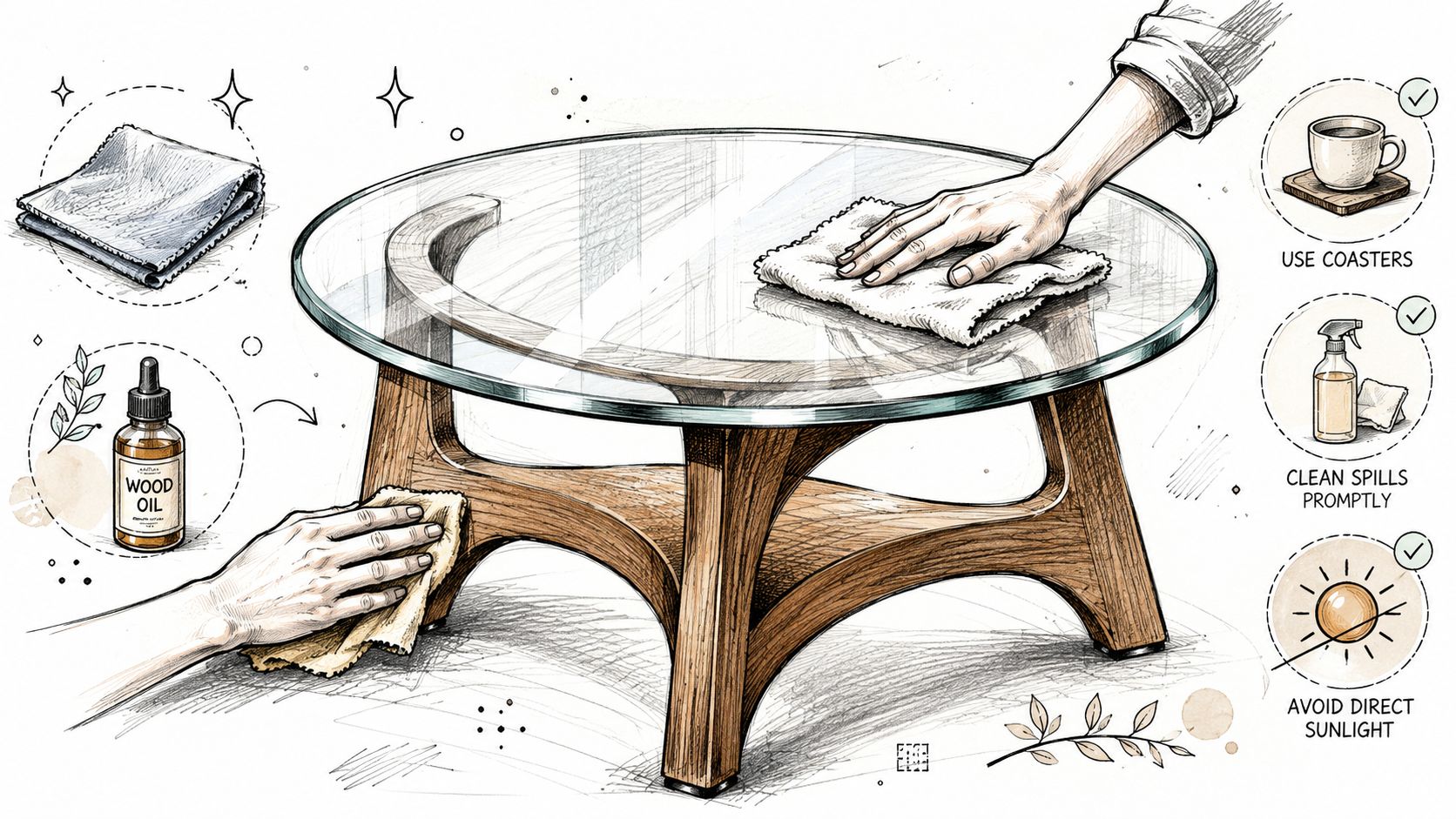
The space between the glass and the wood matters more than many homeowners expect. A properly fitted top should rest on clean, evenly placed bumpers so the glass is supported without pressing directly into the wood finish. That small cushion helps prevent rubbing, finish wear, and stress where the two materials meet.
Fit matters, too. Wood expands and contracts with seasonal humidity, especially in South Georgia and North Florida homes where damp air is part of everyday life. Glass does not respond the same way. A table that is built and set up with proper spacing has room to age gracefully instead of fighting itself.
If your table sees frequent entertaining, children doing homework, or holiday serving pieces, a custom dining room table protector pad adds another layer of defense during heavier use. It is a practical way to protect an investment-quality piece without hiding its beauty every day.
Daily cleaning that respects both materials
The safest routine is simple and consistent.
For the glass, remove crumbs or grit first with a soft dry cloth. Cleaning over scattered particles can create fine scratches over time. After that, use a clean microfiber cloth and a gentle glass cleaner applied to the cloth rather than sprayed heavily around the table.
For the wood base, use a barely damp soft cloth and dry it right away. Moisture tends to collect in carved details, corners, and joinery, which is where finish problems often begin. If your home stays humid for much of the year, make a quick check under the glass now and then. Dust and moisture haze can accumulate there.
The tables that last for decades usually receive steady, calm care rather than occasional aggressive cleaning.
Small habits that preserve a custom table
A well-made table does not need delicate treatment, but it does benefit from thoughtful use. That is especially true for custom pieces chosen to anchor a dining room for many years.
- Lift serving bowls, lamps, and decor instead of dragging them
- Use coasters or trays under items that collect condensation
- Check bumpers occasionally to make sure they are clean and still level
- Clean beneath the glass from time to time so the wood grain stays clear and visible
- Recheck the table's level if it is moved to another room or onto different flooring
Those habits may sound minor, but they protect the finish, the fit, and the clean lines that make a glass top wooden table feel refined. In a coastal home, where windows stay bright and natural light reveals everything, those details show.
Care begins before the first meal
Long-term performance starts with correct delivery and placement. Glass and wood need level support, careful handling, and a final setup that does not twist the base or leave the top uneven. That is one reason investment-quality furniture deserves professional placement instead of hurried setup.
If the table ever needs to be relocated, remove the glass and handle it as a separate piece. Wrapping and securing it properly reduces the chance of edge damage or pressure cracks during transport. Homeowners planning a move can review this guide to packing delicate items safely for a helpful overview of fragile-item handling.
Good maintenance protects more than a surface. It protects the custom choices, craftsmanship, and everyday memories tied to a table you expect to keep for years.
Experience Timeless Design at Lott's Furniture
You spend a Saturday afternoon clearing the mail, setting out dinner plates, and opening the blinds before friends arrive. The room feels bright, relaxed, and coastal. In that kind of home, a glass top wooden table does more than fill space. It becomes a long-term piece that reflects light, shows off beautiful woodwork, and stands up to years of gathering.
That is the difference investment-quality furniture makes. A well-made table should look right in a classic dining room, a lighter beach-inspired interior, or a mixed style home with both old and new pieces. For families across South Georgia and North Florida, that flexibility matters. Homes here often balance natural textures, easy living, and a polished look that never feels stiff.
Buying well starts with seeing the table in person. Online browsing helps you sort through sizes and shapes, but a showroom visit in Fernandina Beach, FL gives you the part photos miss. You can study the wood grain in real light, check how the base feels from every angle, and judge whether the scale fits the way you live.
Customization matters just as much.
A table is a little like a custom-fit jacket. The overall form may be beautiful, but the finish, size, and details determine whether it genuinely belongs in your home. Lott's Furniture helps shoppers choose from personalized options that suit coastal life, from warmer wood tones that soften bright interiors to cleaner lines that fit an airy Florida dining space. That kind of choice is hard to find in mass-market furniture, where one standard version has to work for everyone.
Good service should protect the purchase too. Careful in-home delivery and a detailed inspection before placement help keep the table level, secure, and ready for daily use from the start. That attention is especially important with glass and wood, because both materials perform best when they are set up correctly.
After your table is in place, simple upkeep keeps it looking clear and welcoming. For homeowners who want a practical refresher on caring for glass surfaces, this window cleaning guide for homeowners offers helpful general tips.
Homeowners throughout South Georgia and North Florida can explore investment-quality dining pieces, personalized finishes, and expert design help with Lott's Furniture. Browse the digital catalog, try a style consultation online, or visit the Fernandina Beach showroom to see craftsmanship firsthand and enjoy an easy transition from inspiration to white-glove delivery.


