Save 50% Off MRSP on Lexington | Shop the Catalog >

White Glove Delivery Tip Guide for Furniture Shoppers


Delivery day often arrives with the new sofa at the door, a hallway crowded with décor, and the sudden realization that nobody measured the stair turn. That moment is exactly why white glove delivery deserves more attention than a quick question about gratuity. The crew isn't transporting furniture. They're carrying an investment-quality piece through a lived-in home, setting it up, protecting the room, and leaving the space ready to enjoy.
A practical white glove delivery tip should reflect the work performed, not the furniture's price tag. The right approach is simple: prepare the home, communicate clearly, inspect everything before signing, then recognize careful service appropriately. For homeowners across South Georgia and North Florida, that process is central to the Lott's delivery standard.
What White Glove Delivery Actually Means
A homeowner may clear the front step and still be unprepared for delivery day. The entryway looks open, but a console table blocks the hallway, framed art hangs inches from the path, and the new sectional has to make a tight turn before reaching the living room. A threshold delivery leaves that problem with the homeowner. White glove delivery handles the final journey into the home.
White glove services generally trace back to the mid-20th century, when the phrase described high-touch delivery for wealthy customers who expected careful handling of valuable goods. One logistics account places the organized North American market's emergence in 1985, when it handled fewer than 50,000 deliveries annually and focused on high-value medical equipment and fine art. That specialized history helps explain why white glove delivery remains a premium service with flexible etiquette.

The difference between doorstep and in-home delivery
Standard doorstep or threshold delivery typically gets the item to the property entrance. White glove delivery goes further, commonly including:
- Inside delivery: The crew brings the furniture into the home rather than leaving it at the curb or threshold.
- Room-of-choice placement: The piece is positioned in the room and location selected by the customer.
- Unpacking and assembly: The team handles included setup, such as attaching components or assembling the furniture.
- Packaging removal: Cardboard, protective wrapping, and other delivery debris leave with the crew.
- Final walkthrough: The customer reviews placement and condition before the delivery is closed out.
Neutral industry guidance describes white glove delivery as a complete setup and cleanup service, not merely transportation. A final walkthrough gives the customer an opportunity to confirm the placement and inspect the item while the crew is still present, as outlined in this explanation of white glove furniture delivery.
Stair carries, hoisting, unusually tight turns, furniture moves between rooms, and other exceptional handling may require separate arrangements or fees. Customers should ask about those conditions before appointment day. Anyone weighing different sleeping or guest-room options can also compare futons and sofa beds while thinking through access, assembly, and final placement.
At Lott's Furniture, the same service mindset applies whether the home receives a La-Z-Boy recliner, a Lexington dining set, or a Hooker Furniture desk. The question is not whether the service feels polished. The question is whether the crew completes the job inside the home, with the furniture correctly placed and the customer confident before sign-off. For a closer description of the process, homeowners can review Lott's white glove delivery service.
Preparing Your Home Before the Crew Arrives
Preparation protects two things at once: the home and the furniture. A clear route reduces rushed maneuvering, while an agreed placement prevents the crew from carrying a heavy piece through the room while the homeowner makes decisions on the fly.
Build a safe route
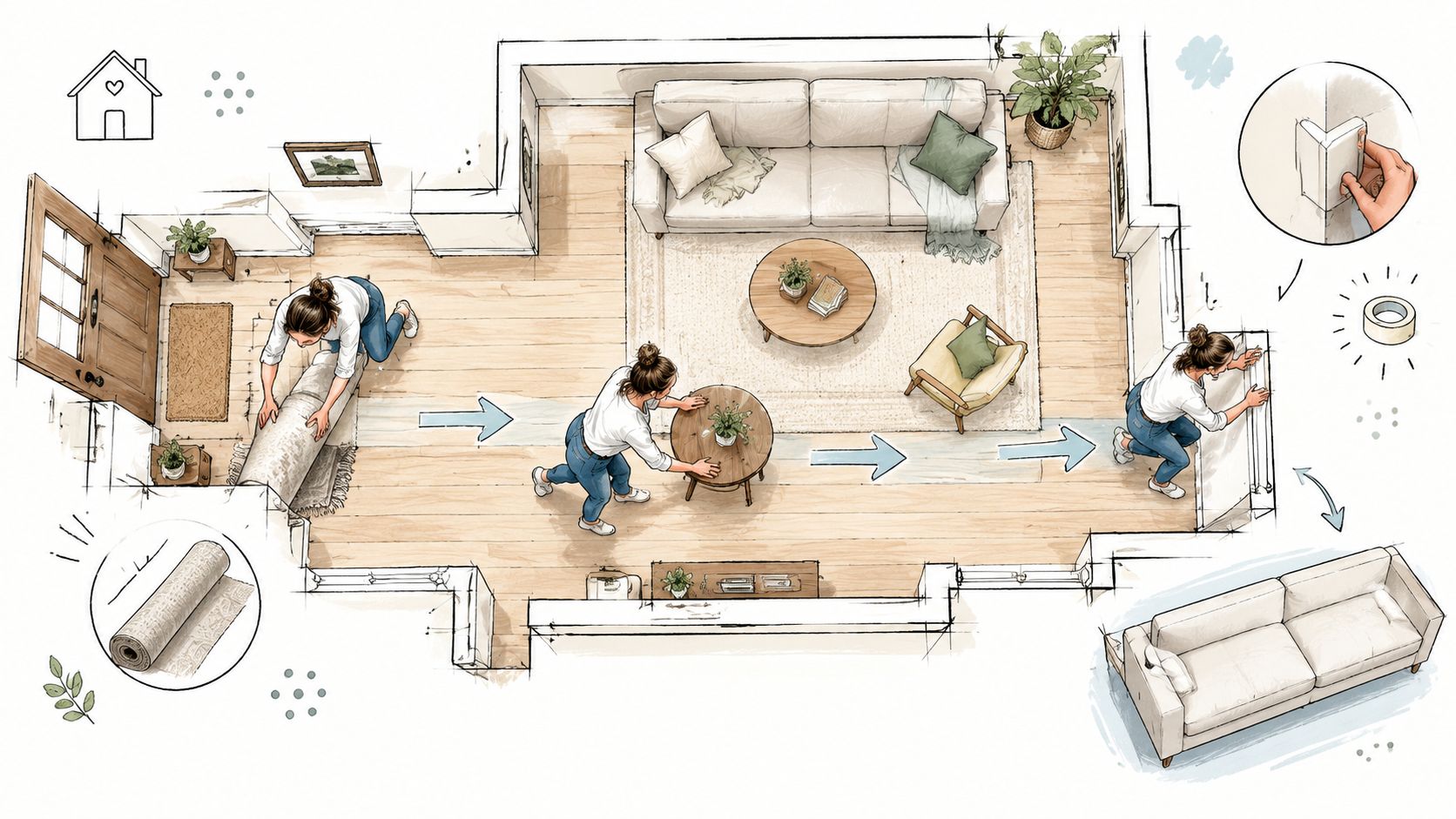
Start at the entry door and walk the exact path to the destination room. Clear shoes, baskets, small tables, rugs that curl at the edges, and anything else that could catch a dolly or a worker's foot. Measure doorways, hallways, stair turns, and elevator openings, paying attention to trim and handrails that reduce usable clearance. Lott's furniture measuring guide offers a useful reference before the appointment.
Remove mirrors, hanging art, fragile wall décor, and loose accessories along the route. A delivery crew can work carefully, but an open path gives them room to turn and protects treasured objects from incidental contact.
Protect surfaces and people
Hardwood and tile deserve attention before the truck arrives. Moving blankets, ram board, or old sheets can help protect floors from dollies and boot traffic. Homeowners concerned about surface care can also review these flooring tips for Richmond homeowners and apply the same careful mindset to the delivery path.
Pets and children should stay outside the work zone. Secure dogs in a separate room, and arrange for children to remain clear while the crew carries, assembles, and positions the piece. This isn't just about convenience. A quiet route lets workers focus on balance, corners, and the furniture itself.
Decide the destination early
Choose the final placement before the crew arrives. Measure the furniture against the intended footprint, check traffic flow, and identify nearby outlets if the item includes wiring. For a power recliner, adjustable bed, or lamp-ready piece, confirm that cords won't cross a walkway or sit directly against a heat source.
Apartment residents should confirm elevator reservations and building access requirements before the appointment. A payment method should also be available for any applicable fees that were disclosed in advance. Preparation doesn't make the delivery feel less personal. It gives the crew the conditions needed to deliver the result the homeowner purchased.
Meeting the Crew and Deciding on Placement
The first few minutes matter. Experienced customers don't wave the crew inside and decide everything after the furniture is already moving. They greet the lead technician, review the delivery ticket together, and confirm the destination room before anything crosses the threshold.
That conversation should cover the exact pieces arriving, included assembly, packaging removal, and any special access condition. If the route includes stairs or a tight corner, pointing it out early gives the crew a chance to plan the carry rather than improvise halfway through.
Ask practical placement questions
The final spot should support the furniture's long-term use, not just make it fit. Ask about:
- Wall construction: Confirm whether the wall can support anything that needs secure attachment. White glove furniture setup doesn't automatically include structural installation.
- Floor load and stability: Discuss whether the surface is level and whether the piece needs careful positioning to sit evenly.
- Sunlight exposure: Direct sunlight can affect finishes and upholstery over time, so consider windows and the room's brightest hours.
- Vent and radiator clearance: Keep air circulation and heat sources in mind before approving the final position.
- Cable management: Decide where cords will run so the finished room remains safe and visually composed.
A large piece can look dramatically different once it enters the room. If the sofa or cabinet feels bigger than expected, painter's tape on the floor can mark the footprint before the crew commits. That quick visual check helps the household judge symmetry, traffic flow, door clearance, and sightlines from adjoining rooms.
Practical rule: The best placement decision happens before the furniture is fully unwrapped, but after the homeowner can judge its real scale in the room.
Homeowners can use Lott's living room placement guide to think through seating relationships, walkways, and focal points before delivery. The same principle applies to a Stressless recliner, a Smith Brothers sofa, or a Lexington case piece. Speak up about the details that affect daily comfort.
The delivery acknowledgment should be signed only after placement looks right and the included work is complete. Signing before unloading removes the customer's clearest opportunity to resolve a placement concern while the crew is still present.
Inspecting Your Furniture Before the Crew Leaves
A white glove delivery isn't complete when the furniture reaches the room. It's complete after the customer and crew confirm that the piece is sound, correctly assembled, properly placed, and ready for use.
Lott's standard treats inspection as a rigorous multi-point process. Logistics guidance describes checks before loading, after arrival, after unpacking, and after placement. Teams look for pre-existing damage, packaging problems, and the condition of the furniture at each stage, with visible damage documented before final delivery in this overview of white glove damage handling.

Follow a slow, deliberate inspection
Stand at the exact placement spot and use the room's normal lighting. A finish can look different near a window than beneath overhead lighting, and upholstery details are easier to judge when the piece is positioned as it will be used.
Check the following before sign-off:
- Upholstery: Examine seams, stitching, fabric tension, leather surfaces, and cushion alignment. Material expectations vary, so the upholstery materials guide can help shoppers understand what to review.
- Wood and finish: Look across tabletops, arms, panels, and exposed edges for visible marks or finish concerns.
- Moving parts: Open and close every drawer, door, recliner mechanism, or adjustable component.
- Hardware: Check that handles, legs, hinges, and visible fasteners feel secure.
- Alignment: Look at doors, panels, drawers, seams, and sectional connections from several angles.
Walk a slow lap around the furniture. Test the parts that move, inspect corners at eye level, and photograph any concern immediately. A signed condition report creates a shared record for buyer and seller, while photos preserve useful detail if a question appears later.
A visible arrival issue belongs in the delivery record. A hidden defect that surfaces after ordinary use may require a separate warranty or service conversation, so homeowners shouldn't try to force every future concern into the delivery acknowledgment. Before the truck leaves, note serial numbers where available and save the condition report, delivery receipt, and related paperwork together.
How Much to Tip for White Glove Delivery
A white glove crew handles several layers of labor: protecting the home, lifting and maneuvering the furniture, completing setup, placing the piece, and cleaning the work area. The gratuity should recognize the difficulty and the crew's care, not the retail value of the order.
The practical benchmark is $20 to $50 per person, with $50 or more per person often appropriate for especially difficult work involving stairs, tight turns, or heavy premium pieces. That guidance reflects white glove delivery as a premium service beyond curbside drop-off.
White Glove Delivery Tip Guidelines by Job Type
| Job Type | Tip Range Per Crew Member | Typical Scenarios |
|---|---|---|
| Straightforward in-home delivery | $20 to $50 | Clear access, uncomplicated placement, limited setup |
| More demanding delivery | $50 or more | Stairs, tight turns, heavy pieces, or careful handling |
| Exceptional service | Above the standard range at the customer's discretion | Outstanding communication, difficult maneuvering, detailed setup, and exceptional care |
The cleanest etiquette is to wait until the job is finished. Confirm that the furniture is assembled, placed correctly, inspected, and cleared of packaging before handing over cash. If two or more movers worked the delivery, the total can be divided evenly among the crew, or each person can receive an individual amount. The driver and helpers should receive the same share when they performed comparable work.
A delivery charge pays for scheduled labor, equipment, transportation, and professional skill. It doesn't automatically replace a gratuity, and a tip isn't mandatory when gratuity is clearly included in the service terms. Customers should review the paperwork or ask the delivery coordinator if the wording isn't clear.
The useful rule is simple: Match the white glove delivery tip to the difficulty of the job, not the price tag on the furniture.
Lott's furniture delivery and assembly service reflects the larger experience homeowners are paying for. A careful crew earns recognition through attitude, precision, protection of the home, and attention to the final details.
Your Post-Delivery Checklist and Next Steps
The final hour after delivery should feel calm, not rushed. Once the crew has left, the homeowner can take a last look at the room, confirm that packaging and debris are gone, and make sure floors and walls remain unmarked.
Save the record
Keep the inspection photos, warranty paperwork, delivery receipt, and signed condition report in one folder. That small habit makes future questions easier, especially for upholstery, case goods with moving parts, and investment-quality mattresses.
Furniture also needs time to settle into its new environment. Cushions and wood can respond to the home's humidity, so a 48-hour settling window gives the household a reasonable period to observe comfort and fit before reporting concerns. Comfort questions should be documented clearly, with photos or notes describing what changed and when.

Lott's associates remain available for follow-up questions after the truck leaves. That continuing access matters when a homeowner needs help understanding a finish, adjusting a room arrangement, reviewing a warranty document, or planning the next piece.
Keep the full design relationship in view
A well-planned delivery begins long before the appointment. Lott's Special Order Program allows shoppers to personalize fabrics, leathers, finishes, cushion firmness, arm styles, and other configuration details through participating vendors. The finished piece is built around those selections, creating comfort and a more curated sanctuary.
Shoppers can use Lott's Style Quizzes, interactive style guides, and Mattress Guide to narrow decisions before meeting an associate in a showroom. The transition between browsing the digital catalog and visiting the Fernandina Beach, FL showroom is designed to feel natural, whether the customer starts online or wants to sit, touch, and compare materials in person. Lott's service area includes South Georgia and North Florida, with associates available to help connect design choices to room dimensions and delivery requirements.
Visit the Fernandina Beach showroom to plan the next heirloom-quality addition, or book an online style consultation for guidance on sizing, fabric, comfort, and delivery timing. Explore Lott's Furniture to begin with the digital catalog and continue with the personal service that makes white glove delivery feel complete.


