
Upholstered Bed Frames: A Buyer’s Guide


The bedroom is nearly finished, but the bed still feels wrong. A soft headboard would make evening reading more comfortable and pull the room together, yet a pale fabric frame raises sensible questions about sandy paws, summer humidity, and the occasional spilled cup of coffee. For homeowners across South Georgia and North Florida, the best choice starts beneath the swatch.
Upholstered bed frames combine furniture construction with textile care. A well-chosen frame should suit the architecture, support the mattress correctly, and come with maintenance instructions that fit everyday coastal living. The right questions concern padding, cleaning access, fabric testing, and repairability as much as headboard shape.
Upholstered Bed Frame Styles and What Each One Does
In a primary bedroom, the bed is often the largest soft surface in view. An upholstered bed frame consists of a structural frame wrapped in padding and fabric or leather, making it both mattress support and a prominent design surface. Its silhouette determines whether the room feels open, enclosed, formal, or relaxed.
Upholstered bed frame styles and the job each one does
| Style | Best room job | How it reads | Watch-out |
|---|---|---|---|
| Wingback | Primary suite that needs a tall, tailored backdrop | High wings frame the pillows | Wings steal nightstand and lamp space |
| Shelter or panel | Calm traditional or coastal bedroom | Broad upholstered panel, usually quieter than tufting | A short panel disappears behind tall pillows |
| Channel or button-tufted | Room that wants texture as the focal point | Deep padding and shadow lines | Tufts and channels hold dust and are harder to spot-clean |
| Fully upholstered platform | Low modern or cottage bedroom | Rails and headboard read as one soft form | Confirm slats can support the mattress without a box spring |
| Storage bed | Smaller primary or guest room that needs drawers | Upholstered outside, drawers under the mattress | Side clearance and a level floor are required for the drawers |
| Sleigh or camelback | Traditional bedroom with wood case pieces | Curved crest with a more formal presence | A high crest can crowd low ceilings and windows |
Match the Headboard to the Wall
Headboard height needs context. For example, a tall wingback against an 8-foot wall may dominate the space, while the same shape against a 9-foot wall may feel comfortably proportioned. These are room-planning scenarios, not rules for selecting a particular height.
Painter's tape can outline the proposed headboard on the wall. Include the wings, then place the nightstand and lamp inside their intended positions. A headboard that looks balanced alone may leave too little room for a lampshade or make a bedside outlet awkward to reach.
A low platform keeps more wall visible, which can help a cottage bedroom feel less crowded. A shelter headboard offers enclosure without necessarily adding elaborate detail. For a closer look at the support and layout implications, Lott's Furniture's guide to platform bed advantages provides a useful starting point.
Let Construction Lead the Brand Conversation
Fabric, color, padding, and headboard shape allow a bed to coordinate with the rest of the room rather than function only as sleeping support. That design flexibility helps explain why upholstered frames are identified as the fastest-growing segment within the broader bed-frame category by Growth Market Reports.
Familiar upholstery names such as La-Z-Boy and Smith Brothers can help establish preferences for texture and customized comfort. Platform and storage availability should still be confirmed by individual model, rather than assumed from the brand name. Lexington case pieces offer another useful reference when coordinating a curved headboard with traditional wood furniture.
Selection rule: Choose the silhouette for the architecture first. Compare color and fabric performance after the bed's proportions work.
That order prevents a beautiful swatch from persuading a homeowner to accept a frame that crowds the room. It also leaves practical decisions, such as storage clearance and mattress support, where they belong: ahead of decorative details.
Mattress Sizes That Actually Fit the Frame
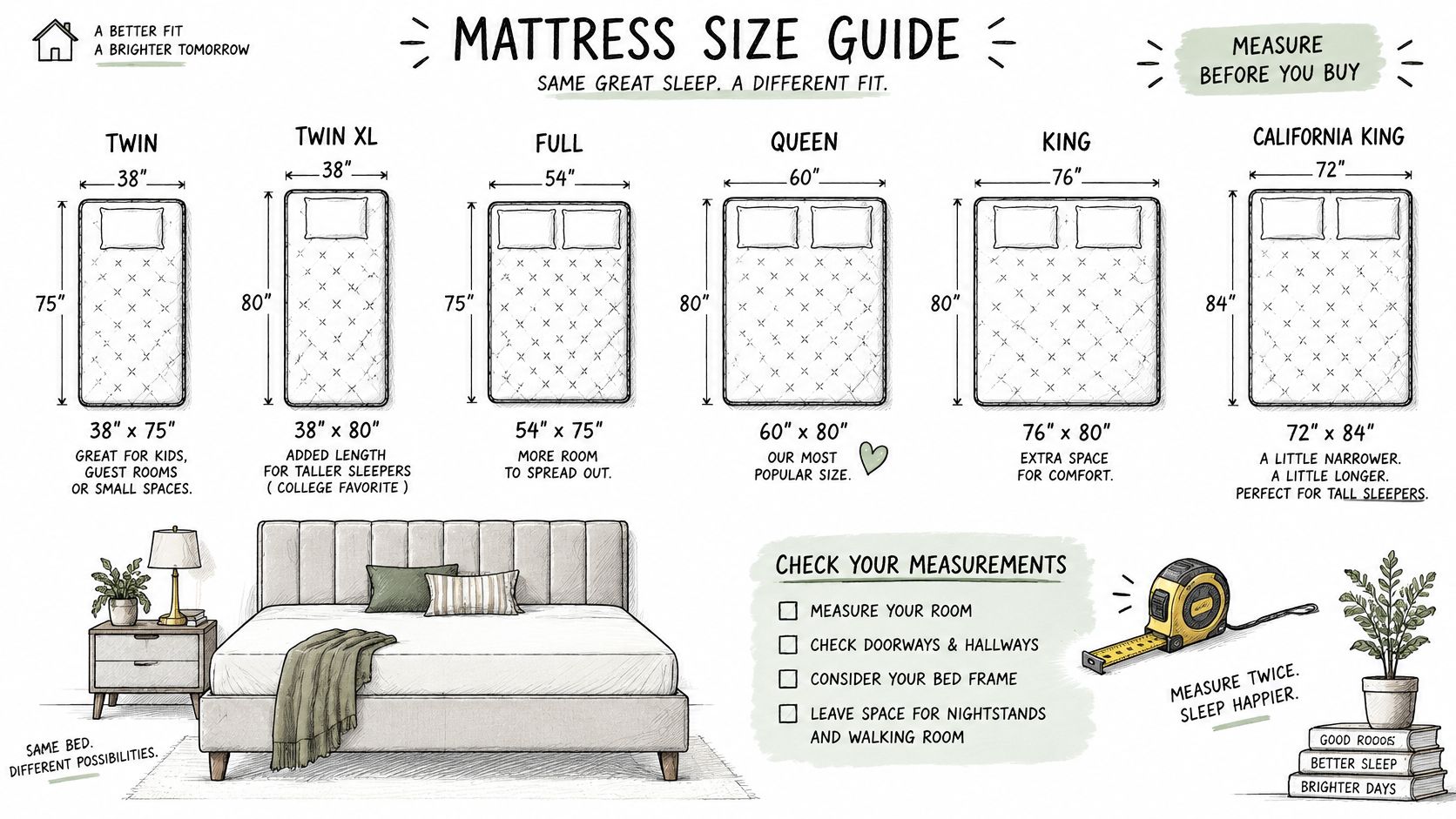
A mattress can fit its listed size and still leave too little room for walking, opening a door, or bringing the bed into the bedroom. Start by matching the mattress dimensions to the frame's interior opening, then check the frame's exterior dimensions and the delivery path.
| Size | Frame check | Common miss |
|---|---|---|
| Twin, 38 by 75 inches | Interior matches twin, not the upholstered outside | Buying twin for a twin XL mattress |
| Twin XL, 38 by 80 inches | Extra length must fit within the frame | Headboard hits the wall or the foot blocks a door |
| Full, 54 by 75 inches | Full interior and appropriate slat support | Assuming a full frame will take a queen |
| Queen, 60 by 80 inches | Queen interior, with platform or foundation as designed | Adding a box spring to a platform bed |
| King, 76 by 80 inches | King width plus a workable stair and doorway path | Underestimating delivery width |
| California King, 72 by 84 inches | Longer, slightly narrower interior than king | Ordering a standard king frame |
These are typical mattress footprints. The frame's exterior dimensions can be larger because upholstered rails, curved footboards, or projecting wings add bulk. Check both measurements before choosing a size. Lott's Furniture's mattress sizing guide helps you compare standard mattress sizes with the space a bed needs.
Identify the Intended Support System
A platform carries the mattress itself, so adding a box spring raises the sleeping surface. That extra height can cover more of the headboard and make getting into bed awkward. A foundation-style frame, by contrast, is designed to hold a separate foundation. Its rails and cross supports may not provide the right support for a mattress on its own. The upholstered exterior doesn't show which system is inside, so confirm the model's intended setup.
For a foam mattress, follow the manufacturer's requirements for slat spacing and center support. The mattress instructions determine what is appropriate. Check that the support legs rest securely on the floor.
An adjustable base needs its own fit check. Make sure the moving parts can operate without catching on the rails, footboard, fabric, or wings. Drawer storage can occupy the space an adjustable base needs, so check compatibility before ordering. Do not remove structural parts unless the manufacturer approves it.
Choose Mattress Feel Independently of Upholstery
Choose mattress feel according to the sleeper's comfort needs, separate from the softness or padding of the headboard. A study of 128 healthy adults found that firmness significantly affected most major sleep measures, with substantial differences in which mattress suited each participant. The softest and firmest options produced poorer outcomes than middle-range options on several measures, according to RTI's mattress study.
For adults with nonspecific low-back pain, a systematic review of mattress performance generally favored medium-firm mattresses for comfort, sleep quality, and spinal alignment. These findings address mattress performance, not bed-frame upholstery, and do not prescribe one firmness for every sleeper.
Lott's Furniture sells mattresses and provides a Mattress Guide. Before choosing, try the mattress in your usual sleeping positions. Notice pressure at the shoulder and hip, and whether getting up feels comfortable.
Bedding has its own scale and fit. A four-ply cashmere queen blanket is one example of a layer to consider separately from the frame and mattress dimensions. A generous blanket drape cannot make a mismatched mattress opening fit.
Before ordering, measure the full delivery path, including turns, stairs, doorways, and the bedroom entrance. Ask which frame pieces arrive separately. A large upholstered headboard may be harder to maneuver than the mattress, even when the mattress passes through comfortably.
Fabrics and Finishes for Everyday Wear
In a humid South Georgia or North Florida bedroom, a bed frame's fabric is a layered textile: the visible cover, its backing, and the padding beneath it can each affect cleaning, breathability, drying, and odor. Start with the selected fabric's specifications, then consider color and texture. Durability needs a test method, a cleaning code, and realistic expectations.
Understand Abrasion Without Overreading It
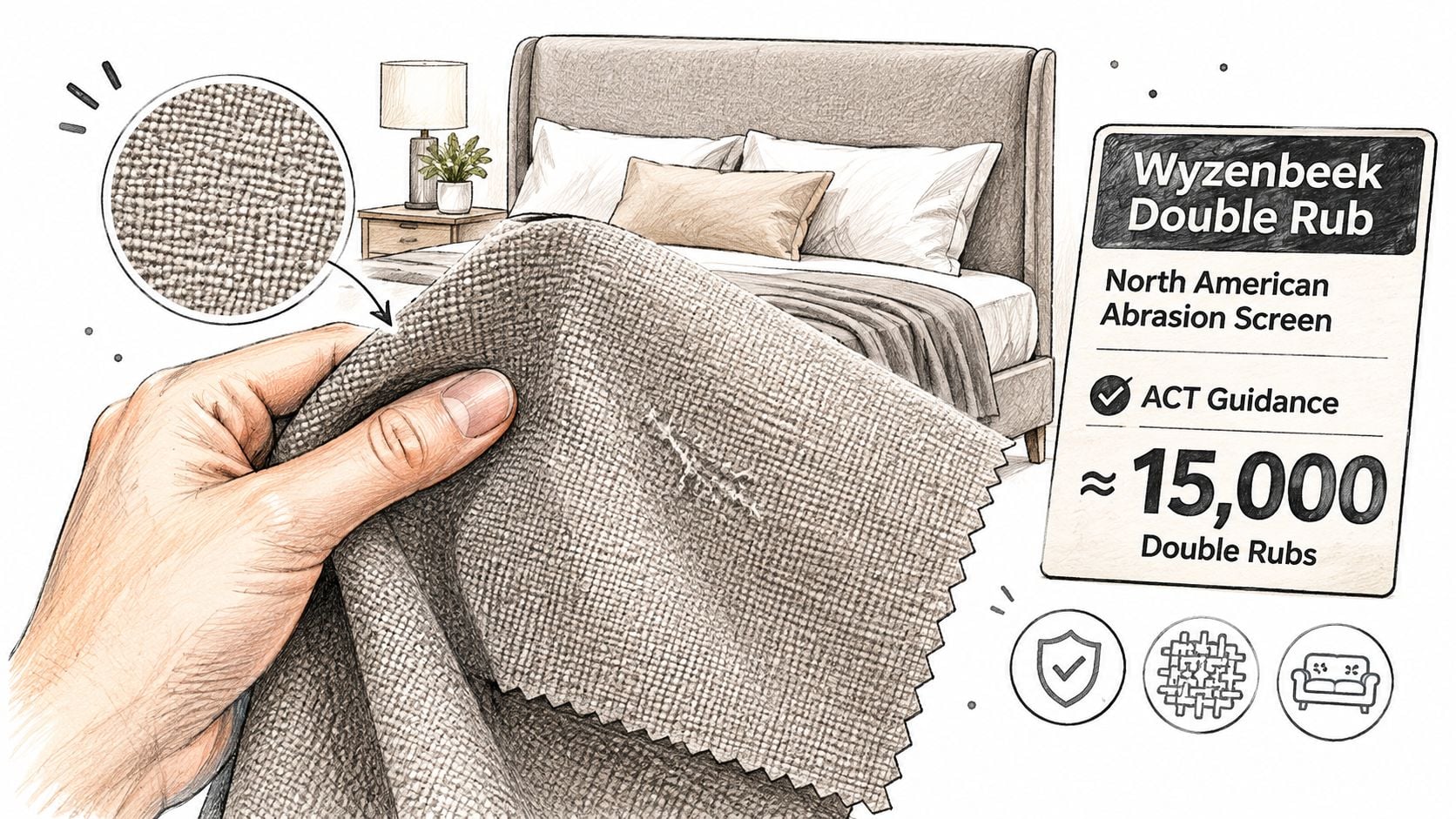
The Wyzenbeek test rubs tensioned fabric in its warp and filling directions and reports double rubs. ACT guidance identifies approximately 15,000 double rubs for low-traffic private spaces and 30,000 for high-traffic public spaces, as explained in Kvadrat's fabric performance guide. The same guide gives Martindale benchmarks of approximately 20,000 cycles for low-traffic use and 40,000 for high-traffic use.
Wyzenbeek and Martindale results measure different motions, so compare each only against its own benchmark. Neither test predicts staining, pilling, seam failure, or resistance to a pet's claws. A high abrasion result is one piece of the decision, not a promise about every kind of wear.
Cleaning codes address a separate concern. W permits water-based cleaning, S calls for solvent-based cleaning, WS permits either approved approach, and X means vacuum-only care. Follow the upholstery instructions; these codes do not authorize saturation, machine washing, or using an unapproved cleaner.
Upholstery materials compared for wear and care
| Material | Abrasion screen | Typical cleaning code | Humidity and pet note |
|---|---|---|---|
| Tight woven polyester | Request the documented Wyzenbeek or Martindale result | Often W or WS, confirm the label | Prompt blotting helps; ask whether the finish is PFAS-free |
| Linen or linen blend | Require a rating suited to the intended bedroom use | Often S, confirm the label | Breathable texture can wrinkle and show water spots |
| Cotton or poly velvet | Require the test method and the individual fabric result | Often S, confirm the label | Pile marks show; soaked padding beneath the pile can retain odor |
| Faux leather or leather-like | Request coating durability and flex-performance information | Manufacturer-approved wipe care | Spills may wipe away easily; heat and incompatible cleaners can damage the coating |
| Top-grain leather | Assess the leather finish and care requirements | Leather-specific care instructions | Develops visible character; avoid saturation and unsuitable household cleaners |
Use the table to narrow questions, then confirm the exact cover's label. Fiber content alone cannot establish an abrasion rating or cleaning code. Coated materials also need their own care guidance rather than assumptions based on woven textiles.
Compare Finishes and Repair Options
Performance treatments and tight untreated weaves each have trade-offs, so compare them on cleaning code, breathability, and drying. In a humid home, consider how quickly a damp spot can dry and whether the fabric or padding may retain odor. Stain resistance and easy cleaning are related, but they are not the same specification.
Lott's Furniture explains what performance fabric is made of, which can help you ask focused questions about the selected cover. For material transparency, ask the retailer or manufacturer whether PFAS are intentionally added to that finish and request a clear description of the treatment. A performance label alone does not identify every material or treatment.
A useful fabric specification explains what the cover can withstand and how it can be cleaned. A reassuring adjective does neither.
Finally, check whether the upholstery is fixed, removable, or replaceable. A zipper does not confirm that a cover is washable, and a removable panel does not confirm that a replacement will be available later. Ask what repair options apply to the selected frame. Access to repair can matter more than a fashionable color when bedding and wall finishes change over time.
Comfort Noise Allergies and Fire Safety
For a bedroom where someone reads in bed or shares space with a pet, an upholstered headboard offers a warm, cushioned surface. Fabric can soften incidental contact with a wall, while the frame's added layers bring different cleaning and safety considerations. If the bed squeaks, inspect its hardware, joints, and placement on the floor. Upholstery does not correct a structural problem.
Upholstered frames also tend to be heavier and more involved to move than simple hard-surface frames. The choice is about more than appearance: consider how the construction suits your household's cleaning needs and comfort.
Make Allergy Decisions About Construction
Upholstery can work in an allergy-sensitive bedroom when the cover is low-pile and the edges are easy to inspect. Pile depth, seams, access for pets, ventilation, and cleaning habits all affect upkeep. A tight, low-pile panel is simpler to inspect than deep button tufting with enclosed recesses.
Check the underside before choosing. An open underside can make cleaning access easier, while a closed dust cover may conceal cavities that warrant inspection after a spill or pest concern. Either way, regular housekeeping still matters.
Purified Air Duct Cleaning's guide to controlling humidity to fight dust mites offers broader household context. Keep mattress and bedding advice separate from claims about a bed frame: those surfaces differ in construction and exposure. For the frame itself, focus on accessible edges and the spaces where dust may settle.
Ask for Smolder-Resistance Documentation
Ask for documentation covering the complete upholstered construction, because a fabric's test result does not cover the foam beneath it. The Consumer Product Safety Commission's upholstered-furniture guidance explains that 16 CFR Part 1640 requires compliance with TB 117-2013. The standard evaluates cover fabric, barrier material, resilient filling, and decking for char length, continued smoldering, and transition to open flame, using methods based on ASTM E1353 cigarette-ignition-resistance testing.
The layers work together, much like a coat and its lining. A test result for the outer textile alone does not establish how unapproved replacement foam or batting beneath it will behave. Request documentation for the full construction, rather than relying on a fabric sample.
Keep the assembly intact. Do not add stuffing, tuck decorative textiles into the upholstery build, or replace foam without approved specifications. A removable throw used as bedding is separate from material attached within the frame.
A smooth wood or metal frame may be easier to manage when a large textile surface does not suit the household. Compare the practical trade-offs:
- Comfort: A warmer touch, a softer visual line, and cushioning against incidental wall contact.
- Moving: Greater bulk and more components to handle during disassembly.
- Housekeeping: Seams and tufting create extra places for dust to settle.
- Construction: Padding and concealed layers make documentation for the complete upholstered build important.
Care That Survives Humidity Pets and Spills
In a South Georgia or North Florida bedroom, an upholstered bed is a layered textile: the cover, padding, and hidden structure each respond differently to spills, humidity, and everyday use. Care starts with the cleaning code and the household's routines. Regular, gentle upkeep helps protect the fabric without making cleaning harder than it needs to be.
Bassett's upholstered-bed care guidance recommends vacuuming with an upholstery attachment, blotting spills with a dry absorbent white cloth, and following the fabric's cleaning code. It also advises avoiding prolonged exposure to heating or air outlets, which can fade fabric and damage fibers.
A Practical Upholstered Bed Care Routine
Vacuum weekly with a suitable upholstery attachment. Move along seams, wings, the headboard, and rail edges. Use gentle suction and avoid a stiff brush that could roughen yarns or pull decorative stitching.
Lift dry crumbs, sand, and grit before rubbing them into the weave. Use gentle suction near buttons and trim, supporting loose details instead of dragging the nozzle across them.
For a spill, keep the cover in place and blot with a dry white cloth. Use a clean section as moisture transfers. Follow only the cleaning method allowed by the cover's code and the manufacturer's instructions.
Avoid scrubbing a stain outward or soaking linen blends and velvet. Rubbing can distort the surface, and excess liquid can spread the mark. Test an approved cleaner in an inconspicuous spot before treating a visible area.
Skip steam and wet extraction unless the manufacturer explicitly approves them. Moisture can pass through the cover into padding, which takes longer to dry. Check the padding beneath the surface, since it dries more slowly than the visible cover.
Keep strong sunlight and heating outlets from concentrating on one upholstered panel. Adjust curtains or furniture placement where practical, rather than relying on a protective spray to offset ongoing exposure.
Manage pet contact at the source. Keep bedding clean, remove shed hair regularly, and check snags before they spread. A pulled thread near a seam calls for a repair assessment, not an assumption that the fabric failed an abrasion test.
Keep Coastal Care Realistic
For a bedroom used seasonally, check behind the headboard and inspect lower rails after floor cleaning. Let the upholstery dry before closing the room. Lott's Furniture's pet-friendly furniture guidance can help connect fabric choices with the way pets use the bed and bedroom.
For questions about moisture-control equipment, Home Dehumidifier Reviews' humidity guide explains the difference between adding and removing moisture. Treat persistent odor as a moisture problem and address the source.
Material transparency belongs in the care file, too. Minnesota began prohibiting intentionally added PFAS in upholstered furniture and textile furnishings on January 1, 2025, according to the Minnesota Pollution Control Agency's PFAS prohibitions guidance. Ask about material disclosures when reviewing a bed's specifications.
Coastal care priority: Blot spills promptly and follow the cover's cleaning instructions. This helps protect the fabric and the layers beneath it.
Before purchasing, obtain written cleaning instructions, finish disclosures, and warranty terms concerning prolonged moisture or mold. Those details help you judge whether a cover suits the household before daily use puts it to the test.
Special Order Looks for Real Bedrooms
A successful special order begins with a room and its routines, not an isolated swatch. Lott's Furniture's designers show fabric choices suited to customers' upholstery needs, while the Special Order Program allows personalization within each vendor's available options. Most vendors support special orders, but the available levers must be confirmed for the chosen model.

A Fernandina Beach Vacation Cottage
Consider a cottage bedroom with painted walls, simple window treatments, and guests arriving after beach days. A low upholstered platform has been chosen to keep the room relaxed rather than ceremonial. The decisive customization is a tight woven cover from the vendor's library with clearly documented spot-cleaning instructions.
A plain edge suits the room better than elaborate trim. The feet take a quiet wood finish that relates to the existing furnishings without trying to match every surface exactly. The fabric sample should be viewed beside the flooring and bedding, since a warm neutral can look quite different against cool white paint.
The floor sample serves as a fit check. Sitting against it reveals whether the headboard angle is comfortable, and standing beside it helps establish whether the rail height feels appropriate.
A Waycross Family Primary Bedroom
In a family primary bedroom, drawers under the mattress have already been selected to reduce pressure on closet space. The deciding fabric needs a manageable care routine because children and pets may regularly brush against the upholstered rails. Drawer operation and access deserve a hands-on check before fabric selection becomes final.
La-Z-Boy and Smith Brothers are useful reference points for family-oriented upholstery preferences and custom comfort. Their available bed silhouettes and special-order options must be established model by model rather than inferred from their broader upholstery collections.
For this room, the important levers are the cover and edge treatment. A plain border may suit frequent contact better than decorative detailing, while a forgiving texture can be preferable to a smooth cloth that displays every touch.
- Fabric tier: The selected cloth's position within the vendor library affects the order cost.
- Cloth or leather: Material choice changes both appearance and maintenance expectations.
- Foot finish and trim: Available wood finishes and nailhead treatments can alter the final specification.
- Comfort options: Cushion feel is adjustable only where the maker offers that choice; it isn't a universal bed-frame feature.
A Traditional Guest Room
A shelter or sleigh headboard has been selected beside Lexington wood case pieces. Rather than choosing a trending swatch, the upholstery takes its color from a quieter thread in the drapery. This creates continuity without requiring a matching bedroom suite.
The useful customization here is a restrained fabric and a foot finish that relates to the wood furniture. Nailhead trim belongs only if its scale supports the room's existing hardware and decorative details.
Lott's Furniture's Style Quizzes can help clarify the direction before a fabric is approved. The selected sample should then be assessed in the bedroom's daylight and evening lighting, not only under showroom lights.
A custom cover generally takes longer than selecting an available floor piece because the chosen specification must be produced. That added lead time belongs in the household's planning, while replacement-panel availability and moisture-related warranty exclusions belong in the written order review. Investment-quality furniture starts with a clear specification, not an assumption that every future repair will be possible.
Visit the Showroom or Start Online
For South Georgia and North Florida shoppers, the most useful showroom visit combines a comfort test with a specification check. At Lott's Furniture in Waycross, Georgia, or Fernandina Beach, Florida, in-store associates can help with design decisions, pull fabrics for the Special Order Program, and use the Mattress Guide alongside the frame discussion.
The online route should feel like part of the same process. Browse the digital bedroom catalog, explore the Style Quizzes, and arrange a design consultation before making the trip. Most vendors offer personalization, so the floor sample is a starting point rather than the only possible result.
Prepare for Selection and Delivery
- Bring the essentials: Mattress size, bedroom measurements, a wall photo, and the preferred fabric direction make the conversation more productive.
- Plan the purchase: Shop Now, Pay Later and extended financing are available to help align the purchase with the household's timeline.
- Confirm the specification: Review the foundation, mattress compatibility, overall dimensions, and access route before the delivery date.
The Lott's Delivery standard includes a rigorous multi-point inspection before every piece reaches the customer. White-glove, in-home delivery places the furniture in the room of choice, exactly where the customer wants it, rather than leaving a crate at the door.
That final placement should account for usable drawers, reachable outlets, and cleaning access. A well-planned delivery completes the same careful decision that began with the bedroom wall.
Lott's Furniture offers personalized design guidance, special-order choices, and white-glove delivery to help homeowners select upholstered bed frames for real coastal living. Visit Lott's Furniture to schedule a showroom visit or an online style consultation, and bring the mattress size, a fabric wish, and a photo of the bedroom wall.


