
How Long Do Mattresses Last: What to Expect and When


Most mattresses last between 7 and 10 years, but construction type and care habits can move that range considerably. Latex may serve longer, while memory foam and traditional innerspring designs often need attention sooner.
Why does one mattress feel worn out after several years while another still seems comfortable well beyond the familiar “7-year rule”? The calendar offers a useful starting point, but it can't tell the full story. Materials, nightly use, body weight, bedroom humidity, foundation support, and the way a mattress feels beneath the sleeper all shape its practical life.
For households across South Georgia and North Florida, climate deserves particular attention. Warm, humid conditions can soften foam and affect adhesives before the cover shows obvious wear. A mattress in a frequently used primary bedroom also faces a very different workload from one in a guest room or lightly used vacation property.
Understanding Average Mattress Lifespan
The most useful answer to how long do mattresses last is usually 7 to 10 years, not because every mattress expires at a fixed age, but because many products begin losing meaningful comfort and support within that window. Independent sleep guidance places well-made mattresses near the upper end of that range, while construction, material quality, and care determine where a particular bed lands. SleepWorks' mattress durability guidance explains why stronger support cores, denser foams, and reinforced edges can slow deterioration.
That benchmark should guide an inspection, not force an automatic replacement. A mattress can remain serviceable beyond the usual range if it has been well maintained and lightly used. Conversely, nightly compression, inadequate foundation support, heat, humidity, and visible body impressions can make a bed feel finished earlier.
Expectations and actual replacement behavior
Consumer expectations don't always match what happens at home. The Better Sleep Council reported that consumers expected a quality mattress to last 10.9 years in 2007, compared with 9.4 years in later research and 9.6 years in 2023. The same research found that nearly half of respondents had replaced their mattress within seven years, revealing a meaningful gap between expected lifespan and replacement behavior. Sleep Savvy's summary of the replacement-cycle research provides that comparison.
Disposal records tell a different story. The Mattress Recycling Council's 2023 Mattress Age Study found that discarded units averaged 13.9 years, with foundations averaging 15.1 years, innerspring and all-foam mattresses averaging 13.2 years, tagged units averaging 10.2 years, and untagged units averaging 19.7 years. An earlier analysis cited in that study placed discarded units at 11.2 years on average, showing that mattresses can remain in homes or secondary use long after owners first consider replacement. The Mattress Recycling Council's study summary separates replacement intent from actual disposal.
Practical rule: Age tells a homeowner when to inspect a mattress. Comfort, alignment, and support tell the homeowner whether it still earns its place in the bedroom.
For a broader homeowner-friendly explanation of the factors involved, the guide to how long should a mattress last offers useful context. The best decision remains personal: if the bed no longer supports the body or allows comfortable sleep, its useful life may already be over.
Mattress Lifespan by Material Type
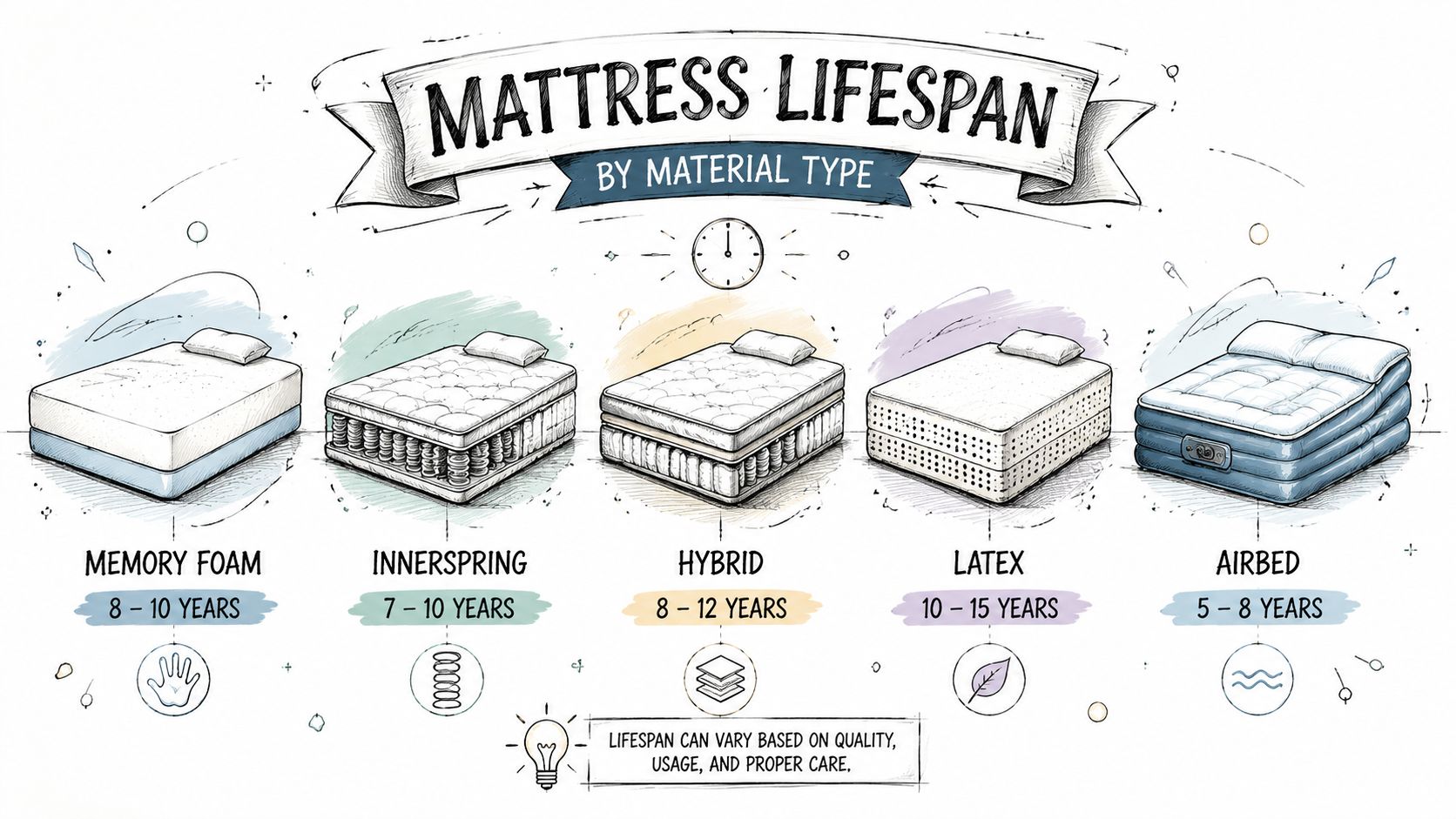
How long a mattress lasts depends less on its label than on how its materials handle years of compression, heat, moisture, and movement. Latex usually springs back well, while foam comfort layers may soften or retain impressions. In a hybrid, the coil unit can remain supportive while the upper foam or latex layers lose their pressure-relieving feel first.
A practical comparison by construction
- Latex, approximately 12 to 15 years: Latex offers strong elastic recovery and generally resists permanent impressions better than many foam-heavy designs. Its springy feel can also help sleepers move without feeling trapped. Lott's latex mattress benefits guide explains how this material supports resilience and surface response.
- Hybrid, approximately 8 to 12 years: Hybrids pair coils with foam or latex. Their support unit may remain durable, but the comfort layers usually decide when the bed stops relieving pressure evenly. Warm or humid rooms can also make some foams feel softer over time, so airflow and moisture control matter.
- Memory foam, approximately 6 to 8 years: Memory foam provides contouring and motion isolation, although lower-density foam may soften or indent sooner under repeated load. Some guidance places good-quality memory foam closer to 8 to 10 years, illustrating how much density and construction matter.
- Traditional innerspring, approximately 5 to 8 years: Coil fatigue, reduced tension, and worn padding can lead to sagging or noise. One health-oriented guide places this category at roughly 5.5 to 6.5 years, particularly where interconnected coils cannot compress independently.
Use these ranges as inspection points, not promises. A heavier sleeper, two people sharing one sleep area, or children jumping on the bed creates more stress than occasional guest use. Edge reinforcement matters if someone sits on the side every morning, and a properly matched foundation helps the support core perform as designed.
Matching resilience to sleep habits
Side sleepers often need enough cushioning around the shoulder and hip to prevent pressure, while back and stomach sleepers may prefer steadier support with less sink. A softer surface can feel inviting, but it may wear sooner if the comfort material is not dense enough for the sleeper's needs. Readers comparing plush surfaces can review the best pillow top for side sleepers for ideas about cushioning and pressure management.
Local climate adds another practical consideration. In warm, humid conditions, breathable covers, moisture control, and regular room ventilation help protect the sleep environment and materials. Rotate the mattress when the manufacturer permits it, and use a stable foundation.
The best selection balances durability with comfort. Latex often favors resilience, memory foam favors contouring, innerspring favors airflow and familiar responsiveness, and hybrid designs balance several traits. Layer quality, bedroom conditions, body weight, and sleep position matter more than the category name alone.
Recognizing the Signs It Is Time to Replace
A mattress has reached the end of its functional life when it no longer keeps the sleeper comfortable and properly supported. A date on the law tag can't measure that. The most reliable assessment combines a visual inspection with an honest review of sleep quality.
Start with the surface and structure
Look for these physical clues:
- Visible sagging: A hollow through the center or beneath the hips suggests the support system or comfort layers have weakened.
- Persistent impressions: Body-shaped indentations that remain after the sleeper gets up indicate permanent compression rather than temporary contouring.
- Lumps or uneven areas: Irregular padding can create pressure points and force the body into awkward positions.
- Noisy movement: Squeaks, creaks, or clicking from coils may signal structural wear, especially when the sounds are new.
- Weak edges: If sitting on the side causes an unusual collapse, edge reinforcement may no longer be doing its job.
- Odor or staining: Persistent smells, moisture damage, or stains can affect the sleep environment even when the mattress still looks reasonably level.
A protector can prevent new spills, but it can't restore a compressed comfort layer. A topper may soften a firm surface for a while, yet it won't correct a sagging support core or a weakened edge.
Let the body provide the final evidence
Morning discomfort deserves careful attention. Repeated aches in the back, hips, shoulders, or neck can indicate that the mattress no longer distributes pressure or holds the spine in a comfortable position. Tossing, turning, waking frequently, or sleeping better elsewhere also points to a comfort problem.
A mattress doesn't need to look ruined to be unsuitable. If the sleeper wakes sore and the bed feels different from the surface tested when new, the support experience has changed.
Check the foundation before blaming the mattress. A damaged frame or inadequate base can imitate sagging and accelerate wear. If the base is sound and the same discomfort continues, replacement becomes a more sensible investment than repeated attempts to disguise the problem.
Extending Your Mattress Life Through Care
Good maintenance protects the materials that carry the sleeper each night. It won't turn an aging mattress into a new one, but it can help a sound mattress reach its intended service life.
Build a simple care routine
- Rotate when the design allows: Follow the manufacturer's instructions and rotate the mattress on the recommended schedule to distribute repeated pressure. Some mattresses aren't designed to be flipped, so turning one over without approval can damage comfort and support performance.
- Use a fitted protector: A breathable, washable protector helps shield the cover and interior from spills, perspiration, dust, and pet dander without replacing the need for regular cleaning.
- Spot-clean carefully: Use the manufacturer's approved method, avoid saturating the mattress, and allow it to dry thoroughly. Excess moisture can encourage odor and contribute to foam or adhesive breakdown in humid rooms.
- Keep bedding breathable: Regularly wash sheets and allow the sleep surface to air during routine linen changes. This helps manage accumulated heat and moisture.
- Inspect the foundation: Confirm that the frame, slats, and center support remain stable. A mattress can't perform properly when the base flexes or leaves unsupported areas.
The local climate makes moisture control especially important in coastal and inland homes across South Georgia and North Florida. Heat and humidity can accelerate softening, while poor ventilation and inadequate hygiene can make a mattress feel older before its fabric looks worn.
For a more detailed household routine, the guide to mattress maintenance and cleaning tips can help organize cleaning, rotation, and foundation checks. Care works best when it becomes ordinary housekeeping rather than a rescue effort after visible damage appears.
Navigating Mattress Warranties and Guarantees
A warranty protects against specific defects, not against every change that happens through normal use. Shoppers should read the coverage language before purchase and keep the receipt, law tag, and delivery documentation in a safe place.
What coverage usually addresses
Manufacturing flaws, broken components, and certain structural failures may qualify under a limited warranty. The manufacturer typically defines the acceptable threshold for sagging, indentation, or other defects, and the claim process may require photographs, proof of purchase, and inspection.
A limited lifetime warranty doesn't mean the mattress will provide lifetime comfort. It often covers qualifying defects for as long as the original purchaser owns the product, while other terms may use a defined period followed by prorated assistance. A prorated arrangement can require the owner to pay part of the replacement cost as the mattress ages.
What usually falls outside the promise
Normal softening, gradual loss of resilience, comfort preference, stains, odors, and damage from an unsuitable foundation are commonly excluded. A mattress may remain within warranty while no longer feeling right for a particular sleeper.
That distinction matters because durability and warranty coverage answer different questions. The warranty asks whether a defect meets the manufacturer's terms. The sleeper asks whether the bed still provides consistent comfort and dependable support.
Before filing a claim, review the Lott's Furniture mattress return policy and the manufacturer's documentation. A showroom associate can help clarify paperwork, but no warranty should replace an honest evaluation of sleep quality.
Choosing Your Next Quality Sleep Solution
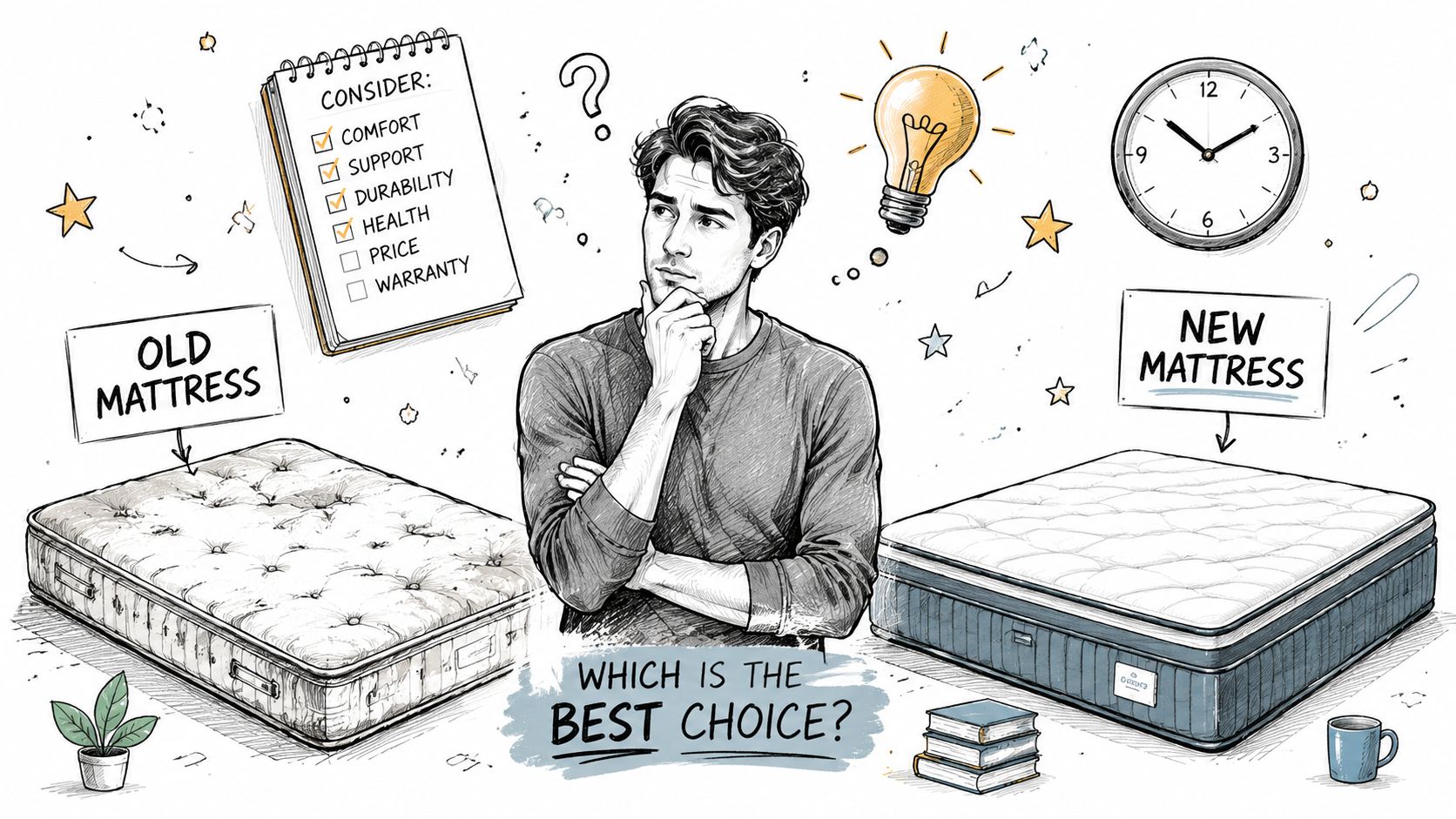
Replacement works best when the new mattress reflects the sleeper rather than the marketing label. A side sleeper often needs pressure relief at the shoulder and hip, while a back sleeper may prefer a steadier surface. Couples must also weigh motion isolation, edge support, and each person's comfort preference.
Compare the features that affect daily sleep
Material feel comes first. Latex offers buoyant support and quick recovery. Memory foam contours more closely and can reduce motion transfer, though heat and permanent impressions deserve consideration. Innerspring systems provide responsive movement and airflow, while hybrids combine coil support with layered cushioning.
Firmness isn't universal. Body shape, sleeping position, and personal preference change how a mattress feels. A surface that seems supportive when sitting can feel too firm at the shoulder after a full night, so testing in a natural sleeping position matters.
The bedroom environment also counts. Warm sleepers may want a more breathable construction, while someone seeking deep contouring may accept a different feel. A guest room, primary suite, and coastal vacation home may each call for different priorities because their use intensity differs.
Lott's Furniture provides a mattress buying guide alongside its Mattress Guide, Style Quizzes, and in-store associates. These tools help shoppers narrow comfort levels before visiting a showroom, then test the leading options in person.
Tailor the purchase to the room and the sleeper
The Special Order Program supports personalization across much of the broader home collection, with many vendors offering choices in fabrics, finishes, and comfort levels. That same design mindset helps a mattress purchase fit a curated sanctuary rather than fill an empty frame. For shoppers exploring sustainable design ideas, a collection of minimalist eco-friendly mattresses offers another perspective on material priorities.
Shopping can move smoothly from the digital catalog to the showrooms in Fernandina Beach, FL, where associates can discuss comfort and support face to face. That omnichannel path keeps research convenient without sacrificing the value of lying on a mattress before committing.
Experience the Difference at Lott's Furniture
A mattress is an investment in every morning that follows. A household may need resilient latex for nightly use, contouring foam for pressure relief, or a responsive hybrid for two sleepers with different preferences. The right answer comes from matching the construction to the body, the bedroom climate, and the household's habits.
Lott's Furniture serves South Georgia and North Florida through showrooms in Waycross, GA, and Fernandina Beach, FL. Knowledgeable associates can help shoppers use the Style Quizzes, Mattress Guide, and in-store testing process, while the digital catalog makes it easy to begin at home and continue in person.
The broader showroom collection includes brands such as La-Z-Boy, Smith Brothers, Lexington, Stressless, and Hooker Furniture, allowing a mattress decision to fit naturally into a carefully furnished bedroom. The Special Order Program also gives shoppers access to personalized designs, including vendor-supported fabric, finish, and comfort selections across qualifying home furnishings.
Every delivered piece undergoes a rigorous multi-point inspection before reaching the customer. The white-glove mattress delivery service includes in-home placement, so the new sleep solution arrives ready for its intended room rather than left for the household to manage alone.
Lott's Furniture offers curated mattress choices, practical guidance, personalized ordering, and white-glove in-home delivery for households across South Georgia and North Florida. Visit Lott's Furniture to begin an online style consultation or stop by the Waycross or Fernandina Beach showroom to test comfort in person.

