Mattress Return Policy: A Simple Guide


A mattress return policy is not one thing. By 2026, major brands commonly offer 90-day, 100-day, 120-night, or 365-night trials, but many also require a 21-30 night break-in period, plus clean condition and refund steps before money moves back to the customer.
That's why a new mattress can feel simple on delivery day and complicated a week later. The clock starts, the household starts debating firmness, and the paperwork rules decide whether the return is real or just marketing. For families in South Georgia and North Florida, that difference matters because a mattress isn't a small purchase, it's part of the sleep environment, and the wrong policy can turn a comfort decision into a logistics headache.
Lott's Furniture has seen this play out in homes from Waycross to Fernandina Beach. The smart move is to read the policy as a set of moving parts, not a single promise, and to ask the right questions before the trial window becomes a problem. For a broader look at the buying journey that leads up to this decision, see our guide to the furniture buying journey.
Why the Mattress Return Policy Question Matters More Than the Trial Number
A mattress can arrive looking perfect and still become the wrong fit once the household sleeps on it. That's why the first question shouldn't be “How long is the trial?” It should be, “What conditions control the refund if this bed doesn't work out?”
The clock is only the beginning
The headline trial window is only one part of the policy. Many retailers start the trial at delivery, then add a mandatory break-in period before comfort-based returns can even begin, and published policy comparisons show major brands commonly pair long trials with waiting periods before eligibility starts. The result is simple: the customer sees a long promise, but the approval path depends on timing, condition, and proof.
Practical rule: If the mattress is already in the house, the policy clock is already moving.
That's why shoppers should look beyond the number printed in the ad. A 100-night trial sounds generous, but it means less if the item must be kept clean, documented, and preserved in a condition the retailer will accept. A clear policy is more useful than a dramatic one.
What changes the outcome
The biggest friction points are usually comfort versus defect, delivery damage versus normal use, and whether the mattress can still be inspected, picked up, or donated. The right local showroom partner can answer those questions face-to-face instead of pushing the customer through a generic script.
Lott's Furniture serves South Georgia and North Florida with that kind of in-person guidance, and our associates can talk through mattress fit, policy concerns, and delivery details before the buyer commits. For shoppers who prefer a cleaner path from showroom to home, our delivery and assembly process matters because condition on arrival is part of the return story, not a separate issue.
The Four Parts Every Mattress Return Policy Really Contains
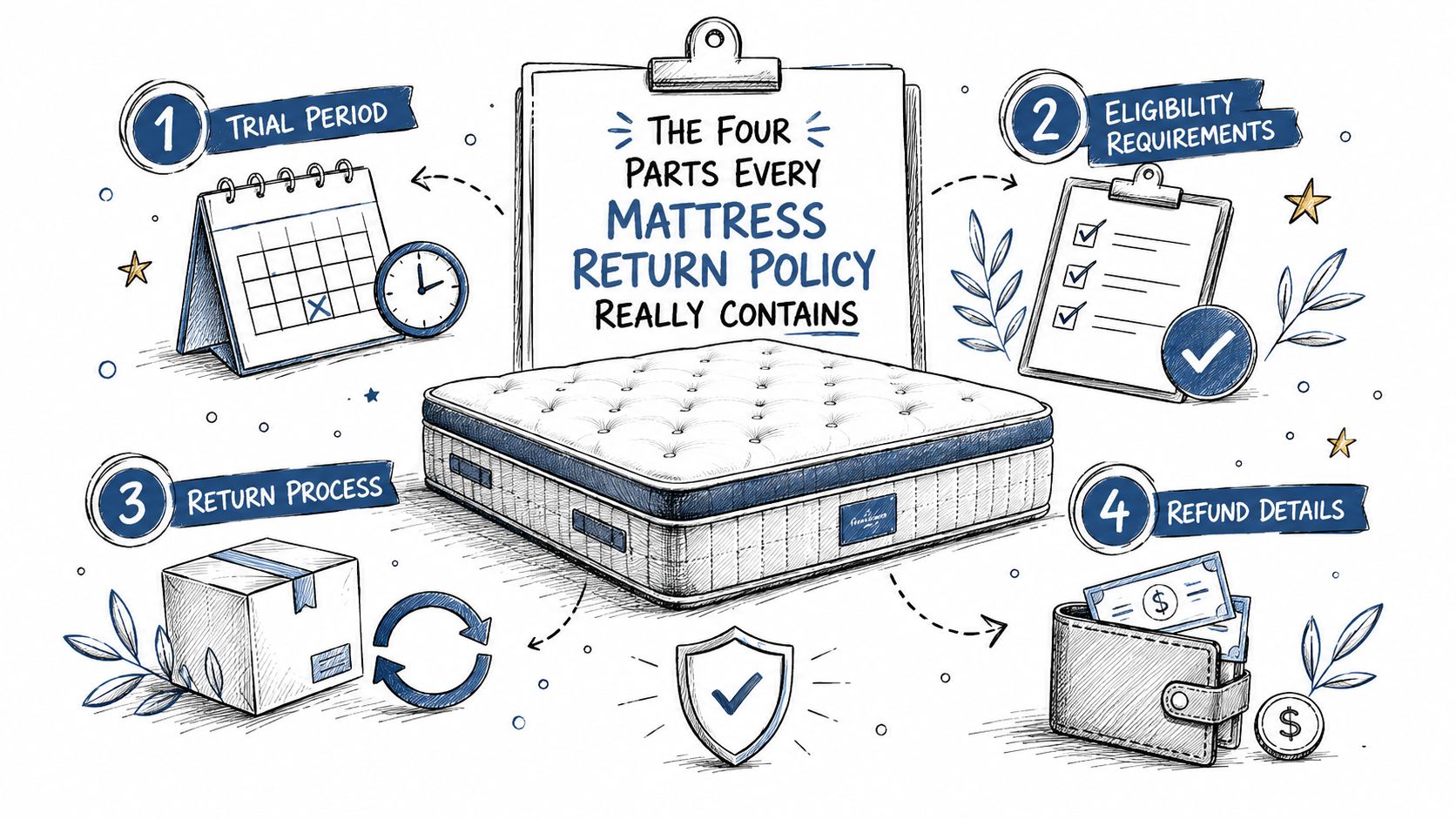
A mattress return policy usually looks simple until the fine print starts doing the heavy lifting. Strip away the marketing language and four parts show up almost every time: the trial clock, the break-in period, the condition rules, and the refund logistics after approval.
1. Trial window clock
The trial is the headline number, but the clock is only useful if the shopper knows when it starts. In most cases, it runs from delivery, not from the date of purchase. That means delay in receiving the mattress can change the usable testing period.
2. Break-in period before eligibility
Policies often force a waiting period before a comfort return can begin. That wait exists because early discomfort is frequently treated as adjustment, not a true product failure. A customer who forgets this detail can feel confident they are inside a return window and still be ineligible.
3. Condition and proof rules
Most policies want the mattress clean, undamaged, and inspectable before they'll approve a refund. Some also want packaging preserved where required, and many expect proof of delivery, photos, or other documentation if a problem is discovered early. A useful way to judge any policy is to ask whether the item can still be reviewed without dispute.
If a shopper wants a quick way to compare the structure of another retailer's policy, it helps to check their returns policy before buying. The wording tells a lot about how much friction may appear later.
4. Refund mechanics after approval
Approval is not the same as money in hand. Pickup may need to happen first, donation proof may be required, and some retailers add restocking or pickup charges. In other words, “return approved” often marks the start of the second phase.
For a simple rulebook on how delivery interacts with those conditions, our furniture delivery and assembly process shows why arrival condition matters from day one.
| Part | What to look for | Why it matters |
|---|---|---|
| Trial clock | Starts at delivery or purchase | Determines the usable test period |
| Break-in period | Often required before comfort returns | Prevents early adjustment complaints from becoming returns |
| Condition rules | Clean, undamaged, inspectable | Protects refund eligibility |
| Refund logistics | Pickup, donation, fees, or delay | Determines how hard the return really is |
How Major Brands Structure Their Trial Windows and Break-In Periods
The market has standardized around long mattress trials, but the details still vary in ways that matter. Some policies count nights, others count calendar days, and a few add mandatory waiting periods that shrink the practical testing time.
Trial length is not the whole story
Published 2026 policy comparisons show Casper at 100 nights, Purple at 100 calendar days, Tempur-Pedic at 90 nights, Mattress Firm at 120 nights, and Nectar and Saatva at 365 nights (retailreturnspolicy.com). That spread sounds huge, but the difference often comes from whether the trial is counted by nights or by days, and whether the customer must wait before the return window opens.
A long trial can still feel short if the sleeper spends half of it waiting for eligibility.
That's where the break-in period changes the math. Mattress Firm's posted structure includes a 120-night trial and a 21-day break-in period before a return or exchange can begin, which is a clear example of how a headline number can hide a built-in delay (yawnder.com). Other policy comparisons describe 30-night waiting rules at several major firms, which shows how common the adjustment period has become (millerwaldrop.com).
Exclusions make the policy tighter
Some mattresses aren't treated like standard stock. Denver Mattress' posted policy excludes special order sizes such as Split King, California King, Twin XL, and Full XL, plus adjustable bases and bedding products removed from original packaging. It also says stained or soiled mattresses won't be accepted, and return shipping charges are the customer's responsibility and must be prepaid.
| Brand | Trial Length | Break-In Period | Notable Conditions |
|---|---|---|---|
| Casper | 100 nights | Not specified in the verified data | Returned mattresses are typically picked up and processed through the brand's return system |
| Purple | 100 calendar days | Not specified in the verified data | Trial is counted by calendar days rather than nights |
| Tempur-Pedic | 90 nights | Not specified in the verified data | Shorter headline trial than some direct-to-consumer offers |
| Mattress Firm | 120 nights | 21 days | One exchange or return, fee applies, mattress must be clean and undamaged |
| Nectar | 365 nights | 30 days before return of an opened mattress | Long trial with a mandatory wait after delivery |
| Saatva | 365 nights | Not specified in the verified data | Long trial length stands out in the market |
A shopper who understands these categories can ask better questions before paying for the mattress, not after the truck has left.
How Lott's Furniture Handles Mattress Returns and Exchanges
Lott's Furniture handles mattress decisions differently from a faceless transaction because the process starts with guidance, not guesswork. Our showroom team in Waycross and Fernandina Beach helps shoppers narrow comfort, support, and feel before delivery ever enters the picture, and that matters because a good fit is the best return prevention strategy.
Where the process starts
Our Style Quizzes, Mattress Guide, and in-store associates help customers match body feel, sleeping position, and firmness preference to a sensible set of options. That's especially useful for families choosing through our Special Order Program, where most vendors support personalized designs, fabrics, finishes, and comfort levels. The point is not variety for its own sake, it's reducing the chance of buying a bed that needs to be swapped later.
Our digital catalog also makes the transition easy between browsing online and visiting the showroom in person. A customer can research at home, then come into the store to test the feel in person before ordering.
What the team looks for
When a mattress concern comes up, our associates focus on proof of purchase, visible condition, and whether the issue sounds like comfort, defect, or damage. That distinction matters because the remedy changes with the problem. A comfort question calls for a different response than a shipping issue or a manufacturing concern.
Our white-glove, in-home delivery standard adds another layer of control. Every piece undergoes a rigorous multi-point inspection before it reaches the customer, which helps catch transit damage early and reduces the odds of a return dispute. That's part of the Lott's Delivery standard, and it's one reason local service beats guessing from a boxed-up listing.
For mattresses paired with brands like La-Z-Boy, Smith Brothers, Lexington, Stressless, and Hooker Furniture, the larger lesson is the same, personalized comfort should begin before the mattress lands in the home. Our Mattress Buying Guide gives shoppers a cleaner starting point than trial anxiety after delivery.
Comfort Returns Versus Defect and Damage Remedies
A comfort return and a defect claim are not the same thing, and treating them like the same thing causes avoidable friction. The retailer's trial policy is voluntary, but a damaged or faulty mattress can trigger a separate remedy path.
Three different outcomes
A comfort return means the mattress didn't feel right after the sleeper gave it a fair try. A defect claim means the product did not meet the standards promised, such as a manufacturing problem. A damage claim usually involves transit or delivery harm, and that is where documentation matters most.
The difference is not academic. If a courier tears the cover, the customer should not be treated as if they merely changed their mind. If a mattress develops a body impression, the seller may look at warranty rules and evidence before deciding whether a return, repair, or replacement applies. Which? notes that online buyers in the UK generally have a 14-day cancellation right, and damaged or faulty goods can fall under separate consumer-law remedies, including repair, replacement, or refund depending on the situation.
Why state rules can change the resale outcome
Connecticut's Department of Consumer Protection says no bedding or upholstered furniture can be returned after delivery to a consumer's home unless a defect is found. It also states that if a store accepts a comfort return, it may not resell that item unless it is licensed as a Second Hand Dealer, and the item has been sanitized and tagged as used (Connecticut DCP bedding guidance).
That matters because it explains why retailers are strict about stains, soiling, and proof of condition. The return may be possible, but the resale rules underneath it are tight.
For shoppers who worry more about keeping a mattress in good condition than navigating a future claim, a protector is not optional filler. Our mattress protector guide explains why that layer can protect both the bed and the paperwork.
Bottom line: A comfort issue, a defect, and a delivery problem should never be handled with the same script.
Your Step-by-Step Mattress Return Checklist
The moment a mattress arrives, the return clock becomes a paperwork exercise as much as a comfort test. The cleanest returns are the ones documented early, calmly, and in the right order.
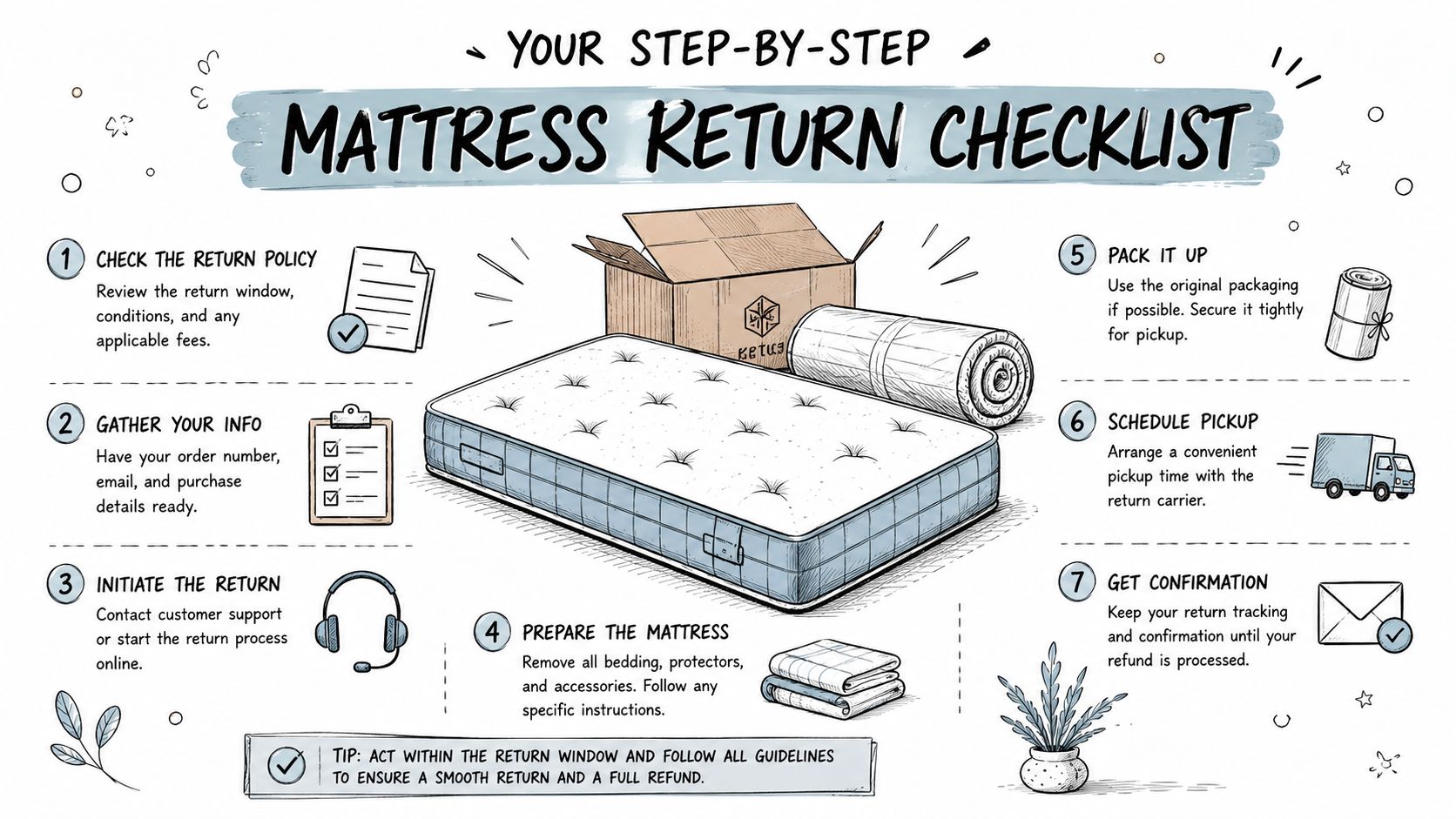
A practical checklist that keeps people out of trouble
- Inspect the mattress on delivery day. Look for tears, stains, or crushed packaging before the team leaves.
- Photograph any issue immediately. Many policies expect prompt defect reporting, and some retailers use a 48-hour window for damage claims, so evidence matters fast (Home Depot bedding policy PDF).
- Keep the packaging and labels if the policy requires it. Some return systems want the product inspectable before approval.
- Sleep on the bed through the break-in period. Comfort decisions made too early usually create false alarms.
- Write down what feels wrong. Firmness, pressure points, heat retention, or edge support are more useful than vague frustration.
- Contact the retailer before the deadline. Waiting until the last night of the trial is how good claims get lost.
- Prepare for pickup or donation logistics. Refunds may not begin until pickup or proof of donation is received, so the approved return is not the finish line.
That last point catches a lot of people off guard. Once the retailer says yes, the process often still needs a pickup window, access through the doorway, and a clean handoff. Some returns also require donation proof before the refund can be released, which means the paperwork lives beyond the approval email.
For shoppers who want a local team to help manage those moving pieces, our tips for buying a new mattress page is a good starting point before the truck ever shows up. The smartest return is the one that never becomes necessary.
Why a Shorter, More Transparent Policy Can Beat a 365-Night Promise
A longer trial sounds generous, but it can also hide more friction. For quality-first shoppers in South Georgia and North Florida, a shorter, clearer process often feels better because it turns the question into fit before the mattress leaves the showroom.
Why transparency wins
A 365-night promise looks impressive, yet a bed that sits in a guest room for months is not being tested in a meaningful way. The household forgets how the first nights felt, the paperwork gets buried, and the eventual return turns into a logistics project. A transparent in-store process solves the problem earlier, when the sleeper can still compare support, softness, and motion feel with help from an associate.
That's where a local showroom relationship beats a headline trial. Style quizzes, a good mattress guide, and direct testing narrow the options before the sale closes, which means fewer “maybe this will work” purchases in the first place. The result is less return anxiety and more confidence in the bed that gets chosen.
What the numbers really suggest
Mattress Firm's 120-night structure with a 21-day break-in, plus a single exchange or return limit and a $99.99 fee, shows how even a generous-looking policy still has guardrails (yawnder.com). The same is true across the market. The trial may sound generous, but the friction lives in the conditions, not the headline.
The best mattress return policy is the one that makes the right choice easier up front.
Lott's Furniture's approach fits that reality. Customers can test comfort in person, use digital tools to narrow the feel, and work with associates who know how to separate a fit issue from a true product problem. That's a better outcome than leaning on a long promise and hoping the mattress fixes itself later.
Mattress Return Policy Questions Worth Asking Before You Buy
The hardest return problems usually come from edge cases, not obvious mistakes. A few direct questions can save time, money, and stress.
Questions that deserve a straight answer
- Will stained or soiled mattresses be refused? Many policies say yes, and once the fabric is marked, the return path usually gets narrower.
- Is a donation receipt required before the refund starts? Some return systems don't release money until pickup or proof of donation is received.
- Do special order sizes count at all? Split King, California King, Twin XL, Full XL, and similar configurations can be excluded from return rules.
- Does a comfort exchange reset the trial clock? That answer changes by retailer, so it should be asked before any swap is approved.
- What happens if damage shows up after the courier leaves? The right answer is to document it immediately and report it fast, because early photos matter.
If the policy language feels confusing, that's usually a sign the process is more rigid than the marketing suggests. A customer who wants a clean, readable policy should ask for the exact steps before purchase instead of trusting a vague promise.
For shoppers who want one more layer of clarity before they decide, our mattress buying guide can help map comfort, construction, and policy concerns together. If the answer still feels uncertain, that's a good reason to slow down and get a human opinion.
Visit Lott's Furniture in Waycross or Fernandina Beach, or use our online style consultation to narrow down the right mattress before the return question ever comes up. Our team serves South Georgia and North Florida with guided mattress advice, white-glove delivery, and the kind of straight talk that makes a big purchase easier to live with.