Multifunctional Living Room Furniture That Works Smarter


The living room gets pulled in every direction. One night it needs to hold a movie crowd, the next day it becomes the guest room, the work call corner, and the place where someone finally puts their feet up. That is exactly why multifunctional living room furniture has moved from a clever add-on to a serious buying decision for homeowners who want a room that works hard without feeling overloaded.
The category is no longer niche. The global multifunctional furniture market was estimated at USD 7.21 billion in 2023 and is forecast to grow at a 6.6% CAGR from 2024 to 2030 (Grand View Research). Another major estimate valued it at USD 15.9 billion in 2024 and projects USD 25.4 billion by 2034, with the sofa segment alone generating USD 4.9 billion in 2024 (Grand View Research). That scale tells a simple story, demand is being driven by real households that need adaptable comfort, not novelty pieces.
What Multifunctional Living Room Furniture Really Means
A family can look at the same room and see four different jobs for it. Someone wants a clean place to sit for dinner leftovers and conversation, someone else needs a spot for a guest to sleep, someone needs hidden storage for blankets and game controllers, and someone wants the room to still feel open on Monday morning. Multifunctional living room furniture is the answer to that kind of daily overlap, a single piece, or a coordinated set, that solves more than one household problem without crowding the room.
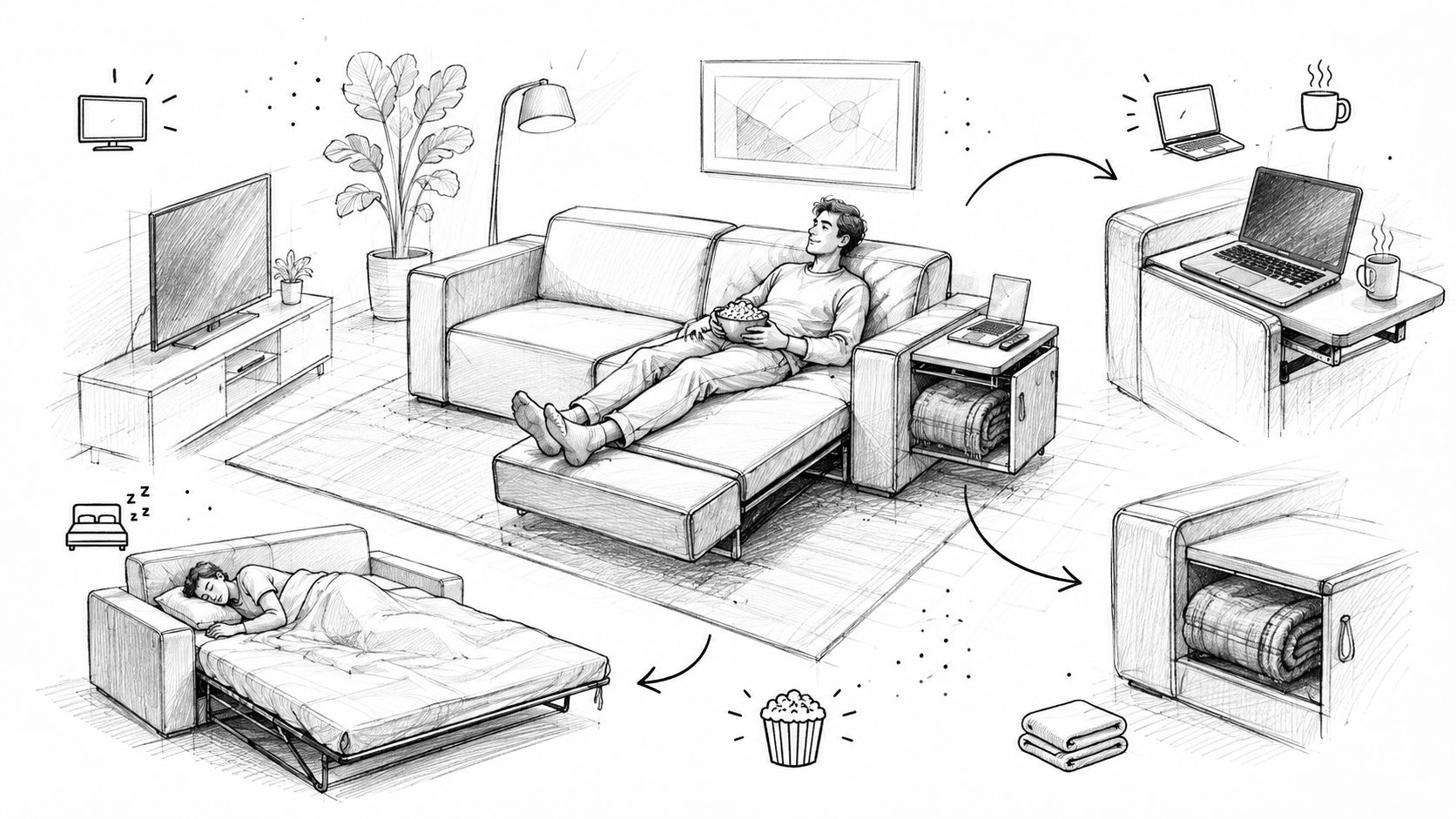
Judge the piece the same way a good homeowner does, by daily comfort first. How it feels when it is closed, sat on, leaned against, and lived with matters more than the feature list. Then check the transformation. A sofa that folds into a bed, a table that hides storage, or seating that tucks away clutter only works if the change is easy and the room still feels calm when the piece is back in its normal position.
That is the standard. The category is about choosing furniture that handles at least two everyday jobs without turning the room into a puzzle. A well-chosen piece should make regular use simpler, not force you to rearrange the whole room every time someone visits or a mess needs to disappear.
That is why the category includes more than sofa beds. It also includes storage seating, modular layouts, tables that expand or tuck away, and consoles that handle both entertainment and organization. For a practical overview of how those living room pieces fit together, Lott's Living Room Furniture Types gives a useful starting point before anyone starts measuring the room.
The best pieces do two jobs without fuss. They do not shout about the trick. They make the room easier to use, and they hold up when the household changes from one day to the next.
The Main Types Worth Knowing
The pieces that do the heavy lifting
A living room usually needs a few specific workhorses, and each one earns its place by handling a real household routine. A sofa bed gives you everyday seating and a place for overnight guests, which makes sense in homes without a dedicated guest room. A storage ottoman keeps throws, board games, chargers, and other loose items out of sight while still working as a footrest or an extra seat.
A modular sectional is the right choice for a room that has to do different jobs across the week. Family movie nights, casual entertaining, and quiet evenings all ask for a different layout, and modular pieces let you adjust without replacing the whole room. A nesting table set works when surface space needs to appear only when it is useful, then disappear again so the room does not feel crowded.
A lift-top coffee table or media-storage console earns its keep when the room needs a work surface, a spot for remote controls, or a clean place to hide cords and devices. A sleeper recliner fits a smaller room that still needs real lounging comfort. A wall bed belongs in spaces that have to switch from living area to sleeping area without the luxury of a separate guest room.
Practical rule: the best multifunctional piece solves a problem the room actually has, not a problem the buyer hopes to have someday.
That judgment matters more than brand labels. Some makers are a better fit when daily sitting comfort has to stay high even after the furniture changes function, while others make more sense in rooms where the finish and silhouette need to feel more refined. The point is simple, transformation should never come at the expense of the way the piece feels at the end of a long day.
For families comparing layouts, multifunctional furniture for small spaces is worth looking at before they commit to a shape. A compact room can handle more than people think, but the piece has to match the room's actual job list.
Honest Pros and Cons of Each Category
Where the trade-off becomes obvious
A sofa bed is the clearest test of what a room needs day to day. It gives a guest a real place to sleep and keeps the room from turning into a dedicated spare bedroom, but the sleeping mechanism adds bulk and the seat comfort still has to hold up for daily use. Households that sit on the sofa for hours should care more about cushion feel than the novelty of the fold-out.
A storage ottoman is easier to live with. It hides clutter, softens the room, and can handle footrest or tray duty, but it also adds one more lid, hinge, or lift point to manage. If the household hates bending down or constantly moving items in and out, a storage ottoman should be used sparingly, not treated like a miracle fix.
A modular sectional gives many homes the most adaptable seating, but it only works well when the seams, corners, and traffic paths are planned carefully. A bad modular layout looks temporary and feels awkward. A good one feels custom, especially when the room has to support both conversation and stretching out.
A published estimate notes that a Murphy bed that transforms into a sofa, bed, or desk can recover up to 40 square feet of livable space without changing the floor plan (GBD Magazine).
That gain is real. The trade-off is real too. Wall systems ask for clearance, stable installation, and a room that can handle the swing of the mechanism. They work well in a true guest-first space, but they are not casual purchases.
Comfort-first choices still matter more than the function label. A family that uses the room every day should look for better seat depth, firmer support, and smoother operation. A home that needs guest flexibility a few times a year can tolerate more compromise. That is also where comfort-focused brands become smart names to keep in mind, because customization matters more when the living room has to do two jobs.
How to Choose the Right Piece for Your Space and Lifestyle
Measure the room the right way
The most common mistake is sizing to the closed footprint only. That's how buyers end up with a sofa bed that fits on paper, then blocks the walkway when opened, or a lift-top table that can't fully lift without hitting another piece. The right starting point is simple, document closed dimensions, open dimensions, clearance zones, and any weight-capacity or wall-mount requirements so the room can function safely (Alcove).
That measurement habit matters more than style preference. A homeowner can fall in love with a sleek profile, but if the active footprint collides with a door swing or the back of a chair, the room loses daily comfort fast. Reserve circulation space first, then choose the shape second.
Match the build to the household
Households with kids, pets, or heavy use should lean toward performance fabrics and worry-free finishes. A custom-order path helps here because the fabric, finish, cushion firmness, arm style, and wood tone can be matched to the way the room is used. Lott's Special Order Program supports that kind of personalization, and its in-store associates, Style Quizzes, and Mattress Guide help narrow the choice before anyone commits.
A practical checklist helps:
- Measure twice: closed size, open size, and walking space.
- Check operation: lift tops, sleeper pulls, and storage lids should move cleanly.
- Test comfort first: if a piece is used daily, sit on it as if it were permanent.
- Verify finish choices: wood tone, upholstery, and hardware should match the room's real wear.
- Use custom order when needed: specific dimensions and comfort levels often beat a near miss.
Our digital catalog and showrooms in Fernandina Beach, FL make that process easier to move between screens and real seats. The best purchase path is usually a mix of both.
Styling and Layout Tips for Small and Open-Plan Rooms
Let the room breathe
A smart room doesn't feel stuffed, even when it's efficient. In small and open-plan living rooms, the goal is to define zones without turning the space into a maze. A modular sectional can frame a seating area, a storage console can anchor the media wall, and a nesting table set can disappear when the room needs more floor space.
One source notes that adaptable modular seating layouts can improve volumetric efficiency by up to 30% compared with static arrangements (Povison). The practical meaning is simple, a flexible layout uses the room's full shape better than a fixed one, especially when the room has angled walls, fireplaces, or tricky door swings.
The room should guide the furniture, not the other way around.
That's why circulation planning matters so much in homes with awkward corners or preserved pathways. A sofa bed should not block the main path when extended. A sectional should define the lounge zone without cutting off sightlines. Open shelving, built-in benches, and L-shaped seating can solve hard layouts better than a pile of standalone pieces.
| Room Challenge | Best Multifunctional Match | Why It Works |
|---|---|---|
| Narrow traffic path | Slim sofa bed | Keeps seating useful without crowding the walkway |
| Open-plan great room | Modular sectional | Creates a zone without building walls |
| Clutter around the TV | Storage console | Hides devices while organizing the focal wall |
| Need for a guest surface | Lift-top coffee table | Adds function without adding another full table |
| Awkward corner | Nesting tables | Fills the corner only when needed |
Homeowners thinking about real buyer concerns, including layout and usefulness during a move or sale, can also look at buyer concerns around home features as a reminder that practical livability often matters more than decoration alone.
For placement help, how to place living room furniture is a smart companion read before the room gets arranged for the last time. Good styling is not about adding more. It's about leaving the room enough room to work.
Maintenance and Care That Protects Your Investment
Treat the moving parts like part of the furniture
Multifunctional pieces ask for more care because they do more work. Cushions need rotating and fluffing, sleeper mechanisms collect dust under the frame, and hinges or pull-outs need occasional tightening so they don't start to wobble. That routine is basic, but it's what keeps a piece feeling solid after repeated use.
Entertainment consoles deserve the same discipline. Multifunctional TV stands and media units now combine structural load management with embedded electrical and audio systems, so buyers should verify both the static load rating and the location of cable routing, power access, and ventilation. Blocked airflow and poor cord placement are the fastest ways to turn a useful piece into a headache.
Lott's standard matters here. Every piece goes through a rigorous multi-point inspection before it reaches the customer, and the white-glove, in-home delivery service places the furniture where it belongs instead of leaving the owner to wrestle with it after a long day. That kind of handling protects the investment before wear and tear even begins.
For painted or finished surfaces, a simple care routine helps preserve the look over time. A useful guide from Farmhouse World can be a helpful reference point for understanding how decorative finishes behave, especially when a piece is meant to stay attractive in an active room.
Stain-resistant upholstery fabric is worth prioritizing for households that don't want maintenance to become a second job. The goal isn't perfection, it's a room that stays presentable without constant fuss.
Common Misconceptions About Multifunctional Living Room Furniture
Comfort and function are not enemies
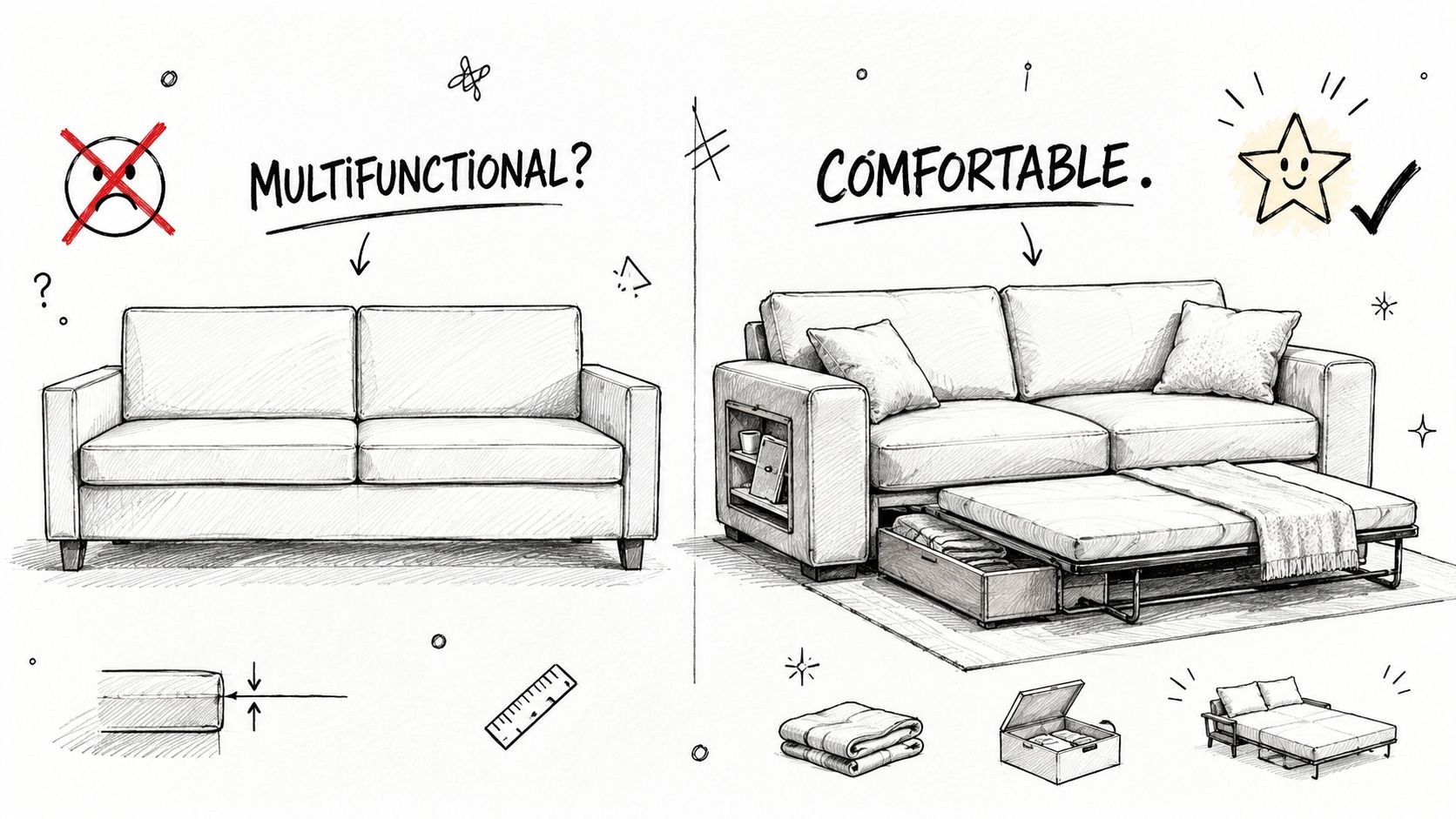
The biggest myth is that multifunctional pieces are automatically uncomfortable. That only happens when the buyer chases features and ignores seat feel, mechanism quality, and daily use. A sofa that folds into a bed once a month can still feel wrong if the seat depth is poor or the cushions break down too quickly.
Another bad assumption is that small rooms need tiny furniture. Small rooms need the right furniture, which can mean one well-scaled sectional, one smart storage piece, or one wall-based solution that keeps the floor open. A room gets cramped from poor layout faster than it gets cramped from a thoughtfully chosen larger piece.
There's also a false idea that custom order is complicated or uncertain. It isn't, not when the manufacturer options already support personalized designs, performance fabrics, and customized comfort levels. That kind of flexibility matters more than chasing an off-the-rack compromise that almost fits the room and almost feels right.
The household should decide whether the piece is for everyday sitting first or guest use first.
That single question clears up most confusion. A room used by a family every day needs comfort and durability at the top of the list. A room that only occasionally hosts overnight guests can give more weight to transformability.
Your Next Step Toward a Smarter Living Room
Choose with your hands, not just your screen
Start online, then test the finalists in person. A showroom visit in Waycross or Fernandina Beach lets a homeowner feel a premium recliner mechanism, compare the cushion quality of a comfort-focused sofa, or judge the clean lines of a high-end sectional before making the call. For quick filtering at home, the Style Quizzes, Mattress Guide, and digital catalog keep the search focused.
A strong starting point for storage-minded buyers is cocktail storage ottoman, especially if the room needs a cleaner center zone without losing daily usefulness. That kind of piece fits a home that wants hidden storage, extra surface space, and a place to put feet up without crowding the room.
Lott's Furniture serves South Georgia and North Florida with white-glove, in-home delivery and a multi-point inspection standard that protects the investment from the start. The digital catalog and the showroom floor are two ways of having the same conversation. The goal is a room that feels right in daily use, not one that only looks good on paper.
Visit Lott's Furniture to explore multifunctional living room furniture, compare comfort levels, and start a style consultation that matches the right pieces to the way your home lives. If the room needs smarter seating, better storage, or a convertible piece that still feels heirloom-quality, our showroom team can help you choose with confidence.