Save 50% Off MRSP on Lexington | Shop the Catalog >

Fabric and Leather Furniture Guide for Every Home

A new sofa often starts with a simple wish: something beautiful enough for the living room, comfortable enough for long evenings, and resilient enough for children, pets, guests, sunlight, and everyday spills. Then the choice narrows to fabric and leather, and the decision suddenly feels less like decorating and more like selecting a long-term companion for the home.
The better question isn't which material wins universally. It's which upholstery system matches the room, the household, and the care routine. A bright coastal sitting room may need a different answer than a shaded study, while a pet-heavy family room may reward a well-specified performance fabric more than a delicate leather finish.
For more than 78 years, Lott's Furniture has helped homeowners across South Georgia and North Florida make those decisions with a balance of small-town service and big-brand expertise. Shoppers can browse the digital catalog, explore a Style Quiz or the Mattress Guide, then move naturally into a showroom conversation with in-store associates in Waycross or Fernandina Beach, FL.
This guide builds the decision from the surface inward. It begins with how fabric and leather are made and felt, then considers durability, cleaning, coastal conditions, sustainability, and personalization. The result is a practical way to choose comfort and investment-quality design without treating every room as if it has the same demands.
Introduction to Fabric and Leather Living
A family may use the same sofa in completely different ways. One person stretches out for a movie, another curls into the corner with a book, a child climbs across the cushions, and a dog settles into the warmest seat. Leather can offer a polished silhouette and a surface that is easy to wipe, while textured fabric may feel warmer and more forgiving from the first evening.
The most useful filter is how the room is lived in. A formal space with controlled light may suit a softer finish. A sunny coastal room, pet-friendly family area, or frequently cleaned rental may benefit from performance fabric designed for repeated use. In South Georgia and North Florida, that practical match can matter more than a simple preference for leather or fabric. With the right construction and care, performance fabric may outlast leather in a busy home, especially where humidity, sand, pet hair, and frequent cleaning are part of daily life.
Material choice also shapes a home's mood. Woven fabric creates a relaxed, layered atmosphere. Leather adds structure and visual depth. Velvet brings a touchable, decorative presence. These qualities work alongside the frame, cushions, finish, and construction, so appearance should be considered together with expected use.
A decision shaped by real rooms
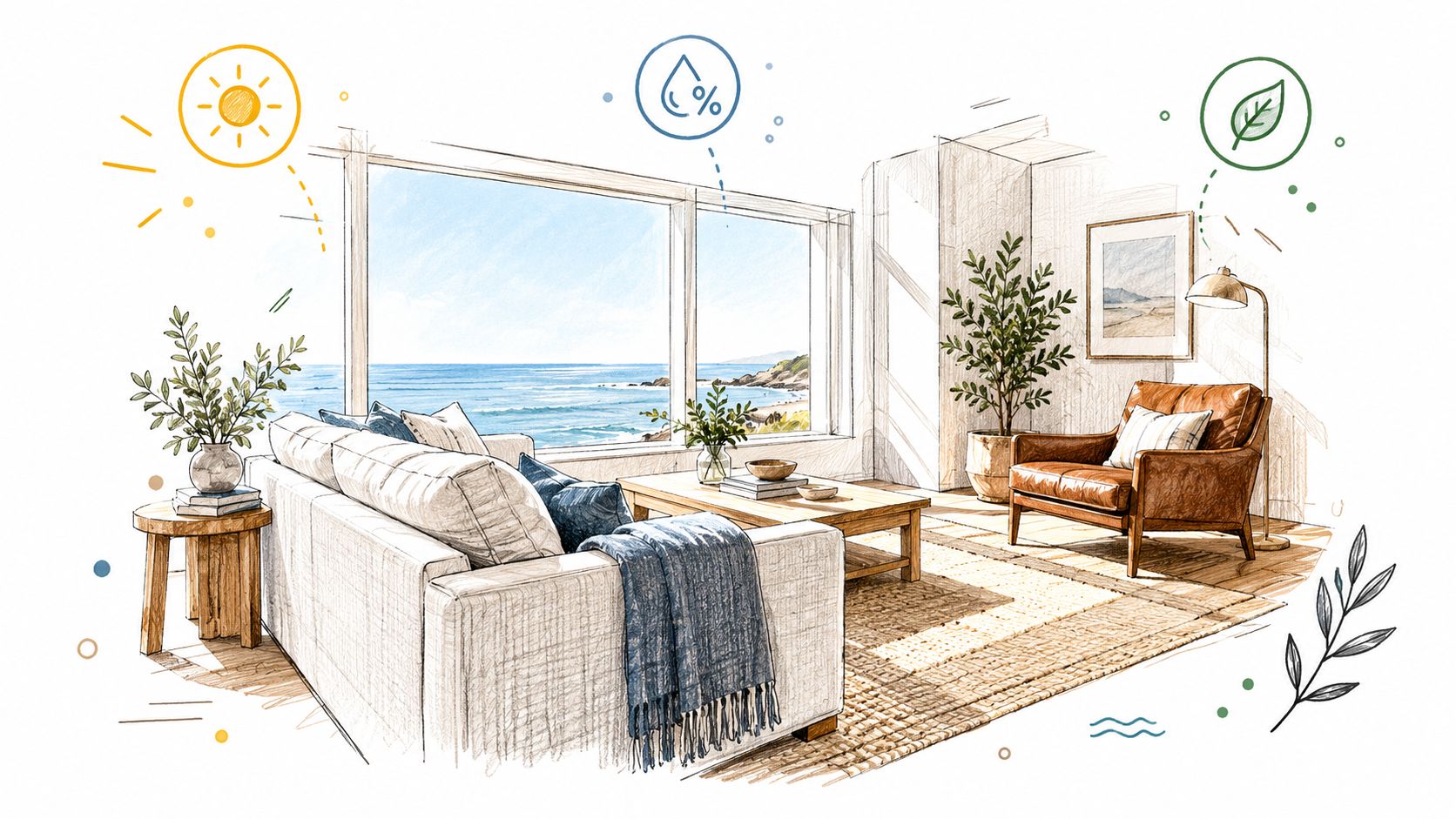
Coastal light can gradually change how upholstery looks, while humidity and sand make regular housekeeping part of the ownership experience. A material that performs beautifully in a low-use room may feel unsuitable in a sunlit family room. Room-by-room matching keeps the decision grounded: consider who sits there, how often the surface is cleaned, whether pets use it, and how much direct light it receives.
Lott's Furniture supports this evaluation through Style Quizzes, the Mattress Guide, and associates who can discuss comfort, proportion, upholstery, and care in person. The process can begin online and continue in the Fernandina Beach showroom, or start with a showroom visit and continue through the digital catalog.
Practical rule: Choose upholstery for the room people actually use, not the room they wish they used.
The strongest result is a curated sanctuary that feels personal rather than precious. Fabric and leather can both support heirloom-quality furniture when the surface, finish, frame, cushions, and maintenance expectations work together.
Understanding Fabric and Leather Types and How They Feel

A sofa's upholstery works much like clothing for furniture. Fiber content is the raw material, weave is the tailoring, and finish is the protective outer layer. Together, these choices shape touch, appearance, and the way a piece fits a room's routine.
How fabric construction changes comfort
Tight weaves usually feel stable and structured. Looser weaves can feel more relaxed and tactile. Performance fabric is built for practical use, with construction or finishes that support easier cleaning. That makes it a strong candidate for busy rooms, especially in South Georgia and North Florida, where coastal light, humidity, pets, and frequent housekeeping can place greater demands on upholstery.
Velvet has a directional pile that catches light and feels plush under the hand. Its appearance can shift as the fibers are brushed in different directions, so it brings more visual movement than a flat weave.
Texture carries as much design weight as color. A neutral fabric with visible variation can soften everyday marks and add warmth. A smooth solid gives the room a cleaner, more refined appearance. Choose based on the role of the sofa: quiet foundation, inviting family perch, or focal point.
For a closer explanation of upholstery materials and their practical differences, compare fiber, weave, finish, and expected care together. The material's origin and finishing process also affect its character. handcrafted leather from CITYSHEEP offers a tactile example of how leather can retain visible variation and a distinctive hand.
How leather categories feel under the hand
Leather categories describe surface treatment as well as appearance. Top-grain leather generally retains natural surface structure, though its finish varies by product. Semi-aniline leather combines a softer, more natural feel with added protective finish. Pigmented or coated leather has a more substantial finish layer, which can provide consistent color and added resistance in high-contact settings.
Aniline leather feels like expressive, lightly protected wood. It shows more variation and records use more openly. Pigmented leather resembles sealed wood, with a more uniform surface and greater protection. The better choice depends on the room, the desired touch, and the amount of care the household will provide.
Fabric and leather can both suit a curated sanctuary. Room conditions should guide the match. A leather surface may bring structure to a lightly used sitting room, while a well-chosen performance fabric may remain comfortable and practical in a bright family room with pets and frequent cleaning. Through the Special Order Program, Lott's Furniture can support personalized selections of fabric, leather, finishes, and comfort levels, helping a standard sofa become a considered centerpiece.
Durability and Comfort Compared for Real Life Use
A sofa in a bright family room faces different demands from one in a quiet sitting room. Durability includes abrasion resistance, tear strength, cushion support, finish behavior, and how the surface responds to heat, humidity, and touch. A strong leather hide may still struggle in intense coastal sunlight, while a carefully selected performance fabric can provide dependable service for pets, children, and frequent cleaning.
Fabric commonly uses the Martindale abrasion method, which rubs a sample against a standard abrasive surface and records cycles until visible wear appears. The rating helps match upholstery to household traffic, but it does not predict every part of real-life performance. Sun exposure, salt air, cleaning habits, pet claws, seam construction, and cushion support also shape how a sofa ages. The Martindale upholstery resistance guide explains the test method and why a rub rating should be read as one part of the specification.
Leather uses a separate abrasion assessment, EN ISO 17076-2, which examines how a finish breaks down during rubbing. The method can model contact and perspiration exposure, helping explain why two leather sofas may behave differently even when both are described as genuine leather. Its focus is the surface finish, not a complete prediction of comfort or long-term furniture quality. The EN ISO 17076-2 leather abrasion standard provides the technical reference.
Fabric and Leather Durability at a Glance
| Performance Criteria | Fabric Insight | Leather Insight |
|---|---|---|
| Abrasion | Rub ratings help match fabric to household traffic. | Finish breakdown depends on leather type and protective coating. |
| Touch | Woven textures can feel warm, soft, or structured. | Finishes range from natural and supple to more uniform and protected. |
| Tear resistance | Construction and backing influence resilience. | Leather can offer strong tear resistance, but the finish remains important. |
| Cushion experience | Fiber surface and cushion design shape immediate coziness. | Leather may feel structured and can develop character with use. |
| High-contact wear | Performance fabric can suit pets, children, and frequent guests when properly specified. | Pigmented or coated leather generally provides greater finish protection than softer finishes. |
A higher rub rating does not guarantee a better sofa, and a leather label does not guarantee a better experience. Frame joinery, suspension, cushion density, seam quality, and proportion matter too. Lott's multi-point inspection provides a practical checkpoint before delivery, helping confirm that investment-quality furniture is ready for the home.
For South Georgia and North Florida rooms, match the material to the room's actual workload. Leather may suit a shaded, lightly used space, while performance fabric can outlast it in a sunny family room where pets, humidity, and repeated cleaning are part of daily life. The guide to performance fabric versus leather helps organize that choice around use rather than material identity.
Stain Resistance and Everyday Maintenance Made Simple
A material can be highly abrasion-resistant and still be inconvenient to clean. Durability describes how upholstery withstands wear, while maintenance describes how easily the household can keep it looking composed. Those qualities overlap, but they aren't interchangeable.
Performance fabrics from brands such as La-Z-Boy and Smith Brothers can offer finishes designed to resist stains and support convenient cleaning. The exact care instructions still matter. A performance label isn't permission to use harsh chemicals, scrub aggressively, or ignore a spill.
Leather handles a different set of problems. A protected pigmented or coated surface may make everyday wiping straightforward, while softer leather finishes can show marks, absorb oils, or react more visibly to perspiration. EN ISO 17076-2 matters here because it evaluates the point at which the finish breaks down enough for leather fibers to become visible. That test helps explain why two leather sofas can behave very differently even when both are described as genuine leather.
A care routine that fits busy households
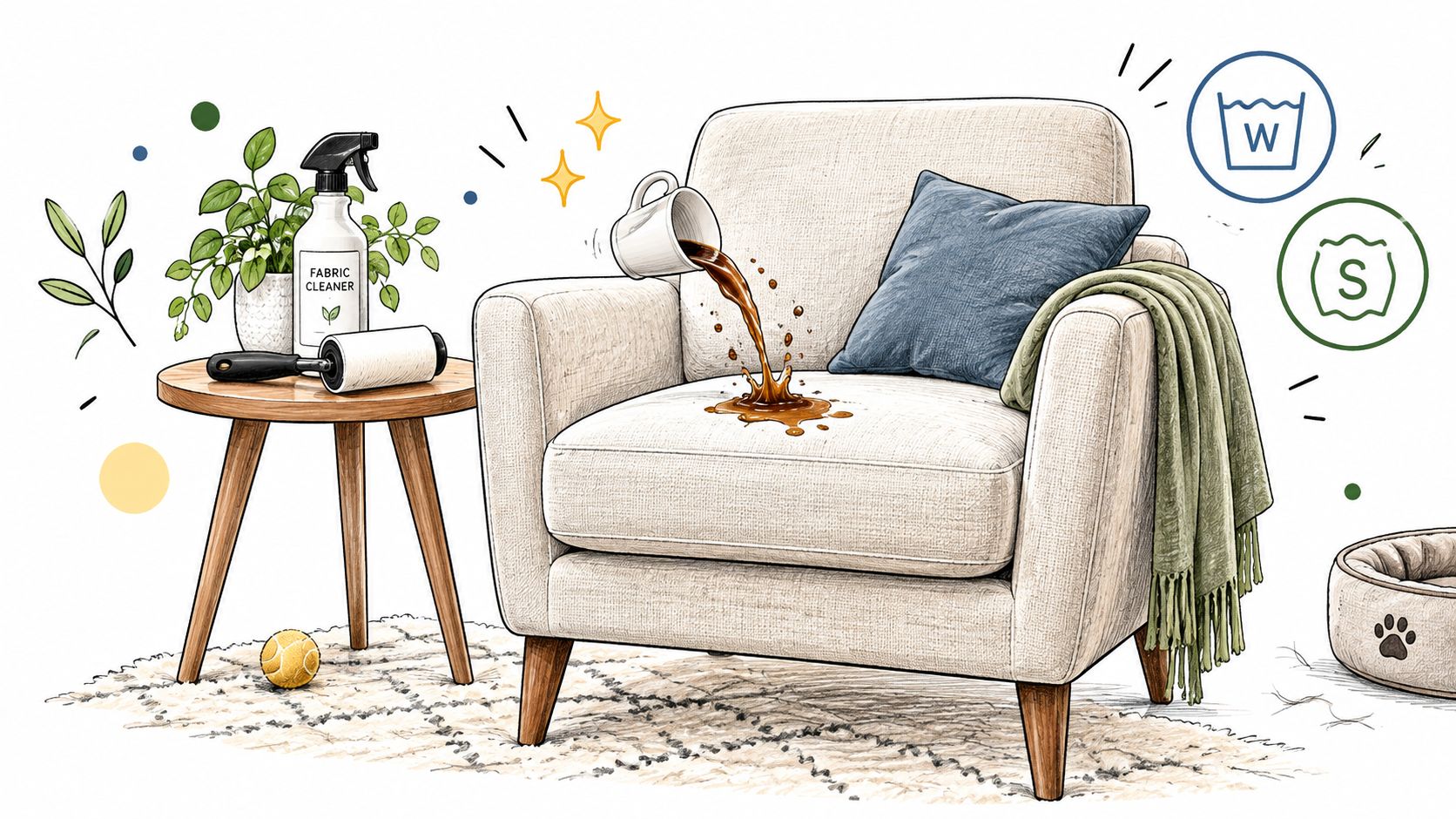
A practical routine should be simple enough to follow after a long day:
- Act quickly: Blot a fabric spill rather than rubbing it deeper into the fibers.
- Follow the care code: Use the manufacturer's approved method instead of assuming every upholstery behaves alike.
- Vacuum thoughtfully: Remove pet hair and surface dust with an attachment suited to the upholstery.
- Wipe protected leather gently: Use the recommended cloth and cleaner, avoiding harsh household products.
- Watch high-contact areas: Arms, headrests, and seat fronts deserve closer inspection because they receive repeated touch.
- Test first: Apply any cleaning product to a concealed area before treating a visible mark.
The right choice depends on which inconvenience feels manageable. A household may prefer fabric because it feels warmer and hides minor visual variation, even if it requires prompt blotting. Another may choose protected leather because a quick wipe is more compatible with frequent meals, pets, or regular housekeeping.
Cleaning advice: The safest cleaner is the one approved for the exact upholstery finish, not the strongest product in the cabinet.
A resource on upholstery stain removal can help homeowners respond calmly when accidents happen. The goal isn't to find a surface that never needs care. It's to choose a surface whose care routine fits the household's patience and schedule.
Best Room Uses and Sustainability Considerations for Coastal Homes
A bright room changes the fabric and leather decision. Strong sunlight can make leather the more vulnerable choice because leather is particularly UV-sensitive. Humidity and moisture add another layer of concern, while frequent cleaning can expose finishes to products they weren't designed to withstand.
That doesn't make leather unsuitable for South Georgia and North Florida homes. It means placement matters. A protected leather chair in a shaded study may perform beautifully, while a sofa positioned beside an unfiltered sunny window may need stronger UV planning. Performance fabric can narrow the durability gap in those conditions, especially when the fabric's construction and finish suit the household's use.
Match the upholstery to the room
| Room condition | Material direction | Reasoning |
|---|---|---|
| Bright coastal living room | Consider a well-specified performance fabric or carefully protected leather away from direct sun. | UV exposure can change the long-term behavior of leather finishes. |
| Humid sunroom | Prioritize breathable, maintainable upholstery and thoughtful placement. | Humidity and heat can make surface feel and cleaning expectations more noticeable. |
| Pet-heavy family room | Look closely at performance fabric, weave, finish, and cleaning instructions. | The best surface may be the one that manages hair, spills, and visible wear together. |
| Rental or frequently cleaned space | Choose upholstery with clear care guidance and a protective finish. | Repeated housekeeping can affect softer finishes and untreated surfaces. |
| Quiet formal room | Softer textures or expressive leather may be suitable. | Lower traffic allows design character to take priority. |
Sustainability is a system question
The environmental and indoor-air-quality discussion goes beyond a simple “green” label. Leather and fabric can both involve tanning, dyes, coatings, adhesives, backing materials, and textile treatments. Furniture specifications may address VOC limits and emissions testing, including requirements for leather or coated fabric upholstery coverings in certain furniture criteria.
The most useful question is therefore specific: Which complete upholstery system offers appropriate emissions performance, service life, maintenance, and end-of-life potential for this room? Longer service life can reduce replacement frequency, but only when the material remains suitable for the room's light, humidity, traffic, and cleaning routine.
A useful coastal-room reference is this guide to Florida room decorating. It reinforces a central point: sustainability isn't secured by choosing a material name alone. It depends on making a durable, lower-emission, maintainable choice that continues to work in the conditions where the furniture will live.
How to Personalize Your Choice With Lott's Brands and Design Tools
A sofa chosen for a bright, humid family room needs a different upholstery plan from one placed in a shaded reading corner. Start with the room's work, then match comfort, material, and finish to the way the household lives. This approach keeps coastal light, humidity, pets, and cleaning frequency in view instead of treating fabric and leather as a simple either-or decision.
Lott's Furniture's Special Order Program allows personalized designs through many vendors, with options that can include fabrics, finishes, cushion firmness, arm styles, wood finishes, and other comfort details. Custom furniture may offer thousands of fabric and finish combinations, along with choices for dimensions, materials, and upholstery details. The result is a piece sized for the room and selected for its daily demands, rather than a compromise that only looks right in the showroom.
A practical customization path
Define the room's job. Identify whether the piece will support daily lounging, formal entertaining, dining, reading, or occasional guests. A pet-friendly, frequently used room may favor a cleanable performance fabric, while a quieter space may allow more delicate texture or expressive leather.
Set the comfort profile. Review cushion firmness, seat depth, arm shape, and motion features. A supportive recliner and a deep lounging sofa can share a color family while creating very different seating experiences.
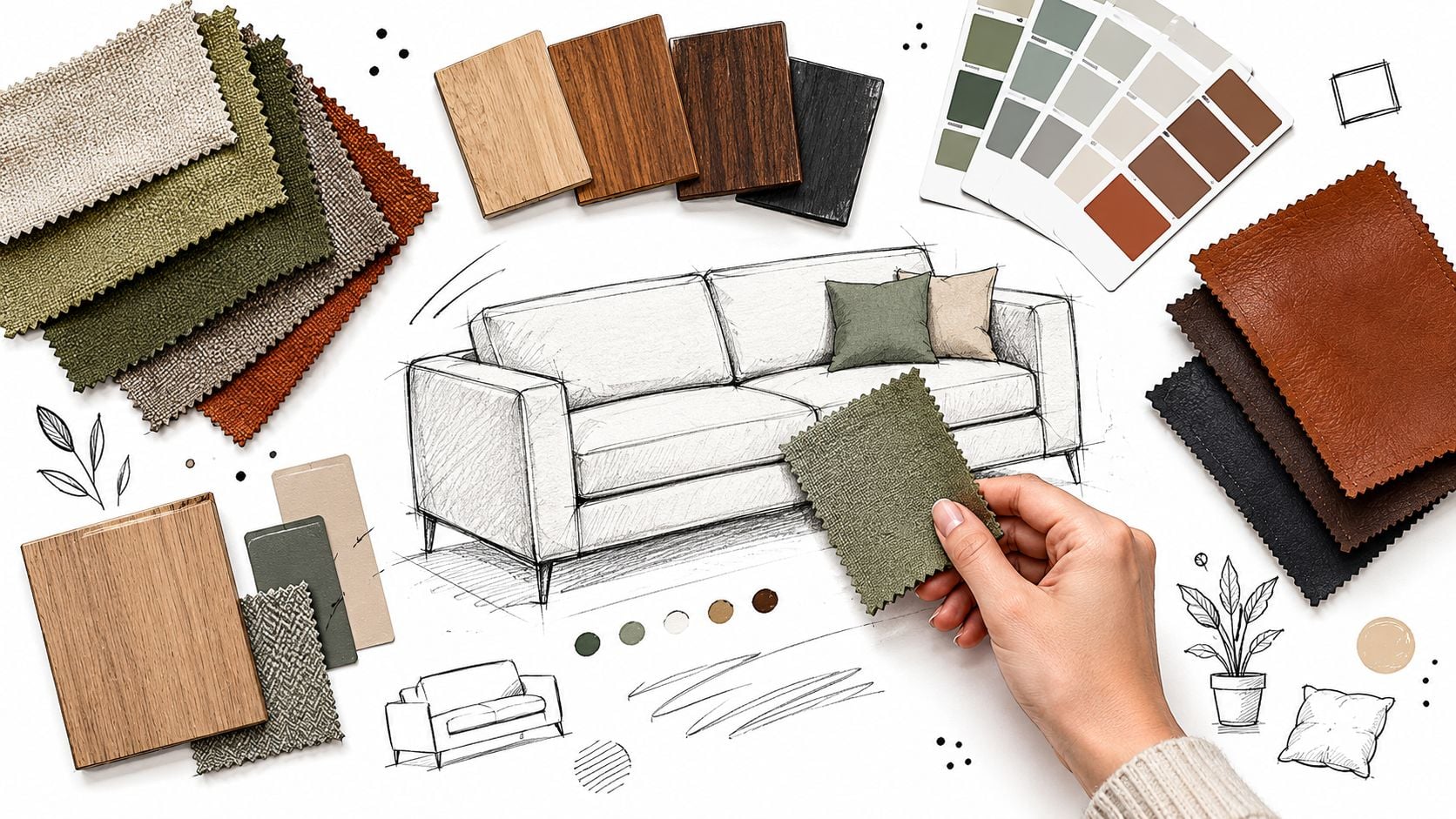
Choose the material family. Compare woven fabrics, performance textiles, velvet textures, protected leather, and softer leather finishes. In South Georgia and North Florida, a well-chosen performance fabric can outlast leather when sunlight, humidity, pets, and frequent cleaning place greater demands on the cover. View swatches in both natural and artificial light.
Coordinate nearby finishes. Wood tone, metal details, rug texture, and wall color affect whether the upholstery feels calm, layered, or dramatic. Coastal daylight can also make a color appear lighter or cooler than it did indoors.
Use guided design support. Style quizzes and interactive guides can organize room type, dimensions, and aesthetic preferences before a showroom visit. They help narrow choices, while in-person testing confirms scale, texture, and support.
Lott's associates can compare swatches, test seating, and connect design preferences with practical room requirements at the Waycross or Fernandina Beach showroom. The Mattress Guide can also support wider-home planning, since guided evaluation helps with both sleep comfort and upholstery comfort.
Bring Your Fabric and Leather Vision Home With Confidence
A coastal family room may face bright afternoon sun, humid air, pets, and frequent cleaning, while a quieter guest room has a very different workload. Match the upholstery to that room's conditions instead of choosing a universal winner between fabric and leather. Ask three practical questions: How will the room be used? What conditions will the upholstery face? How much maintenance feels reasonable?
In South Georgia and North Florida, a suitable performance fabric can outlast leather in a bright, active, pet-friendly room. Its comfort, cleanability, and abrasion resistance may better suit repeated use and cleaning. Leather can provide polished comfort in a structured setting, especially when it is shielded from intense UV exposure and maintained according to its finish requirements.
The cover is only one part of the furniture. Cushion construction, seat proportions, frame quality, and the household's daily habits affect how long a sofa remains comfortable. A well-built piece with the appropriate fabric or leather can become an heirloom-quality foundation for years of living.
Service after the selection
Lott's Delivery Standard extends beyond leaving furniture at the door. The white-glove delivery service from Lott's Furniture generally includes delivery inside to the room of choice, unpacking, setup, and removal of packaging debris. Each piece also receives a multi-point inspection before reaching the customer.
That support makes the change from showroom selection to lived-in comfort easier. Shoppers can browse online, ask questions through a digital consultation, and visit the Fernandina Beach showroom to compare woven fabric, performance textile, and protected leather finishes by touch. The process can also begin in Waycross and continue online.
A successful choice combines material, silhouette, finish, and comfort level with the needs of a real home. Fabric can feel refined and endure demanding use, while leather can offer lasting polish when its environment supports the finish. Lott's Furniture offers personalized selections through its Special Order Program, guided Style Quizzes, digital catalog, and in-store associates across South Georgia and North Florida. Visit Lott's Furniture to begin an online style consultation or stop by the Fernandina Beach showroom to compare swatches, test comfort, and plan an investment-quality piece with white-glove in-home delivery.