
Coastal Dining Set: Ultimate Guide for 2026


Sunlight is hitting the floors, the doors are open, and dinner has turned into an all-evening event. Someone sets down a wet glass. Kids slide chairs back without thinking. Sand shows up where it shouldn't. In South Georgia and North Florida, that's normal life. A coastal dining set has to handle it without losing its shape, finish, or charm.
That's why style alone isn't enough. A pale finish and woven texture may look coastal, but the ultimate test is performance. The right set needs to suit open, social living and still stand up to humidity, salt air, and steady use in a primary home, condo, or vacation property.
Creating Your Coastal Dining Sanctuary
A dining room used to be formal. Today, it does much more. The dining table has become a daily landing spot for meals, homework, laptop time, and holiday gatherings, which helps explain why the market keeps expanding. The global dining table market is projected to grow from $9.19 billion in 2026 to $16.01 billion by 2034, driven in part by the table's growing role as a multi-functional space for work and study, according to Fortune Business Insights' dining table market outlook.

For coastal homes, that shift matters. The modern dining room itself is a relatively recent idea, and today's relaxed coastal look makes sense because people no longer want dining spaces that feel stiff or closed off. They want a room that welcomes people in, moves easily, and feels bright.
What a coastal dining set should do
A strong coastal dining set should accomplish three things at once:
- Invite people to stay with a lighter visual profile and comfortable seating
- Fit real family rhythms instead of forcing the room into occasional-use formality
- Support flexible use for meals, conversation, and day-to-day spillover from the rest of the house
A good coastal dining room doesn't feel staged. It feels lived in, open, and ready for company.
That's also why thoughtful styling matters. Homeowners exploring creating an authentic dining space often respond to the same core principle. The room should reflect how people gather, not just how a catalog photo looks.
Why local homeowners shop this category differently
In Fernandina Beach and across South Georgia and North Florida, dining furniture often has to work harder than it does inland. It may need to serve a full-time family, a weekend retreat, or a home that welcomes rotating guests throughout the year. A set that looks right but ages poorly becomes frustrating fast.
Homeowners refining a breezy, livable look often start with visual inspiration such as coastal design style ideas, then discover that the smarter decision starts below the surface. Joinery, finish, wood choice, upholstery, and table shape usually matter more than the name of the color.
Choosing Materials That Endure Coastal Climates
A true coastal dining set is built for the climate first and styled second. Salt air settles on surfaces. Humidity moves in and out. Sun exposure can punish finishes and fabrics. If the materials aren't right, even an attractive dining set turns into a maintenance project.
Start with the table material
For coastal durability, teak sets the benchmark. A high-quality example uses a solid teak wood frame and a hand-applied finish, and teak is valued because its dense grain and natural oils help it resist the moisture and humidity common in coastal environments, as shown in this solid teak extension dining table example.
That doesn't mean every homeowner needs the same look. It does mean the decision should begin with wood performance, not paint color.
Coastal Dining Material Comparison
| Material | Durability | Maintenance | Best For |
|---|---|---|---|
| Teak | Excellent in humid coastal conditions | Low to moderate | Homes near salt air, sun, and frequent entertaining |
| Other durable hardwoods | Strong if properly finished and constructed | Moderate | Indoor dining rooms that need long-term structure |
| Painted wood finishes | Depends on substrate and finish quality | Moderate to high | Style-driven spaces where upkeep is acceptable |
| Upholstered performance fabric seating | Strong for daily use if fabric is selected carefully | Low to moderate | Family homes, rentals, and high-traffic dining areas |
| Woven or textured seating accents | Useful visually, but performance depends on construction | Varies | Lower-impact use or mixed-material designs |
What deserves extra scrutiny
Most shoppers spend too much time on the table top and not enough on the rest of the set. That's a mistake in a coastal home.
- Finish quality: A hand-applied finish tends to signal more careful surface treatment than a rushed decorative coat.
- Chair upholstery: Performance fabrics matter because dining chairs absorb daily wear faster than people expect. For homeowners comparing practical options, performance fabrics for upholstery are worth reviewing before a final chair decision.
- Hardware and moving parts: Extension mechanisms, chair joints, and fasteners need to feel solid. If they already feel strained in the showroom, coastal air won't improve them.
- Visual texture versus real resilience: Rope details, whitewashed surfaces, and light finishes can be beautiful. They're not a substitute for strong construction.
Practical rule: In coastal interiors, the prettiest finish in the room is useless if the base material can't tolerate moisture swings.
Where buyers often go wrong
They buy the look of coastal rather than the function of coastal. A sun-faded white finish and loosely built chairs may photograph well. They won't necessarily age well. The better path is to choose durable structure first, then layer in the lighter palette and woven accents that create the relaxed atmosphere.
That same thinking shows up outdoors. Homeowners who care about longevity tend to study performance details, much like shoppers researching wind-stable cabana designs instead of buying only by appearance. Indoor dining furniture near the coast deserves the same discipline.
Planning Your Layout for Effortless Entertaining
A well-made coastal dining set can still feel wrong if the room is crowded. Layout controls comfort. It affects how chairs move, how guests circulate, and whether the room feels calm or cramped.
The essential measurement is clearance. Designers recommend leaving about 36 inches between the edge of the table and surrounding walls or furniture for comfortable traffic flow, according to this dining room clearance guideline.
Use clearance before choosing shape
Many homeowners pick a shape first and measure later. The better order is the reverse.
- Measure the room
- Subtract circulation space
- Choose the table shape that fits the usable area
- Select seating that won't overcrowd the perimeter
A coastal room should feel easy to move through. That's part of the style. If guests have to sidestep every chair, the room stops feeling relaxed.
Match the table shape to the way the home is used
Round tables often work beautifully in casual coastal settings because they soften the room and support conversation. They also suit compact spaces well. Common sizing guidance shows that a 42-inch round table seats 4, a 48-inch table seats 4–6, and a 60-inch table seats 6–8, based on coastal dining assortment sizing references.
Rectangular tables make more sense when the room is longer, the household entertains often, or bench seating is part of the plan. Extendable formats are especially practical in coastal homes because guest counts change. A table that expands from 74 to 92 inches or from 79 to 118 inches gives one room two working modes: everyday life and full-house entertaining.
Smaller rooms usually need better configuration, not a smaller personality.
A simple way to avoid a common floor-plan mistake
Open-concept homes often blur the dining zone with the kitchen or living area. That can look airy, but it also makes table scale more important. The table should anchor the dining area without blocking the natural route through the room.
Homeowners comparing shapes, extensions, and seating plans can use this guide to dining table shapes and seating arrangements to narrow the options before stepping onto the showroom floor. That kind of prep usually leads to better decisions than shopping by silhouette alone.
Styling Your Dining Set for a Curated Coastal Look
Once the structure, finish, and layout are right, the room can finally become expressive. At this stage, a coastal dining set stops being a purchase and starts shaping the mood of the home.
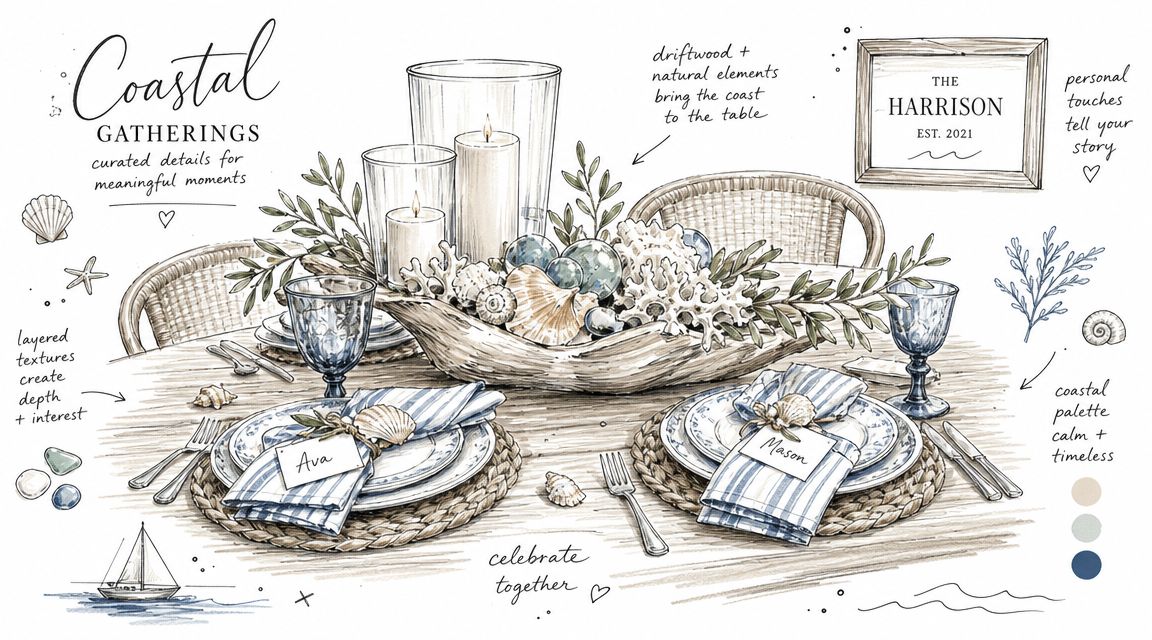
A curated coastal look works best when it avoids clichés. Seashell overload, overly themed signage, and matching-everything sets usually flatten the room. The stronger approach is to let the dining table and chairs establish tone, then layer texture, contrast, and restraint around them.
Build the room from the dining set outward
A light wood table can steer the room toward a soft, natural feel. Upholstered host chairs in a crisp stripe or textured neutral can add a more finished note without making the space feel formal. Woven elements help, but they should be edited.
Good combinations often include:
- Washed wood with structured upholstery for a polished coastal look
- Cleaner-lined silhouettes with woven accents for a more modern coastal room
- Traditional forms in lighter finishes for a cottage-inspired setting that still feels grown up
Core brands often associated with this level of dining-room craftsmanship include:
- Hooker Furniture
- Lexington
- Universal
Use fewer accessories, but choose better ones
The room doesn't need many decorative items. It needs the right ones.
- A natural fiber rug: It grounds the table and softens the room visually
- A statement light fixture: It should bring shape and texture overhead, not visual clutter
- A restrained centerpiece: A bowl, vessel, or low arrangement often works better than a tall display
- Window treatments with movement: Coastal rooms benefit from softness and light control without heaviness
The most convincing coastal rooms feel collected. They don't feel themed.
Accessories should support the furniture instead of competing with it. Homeowners looking to refine those finishing layers can browse dining room accessories that complete the space for practical ideas that keep the room balanced.
Customizing Your Perfect Coastal Dining Set
The smartest coastal dining set is often a customized one. Not because customization is flashy, but because coastal homes ask very specific things from furniture. A family may want a table finish that hides everyday wear better. A condo owner may need a tighter chair footprint. A vacation home may need performance upholstery that handles guest turnover without constant attention.
Why special order makes more sense than settling
A ready-made set can work. It just shouldn't force compromises that will become obvious later.
A Special Order Program gives homeowners more control over the details that matter:
- Finish selection for a lighter or deeper coastal tone
- Fabric choice for easier upkeep and a more structured seat
- Comfort preferences where the vendor allows seating feel or construction options
- Scale adjustments through table shape, extension style, or coordinating chair choices
This matters in South Georgia and North Florida because one coastal home doesn't live like the next. Some need everyday family durability. Some need polished entertaining. Some need both.
The practical side of personalization
Customization also helps solve fit problems before they become delivery-day problems. Buyers comparing room use, guest counts, and round-table sizing often review resources on ideal dimensions for event tables to think through how people gather around a table. That same mindset helps when choosing a dining set for a home that needs to be inviting without overwhelming the room.
One path for homeowners exploring those options is the custom order process for furniture, which outlines how finishes, fabrics, and custom specifications can be selected through a guided order instead of an off-the-floor compromise.
A few trusted names known for broad customization across furniture categories include:
- Smith Brothers
- La-Z-Boy
- Lexington
The true value isn't novelty. It's alignment. The set fits the home, the climate, and the way people live.
Our Commitment from Showroom to Your Home
A coastal dining set shouldn't feel like a risky purchase. It should feel considered from the first browse to the final placement in the room.
That process starts in more than one place. Some homeowners begin online, comparing silhouettes, finishes, and room ideas from home. Others want to sit in the chair, inspect the wood grain, and study the scale in person. Both approaches matter, and the transition between digital research and in-store guidance should be smooth.

Guidance should be available before and after the sale
Homeowners across South Georgia and North Florida benefit most when furniture shopping includes real decision support, not guesswork. That can mean using Style Quizzes to narrow the look, reviewing digital guides for room inspiration, or talking through layout and finish choices with in-store associates in Fernandina Beach, FL. The Mattress Guide belongs to a different room in the home, but it reflects the same idea: clearer tools lead to better long-term purchases.
Delivery standards matter just as much as showroom standards
A well-chosen dining set can still disappoint if it arrives with avoidable issues or gets dropped into the room without care. That's why the handling process matters.
The delivery standard should include:
- A multi-point inspection before the furniture ever leaves the warehouse
- In-home placement in the room where the piece will live
- Assembly and positioning so the set is ready to use
- Packaging removal so the home isn't left with a mess after delivery
A dining set isn't finished when it leaves the warehouse. It's finished when it's correctly placed, assembled, and ready for the first meal.
This is where white-glove service earns its keep. Dining tables are heavy, chairs can be vulnerable in transit, and extension mechanisms need proper setup. Careful delivery protects the investment just as much as a smart material choice does.
The strongest buying experience also respects how people shop now. They may start with a digital catalog, narrow options at home, then visit a showroom to confirm scale, finish, and comfort. Or they may do the reverse. Either way, the process should feel connected, informed, and local.
For homeowners ready to choose a coastal dining set that fits the climate as well as the style, Lott's Furniture offers a clear next step. Browse the digital catalog, explore an online style consultation, or visit the showrooms in Fernandina Beach, FL, or Waycross, GA to work through materials, configuration, customization, and white-glove delivery with guidance shaped for South Georgia and North Florida living.


