
Dining Room Tables and Chairs for 10: An Expert Guide


A family often starts this search with a happy problem. Holiday dinners are growing, kids are bringing partners, grandparents stay longer at the table, and the old setup no longer supports the kind of gathering the home now deserves. The challenge isn't only finding dining room tables and chairs for 10. It's choosing a set that lets people linger, pass dishes easily, and leave the table feeling welcomed rather than squeezed in.
That's where many shoppers get tripped up. A table can technically seat ten and still feel crowded. A room can hold a large table and still function poorly once chairs are pulled back. The smartest choice balances capacity, comfort, movement, and style so the room works on an ordinary weeknight and on a full-house celebration.
The Foundation Sizing Your Space for a 10 Person Table
The room sets the rules before the table ever arrives. A family may see a beautiful 10-seat set in a showroom and know it can fit ten bodies. The better question is whether it can host ten people comfortably, with enough elbow room, serving space, and walking space to keep the evening relaxed.
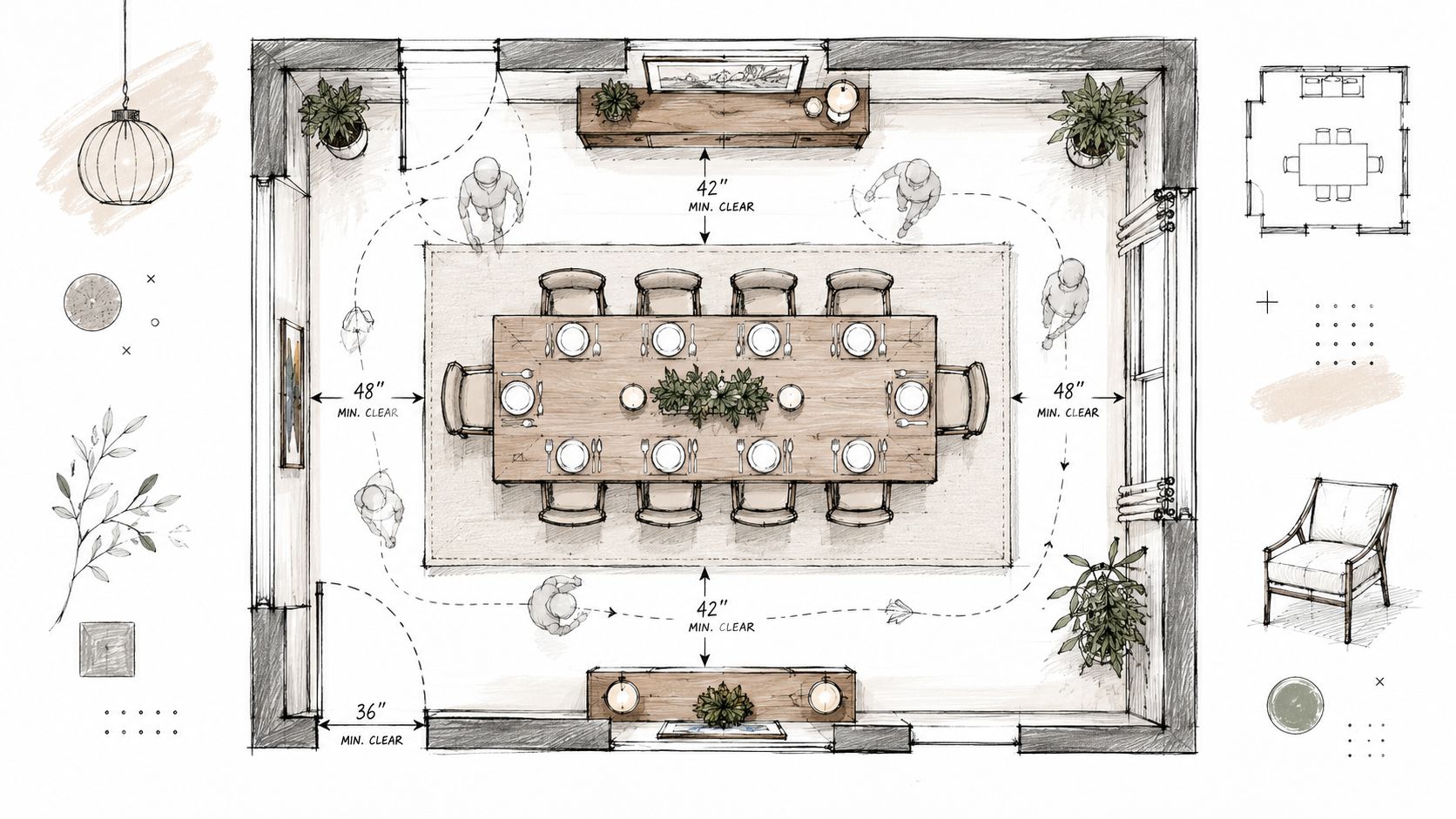
Start with real hosting space, not maximum capacity
For most homes, a rectangular table for ten lands in the range of 96 to 120 inches long and 36 to 48 inches wide. The wider end of that range often serves families better because the tabletop has to do more than hold plates. It also needs to handle serving bowls, glasses, centerpieces, and the natural give-and-take of a full meal.
This is the point many size guides skip. Seating ten at maximum capacity is different from hosting ten in comfort.
A helpful way to judge a table is to separate seat count from social space. Seat count answers, “Can ten people sit here?” Social space answers, “Can ten people stay here for two hours, pass dishes, and talk without feeling packed in?” For true comfort, many families prefer to plan around 28 to 30 inches per person, not the tighter spacing used for occasional overflow seating.
That extra room works like the difference between a hallway you can squeeze through and one you can walk through with a platter in your hands. Both are passable. Only one feels easy.
Measure the room as it will be used
Start with the full room size, then reduce it to the space that is usable. Door swings, radiators, built-ins, and traffic paths all count. A table can fit inside a room's dimensions and still interrupt how the room works day to day.
Three measurements matter most:
- Room length and width: Measure wall to wall.
- Obstacles and openings: Note windows, doors, vents, and case pieces.
- Clearance around the table: Leave enough space for chairs to move and for people to pass behind them.
Many households use about 36 inches of clearance as a baseline around the table. If the dining room is a busy passageway or opens into another active space, more clearance usually feels better.
Plan for chair sweep, not just tabletop size
A table on paper is only half the story. Once someone sits down, the chair moves back, knees need room, and the walkway shrinks. That is why a room that looked generous during shopping can feel tight on the first holiday meal.
Painter's tape helps here. Mark the table outline on the floor, then add the chairs in both tucked and pulled-out positions. Walk from the doorway to the table. Pass behind an occupied chair. Pretend someone is carrying a casserole dish. Those few minutes usually reveal more than a spec sheet.
For families who want to test proportions before moving furniture, Room Sketch 3D's table seating guide offers a useful visual reference.
Leave room for ordinary life too
Many homes need a dining set that feels right on a quiet Tuesday and ready for a crowd at Thanksgiving. That is why extension tables are often such a smart answer for larger gatherings. A design with self-storing leaves keeps the room from feeling oversized every day, and dining room tables with leaves stored in the table make that flexibility much easier to live with.
A well-sized dining room for ten should feel generous even before the first plate hits the table. Comfort begins with space around people, not just seats around wood.
Choosing the Right Table Shape for Your Gatherings
A family of ten can gather around several table shapes and still have a very different evening. One room feels easy, with room to pass dishes and settle in for a long story after dessert. Another fits the same headcount but asks everyone to tuck elbows, shift plates, and squeeze past corners. Shape often creates that difference.
The simplest way to judge shape is to ask two questions. How do you want people to interact, and how long do you expect them to stay at the table? A set that handles a quick weeknight meal may feel very different during a three-hour holiday dinner.
Rectangular tables for clear seating and longer meals
Rectangular tables are usually the clearest answer for ten. They organize a crowd well, especially in longer rooms, because each seat has a defined place and the serving space runs in a straight line through the center.
They also support the article's bigger idea of social space. A rectangular top usually gives you the best chance to move beyond maximum capacity and toward real comfort, especially if you want that more generous personal width that helps adults, teens, and grandparents all relax at once. In plain terms, this shape works like a long front porch bench built with breathing room instead of a bench packed edge to edge.
Host chairs at the ends can add presence without interrupting the flow. Side chairs along the length keep the seating plan orderly, which matters more with ten people than it does with six.
Round and oval tables for connection and softer movement
Round and oval tables create a different kind of gathering. They keep faces turned inward, which often makes conversation feel warmer and more shared. In a busy room, their softer outline can also make walking around the table feel easier because there are no sharp corners projecting into the path.
That social ease comes with a tradeoff. As round tables grow, each guest may have less defined personal territory, and place settings can start to overlap visually. For families who host lingering meals with serving bowls, chargers, glassware, and centerpieces, a large round table can feel full more quickly.
Oval tables split the difference nicely. You get some of the softer movement of a round shape, but with a longer edge that often supports ten guests more comfortably. For many homes, oval is the shape that looks gracious without becoming too formal.
Extension tables for homes that host in seasons
An extension table suits families whose dining room changes roles through the year. Closed, it feels right for everyday life. Open, it welcomes birthdays, holidays, and the extra cousin or neighbor who always seems to arrive at the happiest gatherings.
That flexibility matters because shape is not only about geometry. It is about rhythm. A room should feel comfortable on an ordinary Tuesday and still feel prepared when everyone comes home at once.
A helpful rule is to match the table to the kind of hosting you do:
- Rectangular: Best for long rooms, defined place settings, and longer meals where elbow room matters.
- Round: Best for conversation-focused gatherings where visual connection matters most.
- Oval: Best for families who want softer lines with a little more structure than a round table gives.
- Extension: Best for households that need one table to serve both daily meals and larger celebrations.
For a closer look at matching table shapes to room flow and seating arrangements, this planning guide is a useful next step.
At Lott's, we often tell families to choose the shape that supports the kind of memory they want to make. If your best gatherings involve long meals, passed platters, and easy conversation, the right shape should do more than seat ten. It should help ten people feel welcome enough to stay.
Beyond Capacity Comfortable Chairs and Spacing for Ten
The biggest misconception in large dining furniture is simple. Fitting ten isn't the same as comfortably hosting ten.
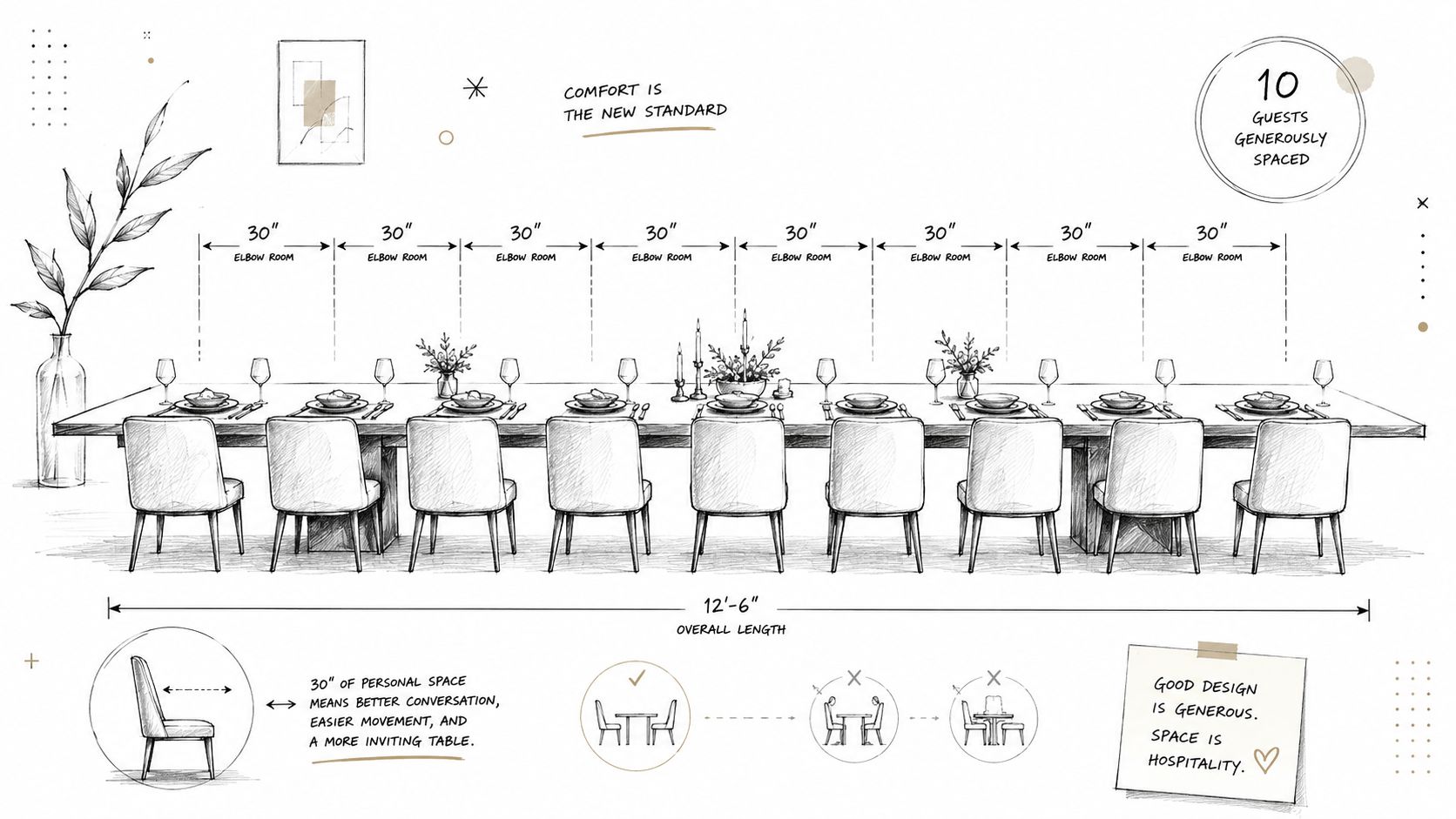
Why the common rule can fall short
Many guides use 24 inches of table edge per person as the basic rule, but a more comfortable target for multi-generational dining is 28 to 30 inches per person, which often pushes the needed rectangular length to 120 inches or more for a relaxed ten-person experience.
That difference shows up in real life as elbow room. It affects how easily guests lift a glass, cut food, or turn to speak without bumping the person next to them. For households that host mixed ages, broader shoulder widths, or long holiday meals, social comfort matters as much as seat count.
Comfort check: A table that “works” for ten during a quick meal may feel very different after dessert and an hour of conversation.
Chair choice changes the experience
Chairs can make a table feel either spacious or tight. That's why the chair discussion shouldn't happen after the table is chosen.
A few common examples help clarify the difference:
- Armless side chairs: Easier to place closely and often better for maximizing flexibility.
- Upholstered chairs with broader seats: More inviting for longer dinners, but they need more visual and physical breathing room.
- Host chairs with arms: Beautiful at the ends of the table, though they can change how tightly a room reads overall.
Seat width, back shape, and whether the chair tucks neatly under the apron all influence the comfort equation. A set can look balanced in a showroom and still feel crowded at home if chair scale wasn't part of the original plan.
The social space idea most guides miss
The best hosting rooms are designed around social space, not maximum capacity. Social space includes the width each diner needs, the emotional ease of not touching elbows, and enough tabletop area for dishes to circulate naturally.
That's why chair height matters too. A mismatched chair can create visual clutter and physical discomfort. Families comparing options often benefit from reviewing this dining table height guide before finalizing a pairing.
In South Georgia and North Florida, many families host across generations, not just friend groups of the same age and build. That makes comfort planning more nuanced. Associates in furniture showrooms often help clients test chair scale, table edge spacing, and reach before a final order is placed because these details are hard to judge from dimensions alone.
Curating Your Style Materials and Finishes
Once the size and seating comfort are settled, the fun part begins. The room starts to take on personality.

Material choices that shape daily life
A ten-seat dining set needs presence, but it also needs staying power. Large tables become homework stations, buffet surfaces, holiday backdrops, and everyday family anchors. Material choice should reflect that workload.
Some families lean toward rich wood tones because they carry a sense of warmth and heritage. Others prefer cleaner finishes or mixed-material looks that lighten the room visually. The right answer depends on how formal the home feels and how hard the table will be used.
Common directions include:
- Solid wood looks: Suited to classic, heirloom-inspired interiors.
- Durable veneers: Helpful when a refined finish and design detail are priorities.
- Metal accents or mixed media: Useful for homes that want a distinct, more current silhouette.
Finishes and fabrics that make the set personal
Chairs often carry the room's softness. Wood seats can feel crisp and architectural, while upholstered dining chairs bring more ease to longer gatherings. For active households, performance textiles deserve a close look, and performance fabric dining chairs are worth considering when spills, pets, or everyday wear are part of the picture.
Lighting also changes how the table's finish reads throughout the day. Families choosing a new set often benefit from reviewing practical guidance on selecting lighting fixtures for home, especially when trying to balance mood, surface reflection, and scale above a larger table.
The most satisfying dining rooms don't chase a trend. They connect the table finish, chair texture, floor tone, and lighting into one calm visual story.
Special Order opens up more tailored options
Customization matters. Many furniture vendors support special ordering, allowing shoppers to personalize details such as fabrics, finishes, and comfort levels rather than settling for a standard floor sample. That approach can be especially valuable for a coastal home in Fernandina Beach, a traditional dining room in South Georgia, or any space that needs a finish tuned to the rest of the house.
Lexington, Smith Brothers, and Hooker Furniture are often part of these style conversations because their collections give homeowners room to refine the final look instead of forcing a one-size-fits-all decision.
Bringing Your Vision to Life with Lott's Furniture
The exciting moment usually arrives like this: the measurements are on paper, a few saved photos already feel like favorites, and the family can finally ask the essential question. Which table will seat ten, and which one will let ten people relax, pass dishes, linger over dessert, and want to stay awhile?

That difference matters.
A large dining set is a little like planning a family gathering in your home. The headcount is only the starting point. Real comfort comes from giving each person enough elbow room, enough chair movement, and enough visual breathing space that the room still feels welcoming once everyone is seated. That is the heart of good selection at this stage. You are not only choosing what fits. You are choosing how the room will feel during birthdays, Thanksgiving, Sunday dinners, and quiet weeknights.
Many families begin online, and that can be a smart first step. Seeing collections on a screen helps narrow the field by shape, finish, and overall style before anyone spends an afternoon walking a showroom floor. Still, large dining pieces often change character in person. A chair that looks slim online may have a wider seat than expected. A tabletop that appears honey-warm on a phone can read much darker under the lighting at home.
At Lott's, that screen-to-showroom process works best when it becomes a conversation rather than a quick transaction. A good furniture specialist helps connect the practical side to the personal side. They can talk through how often you host, whether children use the room daily, how formal the space feels, and whether your goal is maximum seating or the more generous social space that makes ten guests comfortable for a long evening.
That last point is where many families feel relieved. Capacity answers, “Can ten sit here?” Social space answers, “Will ten enjoy sitting here?” For heirloom-minded entertaining, those are not the same question.
Helpful support during the shopping process often includes:
- Guidance on matching table scale to the room, not just to the wall measurements
- Help comparing a set that reaches full capacity with one that gives guests more personal space
- Finish and fabric samples that make it easier to judge color in real home lighting
- Clear answers about special orders, lead times, and delivery and assembly services for large furniture
For households preparing a move at the same time, planning the room before the furniture arrives can save a lot of frustration. Emmanuel Transport offers useful moving reminders that pair well with dining room preparation, especially when access paths, timing, and room setup all need to line up.
A well-chosen dining set should feel settled from the first meal. It should suit the home, support the way your family gathers, and leave enough room for the kind of hospitality people remember years later.
The Lott's Delivery Standard and Final Planning Checklist
A large dining set deserves a careful finish to the process. Delivery isn't just transportation. It's part of protecting the investment.
White-glove, in-home delivery matters because a table of this scale can be difficult to maneuver, assemble, and position correctly. A professional team can place the furniture in the intended room, handle assembly, and check the setup so the family isn't left wrestling with heavy components or packaging.
That service becomes even more valuable when the room is tight. A dining room often needs to be over 190 inches long to accommodate a 120-inch table, the 24 to 30 inches of chair sweep on both ends, and the necessary 36-inch clearance, making a final footprint check one of the most important steps before purchase.
Shoppers preparing for a broader move or whole-home setup may also find moving-planning advice useful, and Emmanuel Transport's guide to moving house offers practical reminders that pair well with furniture planning.
Final checklist before ordering
- Confirm the room footprint: Measure length, width, and any architectural interruptions.
- Test real-life circulation: Make sure doors, walkways, and seating paths remain comfortable.
- Choose the shape by lifestyle: Formal hosting, everyday use, and holiday flexibility may point to different solutions.
- Evaluate chair scale carefully: Don't judge comfort by seat count alone.
- Review delivery details: Furniture delivery and assembly should include placement and setup, not just drop-off.
- Ask about inspection standards: A multi-point inspection before delivery helps catch issues before the furniture reaches the home.
A careful final review saves frustration. It also helps the room feel finished from day one.
Frequently Asked Questions About Large Dining Sets
Can a family mix and match chairs with a table for a ten-seat setup
Yes, and it often creates a more collected, designer-finished look. Side chairs along the length with different host chairs at the ends can add character while preserving function. The key is keeping seat height, visual scale, and finish harmony in balance.
What's the simplest way to care for an investment-quality wood dining table
Daily care should stay gentle and consistent. A soft cloth, prompt cleanup after meals, and protection from overly hot or wet items will help preserve the finish. Households should also think about sunlight exposure, especially in bright dining rooms.
What if the dining room has awkward features like a bay window or door swing
That's common, especially in homes with character. In those spaces, the full footprint matters more than the listed table size. A careful floor plan, chair testing, and shape selection usually solve the problem more effectively than guessing from dimensions alone.
Are upholstered dining chairs practical for everyday family use
They can be, especially when the fabric is chosen with durability in mind. Performance-oriented upholstery is often a smart choice for homes with children, pets, or frequent entertaining. It lets the room feel elegant without becoming fragile.
Families shopping for a large dining set don't have to sort through scale, comfort, finish choices, and room planning alone. Lott's Furniture offers a digital catalog for easy browsing, style quizzes and design guidance for narrowing options, and showroom support in Fernandina Beach, FL, for seeing materials and seating in person. For households across South Georgia and North Florida, it's a practical next step for planning a dining room that feels welcoming every day and ready for the moments that matter most.

