Dining Table Size Guide: Find Your Perfect Fit


A dining table often becomes the place where a South Georgia weeknight slows down, where a North Florida coastal weekend starts, and where guests gather long after the meal is finished. The challenge is that the wrong size changes the whole room. A table can look beautiful in a showroom or online catalog and still feel oversized in an open floor plan, too narrow for serving dishes, or awkward once chairs are pulled back.
That's why a dining table size guide matters. Good sizing isn't just about fitting furniture inside four walls. It's about helping a room work for real life, including casual breakfasts, holiday meals, homework spread-outs, and the steady traffic that comes with open-concept homes and vacation properties.
Families across South Georgia and North Florida often bring the same question to the design process. How big should the table be? The answer gets clearer once the room, the seating plan, and the traffic flow are considered together.
A local approach helps. Homes in this region often have airy layouts, kitchen-to-dining transitions, and relaxed gathering spaces that don't behave like formal boxed-in dining rooms. That's why the best sizing advice has to be practical, not generic.
Finding the Heart of Your Home The Right Dining Table
A common scene plays out in homes from inland family houses to coastal cottages. The dining area is ready for an update, the walls are painted, lighting is chosen, and the table is the last major decision. Then the uncertainty starts. A rectangular table seems safe, but will it crowd the walkway? A round table feels inviting, but will it seat enough people when relatives visit?
That tension is understandable because the dining table is rarely just another piece of furniture. It anchors family routines. It carries the visual weight of the room. It often has to balance everyday practicality with the kind of welcoming presence people want in a curated sanctuary.
For homeowners searching for direction, these key steps for picking the perfect dining table can help frame the decision. The primary work, though, comes from understanding how the table will live inside the home, not just how it looks in a photo.
Why local homes need a more thoughtful fit
South Georgia and North Florida homes often ask more from a dining table than a formal dining room in a traditional floor plan would. A table may sit between the kitchen and living room, define an open area without walls, or soften the harder lines in a coastal interior. In that setting, sizing mistakes stand out fast.
A table that's too large can choke circulation. One that's too small can leave the room feeling unfinished.
A good table should feel centered and useful, not squeezed in and not visually lost.
What shoppers usually need most
Most homeowners aren't looking for abstract design theory. They need plain guidance on a few practical questions:
- Room fit: How much open space should surround the table?
- Seating reality: How many people can sit comfortably, not just technically?
- Shape choice: Will round, rectangular, square, or oval make movement easier?
- Long-term use: Will the table handle daily family life as well as occasional entertaining?
Those answers become much easier once the core sizing rules are clear.
Mastering the Three Pillars of Dining Table Sizing
The simplest way to remove guesswork is to focus on three things. Table height, space per diner, and room clearance. Once those are right, style decisions become far easier.
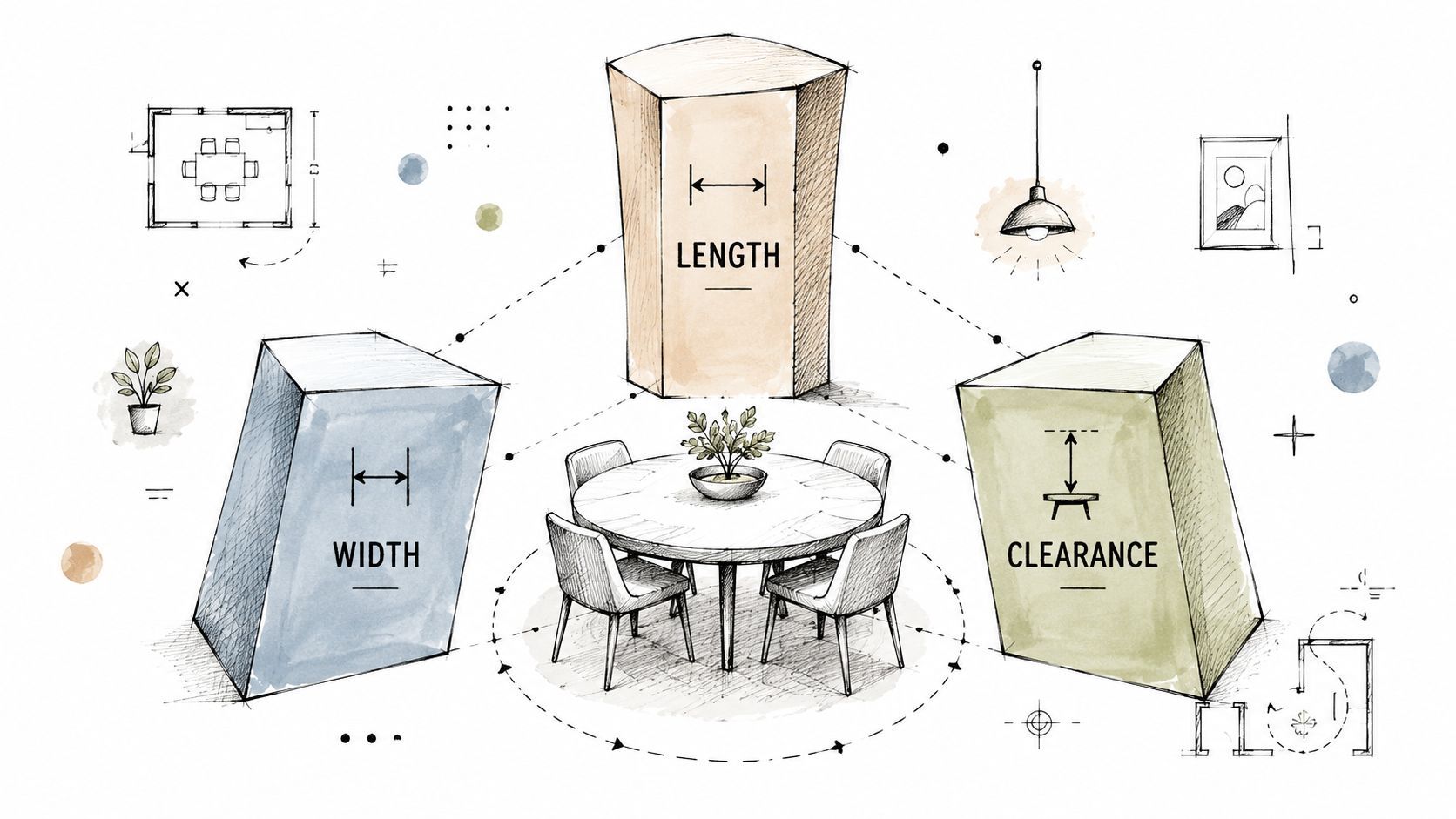
According to this dining table size reference, a standard dining table height is 28 to 30 inches, designers commonly recommend at least 36 inches of clearance between the table edge and walls or furniture, and many guides use 24 inches per diner along the table length as a minimum, with 30 inches preferred for more elbow room.
Pillar one standard dining table height
Height affects comfort more than many shoppers expect. If the table sits too high or too low relative to the chair, the whole meal feels off. Arms lift awkwardly, knees feel crowded, and the set never feels settled.
A standard dining-height table works well in most homes because it supports a familiar seated posture and pairs easily with many chair styles. That makes it the baseline for most dining rooms, breakfast areas, and open-plan spaces.
Pillar two space per diner
The edge of the table is where comfort gets tested. Plates, glasses, elbows, serving pieces, and conversation all compete for space.
Using 24 inches per diner as a starting point helps create a realistic seating plan. 30 inches gives a more relaxed feel, especially for longer meals or wider chairs. This rule matters because a table may be advertised for a certain number of seats, yet still feel crowded in daily use if every diner doesn't have enough personal space.
Practical rule: If a household values comfort over maximum seat count, it should lean toward the more generous spacing rather than the tightest possible layout.
For hosts planning linens and place settings after choosing the table, Jolitee's entertaining tips offer a helpful next step.
Pillar three clearance around the table
Clearance is the room's breathing space. It determines whether chairs can pull out smoothly, whether someone can pass behind a seated guest, and whether the dining area feels gracious or cramped.
The 36-inch clearance guideline gives a dependable starting point, but its real value is functional. It creates enough open area for movement, not just a visually pleasing gap. In homes where the table sits near a walkway, island, or living area, that clearance becomes even more important.
For readers comparing dining heights and how they affect seating choices, this guide to dining table heights adds useful context.
Why these three rules work together
These rules shouldn't be treated separately. A table might have the right height but still fail because the room doesn't allow proper clearance. Another table might fit the floor plan but seat fewer people comfortably than expected.
A strong dining table size guide always connects the three:
- Height affects posture and pairing with chairs.
- Per-person width affects comfort during meals.
- Clearance affects flow around the table.
Once those are balanced, shape becomes the next smart decision.
Choosing Your Shape Seating Capacity by Table Style
Shape changes how a room behaves. It influences not only the number of seats, but also sightlines, movement, and how formally the dining area feels. In many South Georgia and North Florida homes, shape also helps define the dining zone within a larger open space.
A useful sizing benchmark comes from this dining table sizing article, which recommends planning for 24 inches of table edge per diner and 36 inches of clearance around the table. In room-planning terms, that source notes a rectangular table for 8 diners is typically about 6 feet long by 42 inches wide, while a table for 10 diners is often about 8 feet long by 44–46 inches wide.
Dining Table Shape and Seating Capacity
| Shape | Common Dimensions | Seats |
|---|---|---|
| Rectangular | For 6 people, typically about 72 to 80 inches long, with width often between 36 and 48 inches | 6 |
| Rectangular | About 6 feet long by 42 inches wide | 8 |
| Rectangular | About 8 feet long by 44–46 inches wide | 10 |
| Round | Diameter varies by layout and chair size | Varies |
| Square | Side length varies by layout and chair size | Varies |
| Oval | Length and width vary by layout and chair size | Varies |
Rectangular dining tables
Rectangular tables remain the most versatile choice for many homes. They suit long rooms, line up well with rugs and light fixtures, and often make the best use of space when a household needs regular seating for larger groups.
They also work especially well in homes with open floor plans because they create a clear visual zone. A substantial rectangular table can anchor a dining area without needing walls around it. In a more formal room, an investment-quality design from a line such as Hooker Furniture can bring structure and presence without feeling heavy.
Round dining tables
Round tables encourage conversation because everyone stays visually connected. They also soften a room filled with straight cabinetry lines, plank flooring, and rectangular windows. That can be especially appealing in coastal interiors where the goal is an easy, relaxed mood.
Their main strength is flow. Without corners, movement around the table tends to feel smoother.
Round tables often solve a layout problem that rectangular tables create, especially in tighter dining nooks or rooms where people pass through from multiple directions.
Square dining tables
Square tables can feel balanced and intimate. They often suit smaller dining rooms or breakfast areas where a household wants a symmetrical look and everyday seating rather than large-scale entertaining.
The caution with square shapes is scale. Once a square top becomes large, diners across from one another may feel farther apart than expected, and the center can become harder to reach.
Oval dining tables
Oval tables blend traits from both round and rectangular designs. They provide the length of a rectangle with softer edges that improve circulation and visually lighten the piece.
That makes them useful in narrower spaces, especially where a household wants a more refined silhouette without sharp corners. For more room-planning ideas by shape, this guide to maximizing dining space with table shapes and seating arrangements is a helpful reference.
How to choose the right shape for the room
A practical way to narrow the decision is to match the shape to the room's job:
- Rectangular: Better for larger groups, longer rooms, and open-concept layouts.
- Round: Better for conversation, compact rooms, and softer traffic flow.
- Square: Better for smaller groups and balanced, contained spaces.
- Oval: Better for narrow rooms that need gentler lines.
The best shape usually isn't the one with the highest seat count. It's the one that lets the room function comfortably every day.
How to Measure Your Room Like a Design Pro
Most sizing mistakes happen before anyone sits down. The issue usually starts on the floor plan. A room may seem large enough until chair backs move out, a nearby doorway opens, or someone needs to walk behind a seated guest.
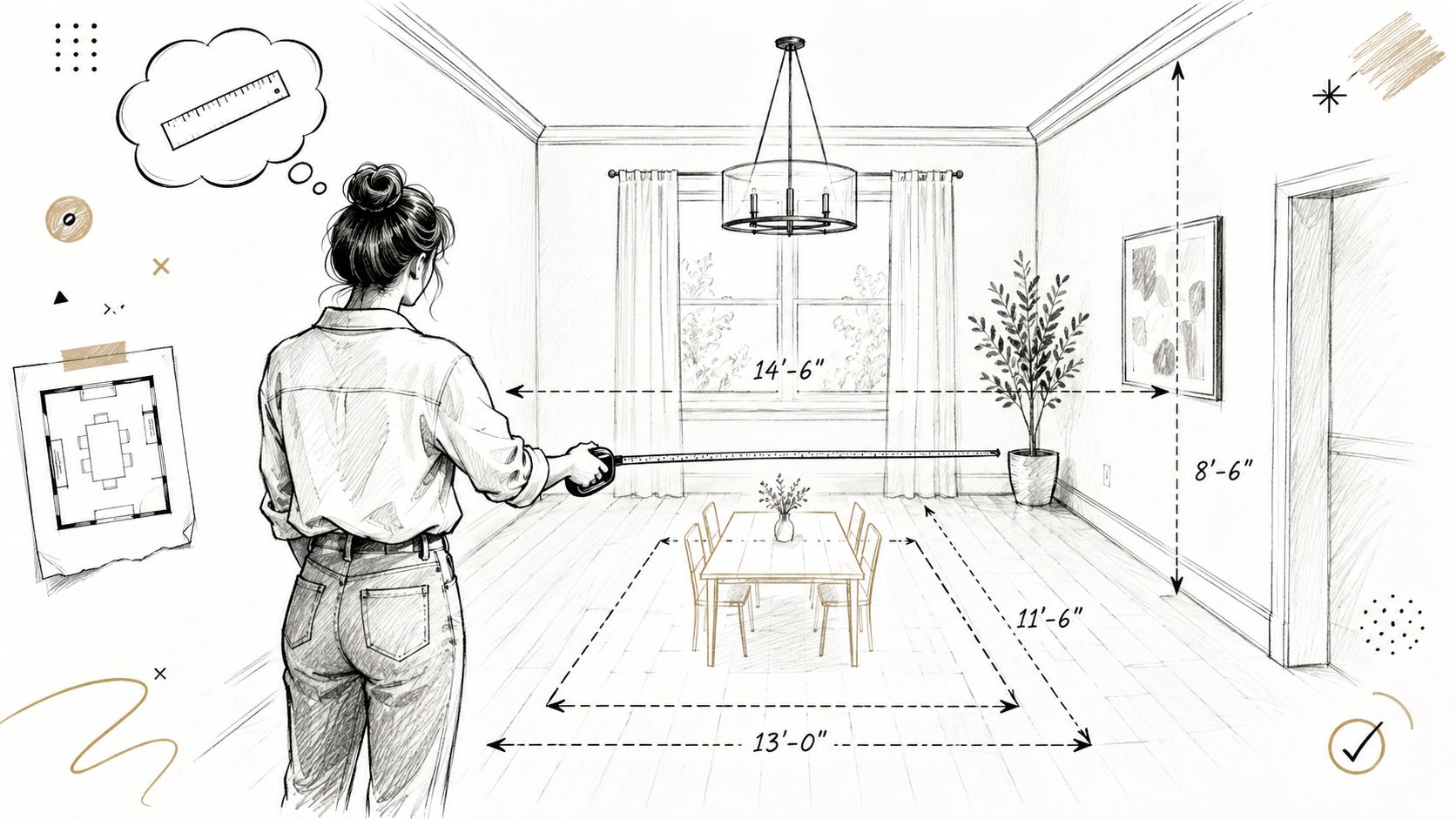
A stronger approach is to measure the room as if the table is already in use, not just as if it's sitting there untouched.
Start with the fixed boundaries
Measure the length and width of the dining area. Then identify anything that changes how people move, including doors, nearby islands, sideboards, windows with low trim, and major walkways.
In many homes across South Georgia and North Florida, the dining area isn't enclosed. It may open directly to a kitchen, family room, or hallway. That makes traffic patterns just as important as wall-to-table distances.
Mark the table footprint on the floor
Painter's tape is one of the simplest professional tricks for room planning. Tape the exact tabletop dimensions onto the floor, then walk around it. Better yet, add chair positions and test how the space feels when those chairs are occupied.
This step helps homeowners notice practical issues quickly:
- Chair pullback: Does the seat hit a wall or another piece?
- Walkway conflict: Can someone pass behind a seated diner?
- Door swing: Does an open door interfere with a chair?
- Visual balance: Does the taped outline feel too dominant or too small?
The floor mock-up often answers questions that measurements alone can't.
Adjust for traffic, not just furniture
One of the most overlooked details in any dining table size guide is that not all clearances serve the same purpose. According to this room-clearance guide, 31–40 inches may work as a minimum, 40–49 inches creates a more comfortable wall gap, and 49 inches is recommended near a doorway. The same source notes that some designers increase clearance to 42–48 inches in high-traffic or formal settings.
That matters in local homes where the dining table often sits on a circulation path, not in a separate formal room. If people regularly pass behind chairs on the way to the kitchen, patio, or living room, the standard minimum may not feel generous enough.
Use a simple measuring sequence
A clear order keeps the process manageable:
- Measure the room: Capture full length and width.
- Map obstacles: Note doors, openings, and nearby furniture.
- Tape the table shape: Use exact dimensions for the top.
- Test chair movement: Simulate chairs pulled out.
- Walk the routes: Follow the paths people use.
For readers who want a broader room-planning checklist, this furniture measuring guide is a practical companion.
Finding Harmony Sizing Chairs for Your Dining Table
A dining table can be perfectly sized and still feel wrong if the chairs don't fit the experience. Chair scale affects comfort, appearance, and how many people can sit at the table without crowding one another.
The key ergonomic relationship comes from this dining table dimensions reference, which notes that standard dining table ergonomics are anchored by a 28–30 inch table height, and table-to-seat spacing is commonly kept around 10–12 inches to preserve comfortable thigh clearance and a natural seated posture.
The seat-to-table relationship
That 10–12 inch gap is one of the quiet details that separates a dining set that looks coordinated from one that feels comfortable over a full meal. Too little space and diners feel pinched at the thighs. Too much and the table can feel oddly high relative to the chair.
This is why chair shopping shouldn't happen as an afterthought. Seat height, arm height, chair width, and how far the chair tucks under the table all affect the final fit.
Chair width changes real seating capacity
A table may technically hold a certain number of place settings, but actual chair width often clarifies the seating capacity. Side chairs usually give more flexibility than armchairs. Armchairs bring elegance and support, but they claim more lateral room and can reduce how many seats fit comfortably along a side.
That choice is especially important for households deciding between everyday efficiency and a more formal look.
- Side chairs: Easier to fit in tighter seating plans.
- Armchairs: More visual presence, but usually require more breathing room.
- Mixed seating: Often works well with armchairs at the ends and side chairs along the length.
Style and comfort should be chosen together
A strong dining space doesn't separate ergonomics from style. It blends them. A coastal dining room may call for lighter finishes and an airy profile, while a traditional interior may benefit from a richer wood tone and upholstered host chairs.
For shoppers exploring upholstered seating, this guide to performance fabric dining chairs helps connect comfort with practical upkeep.
The right chair doesn't just match the table. It supports the way the household actually sits, lingers, hosts, and lives.
Where customization becomes useful
This is also where personalization can make a major difference. Many furniture vendors support individualized choices in fabrics, finishes, and comfort details through special-order programs. That's valuable when a homeowner wants a specific wood finish, a more family-friendly upholstery, or a chair silhouette that better suits the room.
For example, collections from names such as Smith Brothers, La-Z-Boy, and Lexington often open the door to coordinated looks with more individualized options. Lott's Furniture also offers a Special Order Program with customizable dining pieces, allowing shoppers to consider finish and fabric options alongside room fit. Style Quizzes and in-store associates can help narrow those choices, while the Mattress Guide shows the same practical, guidance-first approach in another category.
Beyond Dimensions Style Finishes and Lasting Quality
Sizing gets the table into the room. Style determines whether it belongs there.
The material, finish, base design, and extension features all influence the mood of the dining area. A painted finish can brighten a coastal cottage. A rich wood grain can give a formal room more depth. A pedestal or trestle base can change legroom and the visual weight of the piece at the same time.
Choose a table that suits the home's character
In South Georgia and North Florida, many homeowners want a dining room that feels collected rather than overly formal. That often means balancing durability with warmth. Solid wood tables and thoughtfully finished veneers tend to age gracefully and contribute to the sense of an heirloom-quality room rather than a temporary setup.
Brands such as Lexington, Hooker Furniture, and Stressless are often part of broader home furnishing conversations because shoppers want pieces that feel refined and livable, not stiff or fragile.
Think about flexibility before the first holiday meal
Some households need the table to stay one size all year. Others need flexibility for visiting family, seasonal entertaining, or multi-use rooms. In those homes, an extendable table can be a smart answer because it keeps the daily footprint manageable while offering more seating when the occasion calls for it.
Accessories matter too. For households planning shared serving in the middle of the table, this guide to choosing the best wooden lazy susan offers useful ideas for practical tabletop organization.
Lasting quality includes delivery and setup
An investment-quality dining table deserves careful handling from selection to installation. White-glove, in-home delivery matters because dining furniture is heavy, often vulnerable at corners and finishes, and usually needs thoughtful placement once it arrives.
A rigorous multi-point inspection before delivery adds another layer of confidence. It helps protect the customer from disappointment and supports a smoother experience once the table reaches the home. That standard becomes even more valuable with larger dining sets, custom finishes, or pieces heading into second homes and coastal properties where replacement logistics can be more complicated.
Customization also belongs in this conversation. Many vendors support special-order selections in wood tones, fabrics, and comfort preferences. That gives homeowners a better chance of creating a dining room that feels suited to the architecture, the lifestyle, and the rest of the home.
Your South Georgia and North Florida Dining Table FAQs
What table shape works well in a coastal cottage or casual beach home
Round and oval tables often suit coastal homes because they soften the room and keep traffic moving easily. They also complement relaxed interiors where the goal is comfort rather than strict formality. The best choice still depends on the room's footprint and how often the household entertains.
How should an open floor plan handle dining table placement
In an open plan, the table should define the dining area without blocking the routes people use every day. That usually means paying close attention to walkways between the kitchen, living area, and outdoor access. A taped floor mock-up is especially useful here because open rooms can look generous until chairs are in use.
What should a shopper do after browsing online but still feeling unsure
The next step is usually to compare the room measurements, preferred shape, and chair style with a real sample in person. Digital browsing helps narrow the field, but finish, scale, and seating comfort are easier to judge inside a showroom. That's also where in-store associates can answer layout questions, discuss special-order options, and help connect online inspiration with a table that fits the room.
For homeowners across South Georgia and North Florida, the easiest path is often a blended one. Browse the digital catalog first, use style tools such as the Style Quizzes or Mattress Guide for decision support, then visit the Fernandina Beach, FL showroom to test proportions, finishes, and seating in person.
Homeowners across South Georgia and North Florida can explore custom dining solutions with Lott's Furniture, starting online and continuing in the showroom for a more hands-on fit check. The digital catalog makes it easy to compare styles at home, while the Fernandina Beach, FL showroom offers a closer look at finish, scale, and comfort. In-store associates can help with room planning, special-order customization, and chair pairing, and each piece is supported by white-glove, in-home delivery and a rigorous multi-point inspection before it reaches the home.