Save 50% Off MRSP on Lexington | Shop the Catalog >

Kiln Dried Hardwood: A Smart Choice for Furniture


A tabletop that picks up a hairline crack, a cabinet door that no longer sits flush, a drawer that starts to stick for no obvious reason, those frustrations usually point back to one quiet decision made long before the furniture reached the home. The wood's moisture content shapes how it behaves after delivery, and that's why kiln dried hardwood matters so much for pieces meant to live in real rooms, not showroom conditions. For homeowners in South Georgia and North Florida, where humidity swings are part of daily life, the question isn't just whether the wood was dried, but whether it was dried well enough to stay calm in the home where it will be used.
Why the Wood Behind Your Furniture Matters More Than You Think
A beautiful piece can still cause trouble if the wood inside it was too wet when it was built. A dining table may look perfect on day one, then show movement around a joint after a few seasons of humidity, and a chest of drawers can start feeling fussy long before the finish looks worn. That's why moisture control sits at the heart of heirloom-quality furniture, not as a technical footnote, but as the foundation of how the piece lives in a home.
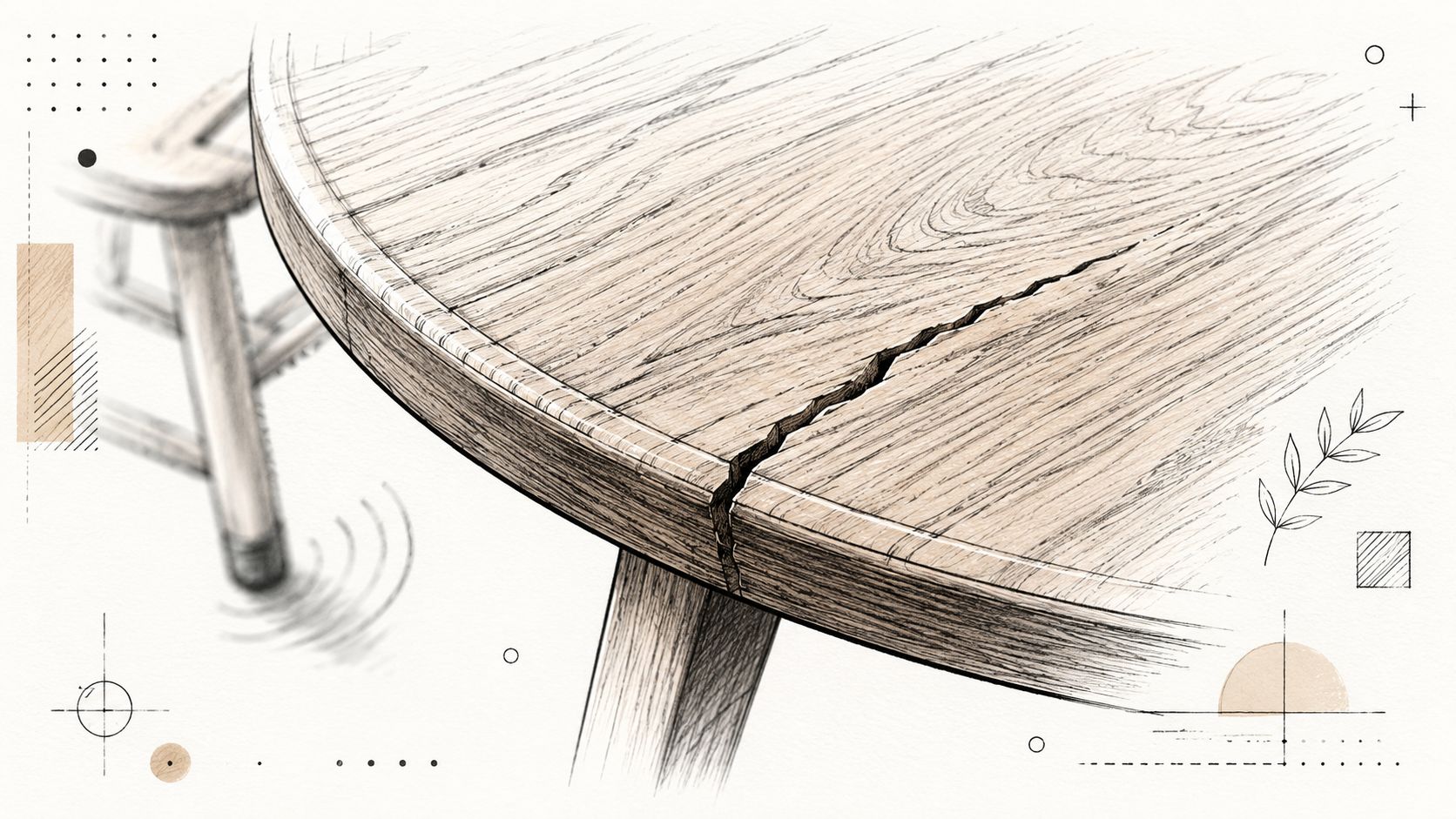
The best way to think about wood is like a natural sponge that wants to find balance with the room around it. If it goes into a home with too much moisture still in it, it keeps adjusting after assembly, and that movement can show up as gaps, bowing, or doors that no longer line up cleanly. The U.S. Forest Service notes that dense hardwoods often begin drying in the 20% to 25% moisture-content range and that kiln drying had become mainstream by the early 1980s, with survey respondents drying over 20 billion board feet annually. That scale matters because it shows kiln drying isn't a niche trick, it's the standard behind stable lumber for interior use. USDA kiln-drying guidance
Practical rule: furniture that stays beautiful usually starts with wood that was prepared for the room it's entering, not just for the factory that built it.
For shoppers deciding between solid wood and other construction methods, the moisture story is part of the bigger picture. A useful companion read is the guide to solid wood vs. veneer, because the structure of the piece and the moisture condition of the lumber work together. Both affect whether a table feels settled and reliable, or temperamental the moment the seasons change.
How Kiln Drying Actually Works
A kiln is basically a carefully controlled oven for lumber, but that simple description leaves out the craft. The wood goes into a closed chamber where air is rapidly circulated over stacked boards, and the heat is managed so moisture leaves the wood gradually instead of all at once. USDA materials on eastern hardwood lumber describe conventional dry kilns using initial temperatures of 100°F to 170°F and final temperatures of 150°F to 200°F. USDA kiln chamber guidance
Why the schedule matters
The schedule is the work. Hardwoods don't all release moisture at the same pace, because density, board thickness, and species all change how heat travels through the lumber. USDA hardwood guidance notes that equalizing begins when the driest sample reaches about 2 percentage points below the target final average moisture content, which is one reason the process is measured and corrected rather than heated until it seems dry. Hardwood kiln schedule guidance
Thicker stock dries much more slowly than thinner stock, and that difference matters for furniture parts that need to stay flat and true. A board that dries too quickly on the outside can trap stress inside, which is how defects like casehardening or honeycomb can enter the conversation. Proper kiln work tries to avoid that imbalance, because furniture makers need lumber that's dry through the core, not just dry on the surface.
The kiln isn't about speed alone. It's about controlling heat, airflow, and time so the wood reaches a stable condition without being damaged along the way.
That's the reason kiln dried hardwood deserves respect. It isn't just lumber that got hot. It's lumber that followed a schedule shaped around the species and thickness, so the finished piece can arrive in the living room ready to hold its shape. A deeper guide to understanding lumber moisture content is helpful for readers who want to visualize why those percentages matter in real life.
Kiln Dried vs Air Dried vs Green Wood
The label on the lumber tells part of the story, but not enough for a serious furniture buyer. Green wood starts out with a lot of water still inside it, air-dried wood loses moisture more slowly and less predictably, and kiln-dried wood is brought down under controlled conditions for interior use. The difference shows up later in how a table top behaves, how a cabinet door closes, and whether a glued joint stays tight.
Side-by-side comparison
| Method | Typical Moisture Content | Stability | Defect Risk | Best Use |
|---|---|---|---|---|
| Kiln Dried Hardwood | Commonly about 6% to 8% for North American furniture lumber, and some kiln-dried wood may come out at no more than 5% moisture under certain conditions USDA source | High, when matched to the right climate and stored properly | Lower when schedules are correct, but still dependent on species and drying control | Furniture, cabinetry, and interior components |
| Air Dried Hardwood | Often 10% to 20% moisture depending on conditions technical guidance | Moderate, but less predictable | Higher variation because weather and storage conditions affect results | Some projects where slow drying is acceptable |
| Green Wood | Often well above 20% moisture USDA source | Low for fine furniture unless processed further | Highest movement risk | Fresh milling, rough stock, or specialized craft uses |
What that means for a homeowner
Air drying can be gentler in some situations, but it's slow and inconsistent. Green wood almost never belongs in fine furniture, because it's still in the middle of a long drying journey and can keep changing shape after the piece is built. Kiln drying gives makers and buyers a more controlled target, which is why it's the standard for pieces that need to live indoors and stay composed through the seasons.
For a shopper comparing options, the question is less about romance and more about performance. A kiln-dried table is more likely to stay true because it was conditioned for a stable interior environment before it was built, while air-dried stock can still drift as the home's humidity shifts. A helpful companion read on choosing the right hardwood species can also clarify why one species may suit a dining table better than another, even before moisture comes into play.
What Kiln Drying Does for Furniture and Flooring
Stability is the first gift kiln drying gives a home. Hardwood that has been brought to the right moisture level is less likely to swell, shrink, cup, or separate at the joints once it starts living in a room with changing air conditions. That matters in humid climates, because the wood won't be constantly chasing the weather every time the AC runs or a rainy week rolls in.
Why the finish and joinery benefit
A lower, more uniform moisture content gives finishes a better foundation. When the wood stops moving as much after construction, glued joints stay tighter, drawers stay truer, and the whole piece feels more settled under daily use. For furniture, that means fewer nagging issues that make a beautiful piece feel high-maintenance.
Flooring shows the same pattern in a different form. Boards that were dried well are less likely to cup or gape after installation, because the wood isn't trying to rebalance itself all over again in the room. The logic is simple, if the material is conditioned before it's installed, it behaves more predictably once it's there.
Think of it this way: kiln-dried hardwood is like a tailored suit. The cut matters, but the fit only works because the material was prepared to hold its shape where it will actually be worn.
That's why the drying step supports everything else homeowners care about, from smooth drawers to crisp finish lines. The look can be customized, the wood species can be chosen for style and strength, and the details can be carefully built, but those choices only last if the lumber itself is stable. A practical guide to protecting wood furniture from scratches and stains pairs naturally with this topic, because once the wood is stable, everyday care helps preserve that condition.
A well-dried board also gives the maker more control. It behaves the way a furniture builder expects, so the final piece can look refined instead of reactive. That's the value of kiln drying in a living room, dining room, or bedroom, it supports the quiet consistency people notice long after the delivery team has gone home.
The Climate Question Most Buyers Never Ask
A kiln-dried label sounds reassuring, but it doesn't answer the whole question. The more useful question is whether the wood was dried for a climate like the one where the furniture will live. USDA Forest Service material notes that kiln-dried hardwood lumber is commonly dried to about 6.5% to 7.0% average moisture content, yet the right final moisture content still depends on species, thickness, end use, and storage conditions. USDA moisture target guidance.pdf)
Why climate changes the buying decision
A piece built for a dry environment can still absorb moisture after it lands in a coastal home. In South Georgia and North Florida, that's not an abstract concern, it's the reality of warm air, seasonal humidity, and indoor cooling cycles that change how wood behaves from week to week. Wood that was dried and stored with that environment in mind is more likely to stay calm and avoid unnecessary movement.
That's why local expertise matters. Our region doesn't need generic advice, it needs furniture knowledge tied to real homes, real humidity, and real daily use. Brands like La-Z-Boy, Smith Brothers, Lexington, Stressless, and Hooker Furniture are often chosen with performance in mind, because hardwood components, finishes, and construction details need to support the room as well as the style.
The better showroom question isn't “Is it kiln dried?” It's “Was it kiln dried and stored for a home like mine?”

That shift in question changes the whole conversation. It moves the buyer away from a label and toward performance in the actual living space. For coastal homeowners, that's the difference between furniture that looks good on delivery day and furniture that keeps its poise through the year.
A Buyer's Checklist for Kiln Dried Hardwood Furniture
A smart furniture shopper doesn't need to be a wood scientist, just a good question-asker. Moisture specs are worth asking about, but so are species traits, joinery, and the way the piece was built and handled after drying. A strong sales conversation should make those details easy to understand, not feel like a pop quiz.
Questions worth asking in any showroom
- Moisture target: Ask what final moisture range the piece was built around, and whether it was prepared for a humid Southern climate.
- Species behavior: Ask how the hardwood tends to move, because grain pattern and density affect the way a finished piece ages.
- Construction details: Look for tight joinery, thoughtful panel design, and methods that let the wood move in controlled ways rather than fighting it.
- Warranty confidence: A manufacturer that stands behind the drying and construction process usually signals that the piece was built with care.
For shoppers who like to compare styles and comfort levels before visiting, a style quiz or mattress guide can make the process less overwhelming. That's also where brand fit matters, since La-Z-Boy and Smith Brothers can bring performance fabrics and worry-free finishes to everyday living, while Lexington and Hooker Furniture often appeal to buyers who want case goods with a stronger heirloom feel. Stressless is a natural fit for engineered ergonomic frames where structure and comfort both matter.
A useful regional reference on dew point and Florida humidity can help homeowners understand why indoor air and outdoor climate don't always agree. That's exactly why the right moisture target should be part of the buying conversation, not an afterthought.
Every piece that reaches the home through our delivery process should be inspected carefully before it ever enters the room. A rigorous multi-point inspection and white-glove in-home delivery aren't luxuries, they're part of making sure the furniture arrives ready for real life. For shoppers comparing domestic craftsmanship and finish quality, the guide to American-made furniture adds useful perspective on where value and workmanship often show up first.
Caring for Kiln Dried Hardwood in a Southern Climate
Properly dried wood still responds to the home around it. That doesn't mean it's fragile, it means it's alive to the air in the room, which is exactly why good care habits matter in South Georgia and North Florida. Summer humidity can make rooms feel heavy, while winter heating can pull moisture out of the air, and consistency is the friend of stability.
Simple habits that protect the piece
- Keep indoor conditions steady: Reasonable humidity control helps the wood stay closer to the environment it was built for.
- Avoid harsh placement: Don't park solid wood directly in front of HVAC vents or in constant direct sun, because those spots create uneven drying and heating.
- Use soft protection: Felt pads under décor and accessories reduce surface wear and help finishes stay cleaner longer.
- Clean with care: Use products made for finished hardwood, not harsh all-purpose cleaners that can dull the surface.
That small set of habits pays off because it reduces stress on the finish and helps the wood move as evenly as possible. Our in-home delivery team can position pieces thoughtfully so they aren't set up in the worst possible spot on day one, and showroom associates can recommend care products that match the finish and use pattern. A practical resource on wood furniture care fits naturally here, especially for households trying to protect an investment-quality piece through changing seasons.
When care, construction, and climate all line up, the furniture feels settled in the home instead of merely placed there. That's the quiet advantage of kiln-dried hardwood, it gives the piece a better starting point, then good habits help it keep that advantage for years.
A CTA for Lott's Furniture. Visit our Fernandina Beach or Waycross showroom to see kiln-dried hardwood craftsmanship in person, or book an online style consultation to explore custom options, comfort levels, and finishes for a home that feels personal, calm, and beautifully lived in.